-
-
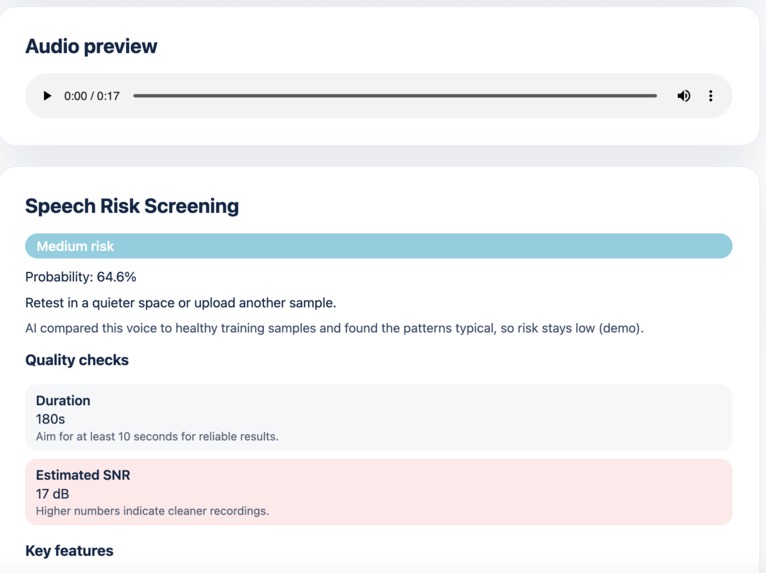
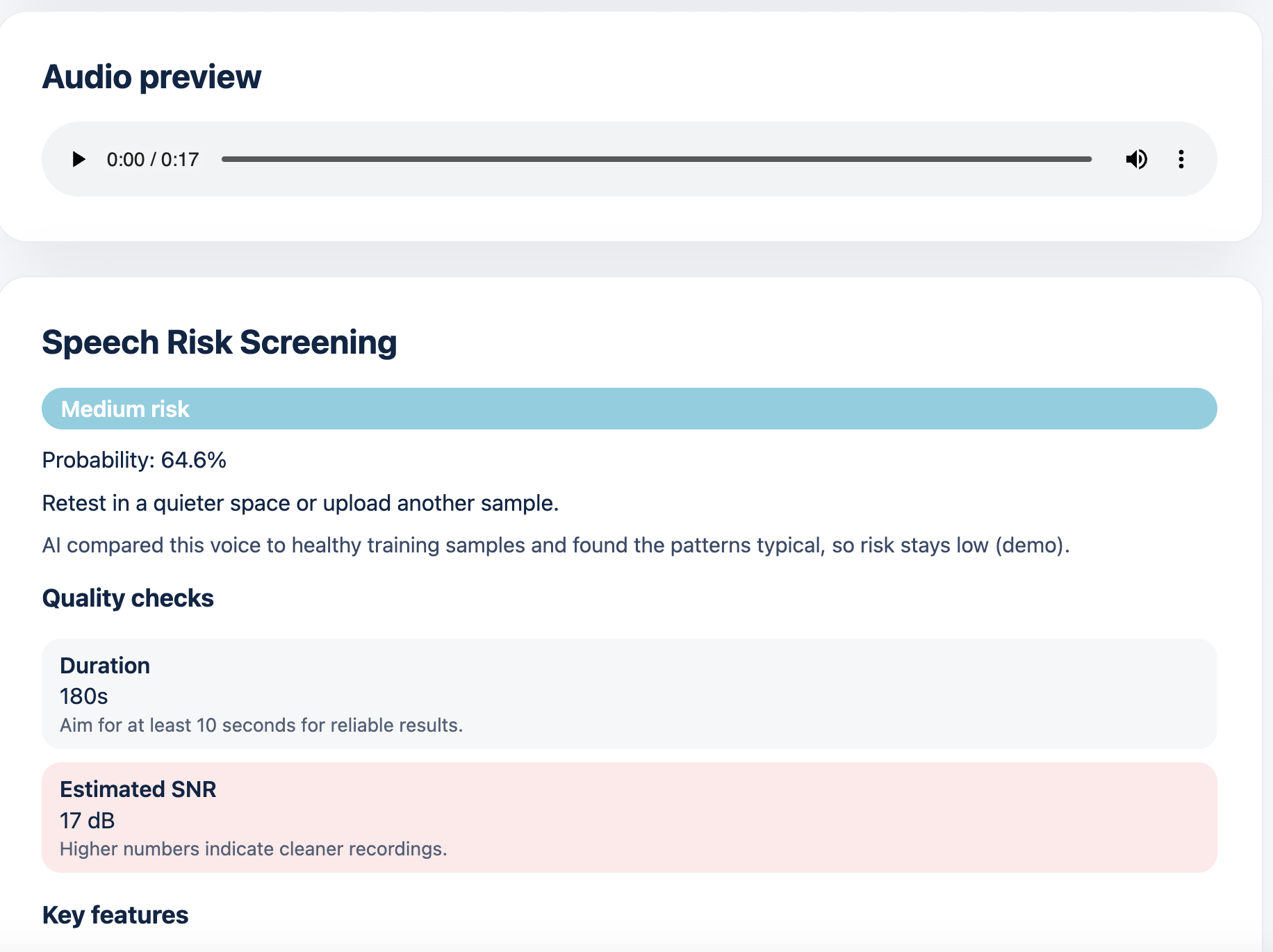
Results 2
-
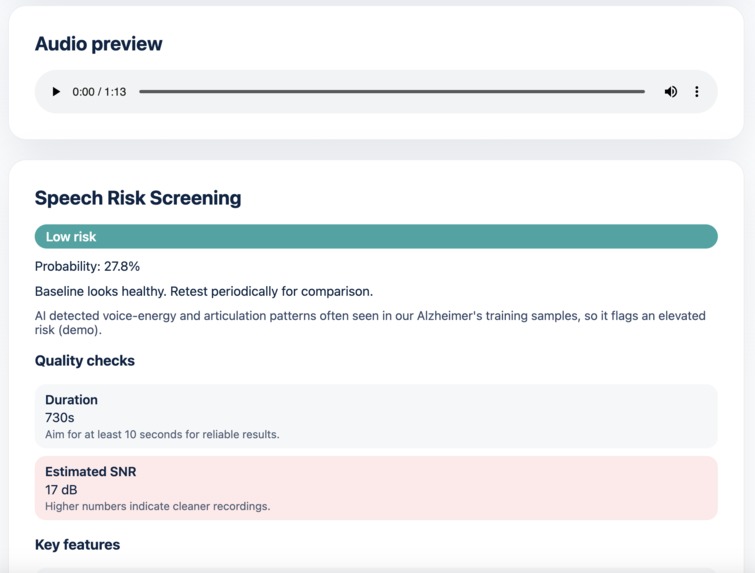
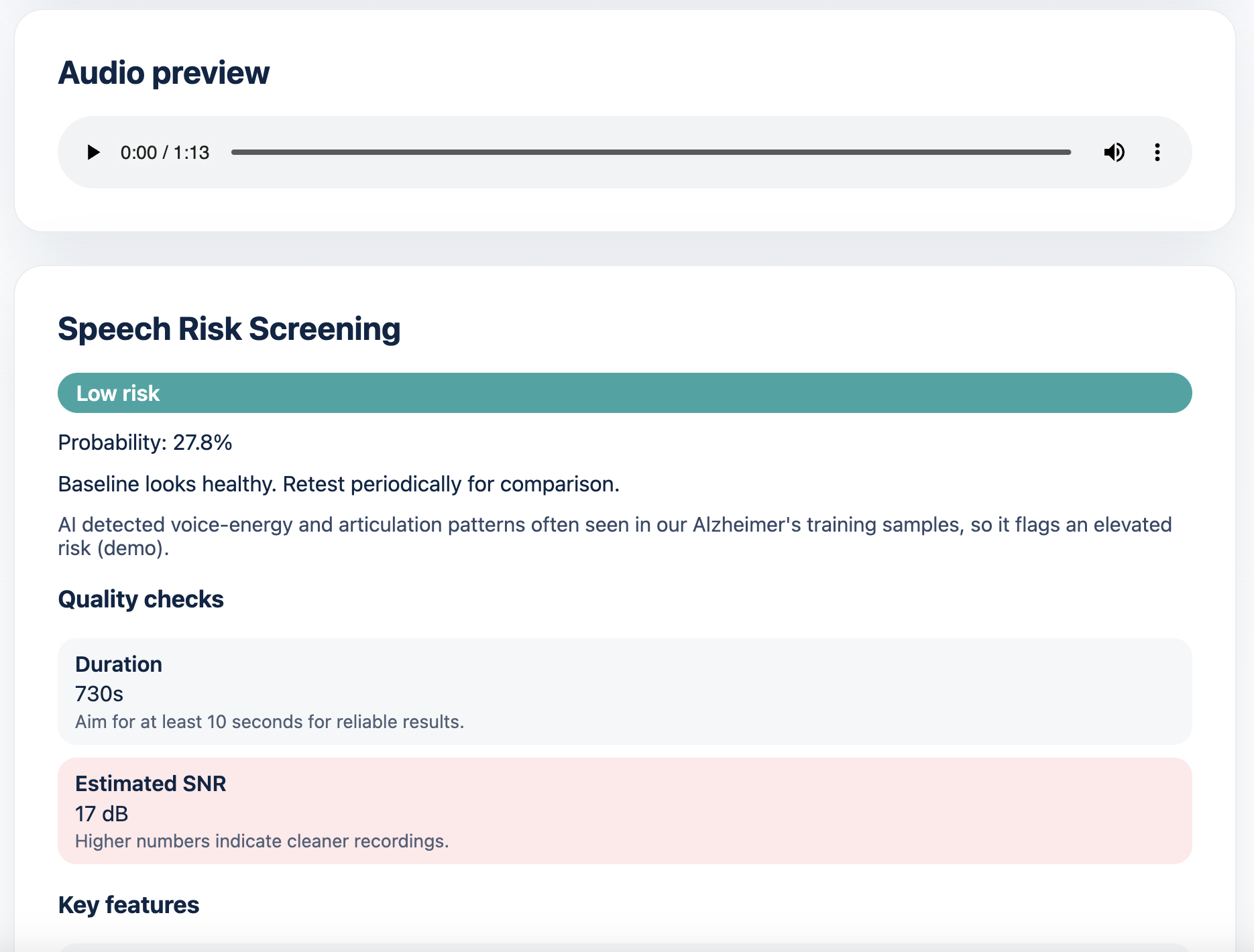
Results
-
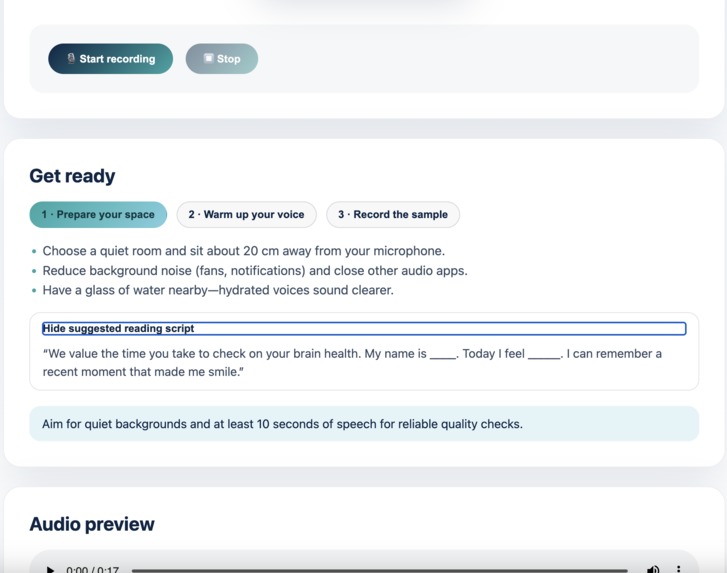
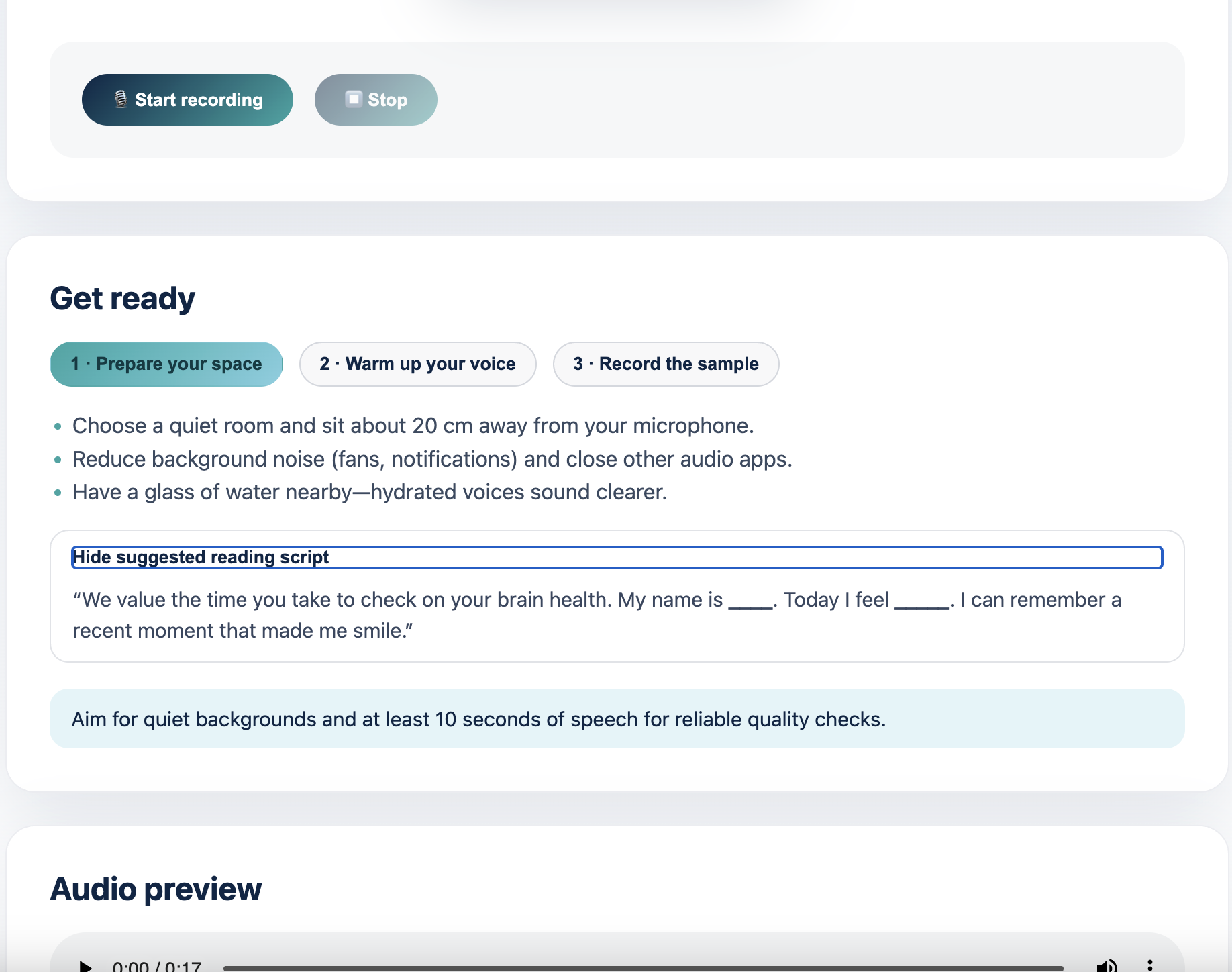
Recording instruction
-
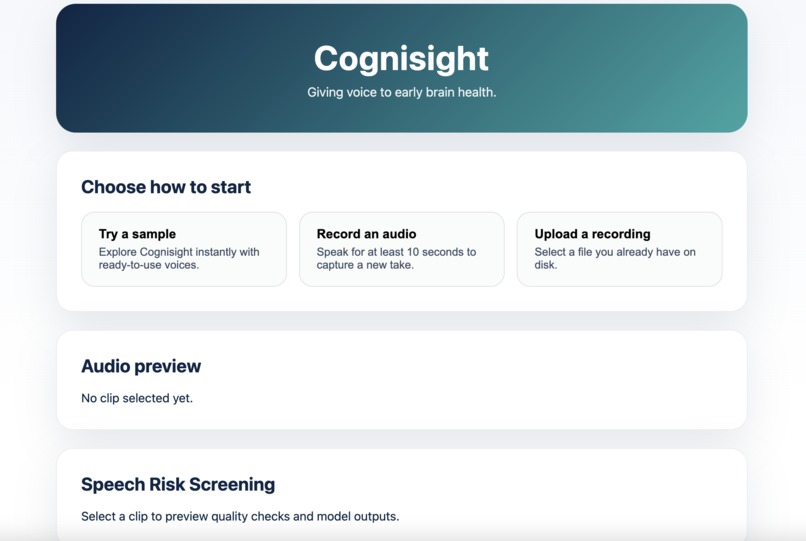
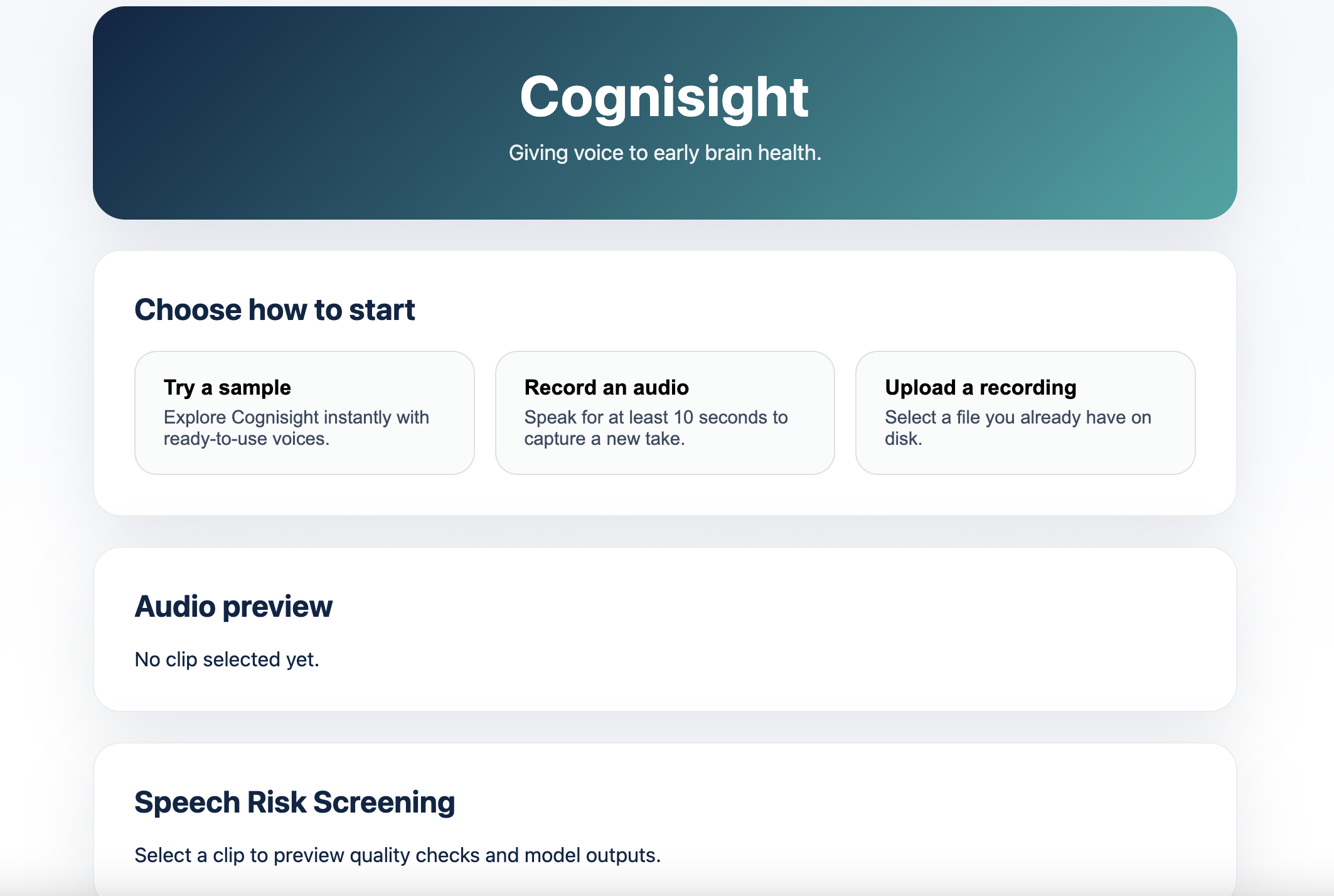
Start screen
🌟 About the Project
find
PDF : https://drive.google.com/file/d/1USfcp7YCG8NB0Xhyzn0MS2JAWLLAhXOp/view?usp=sharing
Reproducible AI Notebook (Colab): https://colab.research.google.com/github/Philshirt18/cognisign2/blob/main/notebooks/Cognisight_AI_Speech_Analysis.ipynb
Source Code (GitHub): https://github.com/Philshirt18/cognisign2
Live Demo: https://cognisign2-jccl.vercel.app/
⸻
Cognisight was inspired by a simple but powerful idea: your voice can reveal more about your health than you think. Many families struggle to detect the early signs of Alzheimer’s, which can appear subtly in speech long before more obvious symptoms. We set out to explore how machine learning and audio processing could turn everyday speech into early, accessible insight.
🎯 What I Built
Cognisight analyzes a user’s speech recording and extracts key audio features — such as timing irregularities, pauses, tremors, and vocal energy — that are often correlated with cognitive decline. These features are then fed into a trained classifier to estimate the likelihood of early Alzheimer’s-related patterns.
🧠 What I Learned • Speech is a powerful biomarker for neurological conditions. • Working with real-world audio requires preprocessing — e.g. trimming silence, normalizing sample rates, and extracting MFCCs. • Even basic models like logistic regression can perform reasonably well when fed quality features
🛠️ How I Built It • Collected datasets of healthy and cognitively impaired speech. • Extracted features using librosa and scikit-learn. • Trained classification models in Python/Jupyter. • Deployed the app using Next.js and Vercel, with model inference handled via a lightweight API.
⚠️ Challenges • Ethical handling of real medical data • Limited availability of Alzheimer’s-specific audio samples • Balancing medical clarity with user-friendly design • Ensuring predictions are not mistaken for diagnosis
Built With
- librosa-audio
- nextjs-frontend
- numpy-pandas
- python
- scikit-learn
- streamlit
- vercel-hosting

Log in or sign up for Devpost to join the conversation.