-
-
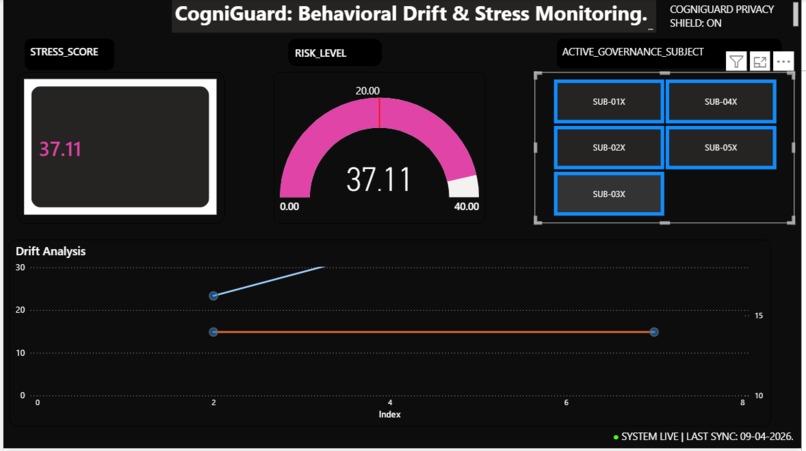
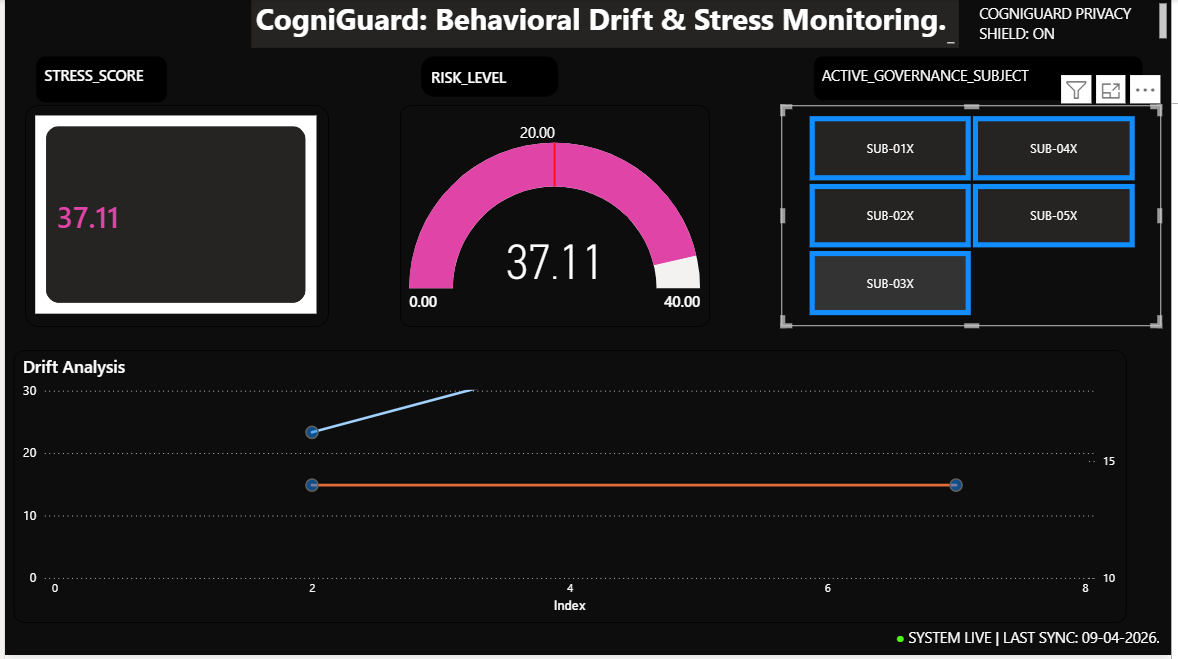
Image tells us user in high stress and need immediate break
-
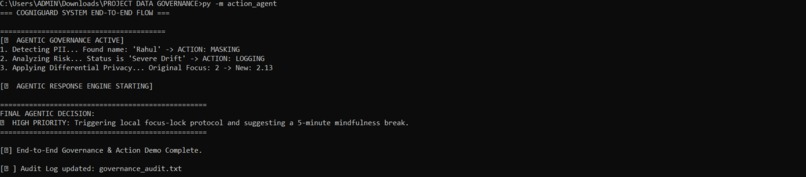
Image identifies User in high stress through stress_score showing real time analysis
-
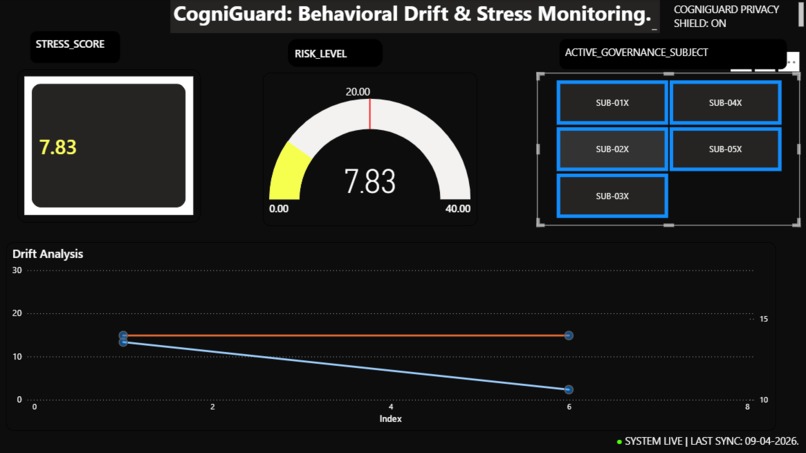
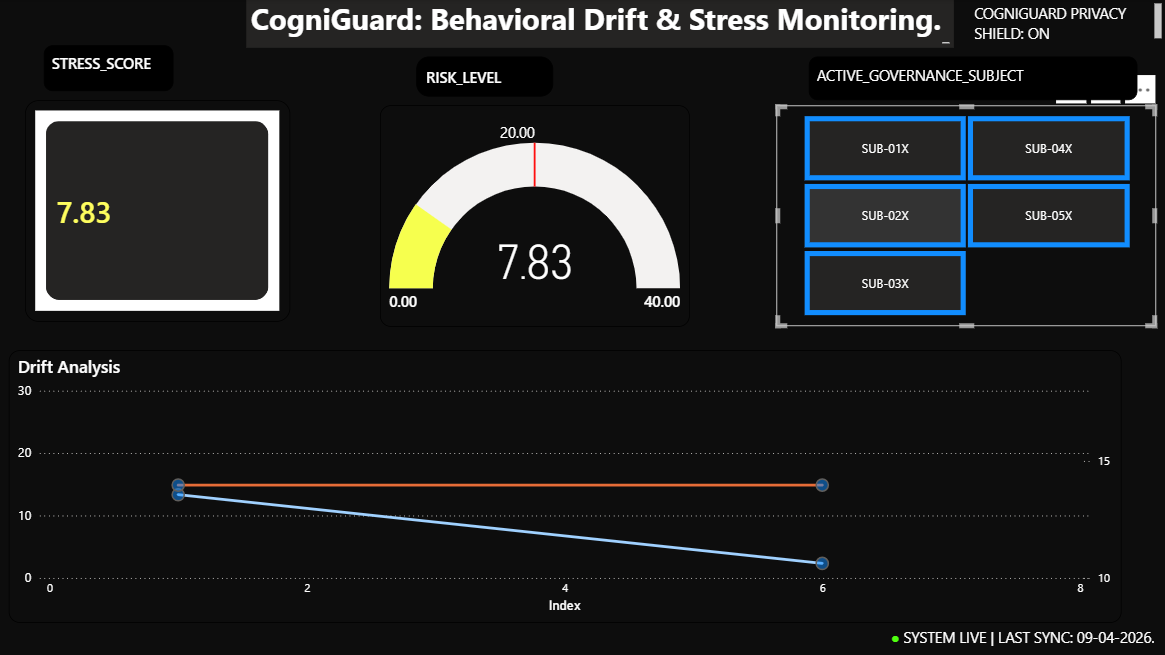
It tells us user is in medium stress managing it effectively
-
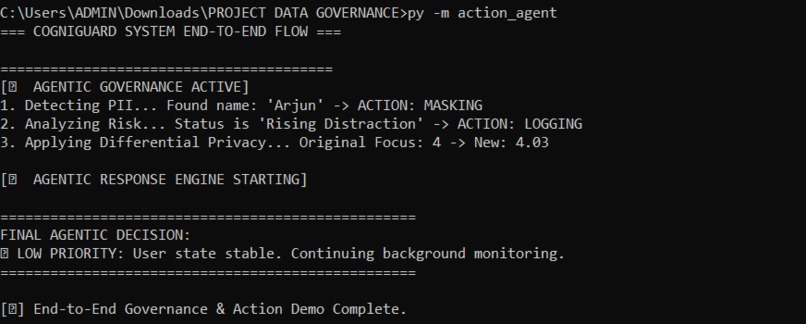
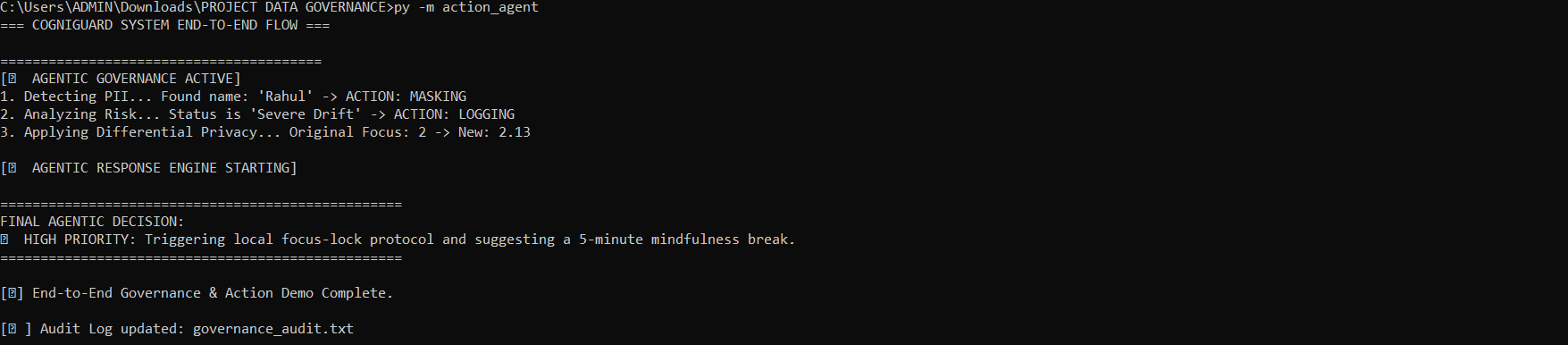
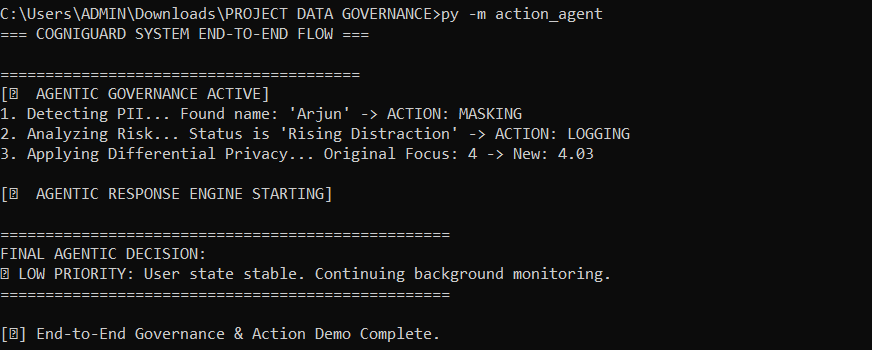
System successfully masks PII of Arjun applying differential privacy
-
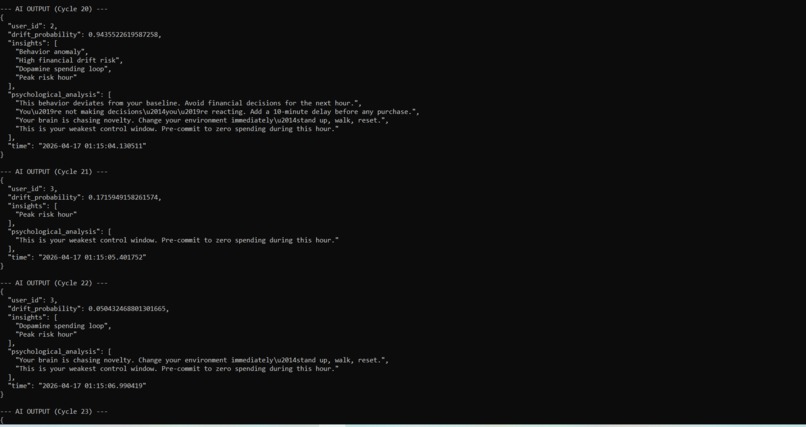
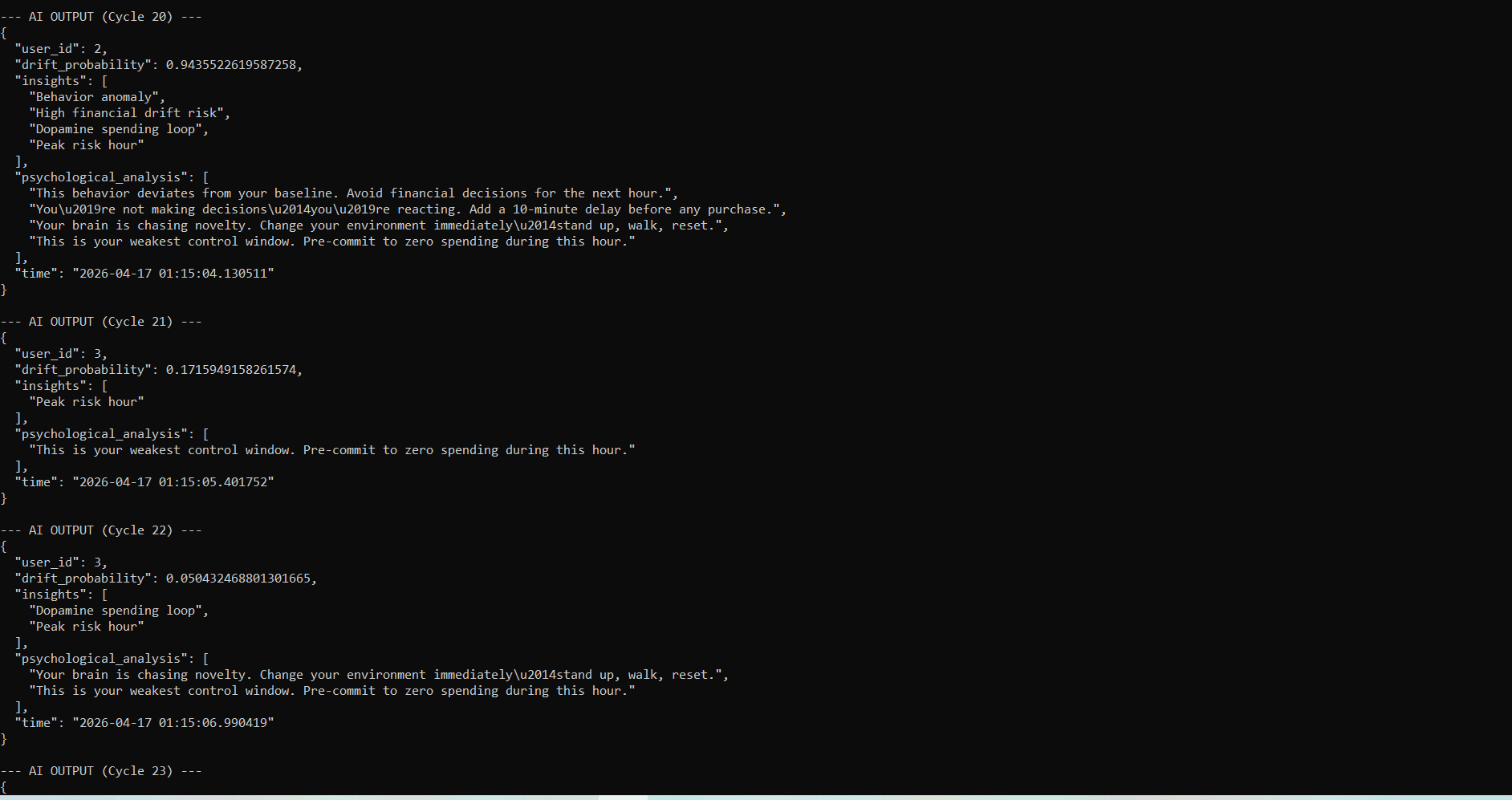
CogniGuard AI engine analyses real time behaviour cycles determining probability for drift providing pyschological insights
Inspiration
CogniGuard was born out of a simple observation: in our hyper-digital workspace, we are constantly monitored for productivity, but rarely protected for our well-being. I noticed that high-stress environments often lead to a "Cognitive Drift," where mental fatigue results in both personal burnout and accidental data security risks. I wanted to build a system that didn't just watch employees like a "Big Brother," but acted as a silent, ethical guardian—an AI that knows when to step in and suggest a break before a mistake even happens.
What it does
CogniGuard is an agentic AI ecosystem that monitors real-time behavioral telemetry to balance mental focus with data privacy. By analyzing "Cognitive Load" and "Stability" metrics, it detects anomalies in user behavior. When the system identifies a "Severe Drift," it automatically triggers a high-priority response—such as suggesting a mindfulness break or initiating a focus-lock protocol. Simultaneously, its built-in Governance Engine ensures that all sensitive PII (Personally Identifiable Information) is masked and protected by differential privacy, keeping the user safe and their identity anonymous.
How we built it
The project is built on a robust Python-based backend that utilizes Scikit-Learn’s Isolation Forest for anomaly detection and Logistic Regression for risk prediction. I integrated a "Secure Engine" that handles real-time data masking and audit logging, ensuring every intervention is documented ethically. For the user interface, I developed an interactive Power BI dashboard that translates complex AI decisions into clear, actionable visuals, allowing for executive-level oversight without compromising individual privacy.
Challenges we ran into
The biggest hurdle was creating an AI that could intervene without being intrusive. I spent a lot of time fine-tuning the balance between sensitivity and accuracy—I didn't want the "Action Agent" to trigger a mindfulness break for every minor distraction. Another major challenge was ensuring that the data masking happened instantly; I had to optimize the Python logic to ensure that by the time the data hit the dashboard, names were already anonymized and privacy was secured.
Accomplishments that we're proud of
I am incredibly proud of the "End-to-End Governance Flow." Seeing the system successfully detect a name like 'Rahul' in the raw data, mask it instantly, and then evaluate a 'Severe Drift' to trigger a focus-lock protocol felt like a huge win. It proved that we could create a system that is both highly technical and deeply human-centric, achieving a "Secure Score" that reflects true digital safety.
What we learned
This project taught me that "Agentic AI" is about more than just automation—it’s about delegating ethical decisions to technology. I learned how to implement differential privacy in a way that actually matters for the end-user and gained a deep appreciation for "Privacy-by-Design." I also realized that data is only as good as the story it tells, which is why the Power BI visualization became such a critical part of the CogniGuard experience.
What's next for CogniGuard
The next step is to evolve CogniGuard into a cross-platform tool that can integrate directly with workspace apps like Slack or Microsoft Teams. I want to refine the "Action Agent" to provide more personalized mental health resources based on long-term cognitive trends. Eventually, I envision CogniGuard becoming the gold standard for ethical AI in the workplace, proving that productivity and employee well-being can—and should—go hand in hand.

Log in or sign up for Devpost to join the conversation.