-
-
Cognify
Inspiration
We live in a time when AI can generate convincing misinformation faster than humans can verify it. Cognify was inspired by the need to restore epistemic trust — helping users know not just what content says, but how true it is.
What it does
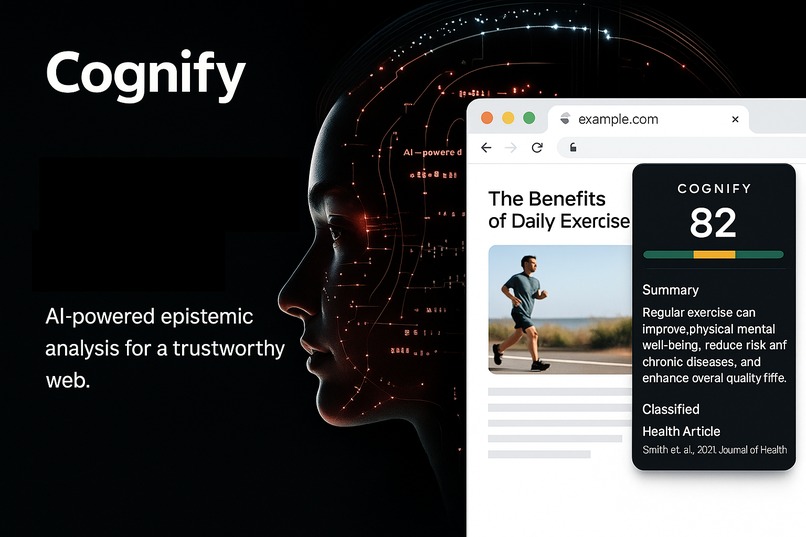
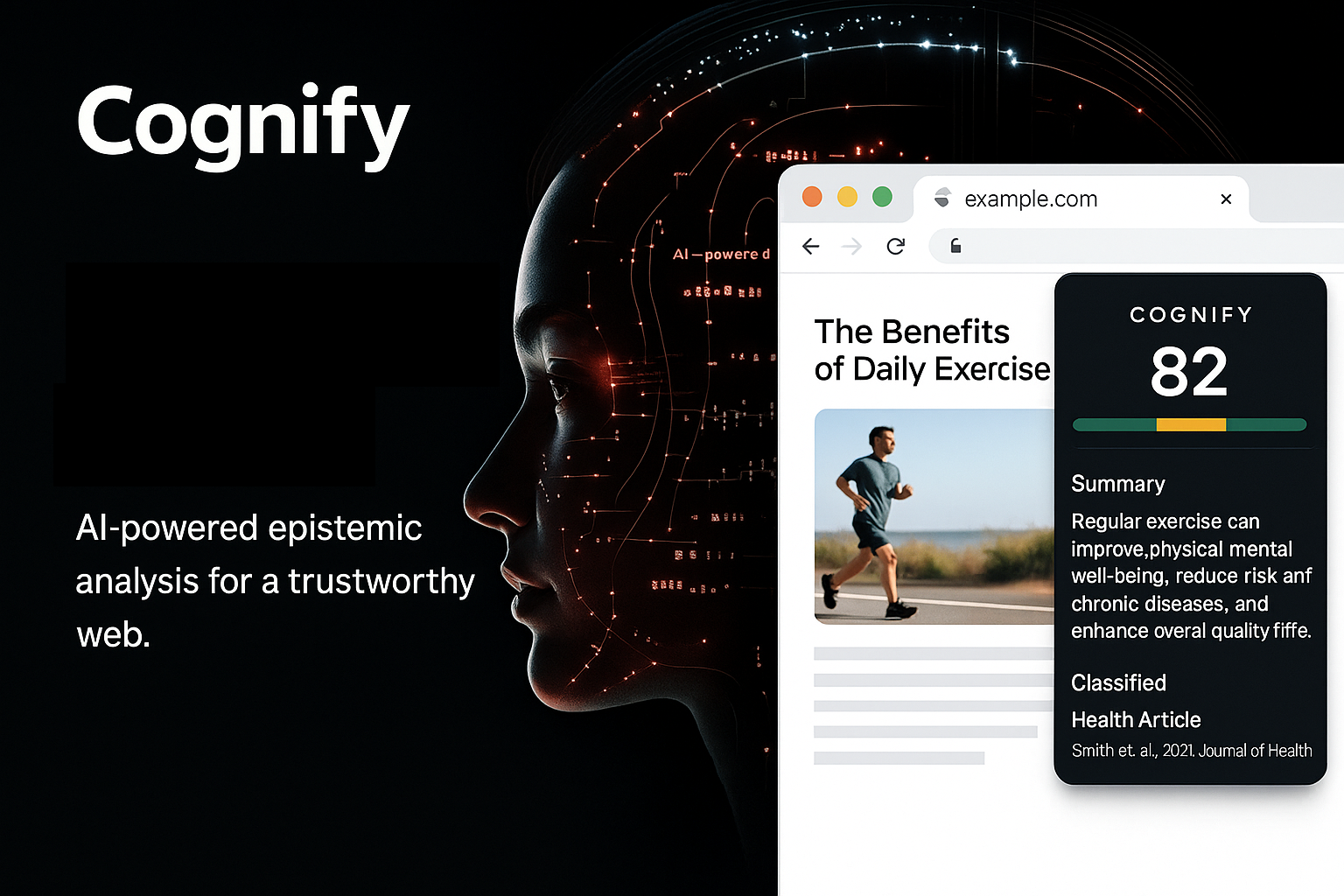
Cognify is a Chrome extension that uses Chrome’s built-in AI APIs to analyze any webpage, article, or image and produce a real-time reliability score. It summarizes, classifies, and verifies online content against academic sources, highlighting bias or low factual quality through a simple color-coded system (🟢 reliable, 🟡 read critically, 🔴 not reliable).
How we built it
- Frontend: Chrome Extension (Manifest V3, TypeScript, Tailwind)
- AI Core: Gemini Nano + Chrome Prompt, Summarizer, and Proofreader APIs
- Backend: Node.js + Express + Semantic Scholar API for citation matching
- Caching: Redis layer for performance optimization and reduced API cost
- UI: Floating overlay with real-time scores and academic references
Challenges we ran into
- Coordinating multiple Chrome AI APIs in one extension context
- Maintaining speed and privacy during on-device inference
- Creating multilingual NLP pipelines (English, Spanish, Catalan)
- Designing interpretable reliability scores that users can trust
Accomplishments that we're proud of
- Achieved fully functional real-time epistemic analysis on-device
- Built a modular architecture ready for open-source release
- Developed an interpretable reliability model combining AI and academic data
- Created a visual UX that makes critical thinking intuitive for all users
What we learned
We learned the potential of on-device AI for privacy-first browsing and how small models like Gemini Nano can enable sophisticated reasoning locally. We also discovered that epistemic analysis requires both linguistic understanding and source credibility mapping — blending technical and philosophical design.
What's next for Cognify
- Integrate Gemini 2 and Chrome’s future on-device graph APIs
- Expand the academic verification layer beyond 20,000 papers
- Launch an open beta and invite researchers and educators to test it
- Develop an offline mode for digital sovereignty use cases
Built With
- chrome-built-in-ai-apis
- devpost
- express.js
- gemini-nano
- github
- manifest-v3
- node.js
- prompt-api
- proofreader-api
- react
- redis
- semantic-scholar-api
- summarizer-api
- tailwind-css
- typescript
- vite


Log in or sign up for Devpost to join the conversation.