-
-
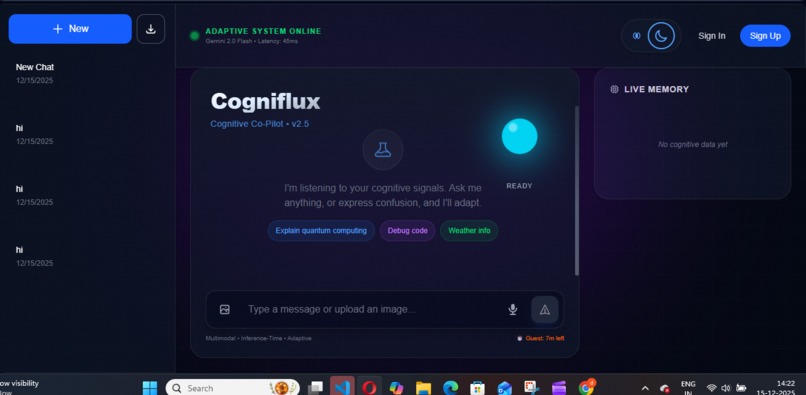
home page
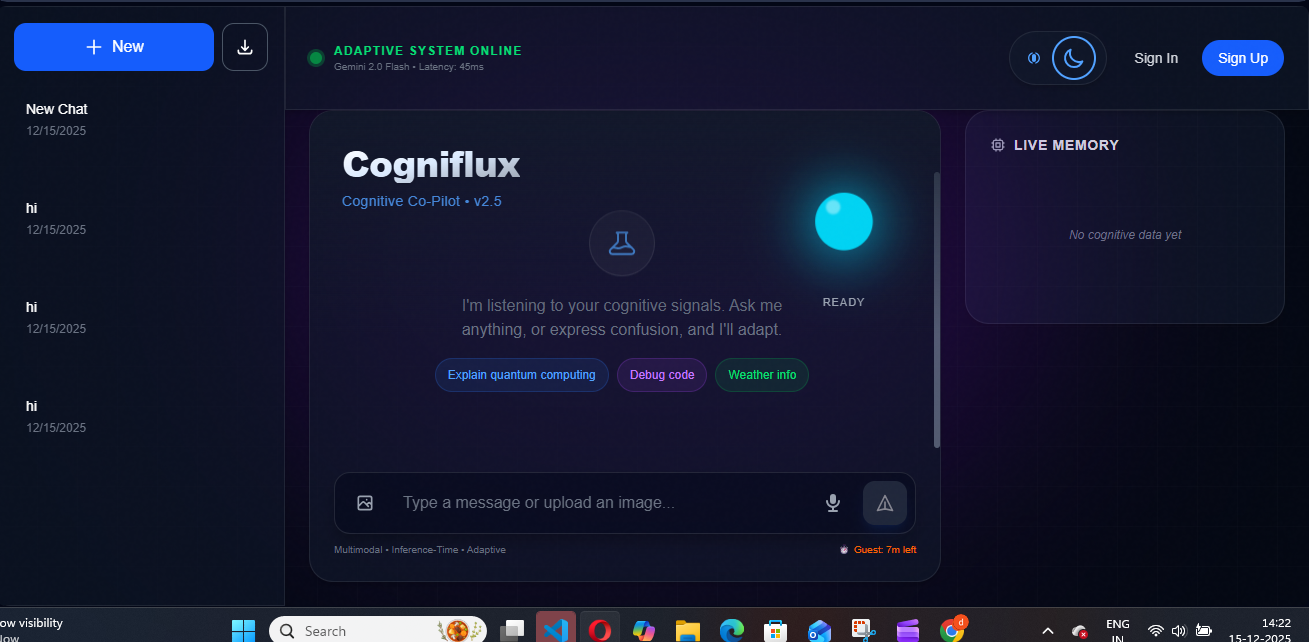
Inspiration
Modern software teams use powerful tools, yet productivity is limited by constant context switching between dashboards, logs, alerts, and workflows. We noticed that most automation tools still force humans to think in terms of scripts and steps instead of goals. This inspired us to build Cogniflux — a system where humans express intent, and software handles execution intelligently. Our goal was to reduce cognitive overload and make complex systems easier to reason about.
What it does
Cogniflux is an AI-powered cognitive workflow engine that transforms natural language intent into automated, intelligent actions. Users describe what they want to achieve, and Cogniflux understands the goal, gathers relevant context, orchestrates workflows dynamically, analyzes data, and delivers decision-ready insights. It removes the need to manually connect tools and instead provides clarity, recommendations, and intelligent actions in one continuous flow.
How we built it
We designed Cogniflux around an intent-driven architecture. The system includes an intent understanding layer, a dynamic workflow orchestration layer, and an observability and feedback layer. We integrated data sources such as metrics and logs, applied AI-based reasoning for correlation and anomaly detection, and ensured every action is traceable. The architecture is modular and tool-agnostic, allowing easy extension and adaptation.
Challenges we ran into
One major challenge was balancing automation with transparency. We wanted Cogniflux to act autonomously while still keeping users in control. Another challenge was handling changing contexts without breaking workflows. Designing dynamic orchestration instead of static pipelines required careful reasoning and validation to maintain reliability and explainability.
Accomplishments that we're proud of
We successfully built a system that converts human intent into intelligent execution without hardcoded workflows. Cogniflux delivers clear, actionable insights instead of raw data, while maintaining full traceability of decisions. We are proud of creating a scalable, adaptable, and responsible AI-driven workflow engine within the hackathon timeline.
What we learned
We learned that intent-driven systems dramatically simplify user experience compared to rule-based automation. Transparency and explainability are critical for trust in AI systems. We also learned the importance of designing for adaptability early, as dynamic environments demand flexible architectures.
What's next for Cogniflux
Next, we plan to expand integrations, improve learning from user feedback, and enhance reasoning capabilities. Our long-term vision is to make Cogniflux a universal cognitive interface where users think in goals and systems execute intelligently.

Log in or sign up for Devpost to join the conversation.