-
-
Vika AI Logo
-
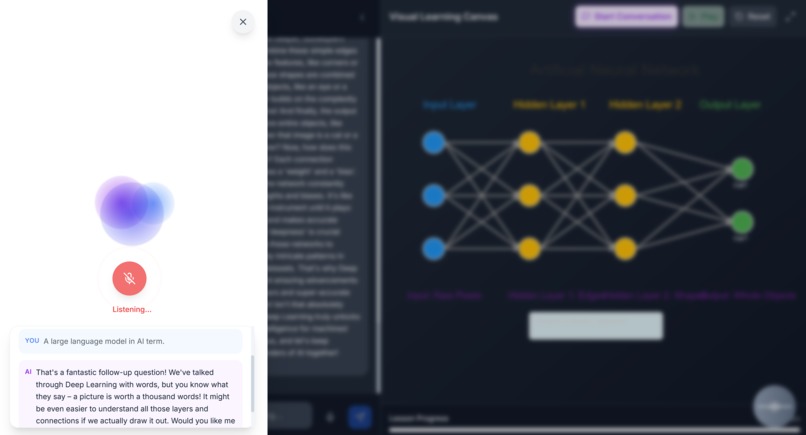
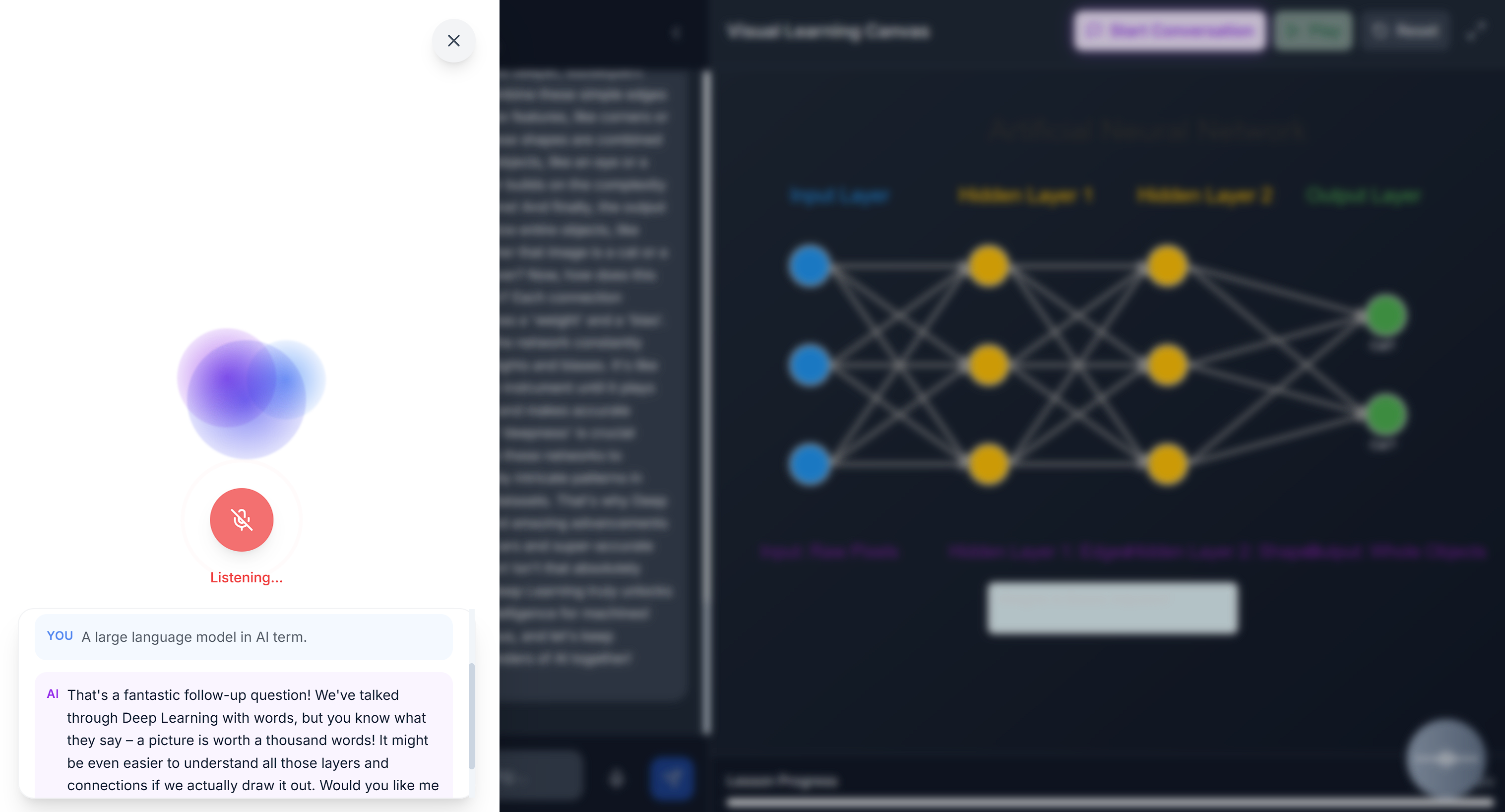
Conversational Learning through Vika AI Voice Agent
-
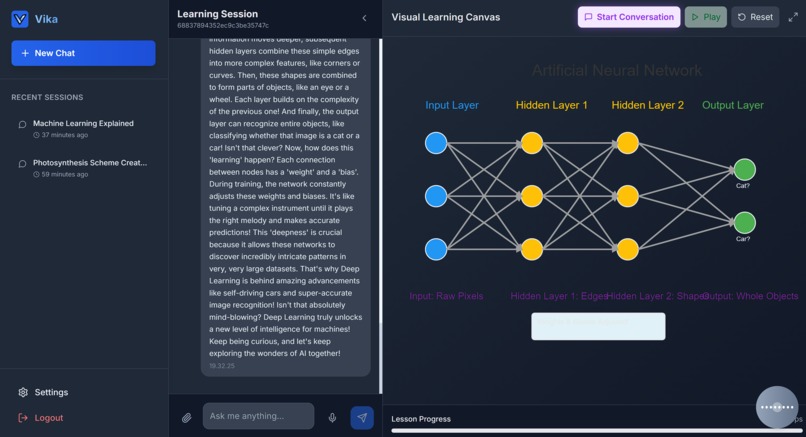
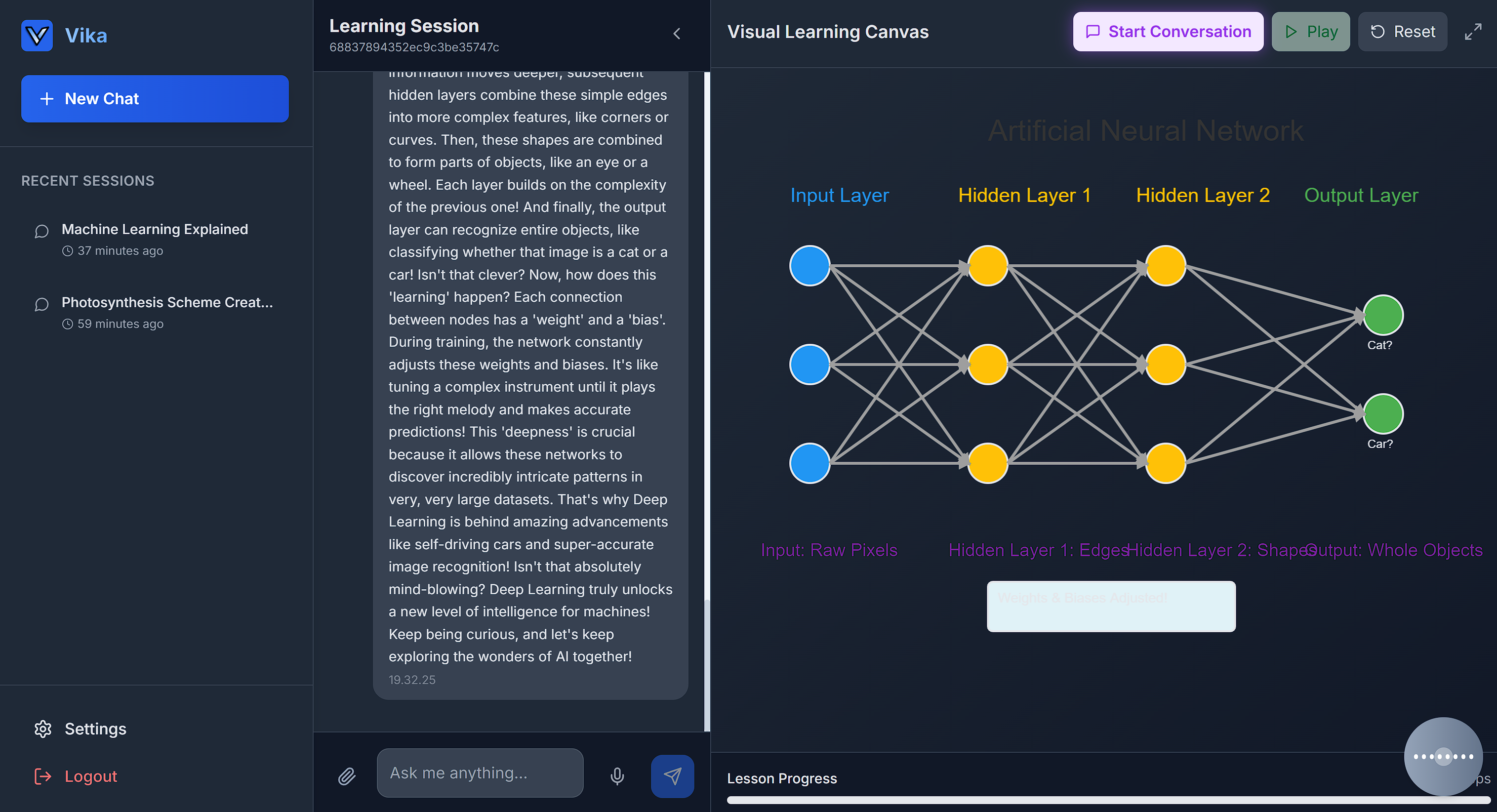
Vika AI's Generative Canvas
-
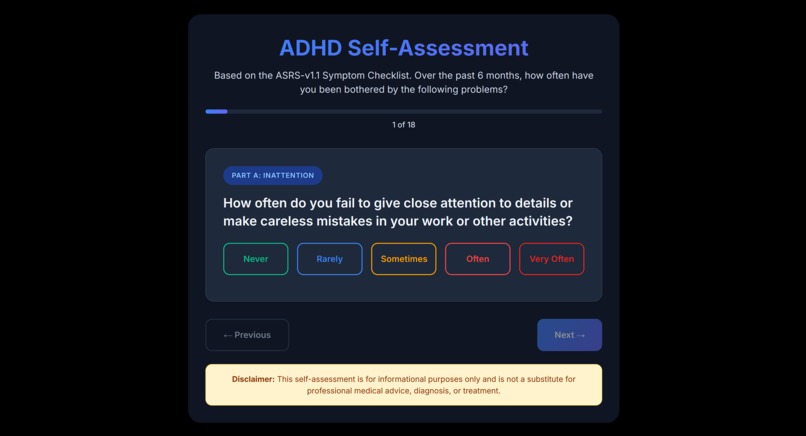
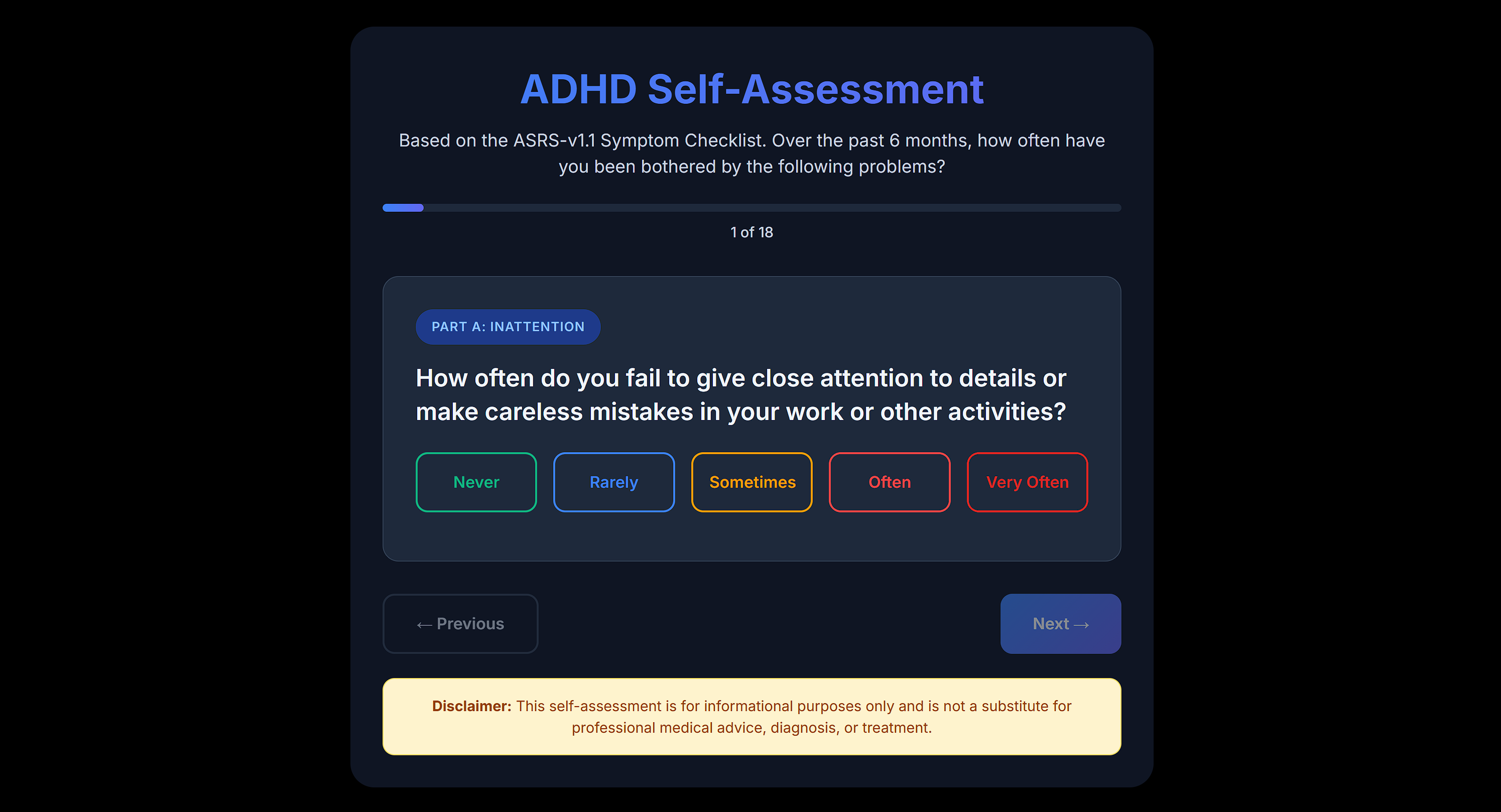
Vika AI's ADHD Assessment
VIKA AI
Inspiration
The education system in Indonesia's public schools is mainly designed without inclusivity in mind. However, a small percentage of Indonesians, such as 15.1 % of 9–13 year‑olds, are at high risk for ADHD, as in a community screening in Surabaya, and national estimates range around 3-12% of school-aged children have ADHD. This draws our attention since we realize how important education is for everyone, and we notice that people who have ADHD need a "special" treatment to learn effectively. Which, of course, most public schools don't implement, and even traditional methods such as textbooks can be difficult for people with ADHD to study with.
Furthermore, according to SDG 4 (Quality Education for All) serves as our inspiration. We are inspired to contribute to inclusive and equitable education (Target 4.5), foster effective learning environments (Target 4.A), and empower all learners (Target 4.7), ensuring every child can reach their full potential.
This leads to people with ADHD not being able to learn as effectively as normal people, which widens the achievement gap between people with ADHD and those without. This can lead to frustration, disengagement, and unequal opportunities for everyone. Thus, we developed a VARK-personalized AI chatbot that can adapt to individuals with ADHD to enhance focus, retention, and comfort in learning.
What it does
Different Model to Support Different Learning Styles
- Visual: Generative diagram canvas
- Auditory: AI‑driven TTS/STT dialogues
- Read/Write: “Bionic” text‑chunking chat interface
- Kinesthetic: Drag‑and‑drop interactive tasks (future implementation)
- Visual: Generative diagram canvas
Adjusted Learning Prompt and ADHD Mode
- Chat response will change if ADHD mode is turned on
- AI agent will effectively enhance learning experience by detecting users' struggles and suggesting other methods of learning within the app.
How we built it
- Frontend: React + Tailwind CSS for a responsive, user-friendly experience, using a comfortable color palette, especially with people with ADHD
- Backend:** Node.js + Express + MongoDB** for user profiles, chats, and session state
- LLM integration using Google Gemini:
- Prompt engineering for different modes provided
- Context engineering and transfer through different modes
- Adaptive learning that adapts to users' pace and preferences -Deployment: Docker Compose for multi-service containerization and Google Cloud VM for deployment.
We also implement AI such as Gemini Research for creating question sets for detecting ADHD and also Claude for fixing error and debugging.
Challenges we ran into
We had several issues in implementing our solutions, since we have a lot of ideas in mind and we want to create as many features as possible and all of them must work. So, as a beginner with a few experiences in creating a chatbot, we needed to adapt in order to fix some errors or some things that we never faced before. The hardest part was integrating and continuously testing the AI Agent that adapts to the users' dynamic understanding. Lastly, we also had some health issues due to the strict deadline and our ambition to do our best and create an impactful and working web app.
Accomplishments that we’re proud of
As a beginner, we are beyond proud upon getting enlisted into this competition, we believe that for us to get to this place is a huge step. We are also proud of ourselves on surviving the last 30 chaotic hours, this project is probably "the best" idea that we came up to out of so many ideas that we discuss with great mentors. Finally, we are proud that we can actually make something impactful that later on can be a game changer for some people, or maybe for Indonesia to reach Indonesia Emas 2045 through equal education, especially for people with ADHD.
What we learned
We learned on how to benchmark ideas, determine which one is good, and which one is bad through many aspects like sustainability, impact, and uniqueness. We also learn how to manage our time effectively to use the small 30-hour timestamp to create the best project that we can create. We also learn a lot of technical new stuff; like LLM Integration, AI Agent Development, and most likely coding related through the mentors that taught us some hard stuff that we are confused with.
What’s next for VIKA AI
- Integrate Augmented or Gamified Learning in creating more interactive learning method for people with Kinestetic.
- Integrate more advanced Voice Agent UX through enhanced Natural Language Understanding, and Dynamic Turn Detection models.
- Availability for people in rural areas to be able to device our Chatbot locally or without internet, maybe chatbot messaging through SMS can be one of the approaches too.
Empowering everyone, especially those with ADHD, to thrive through personalized, multimodal learning.
Built With
- geminiapi
- google-cloud
- mongodb
- react.js
- tailwind
- vite


Log in or sign up for Devpost to join the conversation.