-
-
What We Do
-
How it Works
-
Why The Odd Foundation
Inspiration
The inspiration behind The Odd Foundation came from a simple but frustrating reality: food waste and food insecurity exist side by side in the same communities. Nearly 40% of food produced in the United States is wasted, while millions of Americans struggle to access nutritious meals. During our research, we discovered that many grocery stores and retailers already attempt to discount, donate, or redistribute surplus food, yet edible food still ends up in landfills due to coordination challenges.
We asked ourselves: "How can we create a system that helps suppliers recover value, helps organizations access food, and reduces waste at the same time?" That question became the foundation of The Odd Foundation.
What It Does
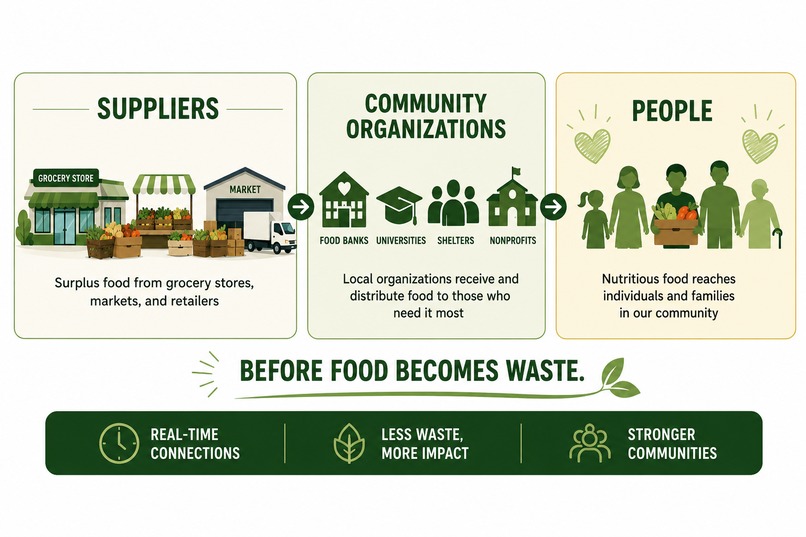
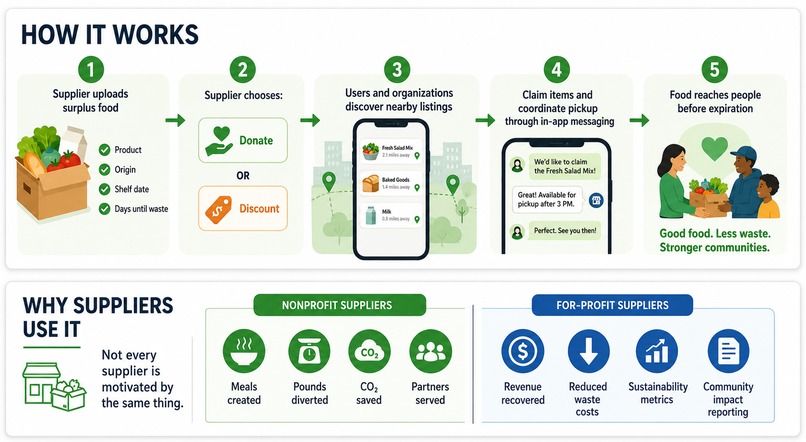
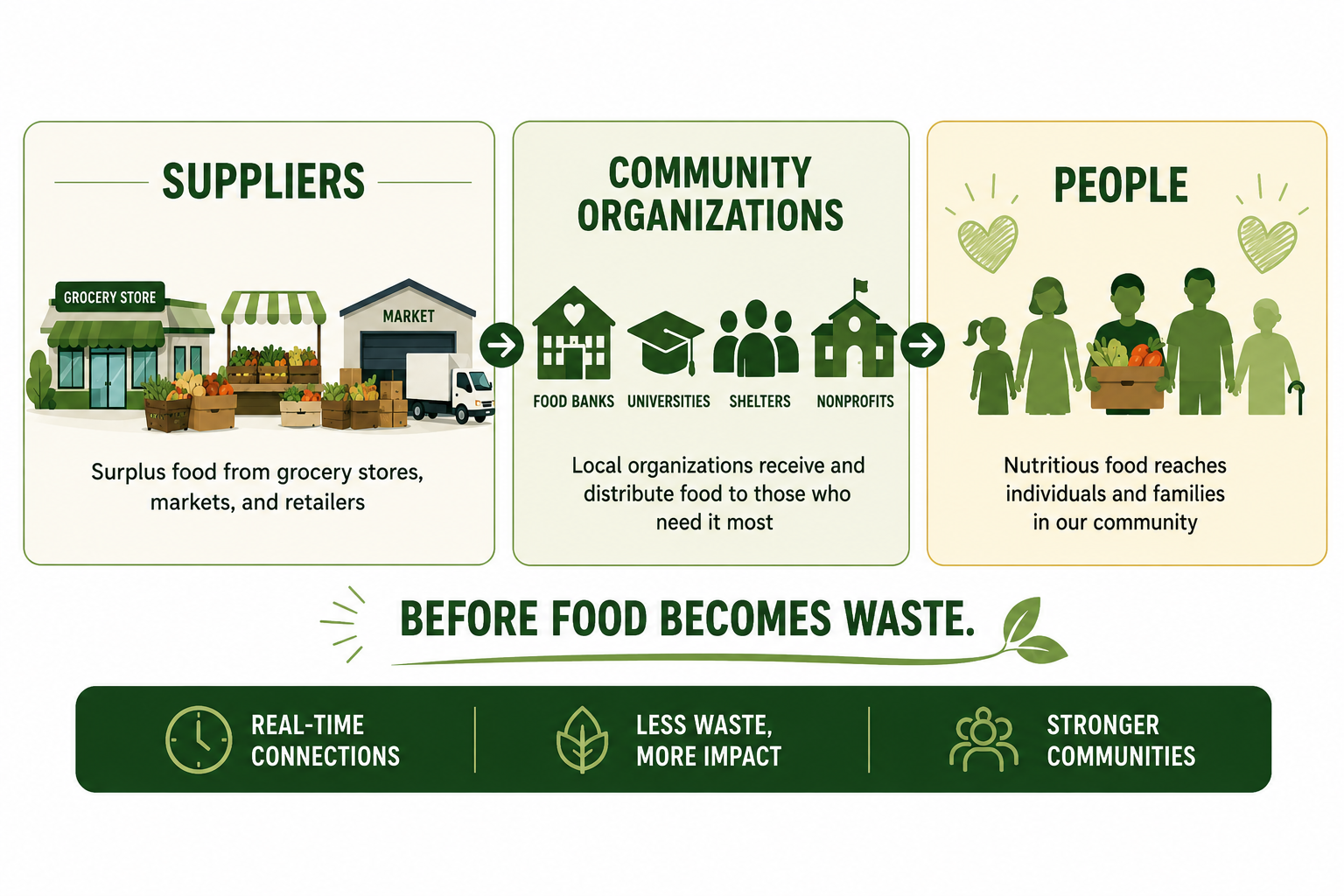
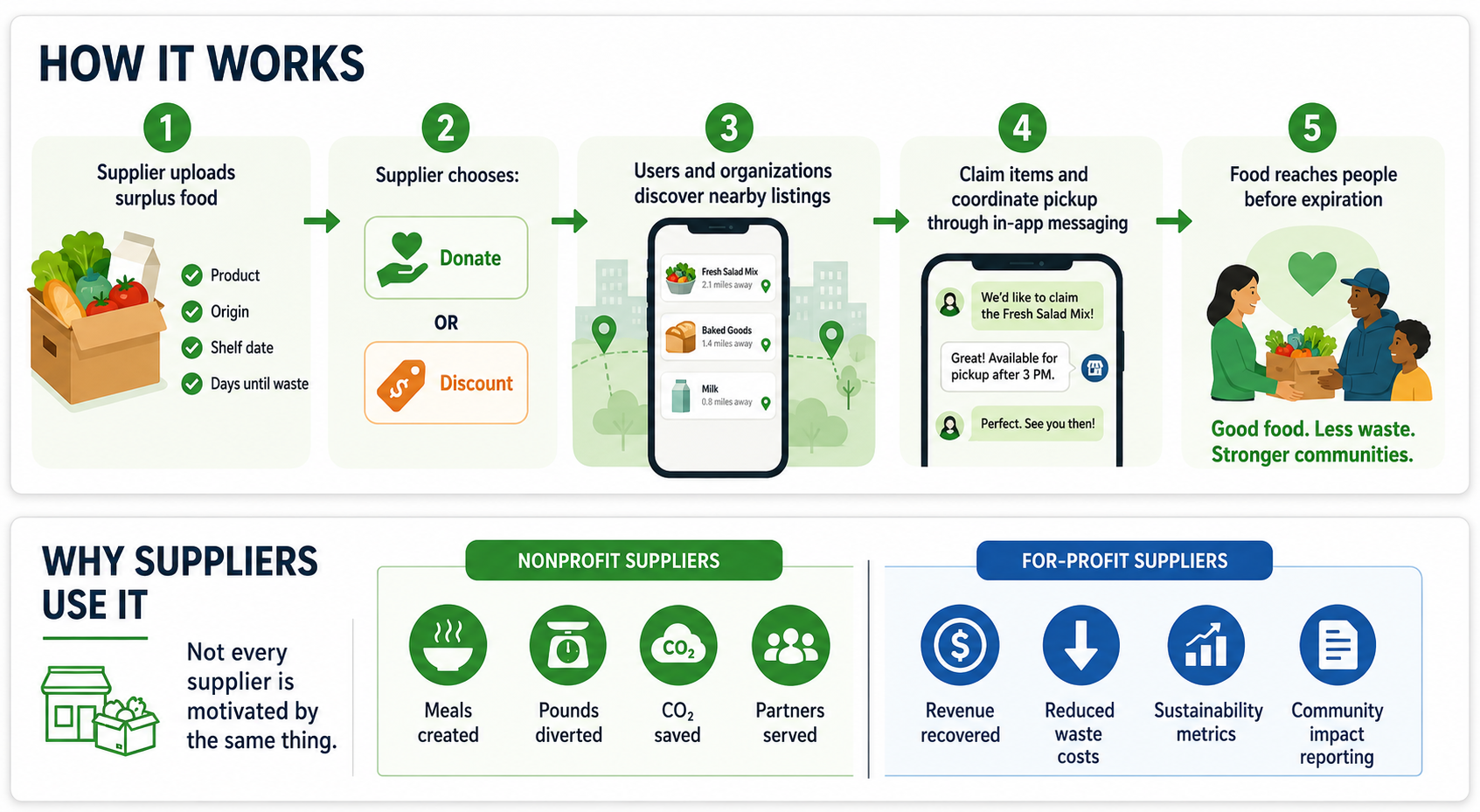
The Odd Foundation is a real-time food recovery network that connects surplus food from suppliers to organizations and individuals before it becomes waste. Suppliers can choose to:
- Donate surplus food
- Sell food at discounted rates Organizations and consumers can:
- Discover nearby surplus food opportunities
- Claim available items
- Coordinate pickups directly through the platform
The platform also tracks measurable impact, including: *Pounds of food diverted from landfills
- Estimated meals created
- CO₂ emissions avoided
- Community partners served
- Revenue recovered from discounted sales
Our long-term vision extends beyond food recovery by encouraging regeneration through composting, seed preservation, community gardens, and educational partnerships.
How We Built It
We began by conducting customer discovery interviews with local suppliers, including grocery stores, discount retailers, and farmers markets throughout the Atlanta area.
Through these conversations, we identified several recurring themes:
- Suppliers already discount food before disposal
- Donation programs exist but lack visibility and impact tracking
- Expiration timelines create urgency
- Many stores struggle to coordinate pickups quickly enough
- Organizations often have difficulty identifying available surplus food
Using these findings, we designed The Odd Foundation as a centralized coordination platform.
Our prototype includes:
- Supplier food listing creation
- Donation and discount pathways
- GPS-based food discovery
- Real-time communication through messaging
- Impact dashboards for suppliers and organizations
The solution was designed to minimize the time between surplus identification and community use.
Challenges We Ran Into
One of our biggest challenges was defining the true problem.
Initially, it appeared that food waste was primarily caused by a lack of donations. However, after speaking directly with suppliers, we learned that many businesses already donate food when possible.
The larger issue was coordination.
Food often becomes waste because there is no efficient system connecting available inventory with organizations capable of using it quickly.
Another challenge was balancing the needs of different stakeholders. Some suppliers prioritize community impact, while others focus on recovering financial value from surplus inventory. This led us to create both donation and discounted-sale pathways within the platform.
Finally, we had to carefully scope our solution for the hackathon timeline while maintaining a vision that could scale into a larger food recovery ecosystem.
Accomplishments That We're Proud Of
- Conducted customer discovery interviews with multiple Atlanta-area suppliers
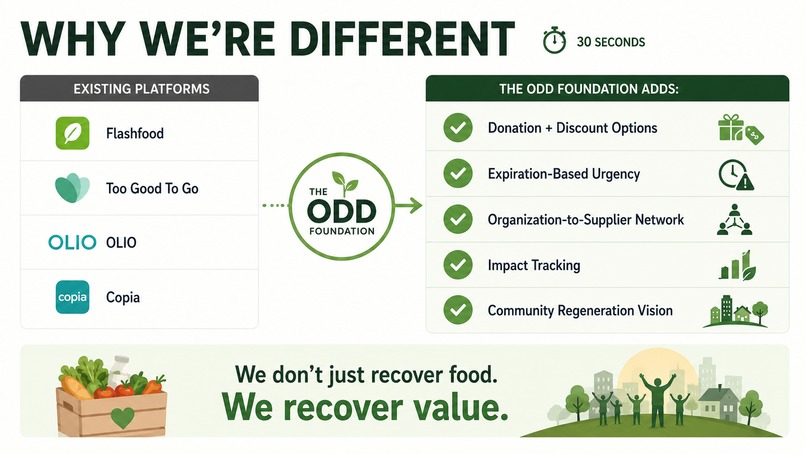
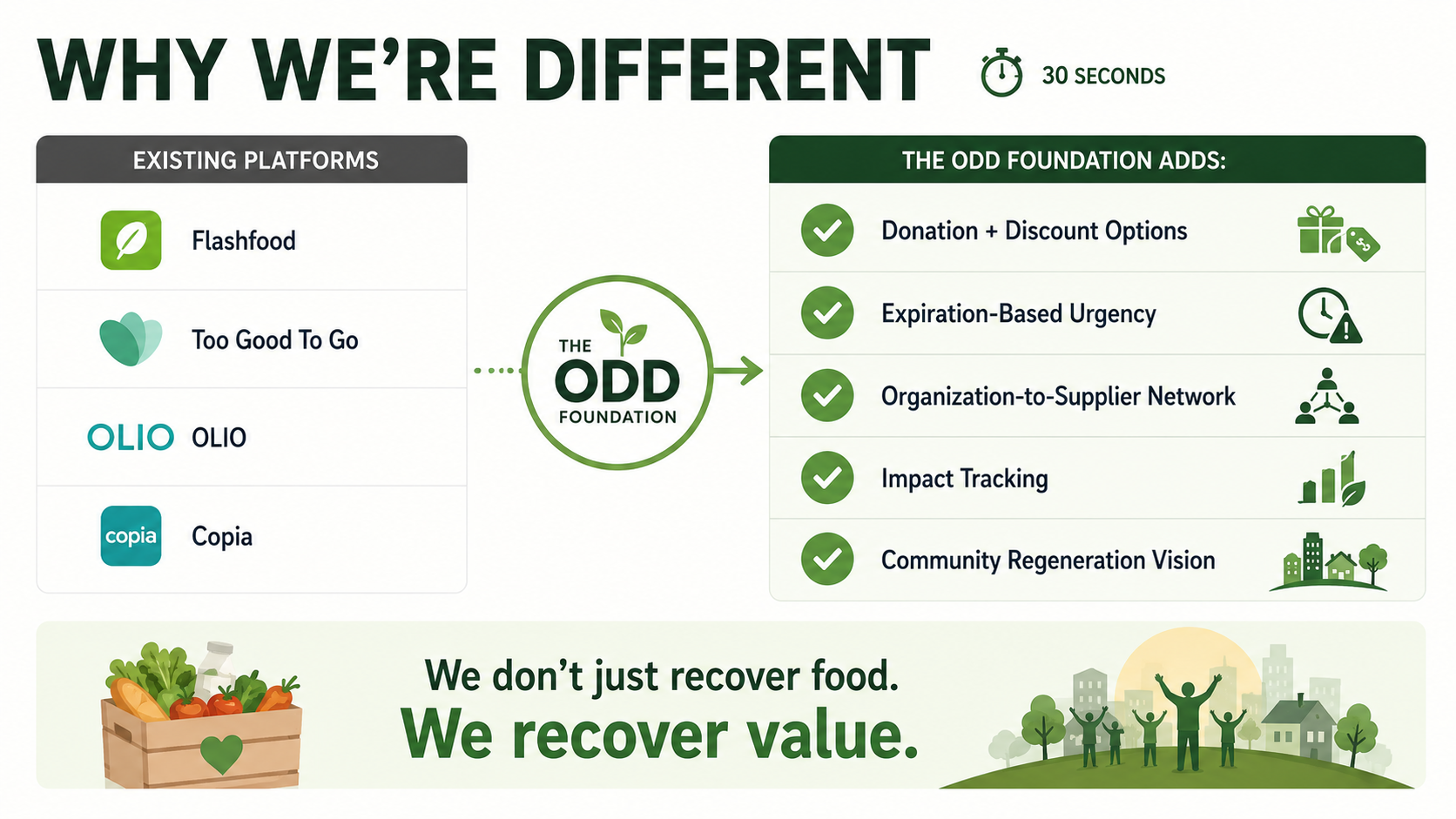
- Identified key gaps in existing food redistribution systems
- Developed a platform that supports both nonprofit and for-profit supplier goals
- Created measurable impact tracking for food recovery efforts
- Designed a scalable model that addresses food waste, food insecurity, and sustainability simultaneously
- Built a concept that aligns economic incentives with community impact
Most importantly, we transformed research insights into a tangible solution that addresses a real-world problem.
What We Learned
This project reinforced an important lesson: "Food waste is often not a supply problem. It is a coordination problem." We learned that many businesses genuinely want to reduce waste but lack efficient tools to connect with recipients quickly enough.
We also learned that sustainable solutions are strongest when they create value for every participant involved. By supporting both donation and discounted-sale models, The Odd Foundation can serve a wider range of suppliers while increasing community impact.
Finally, we learned the importance of speaking directly with stakeholders before designing solutions. Customer discovery fundamentally shaped our understanding of the problem and significantly improved our approach.
What's Next for The Odd Foundation
Our next step is expanding beyond food recovery into food regeneration. Future development includes:
- Partnerships with universities and community gardens
- Seed preservation initiatives
- Composting and soil regeneration programs
- Expanded supplier onboarding
- Enhanced impact reporting and analytics
- Regional food recovery networks across Georgia
Our long-term goal is to create a system where surplus food never becomes waste without first creating an opportunity for community benefit. Reach One. Teach One.
Recover today. Regenerate tomorrow.
Built With
- css
- cursor
- english
- html
- javascript
- python

Log in or sign up for Devpost to join the conversation.