-
-
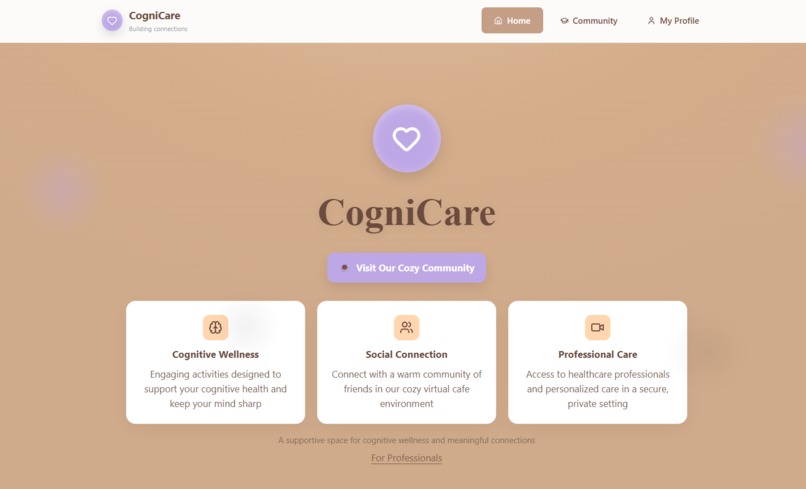
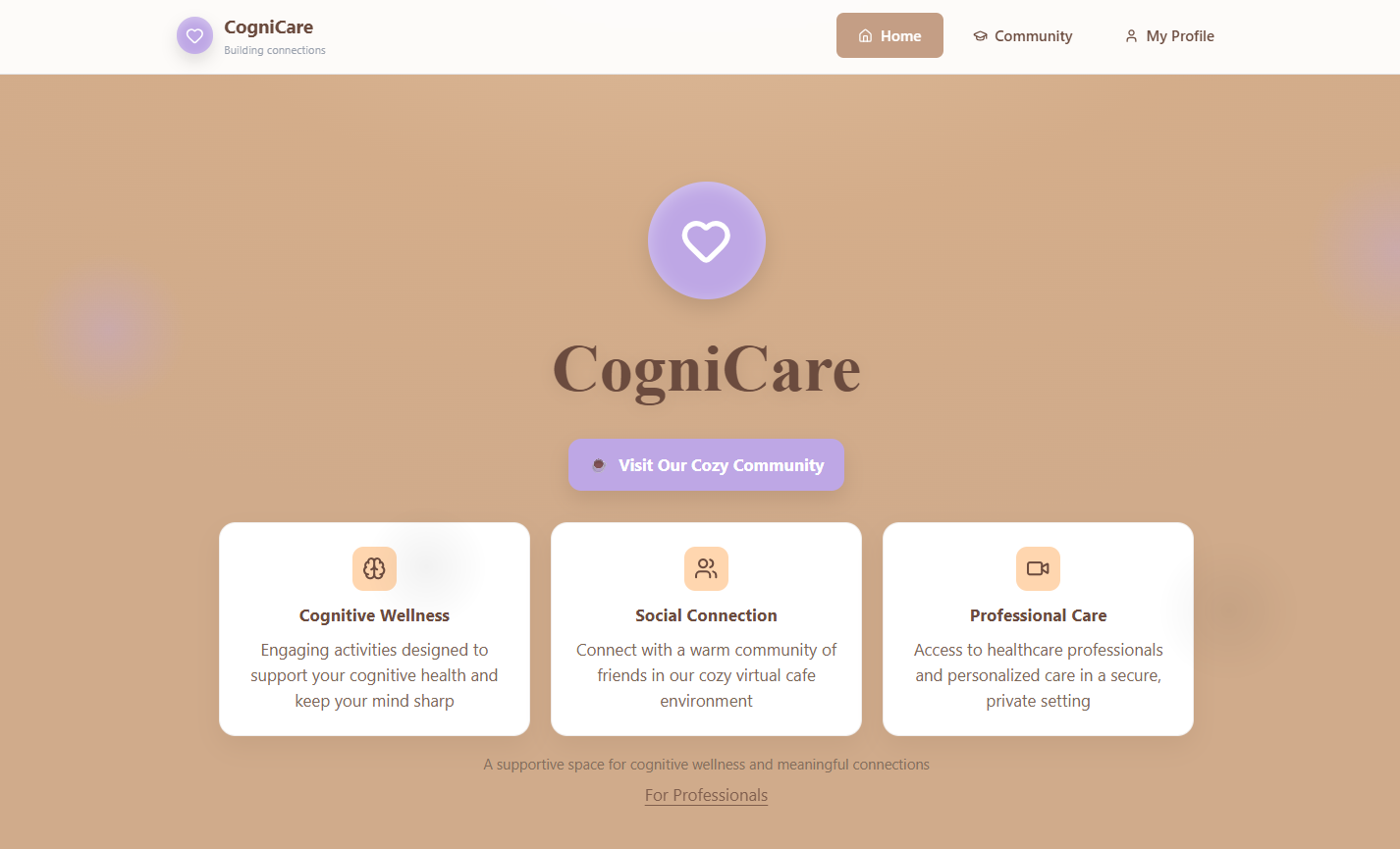
Home Page
-
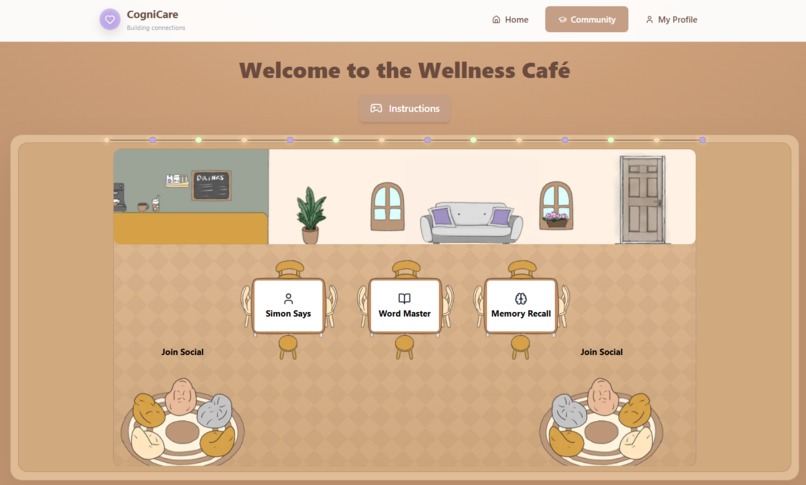
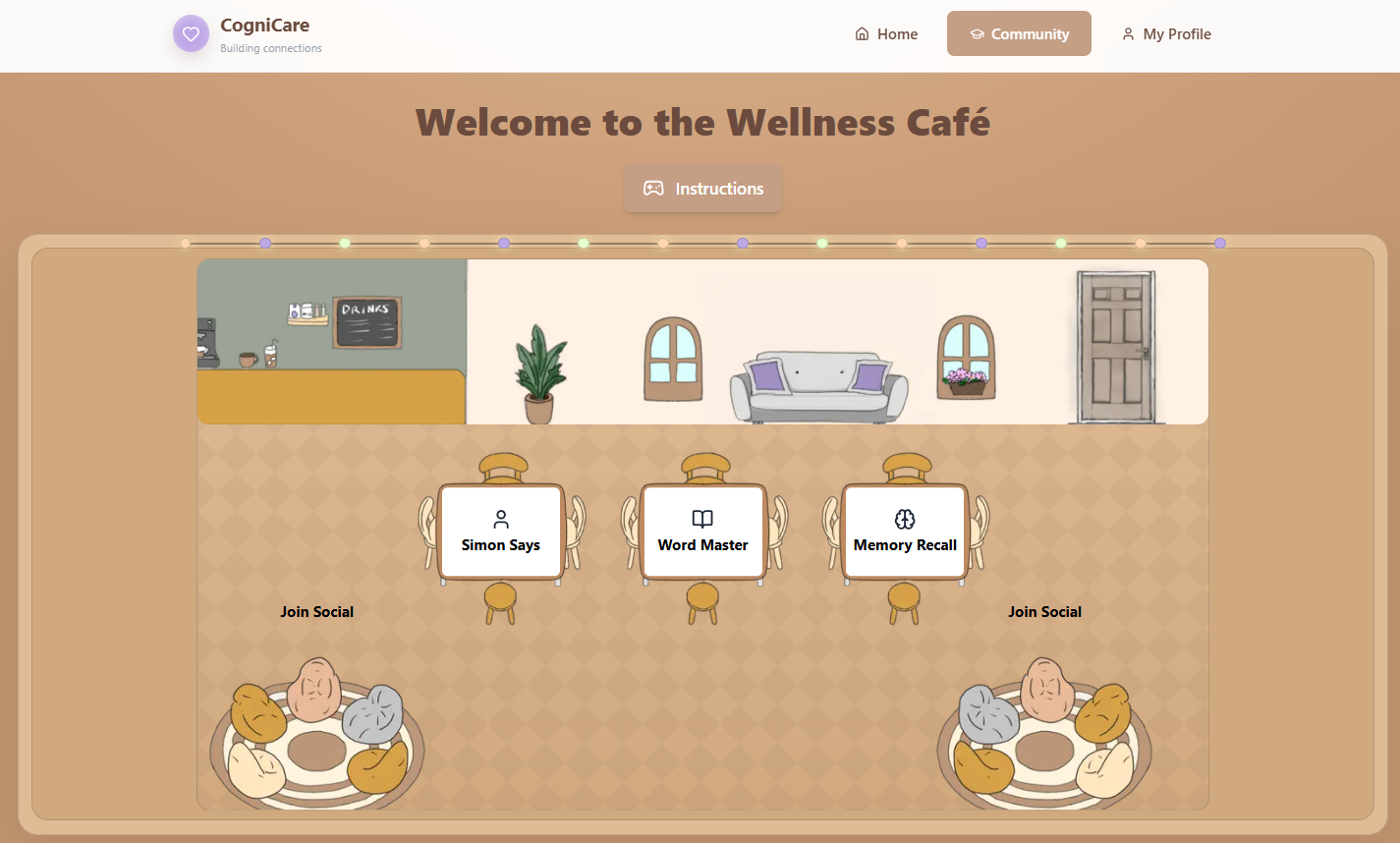
CogniCafe: Cognitive Games + Socialization
-
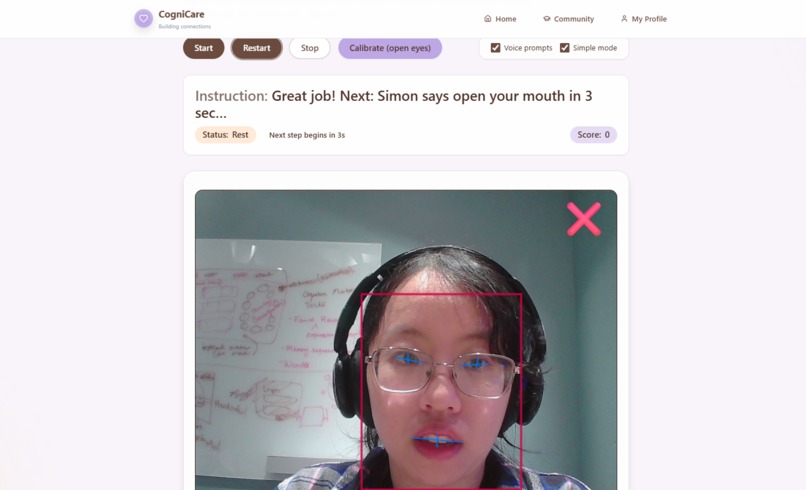
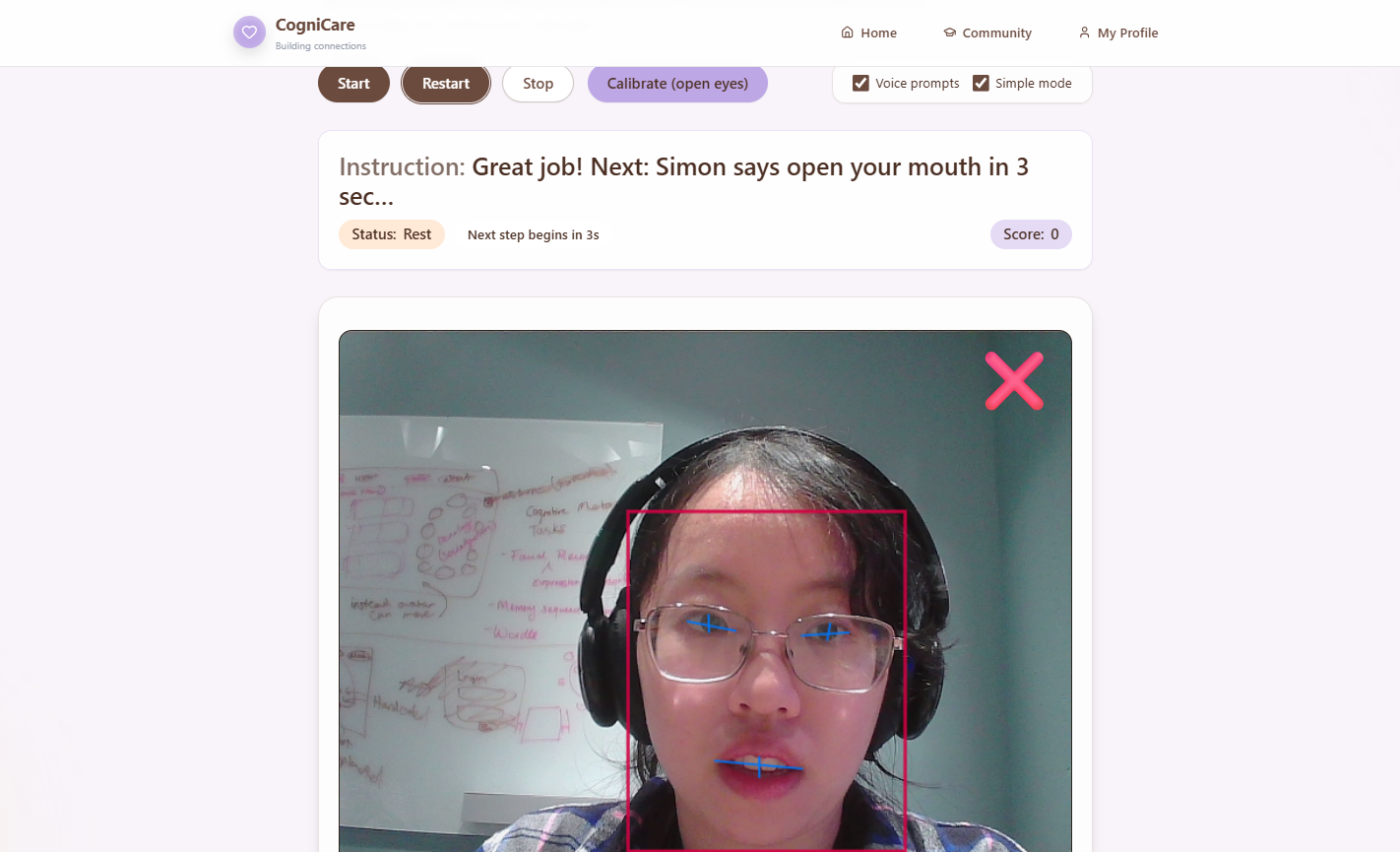
Cognitive Game: Simon Says
-
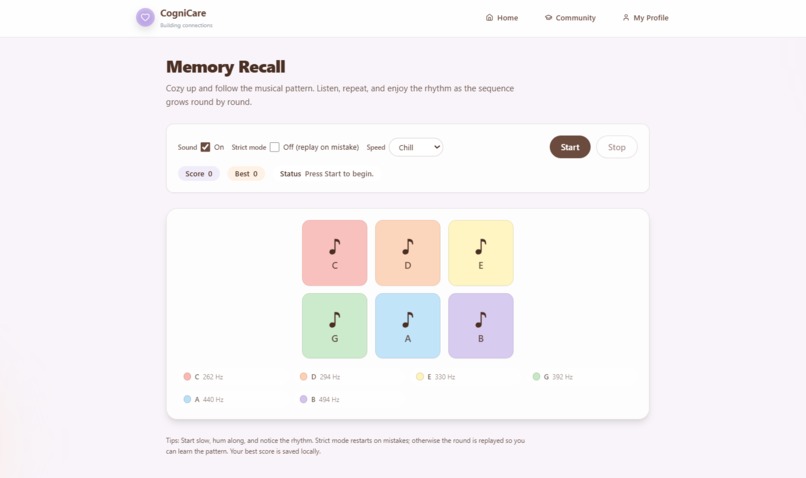
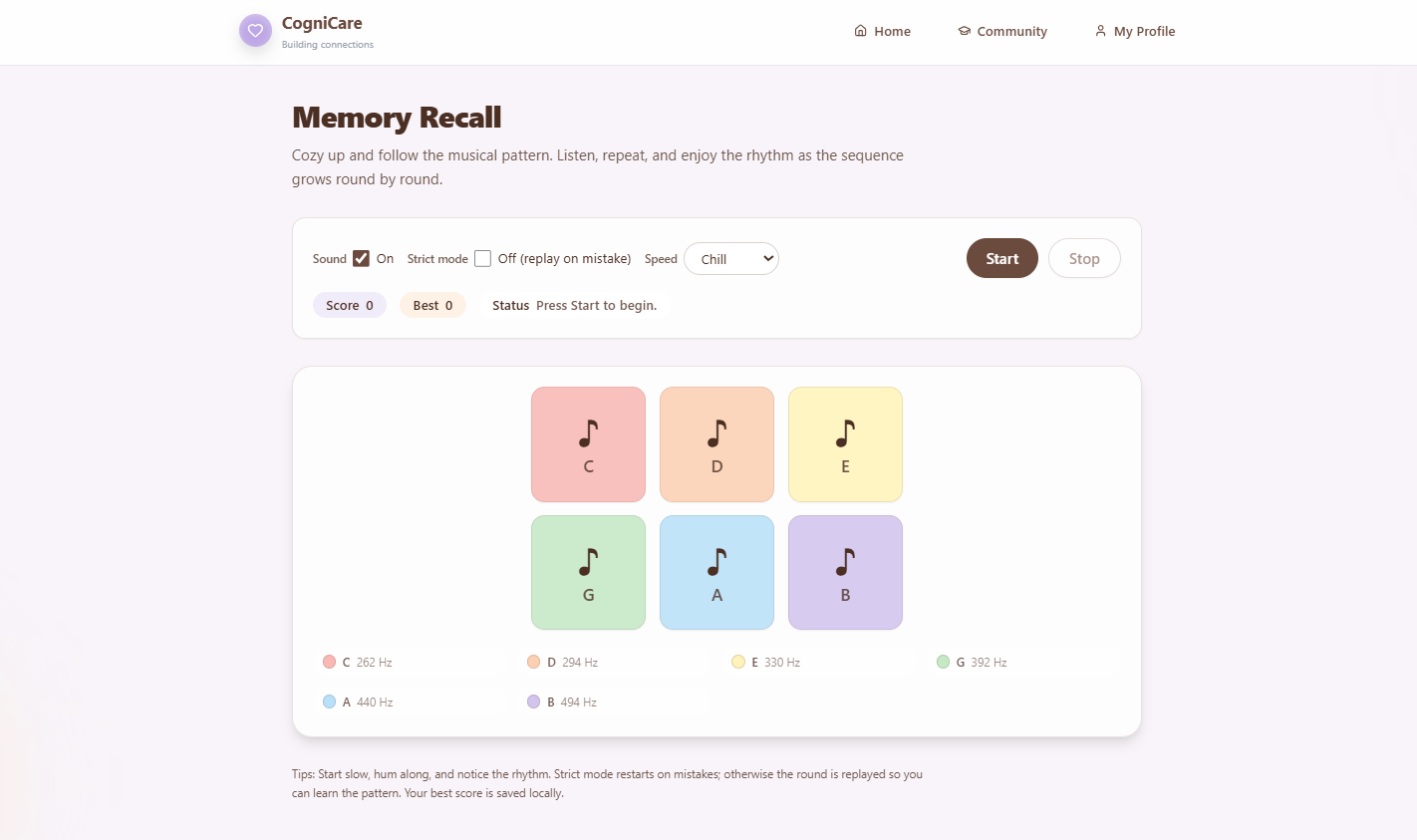
Cognitive Game: Memory Recall
-
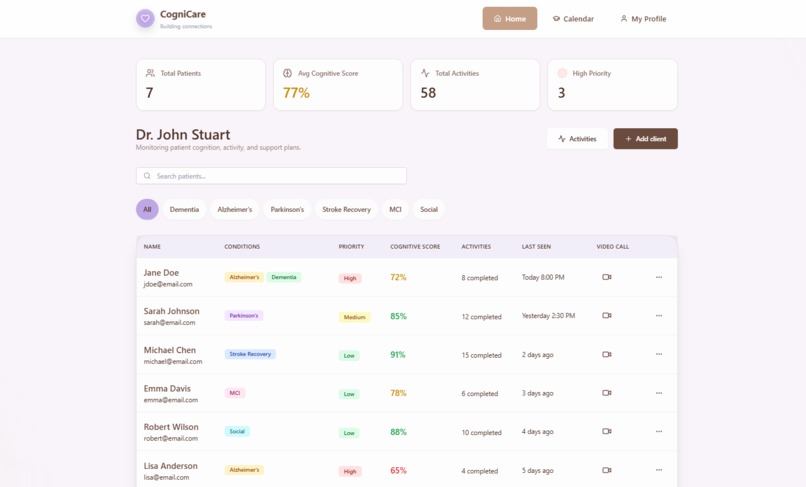
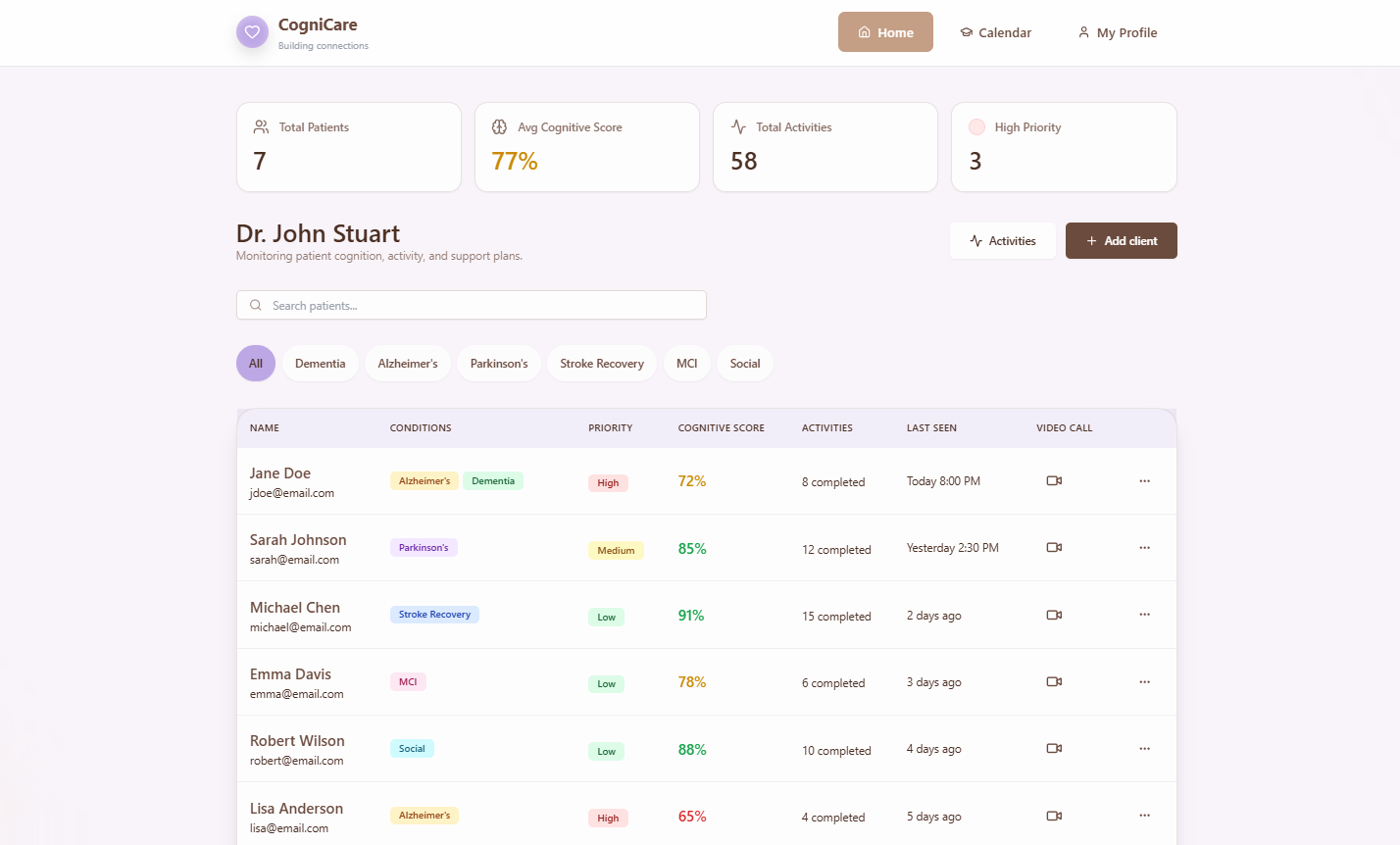
Medical Professional View
-
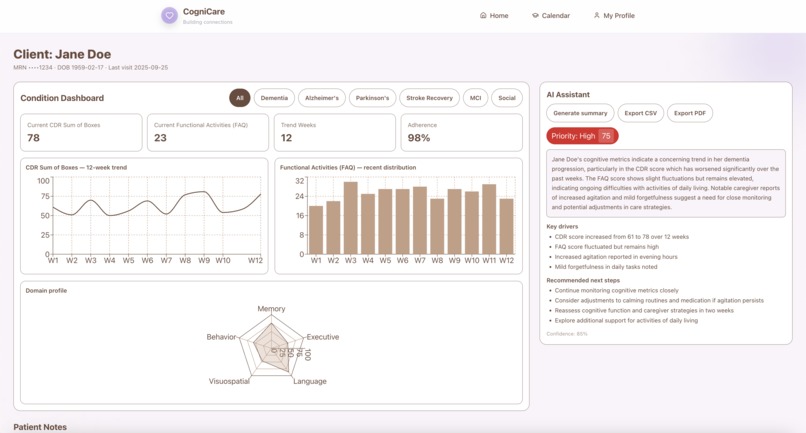
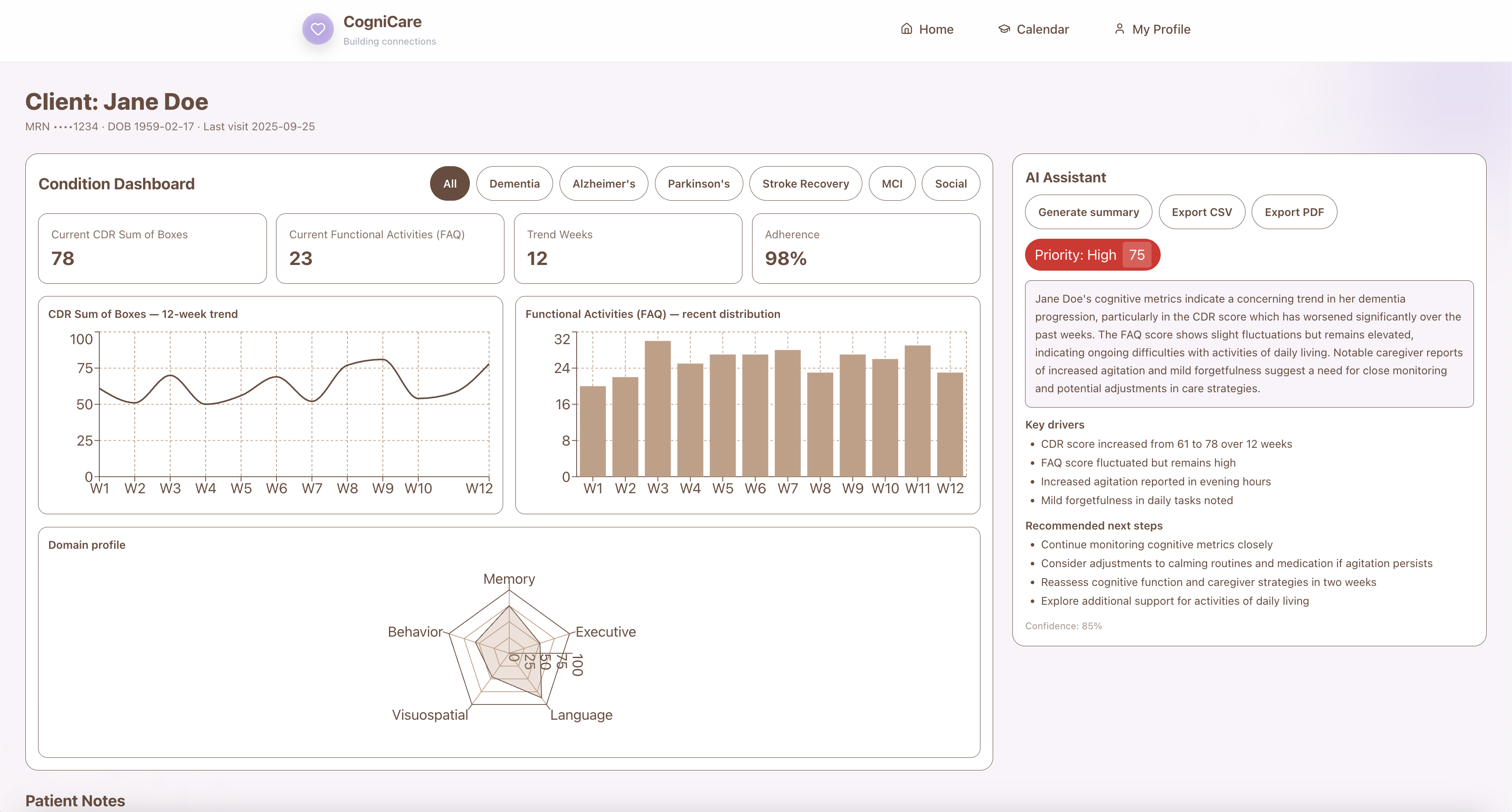
Detailed View of Patient
Inspiration
Millions of elderly adults and their families often miss the earliest signs of cognitive decline. Minor lapses in memory or attention go unnoticed, and healthcare professionals only catch glimpses during visits. Meanwhile, many older adults face social isolation, a condition tied to increased dementia risk.
Research shows that regular engagement in memory, motor, and social activities can reduce dementia risk by nearly half and delay cognitive decline by years. Yet most tools don’t embed these practices into daily life in a friendly, sustainable way.
CogniCare addresses this by combining simple games with continuous insights. Our goal is to help seniors stay mentally active, reassure families, and equip healthcare professionals to detect early decline before it becomes severe.
What it does
CogniCare connects two interfaces: a friendly and intuitive view of a digital cafe for senior citizens and a professional interface for healthcare providers.
For seniors, the platform feels like a digital café where every activity matters:
- Simon Says monitors facial expressions to evaluate cognitive-motor function in real time using TensorFlow and Mediapipe.
- Word Master prompts recall-based word challenges to boost episodic memory [2].
- Memory Recall offers sequence tasks that strengthen neural pathways and slow decline [1].
- CogniCafe provides video call spaces to encourage socialization, which reduces dementia risk by ~30% [3].
For healthcare professionals, CogniCare turns those activities into actionable data:
- A logistic-style regression risk model combines gameplay trends, activity adherence, recency, and clinical note signals to compute a calibrated priority score.
- AI-generated summaries, domain-level visualizations, and CSV/PDF export help with quick interpretation and workflow.
- An integrated “meet” feature enables healthcare professionals to directly check in with patients for follow-ups.
CogniCare aims to be approachable for seniors, effective for professionals, and powerful in supporting early intervention.
How we built it
We aimed to blend usability with technical rigor. Our build emphasized three pillars:
User Interface and Design
- Next.js App Router for routing, Tailwind CSS for consistent UI, and Recharts for charts
- Custom SVG café scenes to evoke warmth rather than clinical coldness
Sensing & Activities
- TensorFlow + Mediapipe analyze live video in Simon Says
- Real-time detection of facial expressions as a proxy for cognitive-motor status
- Research-based games (Word Master, Memory Recall) targeting memory and neural plasticity
Analytics & Insights
- Logistic-style regression risk model that fuses multiple signal types for priority scoring
- AI summarizer that turns metrics into natural language insights
- Dashboard with domain charts, export tools, and the meet integration
Challenges we ran into
Building CogniCare meant solving for two very different audiences. Seniors needed a system that felt warm and simple. Healthcare professionals required accurate and clinically relevant insights. Bridging these needs surfaced several challenges.
- Designing real-time video analysis that ran smoothly without overwhelming system resources
- Calibrating the regression risk model so scores were accurate and easy to interpret
- Creating a dashboard that felt approachable but still conveyed medical-grade information
Accomplishments that we're proud of
Despite these challenges, we delivered a platform that connects seniors and healthcare professionals in meaningful ways. We transformed cognitive health research into accessible daily activities and paired them with professional insights.
- Integrated TensorFlow and Mediapipe for live video analysis of facial expressions as an early-warning tool for decline
- Developed a logistic-style regression risk model that combines gameplay trends with adherence, recency, and clinical note signals to create a calibrated priority score
- Built both a senior-friendly café interface and a healthcare dashboard within the hackathon timeline
What makes CogniCare stand out is the way live video analysis and regression-based risk modeling work together to create insights that are clinically meaningful while keeping the senior experience accessible
What we learned
Working on CogniCare taught us that building for healthcare requires more than technical skill. It requires empathy, research, and validation at every step. We saw how important it is to design with accessibility at the center. Seniors engage best when technology feels familiar, intuitive, and free of clutter.
We also learned that cognitive health cannot be measured through a single activity. A complete picture emerges only when memory, motor skills, and social interaction are tracked together. Activities that target multiple domains not only help seniors stay engaged but also produce richer data for healthcare professionals.
We learned the value of turning academic research into real-world practice. Studies on recall, motor tasks, and socialization provided the foundation, and our challenge was to adapt them into experiences that seniors could use in their daily routines. This process showed us how research, design, and engineering can combine to create tools that are approachable for seniors and meaningful for healthcare professionals.
What's next for CogniCare
We want CogniCare to move beyond the hackathon and evolve into a clinical-ready platform. The next stage will focus on expanding both the activities available to seniors and the tools available to healthcare professionals.
For seniors, we plan to introduce new games that cover additional cognitive domains. This includes adaptive memory exercises that increase in difficulty, attention and reaction-time tasks, and multimodal activities that combine voice and motion. The goal is to build a library of exercises that keeps seniors engaged while producing diverse cognitive signals.
For healthcare professionals, we plan to deepen the analytics layer. Future iterations of the dashboard will include domain-specific scoring, longitudinal trend analysis, and the ability to overlay data from EHR systems and wearables. We also see potential in integrating natural language processing to analyze provider notes alongside gameplay data, further improving the accuracy of our logistic-style regression risk model. Finally, we plan to enhance collaboration features by adding secure messaging and real-time annotations on patient dashboards.
By growing the game library for seniors and expanding the analytical and workflow features for healthcare professionals, CogniCare will become a comprehensive platform that supports early detection, continuous monitoring, and effective intervention.
References: [1] Chaipunko, S., Ammawat, W., Oanmun, K., Hongnaphadol, W., Sorasak, S., & Makmee, P. (2024). A pretest-posttest pilot study for augmented reality-based physical-cognitive training in community-dwelling older adults at risk of mild cognitive impairment. Retrieved September 28, 2025, from arXiv.org website: https://arxiv.org/abs/2404.18970
[2] Banducci, S. E., Daugherty, A. M., Biggan, J. R., Cooke, G. E., Voss, M., Noice, T., … Kramer, A. F. (2017). Active Experiencing Training Improves Episodic Memory Recall in Older Adults. Frontiers in Aging Neuroscience, 9. https://doi.org/10.3389/fnagi.2017.00133
[3] Budson, A. E. (2021, September 16). Can physical or cognitive activity prevent dementia? - Harvard Health. Retrieved September 28, 2025, from Harvard Health website: https://www.health.harvard.edu/blog/can-physical-or-cognitive-activity-prevent-dementia-202109162595
Built With
- api
- google-cloud
- mediapipe
- nextjs
- react
- tailwind
- tensorflow


Log in or sign up for Devpost to join the conversation.