-
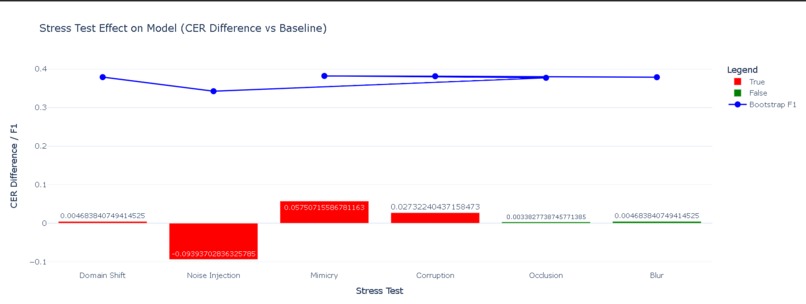
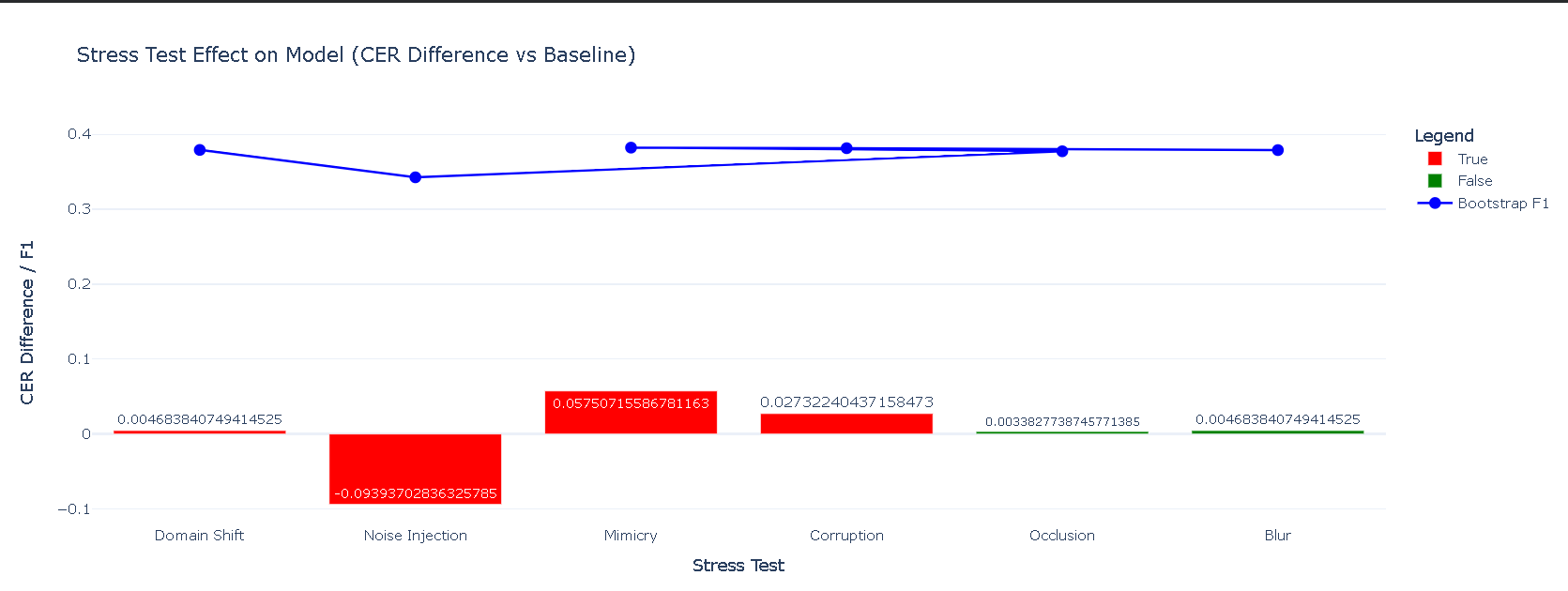
Stress Testing Results
Inspiration
Alzheimer’s disease is often detected too late, when cognitive decline is irreversible. I wanted to see if interpretable computer vision methods could detect early patterns in MRI scans while remaining understandable to clinicians.
What it does
RobustHOG predicts Alzheimer’s severity from brain MRI scans using HOG features, PCA, Diffusion Maps, and Logistic Regression. It balances predictive performance with transparency for explainable, data-driven insights.
How I built it
I extracted HOG features from preprocessed MRI images, reduced dimensionality with PCA and Diffusion Maps, and trained a Logistic Regression classifier. I performed extensive statistical and robustness testing to validate predictions.
Challenges I ran into
Maintaining interpretability while achieving reasonable accuracy was tough. High-dimensional imaging data, limited samples, and noisy inputs required careful feature engineering and robustness evaluation.
Accomplishments that I'm proud of
I developed a fully interpretable pipeline that can detect early Alzheimer’s patterns, stress-tested it against noise and corruption, and demonstrated that classical CV methods can be both robust and explainable.
What I learned
I strengthened my computer vision skills and learned the value of interpretability, statistical validation, and robust evaluation. This project reinforced the importance of strong fundamentals when tackling real-world medical AI challenges.
Built With
- causalml
- imblearn
- manifoldlearning
- mlflow
- pca
- pyngrok
- scikit-learn
- scipy
- xgboost

Log in or sign up for Devpost to join the conversation.