-
-
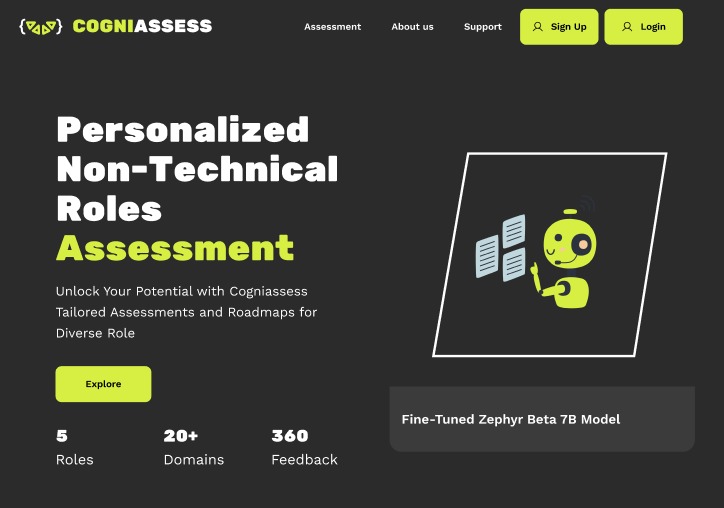
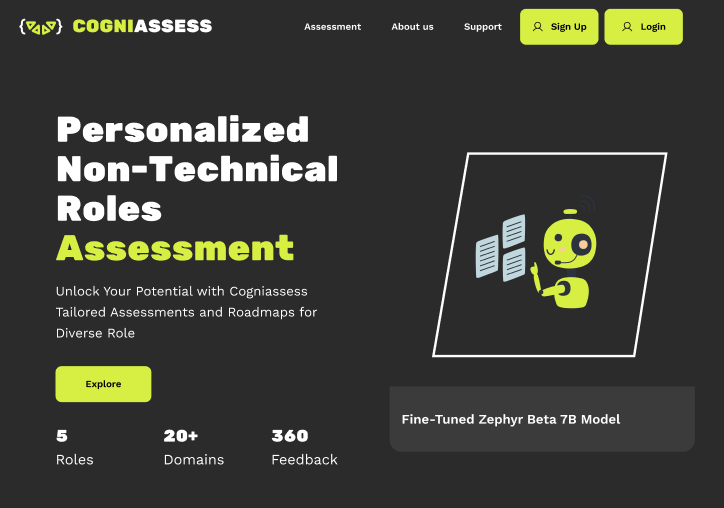
home page
-
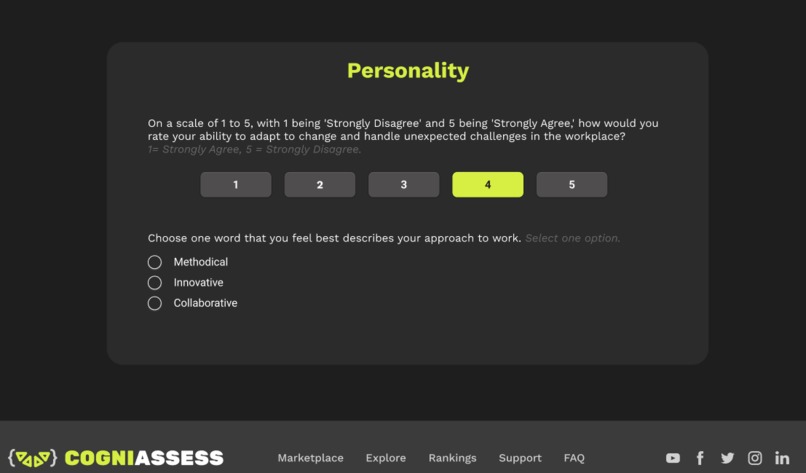
assessments
-
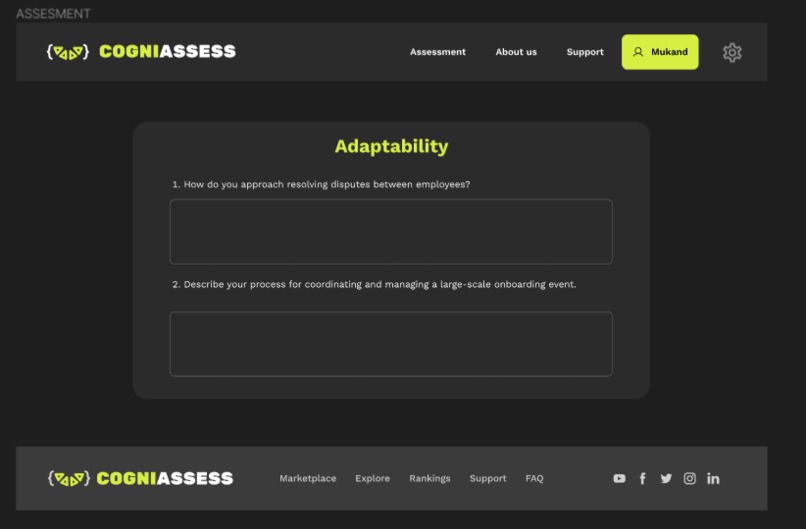
chatbot
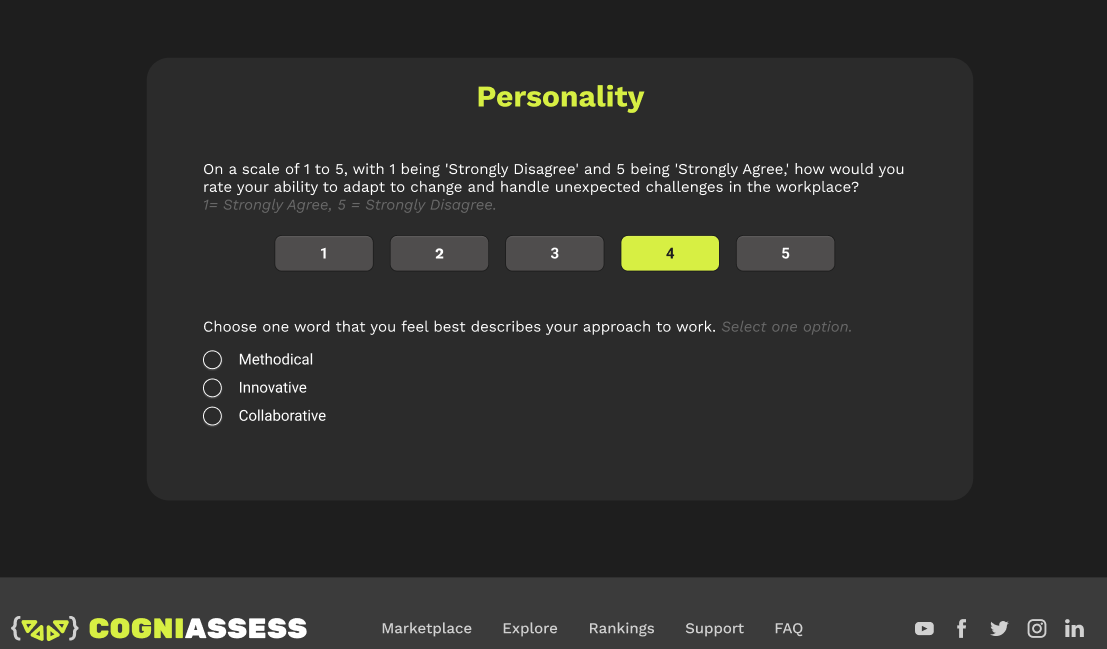
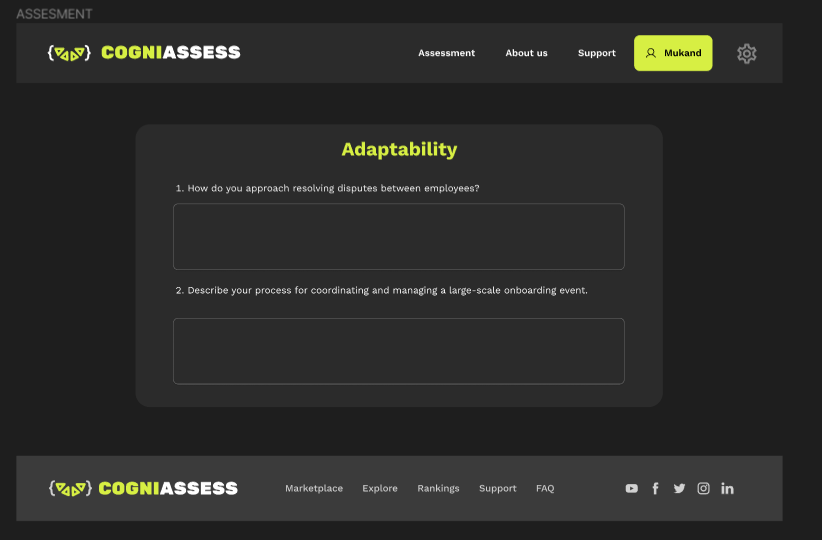
Inspiration
The Inspiration for this project came when I was unable to get the right setup for the interview procedure with one of the HR in a company. We were constantly sending emails back and forth, without deciding on which time will be suitable for me to come to the Office and give my interview. That's where I thought, there must be a tool or platform that could make this procedure easy for the candidates, also for the HRs to have the time saved for other important tasks.
The modern job market demands not only technical acumen but also a strong set of non-technical skills, which often dictate an employee’s success in a role. Existing talent assessment tools predominantly focus on evaluating technical skills, leaving a noticeable gap in comprehensive skill assessment. Moreover, many tools lack role-specific customization, resulting in generic evaluations that don’t necessarily align with job requirements. This project aims to fill this gap by developing an AI-driven tool that can conduct a nuanced assessment of non-technical skills tailored to specific job roles, thereby assisting organizations in making informed hiring and talent development decisions. By leveraging statistical data and insights from industry experts, this tool aims to enhance the relationship between employees and organizations, catalyzing a productive work atmosphere.
What it does
In the contemporary job landscape, the success of professionals is no longer solely determined by their technical competencies but is increasingly reliant on a robust set of non-technical skills. These skills encompass a wide range of attributes, including effective communication, critical thinking, problem-solving, adaptability, and interpersonal abilities, among others. The recognition of the pivotal role played by non-technical skills in professional achievement has prompted a paradigm shift in talent assessment. However, existing talent assessment tools predominantly focus on evaluating technical expertise, inadvertently leaving a significant void in the comprehensive evaluation of non-technical skills.
Moreover, many of these tools lack the critical element of customization, rendering generic assessments that may not be aligned with the specific requirements of various job roles. This prevailing deficiency in holistic skill assessment creates a substantial challenge for organizations seeking to make informed decisions regarding hiring, talent development, and workforce optimization.
To address this critical gap, we embark on a groundbreaking project aimed at the development of an AI-driven tool. This tool is designed to conduct nuanced assessments of non-technical skills tailored to the unique demands of specific job roles. By doing so, it promises to be a game-changer in the realm of talent assessment, revolutionizing the way organizations identify, nurture, and leverage non technical skills.
How we built it
1.1 Identification of Job Roles and Skill Sets
Industry Analysis: Conduct a deep analysis of various industries to understand the diverse job roles and the specific skill sets they require. This will involve researching job market trends and identifying the most sought-after non-technical skills.
Stakeholder Surveys: Undertake surveys and interviews with stakeholders such as hiring managers, recruiters, and employees to gather firsthand insights into the essential non-technical skills for different roles.
1.2 Data Collection
Data Aggregation: Develop a robust data aggregation system capable of collecting and organizing large volumes of job descriptions, resumes, and related documents from various sources including online job portals and company websites.
Data Structuring: Implement techniques to structure the collected data effectively, facilitating easier analysis and pattern recognition in later stages.
2.1 Technology Selection
Technology Stack Definition: Define a technology stack that integrates various advanced technologies including Natural Language Processing (NLP), Machine Learning (ML), and Computer Vision, ensuring they work in harmony for a seamless user experience.
Resource Allocation and Optimization: Develop strategies for optimal allocation and utilization of GPU resources, especially focusing on the efficient functioning of fine-tuned LLMs.
2.2 Development of Modules
Module Development and Integration: Develop distinct modules for NLP, ML, and Computer Vision, focusing on their integration to work as a cohesive unit. This includes creating algorithms capable of analyzing textual data, identifying patterns, and analyzing non-verbal cues during interviews.
Simulation Environments: Create realistic simulation environments for role-specific assessments, ensuring they mimic real-world scenarios to provide accurate evaluations.
3.1 Psychometric Testing
Test Development: Develop a series of psychometric tests, focusing on evaluating various personality traits and cognitive abilities that are relevant to the job roles identified in Phase 1.
Validation and Reliability Testing: Conduct validation and reliability testing of the psychometric tests to ensure their accuracy and effectiveness in assessing candidates
User Experience (UX) Optimization: Focus on optimizing the user experience, ensuring that the gamification elements do not overshadow the primary goal of skill assessment.
4.1 Pilot Testing
Beta Testing: Conduct beta testing with a select group of users, gathering data on the tool’s performance and identifying areas for improvement.
Feedback Analysis and Iteration: Analyze the feedback gathered during beta testing, using the insights to make necessary adjustments and improvements to the tool.
4.2 Final Evaluation
Performance Metrics: Develop a set of performance metrics to evaluate the tool’s effectiveness in assessing non-technical skills, focusing on aspects such as accuracy, reliability, and user satisfaction.
Final Adjustments: Make final adjustments based on the evaluation, refining the tool to ensure it meets the desired standards of performance and reliability.
Challenges we ran into
- Access to quality data 2 GPU: Access to a cloud or Offline GPU for finetuning LLMs incase necessary.
- Technology Infrastructure: Cloud computing resources, servers, and databases to support the development and hosting of the AI-driven tool.
- User Testing and Feedback: Engagement of users for usability testing and feedback to refine the tool’s design and functionality.
Accomplishments that we're proud of
This project endeavors to transform the non-technical skill assessment domain by presenting nuanced, role-specific evaluations supplemented with developmental roadmaps. Through aligning individual skill sets with job prerequisites, it promises a mutually enriching relationship between organizations and their employees. Helping Employees has been our top accomplishment also leveraging the use of AI and data science surely was a nice experience.
What we learned
- Team work
- Use of Gen AI
- How data science helps in understanding Data
- Meeting Deadlines very quickly
What's next for CogniAssess - Non Tech Roles Assessment
- We would try to add more features, like AI proctoring
- We would try to get more data for the model to better understand the question
- Deployment and making it accessible to all the user on the internet.


Log in or sign up for Devpost to join the conversation.