-
-
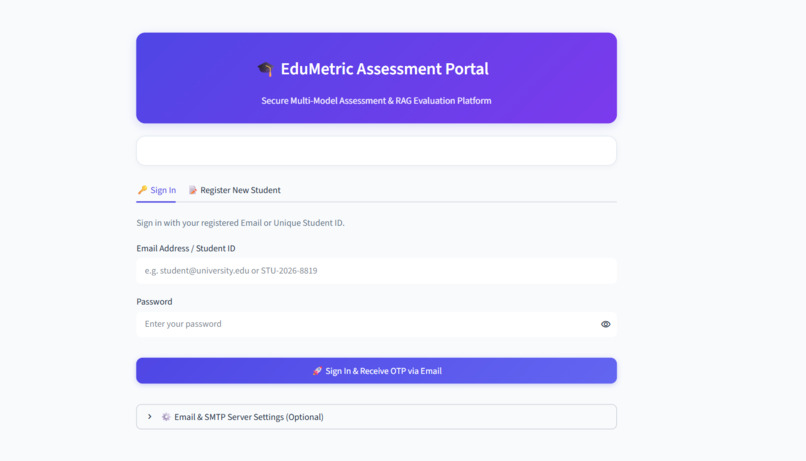
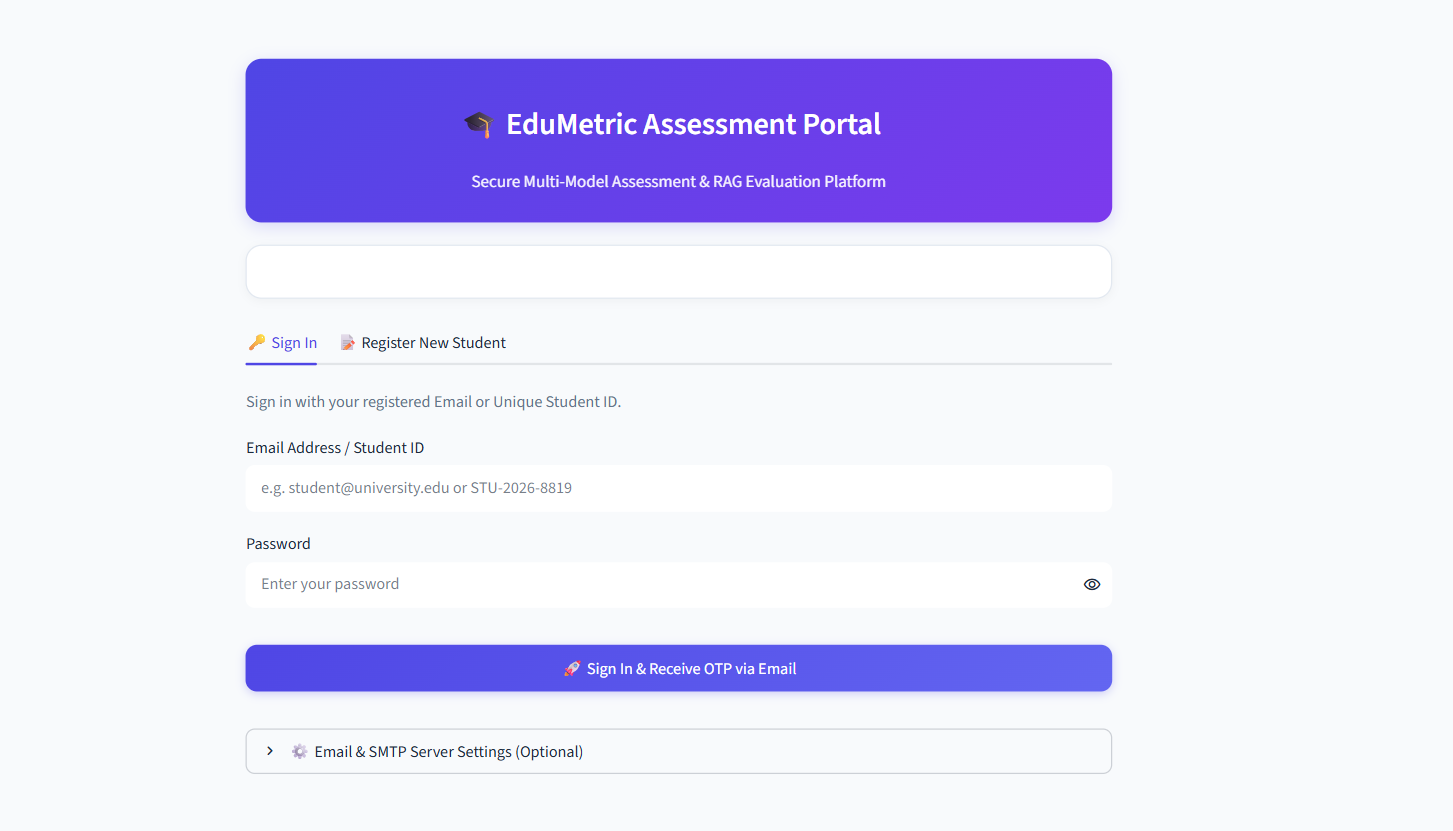
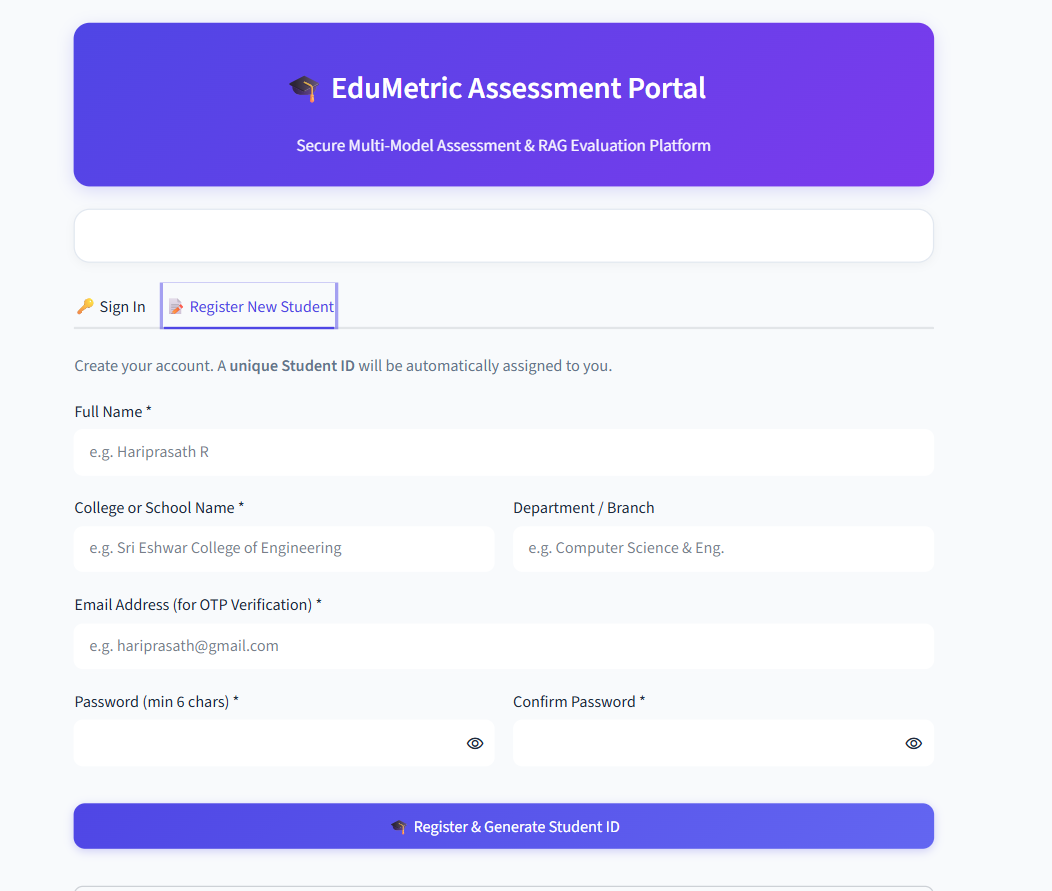
Login page
-
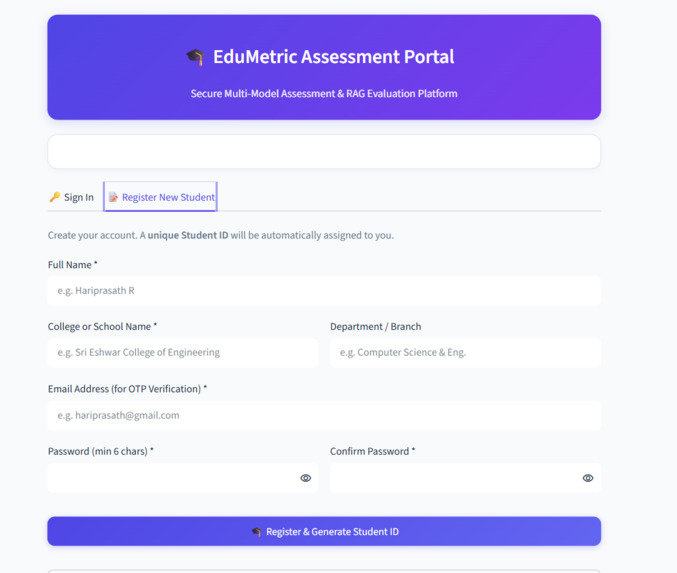
sign in page and registeration
-
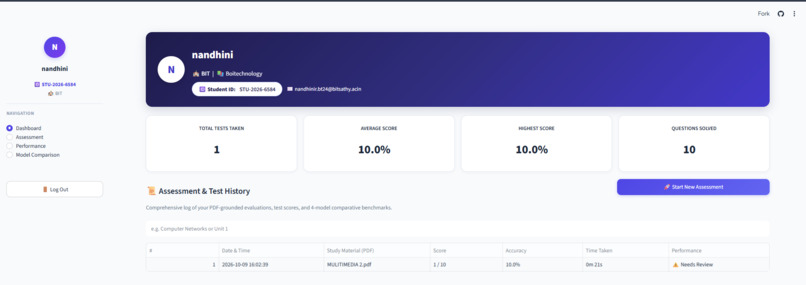
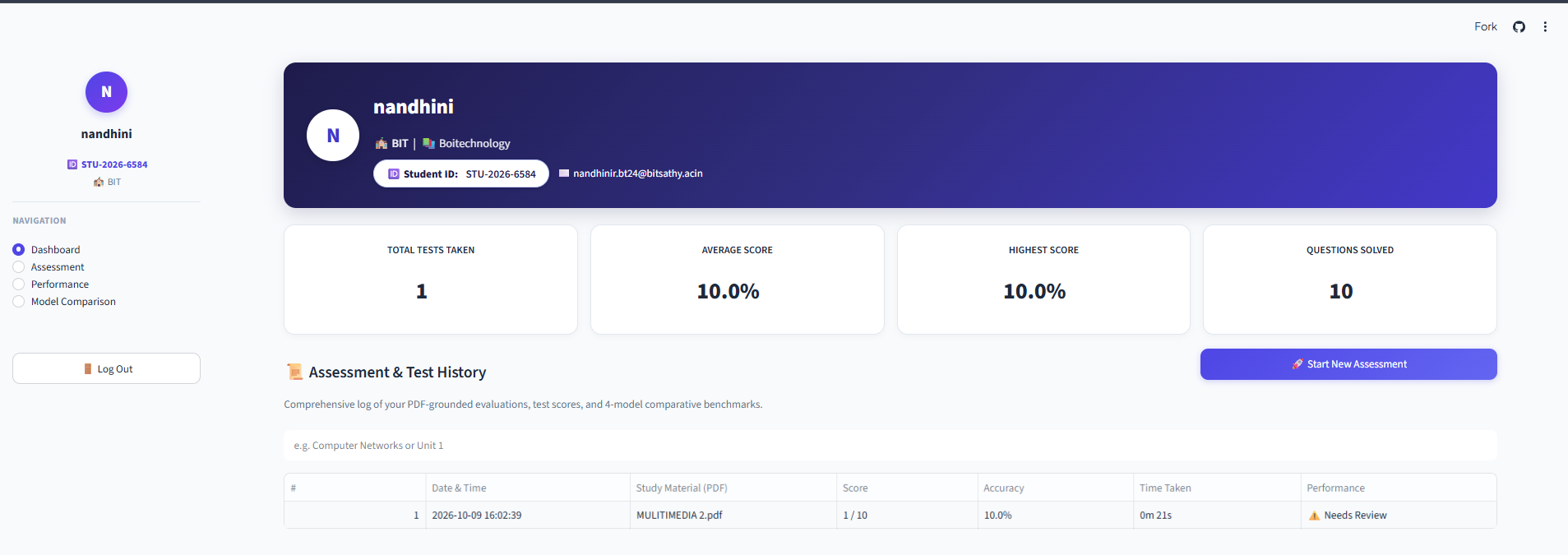
Landing Page
-
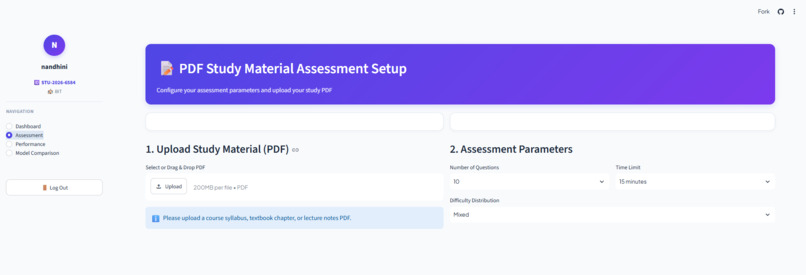
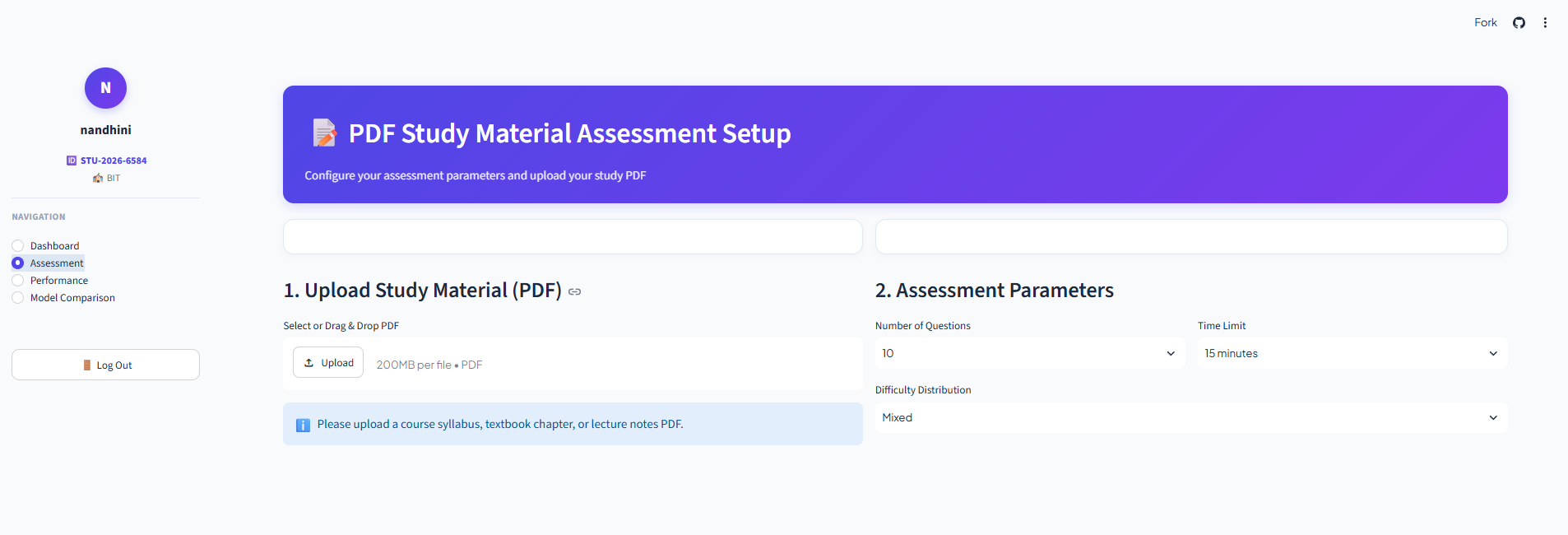
Pdf Uploading page
-
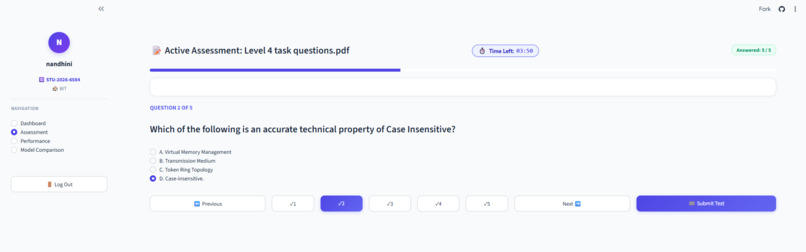
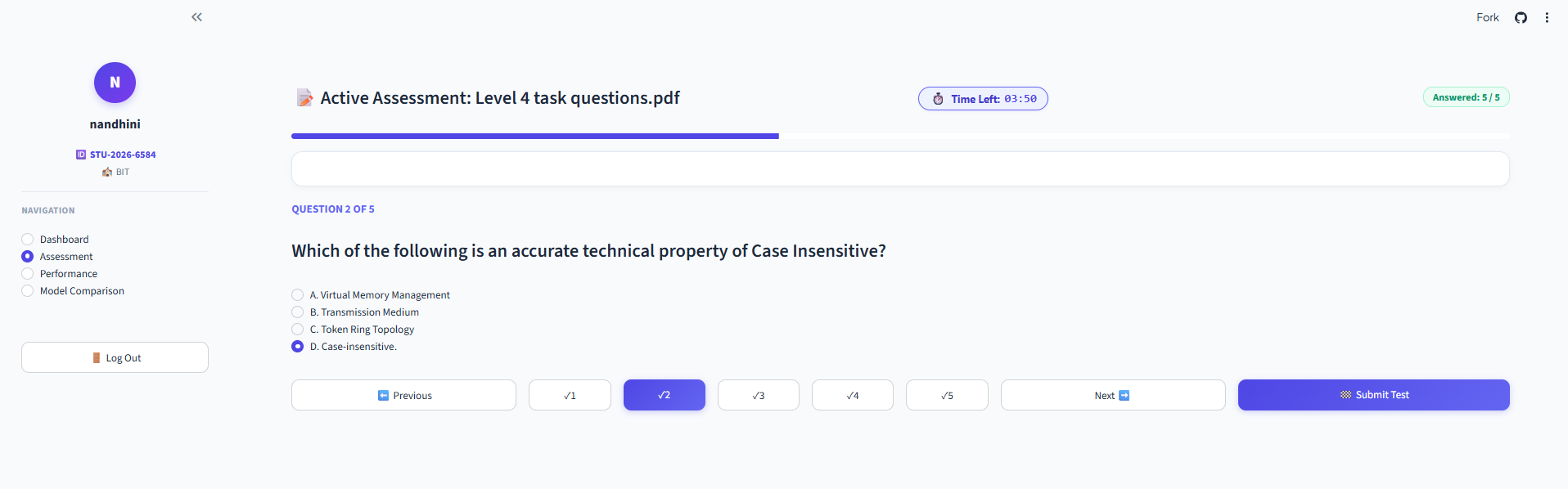
Assessment page
-
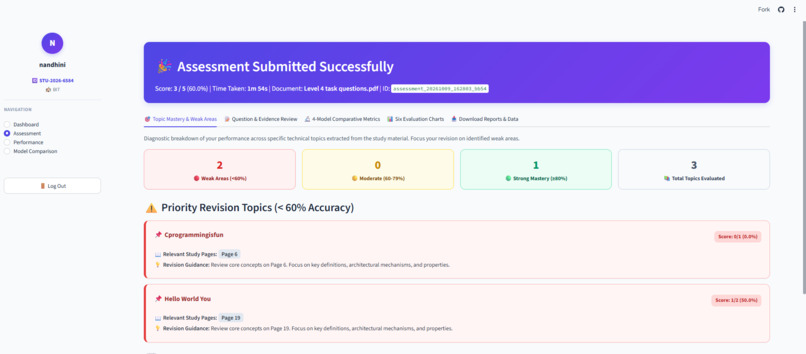
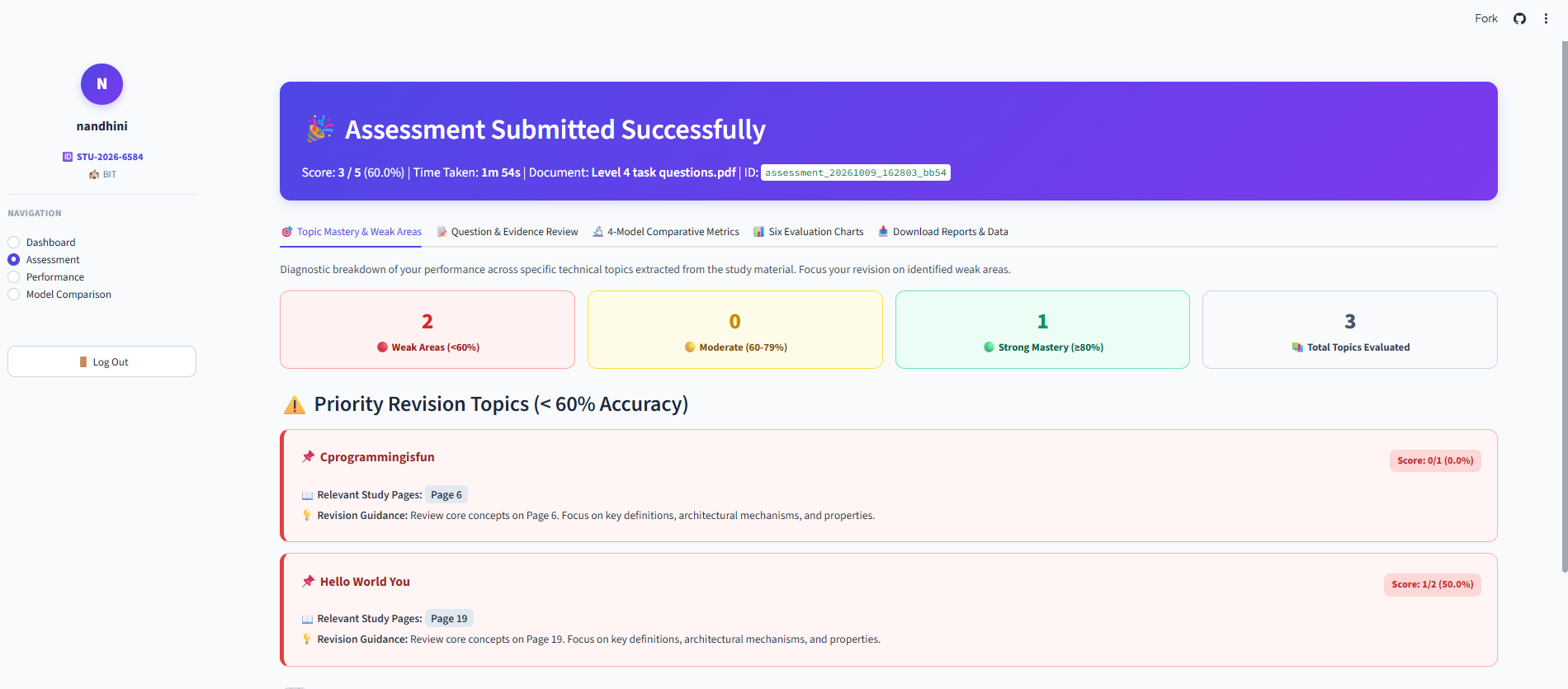
Results page
-
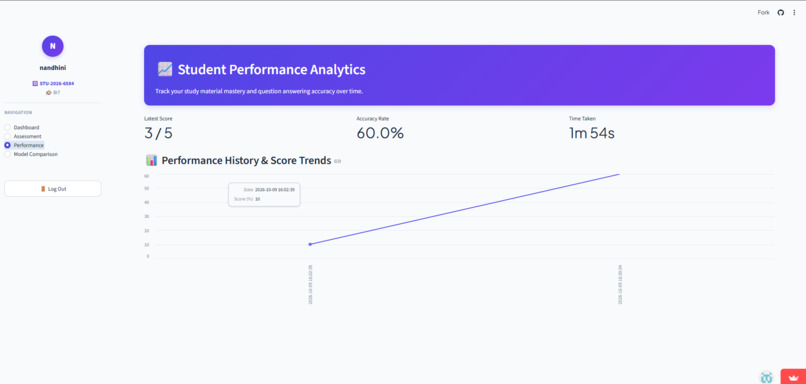
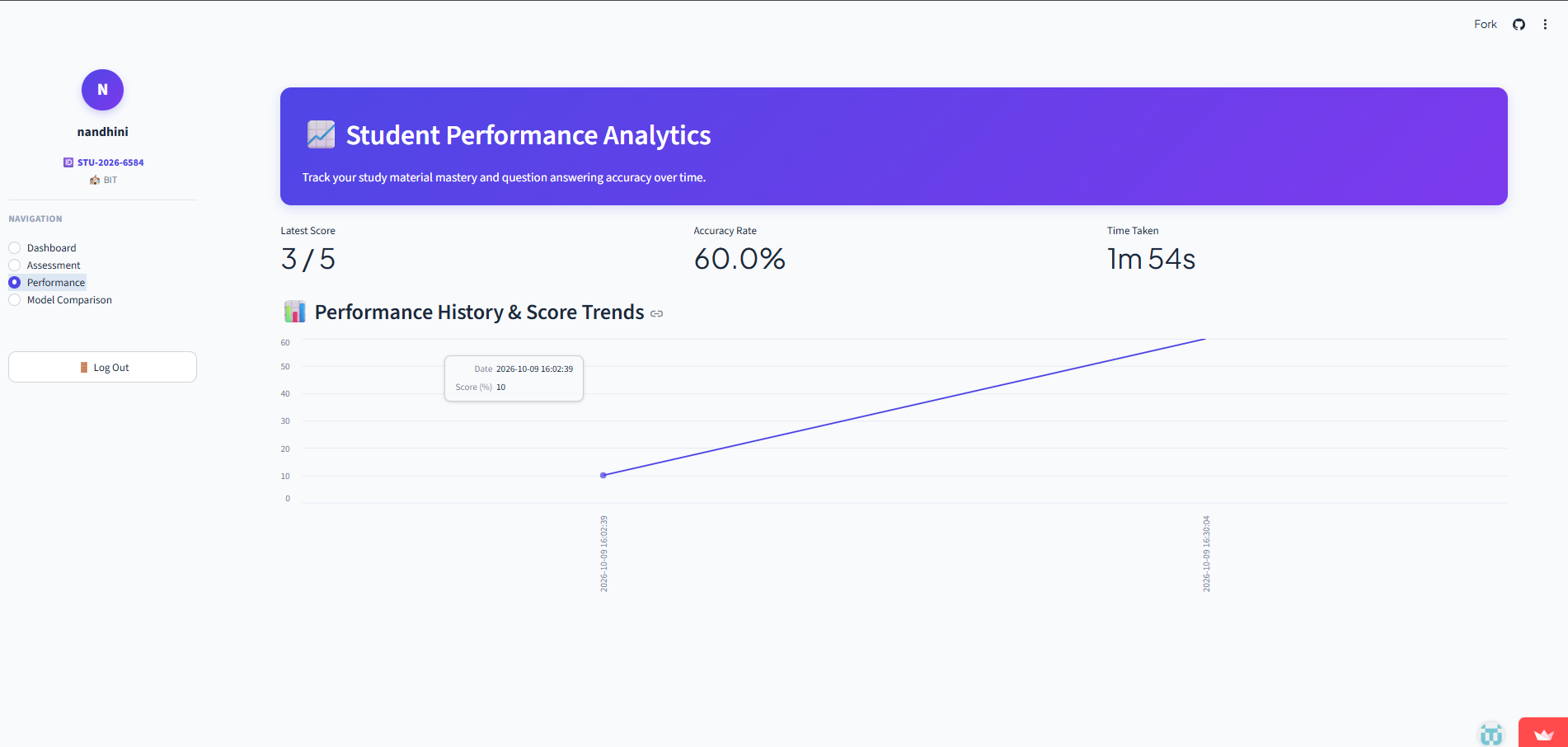
Performance and analysis page
-
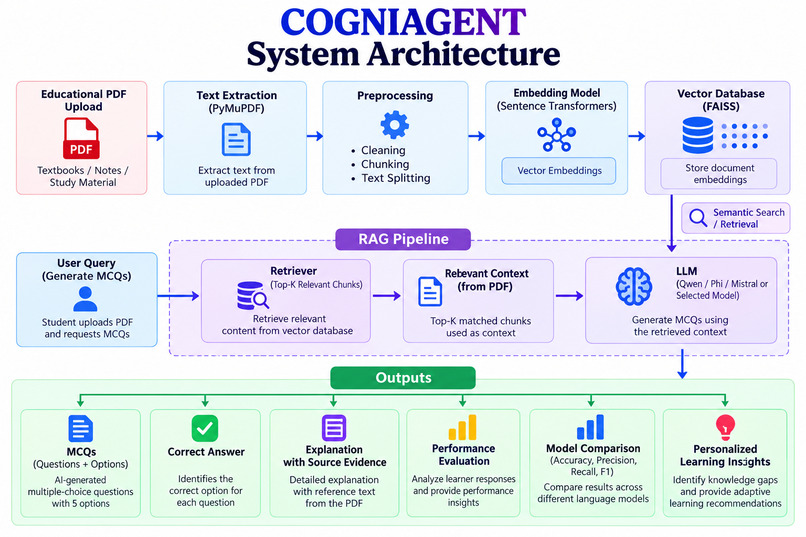
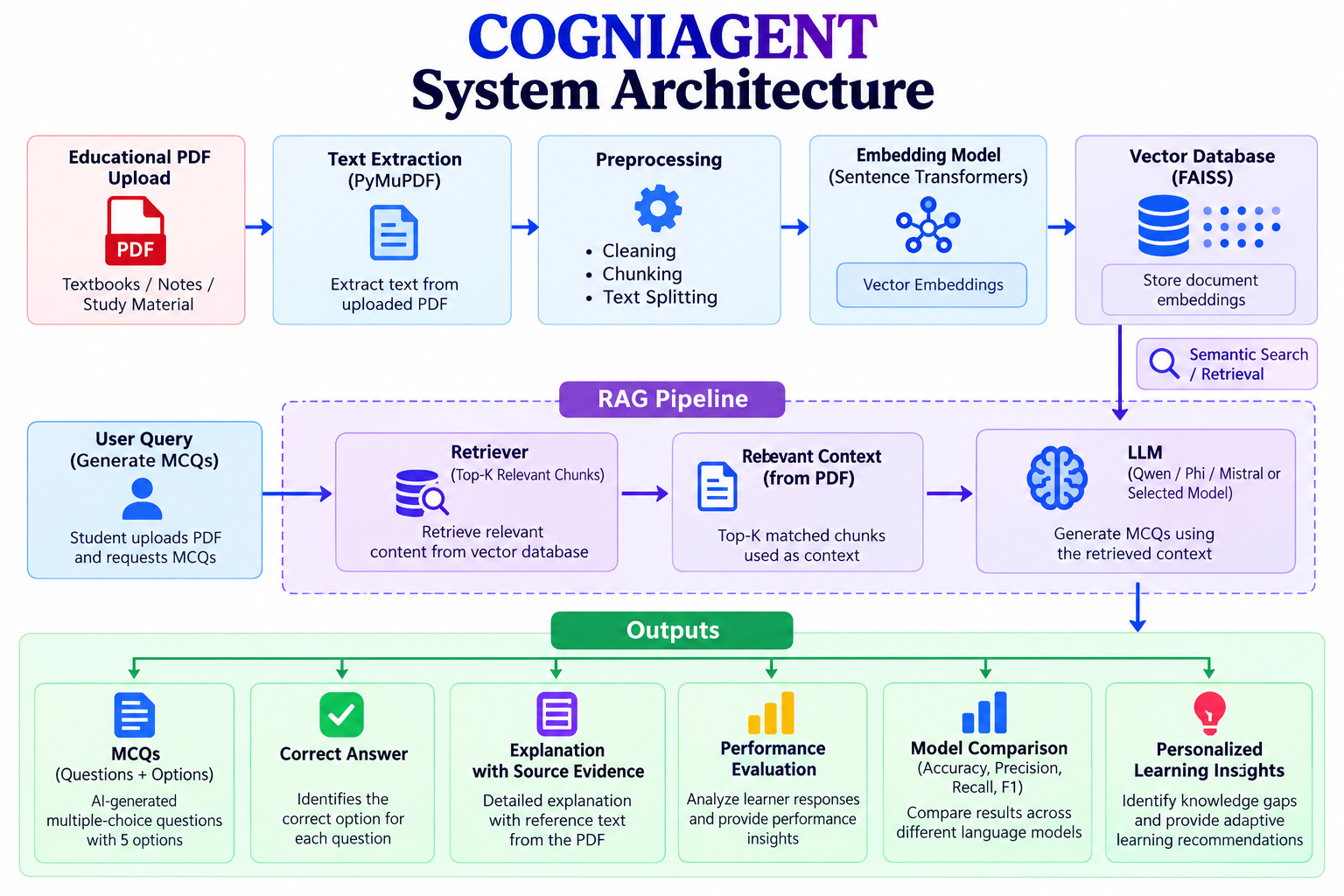
Overall System Architecture
Inspiration COGNIAGENT was inspired by the difficulties students face when preparing for examinations using lengthy textbooks and PDF notes. Manually creating practice questions takes time, while general AI tools may generate answers that are not directly supported by the original study material. We wanted to build an intelligent learning system that transforms educational documents into reliable assessments and helps students understand their strengths and weaknesses.
What it does COGNIAGENT is an AI-powered adaptive assessment and learning system that converts uploaded educational PDFs into multiple-choice questions. It uses Retrieval-Augmented Generation (RAG) to retrieve relevant content from the source document and generate context-based questions, answers, explanations, and source evidence. The platform also evaluates learner responses, analyzes performance, identifies knowledge gaps, and compares different language models using evaluation metrics.
How we built it
We built COGNIAGENT using Python and Streamlit. PyMuPDF extracts text from uploaded PDFs, which is then cleaned and divided into manageable chunks. Transformer-based models process the text, while Sentence Transformers generate embeddings for semantic retrieval. The RAG pipeline retrieves relevant document content to support question generation. We also implemented assessment workflows, answer review, performance dashboards, and model-comparison visualizations to evaluate the system's capabilities.
- Challenges we ran into
One of our major challenges was running language models within limited hardware and memory resources. We also encountered difficulties in generating consistently structured questions, retrieving relevant source passages, and ensuring that generated answers remained grounded in the uploaded document. Comparing different models fairly was another challenge. Through model experimentation, debugging, and workflow improvements, we worked toward making the system more reliable and practical.
- Accomplishments that we're proud of
We are proud to have developed a working prototype that connects PDF processing, semantic retrieval, AI-based question generation, assessment, and learner performance analysis in a single application. We also explored multiple language models and incorporated comparative evaluation visualizations. Most importantly, we transformed an educational problem into a practical AI application designed to make self-assessment more accessible and useful.
- What we learned
Developing COGNIAGENT strengthened our understanding of Natural Language Processing, Transformer architecture, tokenization, embeddings, self-attention, semantic search, and Retrieval-Augmented Generation. We learned how to integrate pretrained models into a real application, manage computational limitations, debug complex pipelines, and evaluate AI-generated content. The project also taught us that a useful AI system must focus not only on generating outputs but also on their relevance, reliability, and connection to the source material.
- What's next for COGNIAGENT: AI-Powered Adaptive Assessment Learning System
Our next goal is to strengthen source-grounded verification and improve the quality of generated assessments. We plan to enhance multi-agent collaboration, support descriptive-answer evaluation, develop more detailed learner cognitive profiles, and provide personalized recommendations based on topic-wise performance. We also aim to improve model benchmarking, expand document-format support, and introduce progress tracking across multiple assessment sessions. Ultimately, we want COGNIAGENT to evolve into an intelligent learning companion that connects educational content, verified assessment, and personalized learning support.
Built With
- adaptive-learning
- artificial-intelligence
- automated-question-generation
- educational-technology
- hugging-face
- large-language-models
- machine-learning
- model
- multi-agent-systems
- natural-language-processing
- pdf-processing
- python
- pytorch
- rag
- retrieval-augmented-generation
- semantic-search
- sentence-transformers
- streamlit
- transformers
- vector-embeddings

Log in or sign up for Devpost to join the conversation.