-
-
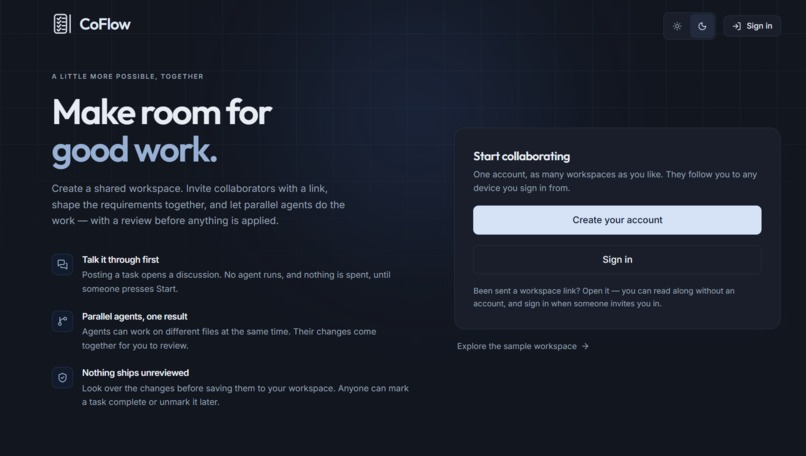
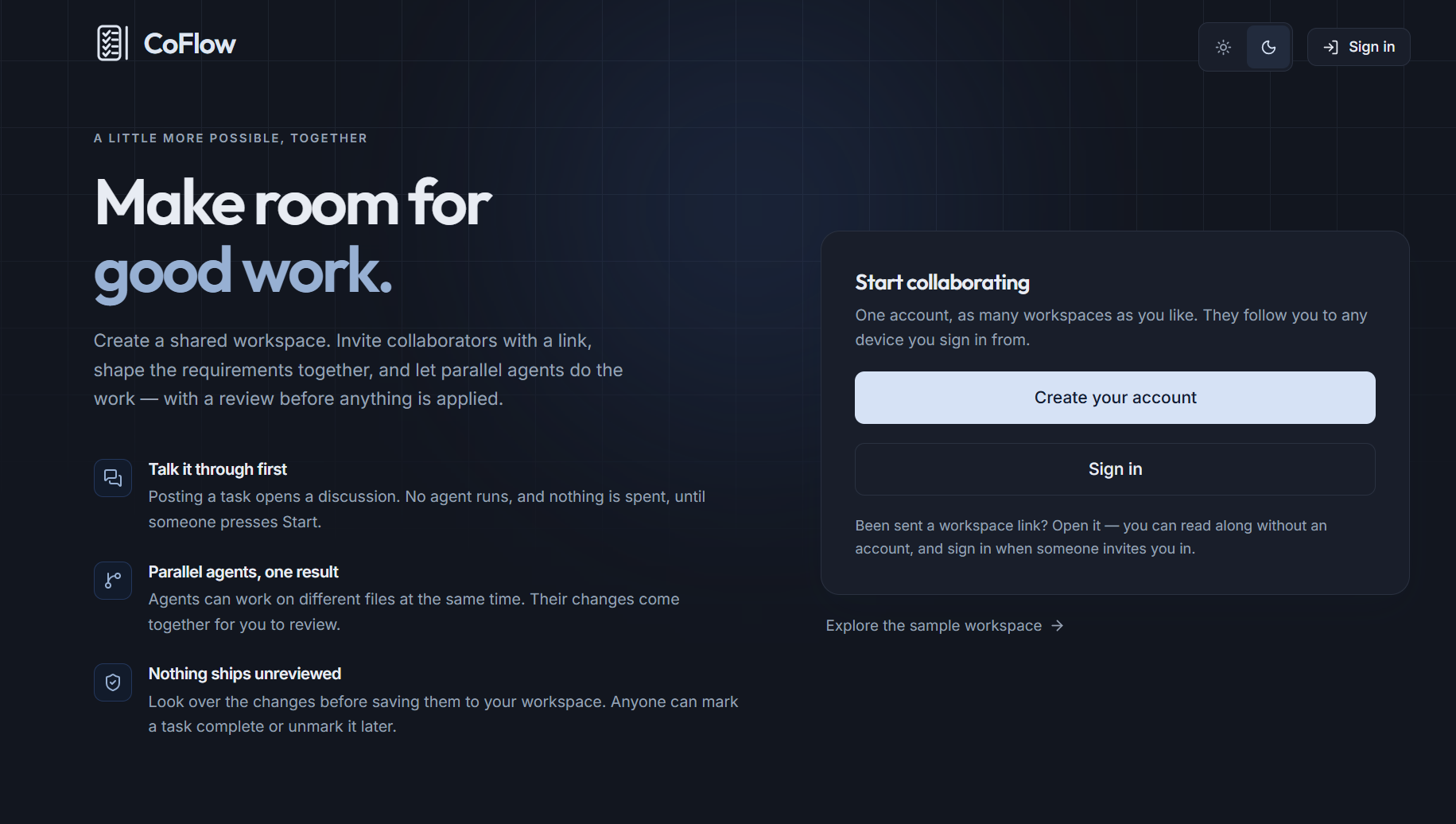
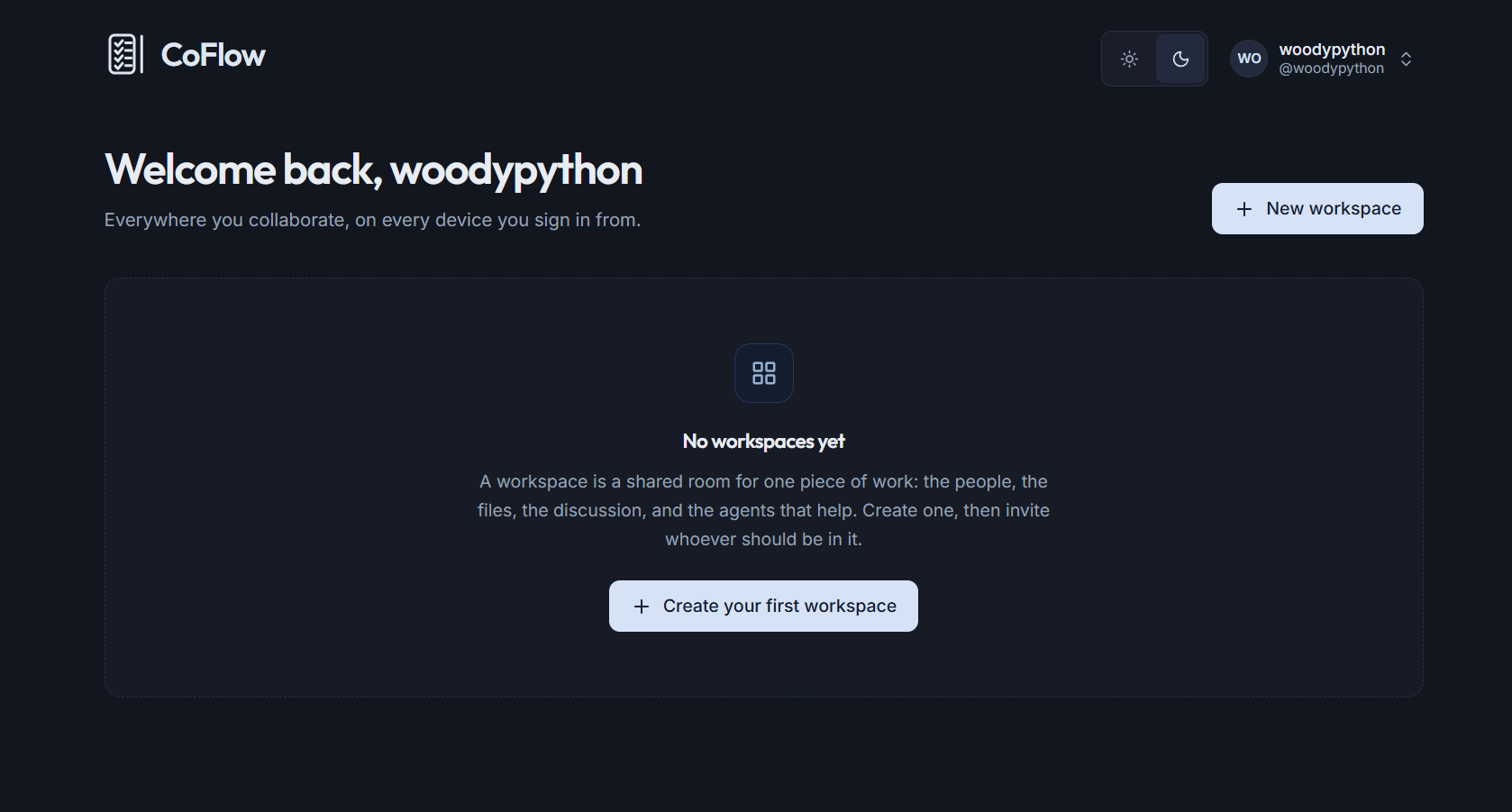
Main landing page
-
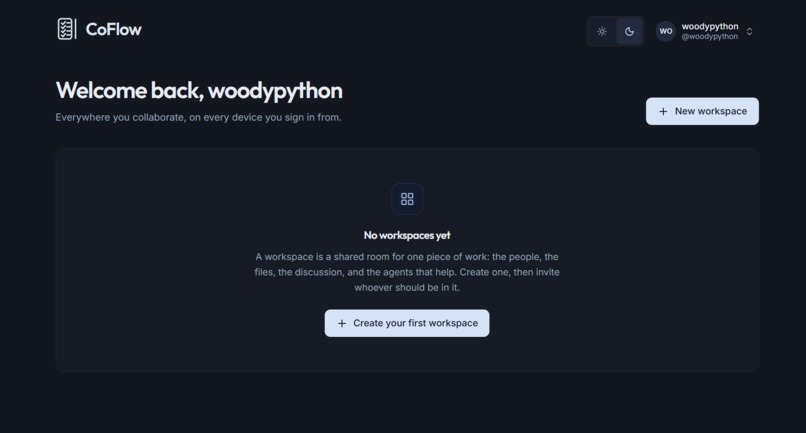
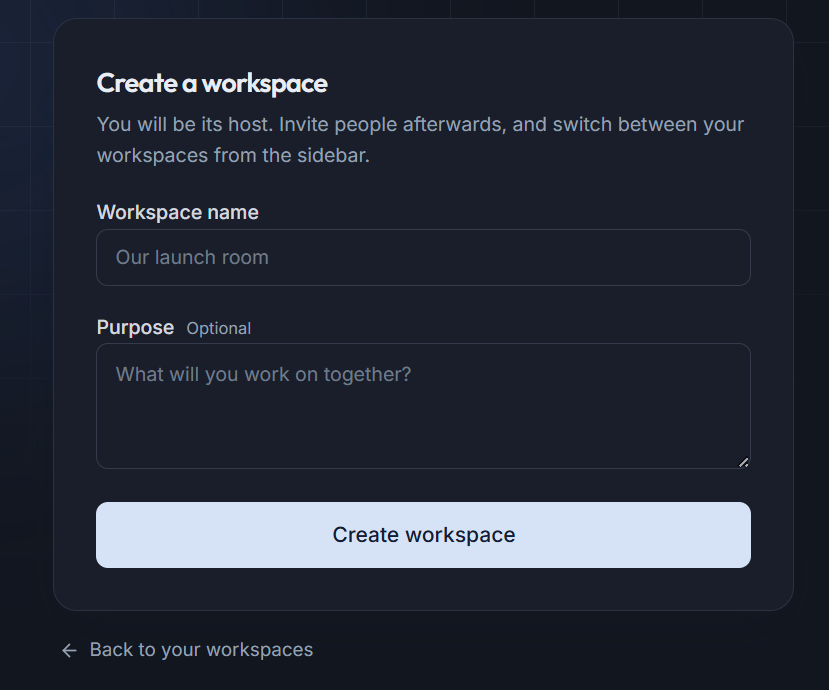
Workspace creation page
-
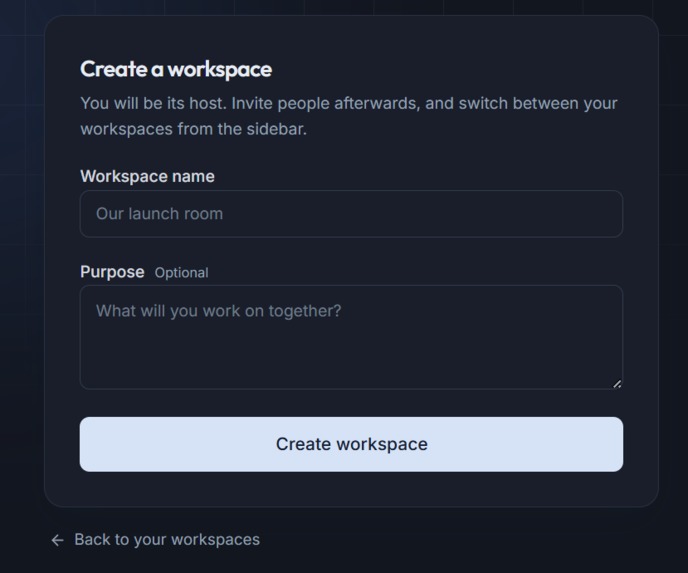
Workspace creation
-
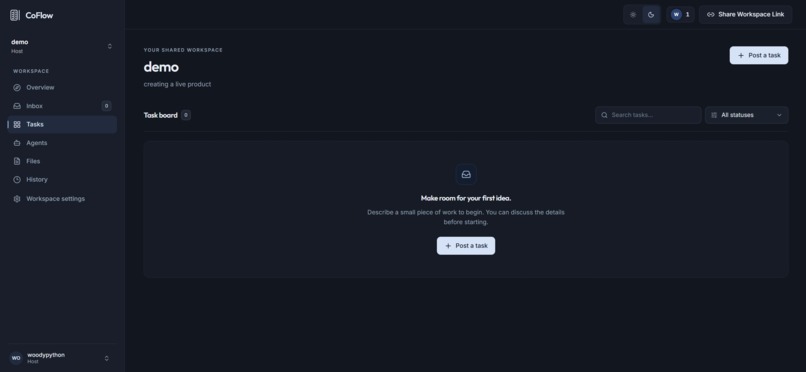
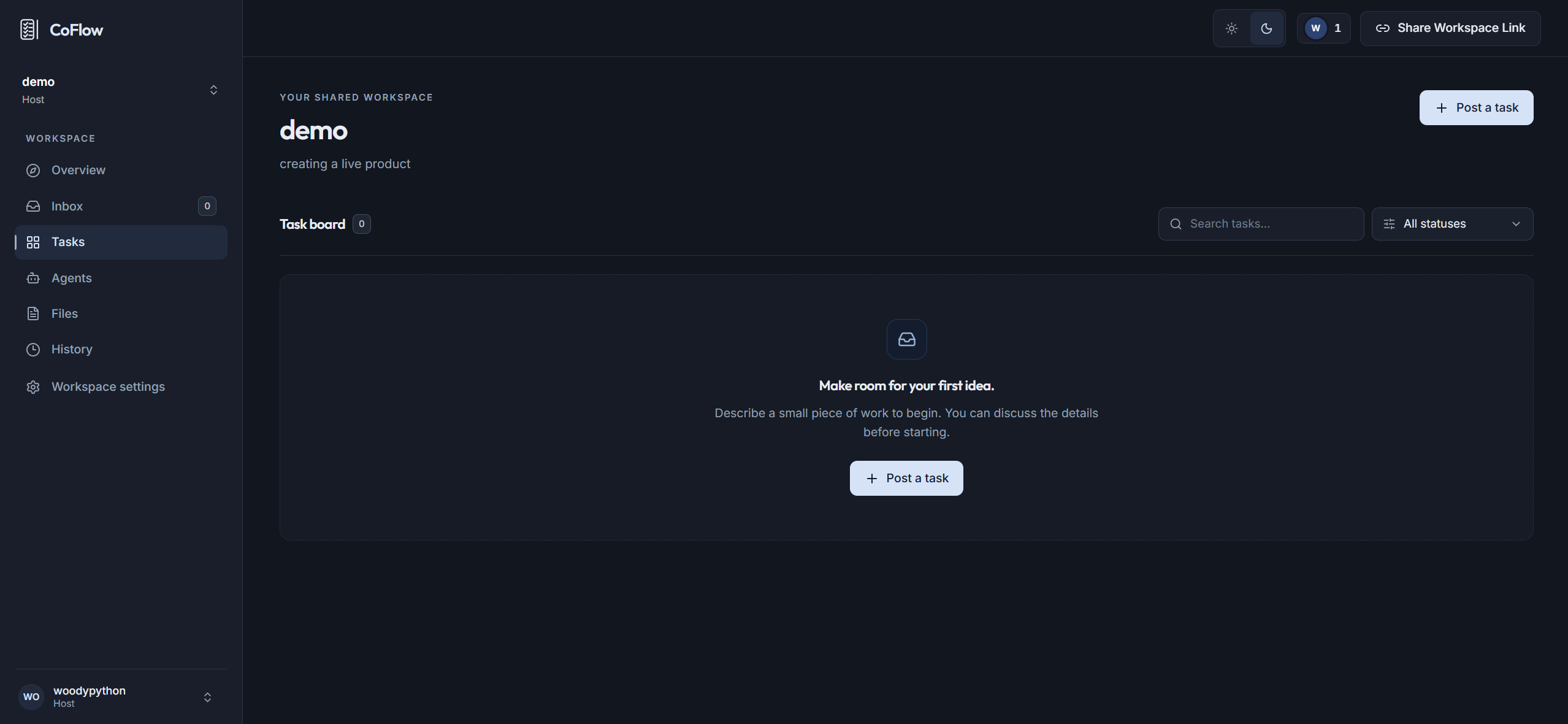
Workspace landing page
-
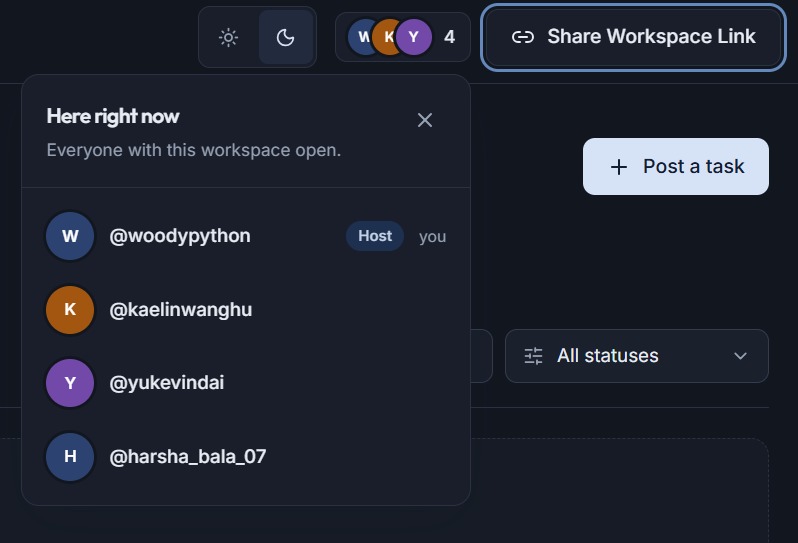
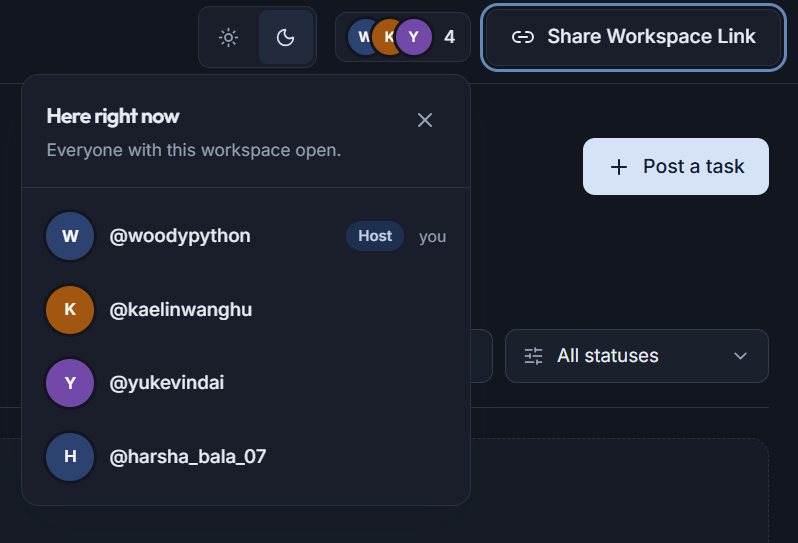
Live users viewing on your workspace
-
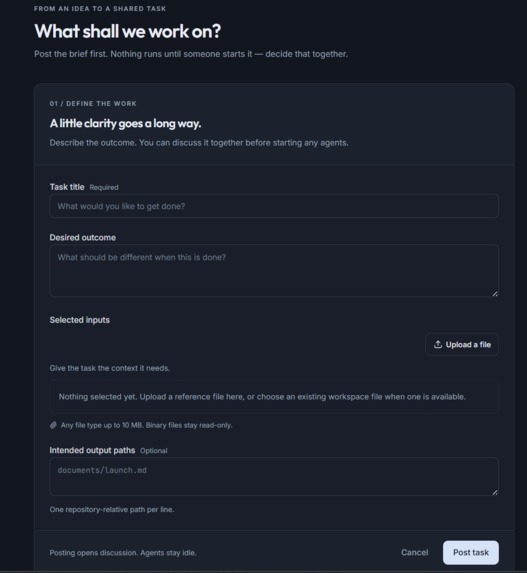
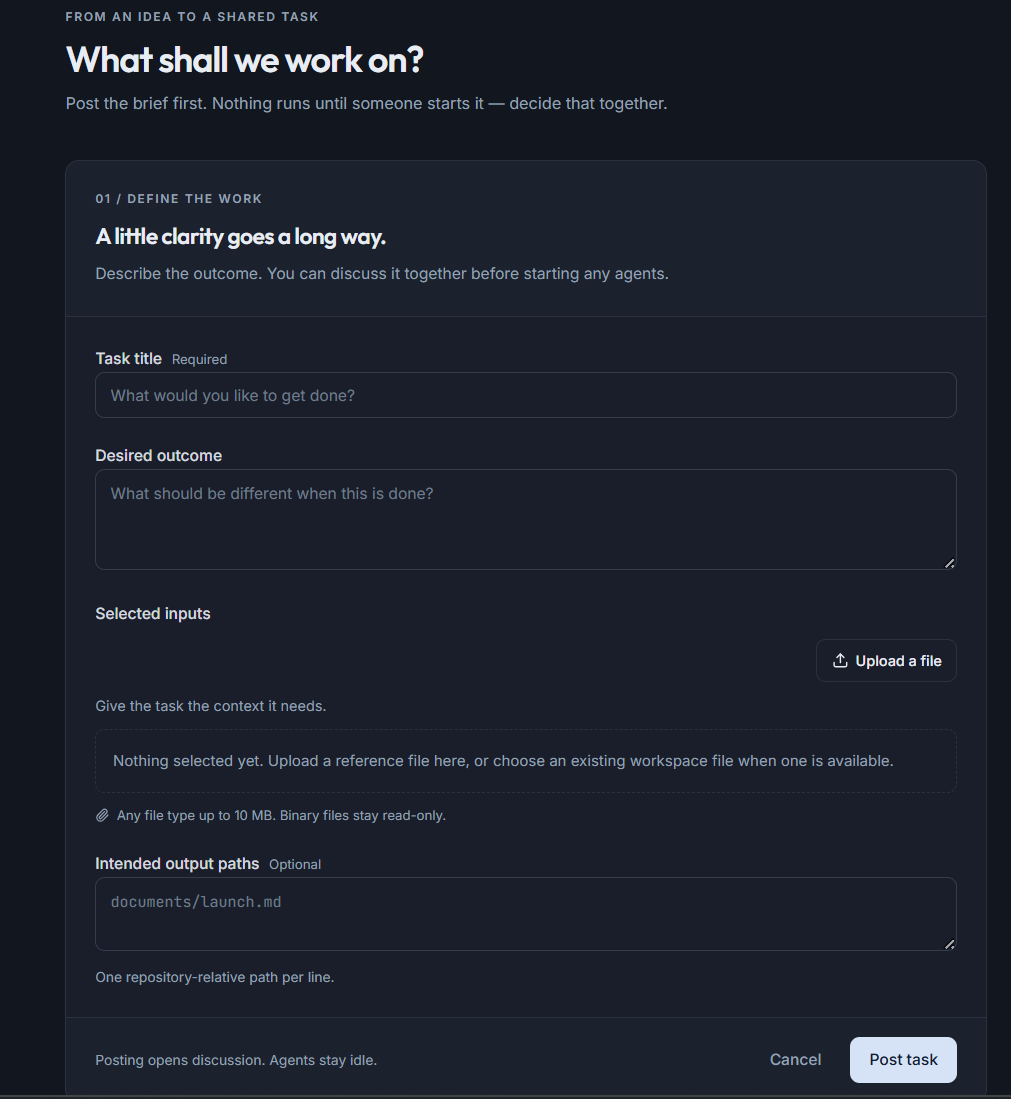
Task creation page
-
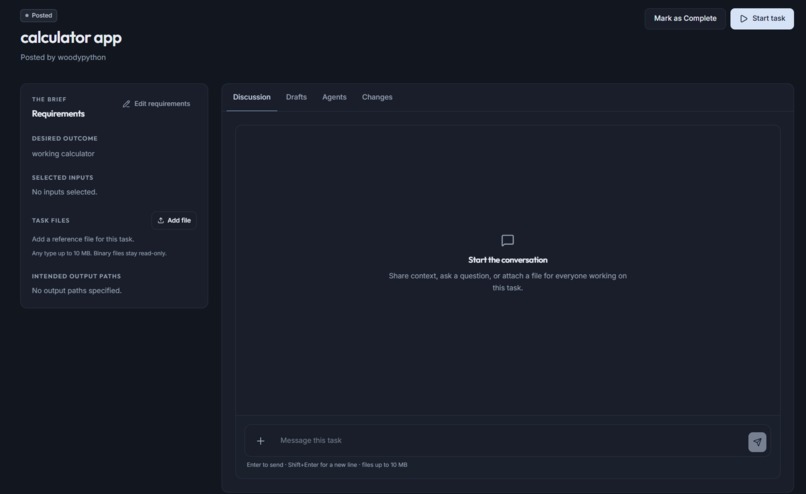
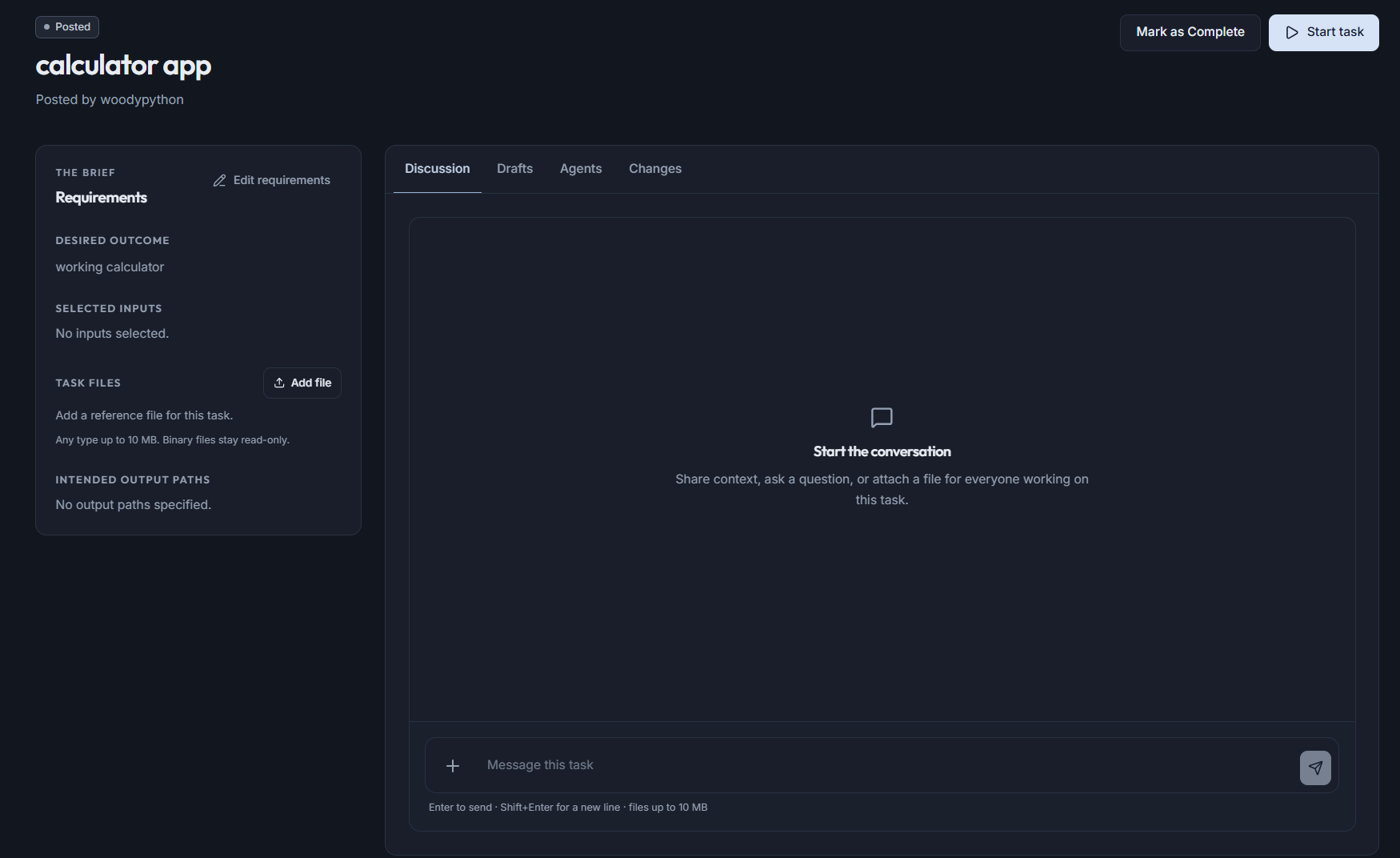
Task page
-
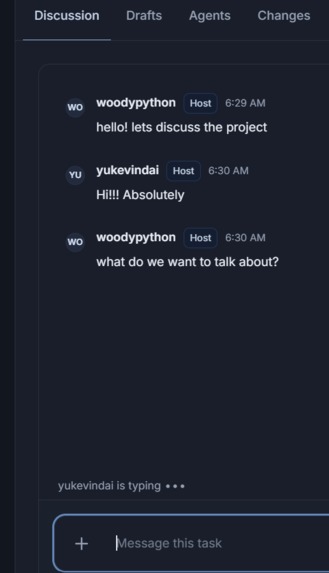
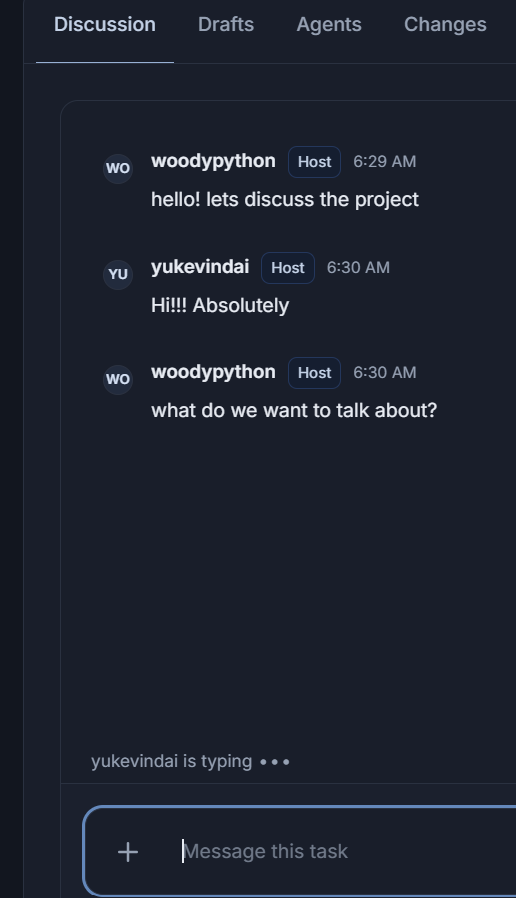
Live chat within tasks
-
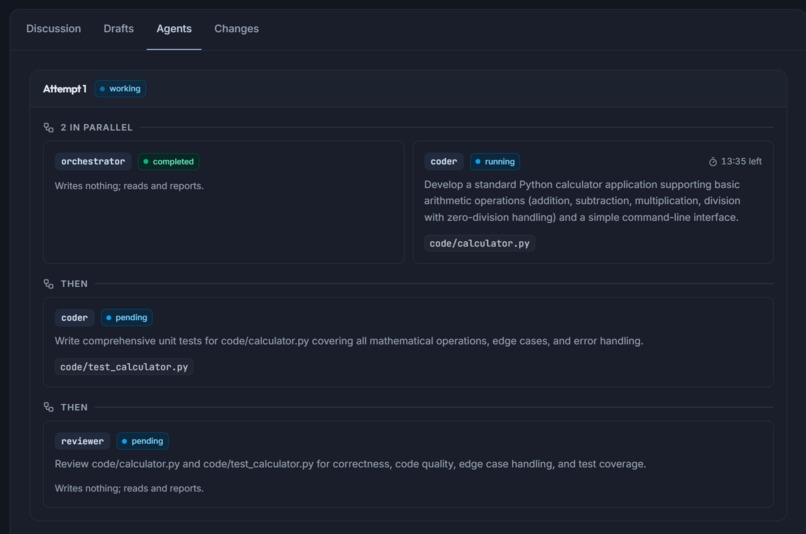
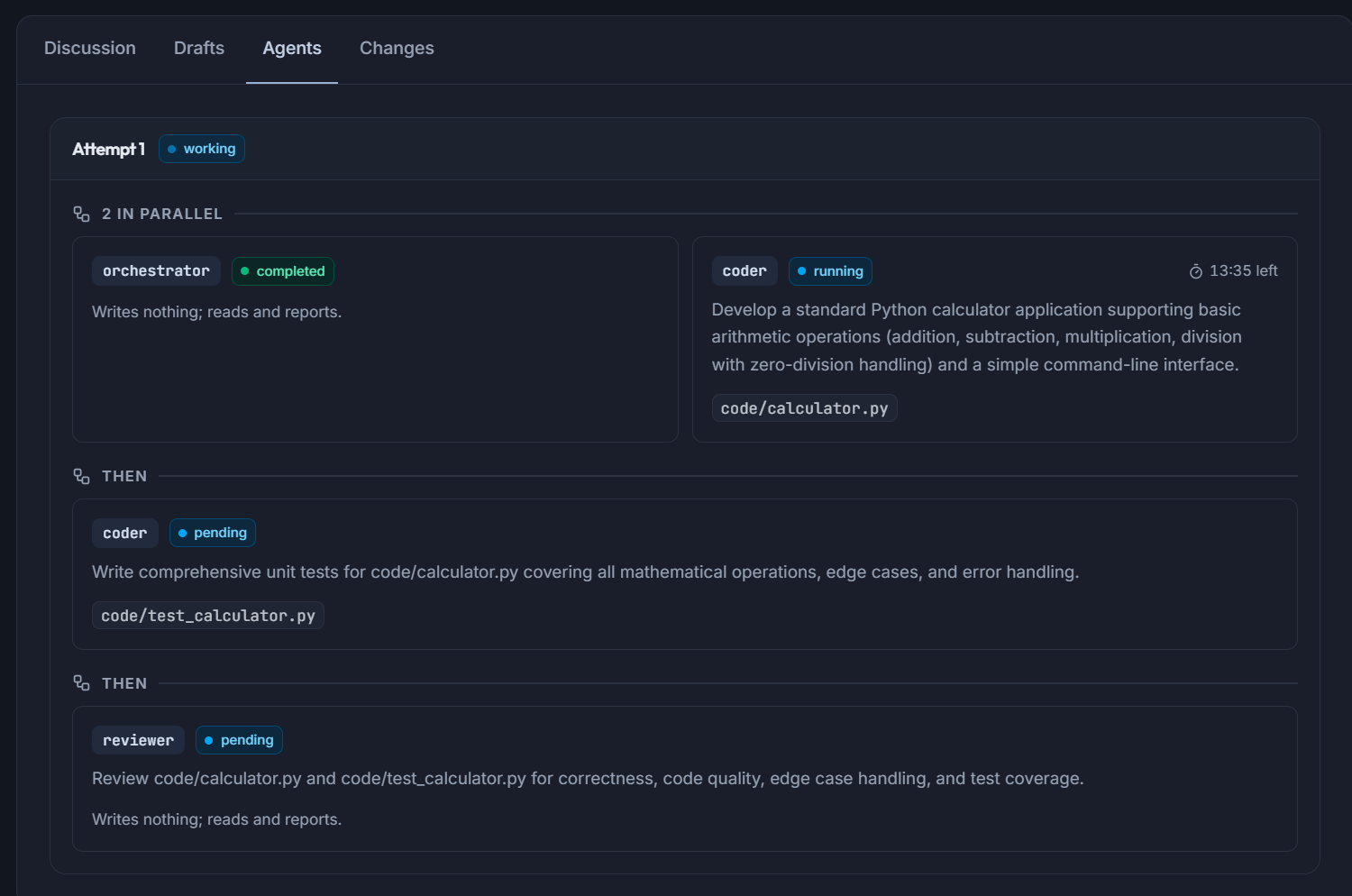
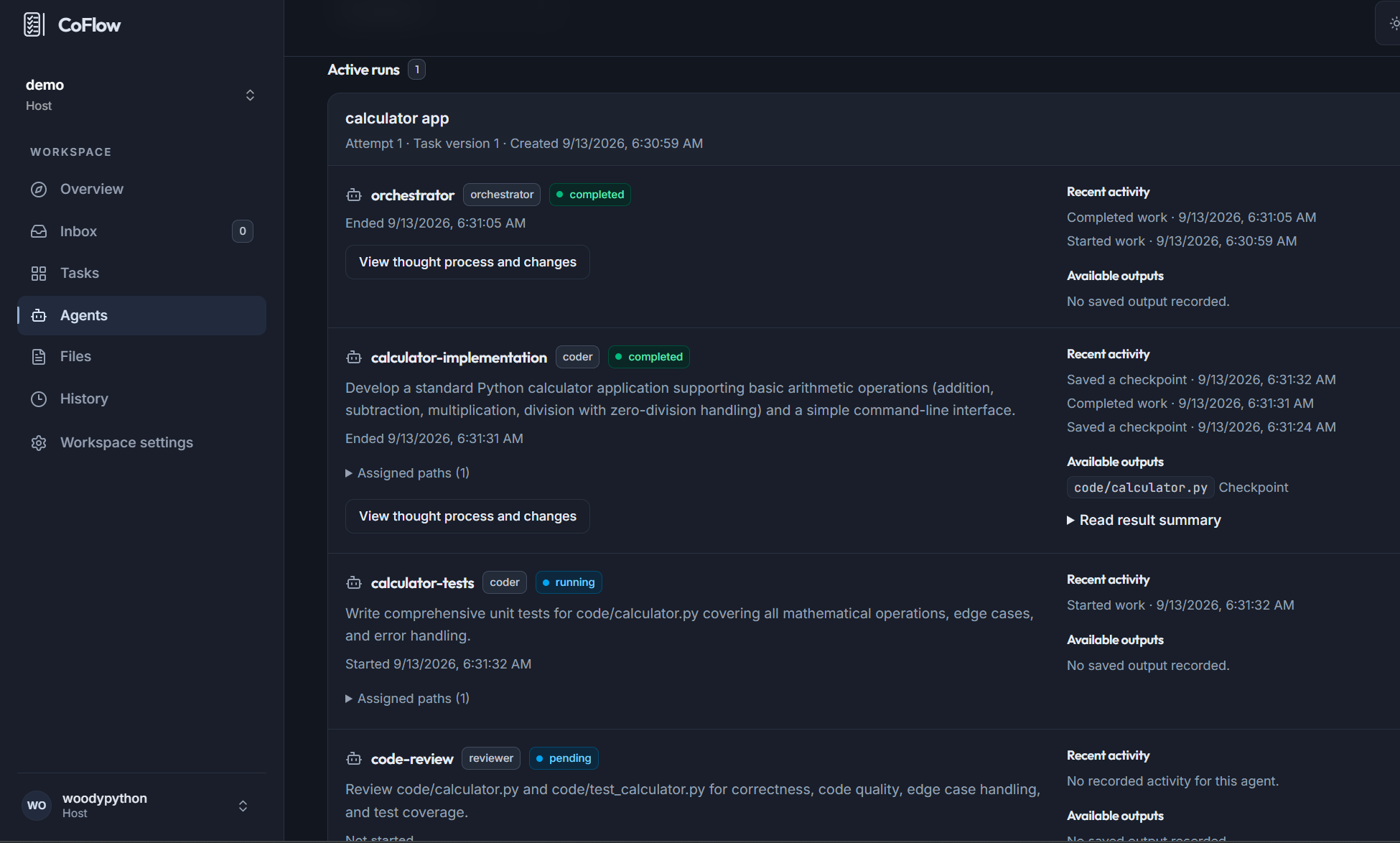
Agents working on task
-
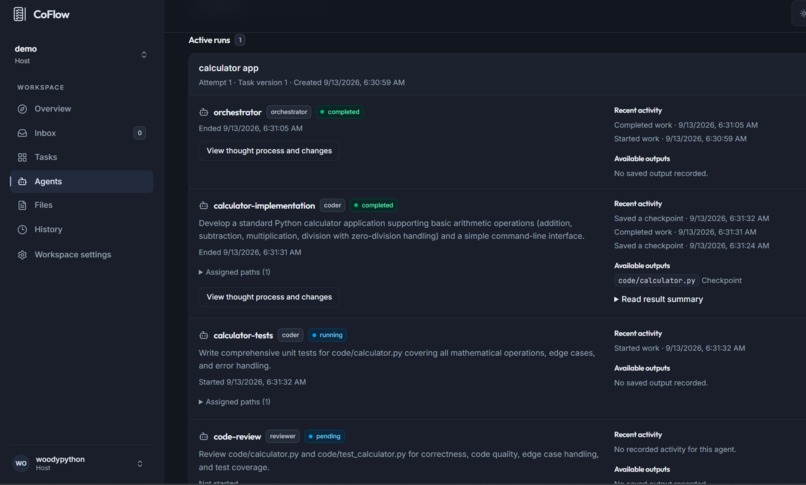
Main agent tab with more specifics on working agents
-
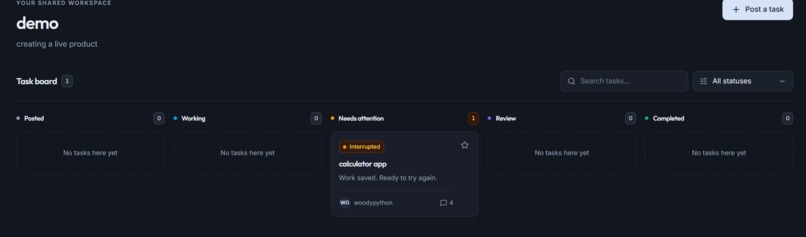
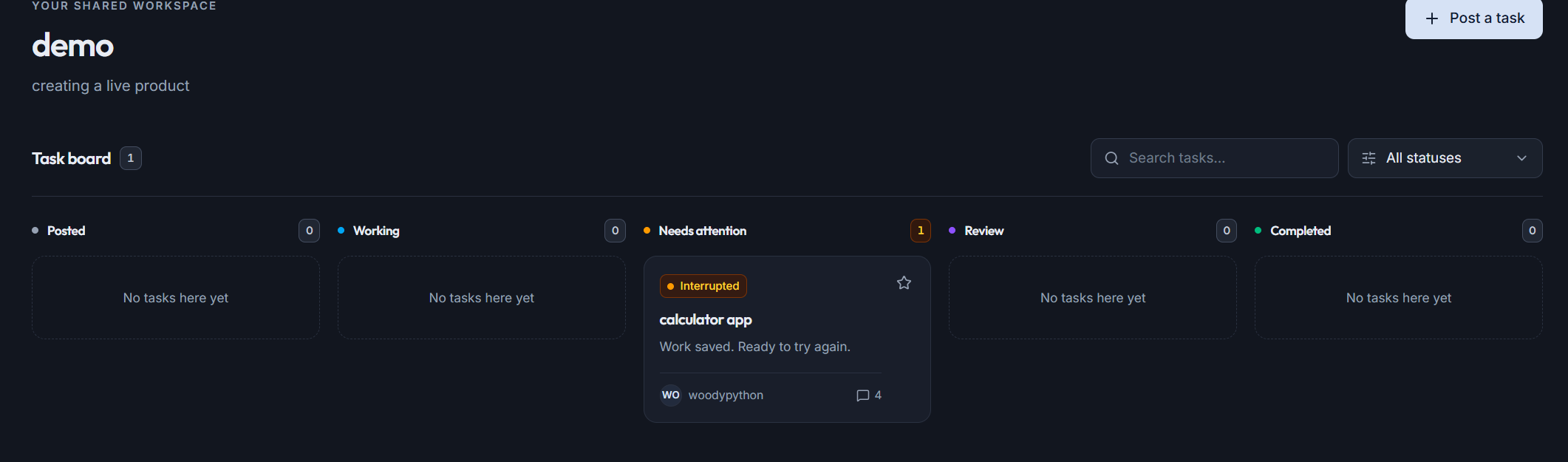
All tasks view with progression steps
-
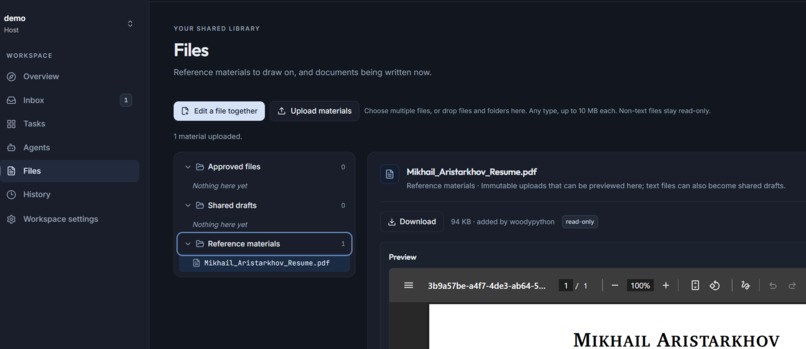
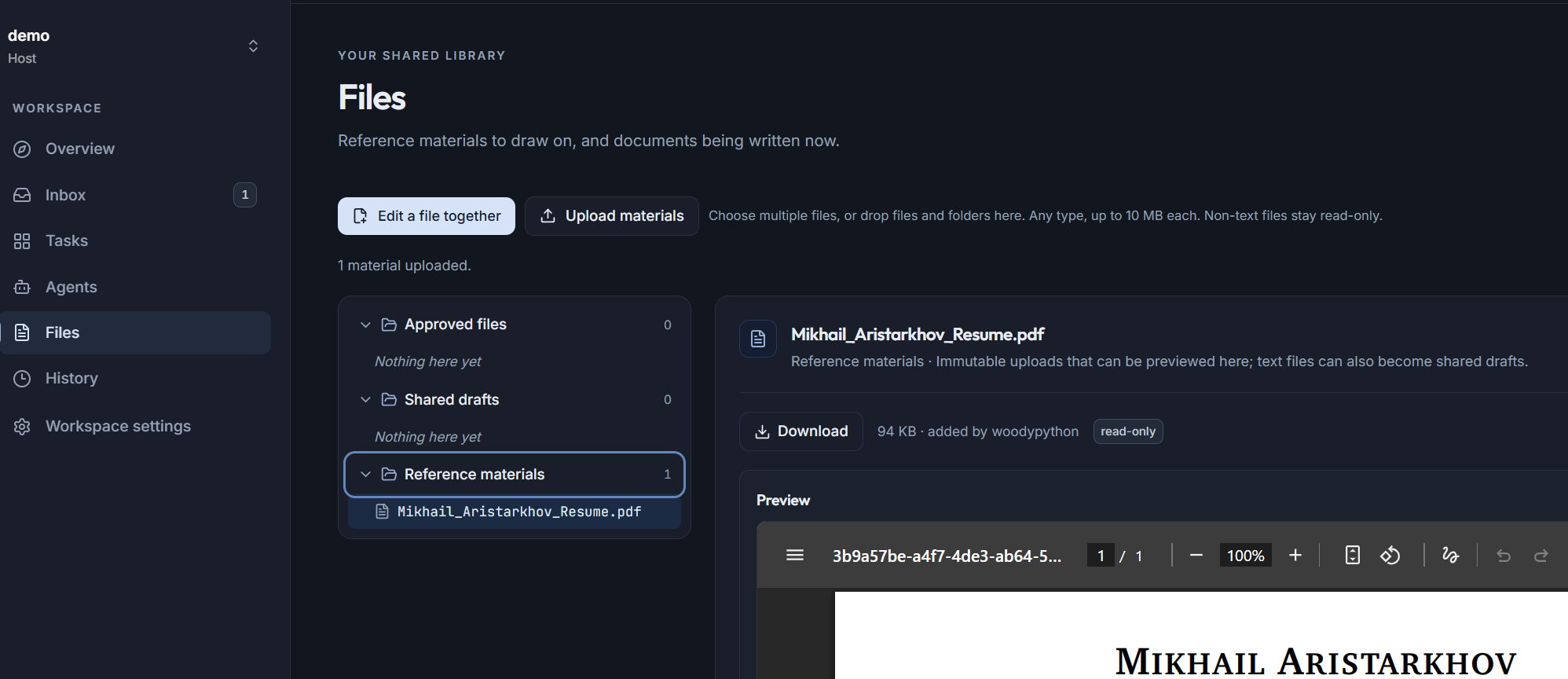
Workspace-wide file sharing and editing
-
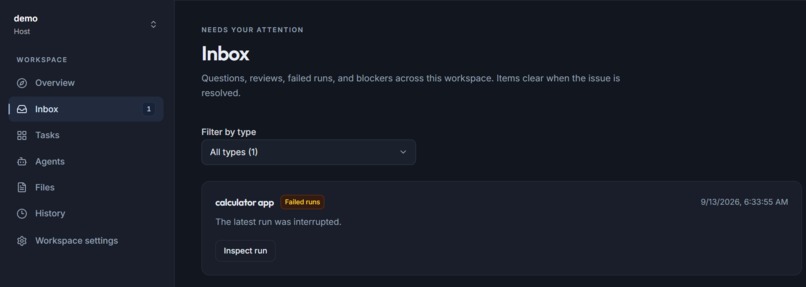
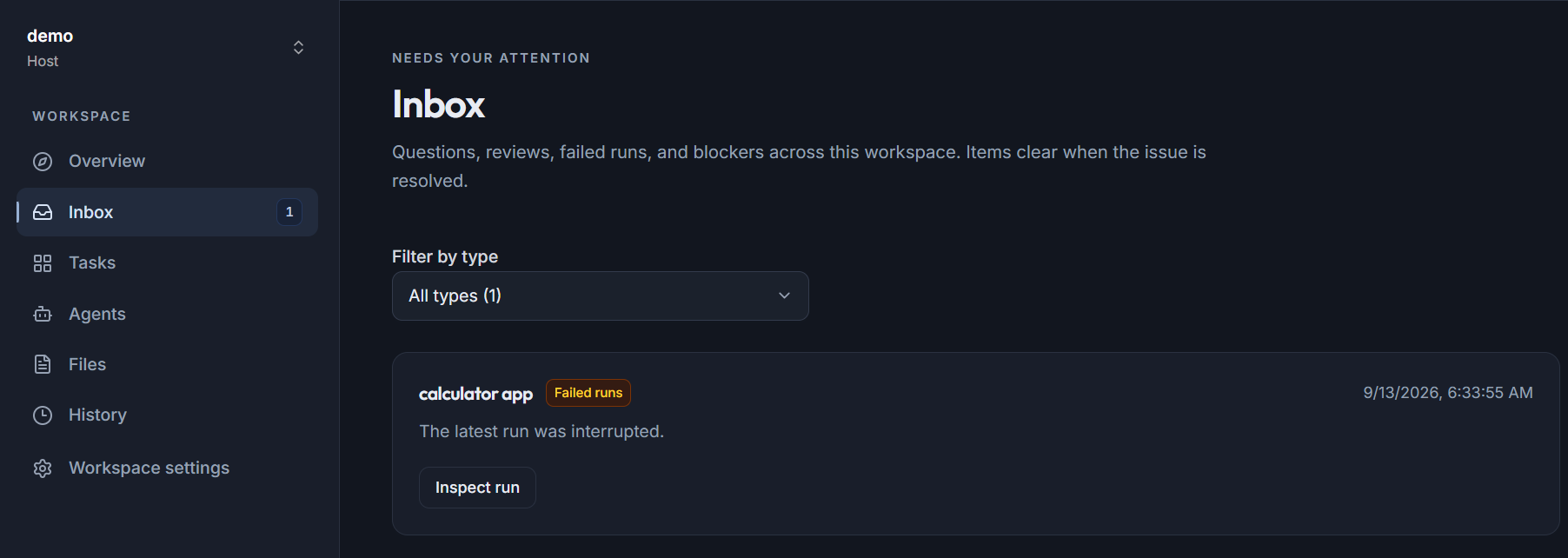
Inbox for important notifications
-
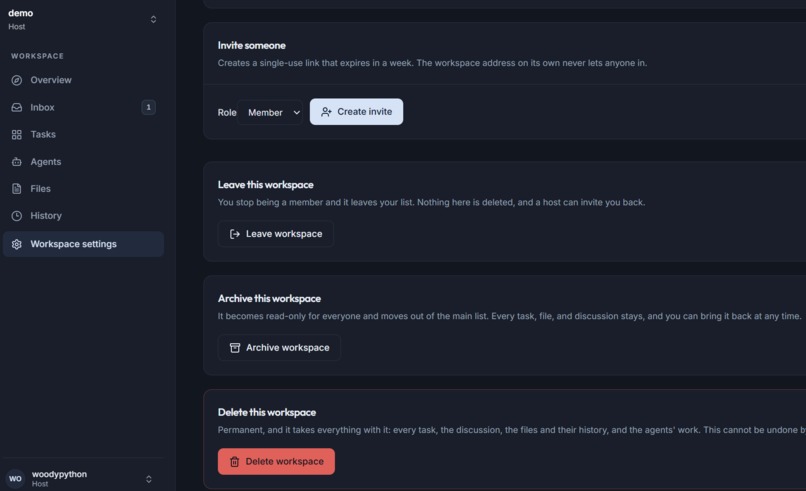
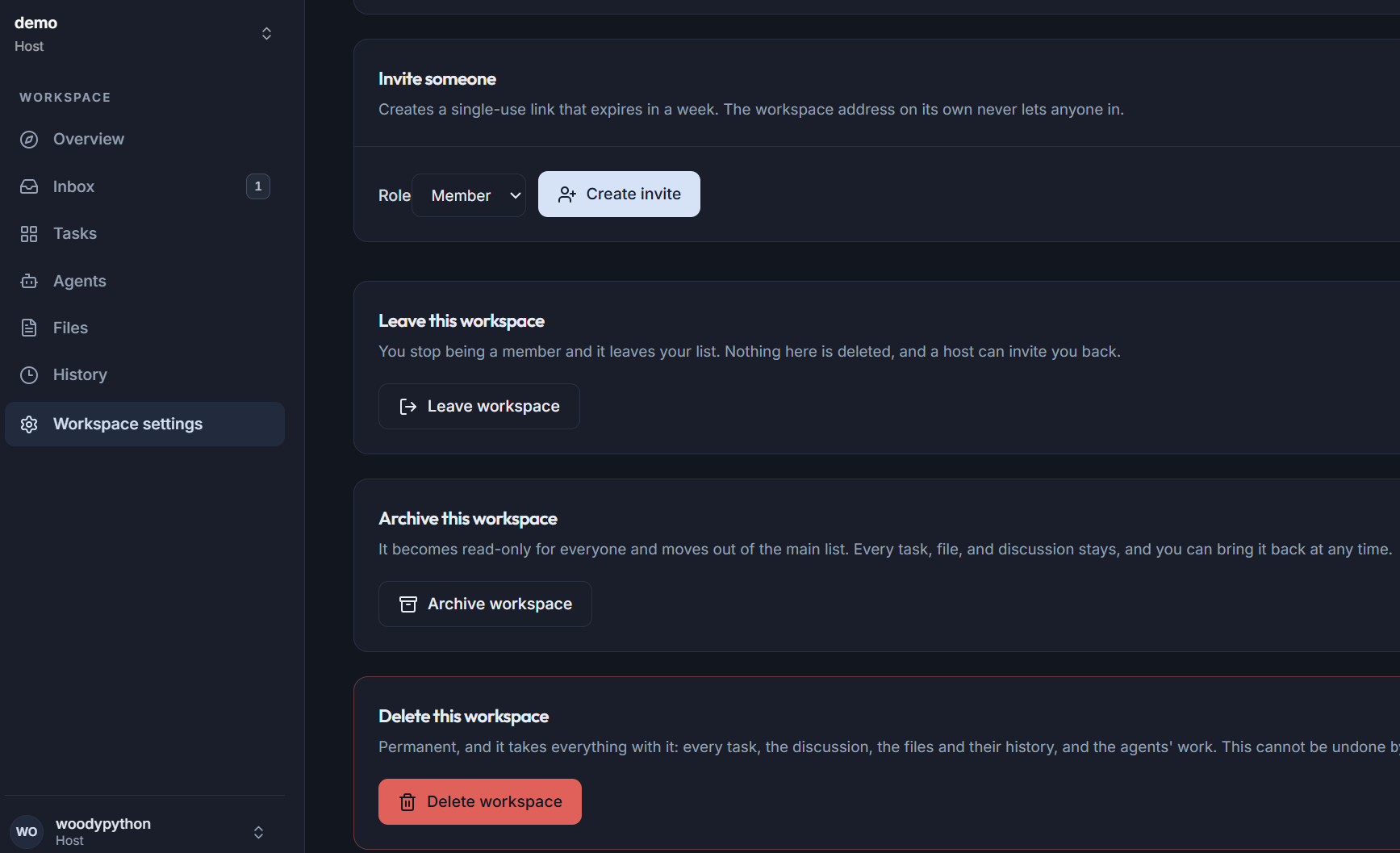
Workspace settings
-
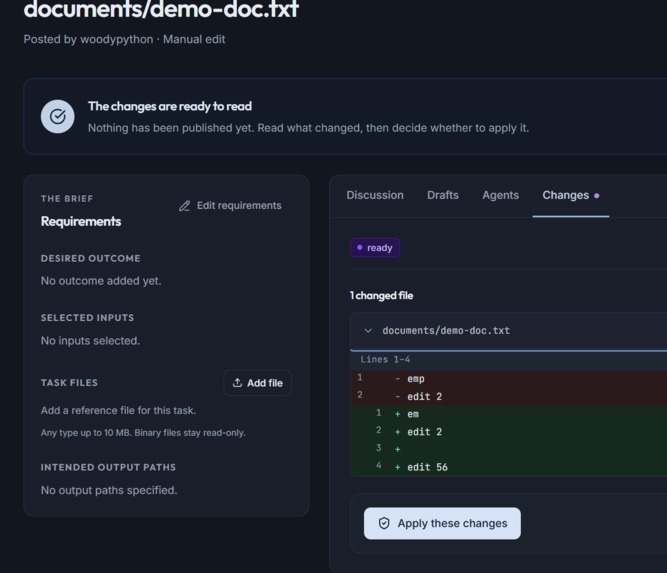
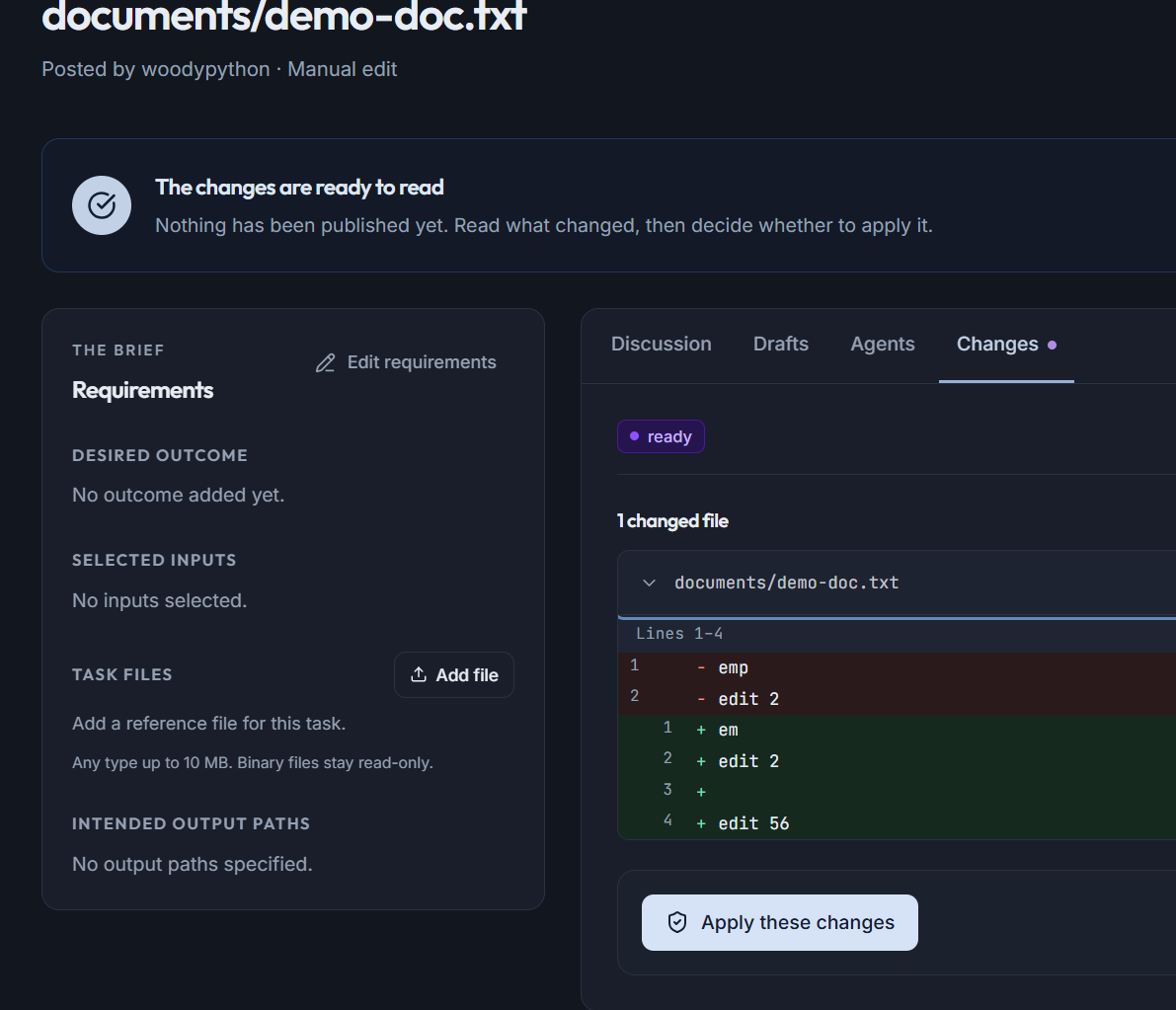
Built-in version control for text based docs
Inspiration
AI agents are capable, but the issue is that it's still built for one person at a time. This means that teams have no shared way to discuss, assign, and track AI-driven work together. We wanted to give teams a way to work with AI without straying away too much from how they normally collab.
What it does
CoFlow is a shared workspace where teams create trusted workspaces to discuss and post tasks together. After a task is started, an AI coordinator automatically breaks those tasks into scoped items for a fleet of agents to execute. Agents are given full context before starting work to maximize their chance of success. Everything the agents produce are managed through Git in a branch-based model, so changes are visible as diffs and allow human review before merging. Teams can also work directly in a shared editor with real-time saving, track agent history, and easily share workspace access.
How we built it
We built our collaborative workspace using React, TypeScript, and Vite for the frontend, backed by a Node.js and Fastify API. Supabase-hosted PostgreSQL handles application data, uploaded materials, and realtime updates, while Monaco Editor and Yjs power simultaneous document editing with shared cursors. Users can create a workspace, share its contribution link, post tasks, and discuss requirements before explicitly starting AI agents.
Google’s GenAI SDK connects Gemini models for orchestration and worker assignments, while Git keeps human drafts, agent outputs, and approved files separate so changes can be reviewed before publication. Shared Zod schemas keep the frontend and backend aligned, and we use Vitest and React Testing Library to verify behavior and ensure quality.
Challenges we ran into
Integrating Gemini into our coordinator logic took real trial and error, since getting it to reliably break down tasks and assign them to the right agents wasn't something that worked out of the box. There were also significant struggles regarding Google Cloud's rate limits and API key integration that made Gemini functionality more difficult than expected.
We also had to keep changing our MVP scope as we built, by cutting or reworking features to make sure we had something both functional and aesthetic for the demo. Finally, we also ran into collaboration issues with our AI agents (the exact problem we were trying to solve) as the project grew and the scope of our duties expanded and conflicted.
Accomplishments that we're proud of
We're most proud of getting real Git integration working with the orchestration and concurrency systems, so every change agents make is tracked, diffable, and reviewable before it merges. We also put a lot of care into the UI, aiming for something easy to use and sleek that people from all backgrounds could understand.
Another feature that we believe to be noteworthy is the seamless collaboration between different people: discussion comments show up immediately, files can be edited concurrently, and synchronization is rigorously kept to ensure users all see the same state at all times.
What we learned
Building CoFlow taught us a lot of valuable lessons, as working with Gemini showed us how much careful prompting and structure it takes to get reliable task breakdown. Running into token limits with it early forced us to think more intentionally about efficient tool use and smart context windows.
We also learned just how important a well-structured markdown file and documentation is for agents. Giving them clear, well-organized context up front made a noticeable difference in how well they onboarded, understood, and executed tasks.
Finally, we were validated in our insistence on a solid design before any coding took place. Even with the occasional hiccup, giving agents the full design of the system allowed their output to integrate more holistically, allowing for a significantly shorter period focused on integration.
What's next?
We're planning to expand file support beyond what we currently handle, so teams can work with a wider range of file types directly in CoFlow (like Excel sheets).
For AI features, we want to give agents more pathways to interact with the coordinator, so that deviations from the plan at execution time can be more directly addressed.
Finally, we plan to add the ability to switch between different AI models, giving teams flexibility to choose the best model for a given task and making the application platform agnostic.
Built With
- agentic
- ai
- docker
- git
- monaco
- node.js
- postgresql
- react
- router
- supabase
- typescript
- vite
- websocket
- yjs
- zod


Log in or sign up for Devpost to join the conversation.