-
-
CoffeeProcure AI
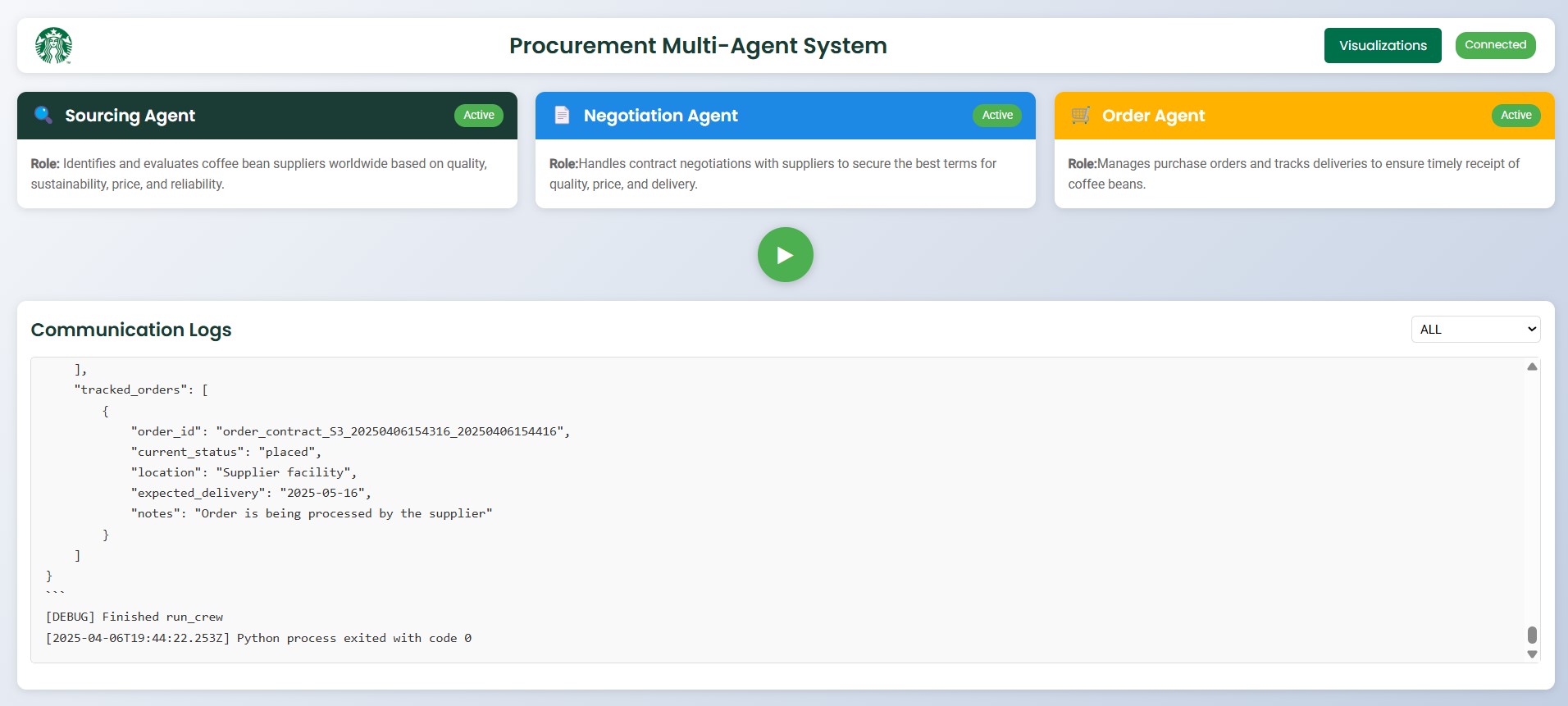
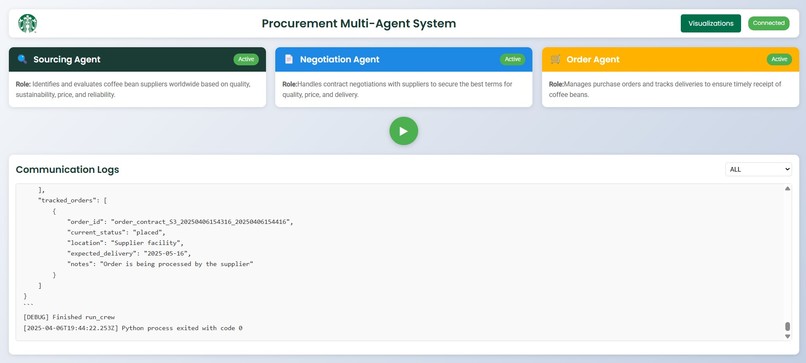
Inspired by the complexity of supply chain management, I developed a Coffee Procurement Multi-Agent System to simulate how autonomous agents can streamline coffee bean sourcing for a fictional company. My goal was to explore how AI agents can collaborate to optimize procurement processes, drawing inspiration from real-world logistics challenges faced by companies like Starbucks.
I built the project using a combination of HTML, CSS, and JavaScript for the front-end, with Node.js and Express for the back-end. Python powered the agent logic, utilizing mock implementations of sourcing, negotiation, and order agents. WebSocket enabled real-time communication between the server and the dashboard, displaying agent logs and final outcomes. The visualizations page, built with Chart.js, simulated market trends, updating every 1.5 seconds.
I learned to integrate WebSocket for real-time updates, manage inter-process communication between Node.js and Python, and design a cohesive UI with a brown theme. Challenges included resolving WebSocket compatibility issues, handling missing Python modules, and ensuring seamless data flow between the front-end and back-end. Debugging asynchronous message handling was particularly tricky, but it taught me the importance of robust error handling and modular design in multi-agent systems. This project deepened my understanding of AI-driven automation in supply chains.


Log in or sign up for Devpost to join the conversation.