-
-
Honeycomb
-
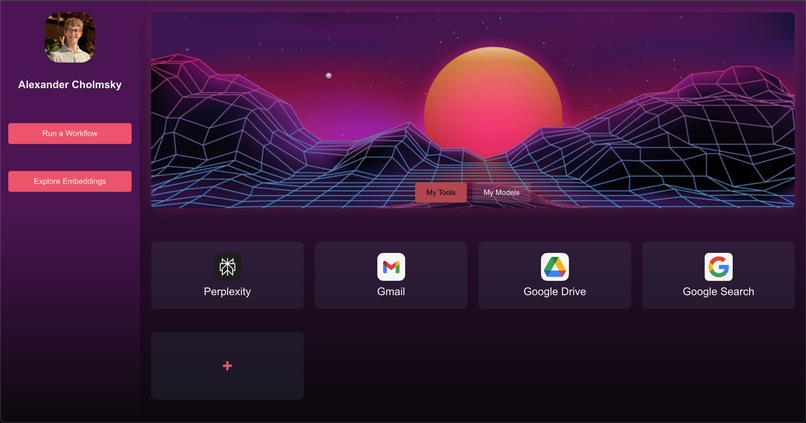
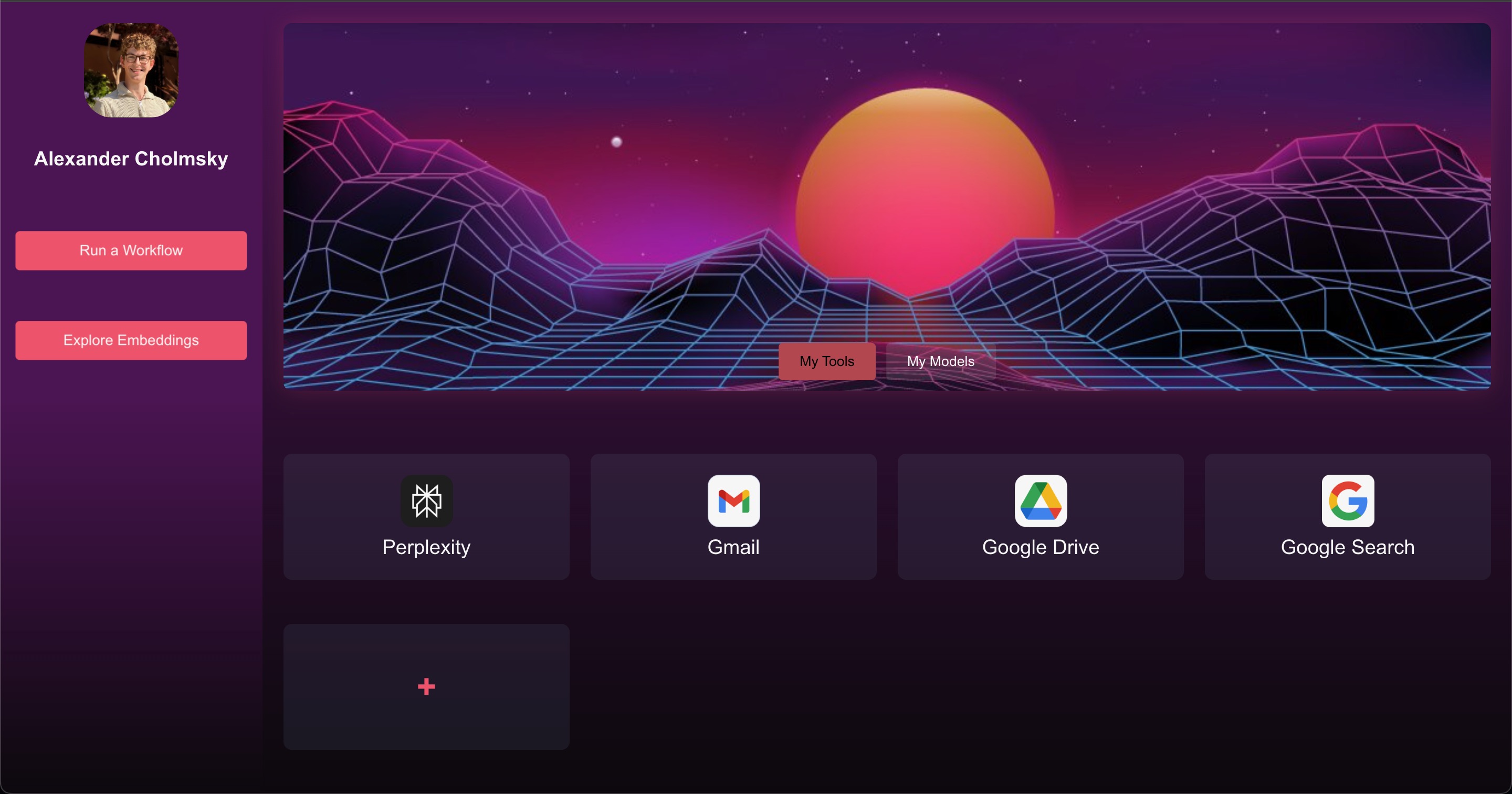
Main Page: You can see the different tool we currently support, each have their own agent.
-
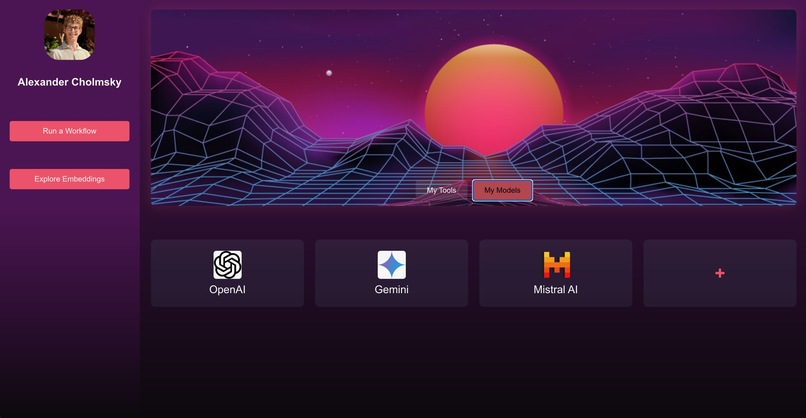
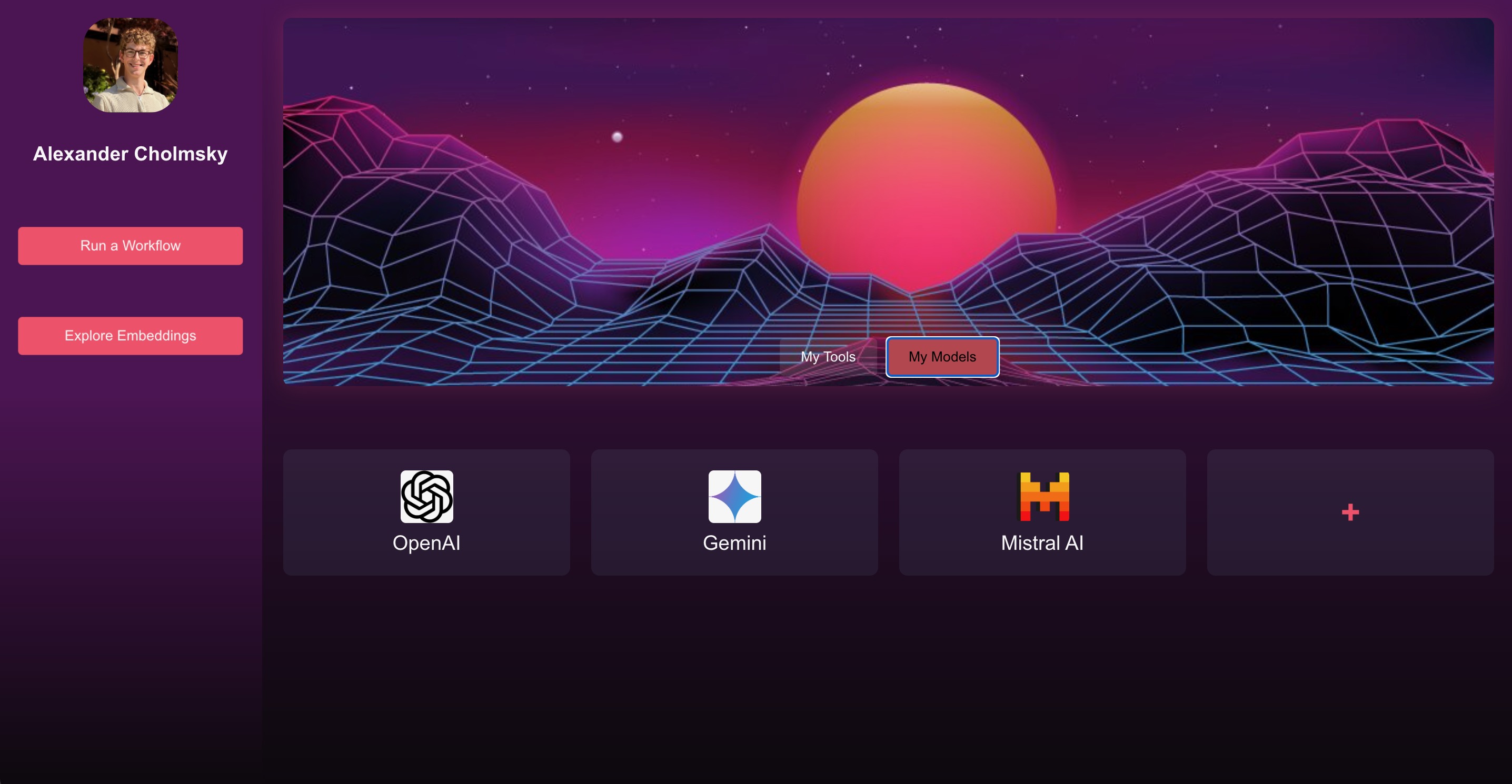
Main Page: You can see the different models available. We aim to expand our support to more models in the future!
-
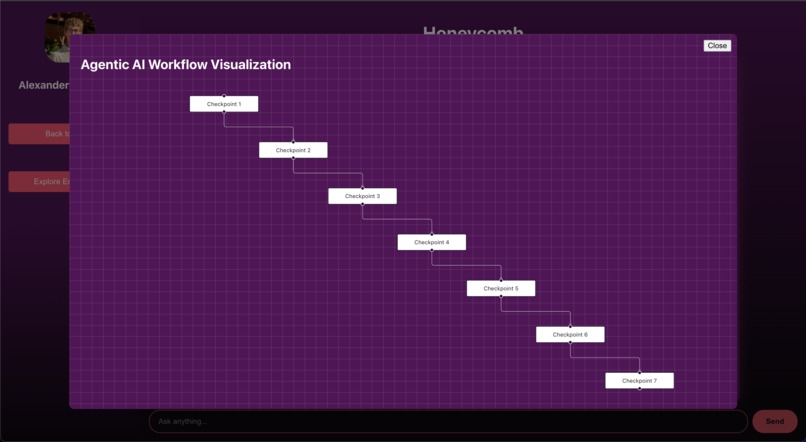
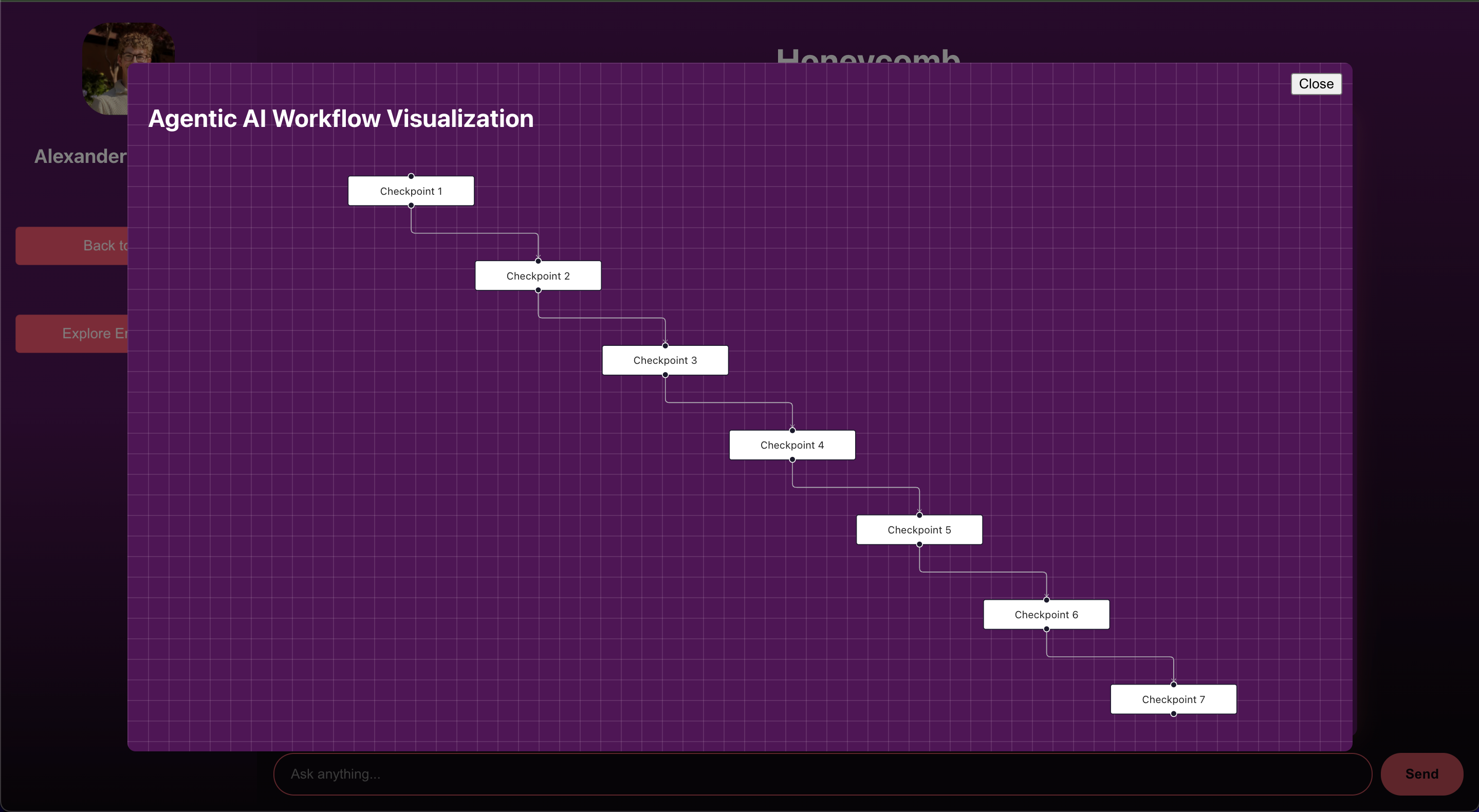
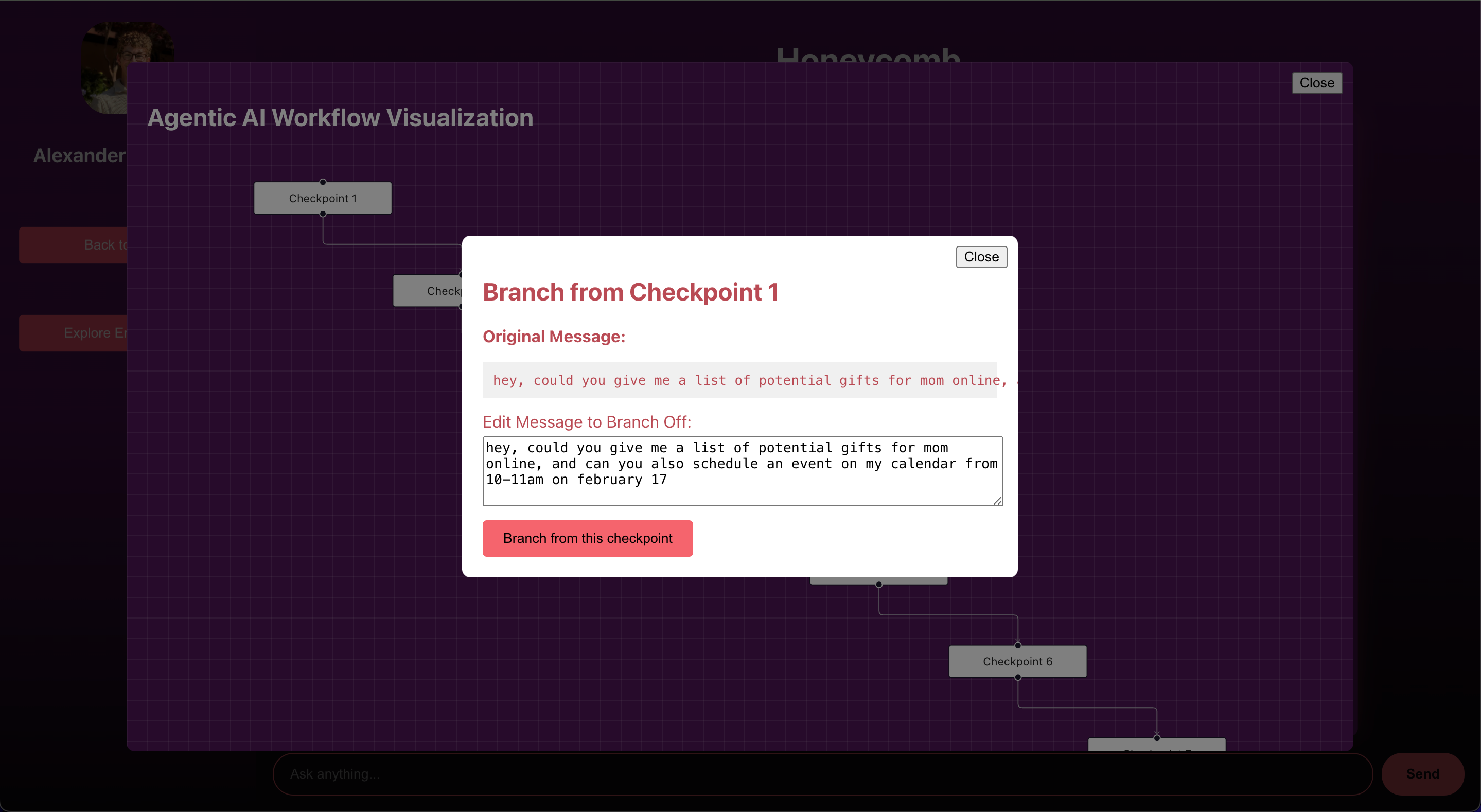
Interactive Visualization Tool: We can see each step the orchestrator and agents take. You can click on each checkpointt.
-
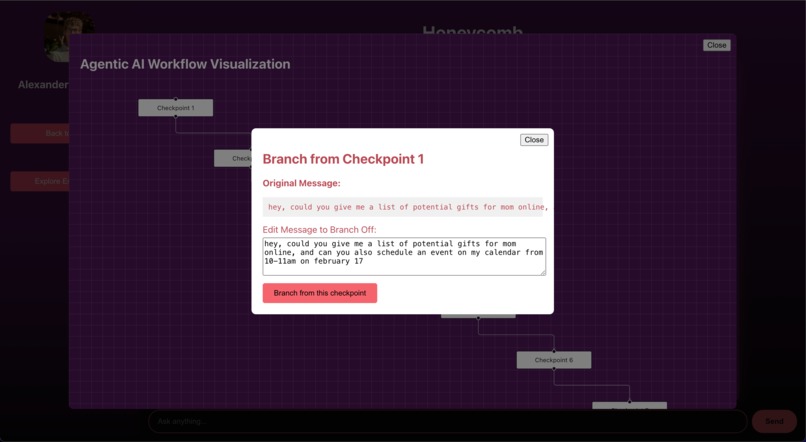
Checkpoints: If you select a checkpoint, you can see what step is being executed. You can modify inputs and re-run execution from this point
-
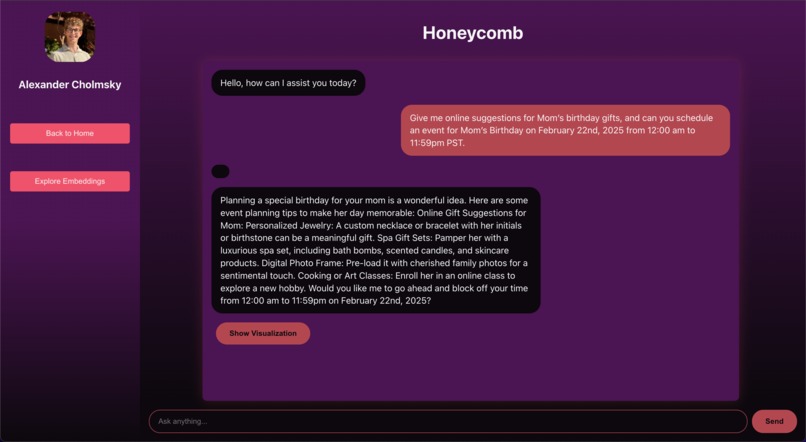
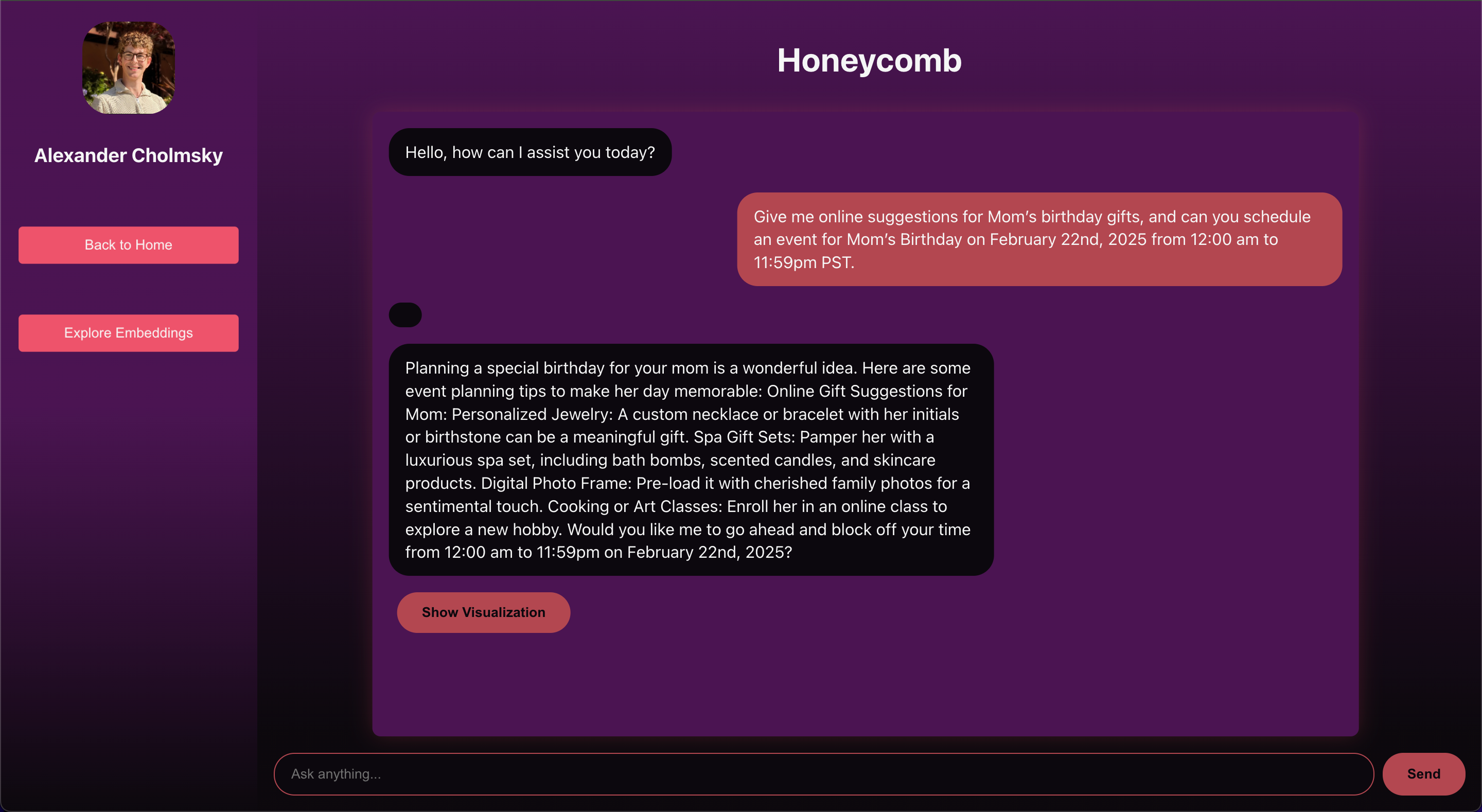
Chatbot feature
-
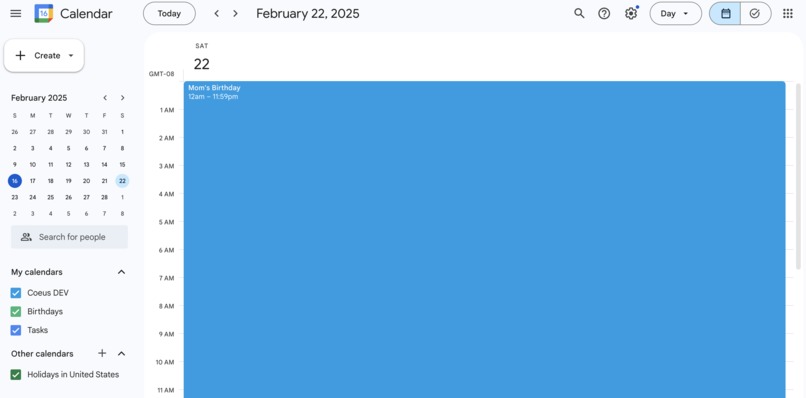
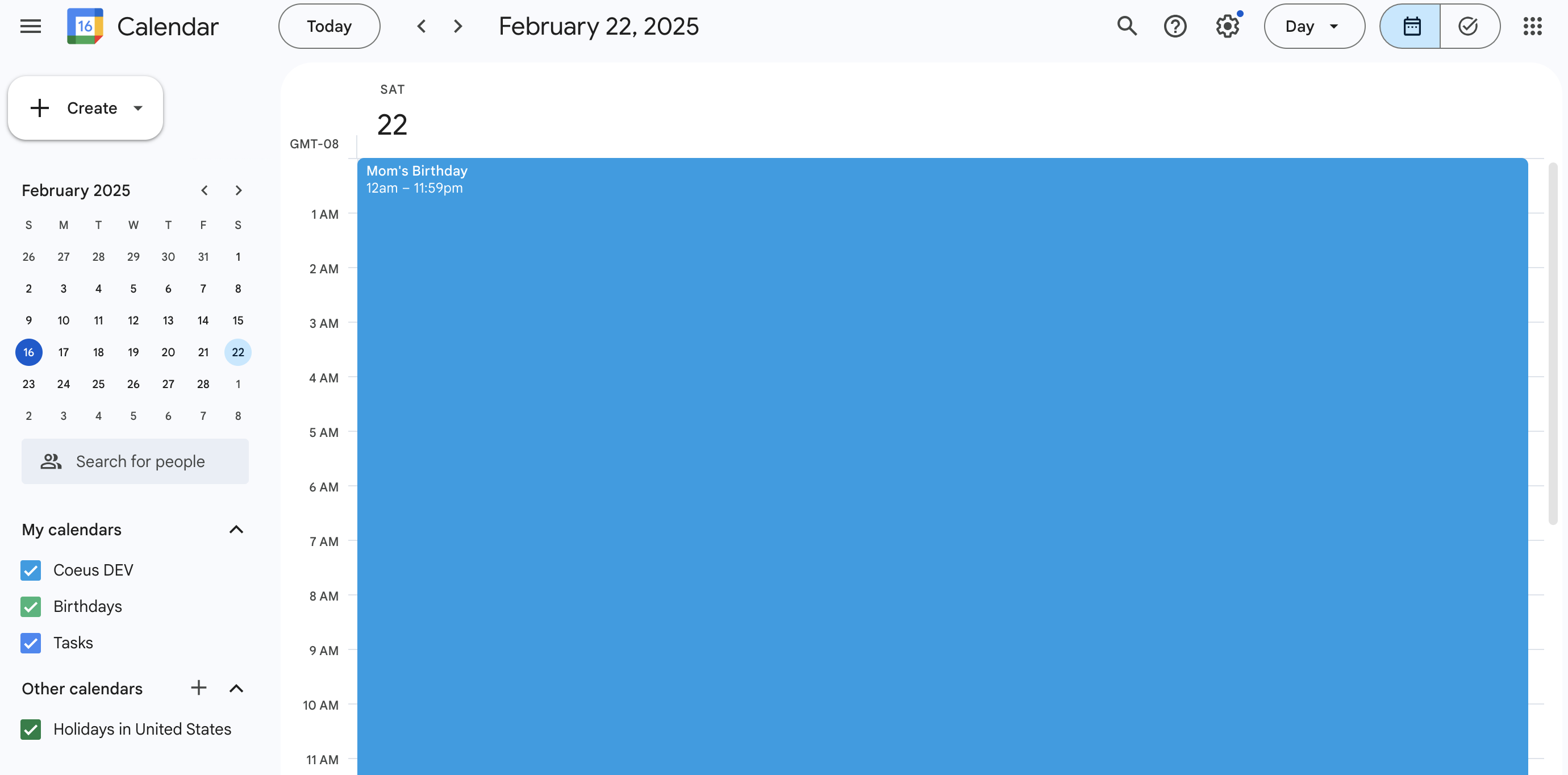
GoogleCalendar Agent can create/update events. We also support Google Search, Google Drive and Gmail Agents. Each API is paired with an LLM.
-
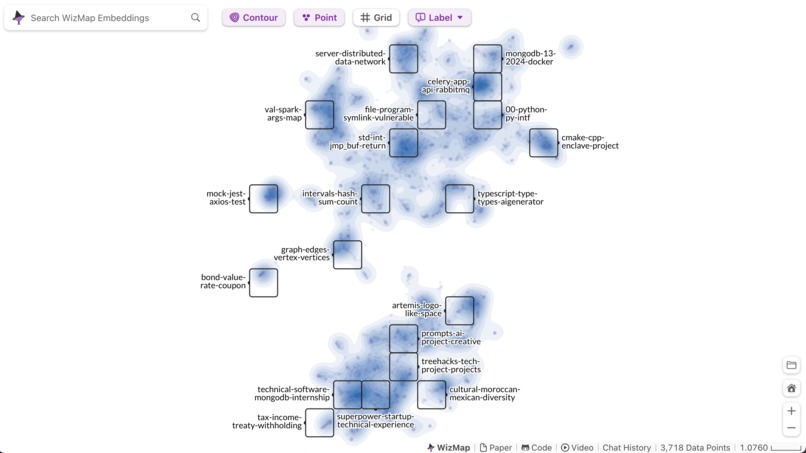
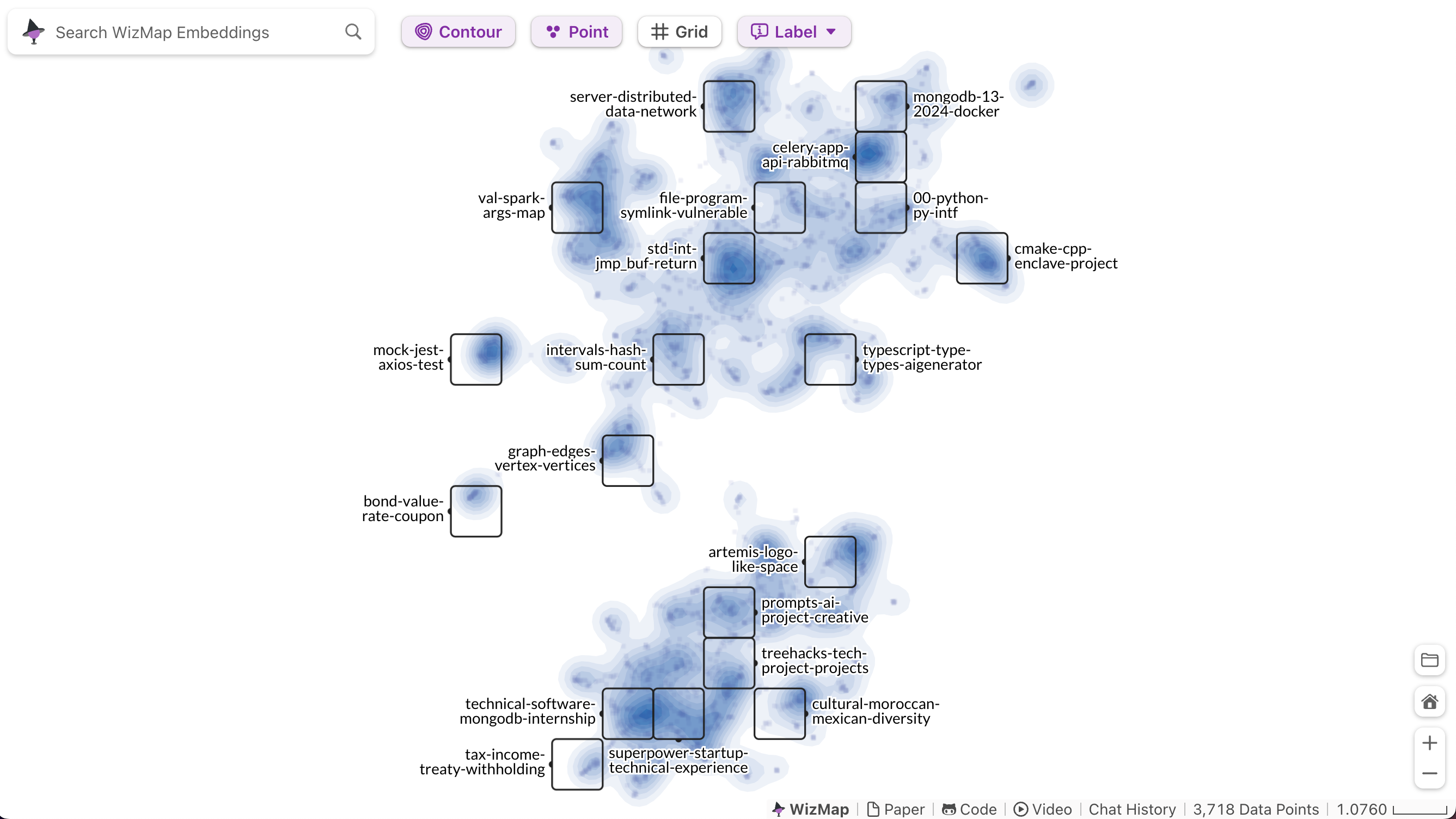
We also support embedded visualizations tracking user chat history.
Inspiration
Garry Tan’s post about building a secure, user-focused AI app store sparked an idea that inspired us—the need for a platform that seamlessly integrates new AI capabilities without requiring developers to reinvent the wheel. We envisioned an environment where multiple language models could coexist, enabling users to experiment with prompts, connect data sources, and transform natural language into powerful workflows.
We also recognize enterprises’ growing desire to streamline and automate their workflows—we decided to build a workflow automation platform that encompasses these traits, emphasizing data control, shared memory, and user-centric design that empowers both technical and non-technical users to specify tasks in natural language.
What it does
Honeycomb is a unified platform for experimenting with AI models, building sophisticated workflows, and seamlessly integrating data sources:
- AI Platform: Access different language models in a single, secure environment.
- Prompt Experimentation: Easily compare results across multiple models by tweaking prompts and observing outcomes in real time.
- Workflow Automation: Use natural language to design multi-step processes. If an error occurs at any step, the system can roll back and retry from that point forward.
- Unified Memory – All models and agents share the same memory and context, ensuring a seamless and consistent workflow all in one environment.
- Interactive Data Visualization – The platform features an interactive timeline visualizer that maps out each step taken by the orchestrator and agents. Users can modify inputs and outputs at any stage, track branching when agents explore alternate trajectories, and view changes made through user adjustments to the workflow.
- Agent-Orchestrated: Let specialized agents take on tasks (like searching emails or scheduling in Google Calendar), all orchestrated by a central “chain of thought.”
- Enterprise-Ready: Scalable from a personal productivity tool up to large enterprise workflows, integrating directly with existing cloud and on-prem data.
How we built it
We combined several powerful tools and technologies to bring Honeycomb to life:
- LangChain: Specifically LangGraph helped facilitate building complex multi-agent graphs, building specialized agents, and managing advanced prompts.
- Codeium’s WindSurf IDE: Despite being back-end engineers at heart, we utilized WindSurf IDE to build a functional and interactive front end. This IDE offered agent-based components that made creating our own agents very fun and easy.
- OpenAI: The first language model we integrated, providing robust text generation and conversational capabilities.
- Google Suite APIs: Created dedicated agents for Gmail, Google Calendar, Drive, and Search to automate tasks within the Google ecosystem.
- Elasticsearch VectorDB: Stores historical chat data and context, enabling quick vector searches and large-scale retrieval for RAG (Retrieval-Augmented Generation).
Challenges we ran into
- Front-End Development: As primarily back-end engineers, building an interactive UI was a learning curve. WindSurf IDE helped us accelerate this process, but we still had to adapt to new technologies quickly.
- Chaining Complexity: Implementing robust “chain of thought” logic required careful design. If one task fails, the system needs to backtrack seamlessly and re-run subsequent tasks.
- Degradation when Number of Tools Increase: There is a clear trade-off between the number of agents you can provide to your orchestrator, and the orchestrator's abilities to effectively handle complex workflows. With the strong desire to continue growing this platform, we explored ways to optimize decision-making within the orchestrator, allowing it to intelligently allocate resources and construct workflows more effectively.
- Scalability: Designing for individuals and large enterprises alike meant ensuring our architecture could handle numerous models and tools.
Accomplishments that we're proud of
- Modular Orchestrator: We successfully built a chain-of-thought orchestrator that can dynamically break down prompts, handle errors mid-flow, and resume tasks without losing context.
- Seamless App Store Approach: We proved the viability of the AI App Store idea by integrating multiple models, data sources, and specialized agents into one platform.
- Unified Experience: Our platform keeps chat context, data visualization, and workflow automation under one roof, drastically reducing the need for multiple, disconnected apps.
- Developer Ease of Use – Designed for seamless integration, the bring up of tools and agents is easy and can take as quickly as a few minutes. We envision a community-driven marketplace where developers can effortlessly add and share new models, expanding the platform’s capabilities.
What we learned
- Iterative Development: Building a system that can roll back and retry tasks requires a deeper understanding of stateful workflows, concurrency, and error handling.
- Collaboration with Tools: Embracing Codeium’s WindSurf IDE and specialized agents taught us the importance of letting powerful tools handle repetitive or boilerplate tasks, leaving us to focus on core functionality.
What’s next for Honeycomb
- Expanded LLM Support: Integrating more language models (e.g., Anthropic, Cohere, and local LLaMA instances) for broader capabilities and user choice.
- Extended Agent Ecosystem: Developing new agents for popular third-party services (e.g., Slack, Trello, AWS) to further automate enterprise workflows.
- Fine-Grained Access Control – Providing users with detailed permission settings, allowing them to specify which data sources each model can access, ensuring greater privacy, security, and customization.
- App Store Launch: Creating a dedicated marketplace where developers can publish “AI apps” (pre-configured agents and workflows), and users can discover and safely install them.
- Developer Extensions – Open-sourcing key components to foster a collaborative ecosystem where developers can contribute new models, agents, and features.
- Benchmarking and Performance Optimizations – Continuously refining the platform to enhance efficiency, responsiveness, and overall user experience for both developers and end users.
We’re excited about Honeycomb's potential to transform how we interact with AI in everyday life—whether it’s for personal productivity or large-scale enterprise solutions.
Built With
- codeium
- elasticsearch
- langchain
- openai
- python
- react
- vectordb
- windsurf


Log in or sign up for Devpost to join the conversation.