-
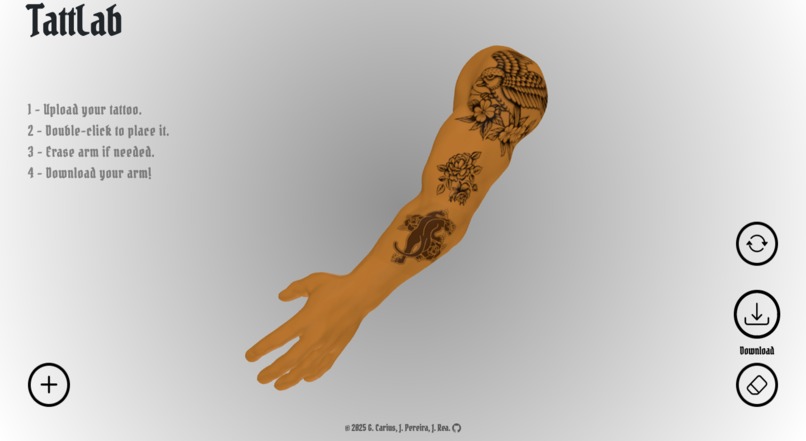
Sample Tattooed Arm
💡 Inspiration
The idea for this project came from the common struggle of planning a tattoo sleeve. Many people dream of getting a sleeve but find it difficult to visualize how different tattoos will fit together. Traditionally, this process requires working with a tattoo artist, who sketches designs on paper or an iPad—an approach that can be costly and time-consuming. We wanted to create a free and easy-to-use tool that allows users to experiment with their tattoo ideas before committing to an artist.
⚙️ What it does
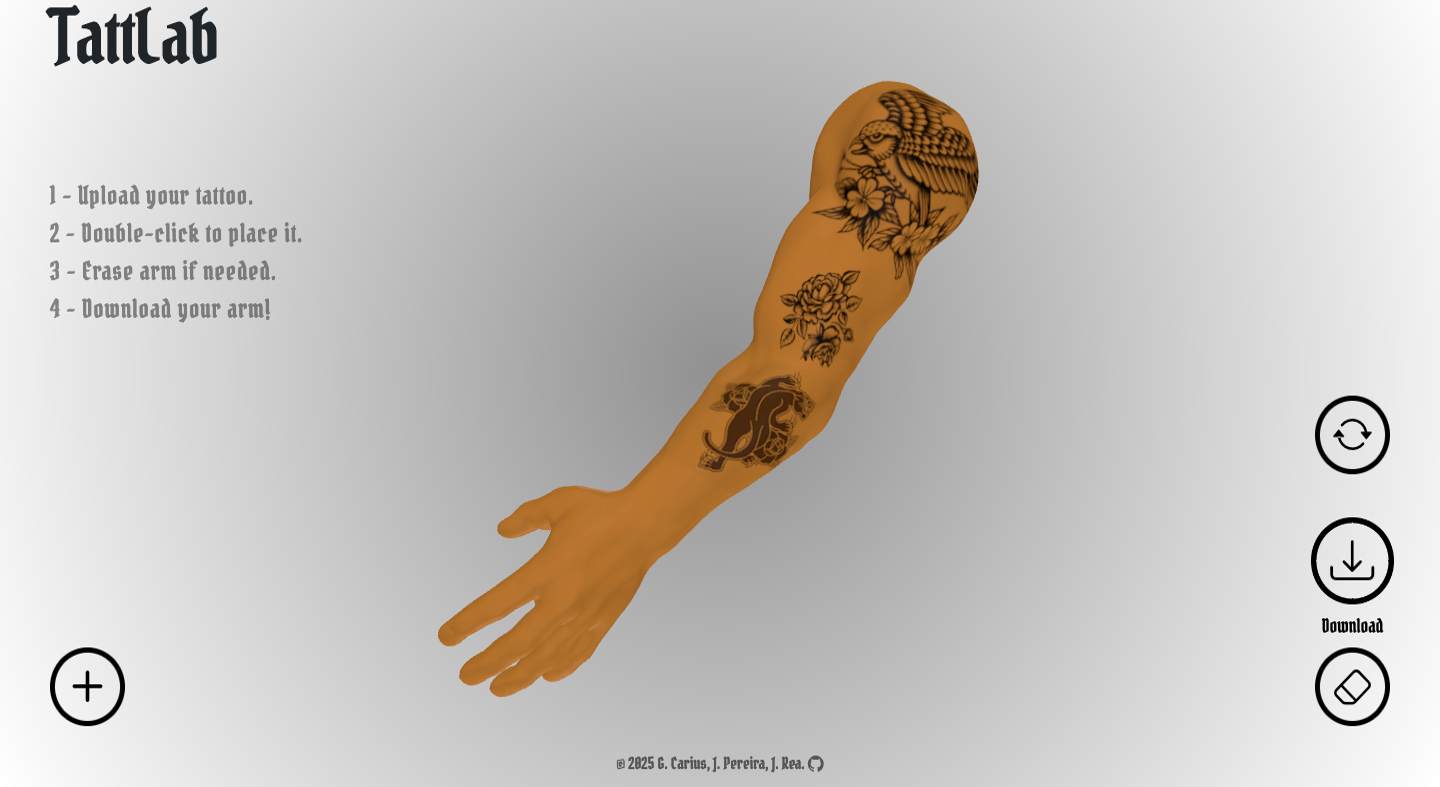
Our web application provides an interactive 3D model of a human arm where users can upload and position tattoo images. This allows them to experiment with different designs, placements, and combinations before visiting a tattoo artist. The goal is to help users confidently plan their tattoo sleeve with ease.
🛠️ How we built it
We developed the web application using Three.js to render a 3D model of a human arm. The front-end was built with HTML, CSS, and JavaScript, ensuring a smooth and interactive experience. The back-end, powered by Flask, handles rendering of the page and overall backbone of the project allowing for our team to develop the project while testing.
⚠️ Challenges we ran into
One of the biggest challenges was accurately mapping 2D images onto a 3D surface without distortion. We had to fine-tune the UV mapping process to ensure that tattoos wrapped naturally around the arm. Finally, creating a user-friendly interface that balances flexibility and simplicity required extensive testing and iteration.
🏆 Accomplishments that we're proud of
We are proud of successfully implementing an intuitive 3D interface that allows users to visualize their tattoo sleeve in real-time. The seamless integration of image uploads and interactive positioning enhances the planning experience. Additionally, our team overcame technical hurdles in 3D rendering, ensuring a realistic representation of tattoo designs.
📚 What we learned
Throughout the development process, we gained valuable insights into 3D rendering, web development, and user experience design. We explored Three.js for interactive 3D graphics, learning how to manipulate and texture a model dynamically. Additionally, we improved our understanding of front-end development principles, including how to create an intuitive interface for users with little technical experience.
🚀 What's next for coding-neymars TattLab
Moving forward, we aim to enhance the application by adding more customization features, such as different arm models, skin tones, and the ability to preview tattoos under various lighting conditions. We also plan to introduce a save-and-share feature, allowing users to keep and share their designs with tattoo artists or friends for feedback.

Log in or sign up for Devpost to join the conversation.