-
-
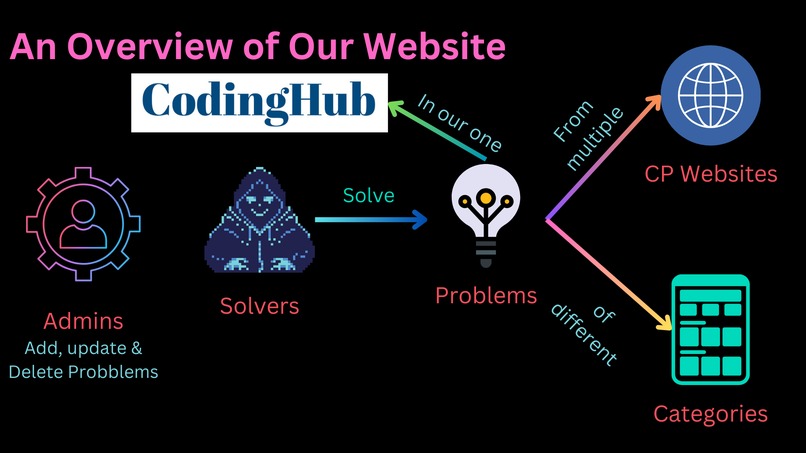
Overview of CodingHub
-

What our Platform offers

Inspiration
The inspiration behind CodingHub stems from the desire to enhance the problem-solving experience for developers by creating a centralized platform that aggregates challenges from top sites like Codeforces, LeetCode, and CodeChef. This approach aims to reduce the hassle of navigating multiple platforms, allowing users to focus on what matters most—solving problems.
By offering a personalized experience, CodingHub tailors problem recommendations to individual skill levels and preferences, ensuring that users can target their specific learning needs more effectively. This leads to more efficient learning, where users can maximize their time and effort in honing their coding skills.
Furthermore, CodingHub embraces innovation in problem-solving by introducing features like problem categorization by rating, custom problem sets, and integrated progress tracking. These enhancements provide a unique and streamlined approach to learning, making CodingHub an essential tool for anyone serious about improving their problem-solving abilities.
What it does
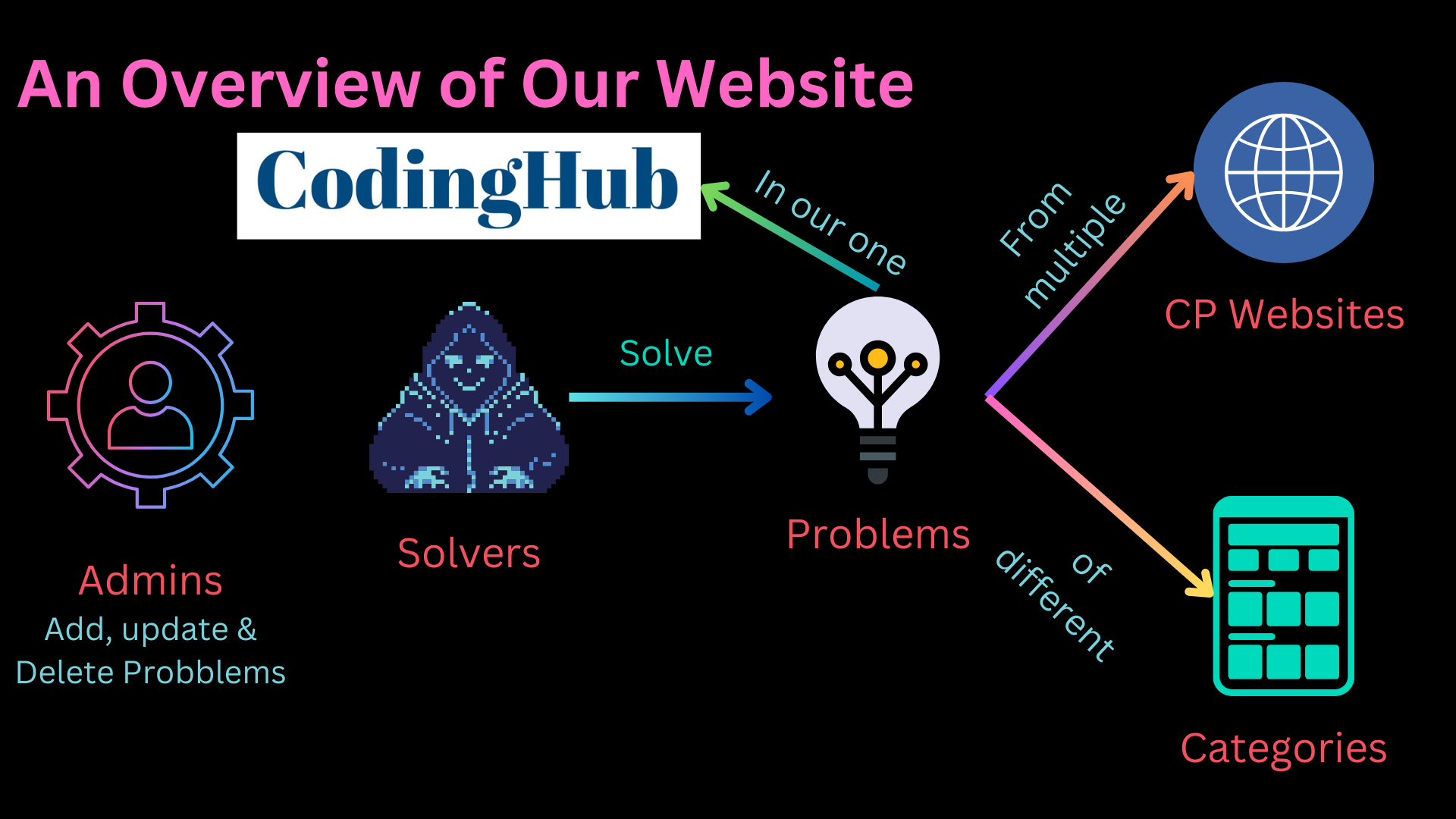
CodingHub supports three types of users: guest users, admins, and solvers.
Solvers can browse and click on problem links that directly navigate them to the problem's website, such as LeetCode, CodeChef, or Codeforces. Each problem also includes a solution link for reference. Problems are sorted by difficulty—easy, medium, and hard—to help solvers find challenges that match their skill level. Additionally, every solver has a dedicated profile page to track their progress.
Admins have the ability to upload new problems to the platform and edit existing ones, ensuring the problem database remains up-to-date and accurate.
Guest users can explore the platform but may have limited access to certain features.
How we built it
We developed CodingHub by focusing on creating a seamless and efficient platform for coding enthusiasts. The project started with the database, where we used MySQL to structure and manage key entities such as solvers, admins, websites, and problems. This database forms the backbone of the application, ensuring that all user interactions and data are stored efficiently.
For the frontend, we used HTML, CSS, and JavaScript to design a clean, intuitive user interface. These technologies allow for a responsive and engaging experience, making it easy for users to navigate through problems and access solutions.
On the backend, we leveraged Java with the Spring Boot framework to handle the application's business logic. Spring Boot provides a powerful, flexible environment that integrates seamlessly with our MySQL database, ensuring smooth communication between the frontend and backend.
Together, these components create a cohesive platform where solvers can access and solve coding problems, admins can manage content, and all user activities are streamlined and efficient.
Challenges we ran into
Complex Frontend Development:
Creating a user-friendly frontend for CodingHub involves designing an intuitive interface that accommodates different user roles. Managing dynamic data flow, ensuring responsiveness across devices, and maintaining smooth navigation are key challenges. The goal is to deliver a seamless and engaging user experience.
Backend Development:
The backend must handle complex business logic, data validation, and real-time updates. Integrating it efficiently with the frontend while ensuring maintainability is essential. The backend’s architecture must be robust to support smooth data management and user interactions under varying loads.
Database Management:
Database management involves designing a scalable schema that handles entities like solvers, admins, and problems while ensuring data integrity. Regular maintenance, optimization, and backups are necessary to prevent performance issues and ensure the database can scale with the application’s growth.
Accomplishments that we are proud of:
In our web application, users can access problem sets from platforms such as LeetCode, Codeforces, and others individually. The problems are meticulously organized by categories and difficulty levels to facilitate efficient navigation and selection. This project represents our first hackathon, and we are proud of the accomplishments achieved through its development.
What we learned
Through this project, we leveraged our foundational knowledge of HTML, CSS, JavaScript, and Java to further enhance our skills in these areas. By applying these technologies in a practical context, we deepened our understanding and expertise, refining our ability to create sophisticated web applications. The project allowed us to advance our proficiency in frontend and backend development, including more advanced aspects of JavaScript for asynchronous communication and dynamic content management. This hands-on experience has significantly strengthened our technical capabilities and problem-solving skills in web development.
What's next for Coding Hub
Firstly, we plan to foster community collaboration by introducing features that facilitate interaction among users. This includes adding forums, discussion boards, and collaborative problem-solving tools, which will allow users to share solutions, discuss strategies, and engage with one another more effectively.
Additionally, we aim to introduce coding contests to boost user engagement and motivation. By organizing timed contests with leaderboards and prizes, we will create a competitive environment that encourages users to challenge themselves and improve their programming skills.
Built With
- axios
- chatgpt
- css
- html
- intellij-idea
- java
- javascript
- mysql
- phpmyadmin
- springboot
- xampp

Log in or sign up for Devpost to join the conversation.