-
-
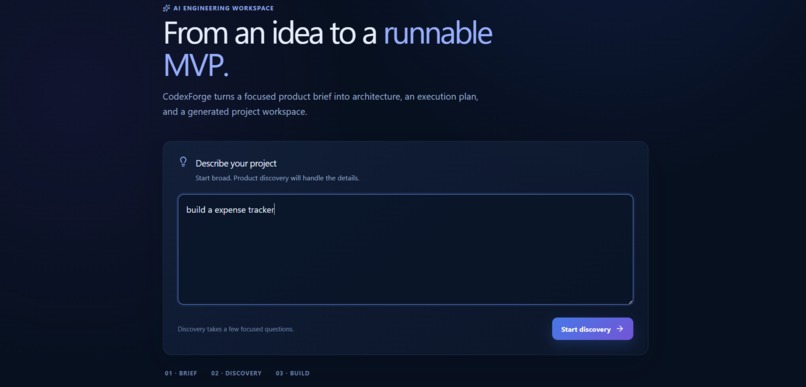
Landing Page
-
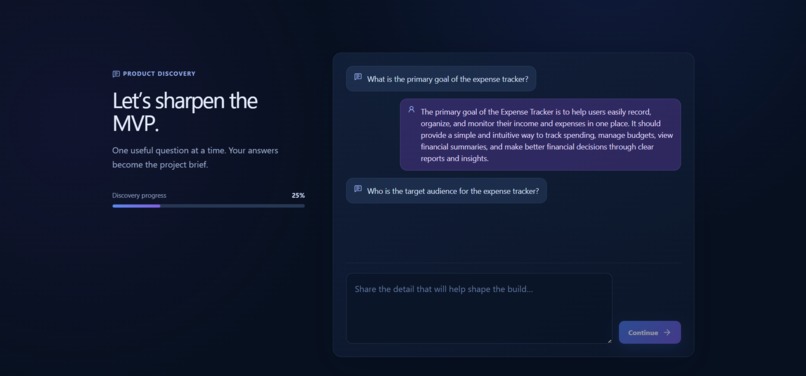
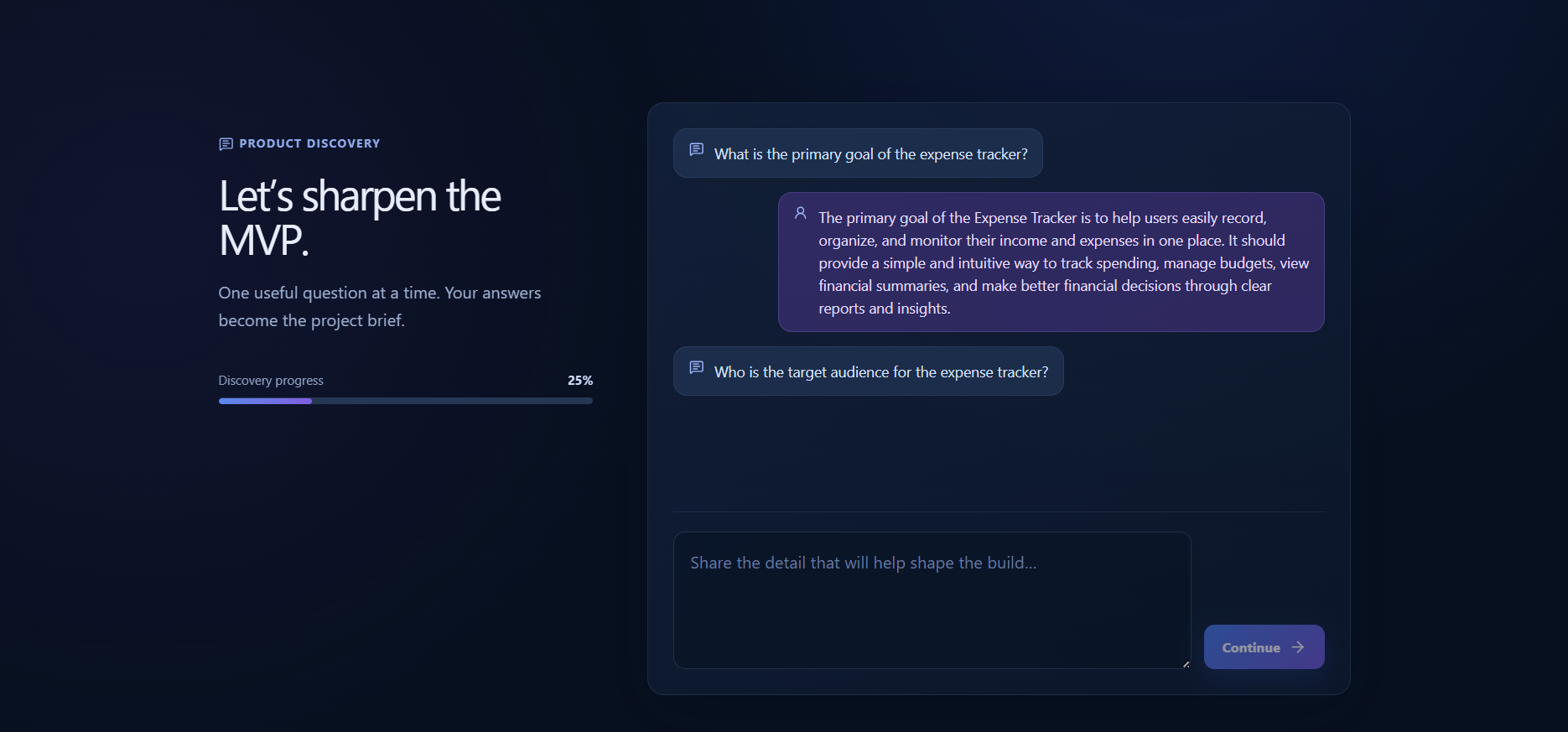
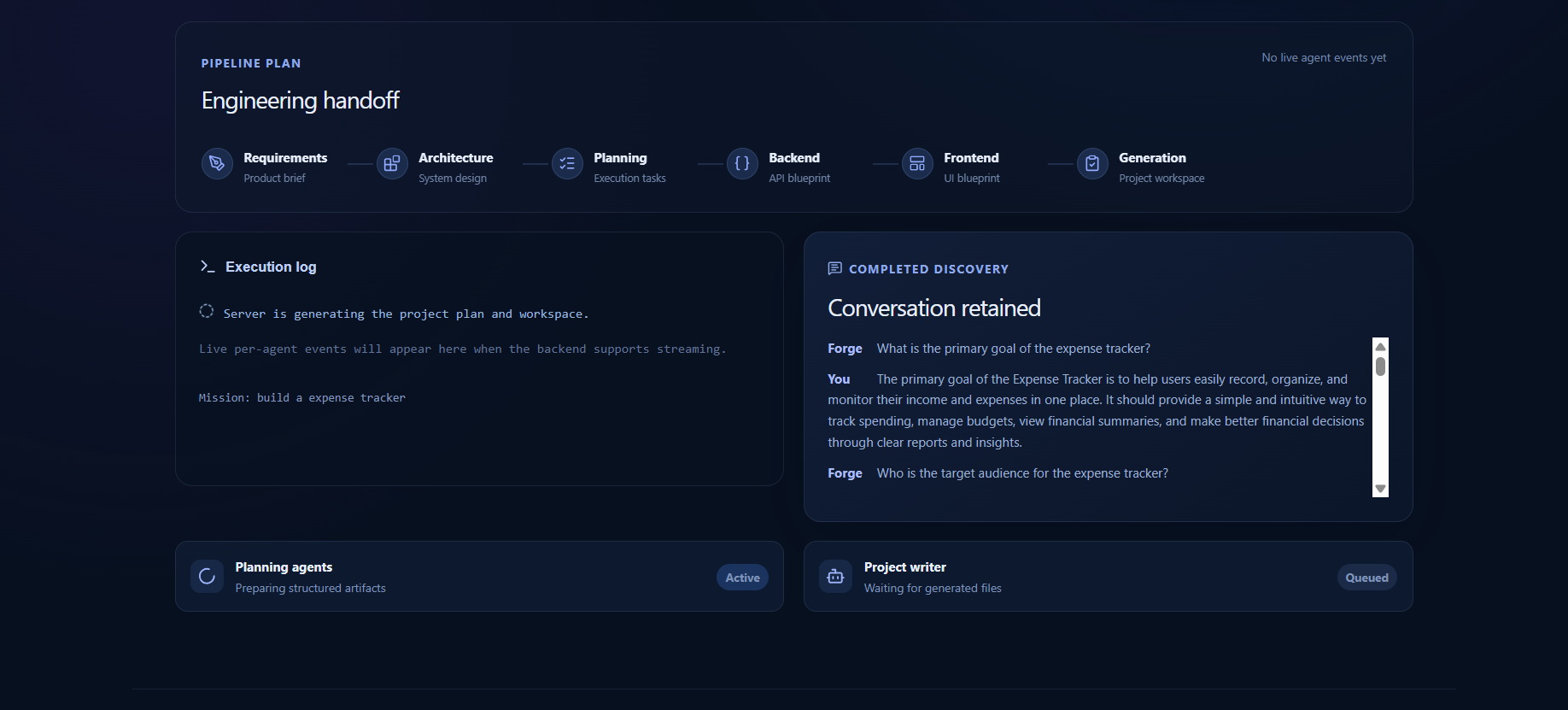
Discovery Questions
-
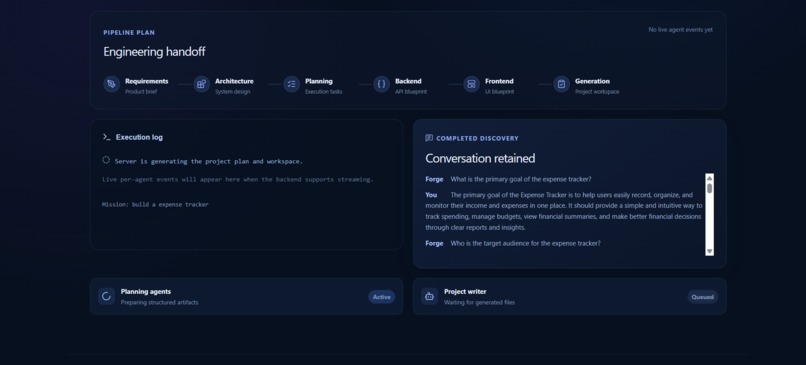
Engineering Pipeline
-
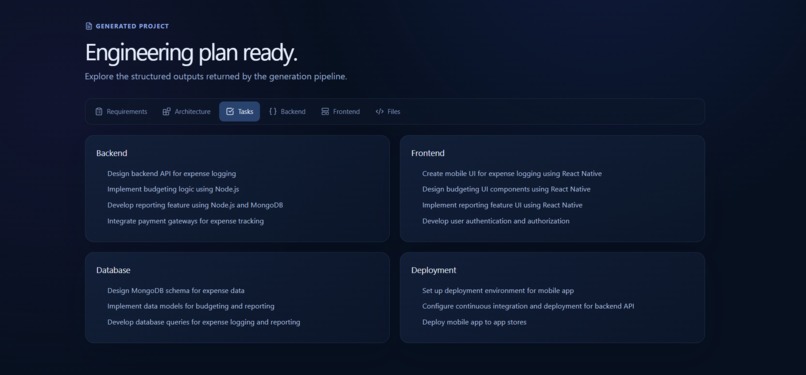
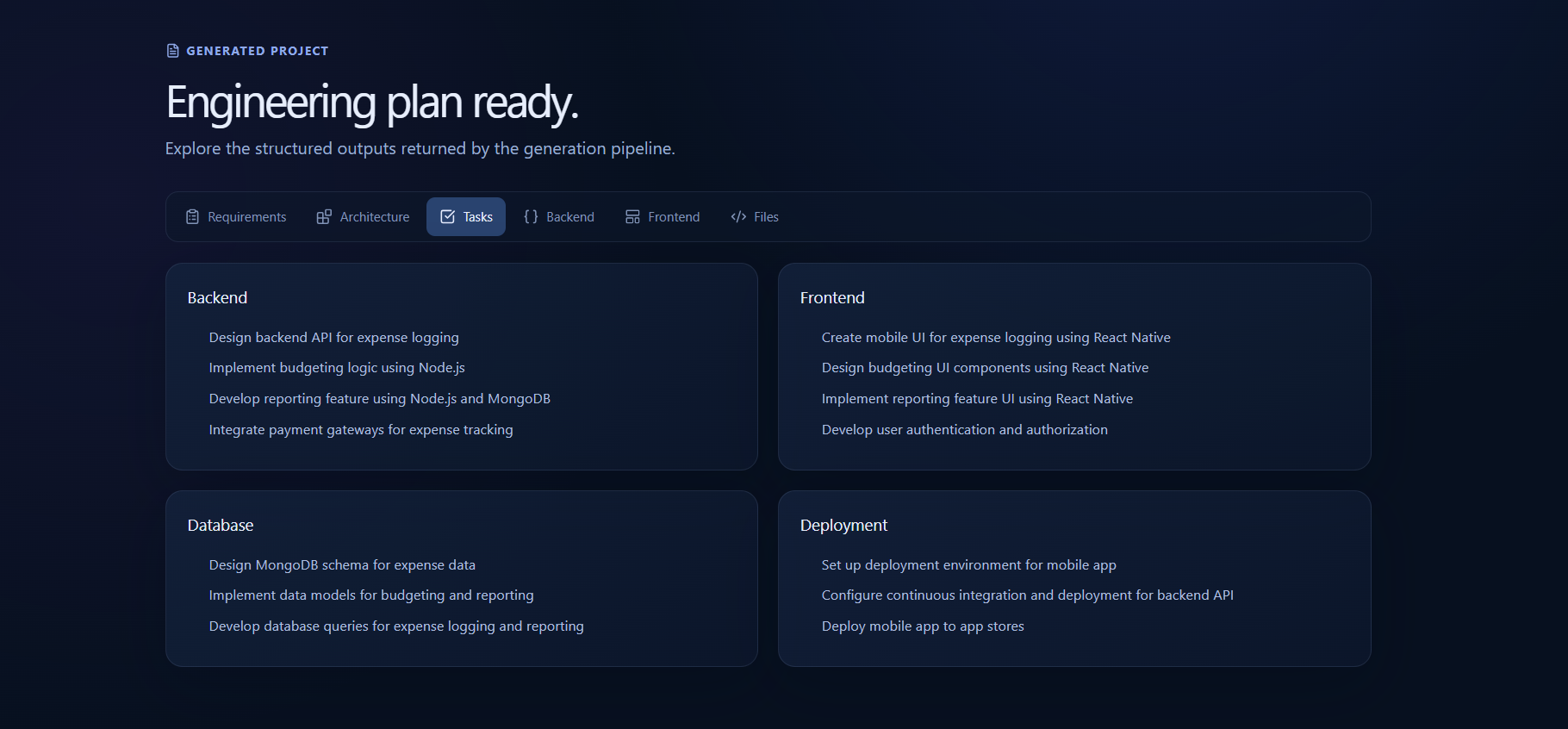
Generated Tasks
-
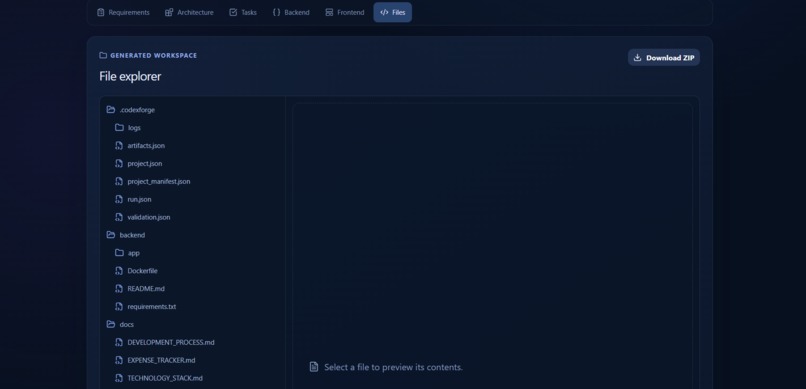
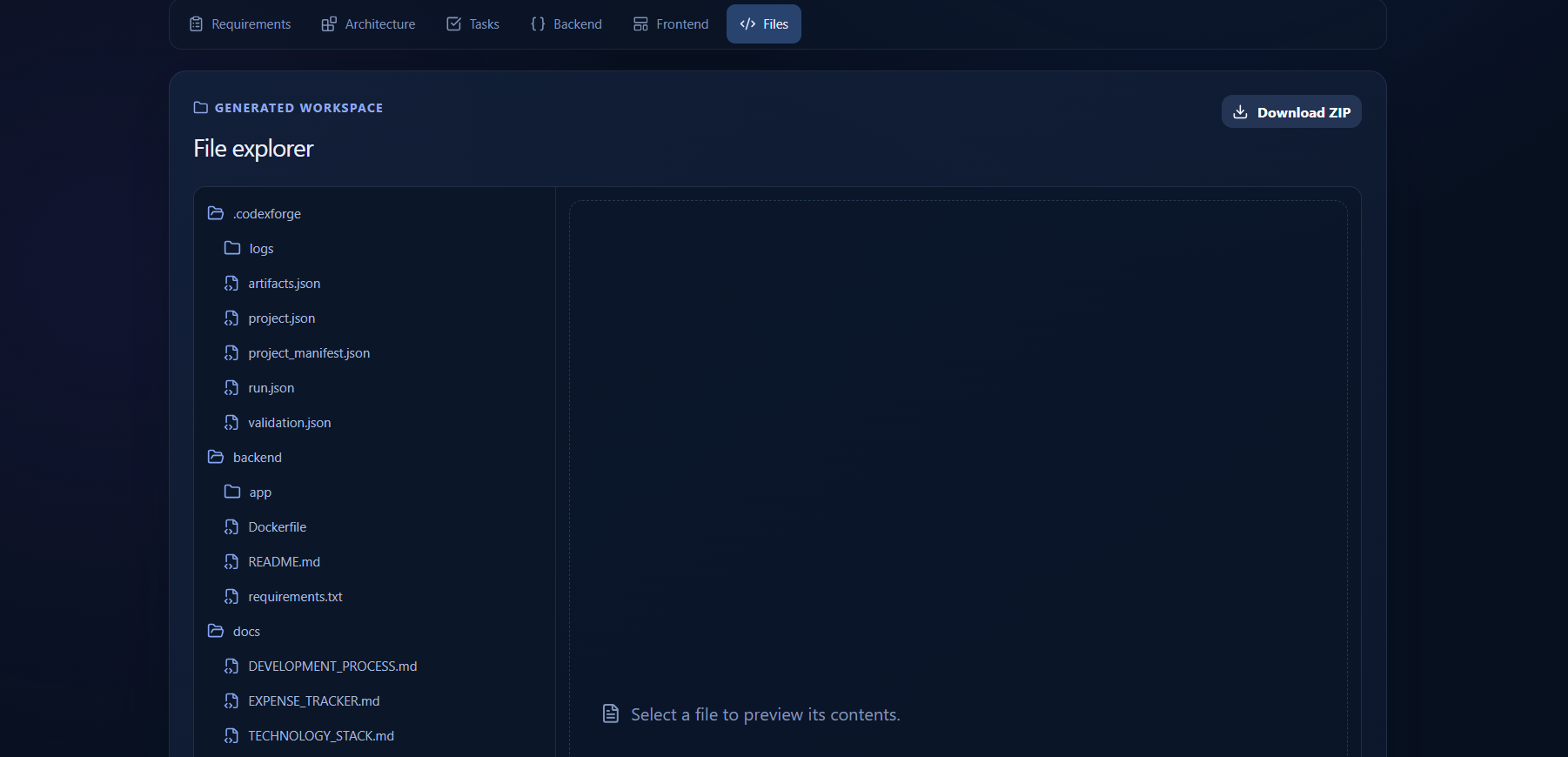
Generated Files Explorer
-
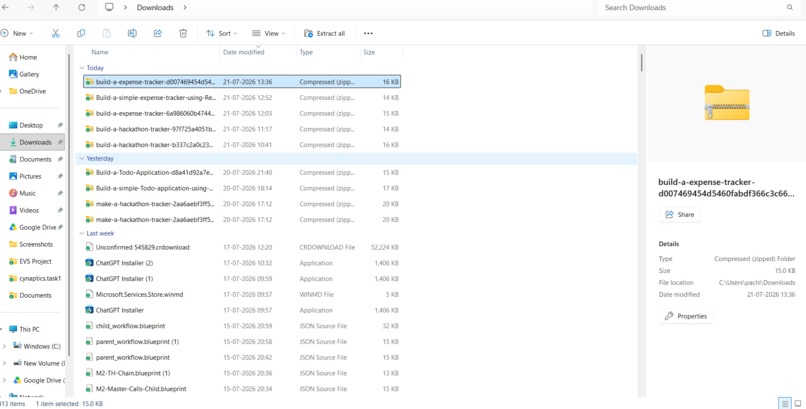
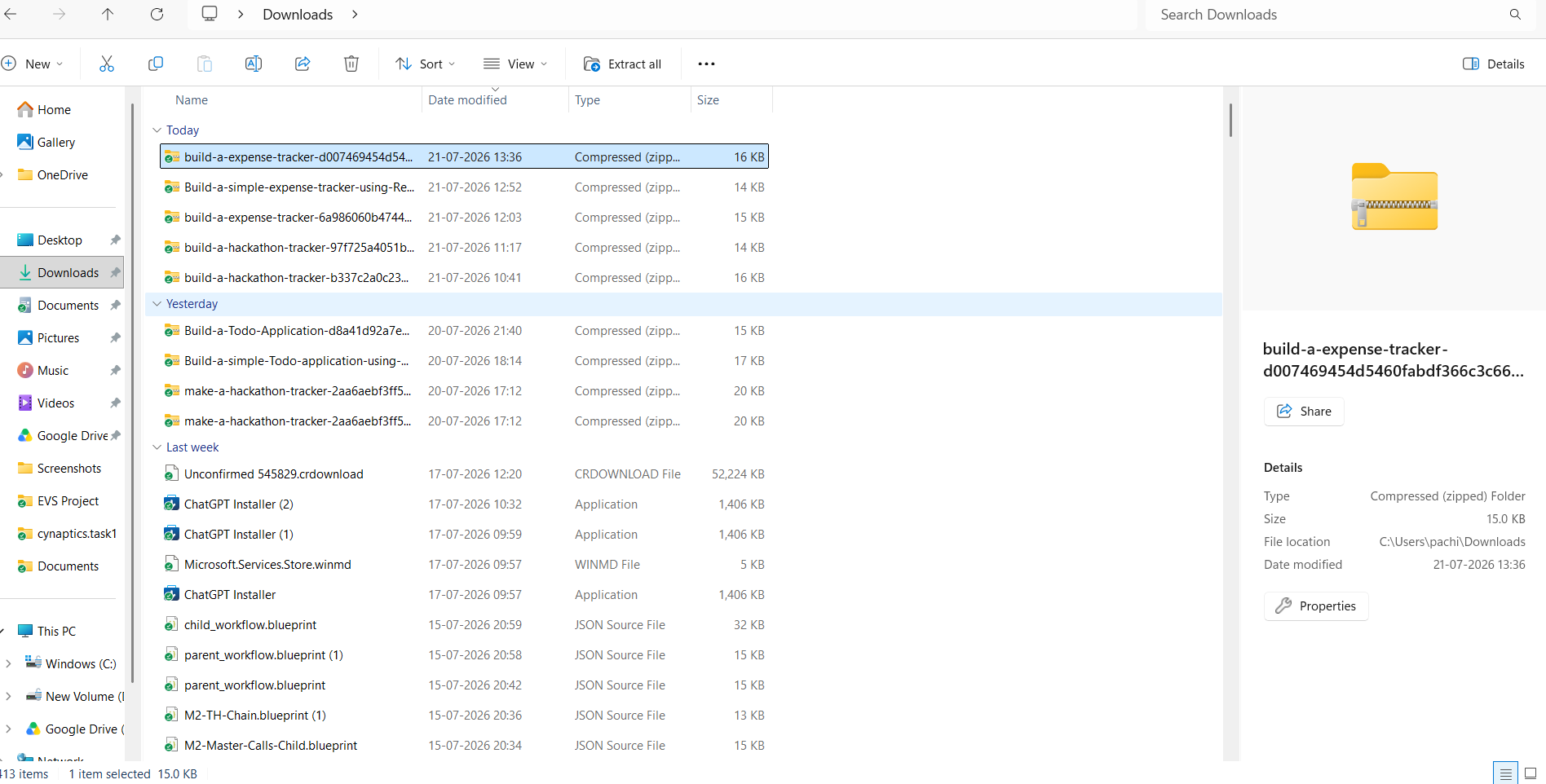
Download ZIP / Workspace
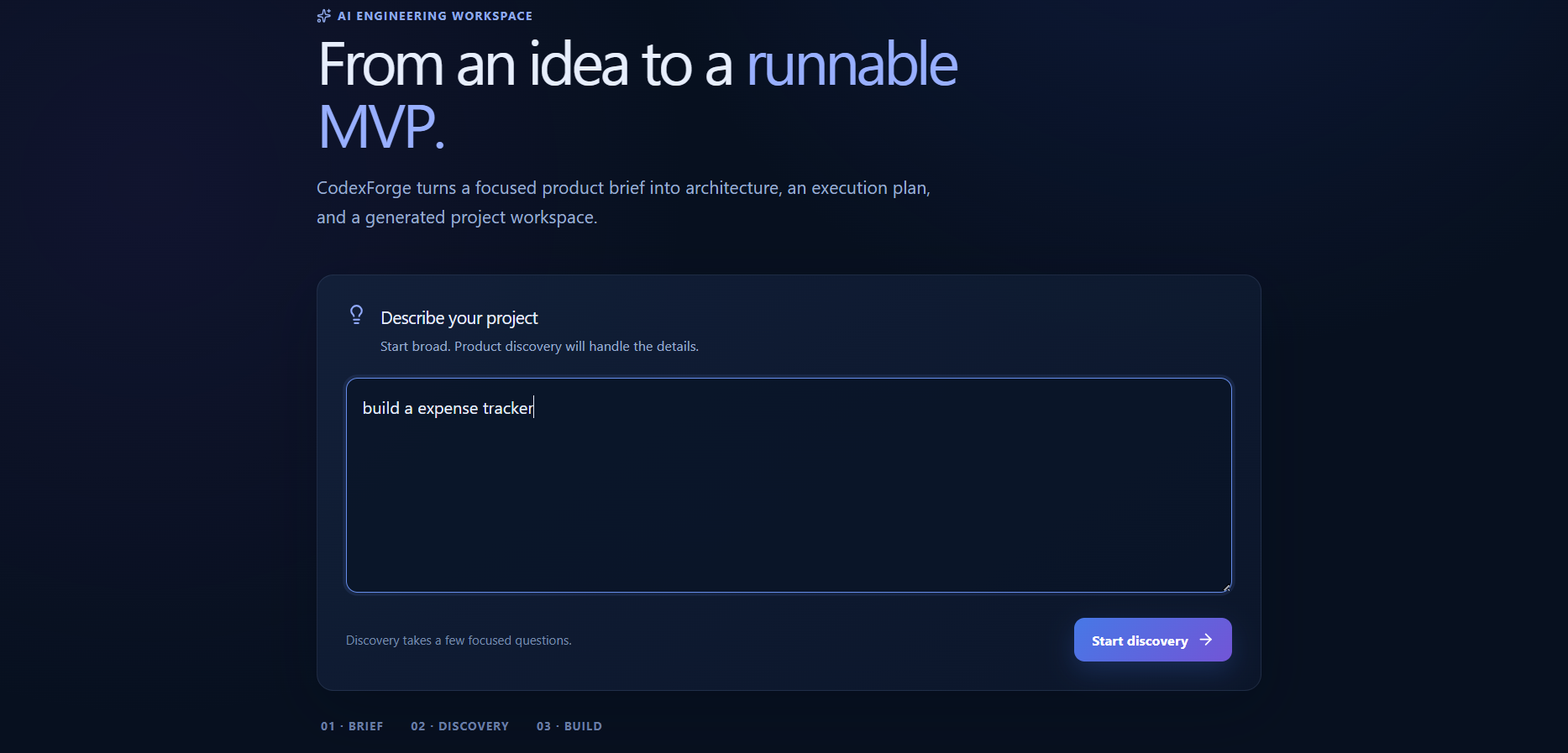
Inspiration
Software development often involves moving between requirement gathering, architecture planning, API design, frontend planning, code generation, and project organization. We wanted to explore how GPT-5.6 and Codex could automate this engineering workflow and reduce the time required to transform an idea into a runnable project.
Our goal was to build an AI engineering workspace that acts like a team of software engineers, where each specialized agent contributes to a different phase of development.
What it does
CodexForge is an AI-powered multi-agent engineering workspace that converts a simple product idea into a structured software project.
The platform guides users through an AI-powered discovery conversation, generates detailed requirements, designs the software architecture, creates implementation tasks, produces backend and frontend blueprints, and finally generates a downloadable project workspace.
The generated workspace includes documentation, project structure, implementation plans, manifests, and supporting files that developers can immediately continue building.
How we built it
The project uses a multi-agent architecture where every agent is responsible for one stage of the engineering workflow.
The backend is built with FastAPI and coordinates specialized AI agents including:
- Requirement Agent
- Architecture Agent
- Task Planner Agent
- Backend Agent
- Frontend Agent
- Code Generation Agent
- Project Generator Agent
The frontend is built using React and TypeScript, providing an interactive workspace where users answer AI-generated questions, monitor generation progress, explore engineering artifacts, and download the generated project.
GPT-5.6 powers the reasoning, planning, and structured generation pipeline, while Codex significantly accelerated development by helping implement validation, project generation, architecture improvements, debugging, testing, deployment preparation, and documentation.
Challenges we ran into
Building a reliable multi-agent pipeline required solving several engineering challenges.
Some of the biggest challenges included maintaining structured outputs between agents, validating generated project artifacts, preventing invalid file generation, handling API rate limits, improving project validation, and coordinating multiple independent engineering agents into a single workflow.
Preparing the project for deployment across Render, Vercel, and GitHub while ensuring consistent generation results was another major challenge.
Accomplishments that we're proud of
- Successfully built an end-to-end AI engineering workspace.
- Designed a modular multi-agent architecture.
- Implemented automated project validation before downloads.
- Added secure workspace generation and file validation.
- Successfully deployed both frontend and backend.
- Generated downloadable engineering workspaces automatically.
- Completed the project using GPT-5.6 and Codex throughout development.
What we learned
This project demonstrated how multiple specialized AI agents can collaborate to perform complex software engineering tasks.
We also learned the importance of structured outputs, validation pipelines, modular agent design, deployment automation, and iterative collaboration between human developers, GPT-5.6, and Codex.
What's next for CodexForge
Our roadmap includes:
- Live streaming of agent execution
- Real-time progress visualization
- Direct GitHub repository generation
- Docker and Kubernetes project generation
- Support for additional programming languages
- Plugin ecosystem for custom engineering agents
- Team collaboration and project sharing
- Autonomous code repair and iterative refinement
Built With
- codex
- css
- docker
- fastapi
- github
- gpt-5.6
- openai
- pydantic
- python
- react
- render
- sqlalchemy
- sqlite
- tailwind
- typescript
- vercel

Log in or sign up for Devpost to join the conversation.