-
-
-
-
-
-
Integration to other apps
Inspiration
AI-assisted coding has become increasingly powerful, but many development sessions still lose context over time. Developers often need to repeatedly explain project requirements, manually track progress, and recover from interrupted sessions. We built CodexFlow Framework to solve these challenges by providing a structured, repeatable workflow that keeps AI coding organized, traceable, and token-efficient.
What it does
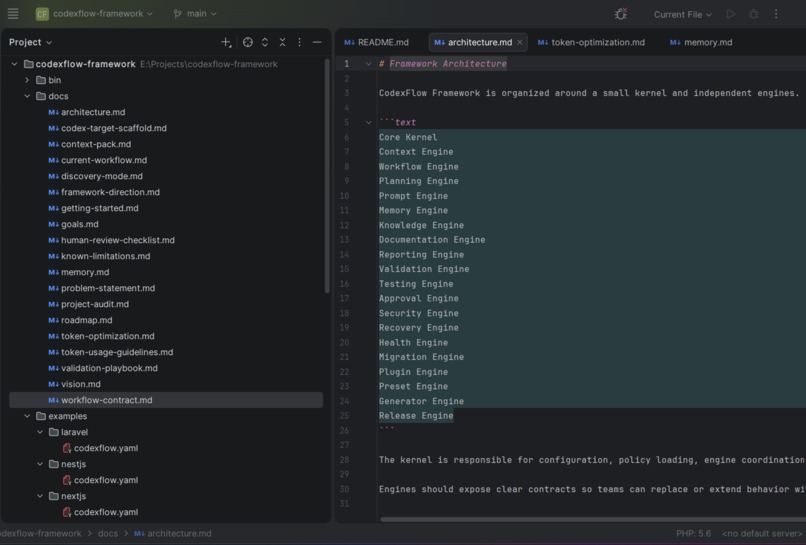
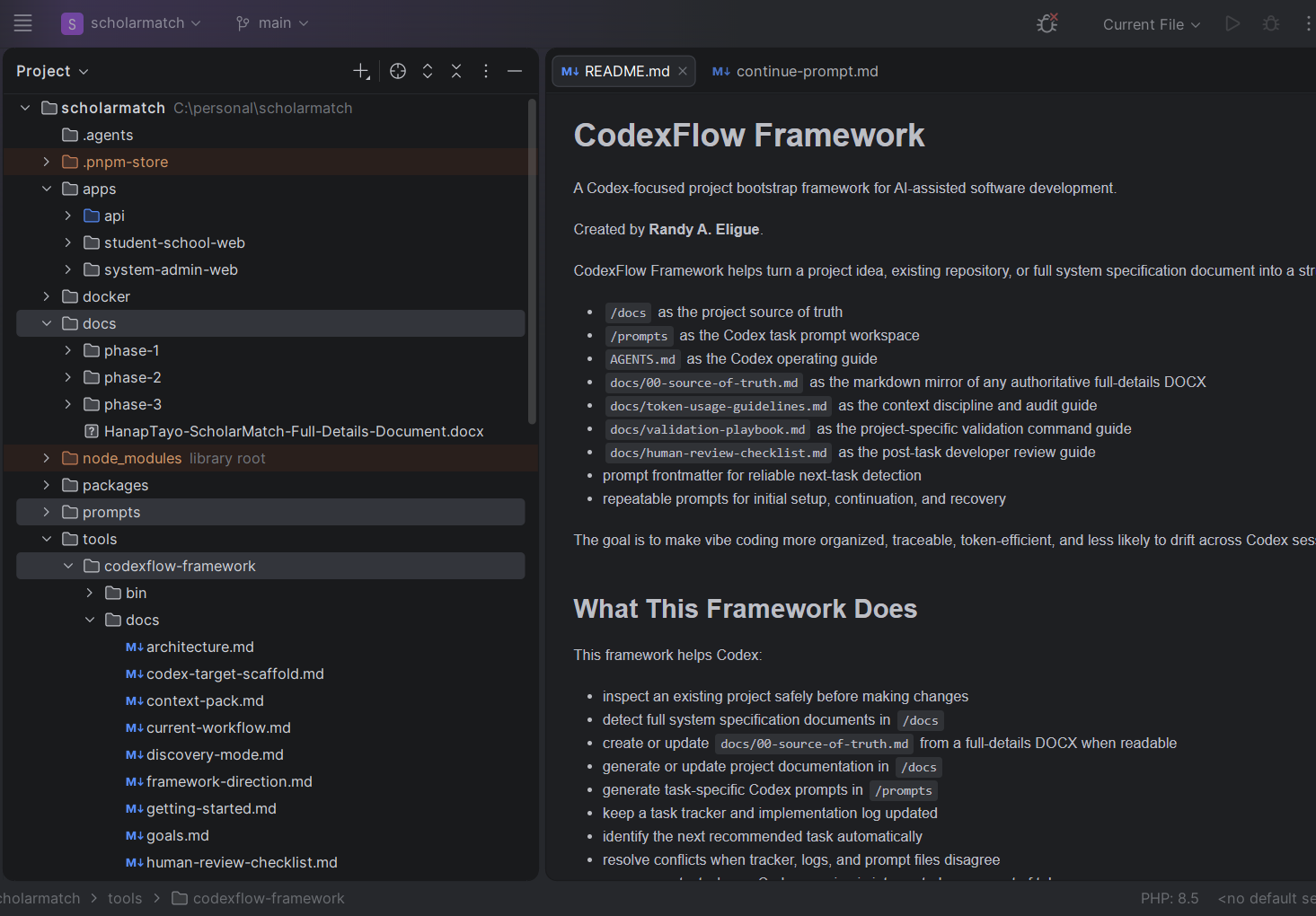
CodexFlow Framework is a Codex-focused project bootstrap framework that transforms a project idea, an existing repository, or a complete system specification into a structured AI development workflow.
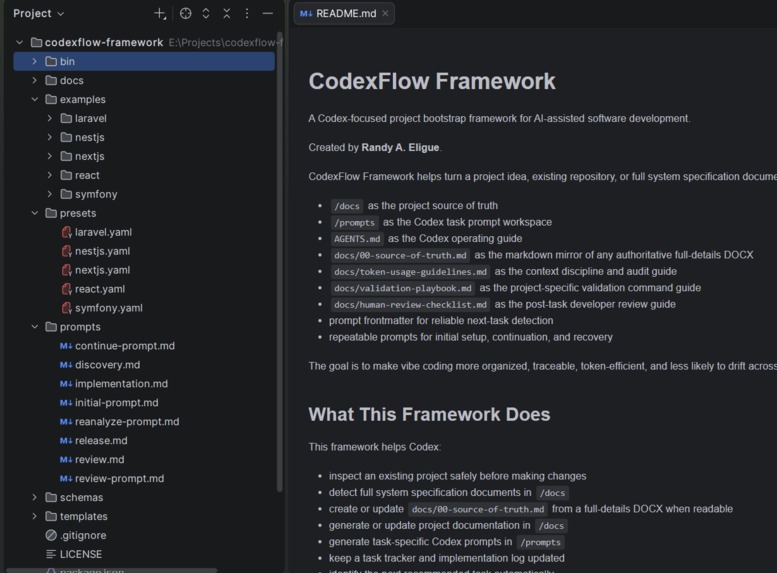
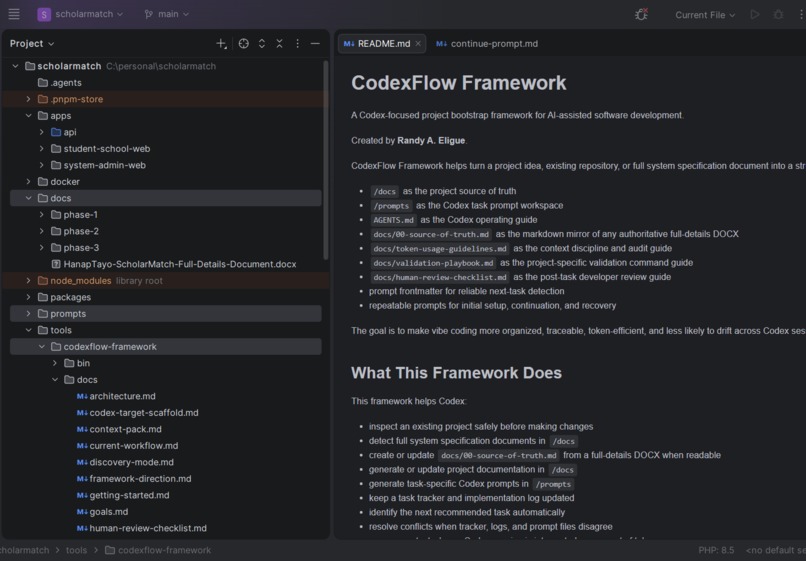
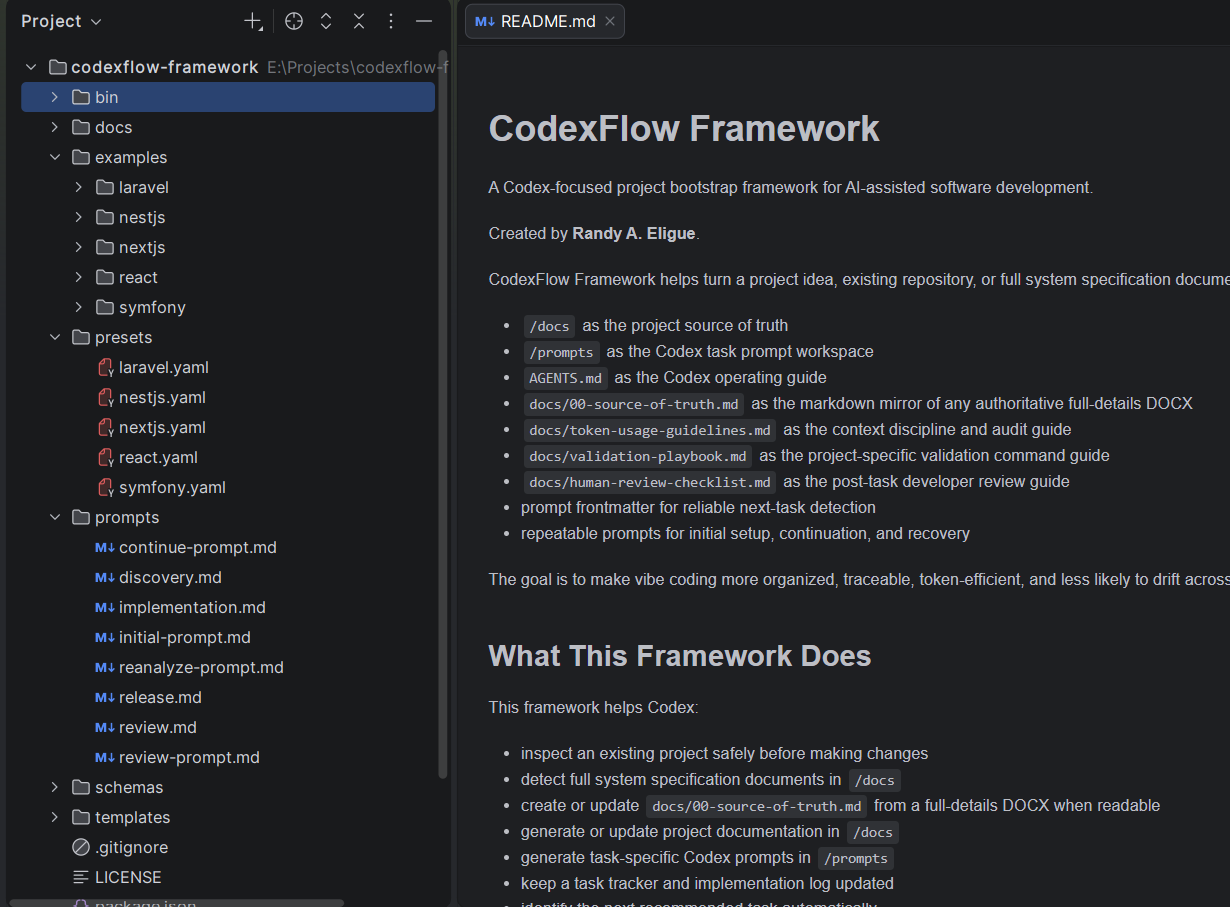
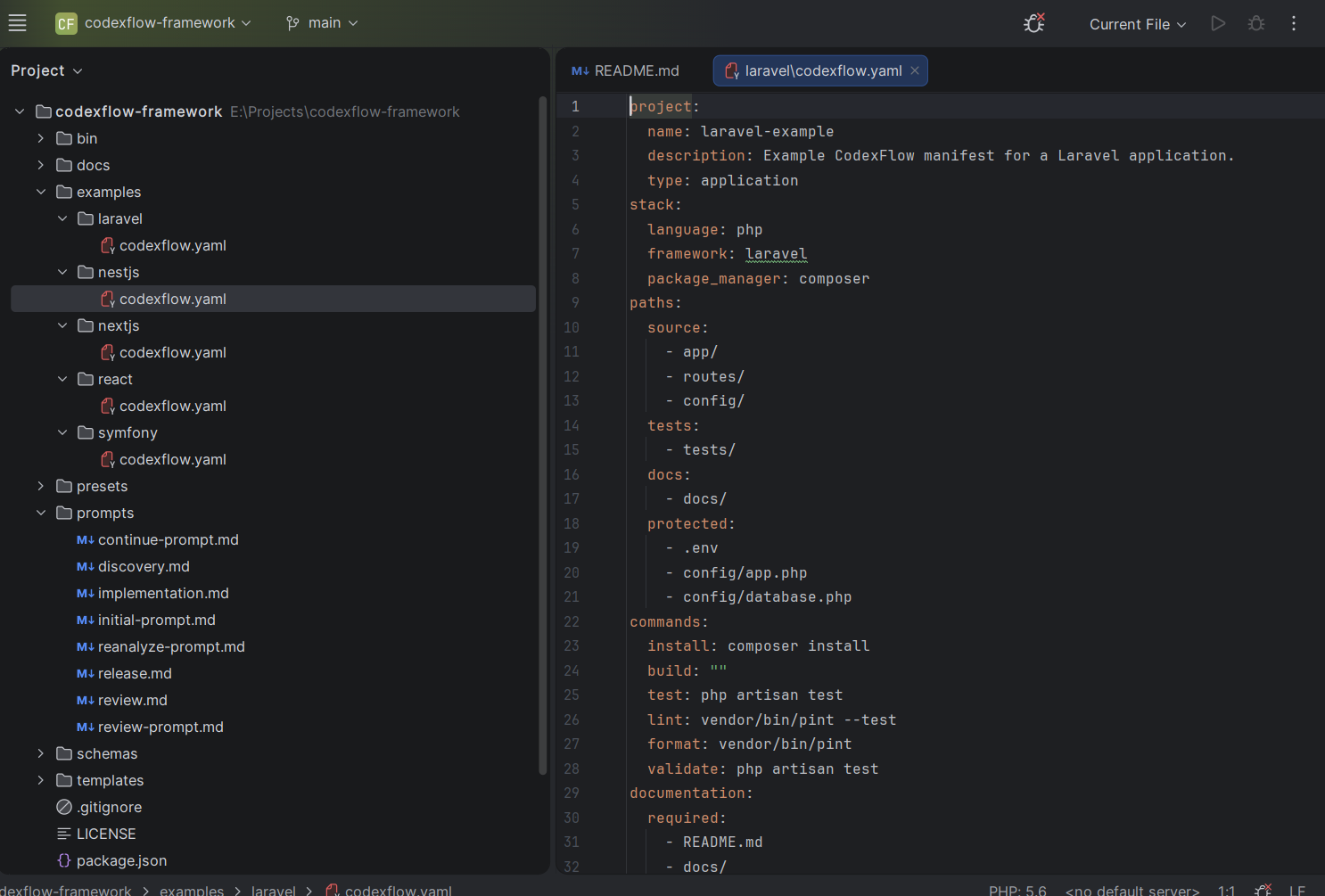
The framework establishes /docs as the project's source of truth, /prompts as the AI task workspace, and AGENTS.md as the operating guide. It automatically organizes project documentation, generates task-specific prompts, tracks implementation progress, recommends the next development task, and helps recover context after interrupted AI sessions.
It also introduces prompt frontmatter, validation playbooks, human review checklists, and Context Usage Reports to make AI-assisted software development more reliable, auditable, and scalable.
How we built it
We designed the framework around a documentation-first workflow. Instead of relying solely on conversation history, CodexFlow stores project knowledge inside structured documentation that AI can consistently reference across sessions.
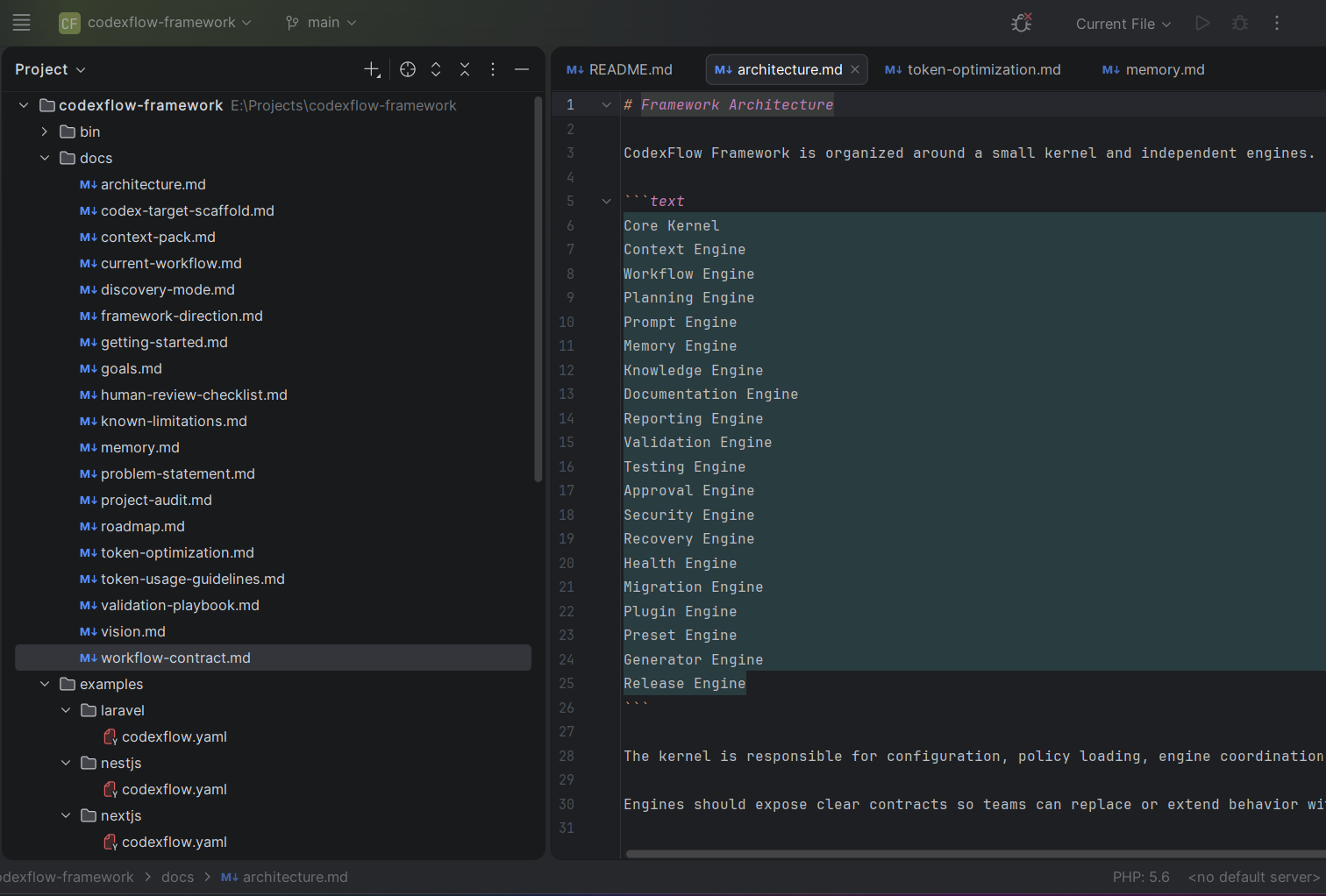
The framework consists of reusable prompt templates, project scaffolding, documentation standards, validation guides, review workflows, and an optional lightweight Node.js CLI for project initialization and validation. Together, these components create a repeatable development process that minimizes context loss while keeping documentation synchronized with implementation.
Challenges we ran into
One of our biggest challenges was designing a workflow that remains flexible enough for different software projects while enforcing enough structure to prevent AI from drifting away from project requirements.
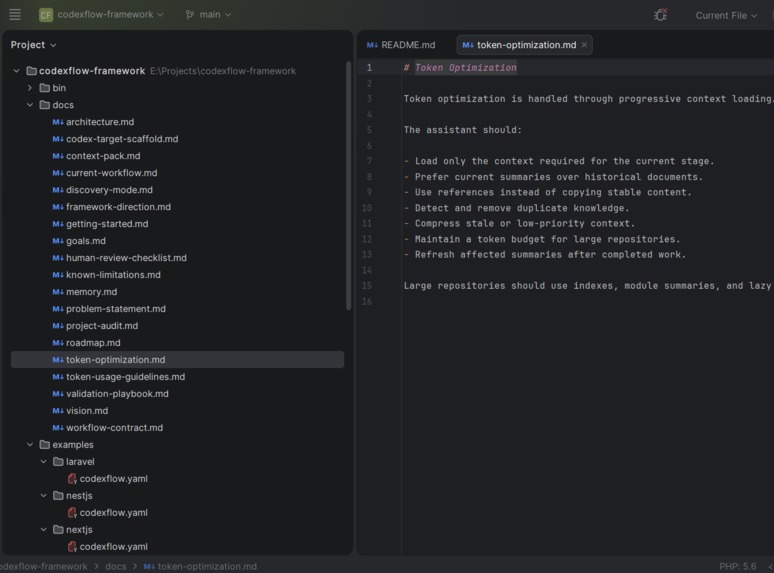
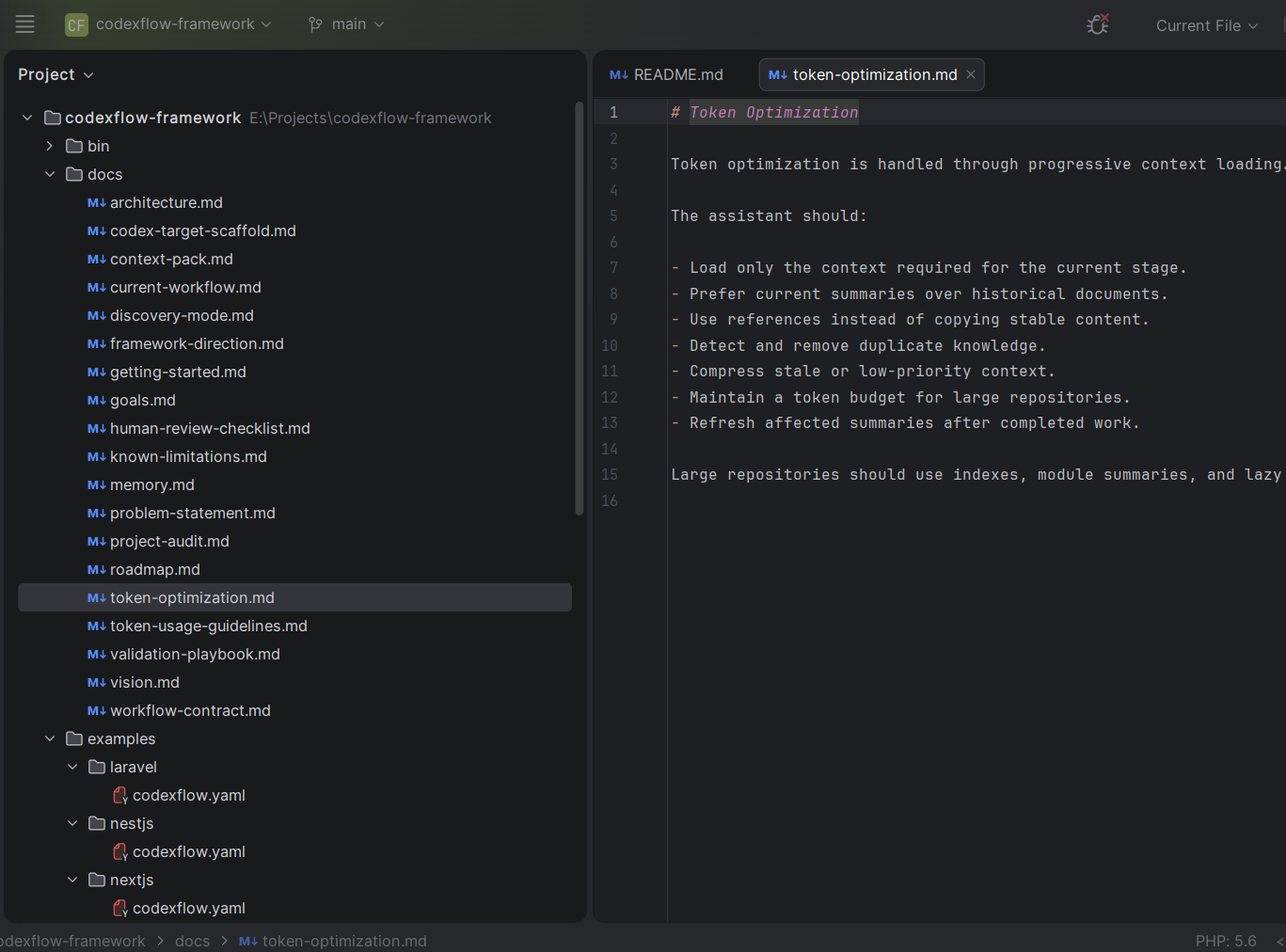
Another challenge was optimizing context usage. Large projects quickly consume AI context windows, so we designed a minimum-context-first workflow that loads only the essential project files before expanding into additional documentation when necessary.
Accomplishments that we're proud of
We're proud of creating a framework that makes AI-assisted development more structured and maintainable. CodexFlow introduces a practical workflow for documentation management, prompt generation, task tracking, validation guidance, and recovery from interrupted AI sessions—all while reducing unnecessary token usage.
The framework helps developers spend less time rebuilding context and more time shipping software.
What we learned
Building CodexFlow reinforced how important project structure is when working with AI coding assistants. We learned that clear documentation, standardized prompts, validation rules, and human review checkpoints significantly improve the consistency and reliability of AI-generated code.
We also gained valuable experience in designing reusable developer workflows that balance automation with developer oversight.
What's next for CodexFlow Framework
Our next goal is to expand CodexFlow into a more comprehensive AI development platform by adding:
- Support for additional AI coding assistants and models
- Visual workflow and task management
- IDE integrations
- Team collaboration features
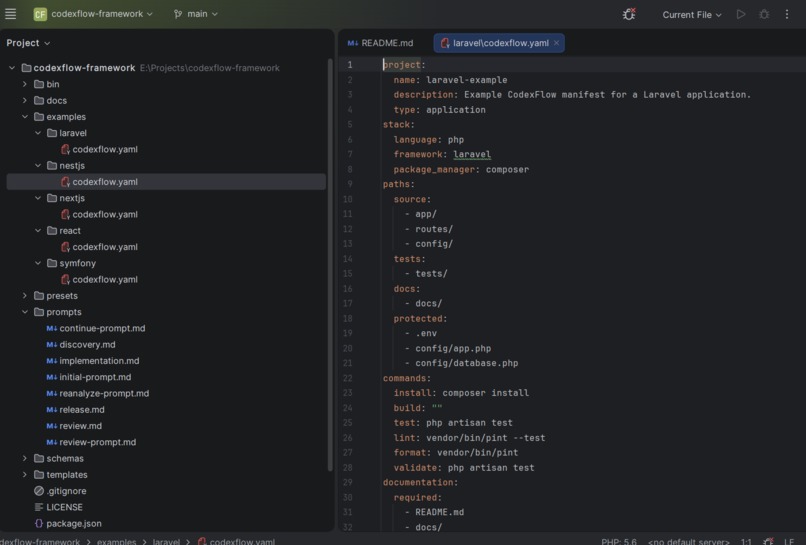
- More project templates and presets
- Enhanced validation and automated quality checks
- Community-contributed prompt libraries and plugins
We envision CodexFlow becoming a standard workflow framework for AI-assisted software engineering teams.
Built With
- codex
- markdown

Log in or sign up for Devpost to join the conversation.