-
-
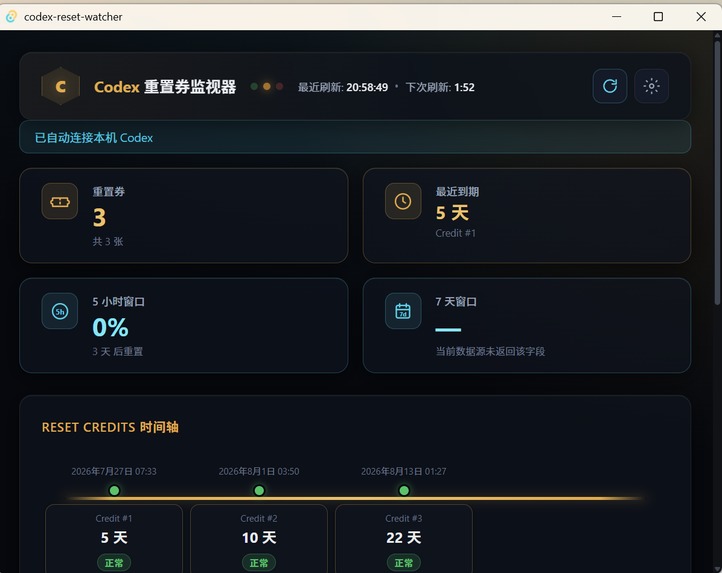
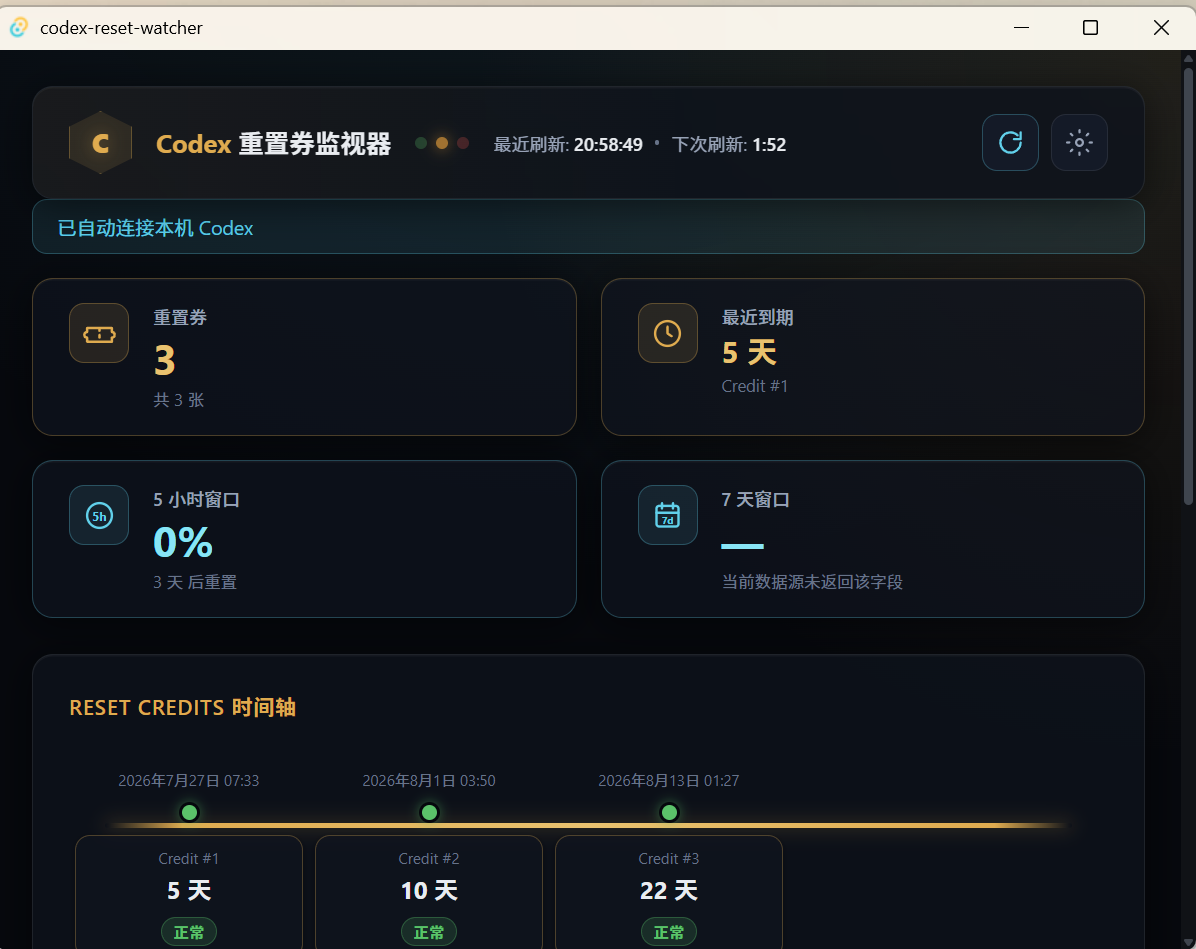
the app usually reads real quota automatically with no Codex-Usage or Python setup.
I developed Codex Reset Watcher through a human-led, AI-assisted workflow using ChatGPT and OpenAI Codex.
I was responsible for identifying the original problem, defining the product requirements, deciding which features were necessary, reviewing the interface, testing the application, and making the final technical and product decisions.
ChatGPT mainly helped me clarify the product concept, refine the requirements, design the development roadmap, analyze implementation issues, improve the user experience, and write detailed task instructions for Codex. It also assisted with documentation, release planning, testing checklists, and feature prioritization.
Codex was mainly used as the coding and repository execution agent. Based on the requirements and prompts I provided, it inspected the existing codebase, implemented features, fixed bugs, refactored modules, ran tests, verified builds, updated documentation, and assisted with the GitHub release process.
The overall workflow was iterative:
- I identified a real problem and defined the expected behavior.
- I discussed the product design and technical approach with ChatGPT.
- ChatGPT helped turn the requirements into clear implementation tasks.
- Codex modified and tested the codebase.
- I reviewed the results, tested the application, and reported issues or new requirements.
- The project was continuously improved through multiple development and validation cycles.
AI did not independently create the product. I remained responsible for the project direction, requirement decisions, quality control, testing, and final acceptance. ChatGPT and Codex acted as development assistants that helped me turn the idea into a usable open-source Windows desktop application more efficiently.
Built With
- backend:
- css
- custom
- frontend:
- localization:
- react
- styling:
- tauri
- typescript
- vite

Log in or sign up for Devpost to join the conversation.