Inspiration
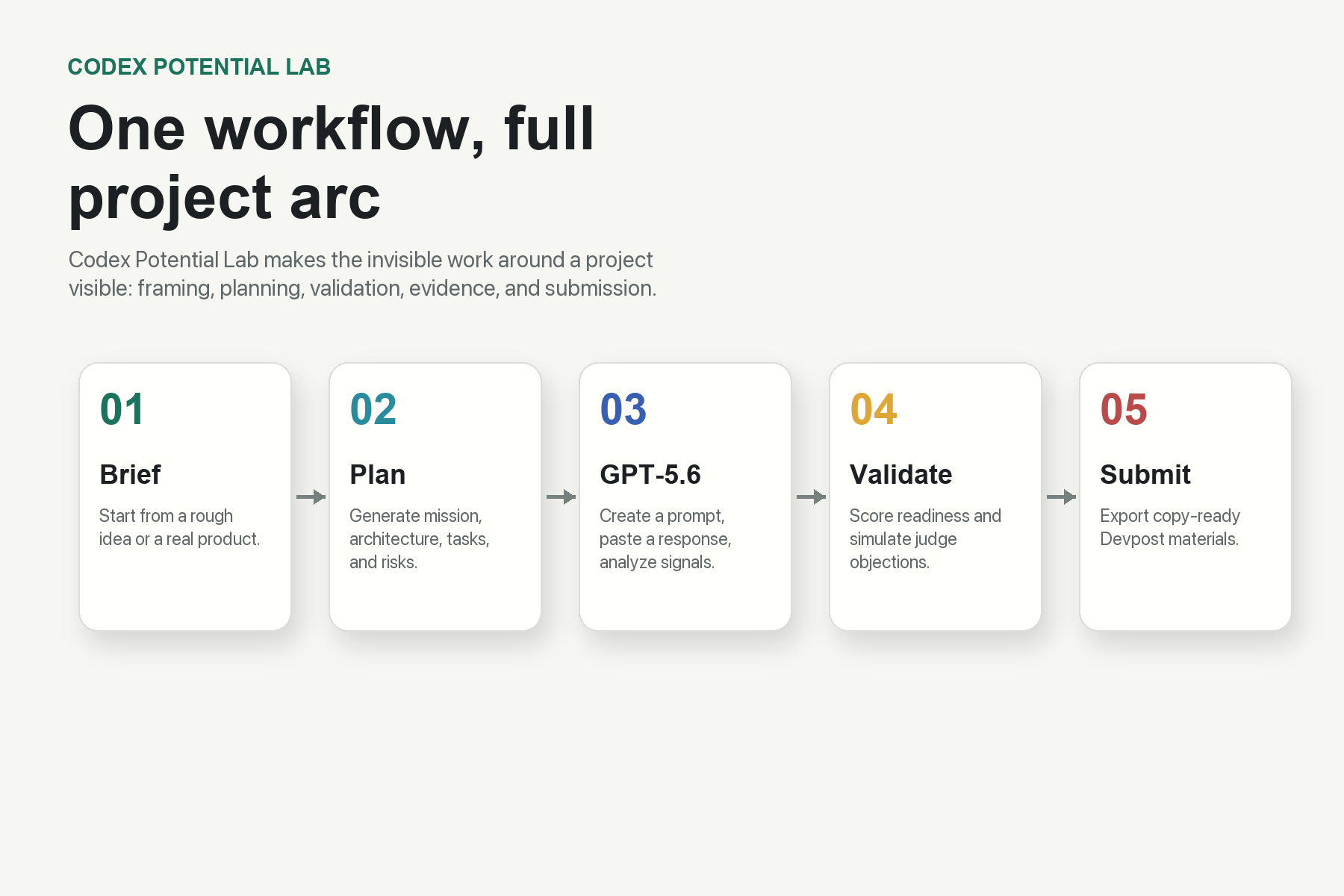
Codex can do more than help with individual code changes. It can help shape the full arc of a project: product framing, implementation, quality, documentation, demo narrative, and final submission. Codex Potential Lab was built to make that end-to-end workflow visible.
What It Does
Codex Potential Lab helps builders go from a rough idea to a credible submission pack. It generates a mission, architecture map, execution board, risks, checklist, GPT-5.6 prompt, response analysis, and Markdown export.
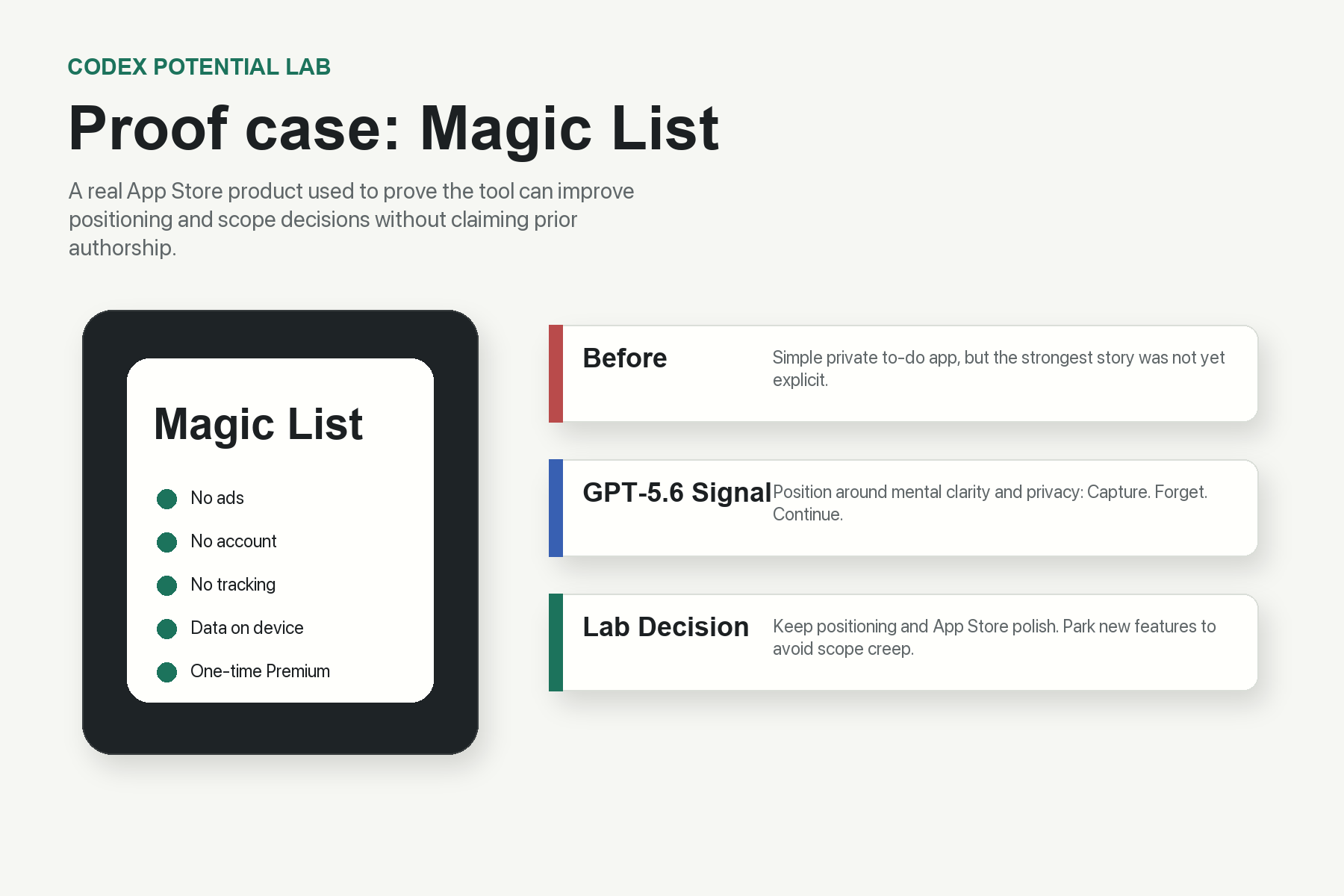
The project includes Magic List as a real-world proof case. Magic List already existed before this project. It is used to show how Codex Potential Lab can analyze an existing App Store product and produce positioning, roadmap, onboarding, App Store, demo, and risk recommendations.
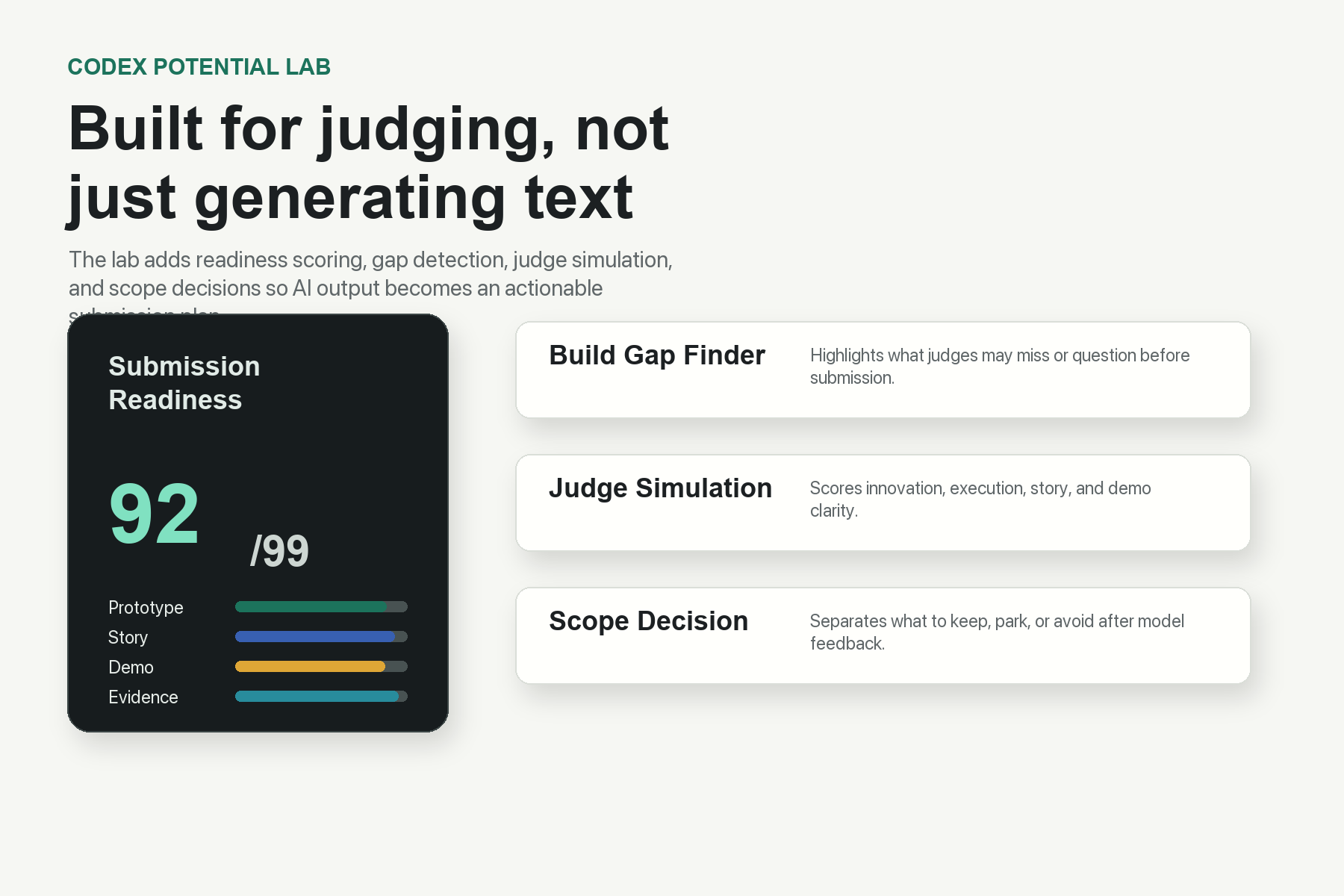
After a real GPT-5.6 critique, the app was extended with a Submission Readiness Score, Build Gap Finder, and Judge Simulation. This turns the project from a submission text generator into a validation cockpit.
A second real GPT-5.6 response is included for Magic List. It recommends positioning Magic List around mental clarity and privacy, then proposes Brain Dump Mode, Daily Focus, Completion History, Natural-language Quick Add, and a Magic Capture Widget. Codex Potential Lab then filters that output through real constraints: keep positioning and App Store/onboarding polish, but park new feature work for now. That response is used as proof that Codex Potential Lab can improve a real product's strategy and story without claiming to have created the original app.
How It Was Built
The app was built with HTML, CSS, and JavaScript so judges can run it quickly without installing dependencies. Codex created the project structure, interface, local generation logic, GPT-5.6 Studio workflow, Magic List case study, documentation, and submission pack.
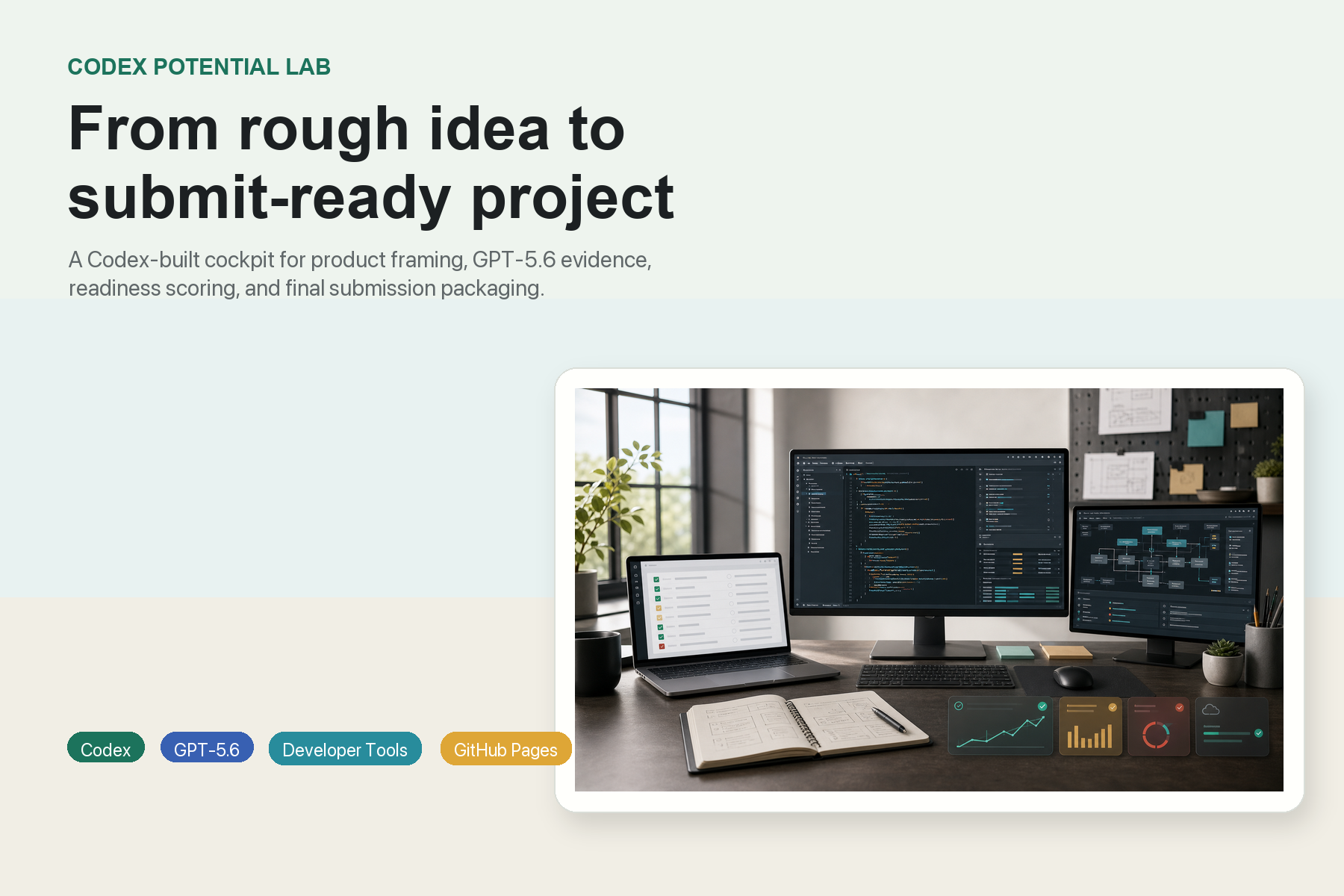
The generated visual asset was created with Codex's image generation workflow and integrated locally into the app.
How GPT-5.6 Was Used
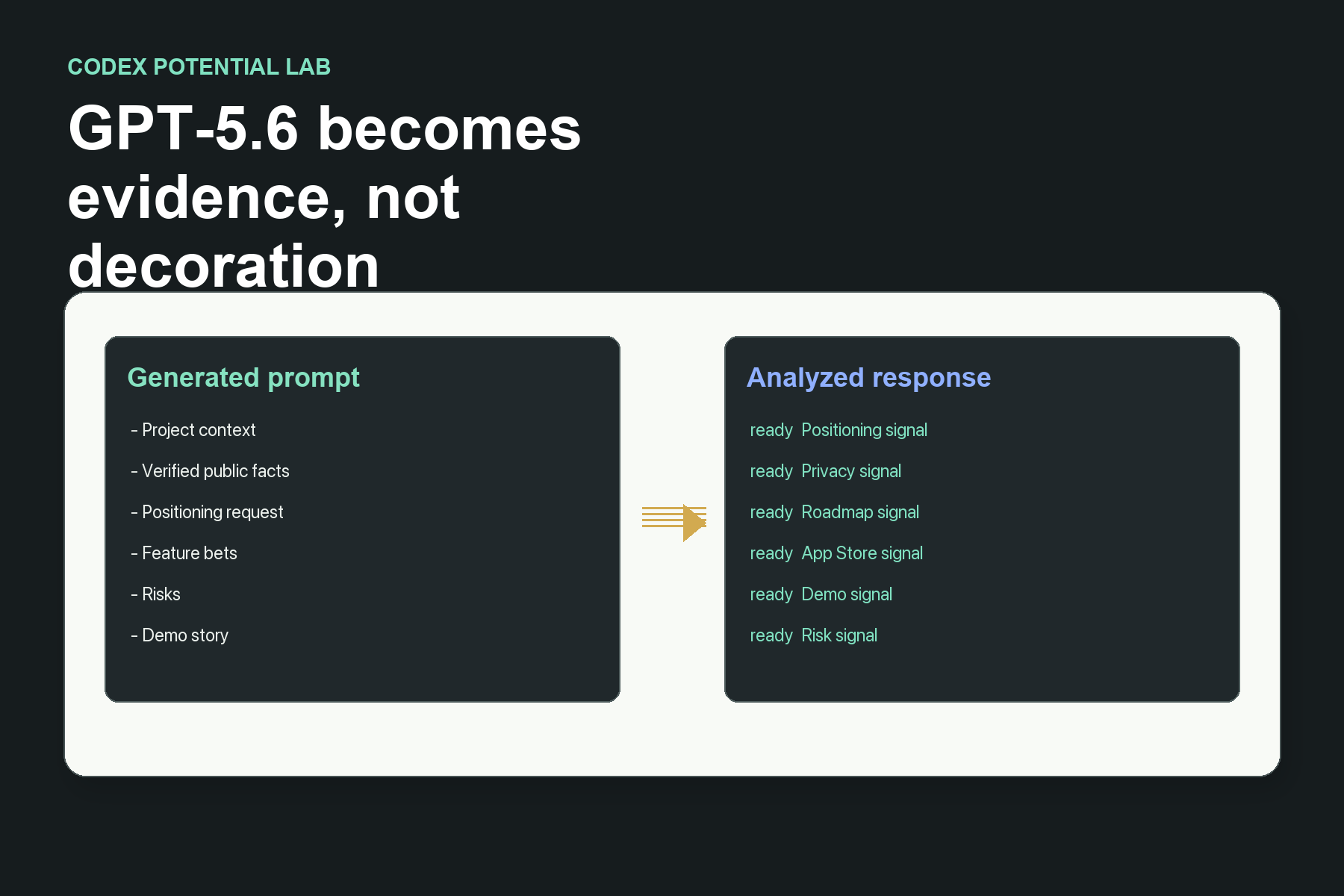
The app includes a GPT-5.6 Studio. It creates a structured prompt, lets the builder paste a real GPT-5.6 response, analyzes the response for product signals, and includes the result in the exportable submission pack.
A real GPT-5.6 response was used to improve the project. It recommended making validation the core value, not text generation. That feedback directly led to the Submission Readiness Score, Build Gap Finder, and Judge Simulation.
A real GPT-5.6 response was also used for the Magic List case study. Codex Potential Lab loads that response, analyzes it, and turns it into evidence for positioning, onboarding, demo story, risks, and scope decisions.
Challenges
The main challenge was building a project that demonstrates Codex's broader potential without making false claims about pre-existing work. Magic List is therefore positioned carefully as a real-world test case, not as something created by Codex Potential Lab.
Accomplishments
- Built a complete local app from a blank workspace.
- Added a GPT-5.6 evidence workflow.
- Used GPT-5.6 critique to add readiness scoring, gap detection, and judge simulation.
- Used a second GPT-5.6 response to strengthen the Magic List proof case.
- Added a real-world Magic List case study.
- Created README, Devpost draft, video script, walkthrough, and checklist.
- Published a public GitHub repository.
What Is Next
- Expand the app to compare multiple products or export richer reports.
Built With
- ai
- css
- developer-tools
- github
- gpt-5.6
- html
- javascript
- openai
- productivity

Log in or sign up for Devpost to join the conversation.