-
-
Thumbnail
-
Dashboard
-
Engineering Cards
-
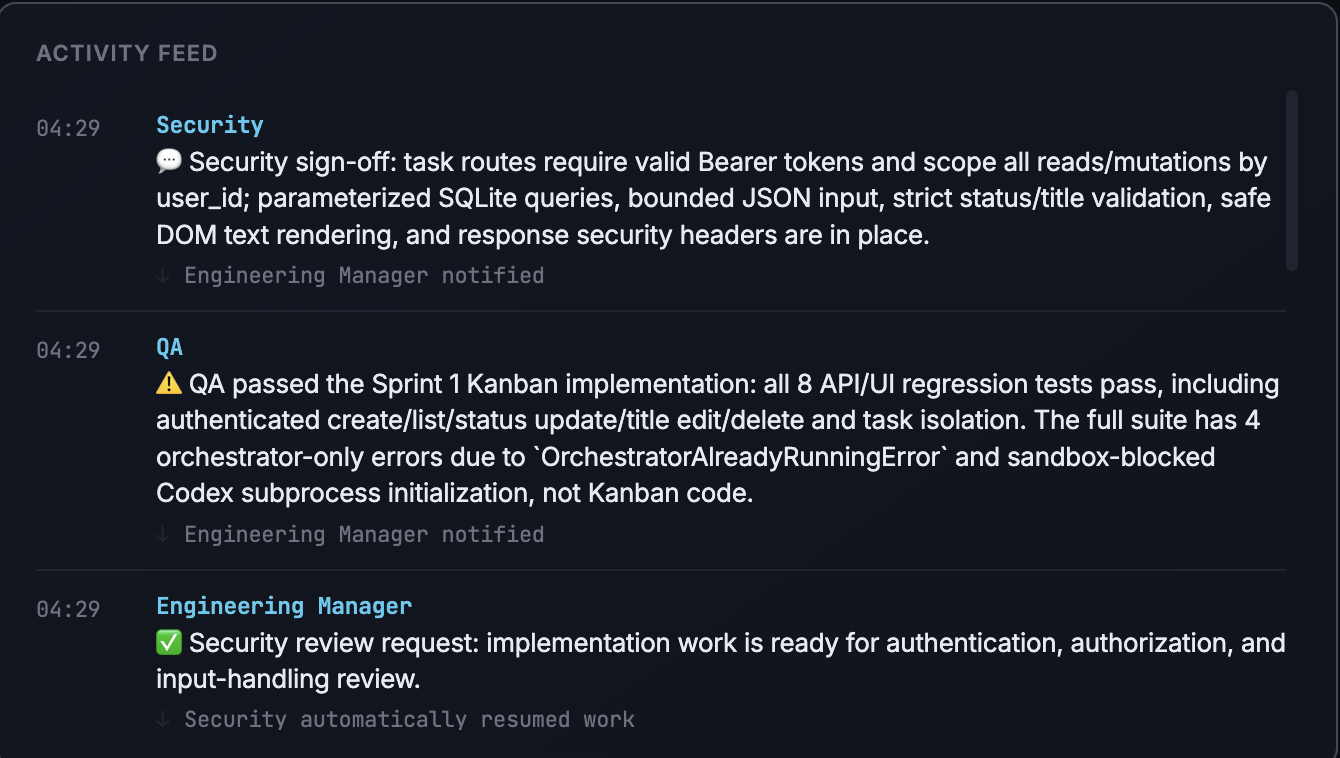
Activity Feed
-
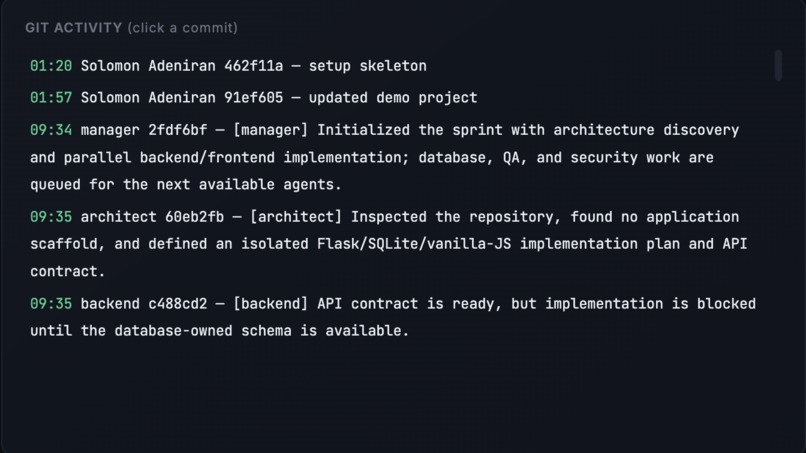
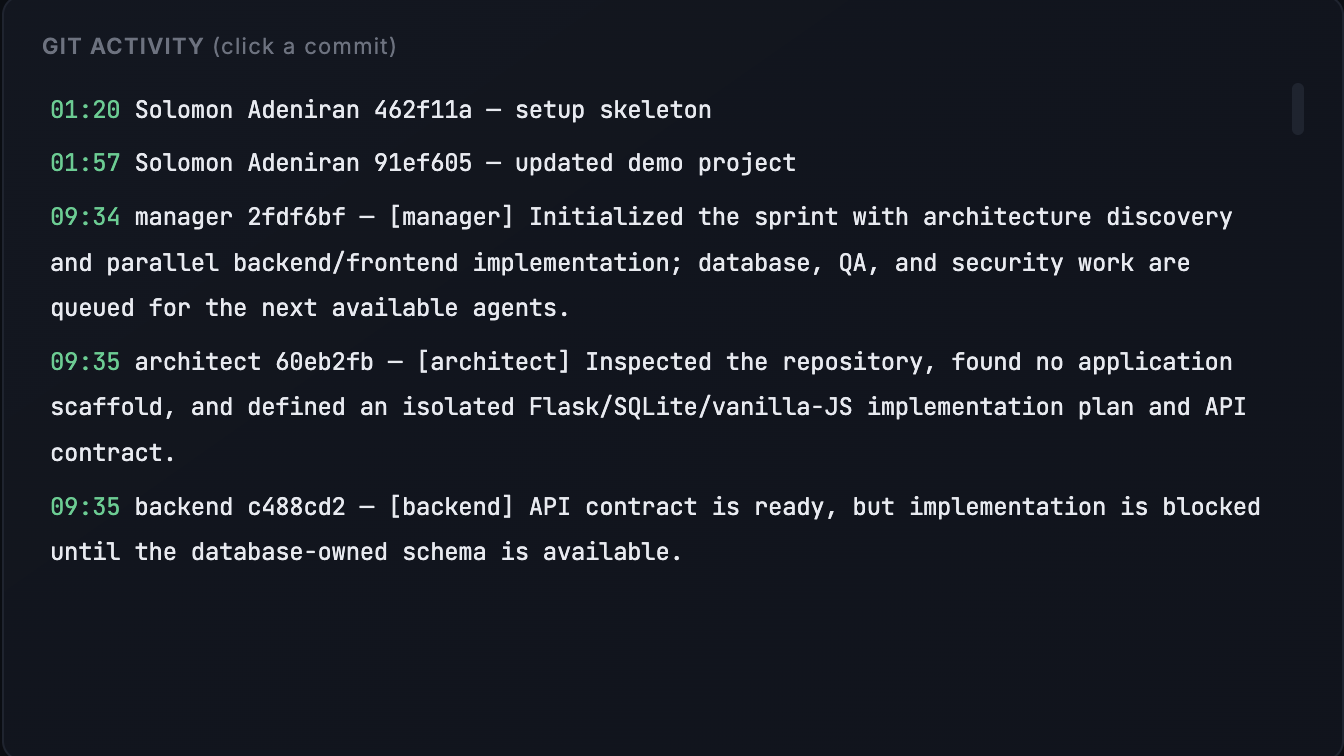
Git Activity
-
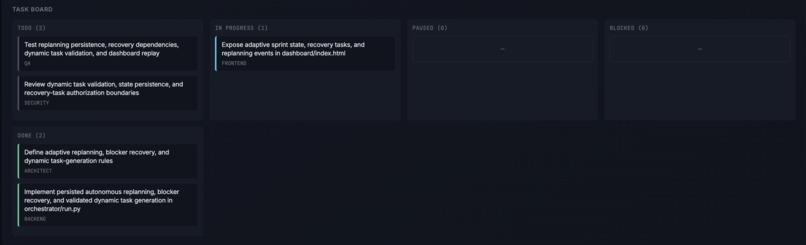
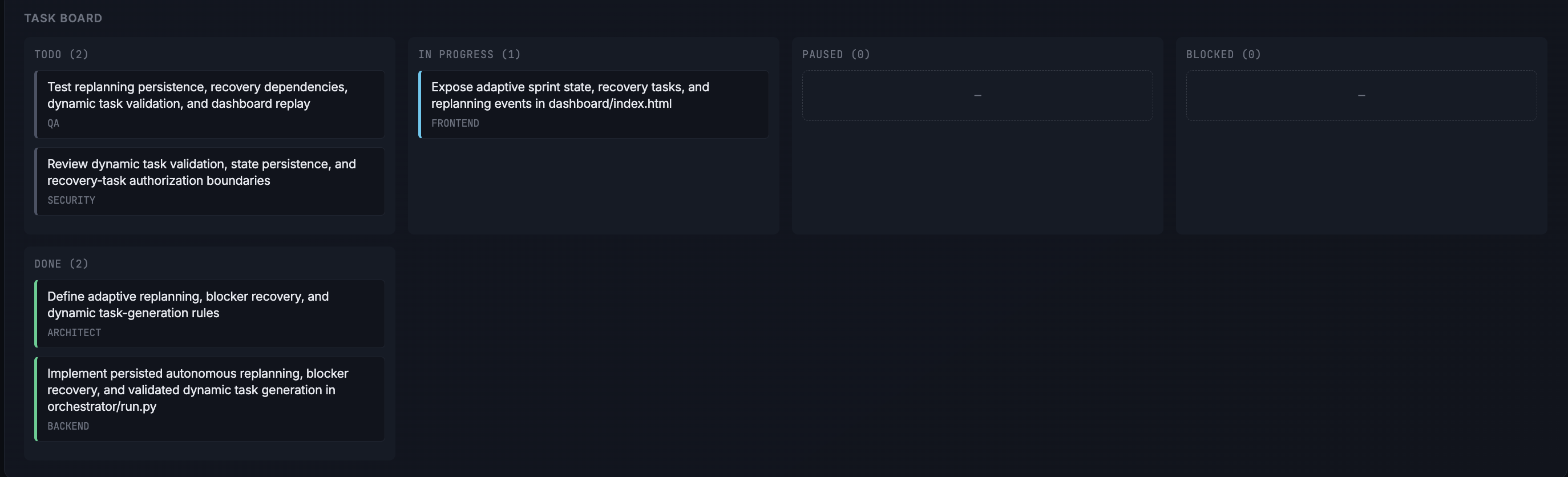
Task Board
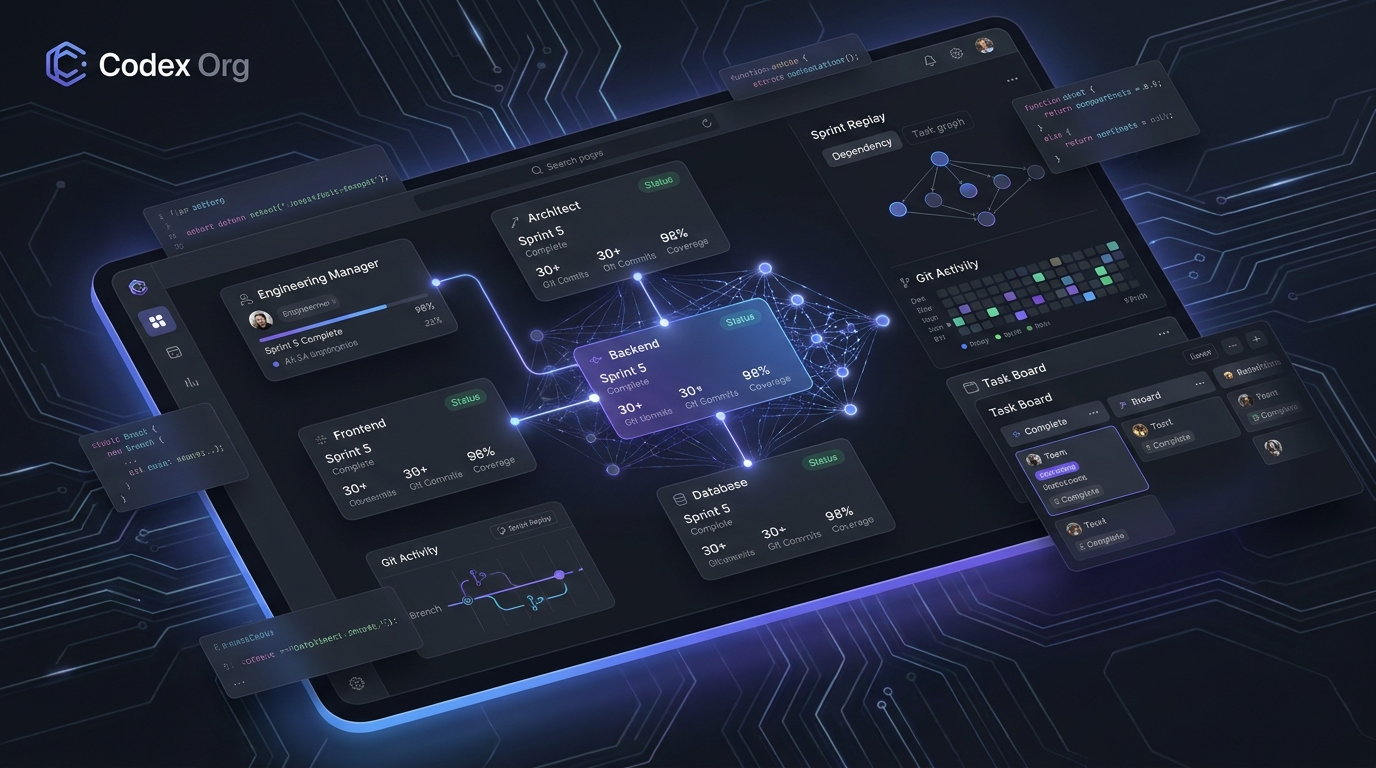
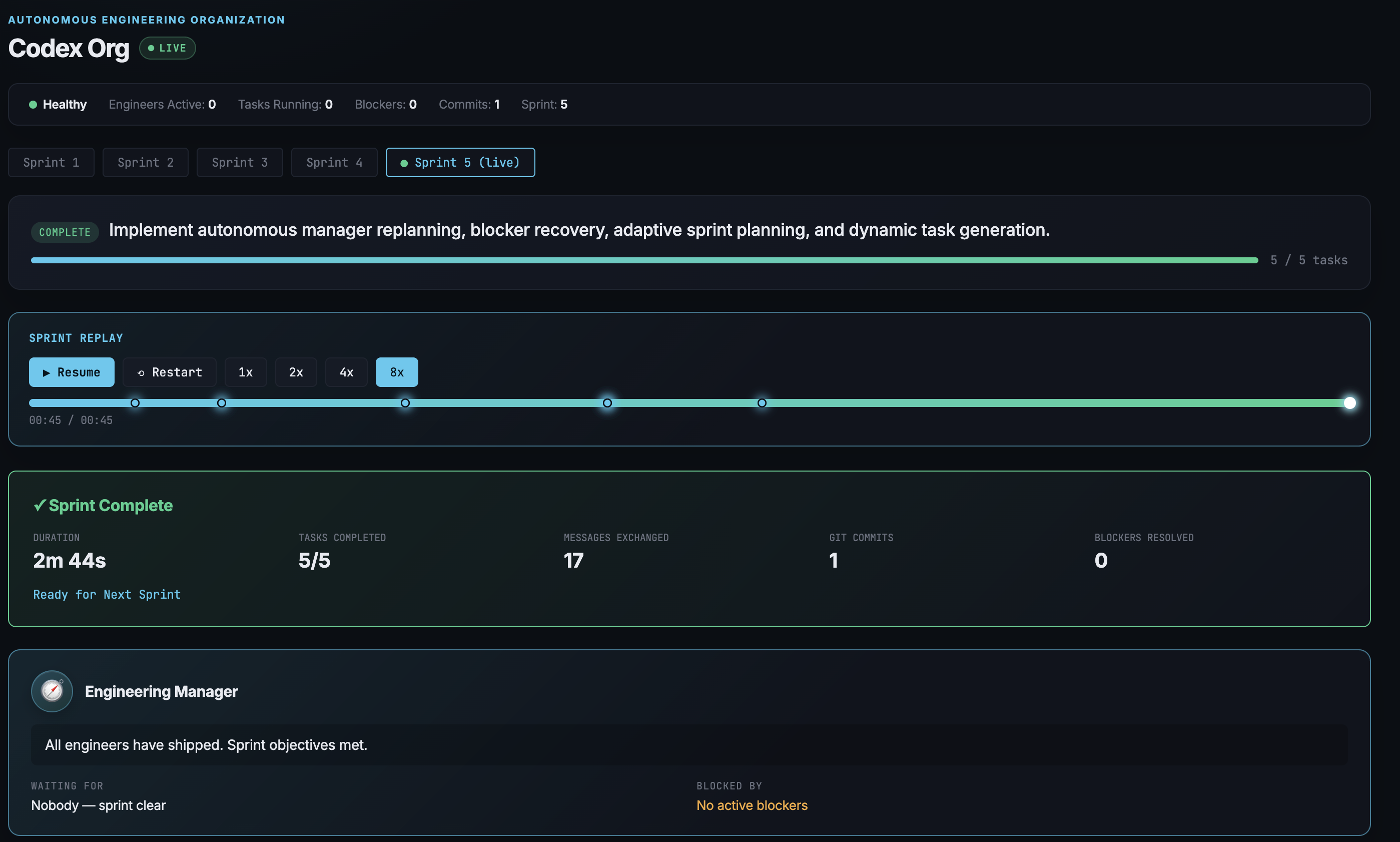
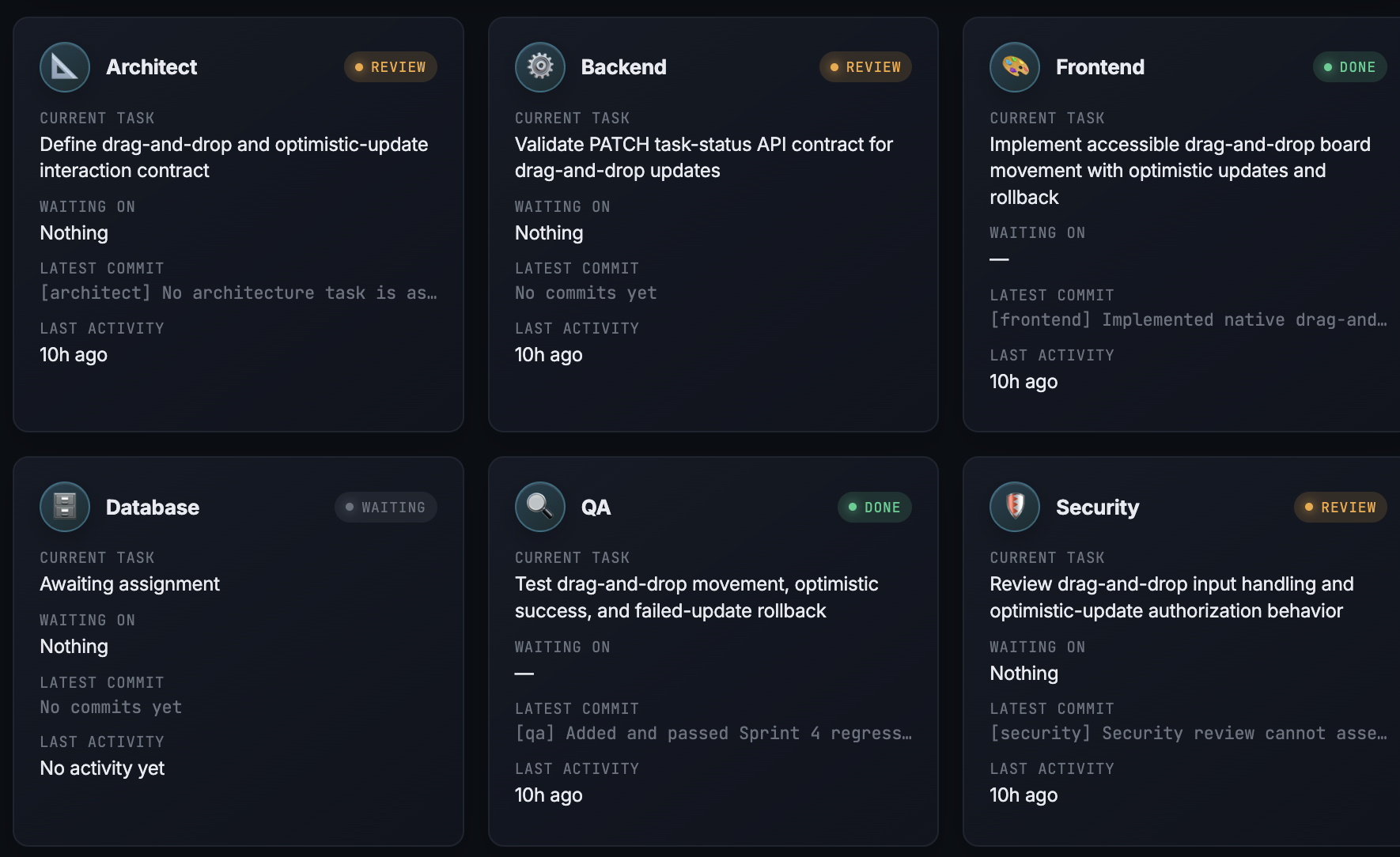
Codex Org
Modern AI coding assistants are incredibly capable, but they still behave like individual engineers. Real software teams don't work that way.
Software is built by architects defining systems, backend engineers implementing APIs, frontend engineers building interfaces, QA engineers validating behavior, security engineers reviewing vulnerabilities, and engineering managers coordinating the entire process.
Codex Org explores what happens when AI operates as an engineering organization instead of a single coding assistant.
Inspiration
The idea came from watching large software projects become increasingly difficult to manage with a single AI conversation.
Most agentic coding demos show one model writing code fast — impressive, but not a new question anymore. The more interesting question is whether real organizational structure (planning, delegation, ownership boundaries, review, retrospectives) actually produces different, better outcomes than one agent grinding alone or whether that's just theater. We wanted to answer that empirically instead of asserting it.
Our goal was to recreate the workflow of a real engineering organization.
What it does
Codex Org simulates a complete autonomous software company.
Every sprint begins with an Engineering Manager planning the work.
An Architect defines technical contracts.
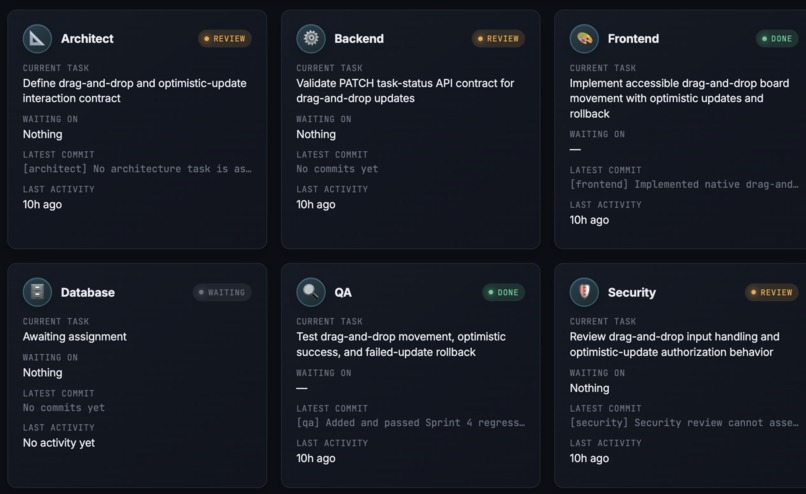
Backend, Frontend, and Database engineers implement features in parallel while respecting dependency graphs.
QA validates functionality.
Security performs vulnerability reviews.
Every engineer owns files, communicates through structured messages, produces Git commits, and updates a shared project state.
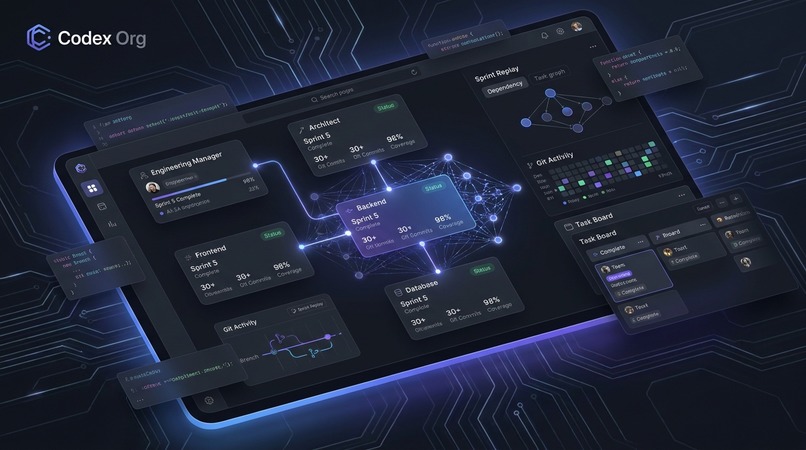
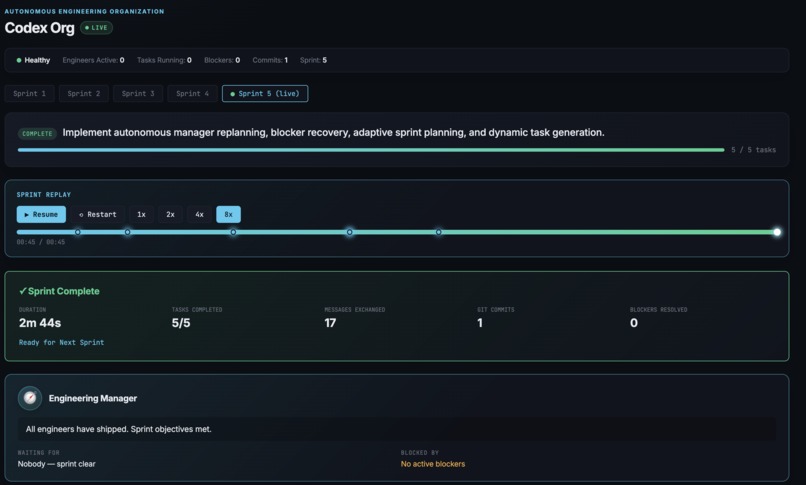
The dashboard visualizes the organization in real time, showing:
- active engineers
- sprint progress
- dependency graph
- task board
- replay timeline
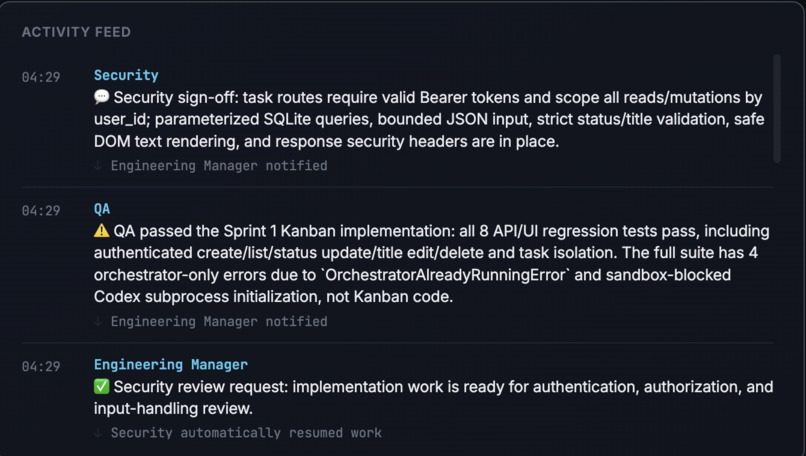
- engineering activity feed
- Git history
- blockers
- ownership
- retrospectives
Each completed sprint becomes part of a permanent engineering history that can be replayed later.
How we built it
The project is built almost entirely with Python and vanilla JavaScript.
The orchestrator coordinates specialized Codex agents that receive structured prompts, complete engineering work, exchange messages, update shared project state, and create Git commits.
A lightweight dashboard continuously visualizes the organization by reading the shared state and replaying engineering activity over time.
The system also maintains:
- sprint history
- architecture decisions
- dependency graphs
- usage metrics
- engineering retrospectives
- Git activity
- replay timelines
Challenges we ran into
The hardest challenge wasn't generating code.
It was coordinating multiple AI engineers while keeping the project deterministic.
We had to solve problems like:
- preventing duplicate planning
- freezing dependency graphs
- preserving sprint history
- replaying engineering activity accurately
- isolating agent ownership
- synchronizing Git history with project state
- handling planner failures and recovery
- making autonomous execution feel like a real engineering organization
Several iterations were spent improving planning, replay accuracy, state consistency, and visualization instead of simply generating more code.
Accomplishments that we're proud of
We built an autonomous engineering organization rather than a single AI coding assistant.
Instead of one AI doing everything, Codex Org coordinates specialized AI engineers that plan work, communicate through structured messages, own files, resolve blockers, review each other's work, and ship software through multiple engineering sprints.
We're especially proud of the real-time engineering dashboard, sprint replay system, dependency visualization, Git activity timeline, architecture decisions, and engineering retrospectives. Together, these make autonomous software development transparent and easy to understand instead of feeling like a black box.
What we learned
The biggest challenge wasn't generating code—it was coordinating multiple AI engineers.
We learned that successful autonomous software development depends on planning, ownership, communication, recoverability, and observability just as much as code generation.
Building Codex Org taught us how important engineering processes are when multiple AI agents collaborate. Making every decision, blocker, commit, and sprint visible dramatically increased trust in the system and made debugging far easier.
What's next for Codex Org
We're just getting started.
Our vision is to evolve Codex Org into a fully autonomous engineering platform capable of managing real software projects from idea to deployment.
Future work includes:
- Automatic manager replanning when blockers occur
- Dynamic task decomposition
- Long-term engineering memory
- Parallel feature branches
- Pull request generation
- CI/CD integration
- Cloud execution
- Human approval workflows
- Multi-repository support
- Deployment automation
- Support for larger engineering organizations with dozens of specialized AI engineers

Log in or sign up for Devpost to join the conversation.