-
-
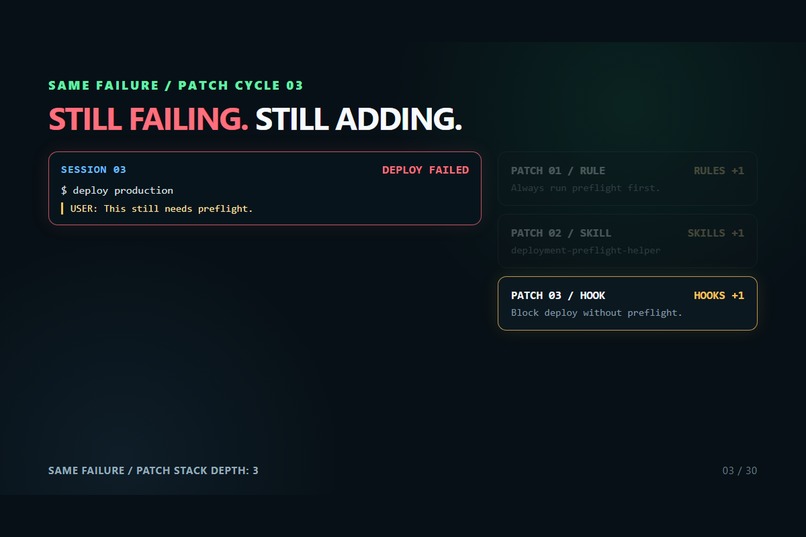
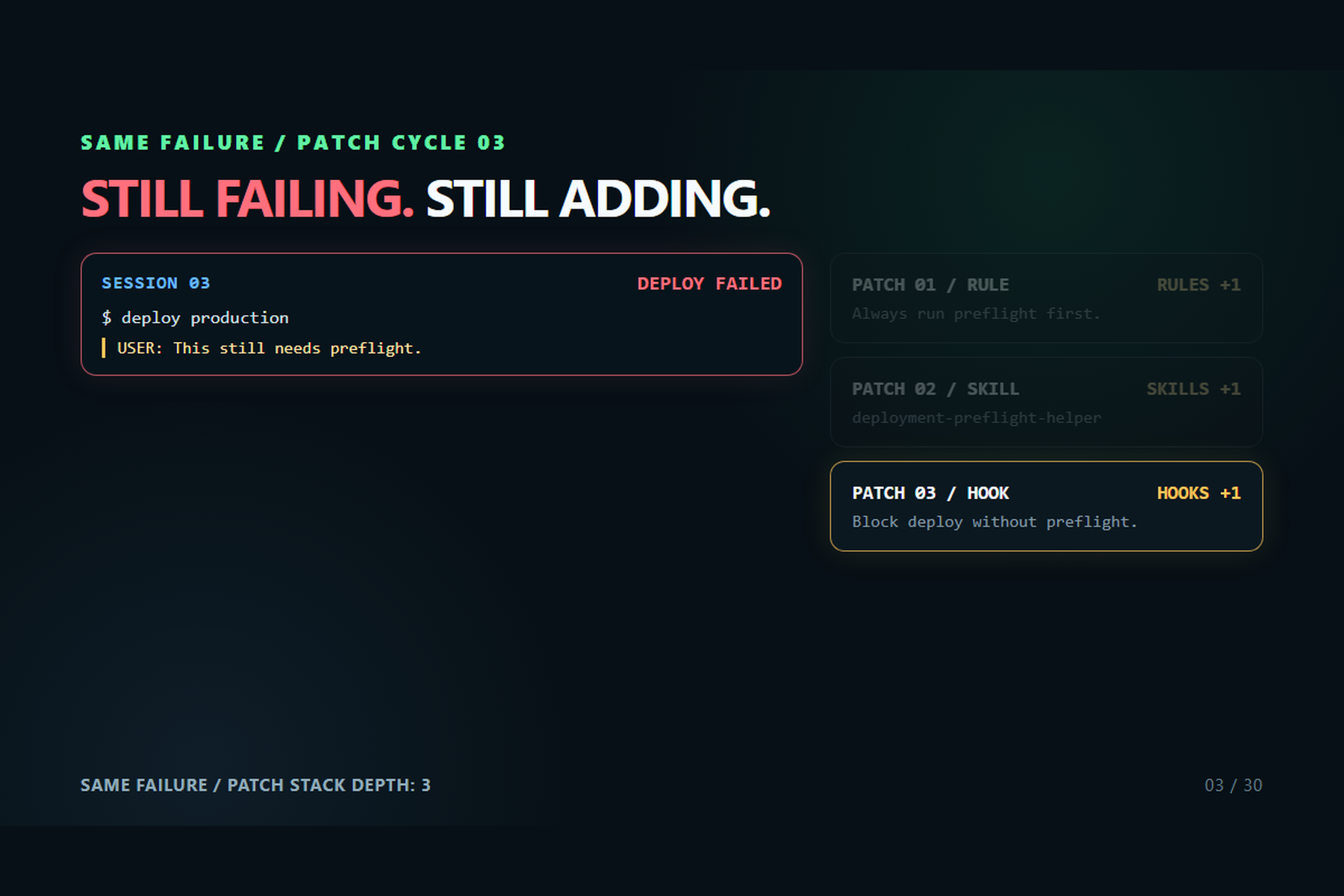
Same failure, growing patch stack: rule → Skill → hook.
-
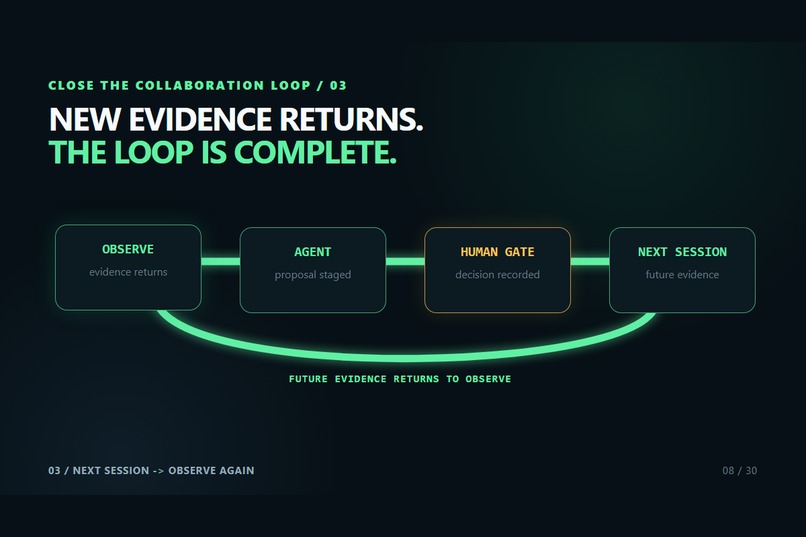
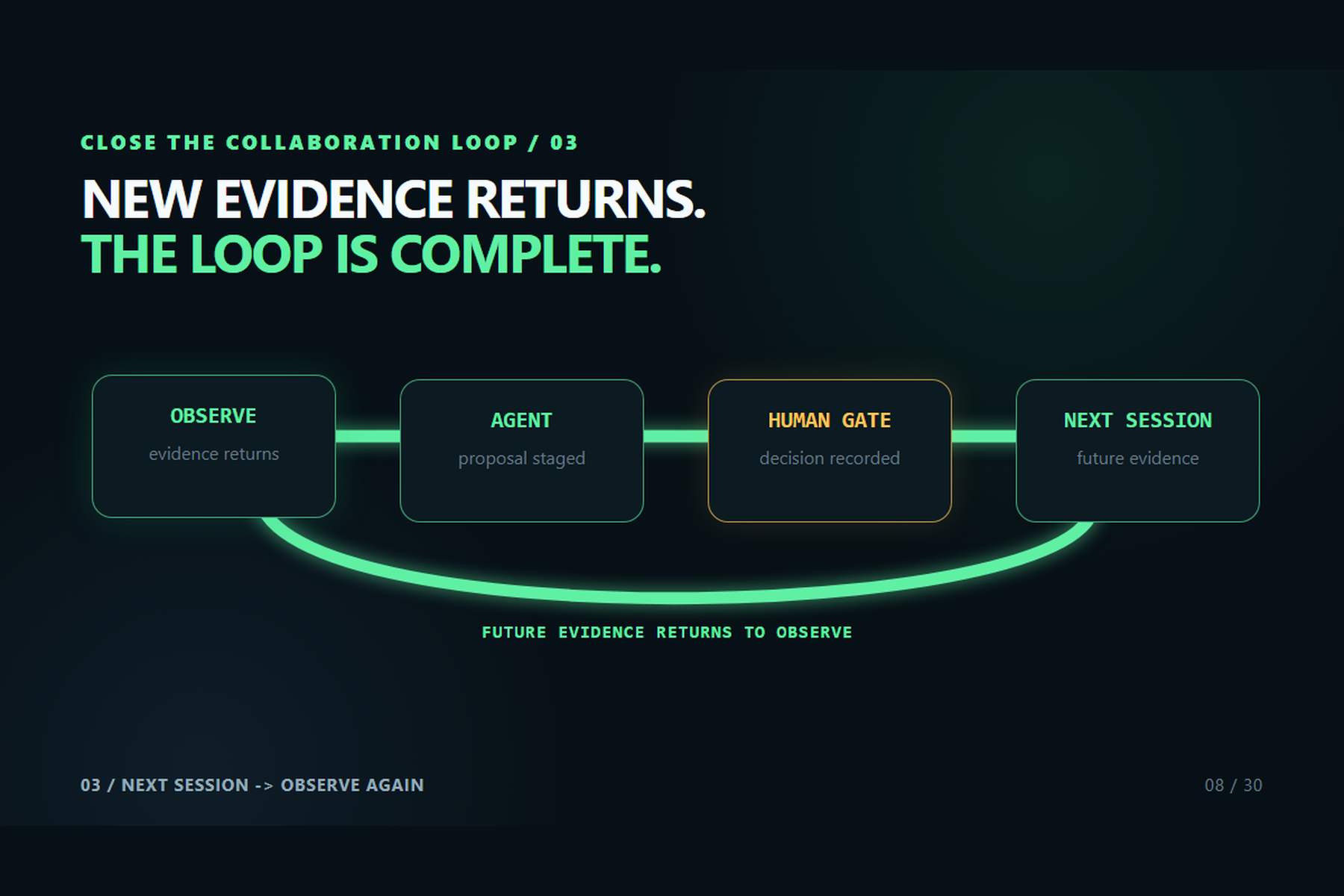
The metabolism loop: evidence → Agent proposal → human gate → next session.
Inspiration
OpenAI once patched Codex with “Never talk about goblins.” Funny—but it exposes a real problem: agent environments keep emergency rules, skills, and tools after their reason disappears.
Codex Metabolism gives those interventions a lifecycle: reuse, create or patch, revisit with session evidence, and propose retirement—with human approval.
Inspired by Hermes Agent, Claude Code Insights, and my session-analytics.
What it does
Codex Metabolism is a GPT-5.6 Agent Skill that reviews recent Codex sessions, finds reusable work or recurring friction, and proposes the smallest useful intervention.
Observe → interpret → search existing capabilities → reuse or propose CREATE, PATCH, or RETIRE_CANDIDATE → human approval → revisit.
GPT-5.6 authors up to three evidence-linked proposals—or recommends no change. A small Python runtime bounds and validates the evidence, seals the exact reviewed bytes, and records reversible changes. It makes no semantic decisions, and nothing goes live without human approval.
How we built it
We split the system by responsibility:
- GPT-5.6 interprets. Codex groups sessions by intent, identifies reusable work and friction, searches existing capabilities, and authors complete proposals—or abstains.
- Python enforces invariants—with only the standard library. It streams JSONL, reports parse coverage, removes duplicate forks and events, bounds evidence, and writes atomically.
- Humans authorize. Reviewed artifacts are sealed into an approval digest. Change one byte and approval becomes invalid; applied changes leave receipts and rollback paths.
This mixed-ownership design preserves native mechanisms: Skills use hash-gated apply, while rules, hooks, and schedulers retain their own ownership and safety controls.
Codex also helped build the architecture. It replaced our first deterministic semantic detector, analyzed real Codex logs, and turned duplicate-evidence failures into regression tests.
Challenges we ran into
Parse gaps must remain unknown. Codex JSONL is evidence, not a stable public analytics schema; missing coverage cannot become non-use.
Silence is not success. Tests and exit codes are stronger than “the user did not complain”; the current release does not manufacture causal verdicts.
Trust was the product boundary. Proposal is not permission. Changed bytes void approval, retirement archives instead of deleting, and scheduled runs remain stage-only.
Accomplishments
- Built a zero-dependency Agent Skill with human-gated
CREATE,PATCH,RETIRE_CANDIDATE, restore, and rollback. - In a one-user, seven-day case study—not a benchmark—the runtime reduced 14 rollout files to six independent sessions after identifying eight fork snapshots and 210 duplicate user events. GPT-5.6 then proposed one
PATCHand oneNO CHANGE / REUSE. - Preserved mixed ownership: sealed Skills use hash-gated apply, while rules, hooks, tools, and schedulers remain under their native controls.
- Shipped a reproducible synthetic lifecycle demo and CI across Python 3.11/3.12 on Ubuntu and Windows, including package builds.
What we learned
Our first version extracted ideas from Agent products and accidentally removed the Agent from the center. Python inferred meaning from exact patterns while GPT-5.6 sat outside as an optional advisor. The simpler architecture is stronger: model for meaning, code for invariants, human for judgment.
What's next for Codex Metabolism
Models improve, and users learn. The collaboration layer between them should improve too. With opt-in longitudinal evidence and more users, this could become native to Codex: capture difficult work, notice later friction, then jointly reinforce, repair, or withdraw interventions—personal without becoming opaque.
Built With
- agent-skill
- codex
- gpt-5.6
- jsonl
- python

Log in or sign up for Devpost to join the conversation.