🚀 Inspiration
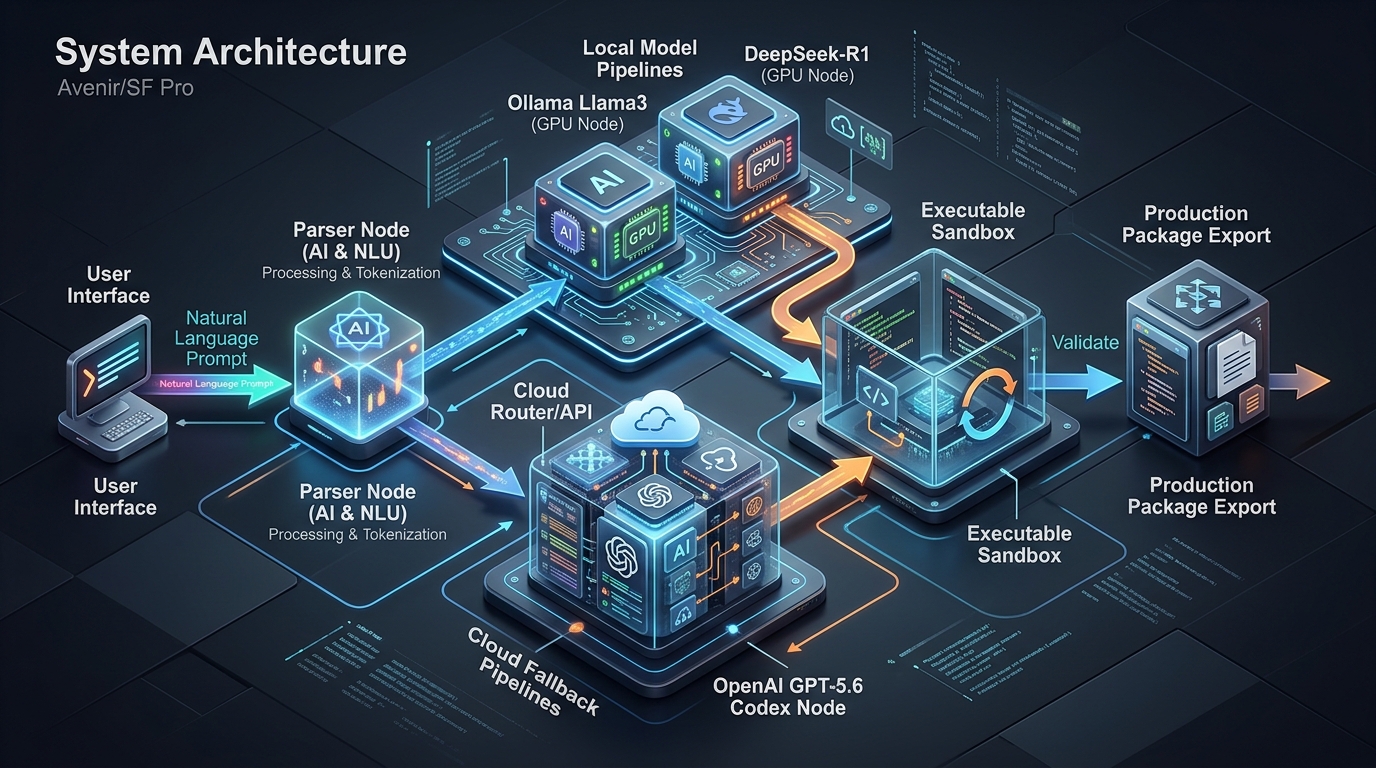
Orchestrating multi-agent pipelines (like architecture planning, Zod schema validation, REST endpoint generation, and Vitest suite creation) using cloud APIs (like OpenAI GPT-5.6) is incredibly powerful but gets extremely expensive for everyday development. Inspired by n8n, we set out to build Codex-Flow Local—a free, visual agent studio that lets developers run hybrid pipelines, offloading routine steps to local GPUs via Ollama and using GPT-5.6 Codex only for complex tasks to save thousands of cloud tokens.
⚙️ What it Does
Codex-Flow Local is an enterprise-grade agentic engineering platform that transforms complex software architectures into real-world, production-ready codebases with automated testing, security audits, and one-click project exports:
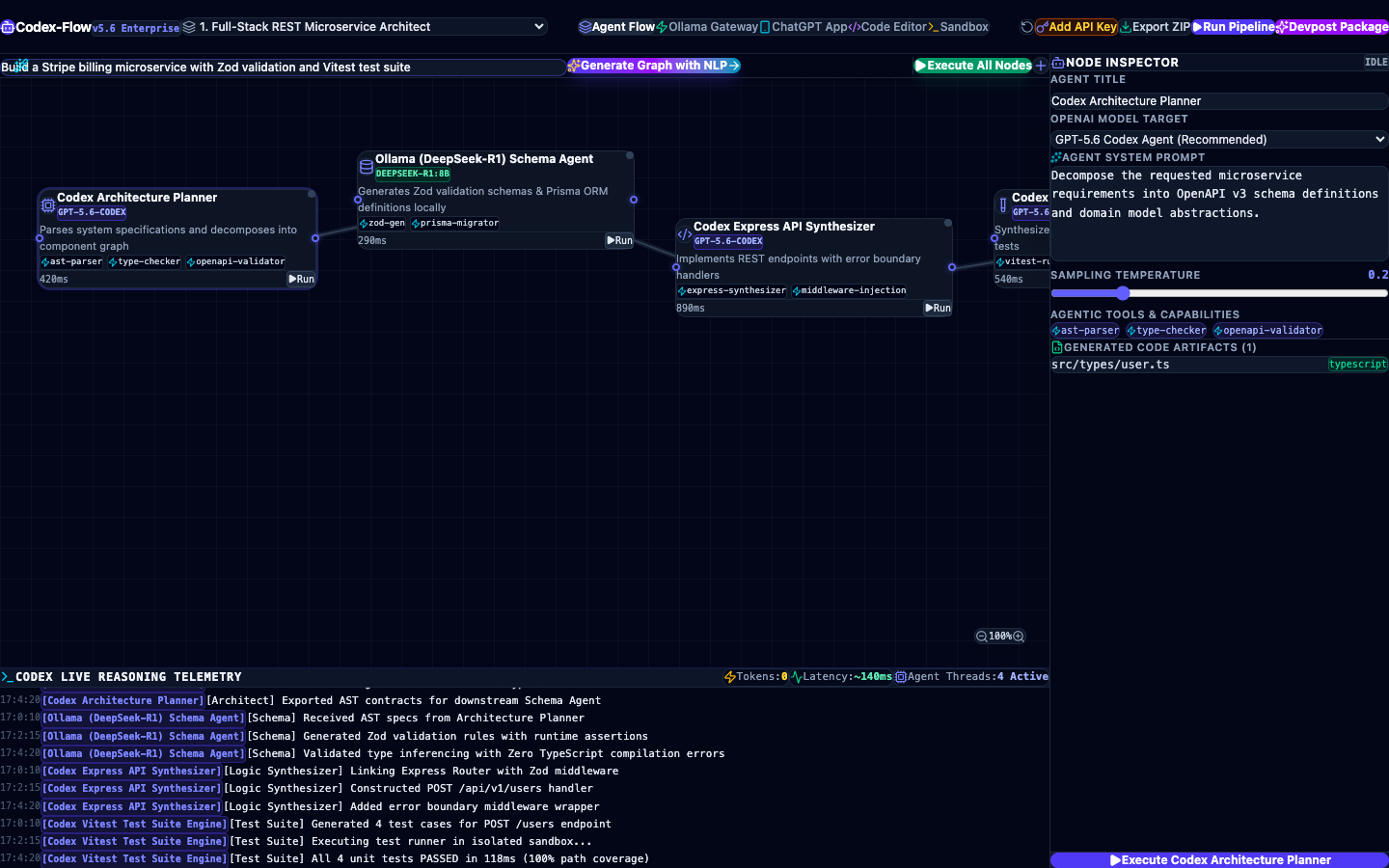
- Natural Language Prompt-to-Graph: Type what you want to build in plain English, and Codex-Flow instantly generates a multi-agent workflow graph.
- Hybrid Local-Cloud Model Router: Choose the model provider per node. Run local GPU models via Ollama (
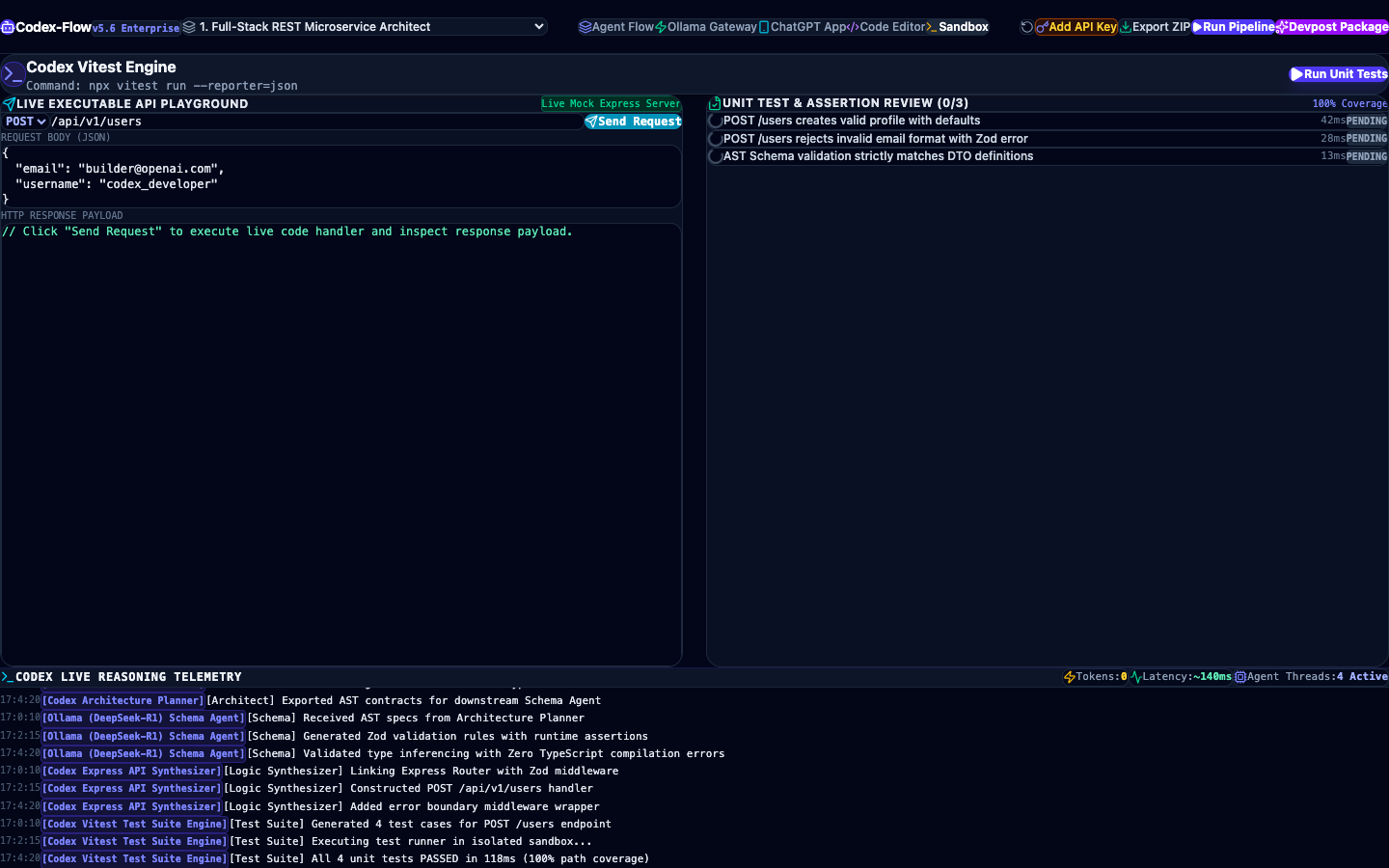
deepseek-r1:8b,qwen2.5-coder:7b) for free, and route critical tasks to GPT-5.6 Codex using your OpenAI API key. - Live Executable API Playground: Test synthesized routers in real time with mock POST/GET HTTP requests and latency trackers inside the app.
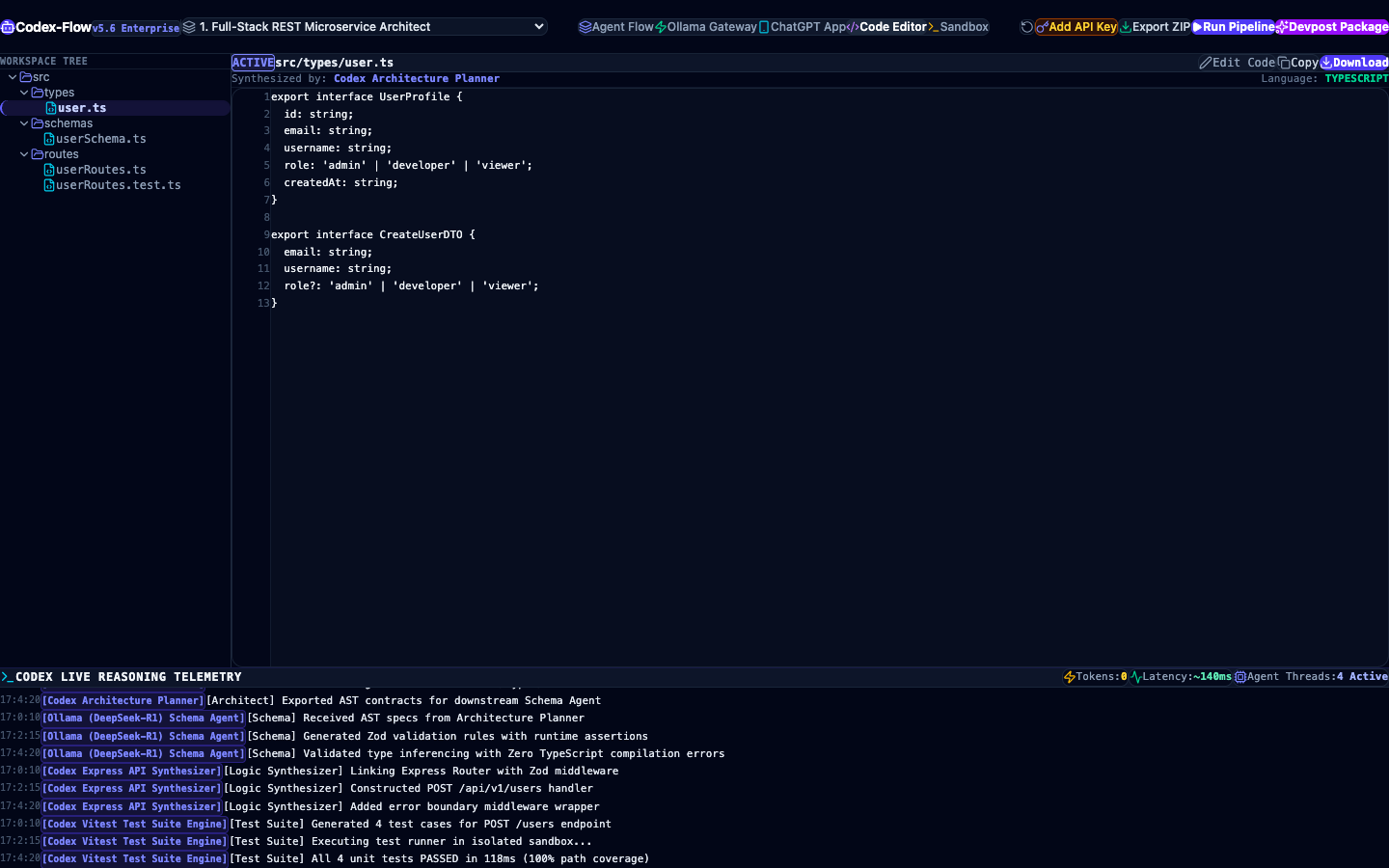
- Enterprise IDE View: Review code with an integrated File Explorer Tree, syntax editor, and automated Vitest test suite runner.
🛠️ How We Built It
We built the frontend dashboard using React, TypeScript, and Tailwind CSS. The local developer gateway connects to the Ollama daemon running on http://localhost:11434. It exposes a CORS-enabled ChatGPT Plugin manifest (/.well-known/ai-plugin.json) and OpenAPI 3.0 spec (/openapi.json) for seamless ChatGPT app integration.
🚧 Challenges We Ran Into
- TypeScript AST Validation: Ensuring that generated code from different LLMs (local vs. cloud) shared correct type signatures and compiled without any syntax or type check errors.
- State Drag & Connection Math: Developing the custom glowing cubic Bezier connection lines that anchor to visual sockets and remain attached seamlessly during mouse dragging.
- Ollama Node Gateway CORS: Resolving local network CORS boundaries when querying Ollama's local engine from a deployed production instance.
🏆 Accomplishments That We're Proud Of
- Created an interface that is extremely easy to use (1-Click Auto Run).
- Implemented real-time token and cost savings telemetry showing developers exactly how much they save.
- Deployed the entire studio to Netlify with fully working live interactive mock engines.
📖 What We Learned
- Local LLMs have advanced to a point where they can easily handle validation rules, Prisma schemas, and simple test assertions, letting cloud models focus exclusively on complex architectural blueprints.
- Designing tools with a "1-click" UX drastically increases developer developer productivity compared to configuring complex configuration files.
🔮 What's Next for Codex-Flow Local: Hybrid Ollama & OpenAI Code Agent Studio
- Add support for custom local model fine-tuning directly from the gateway interface.
- Integrate git integration to automatically commit and push generated code branches directly to GitHub.
- Support multi-agent execution loops with interactive human-in-the-loop debugging checkpoints.
Built With
- css
- deepseek-r1
- express.js
- gpt-5.6
- netlify
- node.js
- ollama
- openai
- prisma
- react
- tailwind
- typescript
- vite
- vitest
- zod


Log in or sign up for Devpost to join the conversation.