-
-
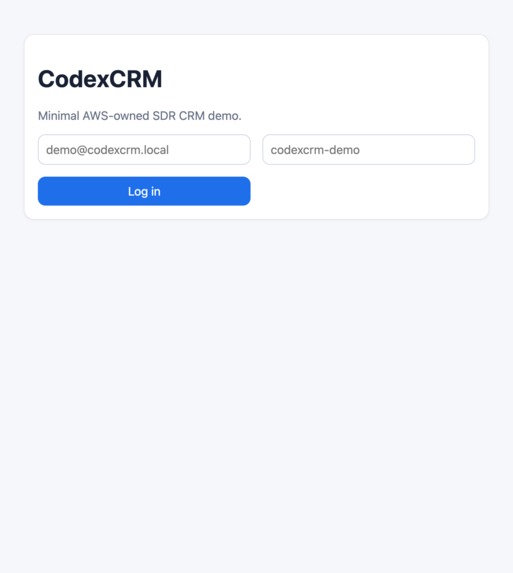
codexCrm
Inspiration
This project started from a real request at a startup where I work as an SDR: we needed a CRM that fit our workflow—not a bloated suite we had to reshape ourselves around.
Most CRMs fall into the same traps. They start affordable, then get expensive through plugins and add-ons. Or they start expensive and are clearly built for enterprise. Meanwhile SaaS and big cloud platforms are everywhere, but that abundance can feel redundant for small and medium businesses that mainly need a focused, customizable toolset: track leads before conversion, communicate safely, and keep interaction history somewhere they control.
With AI (Codex and GPT-5.6) and a cloud account the company already owns, that toolset can be tailored to how a team actually sells—and scaled with normal cloud practices instead of an ever-growing SaaS bill.
What CodexCRM is
CodexCRM is a minimal, customizable SDR CRM designed for teams of roughly 2–20 salespeople:
- Lead tracking, notes, statuses, and a full activity timeline
- Call and SMS via Twilio, with hard caps and safety filters for a public demo
- Data stored in PostgreSQL on the company’s own cloud
- Seeded sample leads plus a limited public-data path so the product is judge-ready without exposing real customers
Try it
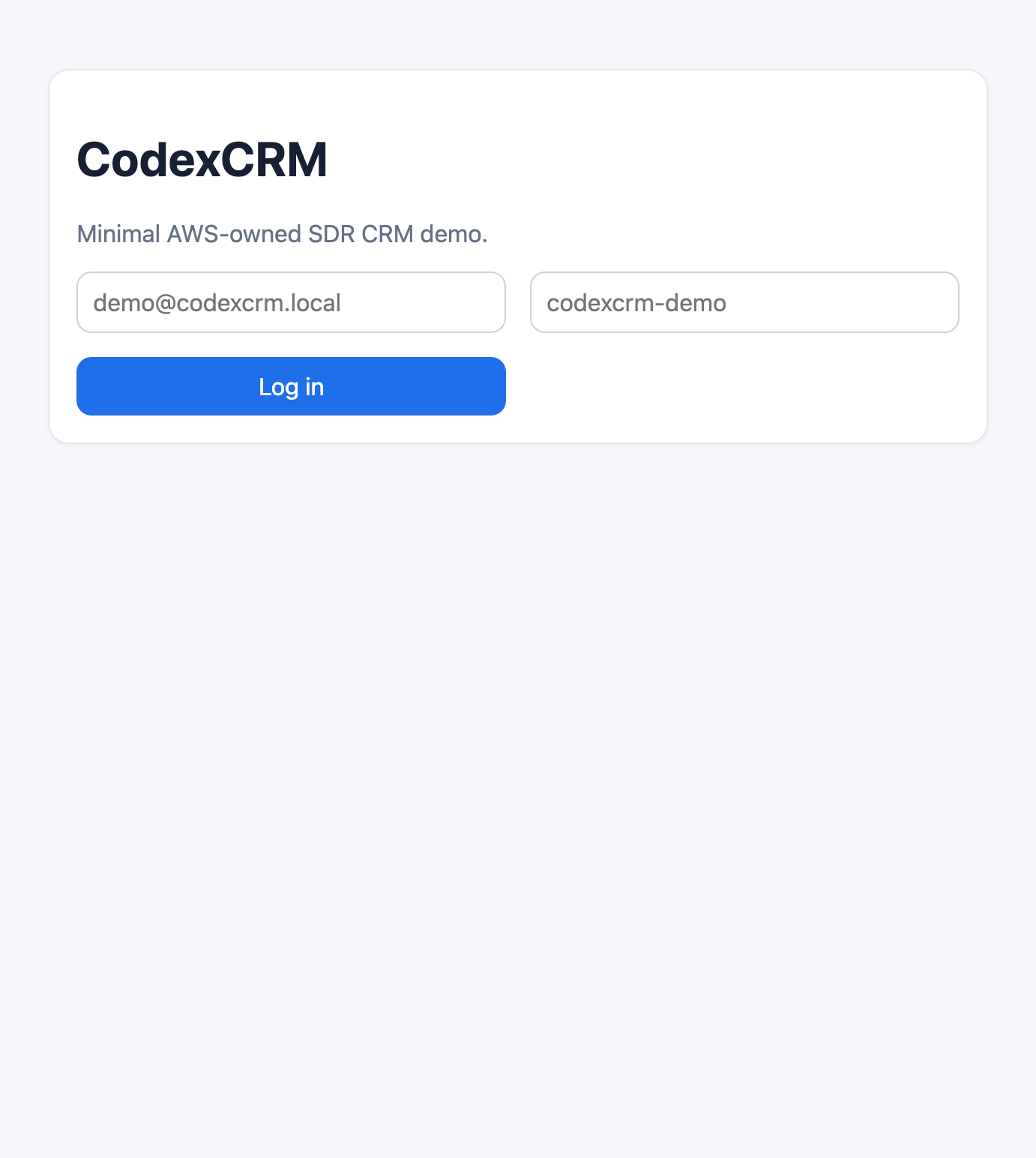
- Live demo: http://204.236.254.26:3000/
- Login:
[email protected]/codexcrm-demo - Repo: github.com/LouisRodriguez12101815/codexCrm
AWS is the example cloud here because access was ready for Build Week—but the same layout maps cleanly to other providers, to an internal server, or later into a larger CRM SaaS if the company outgrows the custom stack.
How I built it
I treated this as a product constraint problem first, then an implementation problem:
- Define the SDR must-haves from day-to-day startup work (leads, outreach, recorded interactions).
- Use Codex to ship the Next.js app, APIs, schema, Docker packaging, and deploy docs quickly.
- Use GPT-5.6 for architecture choices: own the data layer, keep outreach gated, prefer seed data for judges, and deploy inside AWS rather than only “another SaaS login.”
- Host a public judge demo on EC2 + Docker Compose so reviewers can click through in under a minute.
The goal wasn’t to clone Salesforce. It was to prove a customizable CRM core that a small team can afford to run and evolve.
Leads → Notes/Timeline → Twilio SMS/Call (capped) → Postgres on your cloud
Built With
- amazon-ec2
- amazon-web-services
- codex
- docker
- github
- gpt-5.6
- next.js
- postgresql
- twilio
- typescript

Log in or sign up for Devpost to join the conversation.