-
-
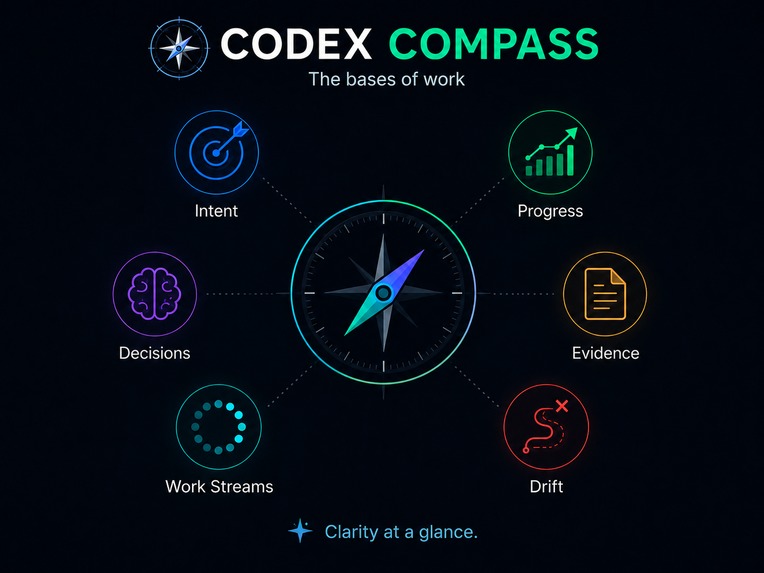
Codex Compass
-
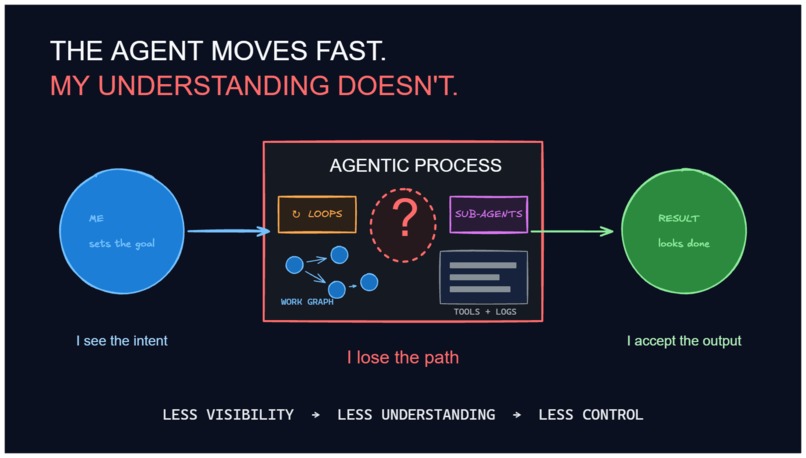
Motivation
-
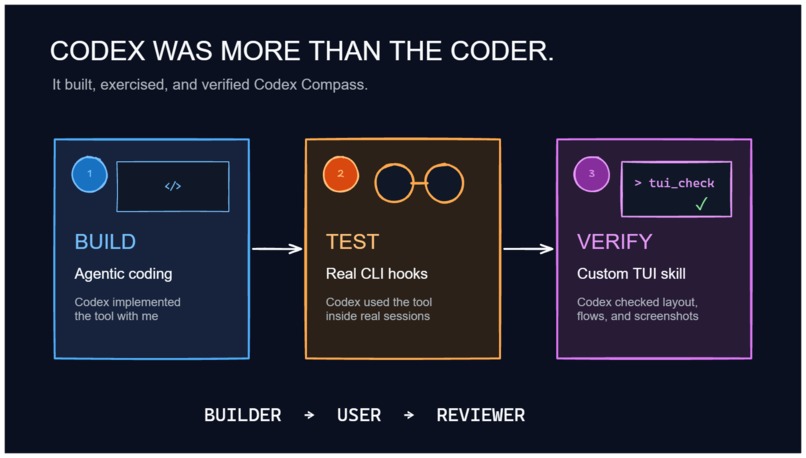
GPT-5.6 usage
-
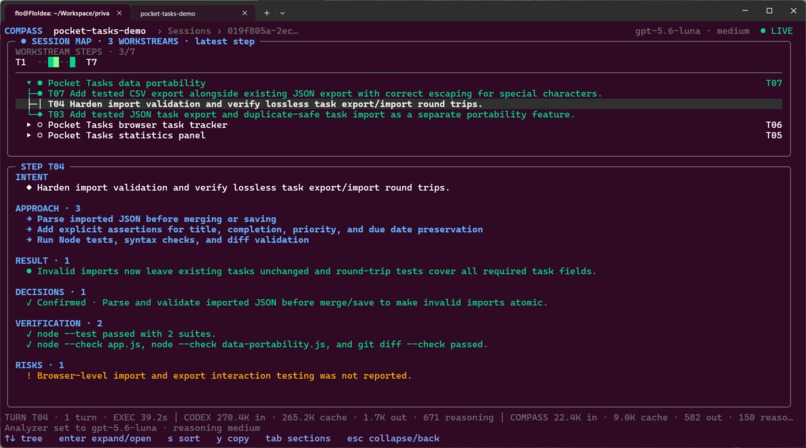
TUI
Inspiration
Last week I followed a presentation about neuroplasticity, which is the ability of our brain to rewire and adapt in response of our daily activities.
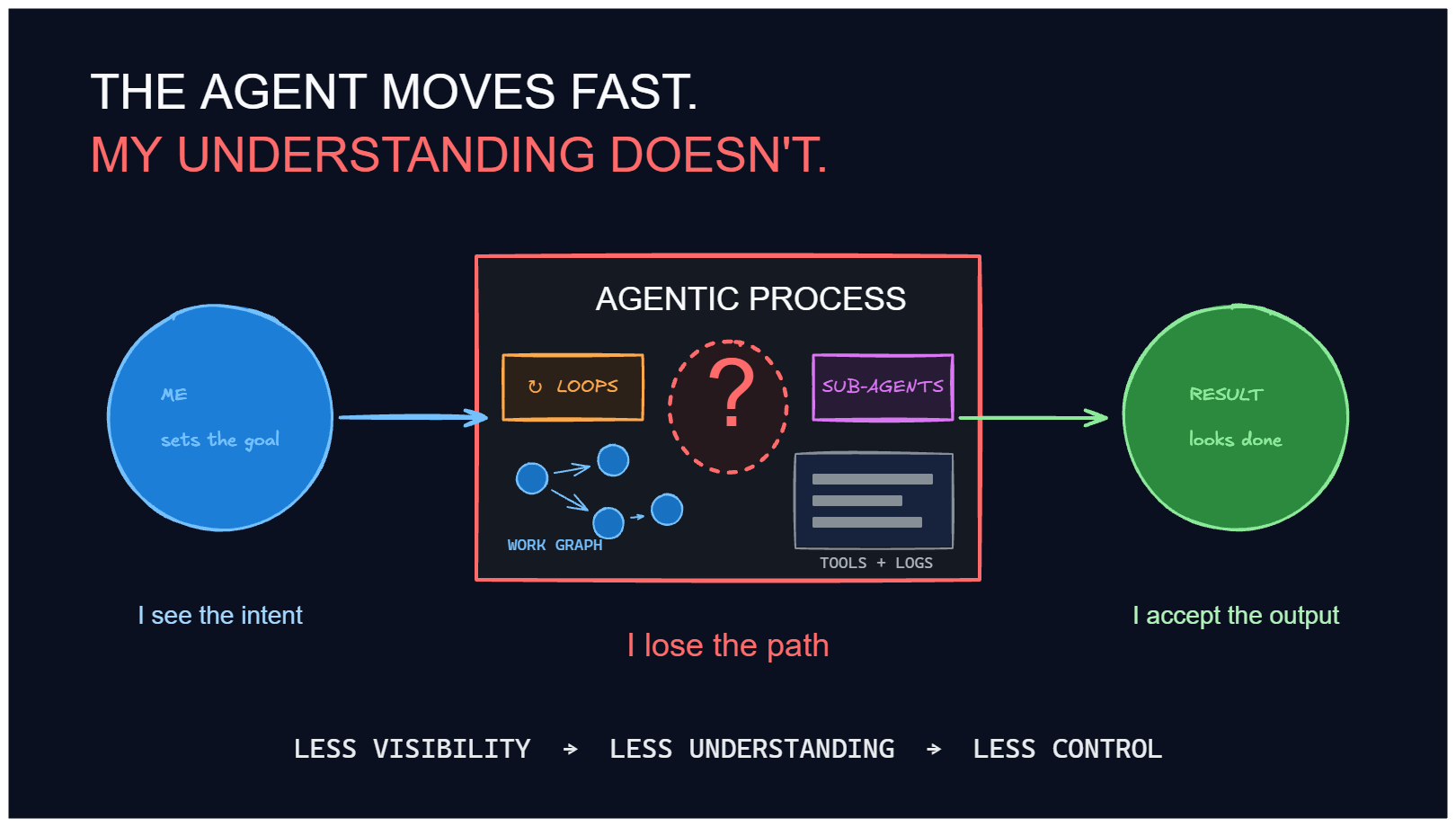
One very important activity and skill nowadays is analytical thinking, which is mainly covert by our prefrontal cortex (PFC). During the presentation I asked myself... "Am I loosing this skill as the analytical thinking in programming just vanished and I feel more like an orchestrator instead of really solving hard challenging problems... the AI is just better nowadays at this area.
An example would be current trends like parallelization, agentic loops, etc., which foresee a future where we are measured by efficiency and steering a lot of parallel workloads... but analysing a really hard problem and trying to solve it in multiple hours or days? I think this will not be the case anymore...
So this project "Codex Compass" is just an experimental approach how to get developers more engaged in the process of agentic coding without slowing down the process, which is the future.
What it does
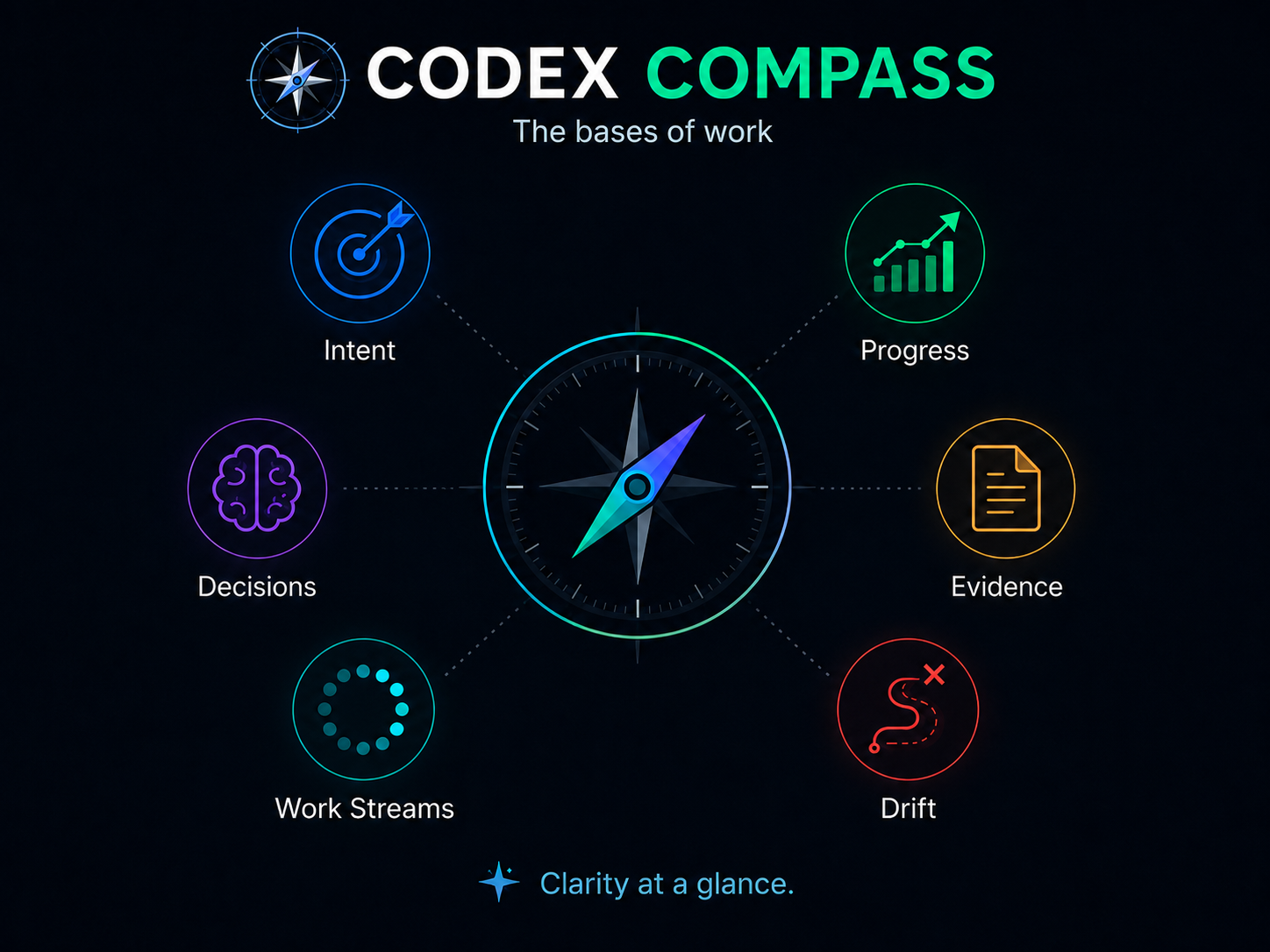
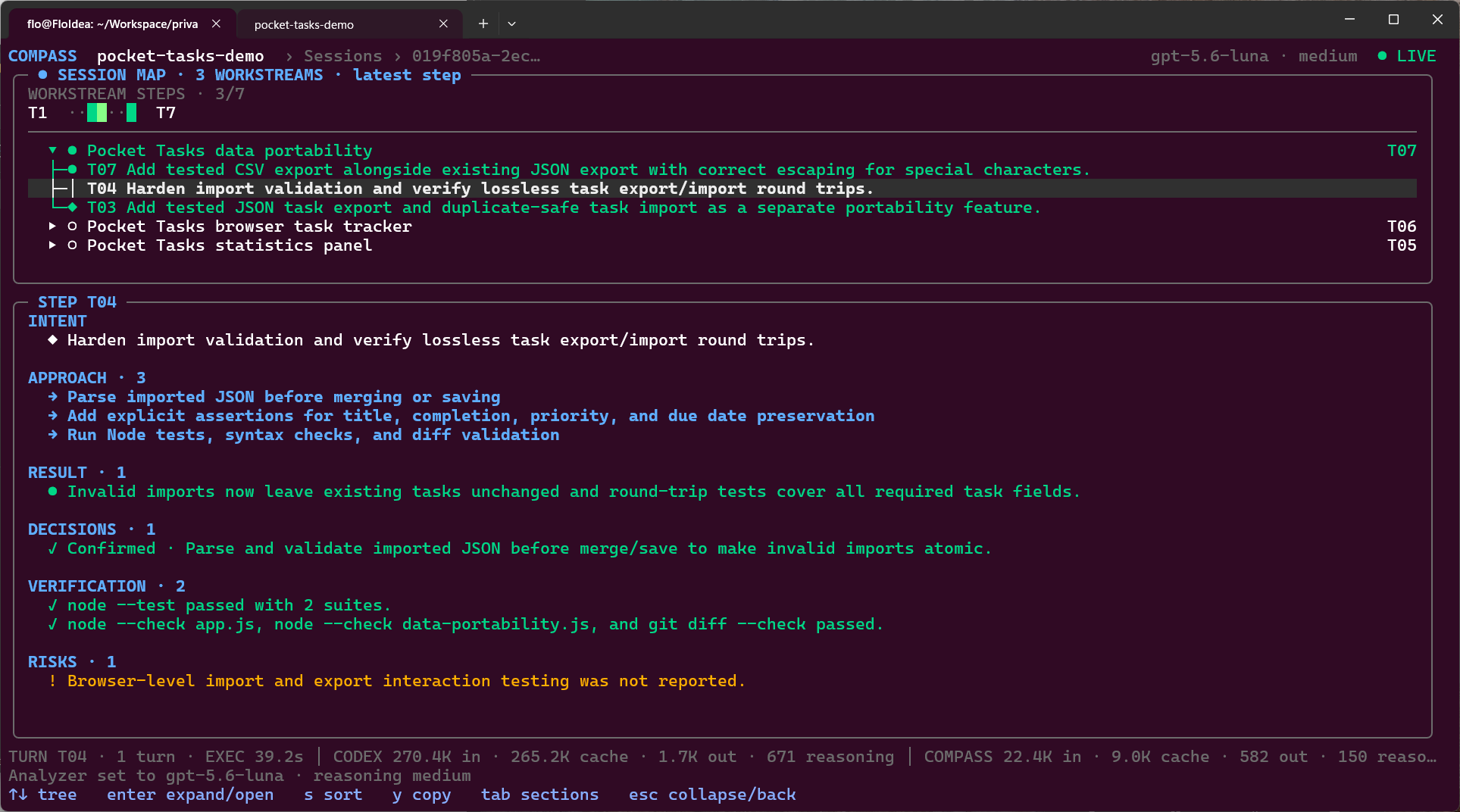
Codex Compass is a local terminal UI (TUI), which is currently only supporting Codex CLI. As many developers will tackle multiple problems and feature during a coding agent session (yes, also if you use git branches :D) Codex Compass helps you to structure and take control of this process by:
- structuring sessions into meaningful workstreams
- keeping track of intentions from single working steps up to aggregated working streams or sessions
- tracking important outcomes, decisions, risk and providing a history or summary of these
It mainly utilizes hook events from the Codex CLI that will trigger Codex Compass activities, which means it is like a hidden watcher that provides values without disrupting the agentic coding flow (trade off are token costs... there is no free lunch).
## How I built it
I built it mainly with Codex CLI and based on Go, because it is simple to develop and understand and has a small footprint plus some good TUI libraries e.g. Bubble Tea.
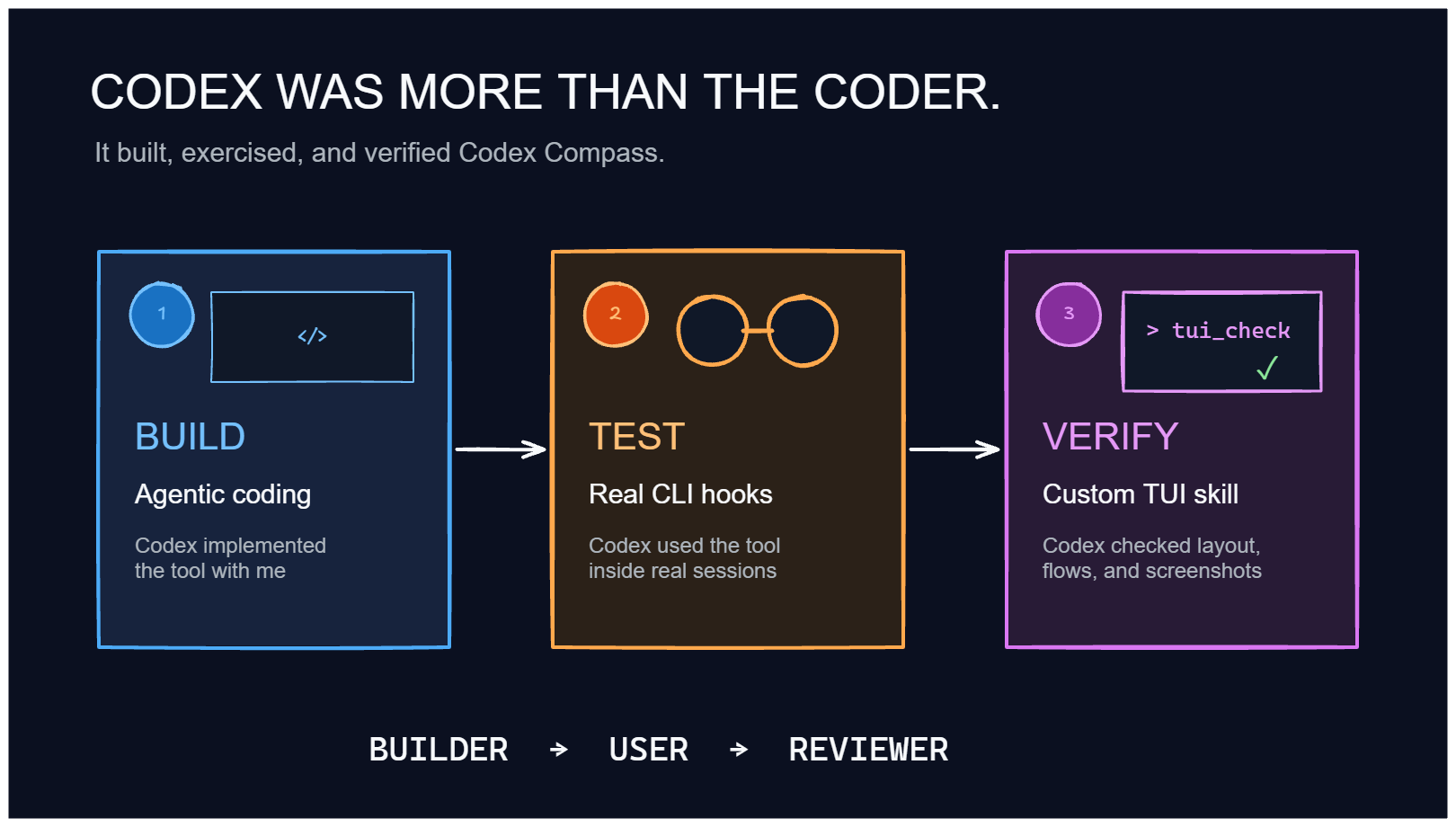
Main usage of GPT-5.6 was to:
- Build - mainly with GPT-5.6 Sol (medium reasoning)
- Test, as I started the watcher builds directly in the folder where I build Codex Compass - mainly with GPT-5.6 Luna (medium reasoning)
- Review, via a Skill that took snapshots of the active TUI terminal to also review design or find bugs - mainly with GPT-5.6 Sol (medium reasoning)
## Challenges I ran into
My main challenge was to think about a good semantic structure of what to keep track during an agentic codings session. People are building all kinds of things and even use it often for non development tasks. So what is really a good structure that is generic enough for all kind of projects, but meaningful enough so it helps the developers... we are trying to solve this since months with endless amount of skills, system prompts, etc. and in the end everyone will write something very customized to their needs.
I don't think this challenge is solved, but I am happy with the current structure as it seems at least a good first draft. Every prompt has an "Intent", multiple "Approaches" which are strategized by the agent, one or multiple results (outcomes), decisions that need to be made during the process (thinking) and risks (gaps), which are not solved, but need to be tracked.
Another more technical personal challenge was how to build a good TUI... I chose a TUI, because I thought it was easy, limited scoped for a weekly challenge I do alone and everyone is doing it e.g. herd, TMUX, etc.... I learned it is not so easy!
What I learned
As mentioned developing a good TUI. I a TUI you have very limited space so it is even more important what information you show and which information you do not show... it is very different from typical Web UI design.
Semantic design and stability of agentic solutions are very hard and results in different projects can be ambiguous.
What's next for Codex Compass
There are no concrete plans as I am quite busy with a lot of other topics, but I will try to use it in the next weeks for my other projects to validate if my interpretation of an agentic compass is reattaching me to the development process.
Personally, I also think existing agentic coding IDEs or CLIs will in the future support such a concept that will involve engaging the developer more in the agentic coding process even if we orchestrate multiple agents.

Log in or sign up for Devpost to join the conversation.