Inspiration
Software bugs can cause application failures, security vulnerabilities, and costly production issues. Developers often spend significant time reviewing code, debugging errors, writing tests, and validating fixes. We created CodeSentry AI to make this process faster and smarter by combining AI-powered code review with automated testing in one platform.
Our goal is to build an intelligent coding agent that helps developers identify problems early, understand why they occur, and generate reliable fixes before the code reaches production.
What it does
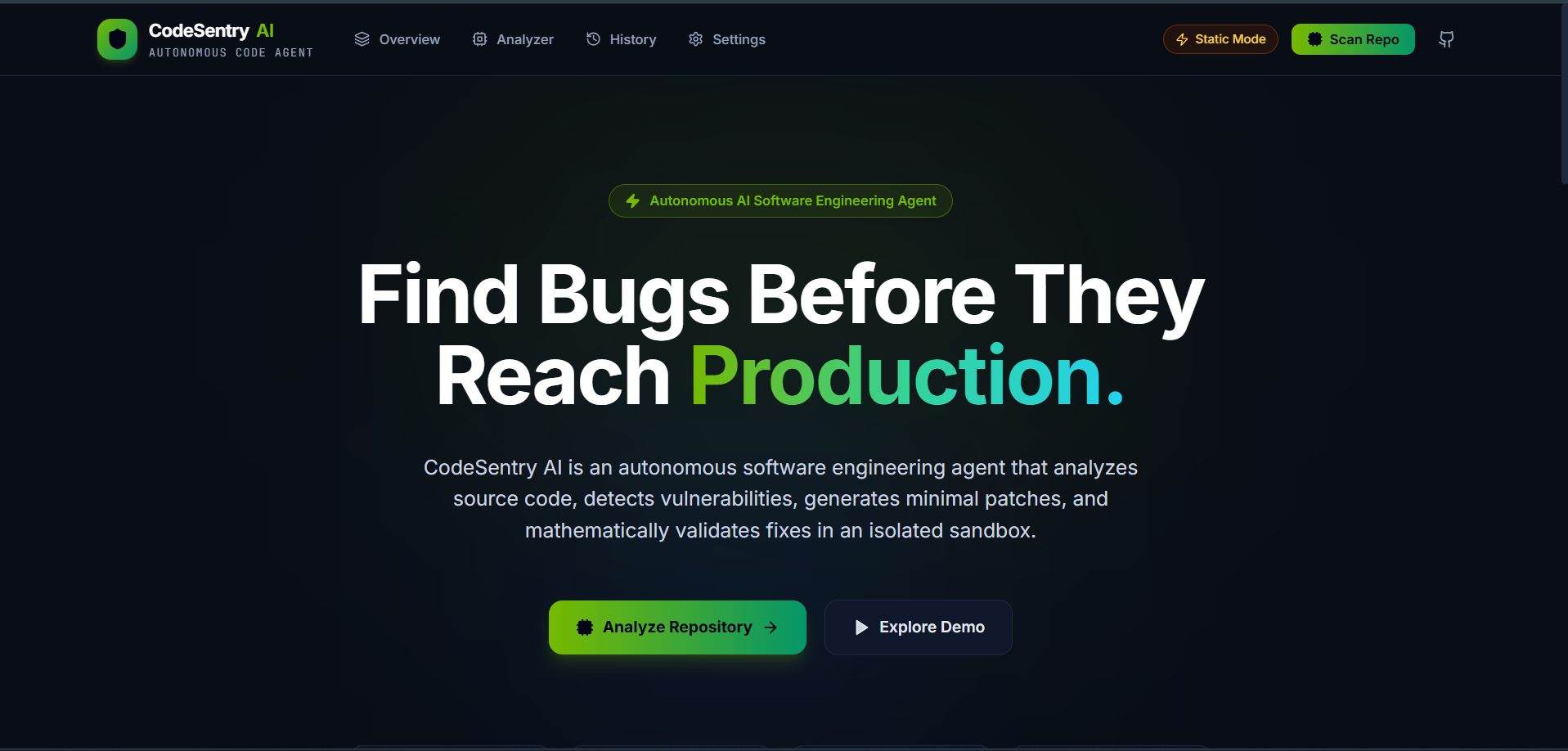
CodeSentry AI is an AI-powered software engineering agent that analyzes source code and assists developers throughout the debugging workflow.
Key features include:
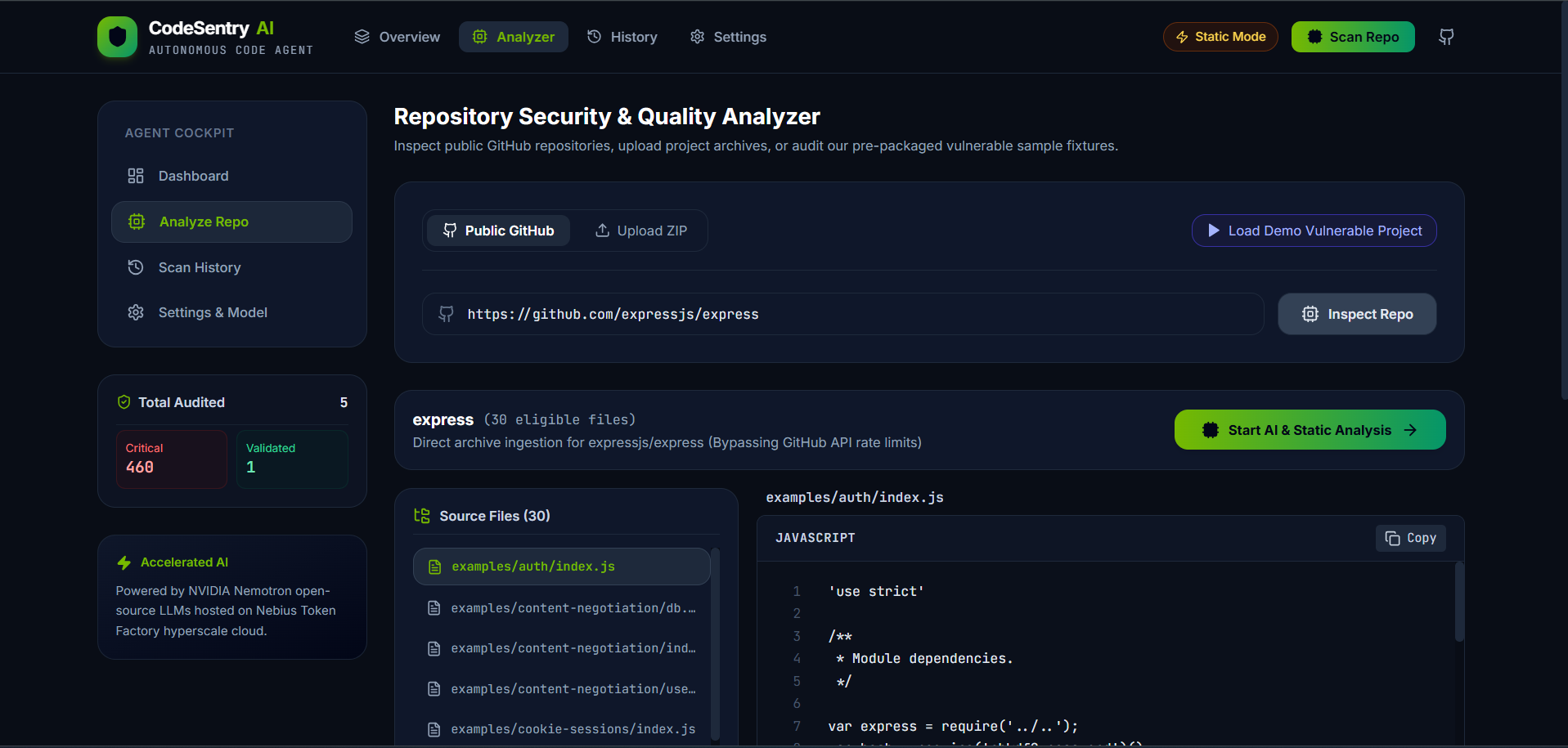
- Repository Analysis: Inspect source code from supported GitHub repositories or uploaded projects.
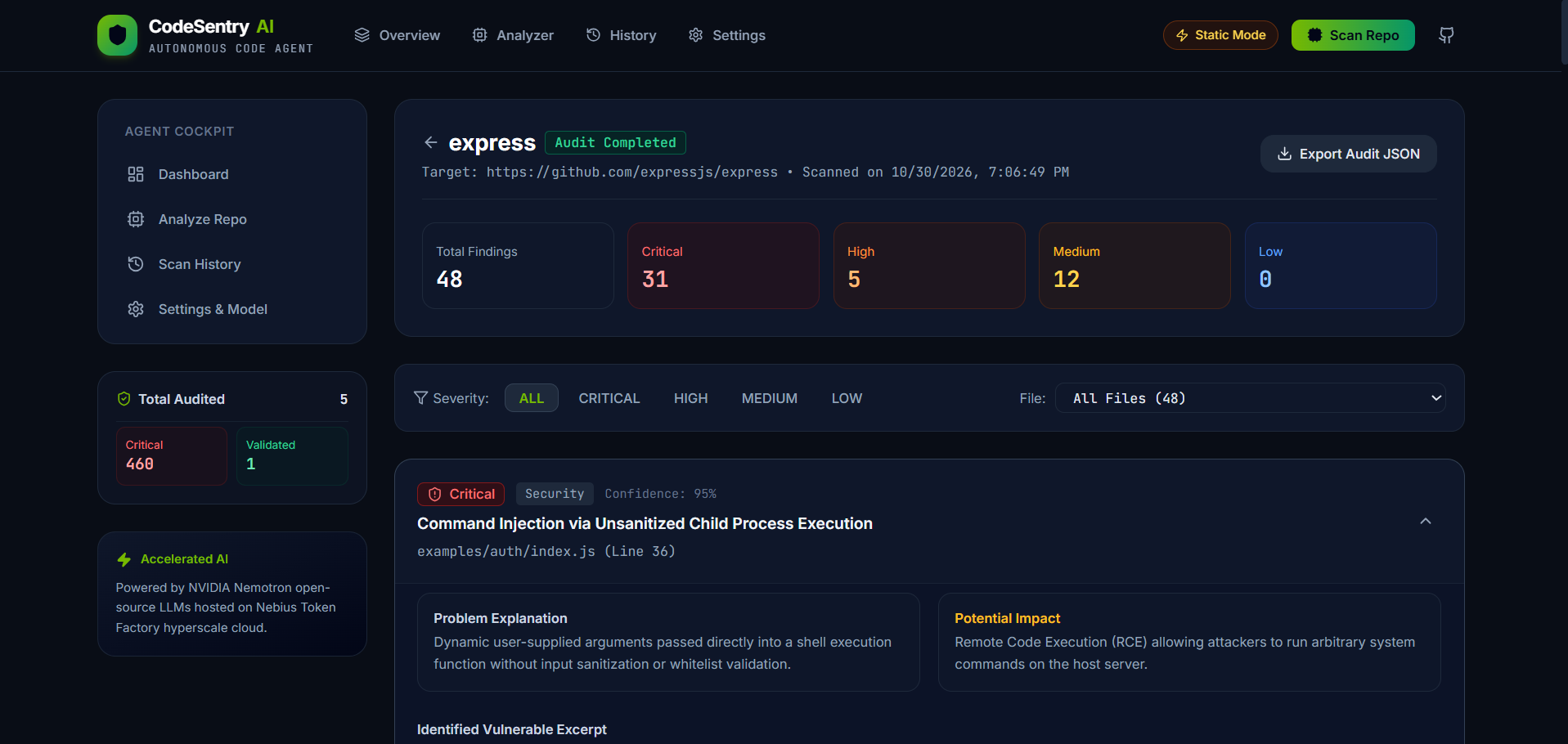
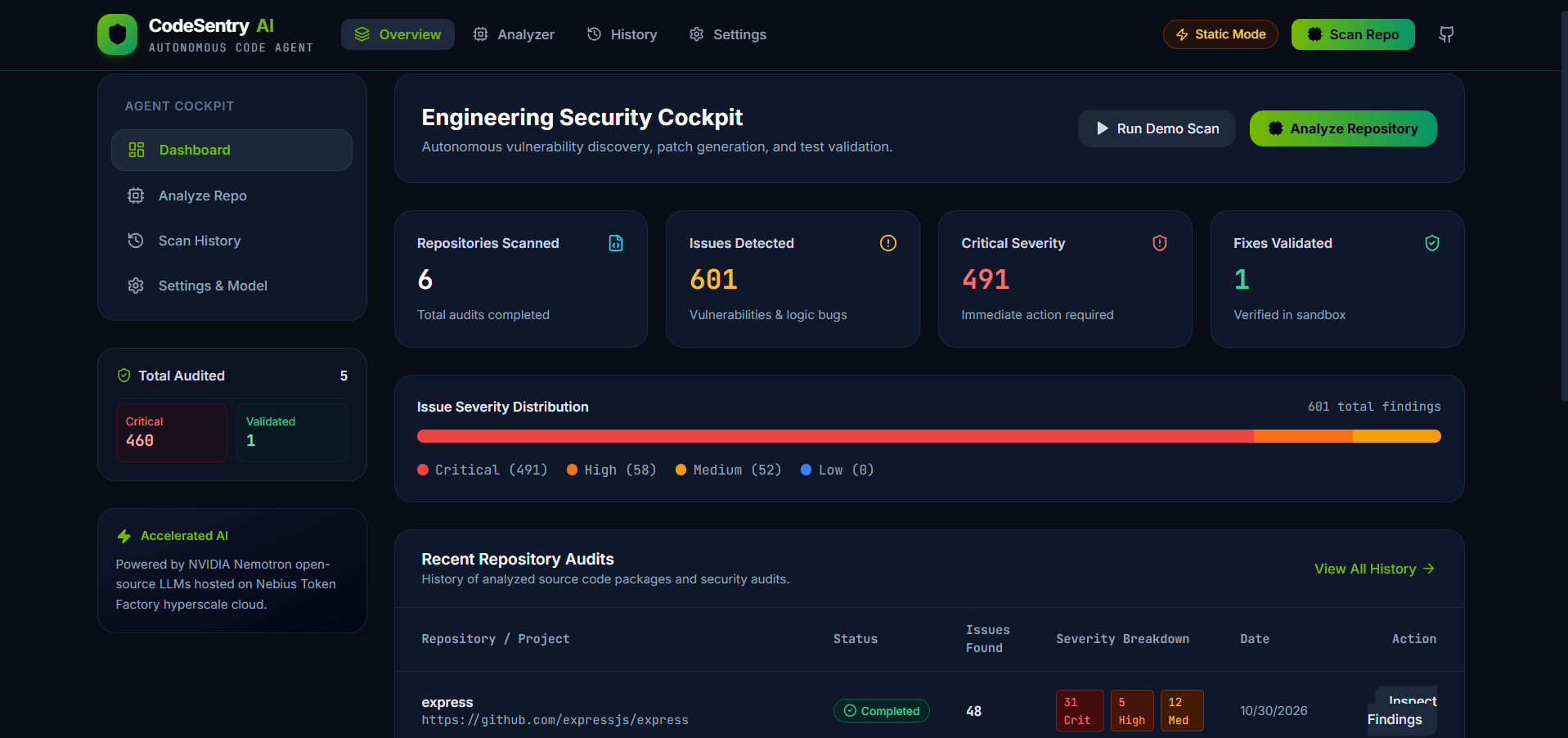
- AI Bug Detection: Identify potential logic errors, suspicious patterns, security risks, and code-quality issues.
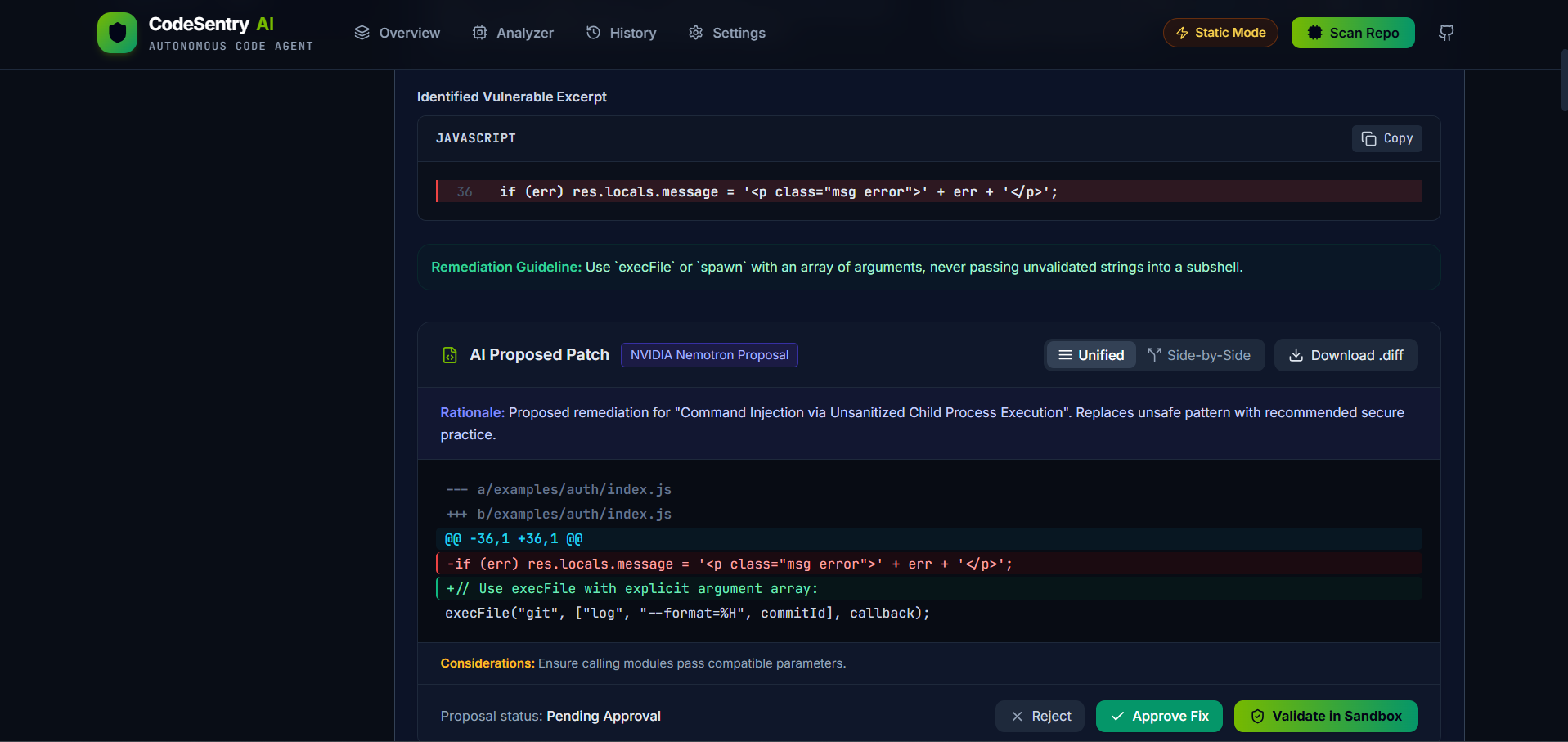
- Intelligent Fix Generation: Suggest focused code patches with explanations of the proposed changes.
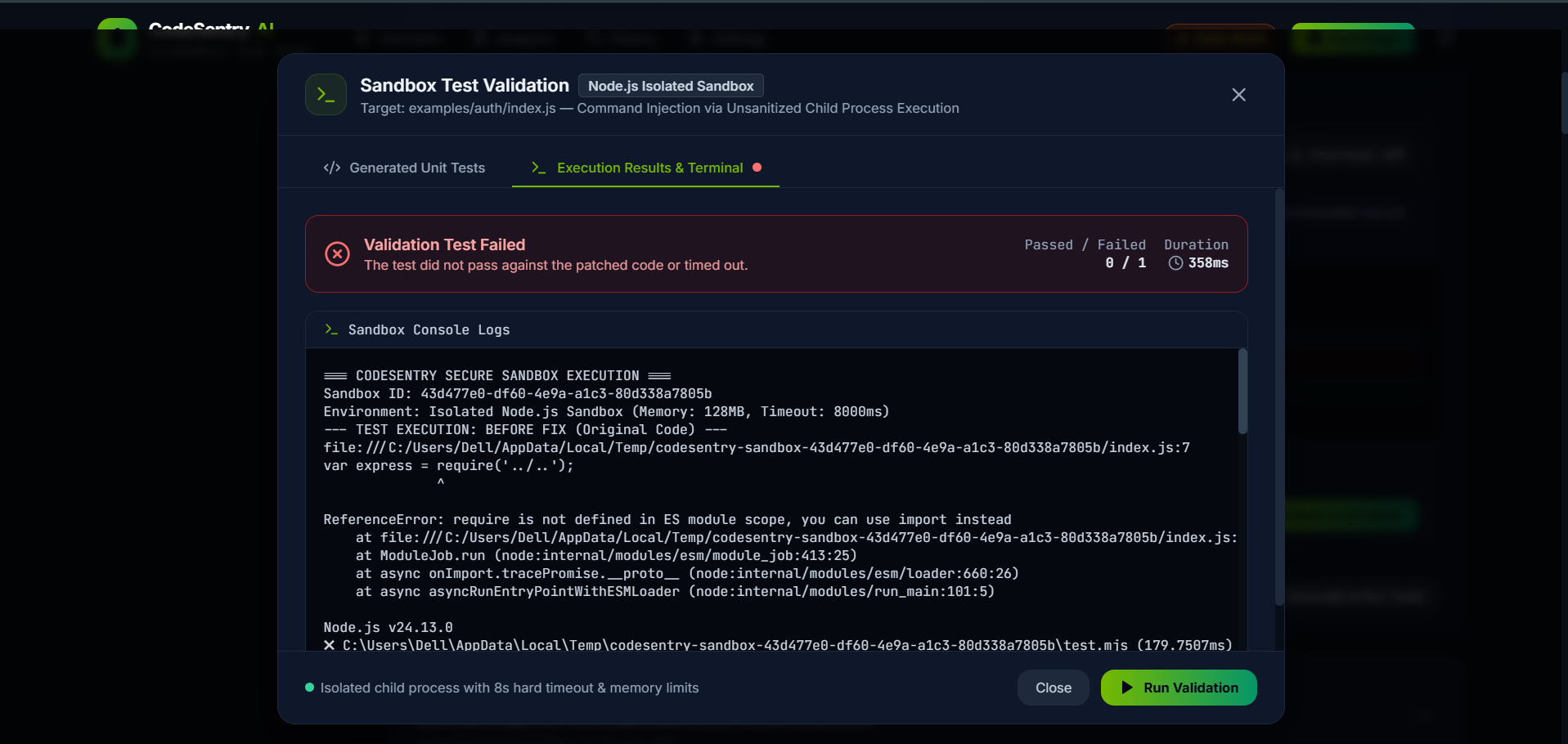
- Automated Test Generation: Generate unit tests for identified issues and proposed fixes.
- Fix Validation: Execute supported tests in an isolated environment and display actual results.
- Analysis History: Review previous scans, findings, and validation results.
The platform combines static analysis with AI-assisted reasoning to help developers make more informed decisions. AI-generated fixes remain proposals until reviewed and validated.
How we built it
We built CodeSentry AI using React, Vite, and Tailwind CSS for the frontend and Node.js and Express.js for the backend.
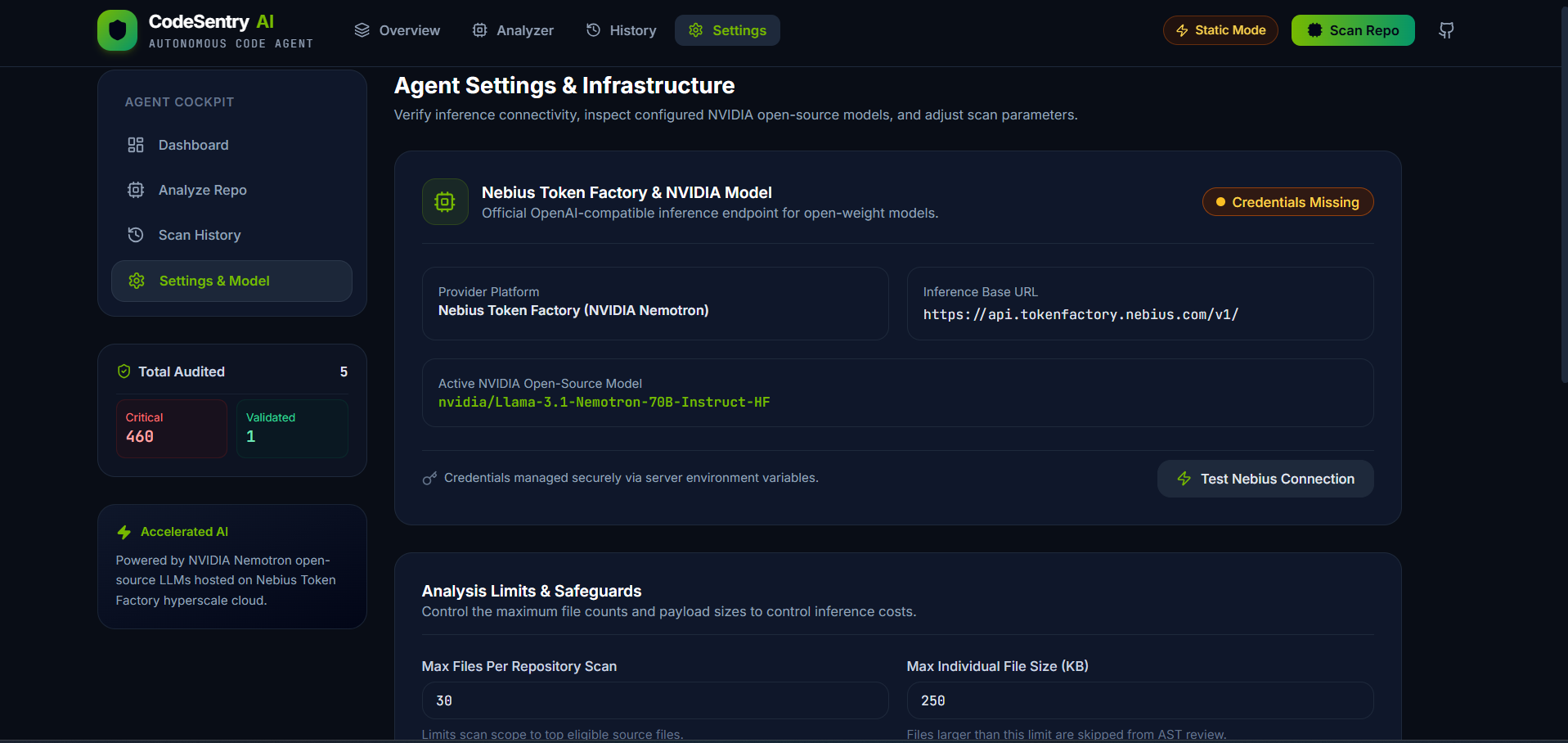
The AI layer integrates NVIDIA Nemotron or another eligible NVIDIA open-source model through Nebius Token Factory to analyze code, explain findings, generate fixes, and create unit tests. Static analysis tools complement the AI by identifying issues through deterministic checks.
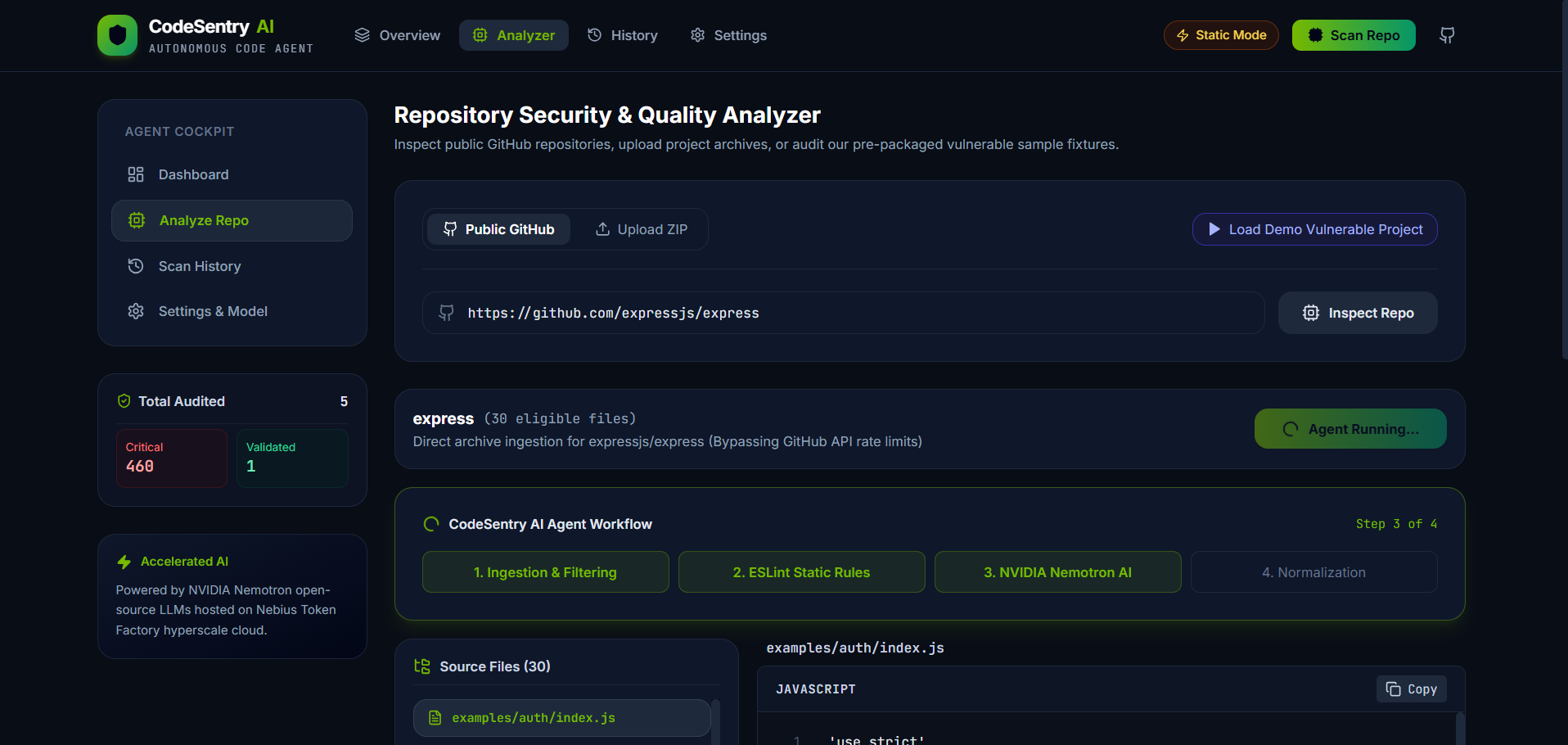
The application follows a controlled workflow: repository ingestion, source-code analysis, AI review, finding generation, fix proposals, test generation, and validation. A persistent storage layer can maintain scan history and results.
Security is an important design consideration. API credentials remain on the server, generated changes require developer approval, and untrusted code must run in a restricted execution environment.
Challenges we ran into
One of our main challenges was designing an AI workflow that produces useful findings instead of vague suggestions. We addressed this by structuring analysis results, validating model responses, and combining AI reasoning with static analysis.
Another challenge was balancing inference costs, response times, and the amount of source code processed. Repository limits, focused prompts, and controlled model requests help make the workflow more efficient.
We also considered the risks of executing AI-generated code. Isolated testing, execution timeouts, resource restrictions, and human approval are essential to making the tool safer and more trustworthy.
Accomplishments that we're proud of
We are proud to bring code review, bug explanations, fix generation, test generation, and validation together in a single developer-focused platform.
We designed CodeSentry AI around a practical software engineering workflow rather than a basic conversational interface. Its modular architecture allows static analysis, AI inference, testing, and reporting to work together.
We are also excited to explore how NVIDIA open-source models and Nebius infrastructure can support practical AI development tools.
What we learned
This project helped us understand how to integrate AI models into a full-stack application, design structured model outputs, and combine probabilistic AI reasoning with deterministic software tools.
We also learned that generating code is only one part of automated software engineering. Reliable validation, transparent results, secure execution, and human oversight are equally important.
Working with Nebius Token Factory and NVIDIA models has helped us explore how hosted inference can power practical developer tools without requiring us to manage the model-serving infrastructure ourselves.
What's next for CodeSentry AI
We plan to extend CodeSentry AI with deeper GitHub integration, pull-request reviews, support for additional programming languages, improved vulnerability detection, and repository-wide dependency analysis.
Future improvements include continuous integration integration, automated regression testing, richer code-quality reports, and more comprehensive sandboxing.
Our long-term vision is to create a trustworthy AI coding agent that helps developers ship safer, more maintainable software with less repetitive debugging work.
Built With
- ai
- javascript
- nebius
- node.js
- nvdia
- react
- tailwind
- vite

