-
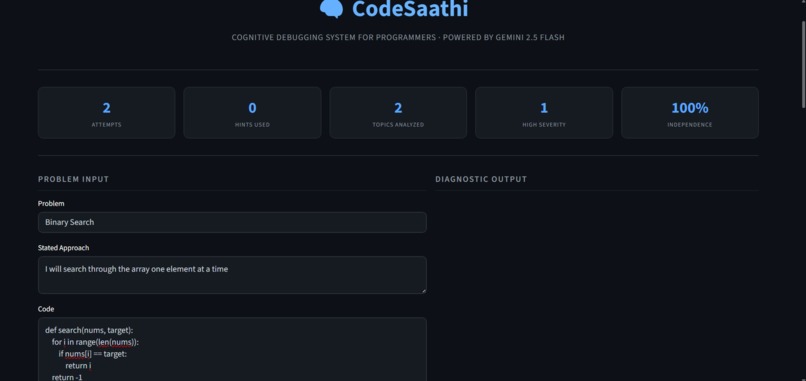
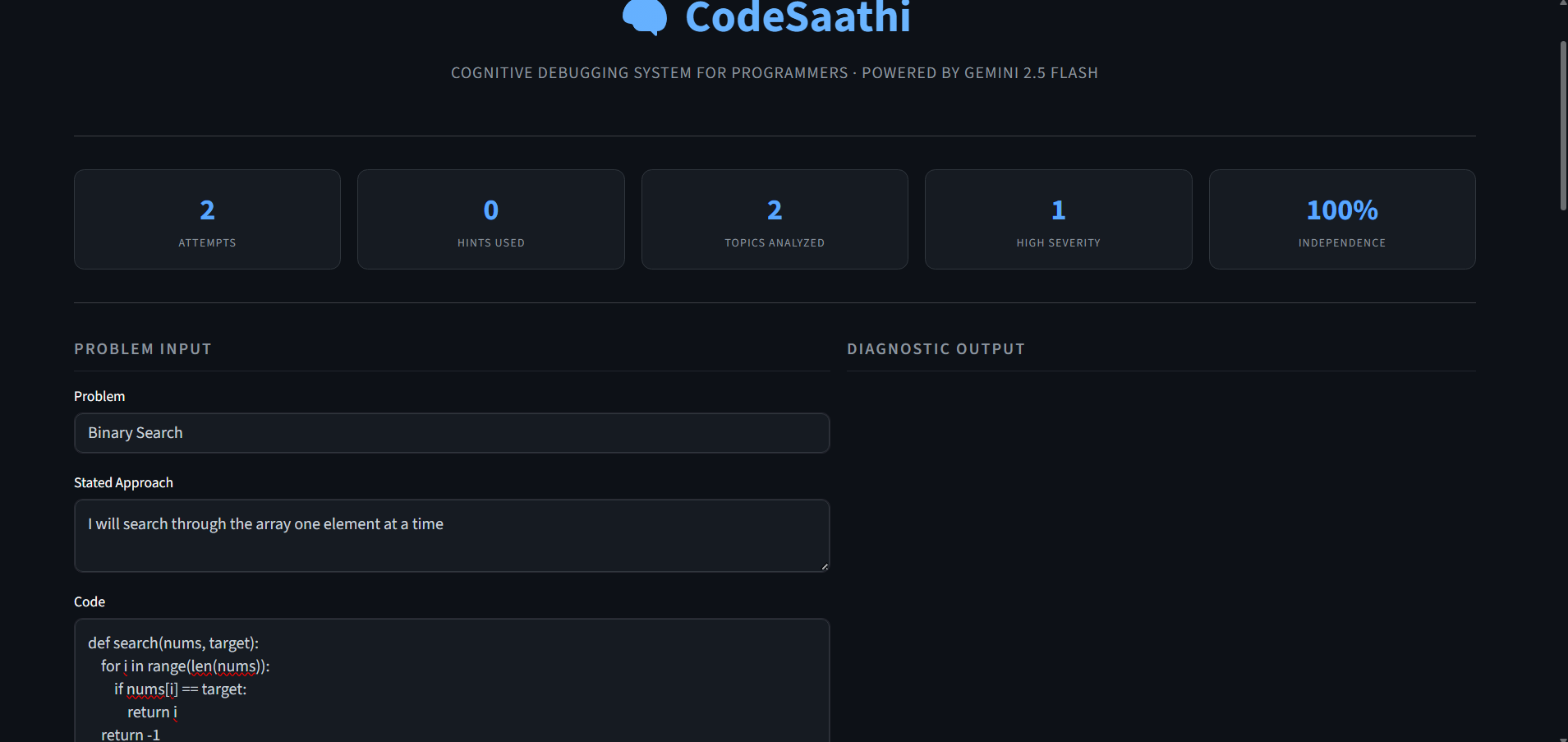
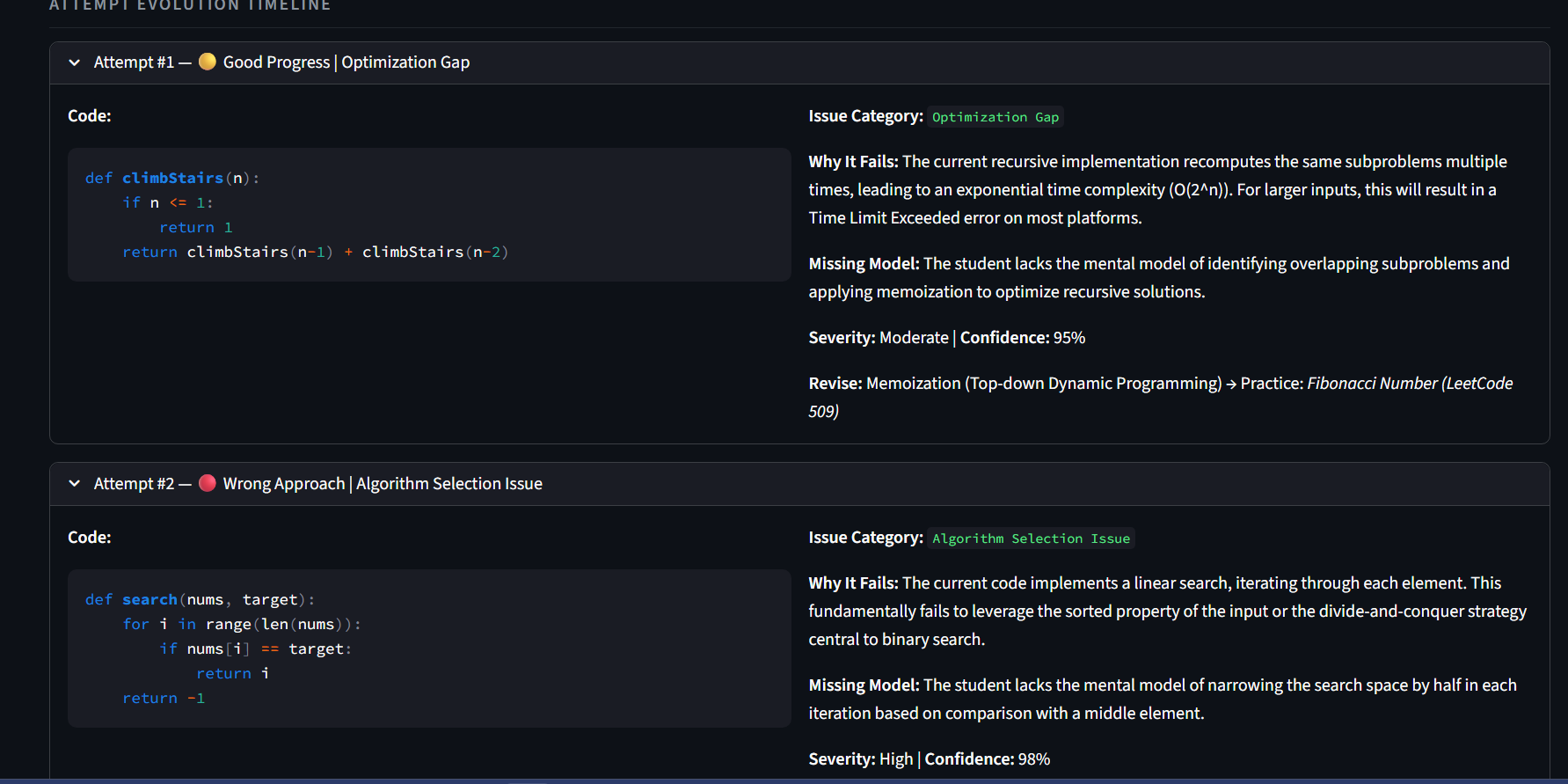
Codesaathi Binary search using linear search code pasted
-
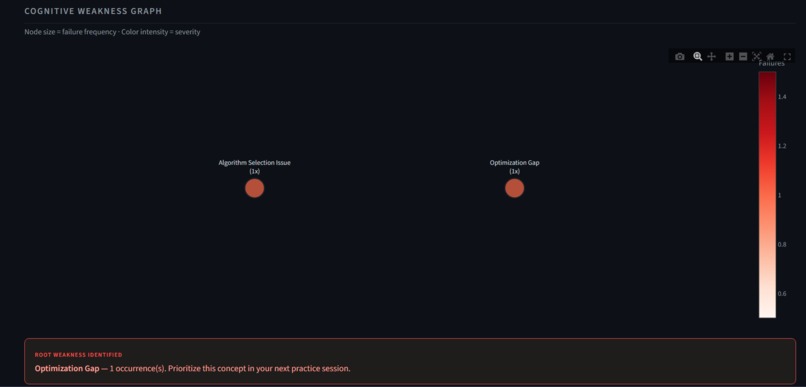
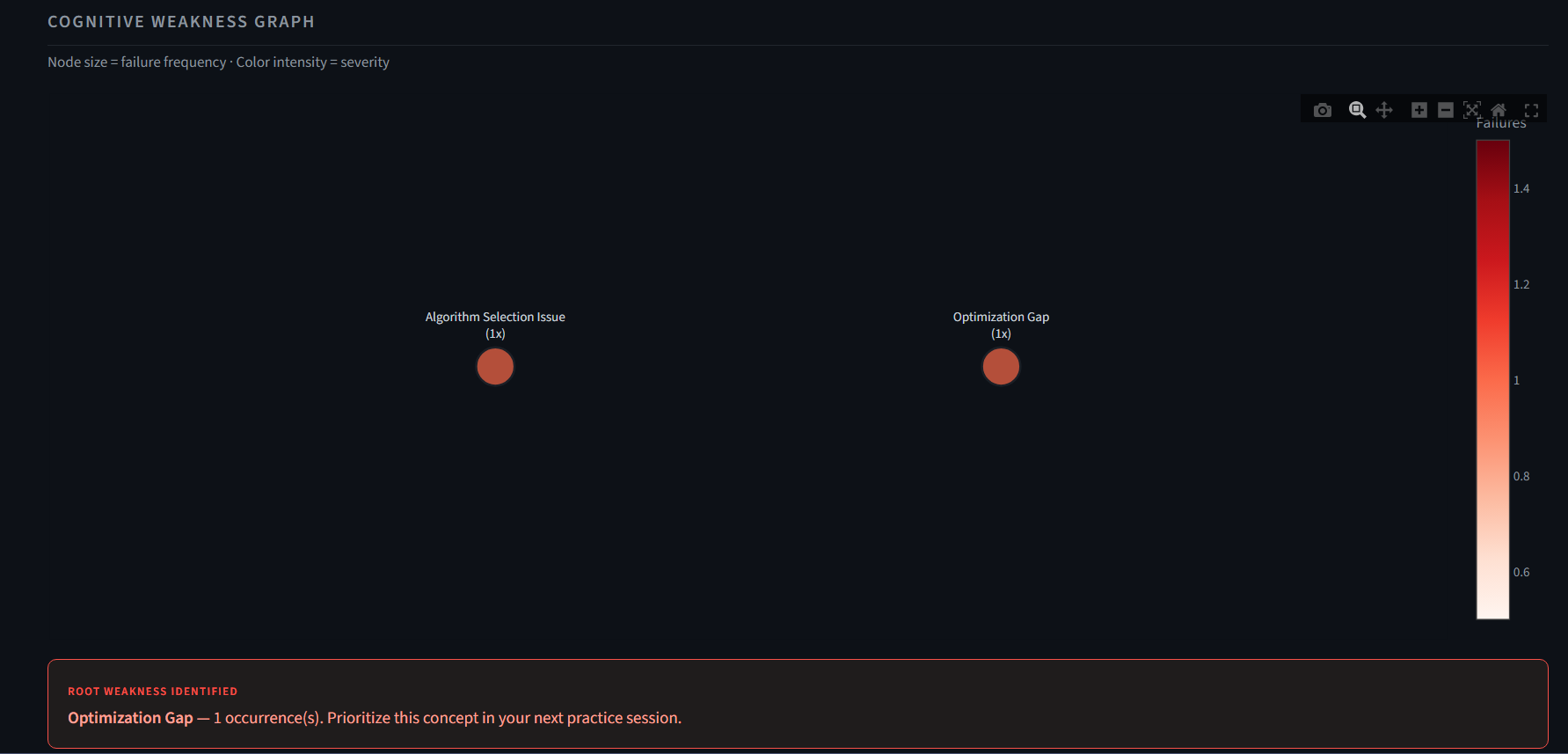
Confusion Graph
-
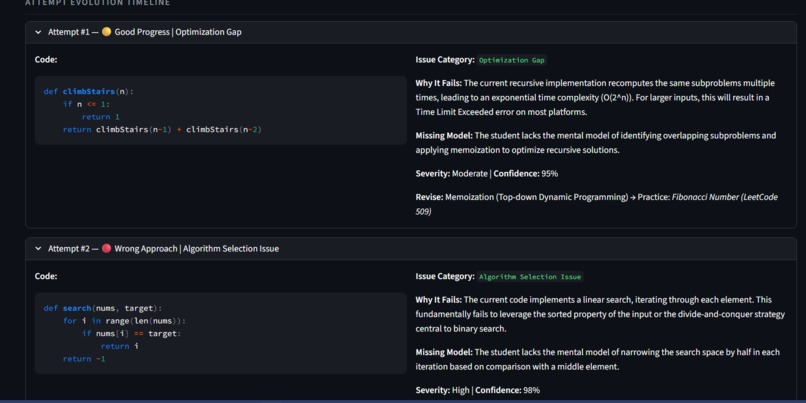
Evolution Timeline showing issue, miising model and severity
Inspiration
I was that student — stuck on an Easy LeetCode problem at 2 AM with no one to ask. I opened ChatGPT, got the answer, copied it. Next day I couldn't solve the same problem again. Every AI tool I had was built to solve for me. Nobody built something that refused to give the answer and fixed the thinking instead. That gap is CodeSaathi.
What it does
CodeSaathi is a Cognitive Debugging System for Programmers. It diagnoses WHY your thinking failed — not what your code does wrong. It classifies failures into 10 categories, identifies your missing mental model, generates a recovery strategy, and guides you through Socratic questioning that never reveals the answer. The Cognitive Weakness Graph maps recurring failure patterns over time. The Independence Score tracks how much you rely on AI assistance.
How we built it
Google Gemini 2.5 Flash for diagnosis and Socratic questioning. FastAPI backend. Streamlit frontend. SQLite for session storage. Plotly for the weakness graph. The core challenge was constraining Gemini to never reveal answers — requiring carefully layered system prompts stress-tested against adversarial inputs.
Challenges we ran into
API quota exhausted mid-build. Socratic constraint occasionally broke under adversarial prompting. Graph not updating after submissions. Database schema redesigned midway from 4 fields to 10. Built entirely solo in under 3 days.
Accomplishments that we're proud of
The Socratic constraint never breaks. The Cognitive Weakness Graph is a real data model built from actual failure frequency data. Eight features. One philosophy. Built solo in 3 days.
What we learned
The hardest part of building an AI product is not calling the API — it is constraining it. The best products are built around one rule. Ours is: the answer is never revealed.
What's next for CodeSaathi
Voice Mode via Gemini Live API. VS Code extension. Professor Dashboard. Interview Readiness Score. Spaced repetition engine.


Log in or sign up for Devpost to join the conversation.