-
-

Landing Page
-
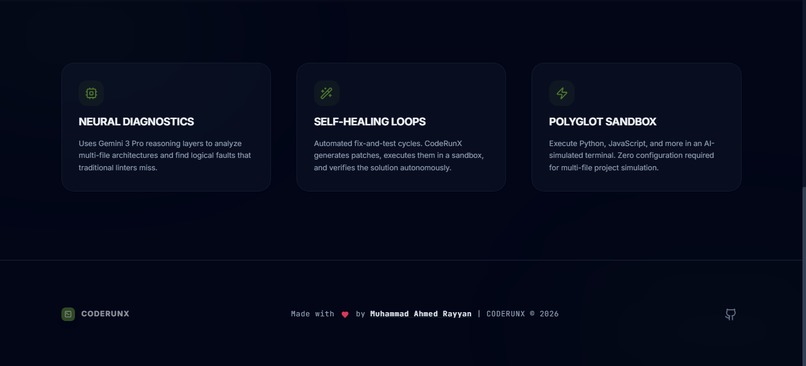
Landing Page 2
-

-
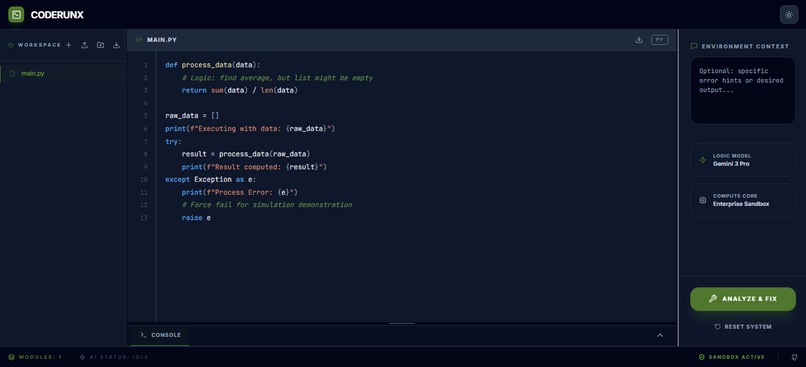
Sandbox environment
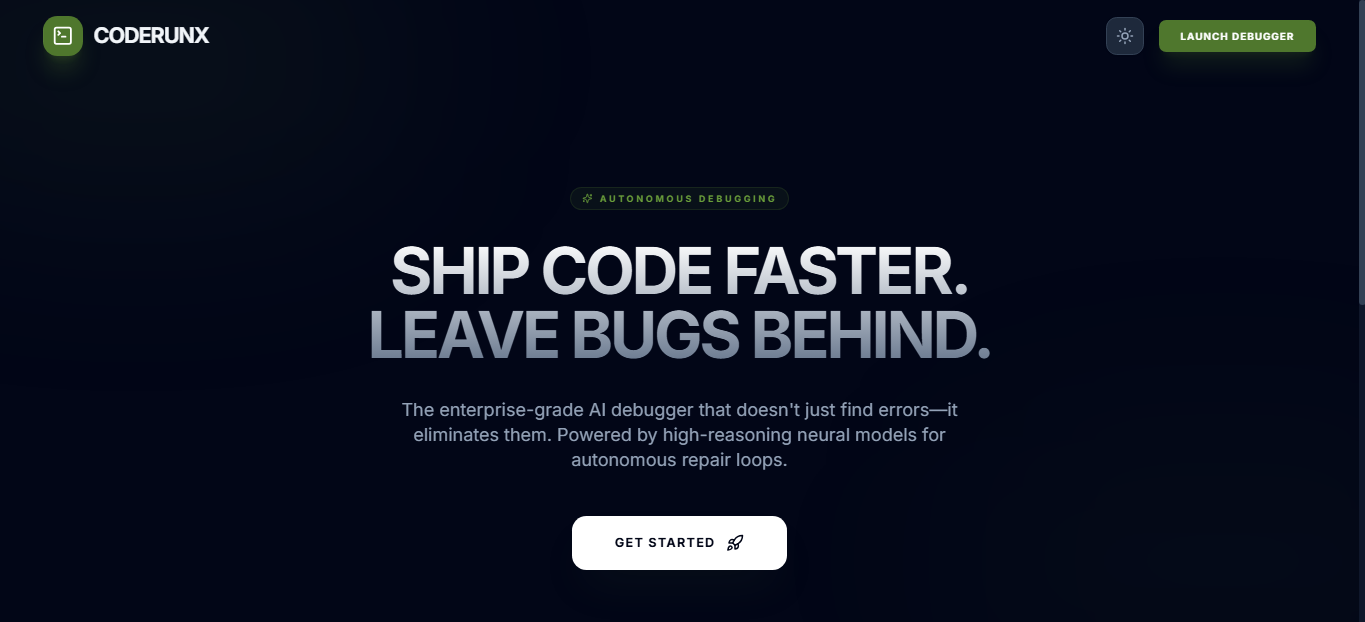

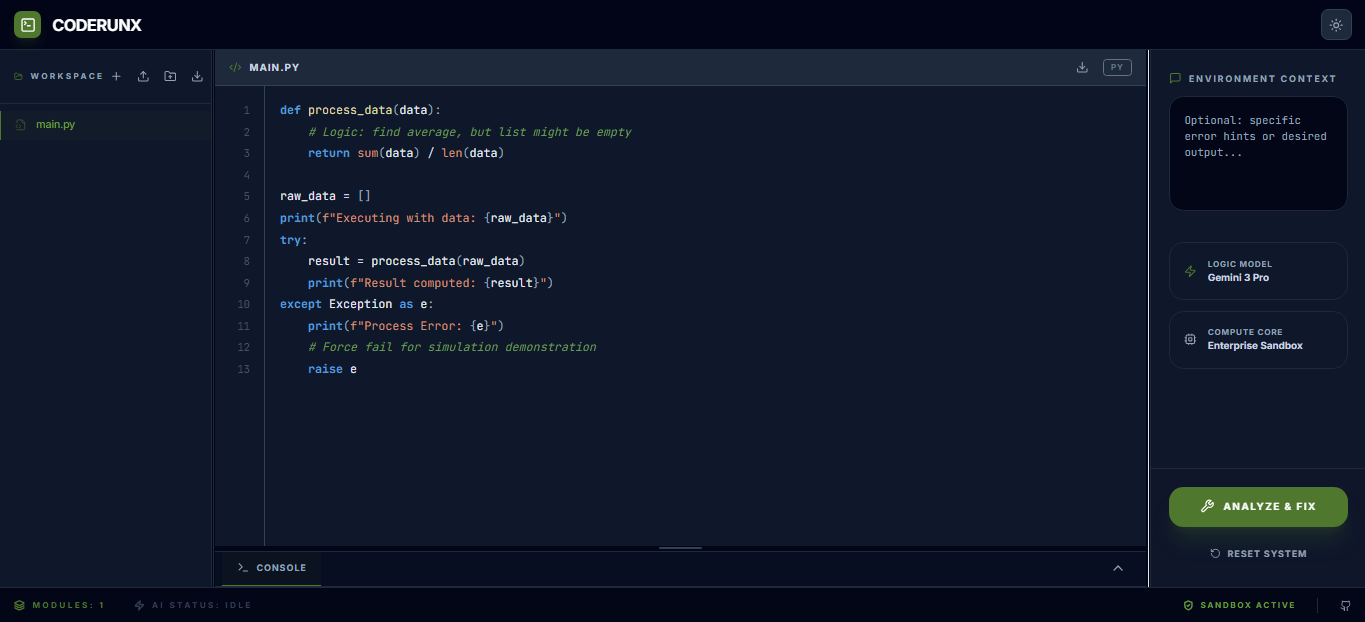
CODERUNX: Enterprise AI Auto Fixer and Debugger
Inspiration
As a developer, I've lost countless hours stuck in the frustrating cycle of debugging complex projects. You fix one bug, run the code, and three more appear. You Google the error, try a solution, and something else breaks. The cycle repeats endlessly.
I realized that modern AI specifically Gemini 3 Pro has the reasoning capability to not just identify bugs, but to actually fix them autonomously. The question was: could I build a system that doesn't give up until the code works?
That's how CODERUNX was born an enterprise-grade debugger that implements autonomous self correction loops, treating debugging as an iterative problem-solving task rather than a one shot analysis.
What It Does
CODERUNX transforms buggy multi-file projects into production-ready code through AI-powered autonomous repair cycles.
Core Capabilities
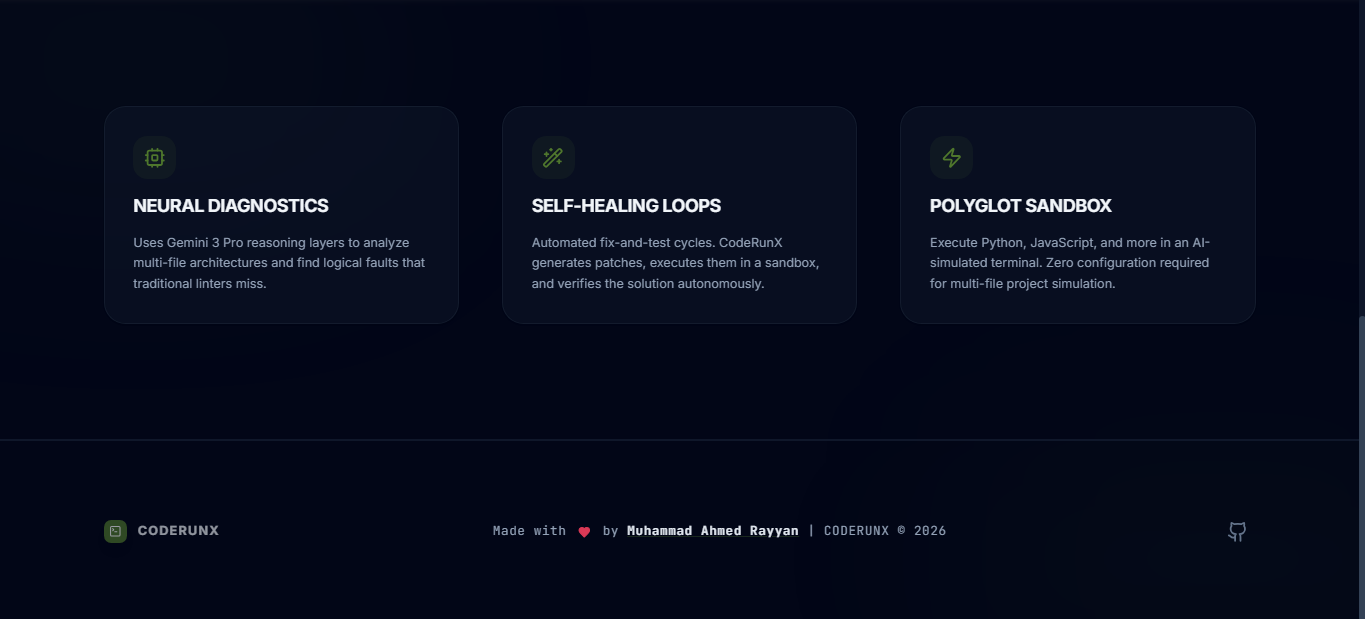
Deep Neural Diagnostics
Goes beyond syntax checking to understand code intent. Identifies:
- Architectural logical flaws across modules
- Runtime vulnerabilities and edge cases
- Asynchronous deadlocks and race conditions
- Cross-file dependency issues
Autonomous Self-Healing Cycle
Implements a "Repair-Verify-Deploy" loop:
- Analyze: Gemini 3 Pro consumes error stack traces with full project context
- Hypothesize: AI identifies root causes using advanced reasoning
- Patch: Generates precision code modifications
- Simulate: Tests fixes in AI-powered sandbox
- Verify: Applies changes only after successful execution
The system retries up to 3 times, learning from each failed attempt to refine subsequent repairs.
Multi-File Workspace
- Drag-and-drop entire project directories
- Dynamic file tree navigation
- Context-aware analysis across dependencies
- Understands architectural relationships between modules
Polyglot AI Sandbox
- Secure, isolated code execution
- Universal runtime support: Python, JavaScript, TypeScript, C++, and more
- Live terminal with AI diagnostic tags
- No local setup required
How I Built It
Technology Stack
Frontend Core
- React 19 + TypeScript
- Tailwind CSS
- Lucide React
AI Engine
- Google Gemini 3 Pro API
- Custom prompt engineering for code repair tasks
Code Editor
- PrismJS with custom themes
- Scroll-synchronized editor with line numbers
- Real-time diff highlighting
File Management
- JSZip for project archiving
- Recursive FileTree components
- Custom file system simulation in browser
Typography
- JetBrains Mono
Development Process
Phase 1: Architecture Design (Days 1–2)
- Designed multi-file workspace system
- Architected autonomous self-correction loop
- Planned Gemini API integration
Phase 2: Core Features (Days 3–4)
- Drag-and-drop directory ingestion
- Recursive file tree navigation
- AI-powered sandbox
- Context-aware Gemini integration
Phase 3: Self-Correction Loop (Day 5)
- Iterative repair cycle with attempt tracking
- Error recovery and fallback mechanisms
Phase 4: UI/UX Polish (Days 6–7)
- Live debugging console
- Code diff visualization
- Theme toggle
- Animations and loading states
Phase 5: Testing & Refinement (Days 8–9)
- Stress-tested complex multi-file projects
- Optimized Gemini prompts
- Fixed edge cases
Key Technical Achievement
async function autonomousRepairCycle(
  projectFiles: File[],
  context: string,
  maxAttempts: number = 3
) {
  for (let attempt = 1; attempt <= maxAttempts; attempt++) {
    const analysis = await gemini.analyzeProject(projectFiles, context);
    const executionResult = await sandbox.execute(analysis.code);

    if (executionResult.success) {
      return { success: true, fixedCode: analysis.code, attempts: attempt };
    }

    analysis.code = await gemini.refineBasedOnError(
      executionResult.error,
      analysis.reasoning,
      attempt
    );
  }

  return { success: false, message: "Manual review needed" };
}
Challenges I Ran Into
Multi-File Context Management
Handled token limits using dependency-based context windowing and file importance scoring.
Autonomous Loop Stability
Implemented retry limits, confidence scoring, and fallback to human review.
Sandbox Security
Isolated execution with strict timeouts, memory limits, and API restrictions.
Real-Time State Synchronization
Centralized state management with optimistic UI updates and rollback.
AI Response Parsing
Built multi-strategy extraction pipelines for clean executable code.
File System Simulation
Created a virtual file system with recursive rendering and path resolution.
Accomplishments
- Production-grade multi-file debugger
- Fully autonomous repair loop
- Deep Gemini 3 Pro integration
- Enterprise-level developer UX
- Universal language support
- End-to-end debugging workflow
What I Learned
Technical Growth
- Advanced Gemini prompt engineering
- Async-heavy React architecture
- Secure client-side code execution
AI Insights
- Iterative repair improves accuracy
- Confidence scoring guides stopping criteria
- Context prioritization is critical
Product Design
- Transparency builds trust
- Real-time feedback improves usability
What's Next
Immediate Roadmap
- GitHub and GitLab integration
- Extended language support
- Cloud sync and collaboration
Advanced Features
- Real-time multi-user debugging
- Custom AI training
- Performance profiling
- Auto-generated tests
Enterprise Vision
- VS Code extension
- CI/CD integration
- Team analytics
- Security scanning
Research Directions
- Multi-agent debugging systems
- Reinforcement learning for repair strategies
- Knowledge graph of successful fixes
Built With
- ai
- analysis
- api
- artificial
- autonomous
- code
- css
- css3
- debugging
- developer
- gemini
- googleaistudio
- html5
- icons
- intelligence
- javascript
- jszip
- learning
- lucide
- machine
- prismjs
- react
- tailwind
- tools
- typescript
- vite

Log in or sign up for Devpost to join the conversation.