-
-
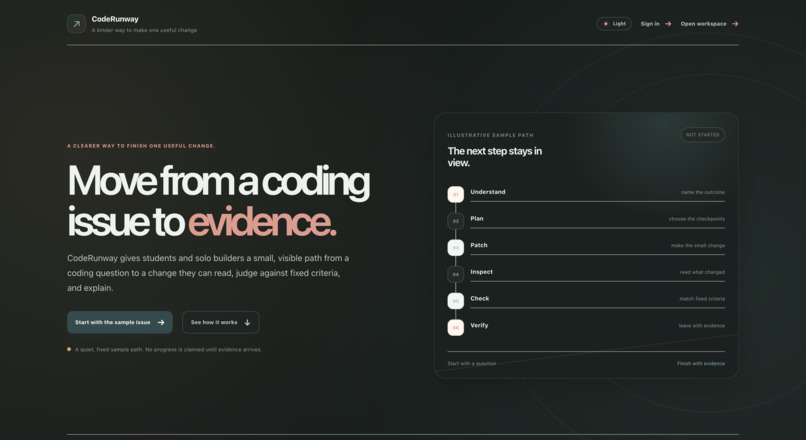
Landing page
-
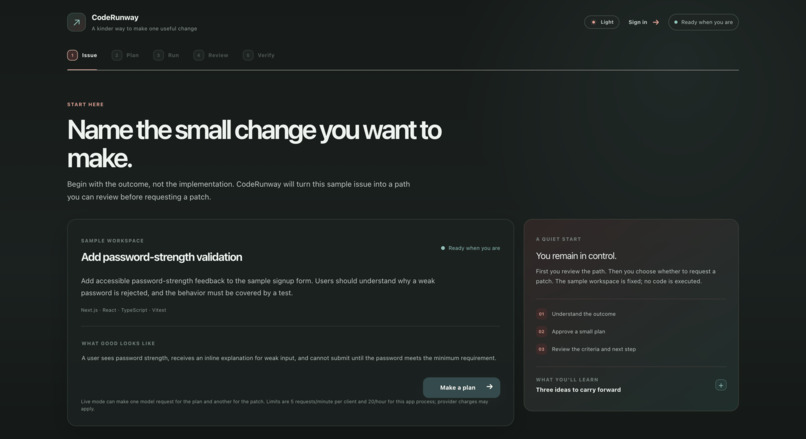
Planning Stage
Inspiration
AI coding tools can show a reassuring green check without making clear what they actually checked. For students and solo builders, that can make it hard to trust a generated change—or to learn from it. We built CodeRunway around a simple idea: show each step, make the change reviewable, and be precise about the evidence.
What it does
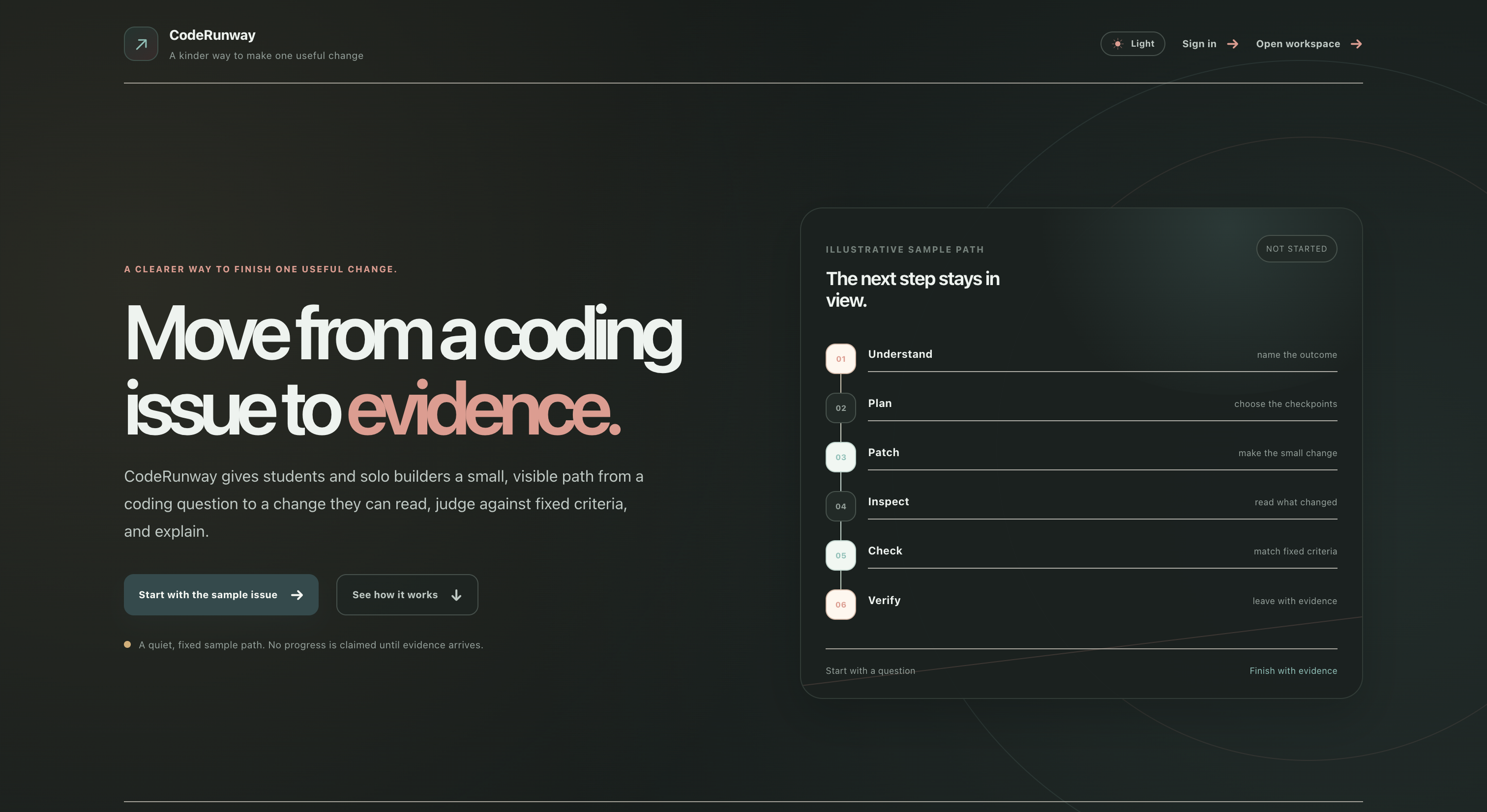
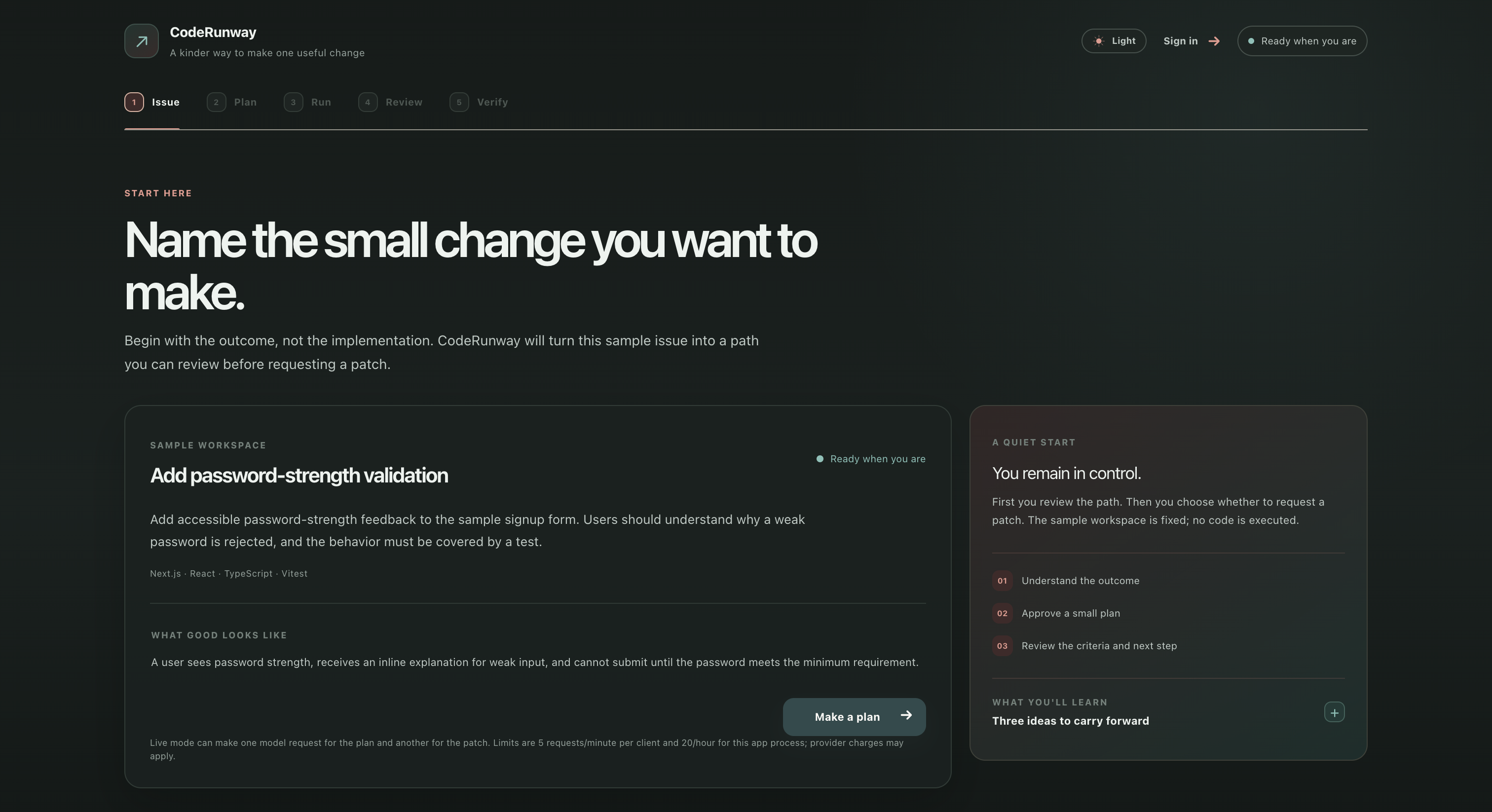
CodeRunway guides someone through one fixed sample coding issue in six checkpoints: understand, plan, generate, inspect, check, and verify. The user reviews and approves the plan before the sample files change, then inspects the patch and sees which static criteria matched.
The scope is deliberately bounded: CodeRunway does not accept arbitrary repositories, execute code, compile it, or run tests. Its checks inspect returned file contents for expected text and markup.
How we built it
We built the workspace with Next.js, React, and TypeScript. In live mode, NVIDIA Nemotron 3.5 Lightning generates the plan and patch through Nebius Token Factory. The server validates the structured output and restricts edits to two allowlisted sample files. The API key stays server-side, and request limits help control usage. A deterministic fallback keeps the sample flow available without provider credentials.
Challenges and what we learned
The hardest design question was how to give useful feedback without running the generated code. We made the evaluator report exactly what it checks and label those results as static fixture criteria—not executed tests. A match means the expected content was found; it does not prove the code works.
That boundary shaped the rest of the product: the patch is visible, failures stay visible, and progress only advances when evidence arrives. We learned that making an AI workflow trustworthy means explaining both what it did and what it did not do.
Built With
- nebiustokenfactory
- nextjs
- nvidianemotron

Log in or sign up for Devpost to join the conversation.