Inspiration
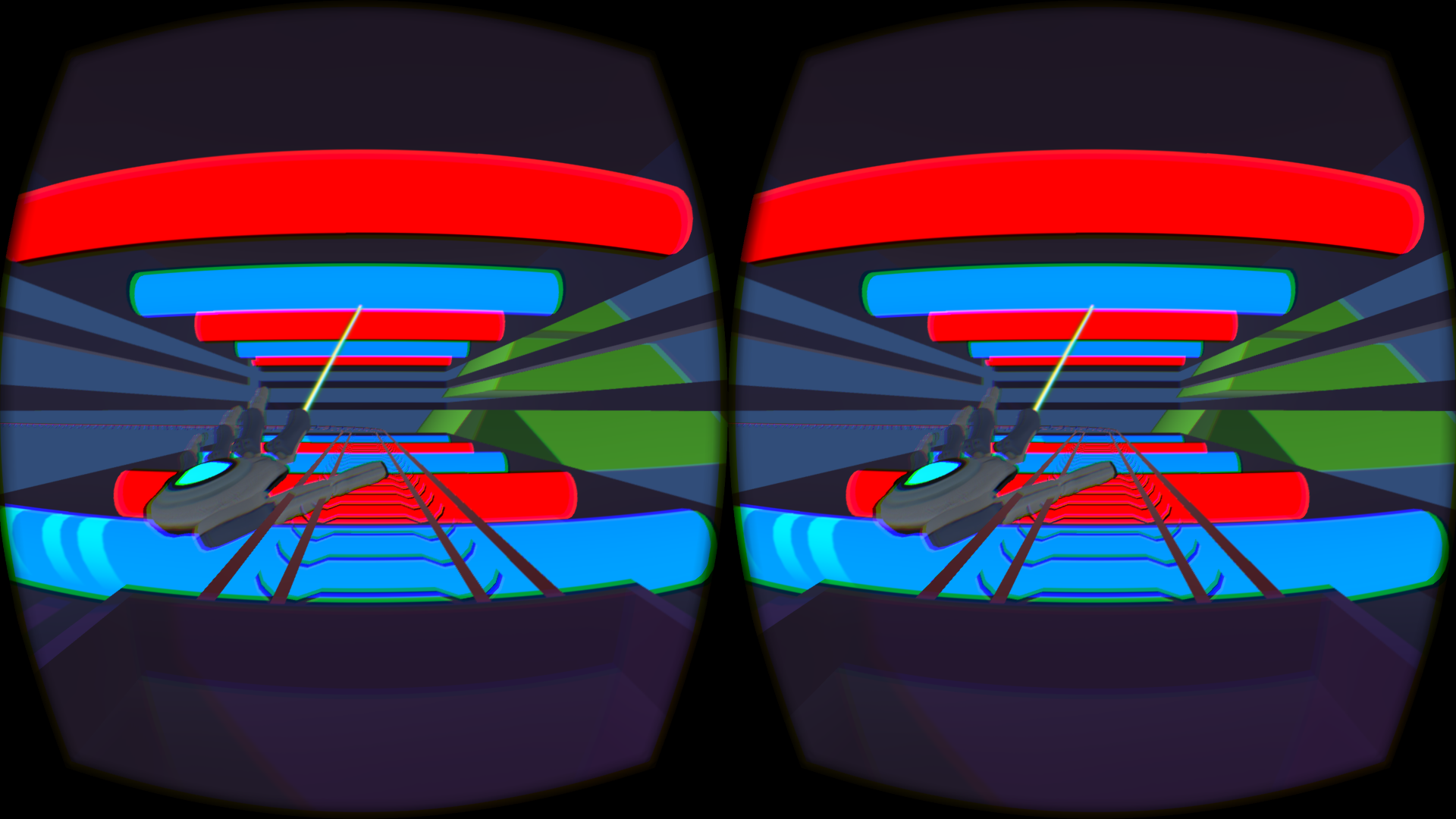
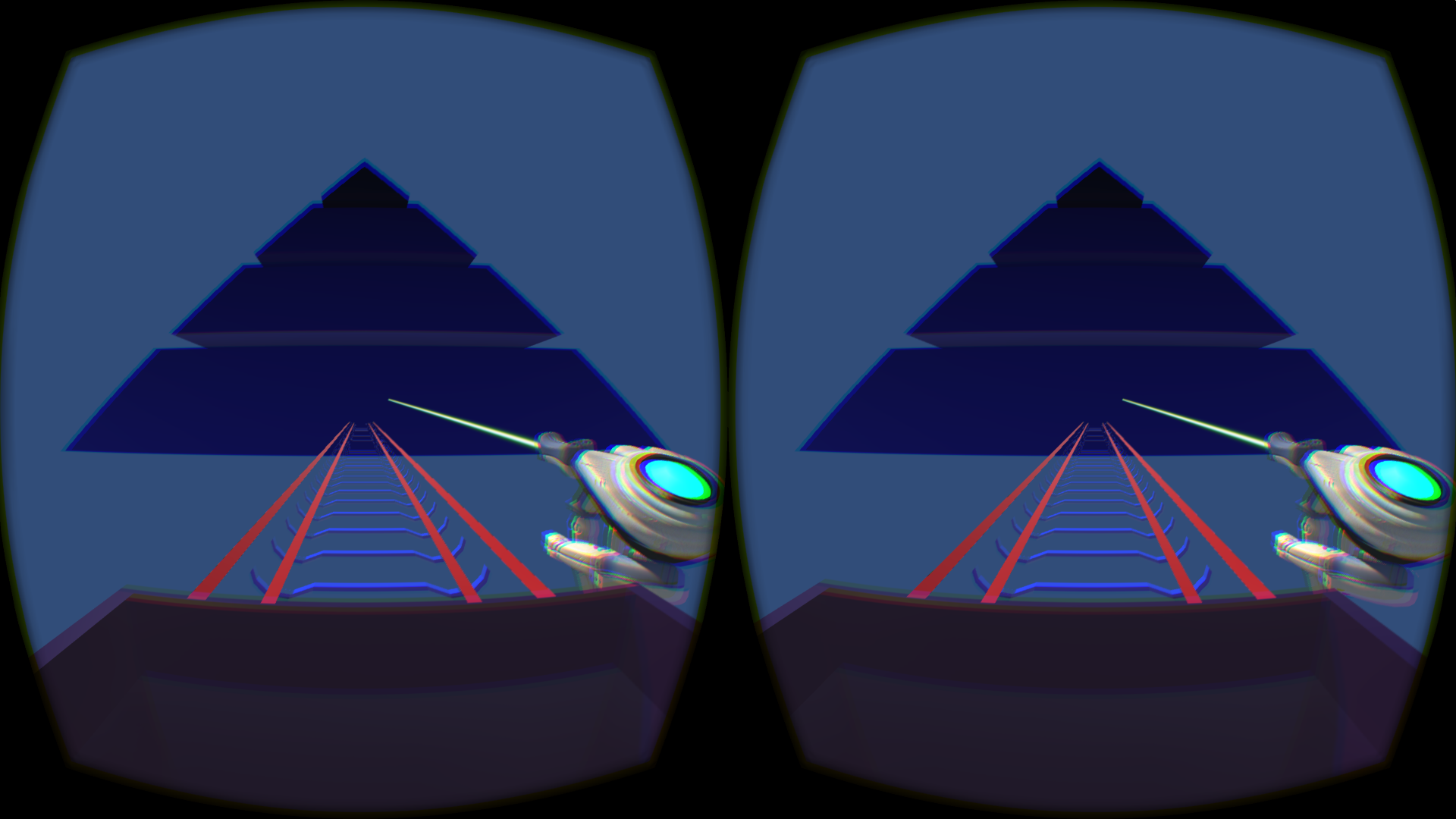
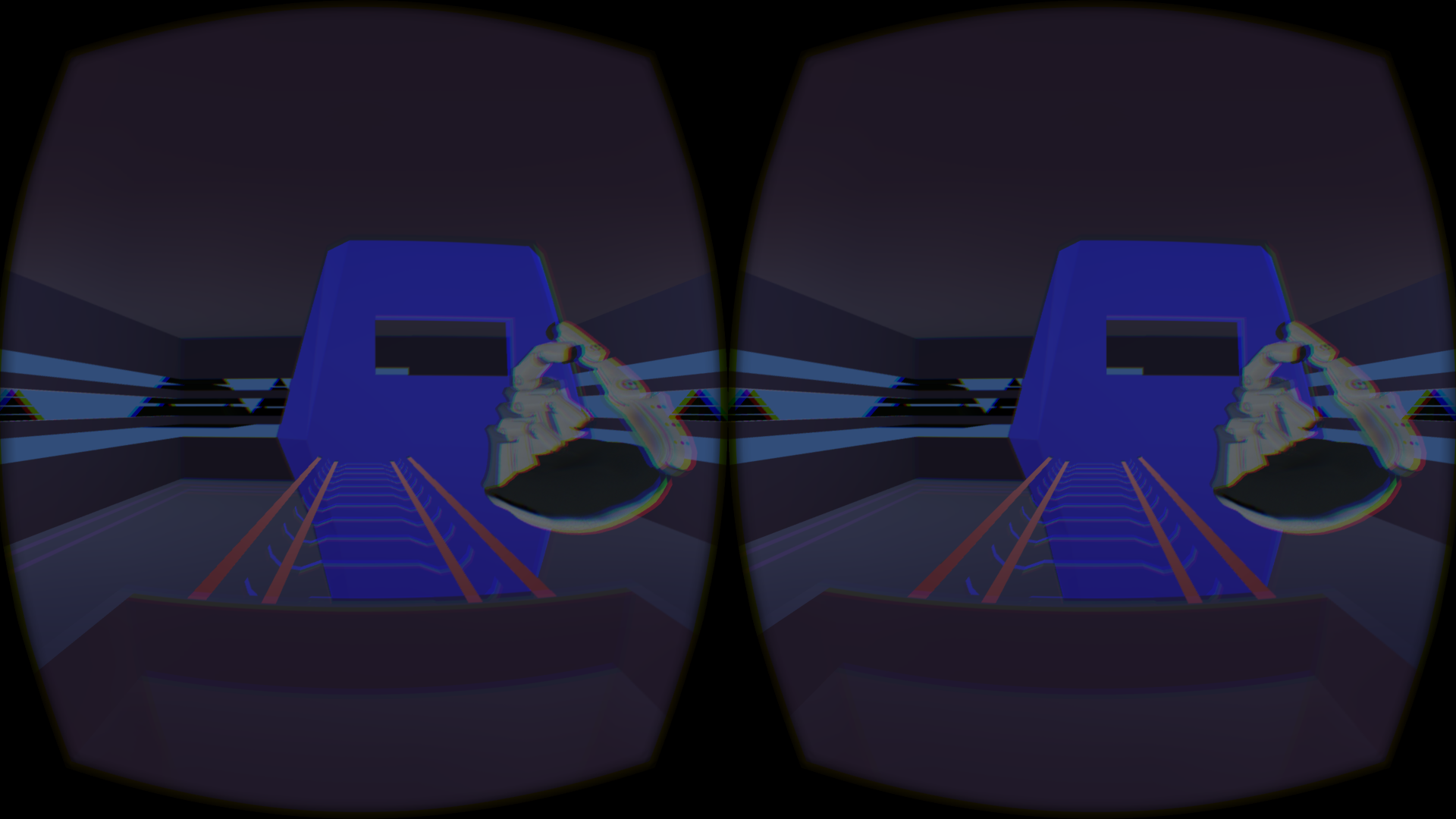
Our inspiration for this project was to take players to the sort of neo-futuristic version of Ancient Egypt that people in the 80s might have imagined, where they can battle electric scarabs with their laser-beam-sword robot glove.
How it works
Our game makes use of the Oculus Rift VR headset with the LEAP Motion sensor within the Unity 5 3D engine to provide an immerse experience unlike any other. With the Oculus, the player can change their viewport with just the turn of their head, and the LEAP motion allows the player's laser-beam-sword to be directed to wherever their actual index finger is pointing. Both of these pieces of hardware blend seamlessly within the Unity 5 engine, where the level was designed.
Challenges we ran into
Developing a project that makes use of such an extensive list of hardware and software as our own is bound to present compatibility errors between the development environments of the different group members, and ours was no exception. Not only did we almost lose all of our data after a linking error early this morning, but the heavy requirements and unstable nature of the latest Oculus Rift drivers nearly bricked one of our team member's machines.
Accomplishments that we're proud of
We feel our finished product not only provides a uniquely immerse experience that is a great display of the hardware abilities of both the Oculus Rift and LEAP Motion, but is aesthetically pleasing and, most importantly, fun.
What I learned
We learned that hardware redundancy in development tools is essential, especially in short development time frames. We learned how to set up and use version control in Unity to work in parallel.
What's next for Techno-Samurai: Escape from Neo-Egypt
We are proud that we created Techno-Samurai in twenty-four hours. We hope to inspire future game developers to utilize both the Oculus Rift and the Leap Motion in future games.

Log in or sign up for Devpost to join the conversation.