-
-
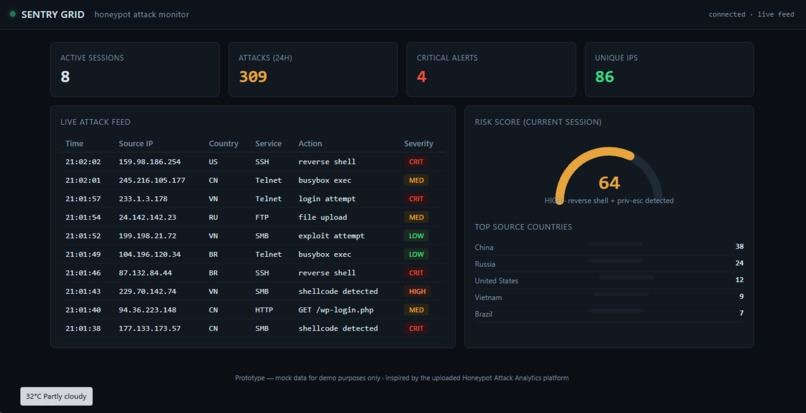
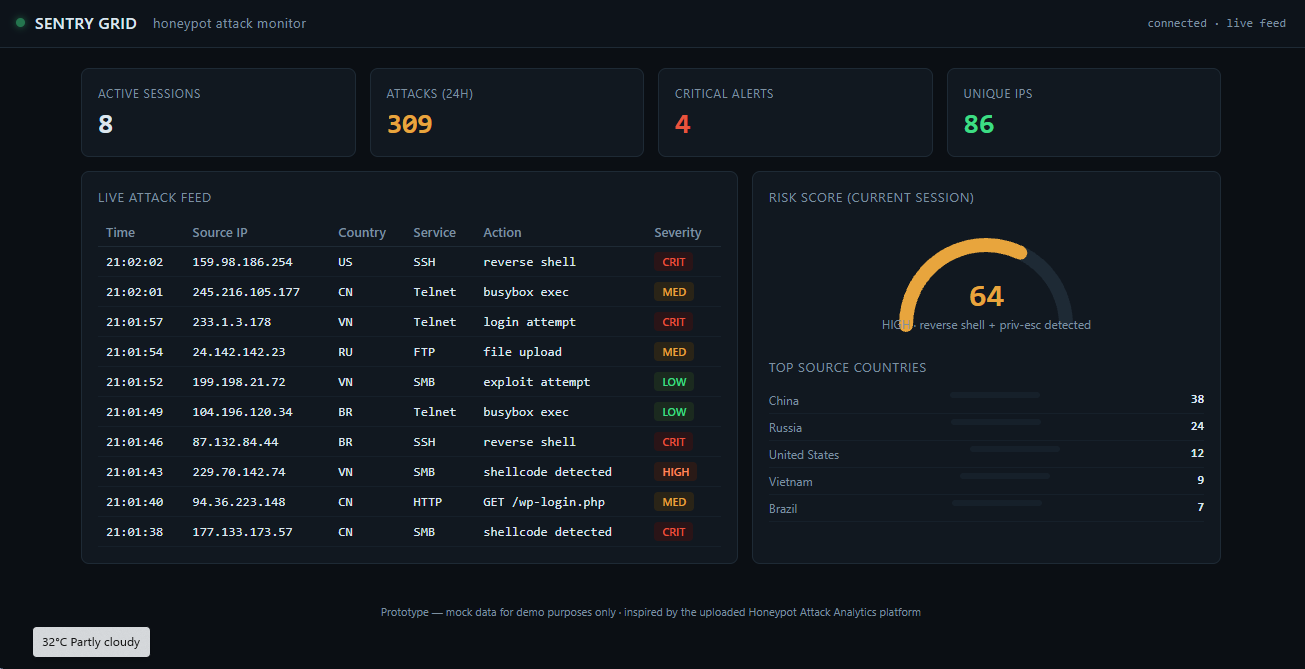
Dashboard screenshot note:this is prototype
-
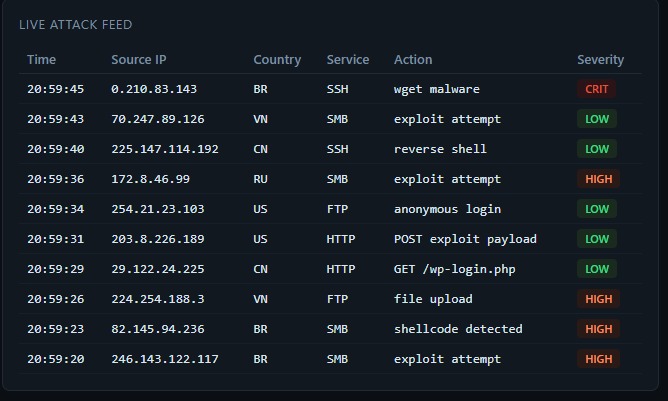
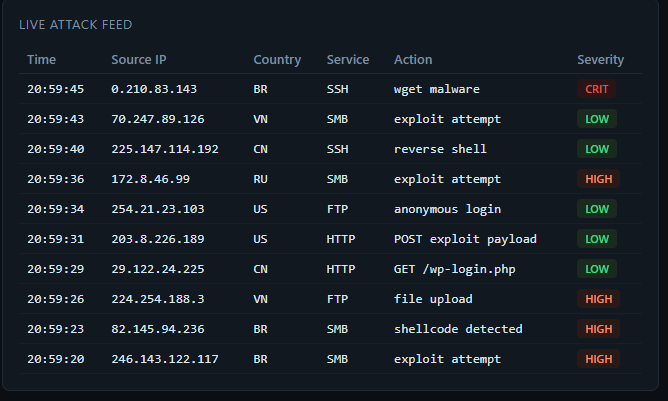
Honeypot attack/event screenshot
-

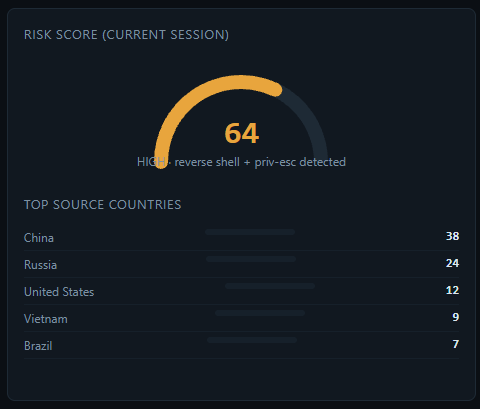
Attack analytics screenshot
-
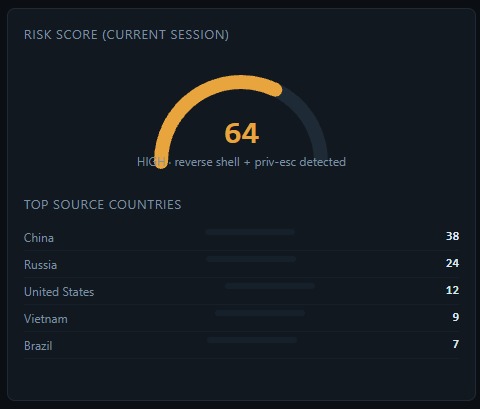
Attack analytics screenshot
-
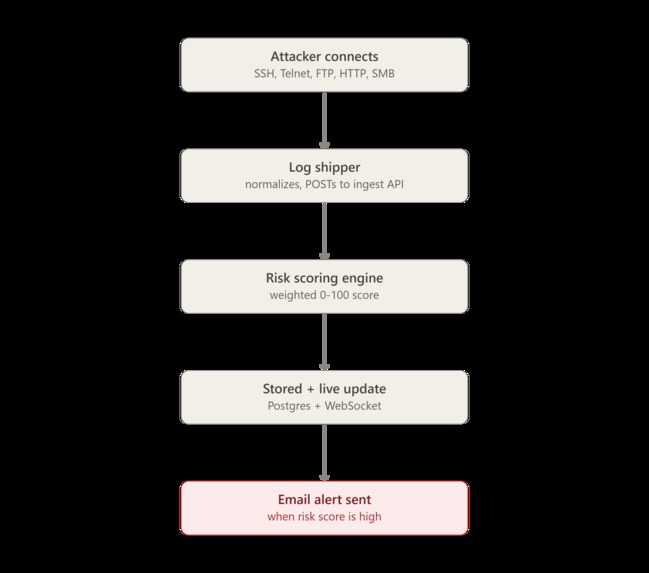
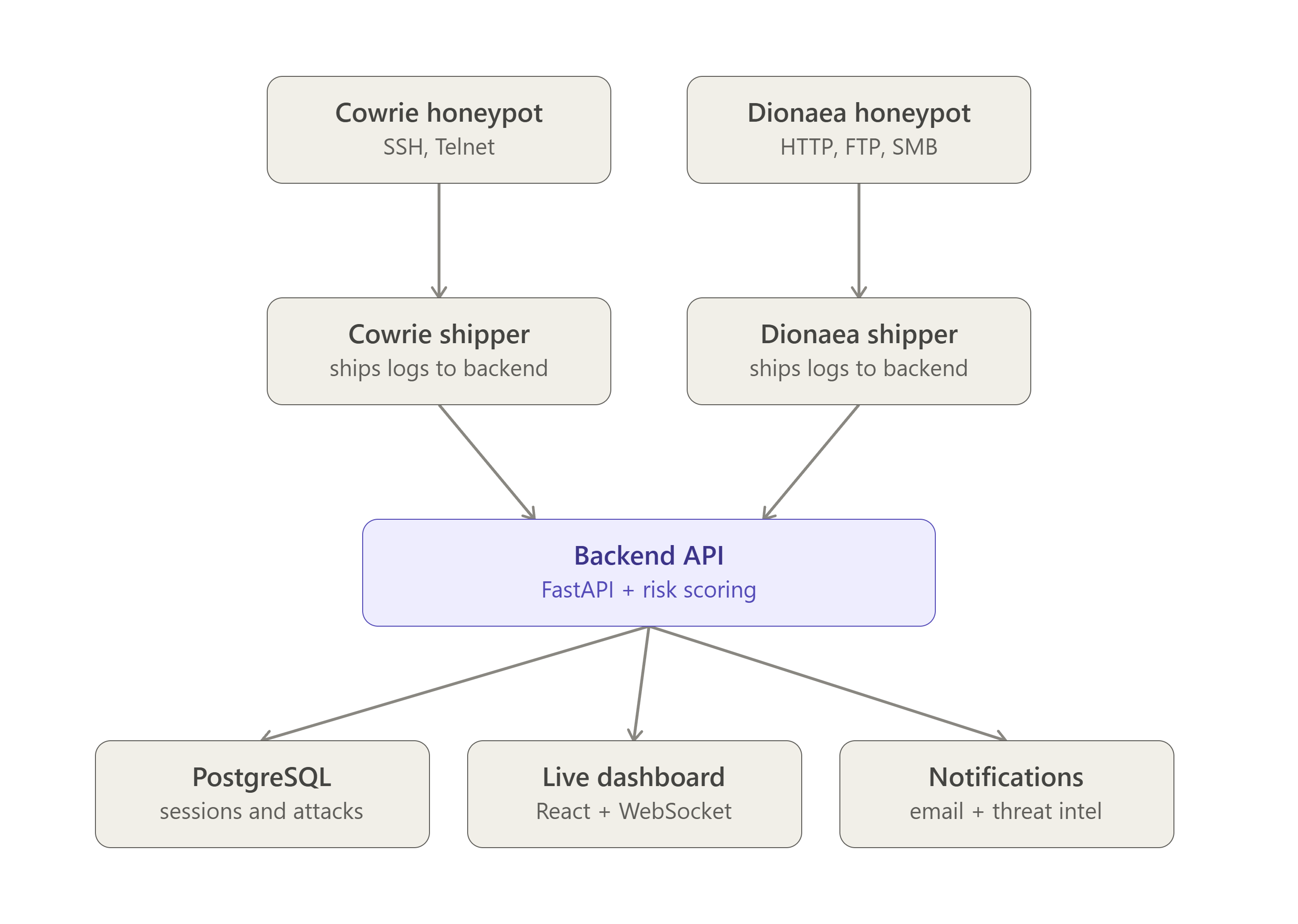
System architecture diagram
-
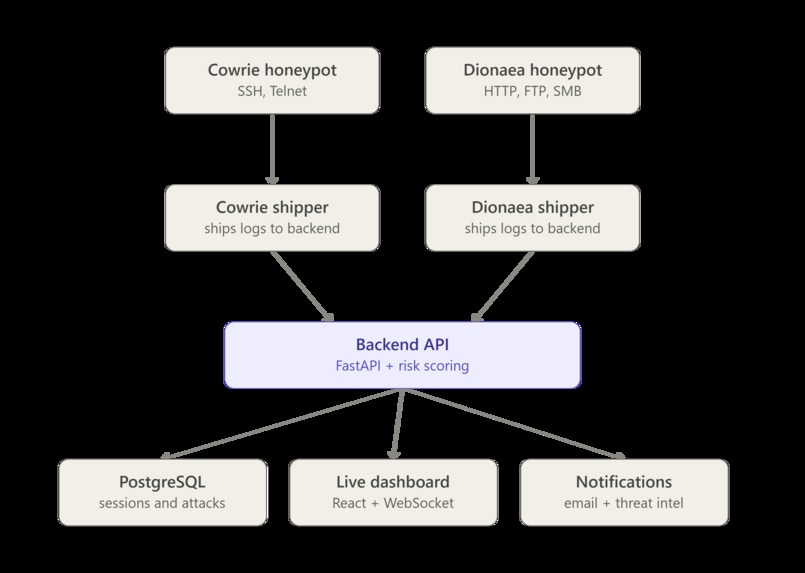
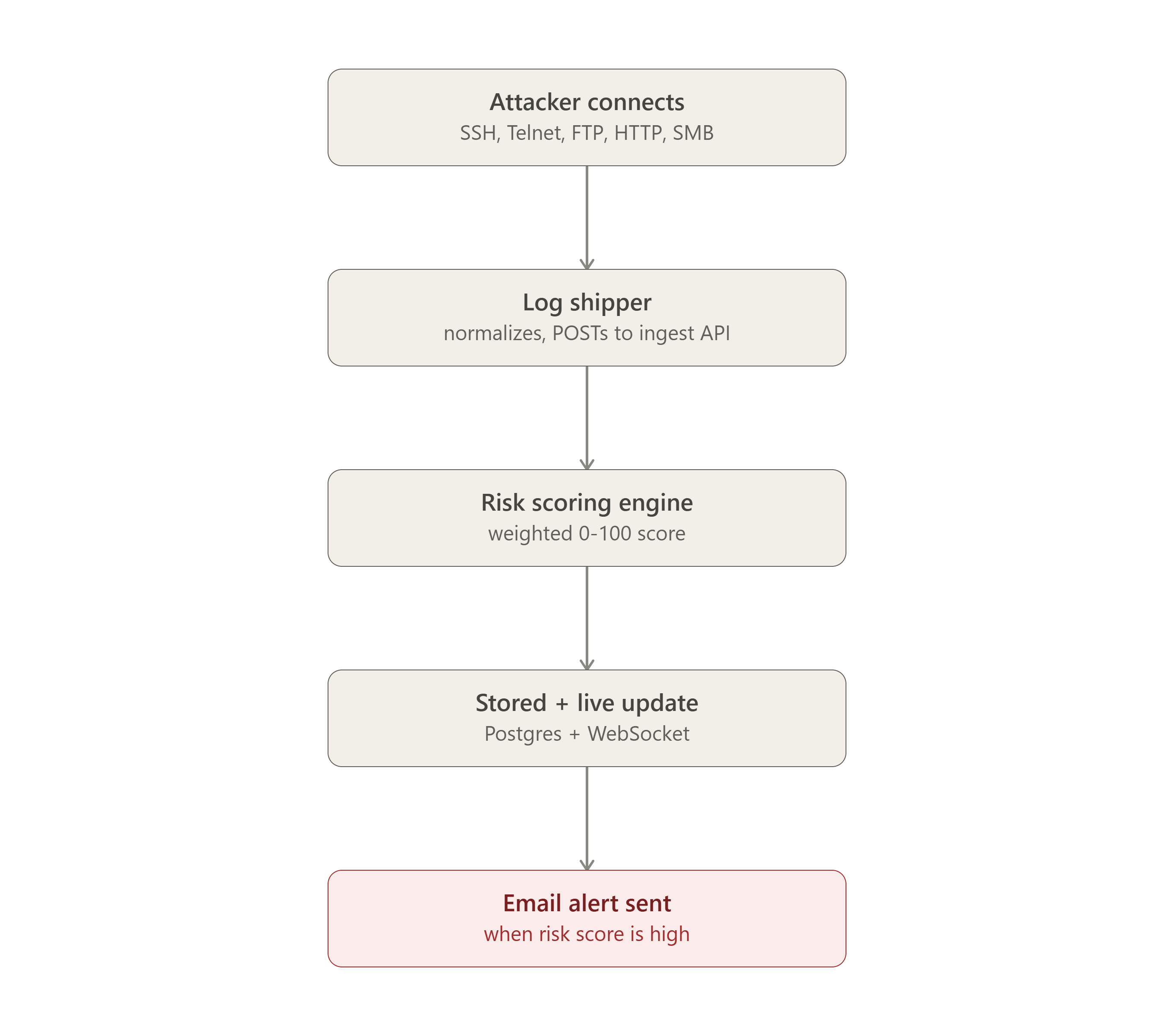
Workflow diagram

Inspiration
Cyberattacks often leave behind valuable traces such as suspicious requests, connection attempts, and attacker activity. However, simply detecting an attack is not enough. Security teams also need to understand what happened, identify attacker behavior, and turn those observations into useful security information.
This inspired us to build AI-Powered Honeypot Platform, a cybersecurity solution designed to attract and observe suspicious activity in a controlled environment and provide meaningful attack analytics.
What We Built
Our project uses a honeypot-based approach to create a controlled environment where suspicious interactions can be captured and analyzed.
The platform focuses on collecting attack-related information and presenting it in a way that can help security analysts understand:
- Source and attacker-related information
- Attack activity and interaction patterns
- Protocol and request details
- Suspicious behavior and attack events
- Analytics that can support further investigation
The goal is to transform raw honeypot activity into understandable security insights rather than leaving the information as unstructured logs.
How We Built It
We developed the project as a software-based cybersecurity platform, combining a honeypot environment with an analytics layer.
The workflow is centered around:
Attack Attempt → Honeypot Interaction → Data Collection → Attack Analysis → Security Insights
The platform is designed so that captured activity can be inspected and analyzed through the application rather than requiring an analyst to manually examine every raw event.
What We Learned
Through this project, we learned how honeypots can be used as a defensive cybersecurity technique, how attack activity can be captured and represented as structured information, and how analytics can help make security data easier to investigate.
We also learned that cybersecurity solutions need to balance detection, usability, scalability, and responsible handling of security data.
Challenges
One of our main challenges was designing the system so that attack activity could be captured in a controlled manner while still producing information that is useful for analysis.
Another challenge was organizing security events into meaningful categories and presenting them clearly instead of overwhelming the user with raw technical data.
We also had to think about how the platform could be extended in the future with more advanced analytics and AI-based threat detection.
Future Scope
The platform can be extended with machine-learning-based anomaly detection, automated attacker behavior classification, threat-intelligence enrichment, real-time alerting, and more advanced attack analytics.
Our long-term goal is to evolve the platform from simply observing malicious activity into an intelligent cybersecurity monitoring and analysis system.


Log in or sign up for Devpost to join the conversation.