Inspiration
Software development has become increasingly AI-assisted, but developers still spend significant time coordinating planning, architecture, implementation, testing, debugging, documentation, and deployment across multiple tools. Existing coding assistants are excellent at generating code, yet they often require constant prompting and manual orchestration. We asked a simple question: What if AI didn't just help write code, but owned the entire software engineering workflow?
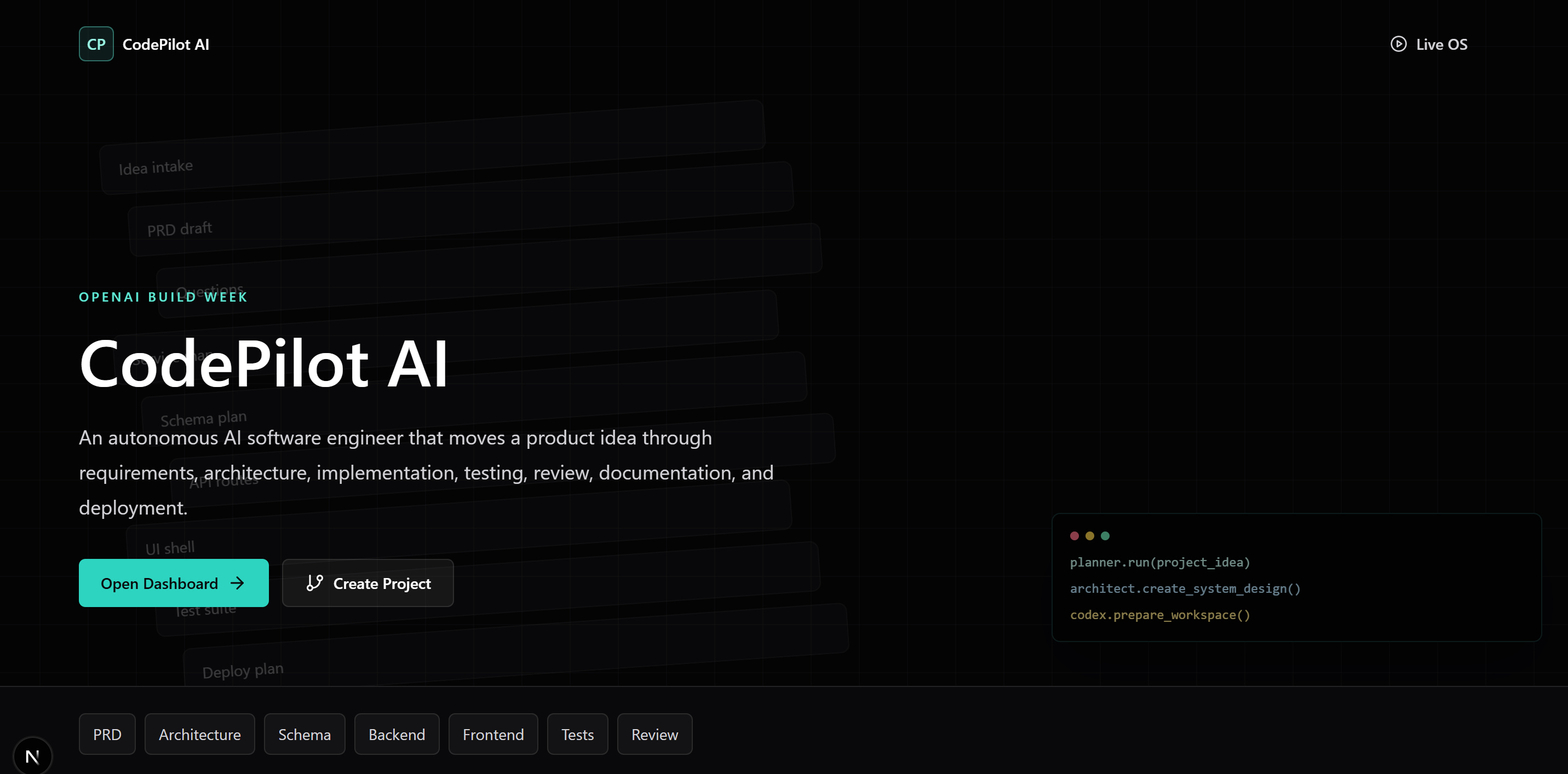
ProjectPilot AI was created to explore that vision. Instead of acting as another autocomplete tool, it functions as an autonomous software engineering platform that transforms product ideas into production-ready software while making every engineering decision transparent and traceable.
What it does
ProjectPilot AI is an autonomous AI software engineering platform powered by GPT-5.6 and OpenAI Codex. A user starts with a natural language idea such as: "Build a SaaS CRM for dentists."
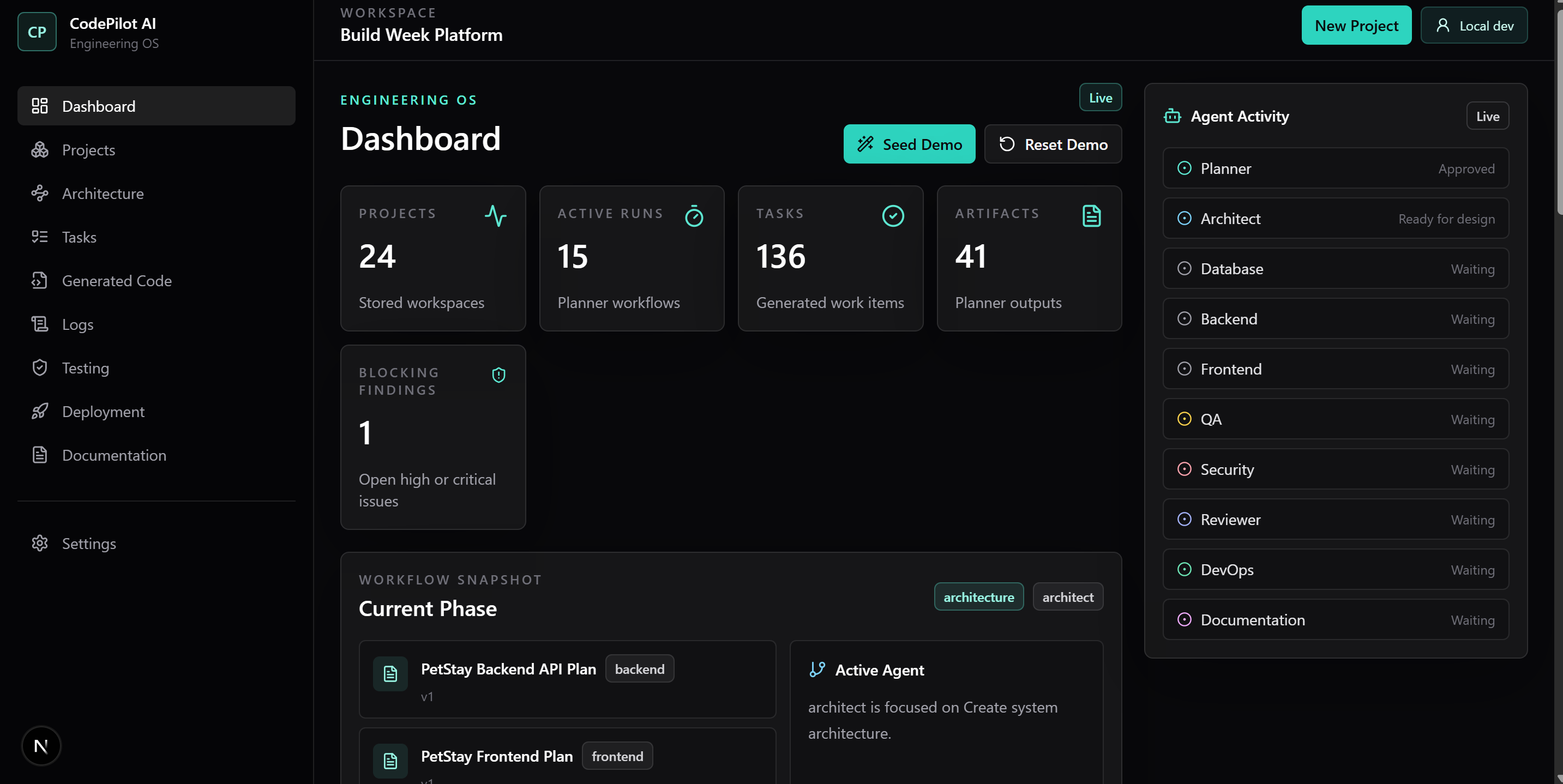
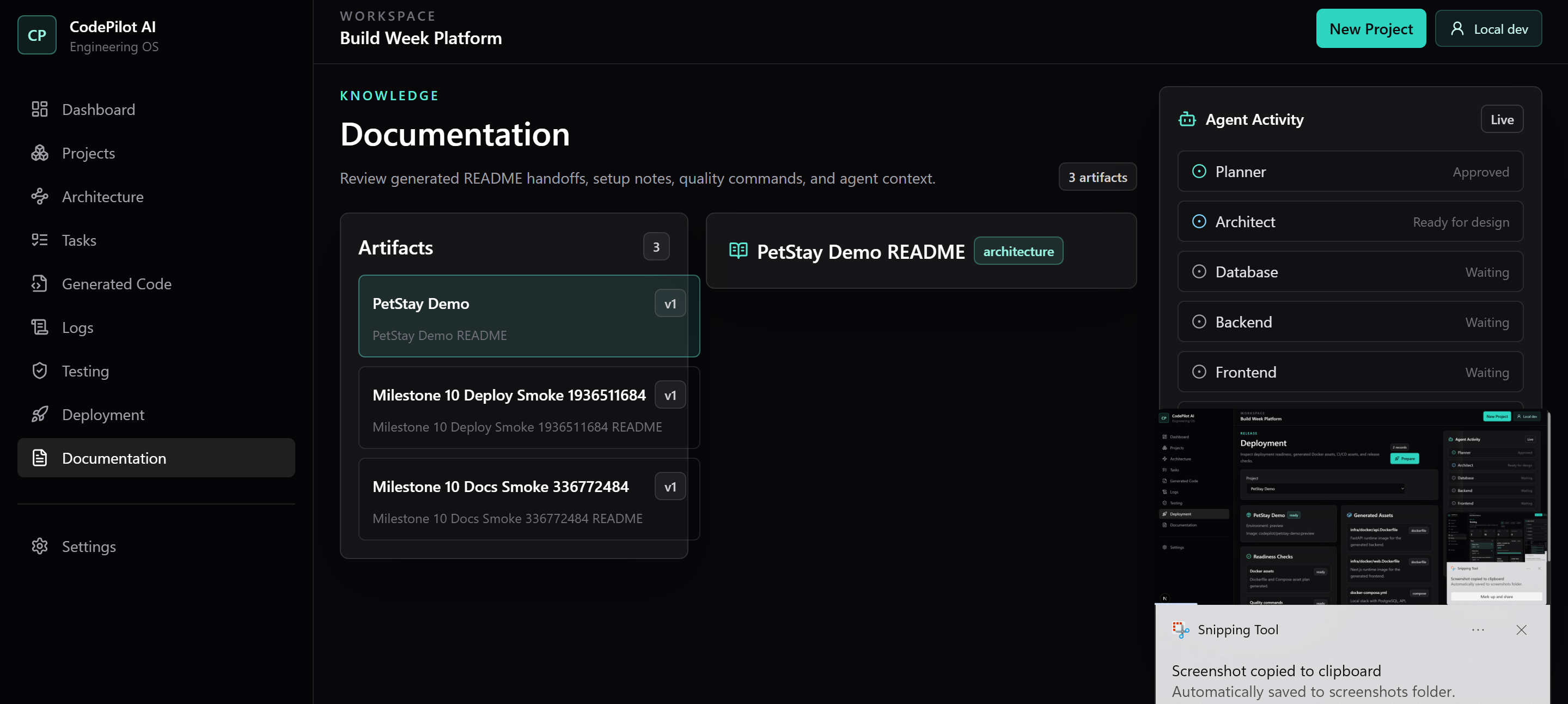
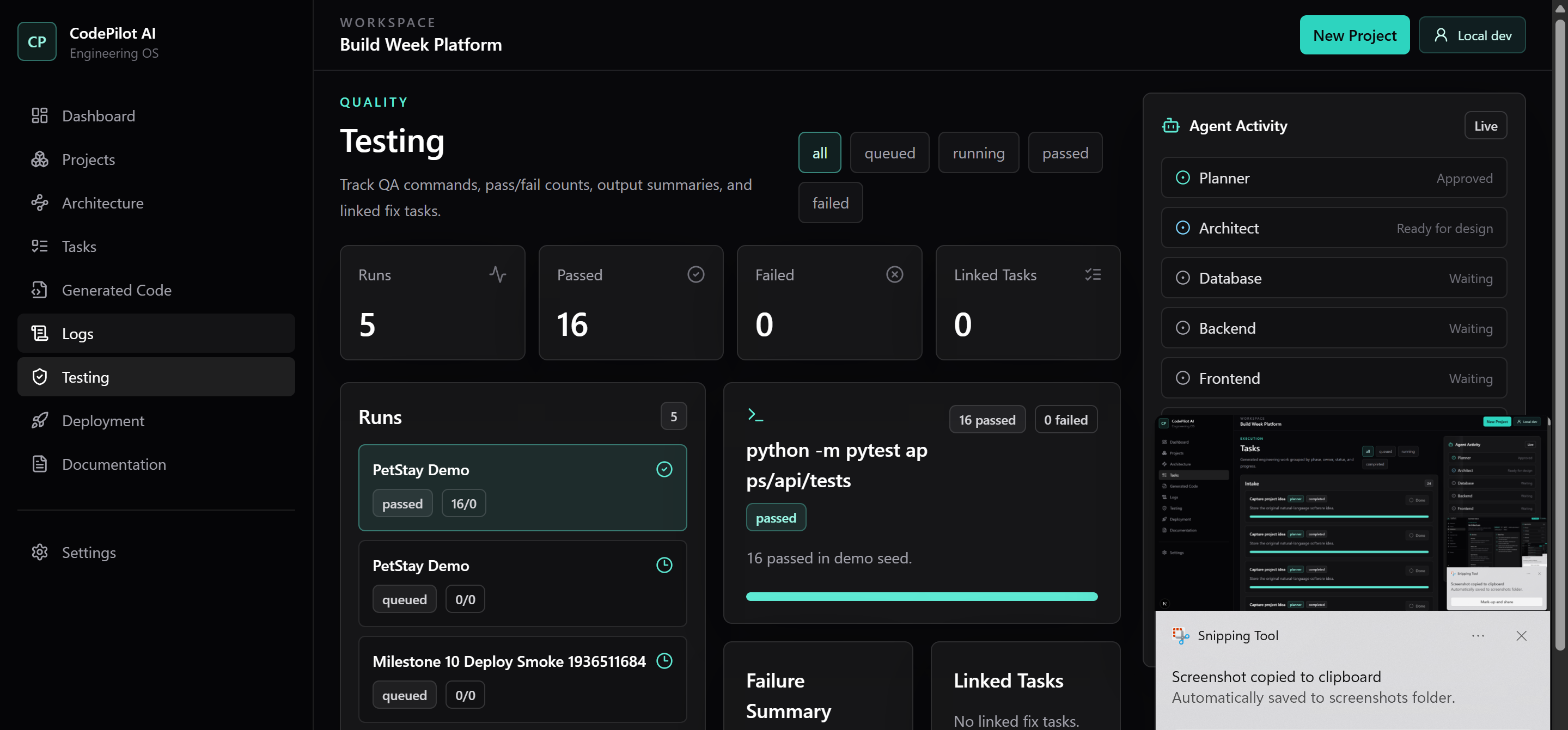
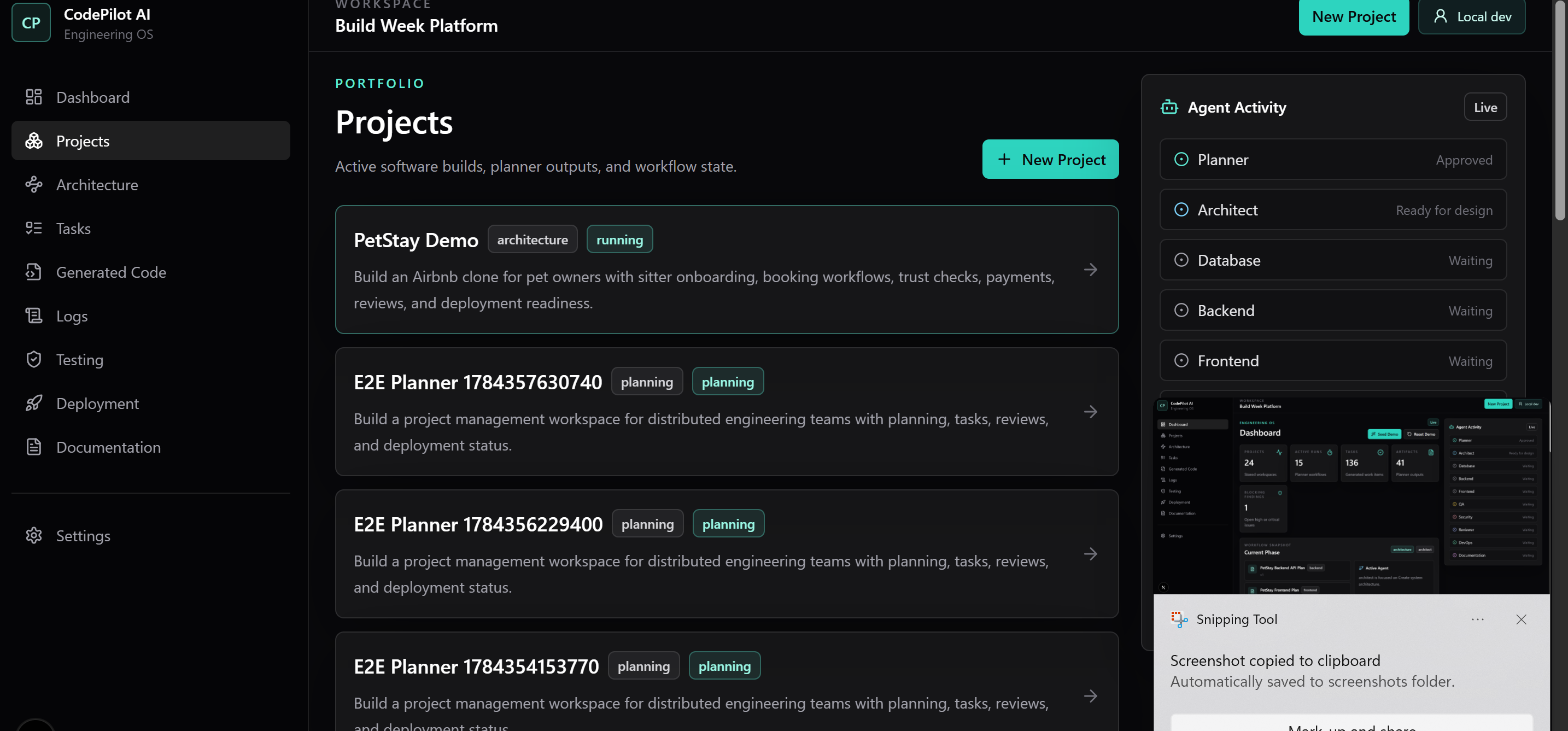
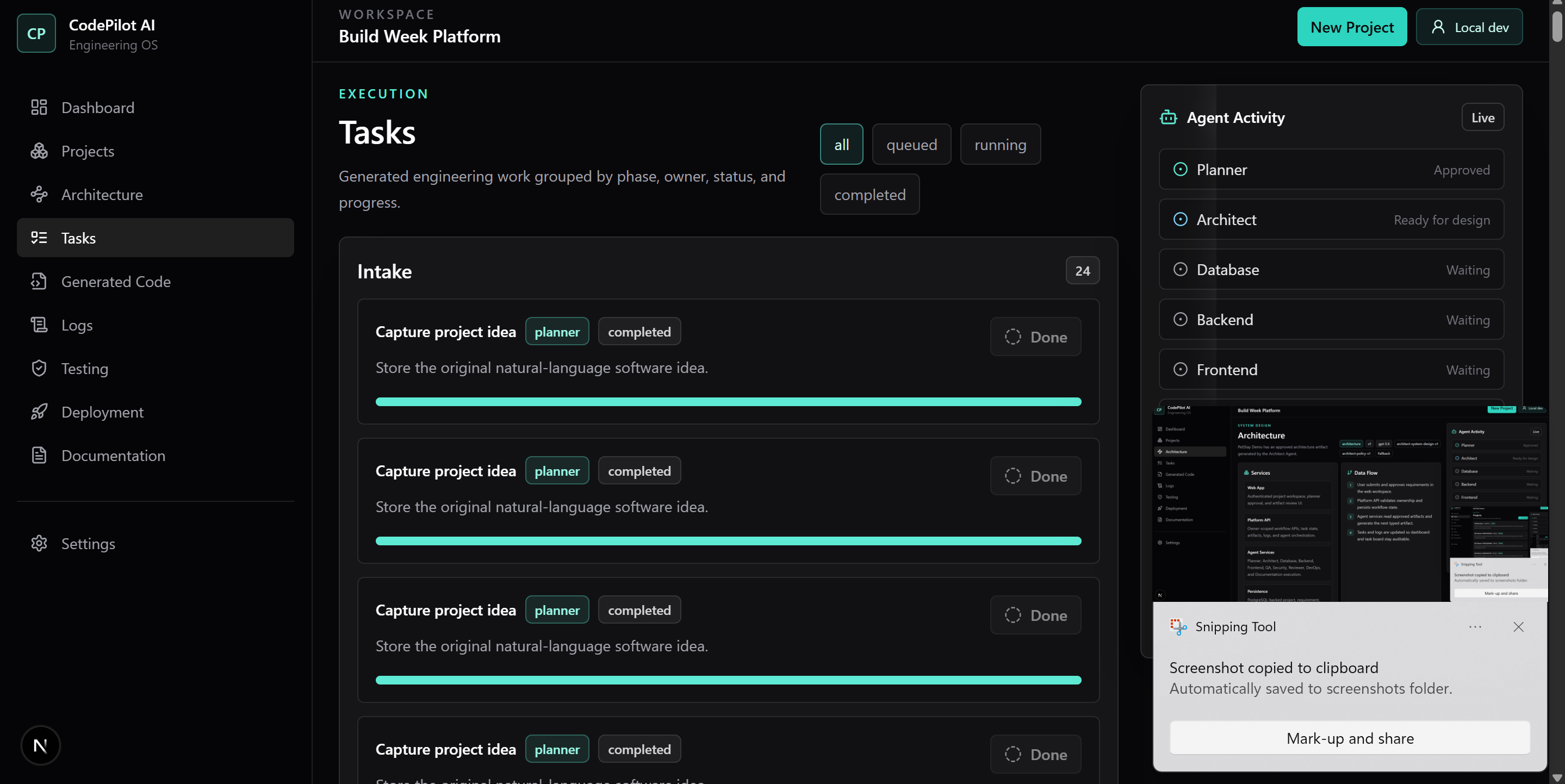
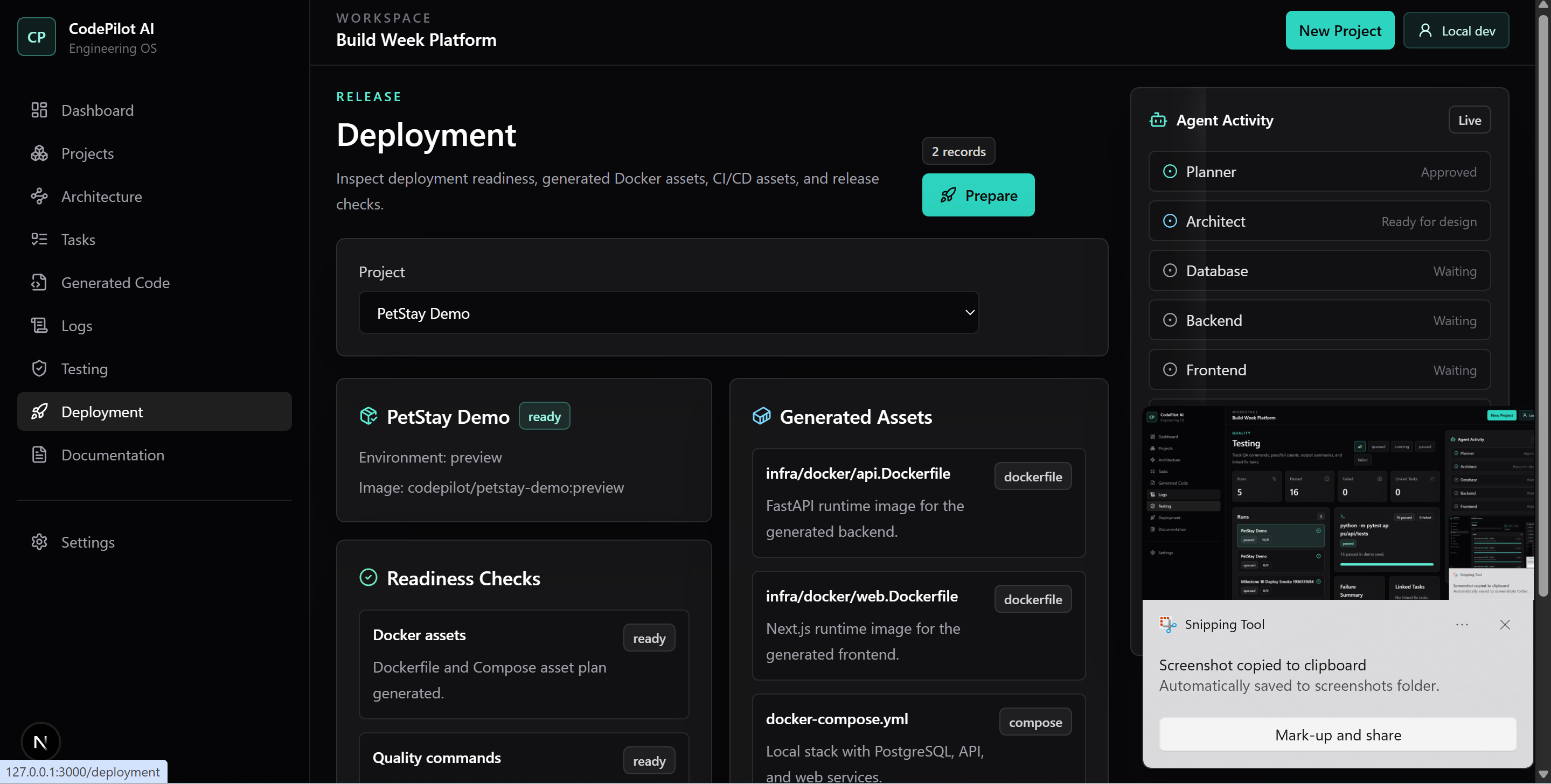
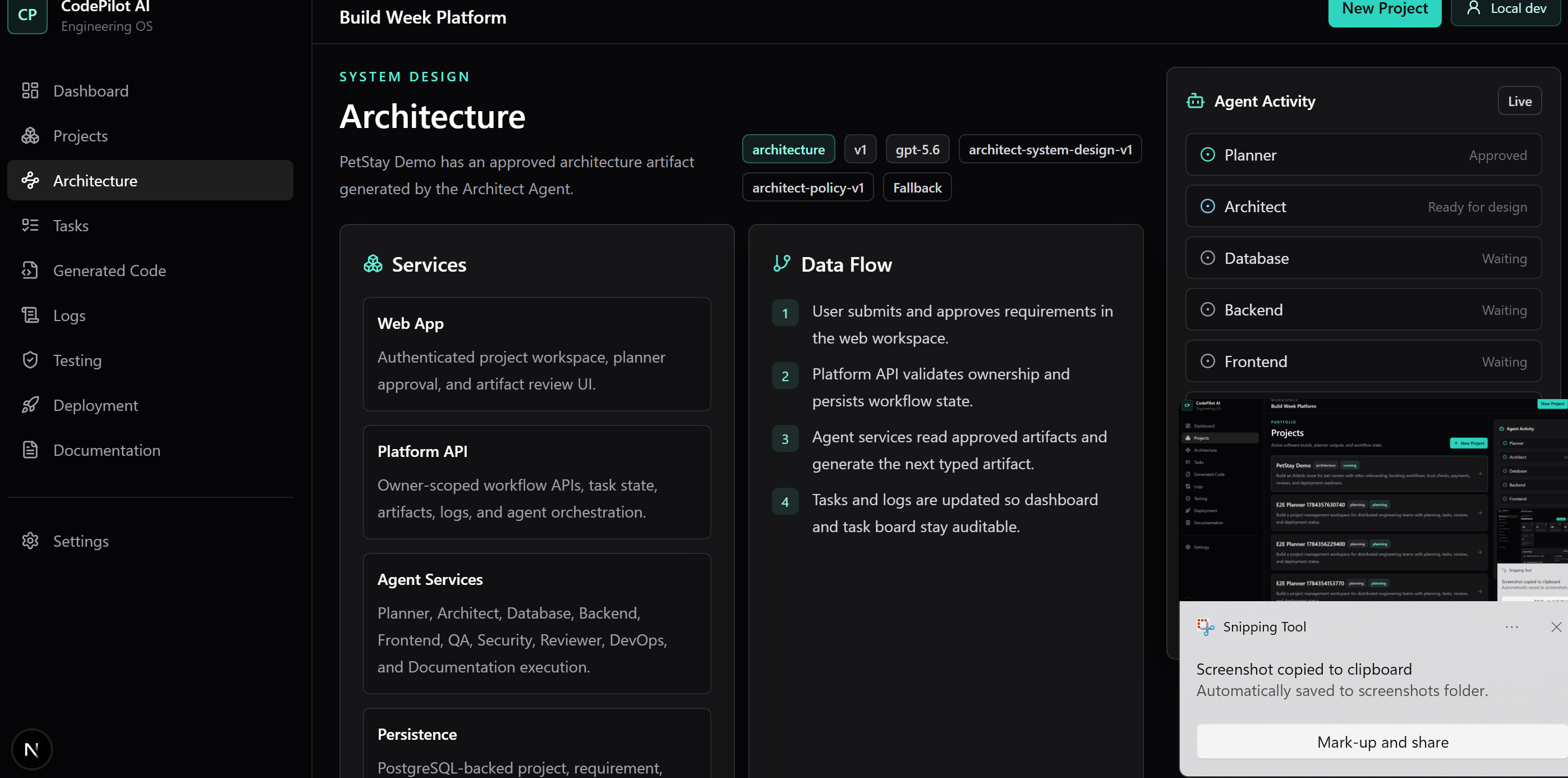
ProjectPilot AI then executes an engineering workflow by: Understanding product requirements Generating a Product Requirements Document (PRD) Creating a scalable system architecture Designing database schemas Planning REST APIs Generating frontend and backend code Writing automated tests Detecting and fixing implementation issues Producing developer documentation Preparing the application for deployment Unlike traditional AI coding assistants, ProjectPilot AI provides a visual engineering pipeline that allows users to follow every stage of development, making the entire software creation process transparent rather than a black box.
How we built it
ProjectPilot AI combines modern web technologies with OpenAI's latest models to create an end-to-end software engineering workflow. Frontend Next.js React TypeScript Tailwind CSS Modern dashboard UI with real-time workflow visualization Backend FastAPI Python REST APIs Modular service architecture AI Layer We intentionally separated responsibilities between the two OpenAI models: GPT-5.6 GPT-5.6 was responsible for higher-level reasoning, including: Requirement analysis Product planning Technical architecture Task decomposition Engineering workflow orchestration Technical decision making OpenAI Codex Codex acted as the implementation engine by: Generating production-ready code Creating project structure Refactoring existing modules Writing tests Debugging implementation issues Producing documentation Accelerating development throughout the project This separation allowed reasoning and implementation to complement each other while demonstrating meaningful use of both technologies.
Challenges we ran into
One of the biggest challenges was moving beyond a traditional AI chat interface. Building a system that behaves like an engineering team required designing an architecture where planning, implementation, testing, documentation, and deployment all work together in a coherent workflow. Another challenge was maintaining consistency across generated components while preserving modularity and scalability. We also spent considerable effort designing a user experience that makes AI decision-making visible, allowing developers to understand not only what the system generated but why each engineering step occurred.
Accomplishments that we're proud of
Built an AI platform that models the complete software engineering lifecycle rather than isolated code generation. Successfully combined GPT-5.6 for reasoning with Codex for implementation. Created an engineering workflow that is understandable and transparent instead of functioning as a black box. Designed a polished developer experience focused on productivity and collaboration. Demonstrated how autonomous AI agents can coordinate multiple engineering responsibilities within a unified workflow.
What we learned
This project reinforced that successful AI software engineering is about orchestration as much as intelligence. Large language models become significantly more useful when they are assigned specialized responsibilities instead of trying to solve every problem through a single conversation. We also learned that developer trust increases when AI systems clearly communicate their reasoning, progress, and implementation decisions rather than simply producing outputs. Finally, we discovered that combining structured reasoning from GPT-5.6 with implementation capabilities from Codex creates a much more complete engineering experience than either model alone.
What's next for ProjectPilot AI
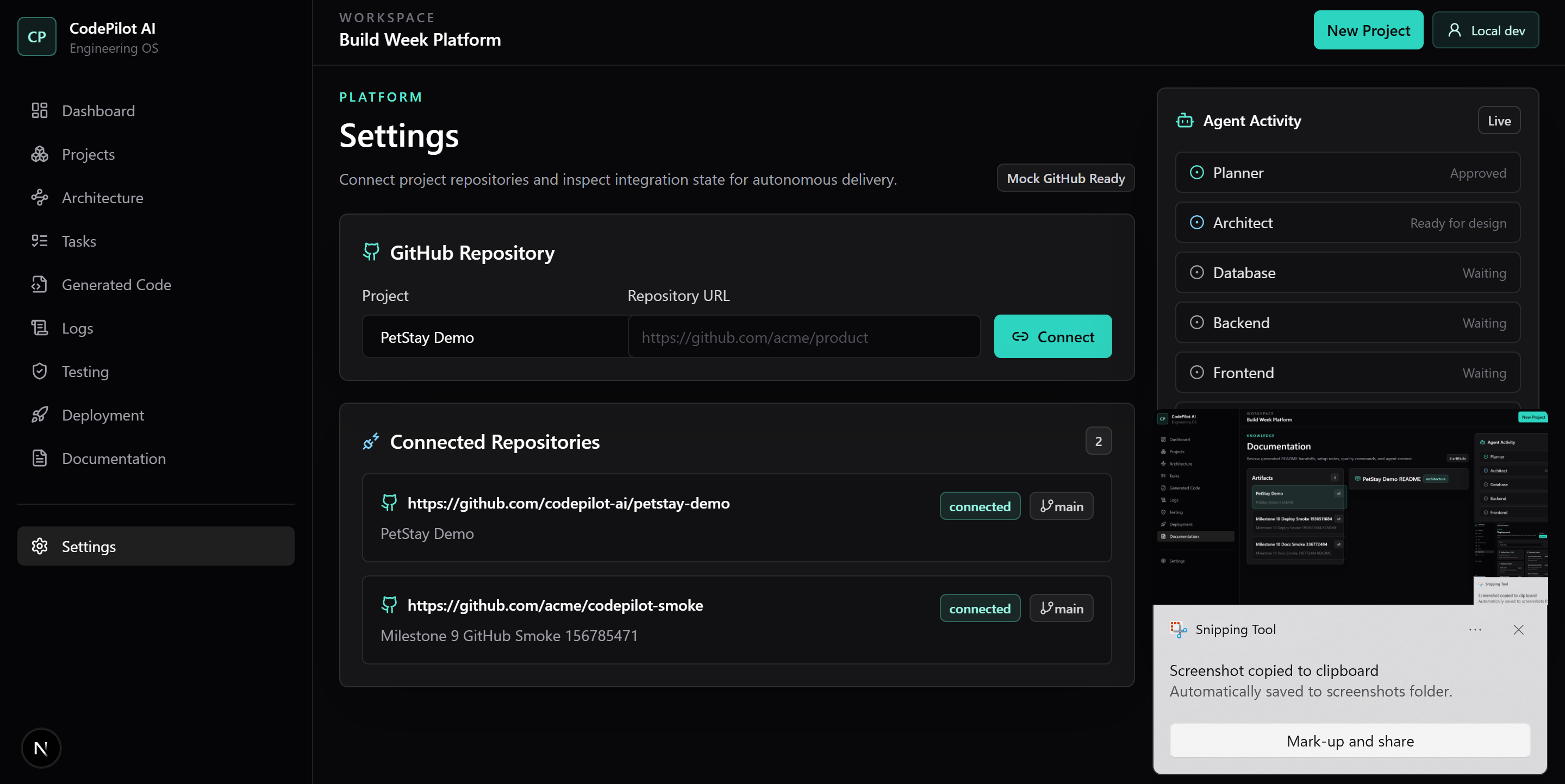
ProjectPilot AI is just the beginning. Future versions will include: Persistent project memory across sessions Multi-agent collaboration with specialized engineering roles GitHub pull request automation Continuous integration and deployment pipelines Automated security analysis Performance optimization recommendations Cloud deployment to AWS, Azure, and Google Cloud Team collaboration with human developers and AI agents working together Long-term architectural memory that continuously improves future engineering decisions Our long-term vision is to build an autonomous software engineering platform that helps individuals and teams transform ideas into reliable, production-ready software while keeping developers fully informed and in control.
Built With
- actions
- agents
- ai
- amazon-web-services
- api
- ci/cd
- codex
- css
- devops
- docker
- github
- gpt-5.6
- jwt
- llm
- next.js
- openai
- pytest
- python
- react
- shadcn/ui
- software
- tailwind
- typescript

Log in or sign up for Devpost to join the conversation.