-
-
12
-
6
-
11
-
13
-
4
-
10
-
9
-
2
-
3
-
1
-
14
-
5
-
8
-
7
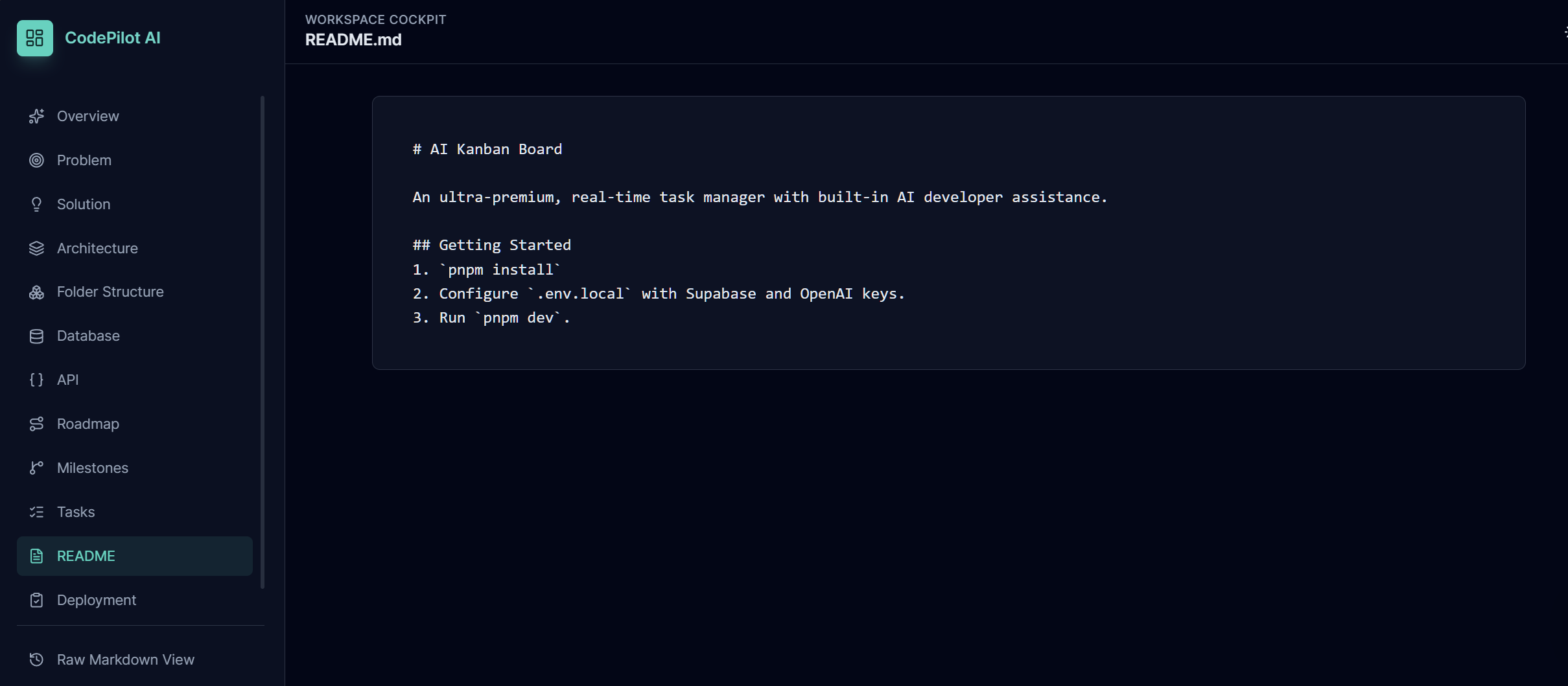
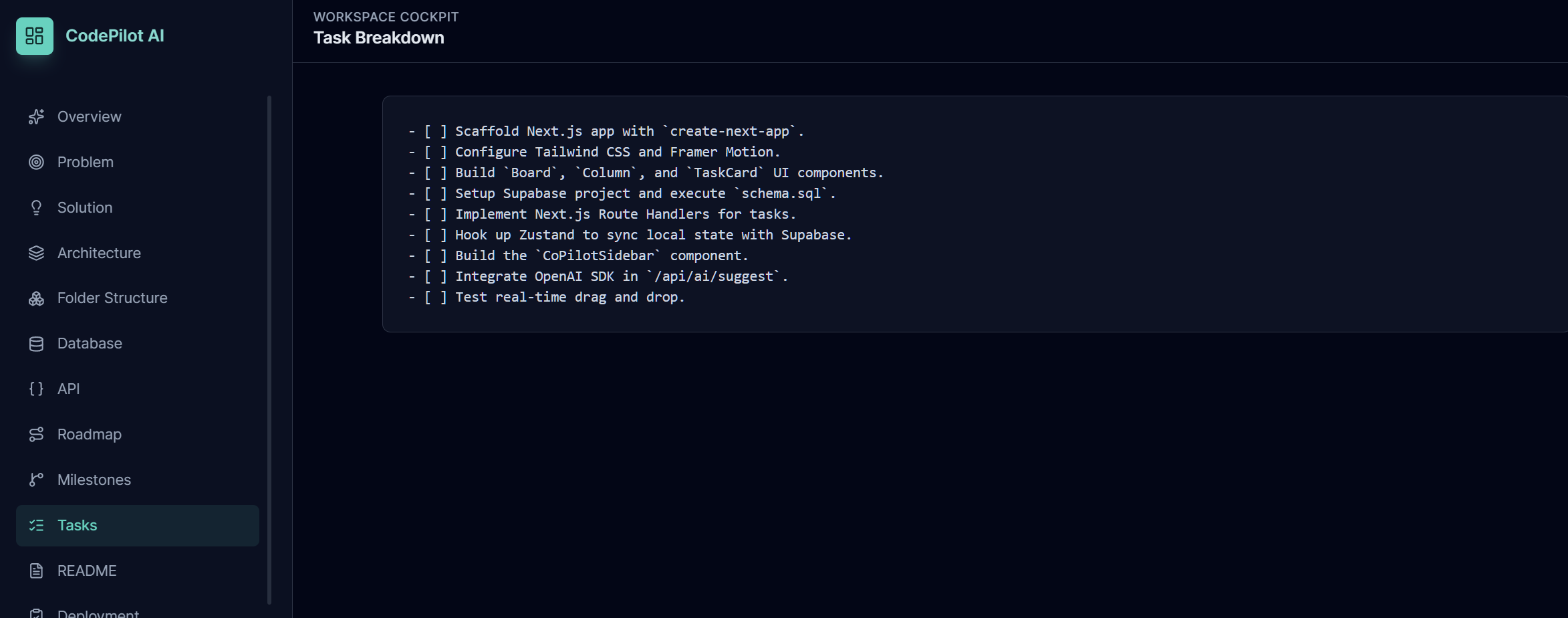
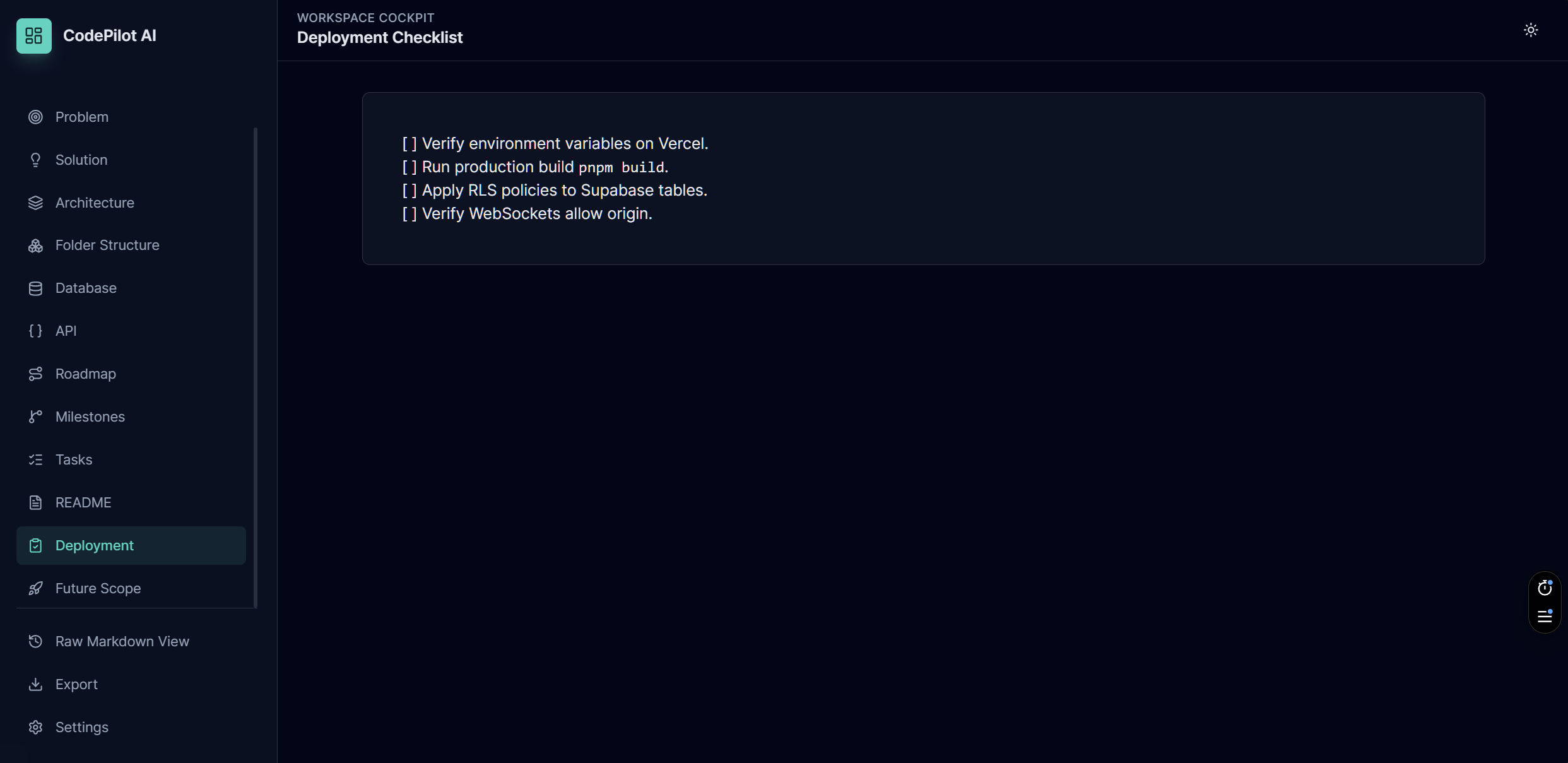
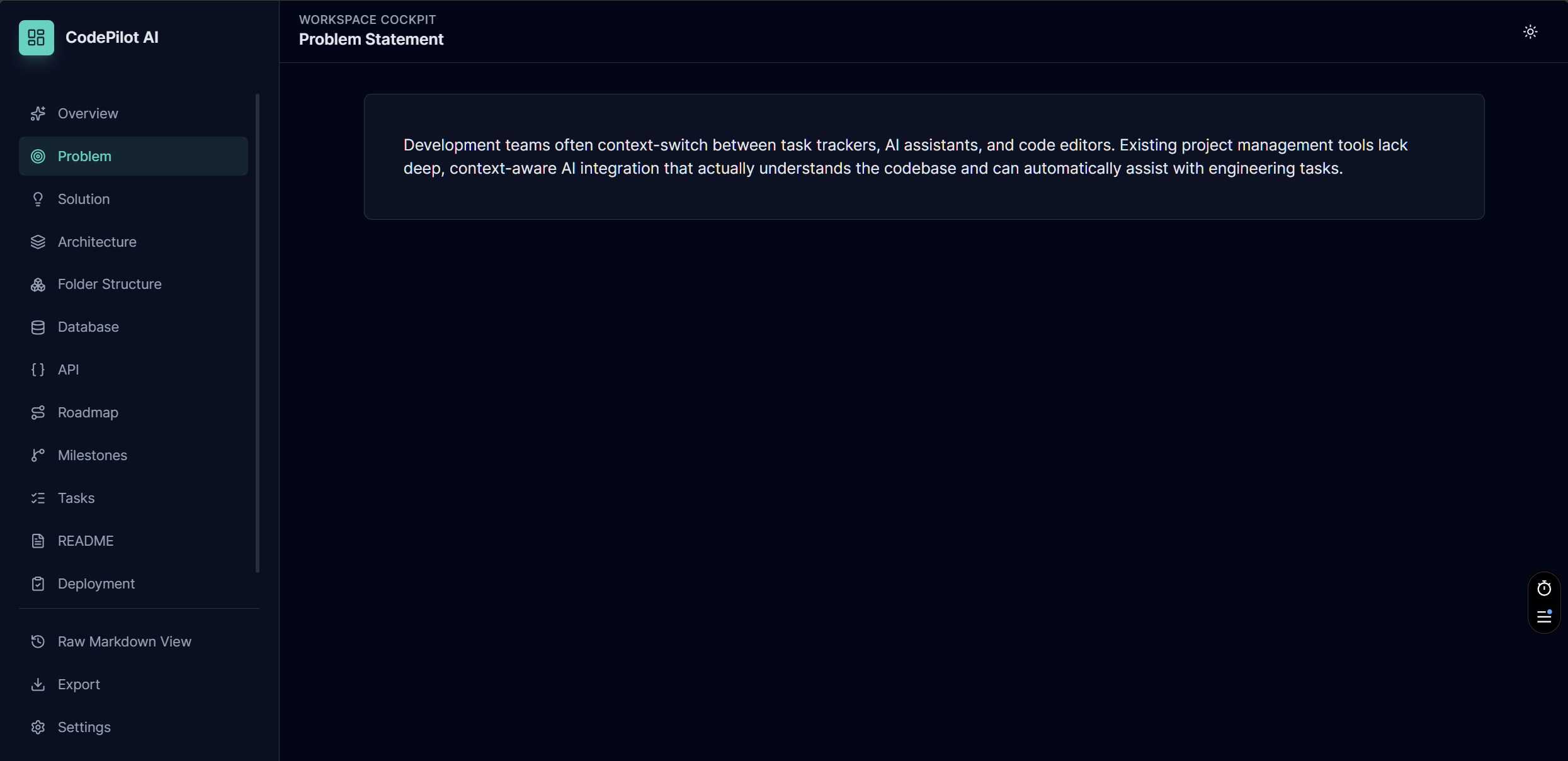
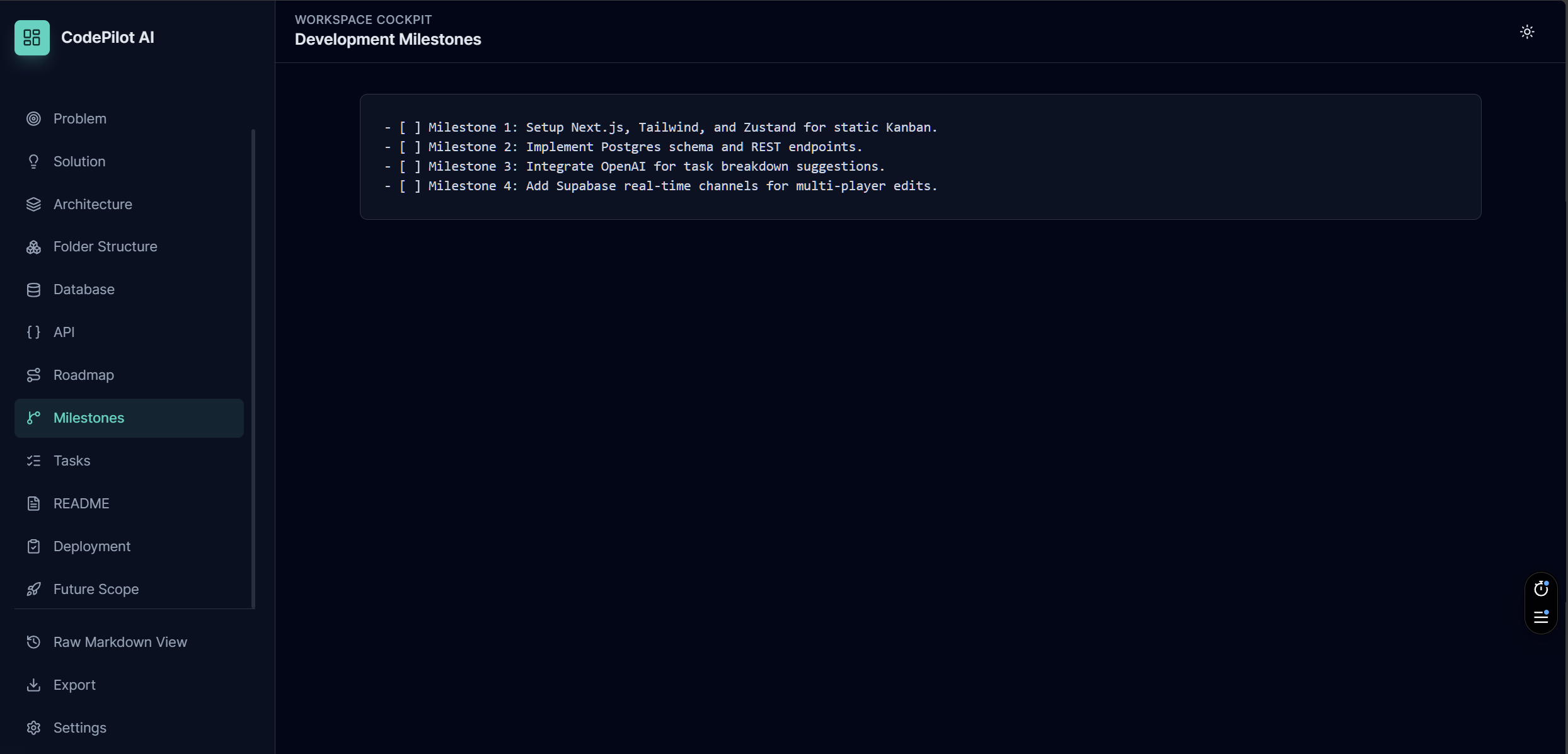
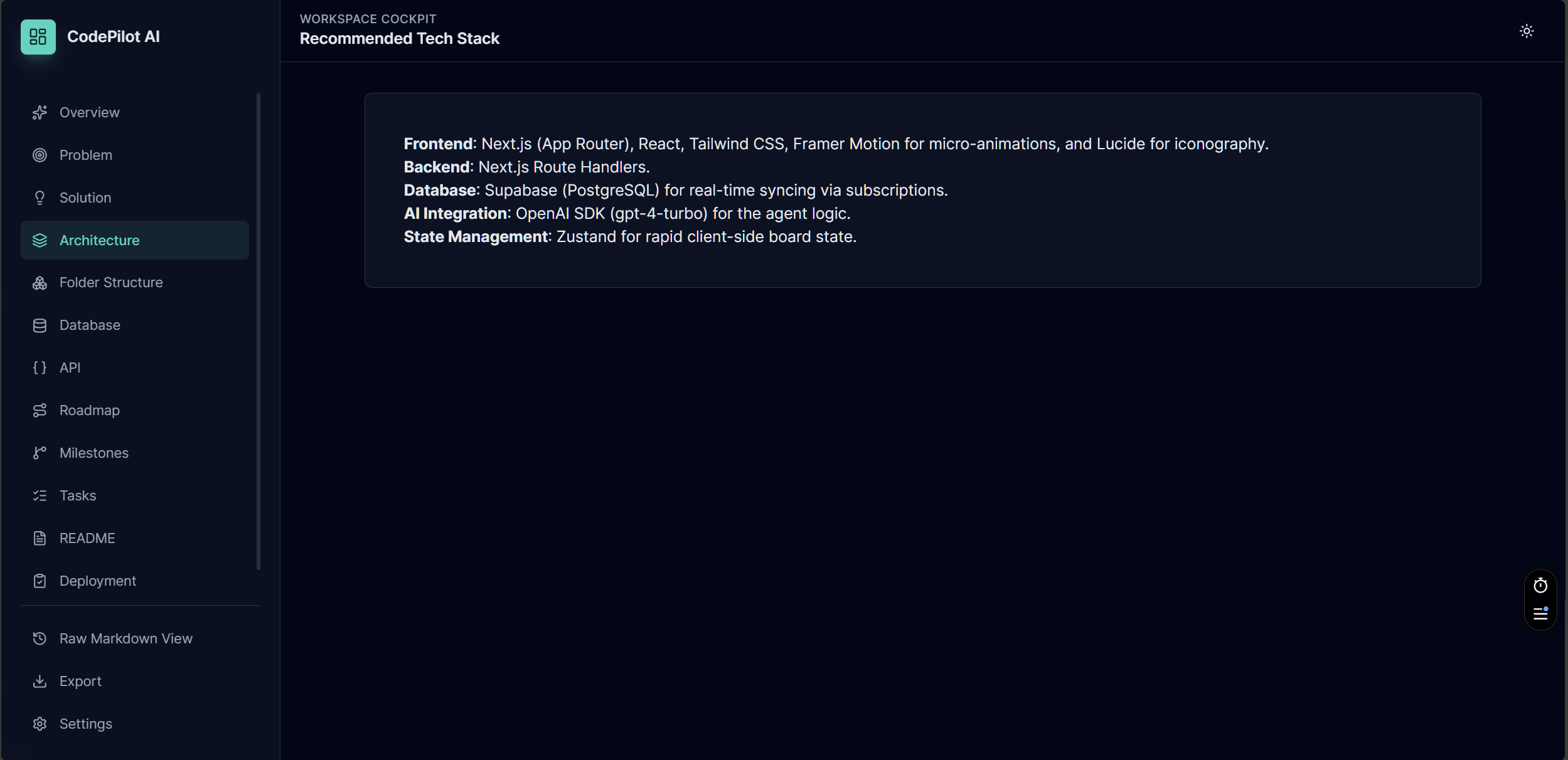
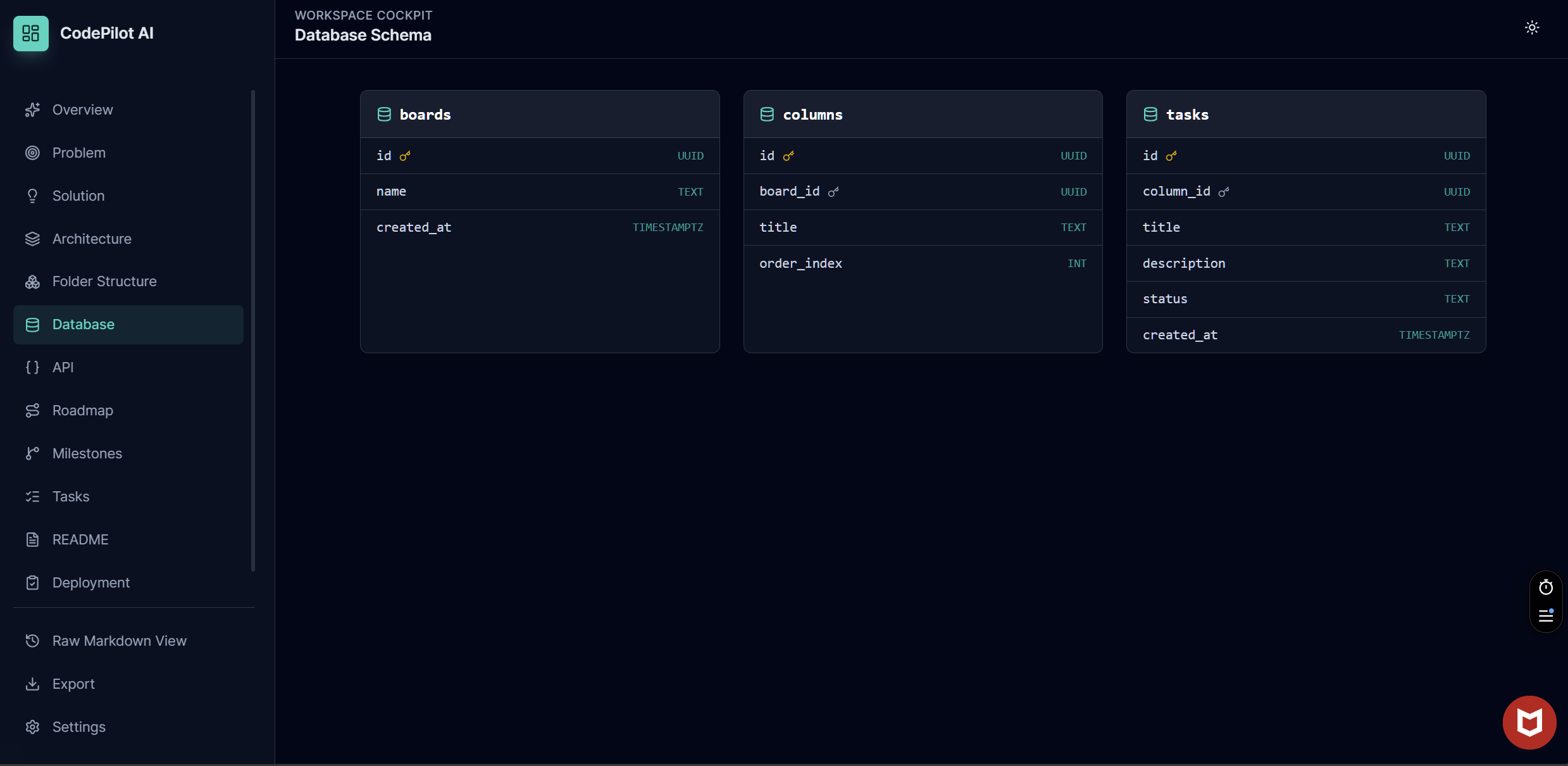
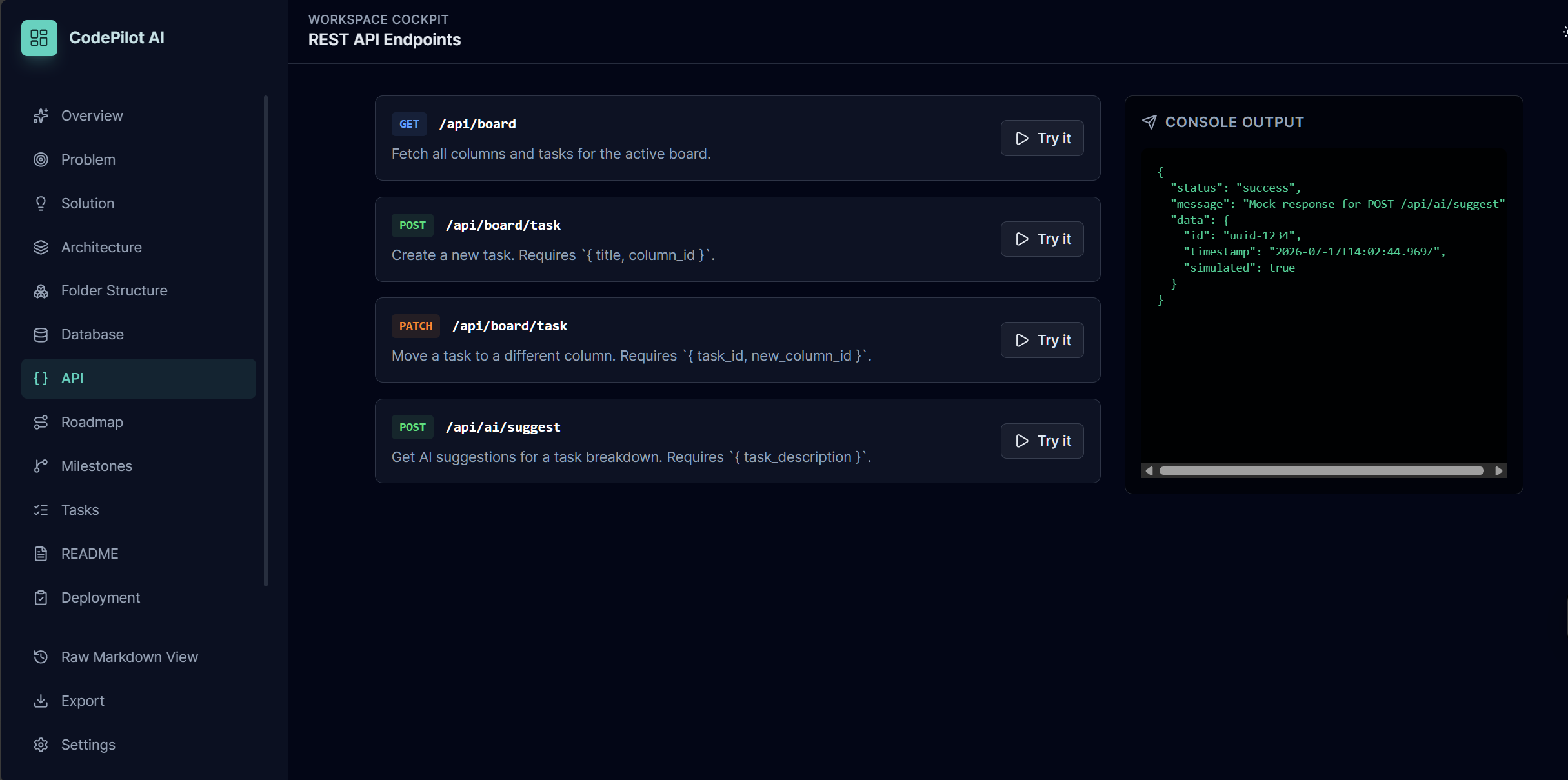
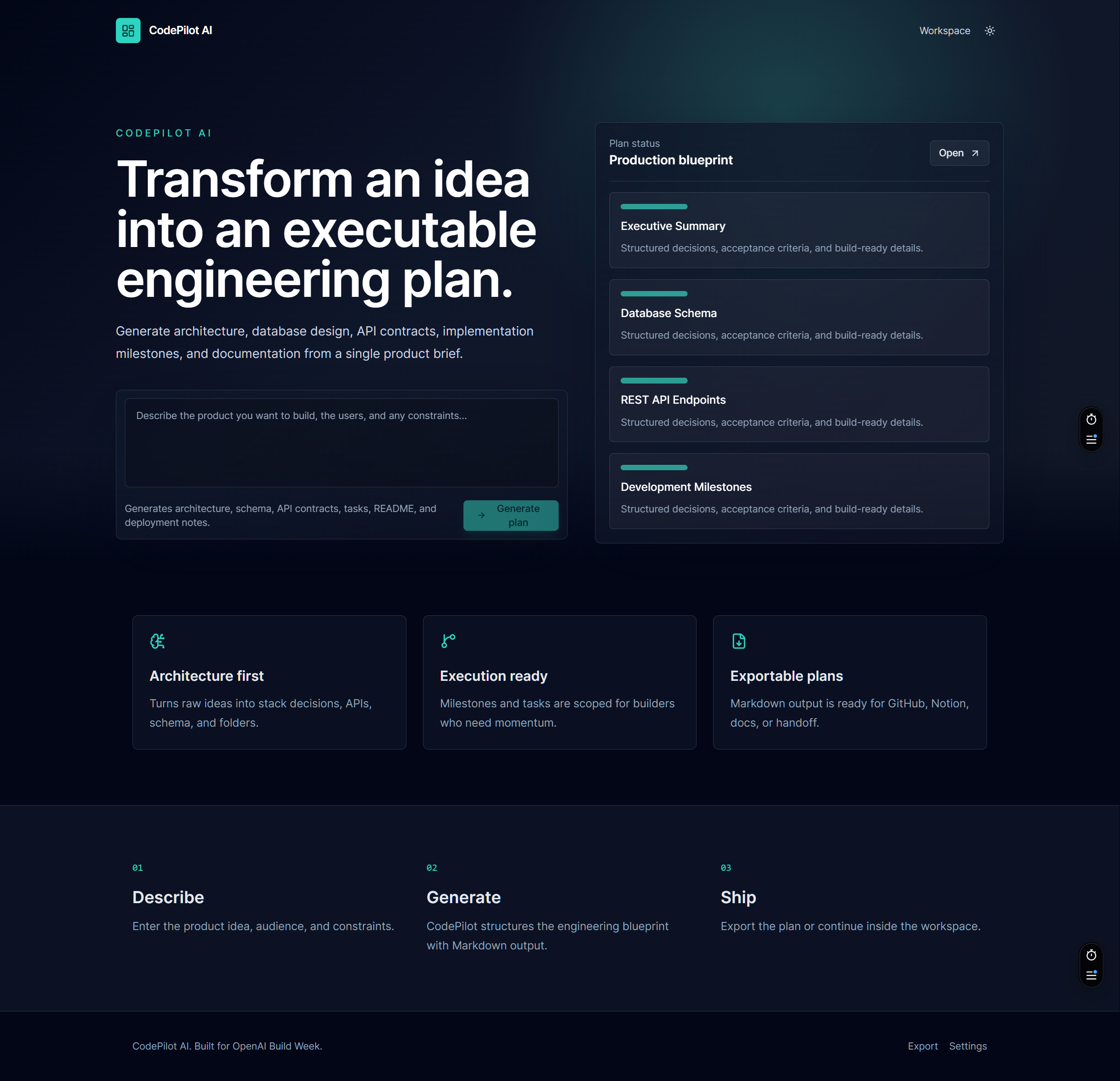
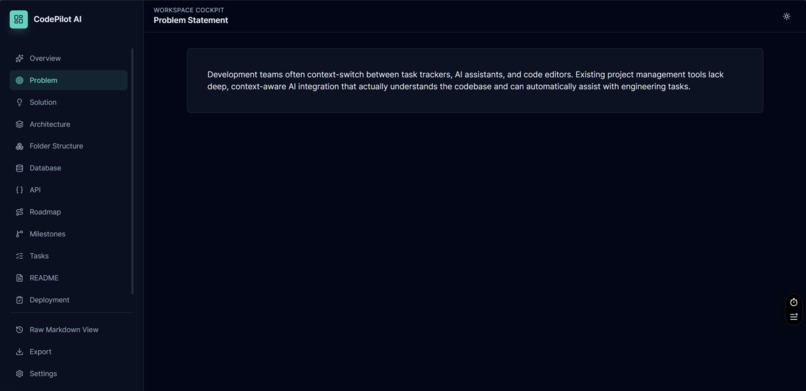
Inspiration Every great software project starts with an idea, but transforming that abstract idea into a tangible product is incredibly daunting. We realized that developers and indie hackers often spend days just in the initial planning phase—debating architecture decisions, designing directory structures, mapping out database schemas, and defining REST API endpoints.
This friction causes many brilliant ideas to lose momentum before a single line of code is written. The dreaded "blank canvas paralysis" inspired us to build CodePilot AI. We wanted to create a tool that skips the setup and provides developers with a structured, instantly actionable foundation.
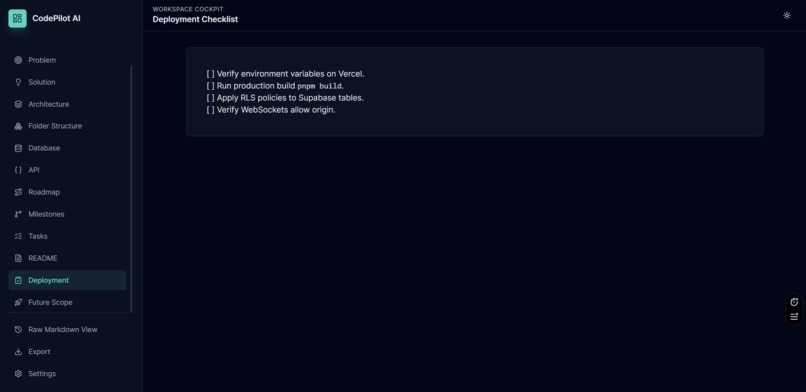
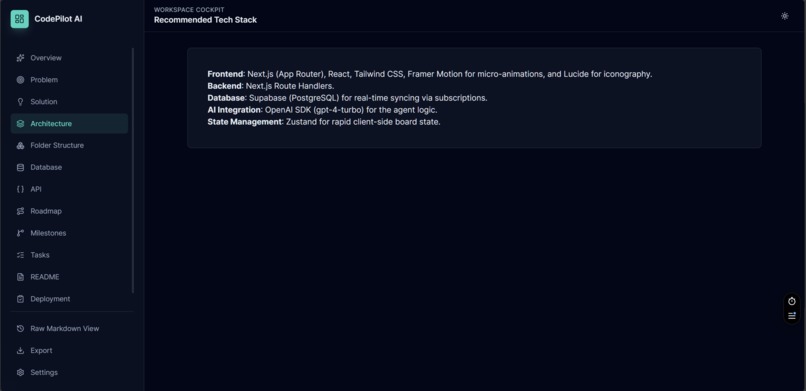
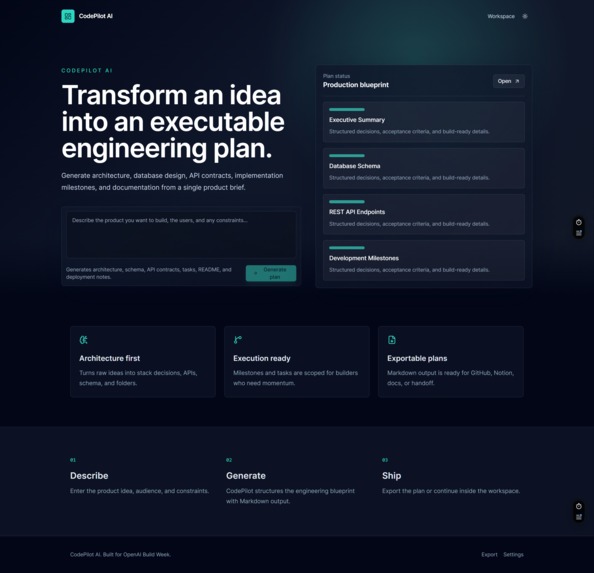
How we built it CodePilot AI is an interactive workspace, not just a chat interface. We built the frontend using Next.js 15 (App Router) with React 19 and Tailwind CSS v4 for a sleek, dark-mode-first UI. For animations and a premium feel, we utilized Framer Motion.
At the core of our backend lies the OpenAI Responses API:
- We utilized GPT-5.6 as our primary reasoning engine. Its advanced cognitive capabilities allow it to analyze an abstract product idea and architect a logically sound, scalable system design.
- We integrated Codex to generate precise, syntactically correct code snippets, configuration files, and database schemas.
- We used Supabase (Postgres) for user authentication and persisting the generated engineering blueprints in the cloud.
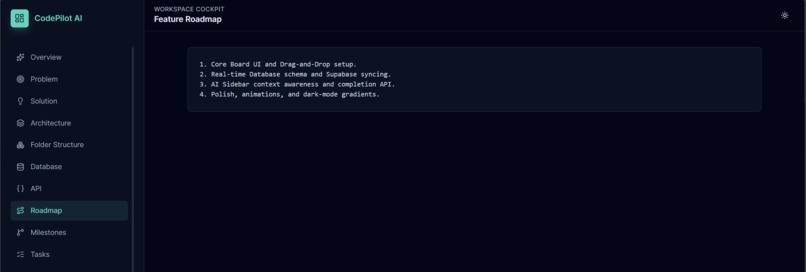
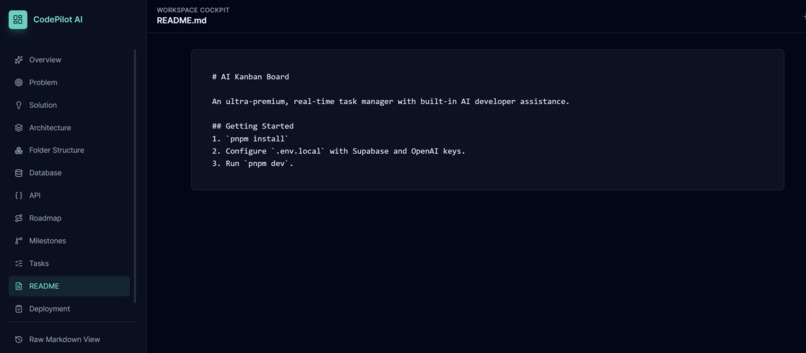
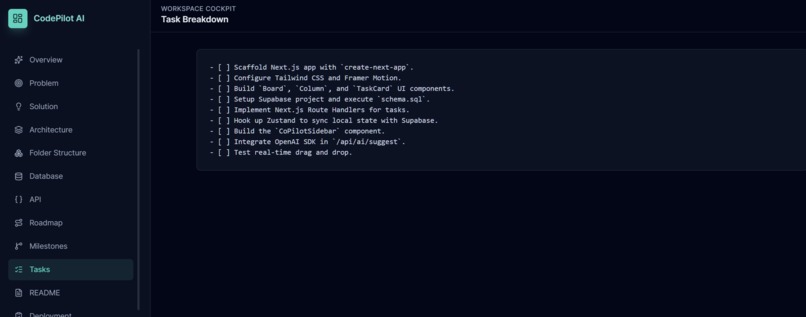
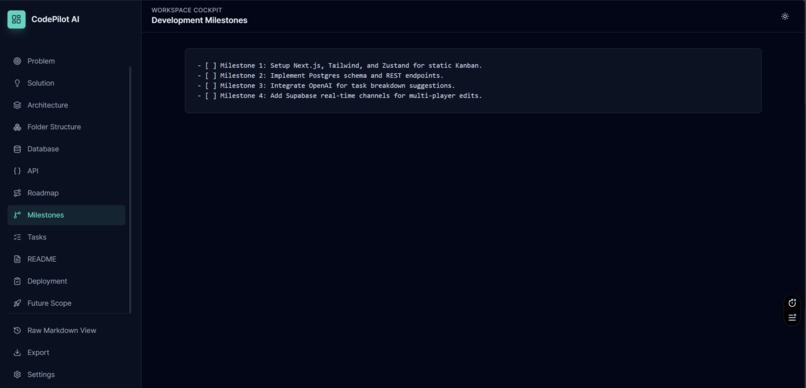
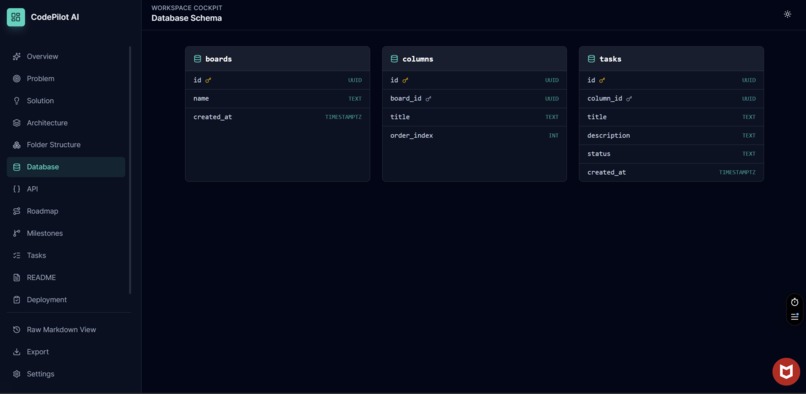
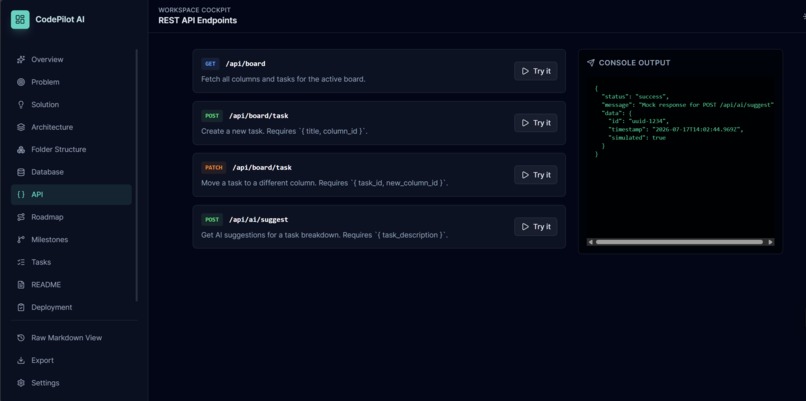
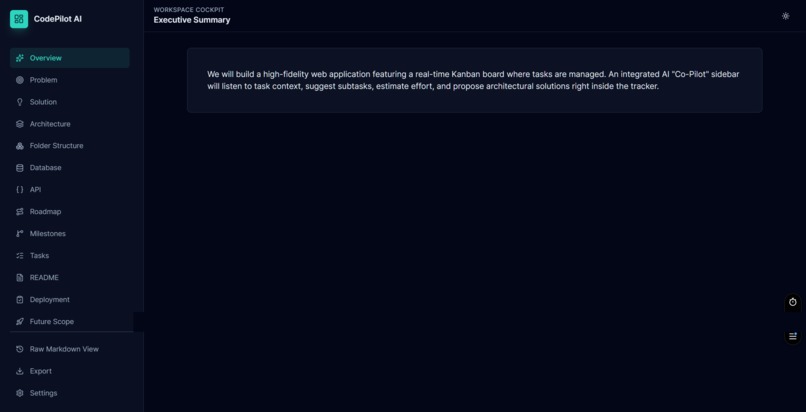
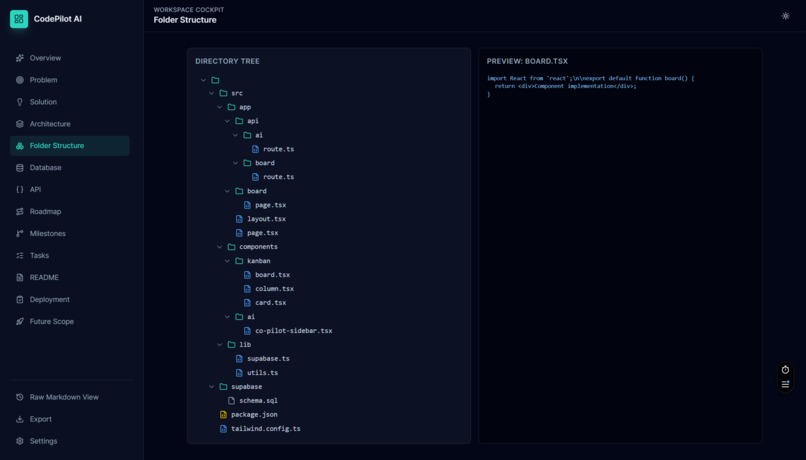
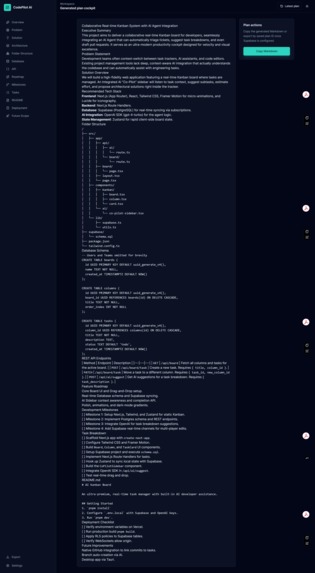
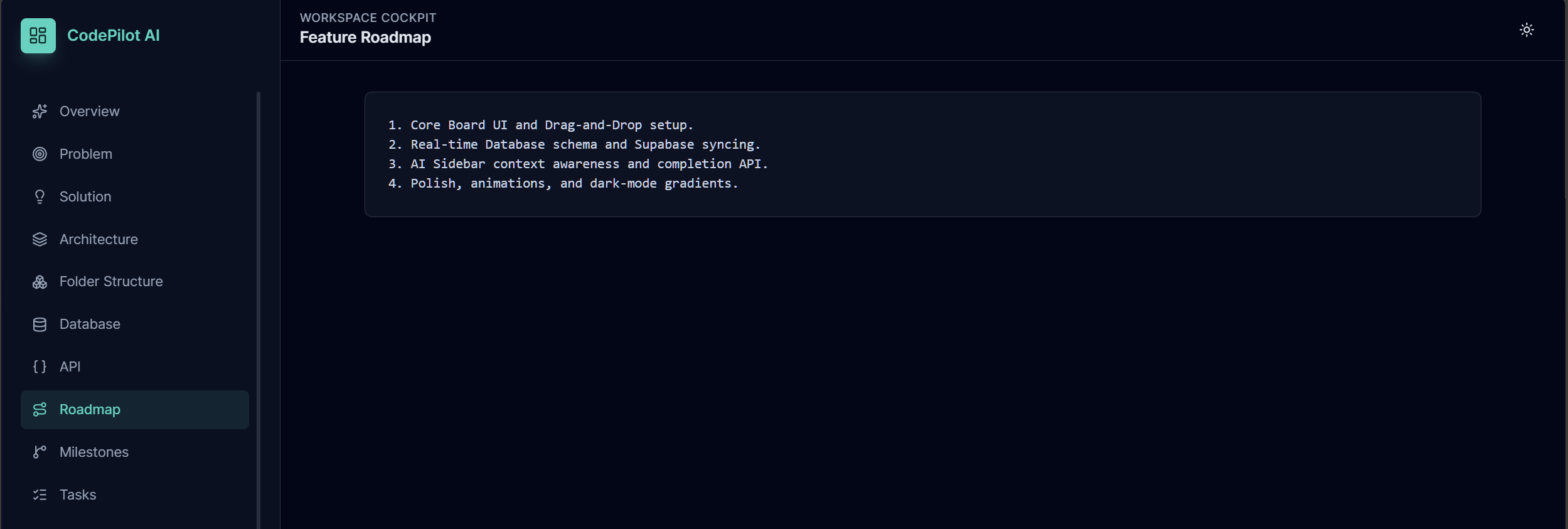
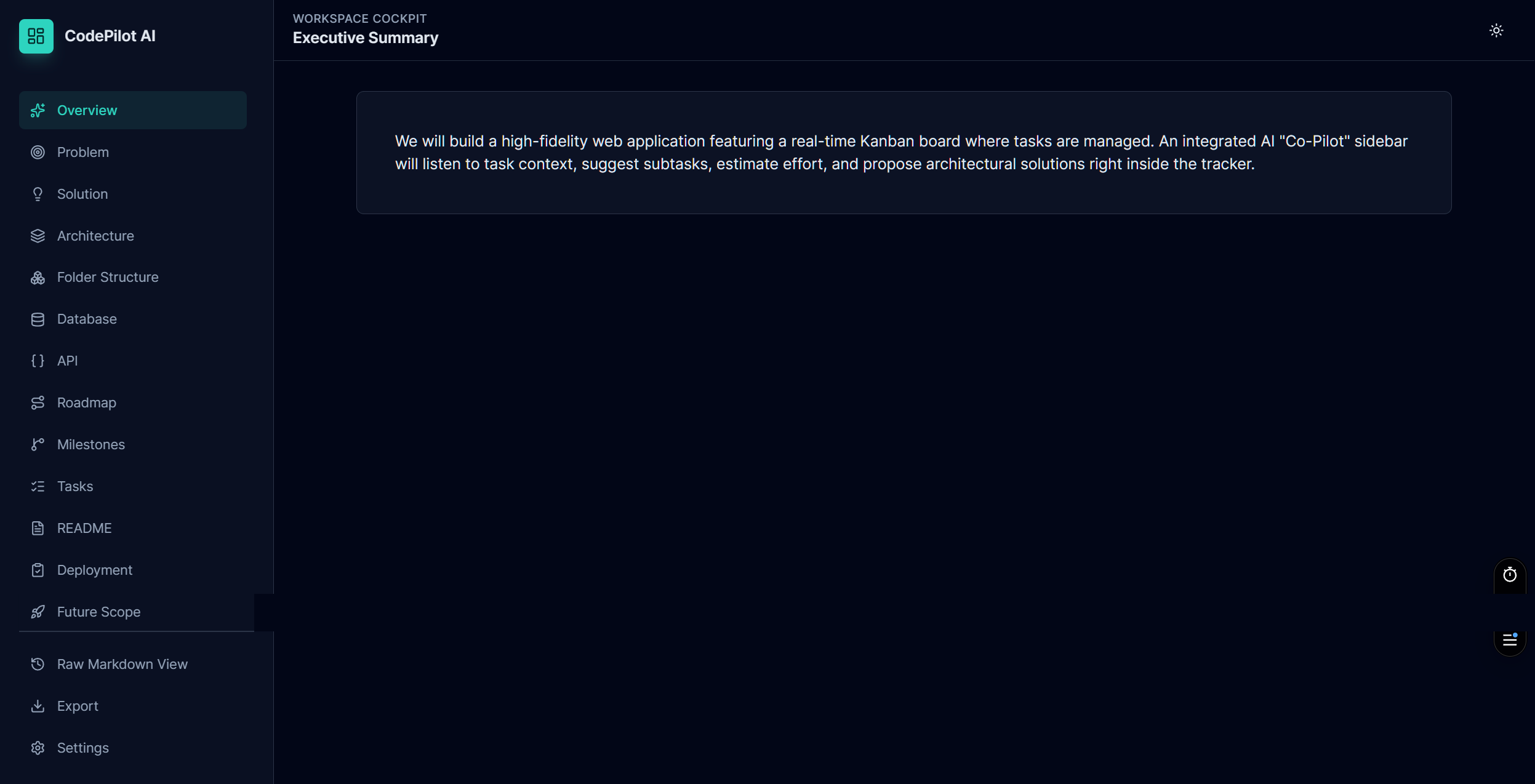
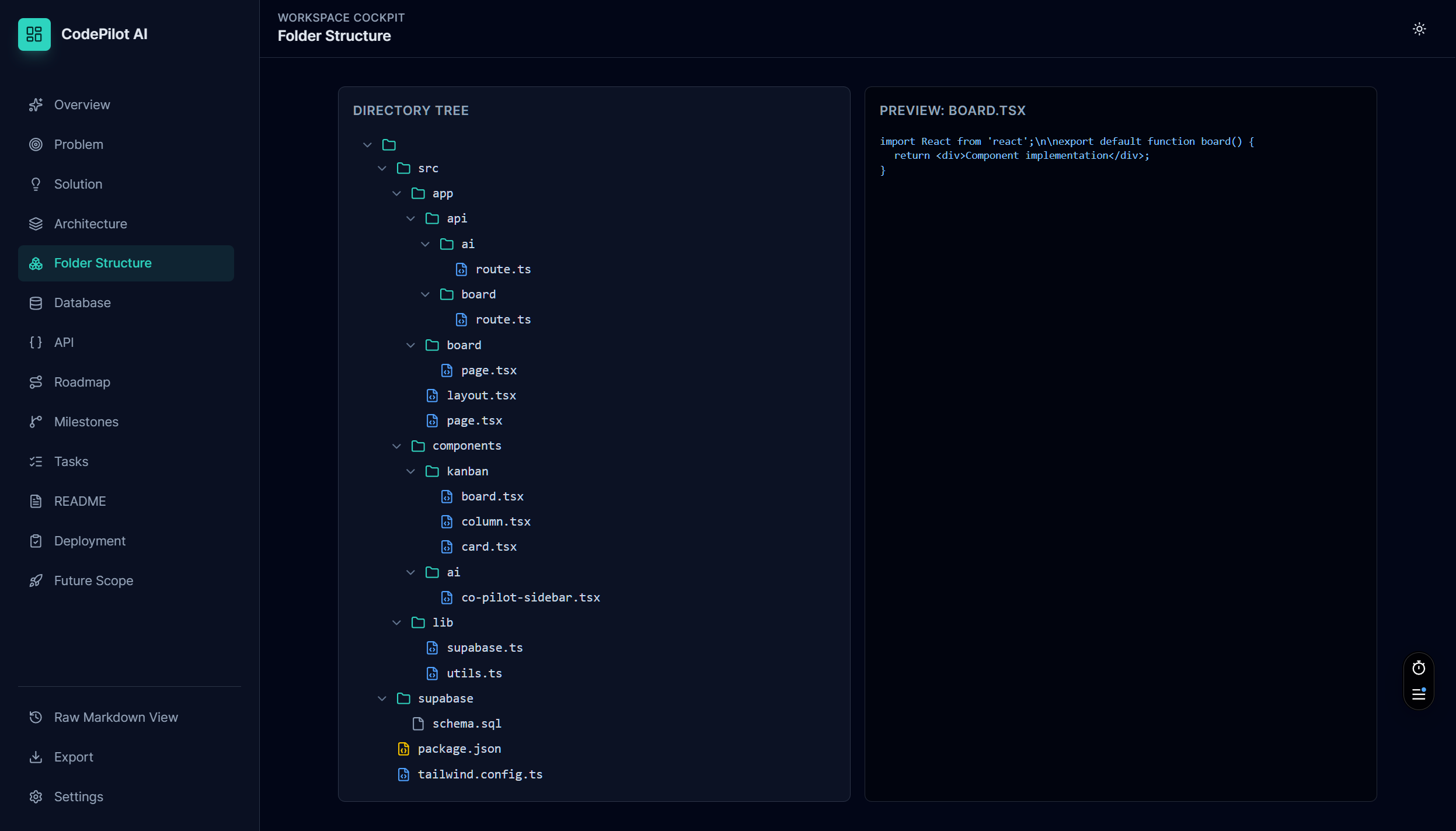
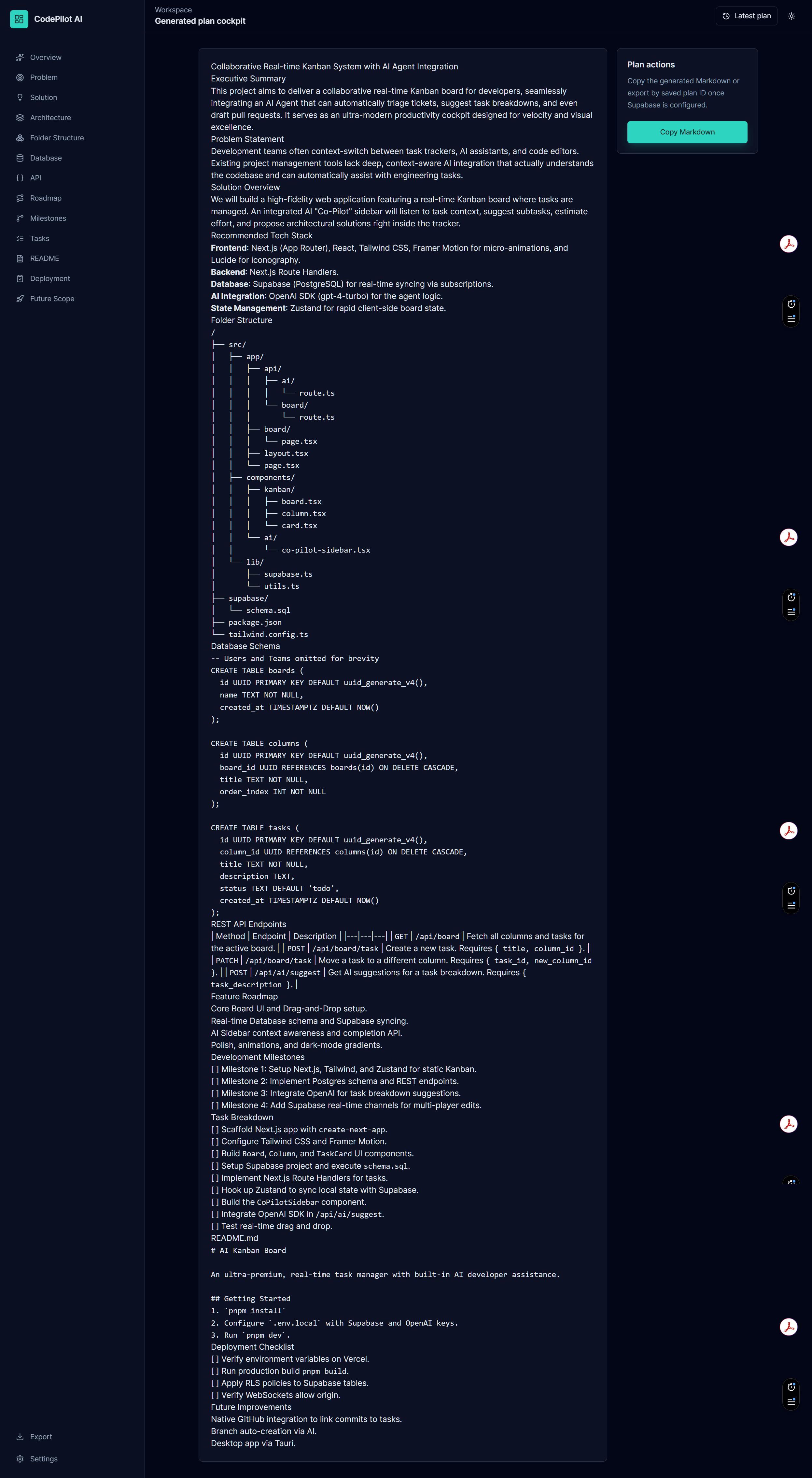
When a user inputs their idea, our Next.js Route Handlers communicate with OpenAI to generate a highly structured JSON response. This output is then piped directly into our custom UI components: an interactive Kanban board, a file/folder architecture tree, an API playground, and a Database Schema viewer.
Challenges we ran into Building a deterministic UI on top of non-deterministic LLMs is incredibly challenging:
- Hallucinations in Complex JSON:** Generating a massive, multi-faceted engineering plan in a single prompt often resulted in malformed JSON. We solved this by strictly enforcing schemas via the OpenAI Responses API and Zod validation, ensuring our UI components never broke.
- Contextual Consistency:** We had to ensure that the generated API endpoints perfectly matched the generated database schemas. By fine-tuning our prompts and leveraging GPT-5.6's superior context window, we maintained strict logical consistency across all architectural layers.
- Interactive UI State:** Streaming large amounts of AI-generated Markdown and structured data into interactive React components (like the Kanban board and File Tree) required complex state management and React Suspense boundaries to ensure a smooth user experience.
🏆 Accomplishments that we're proud of We are incredibly proud of moving beyond the standard "chatbot" interface. By transforming the AI's output into an interactive workspace, we made the data instantly actionable. Seeing a raw idea turn into a functional Kanban board and a visual folder tree in a matter of seconds feels like magic. We are also proud of implementing a seamless Markdown export feature, allowing developers to immediately drop the blueprint into their own repositories.
📚 What we learned
- Advanced Prompt Engineering:** We mastered how to extract deeply structured, multi-domain data (schemas, folder trees, tasks) in a single API call without losing logical coherence.
- The Paradigm Shift of Structured Outputs:** The OpenAI Responses API completely changed the paradigm of building AI user interfaces for us. Guaranteed structured outputs are the key to building reliable AI apps.
- Next.js & Supabase Mastery:** We significantly deepened our understanding of React Server Components, Route Handlers, and integrating them with Supabase SSR for persistent storage.
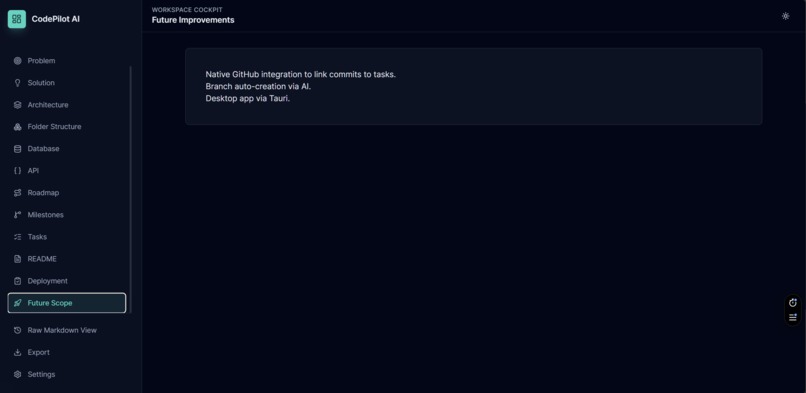
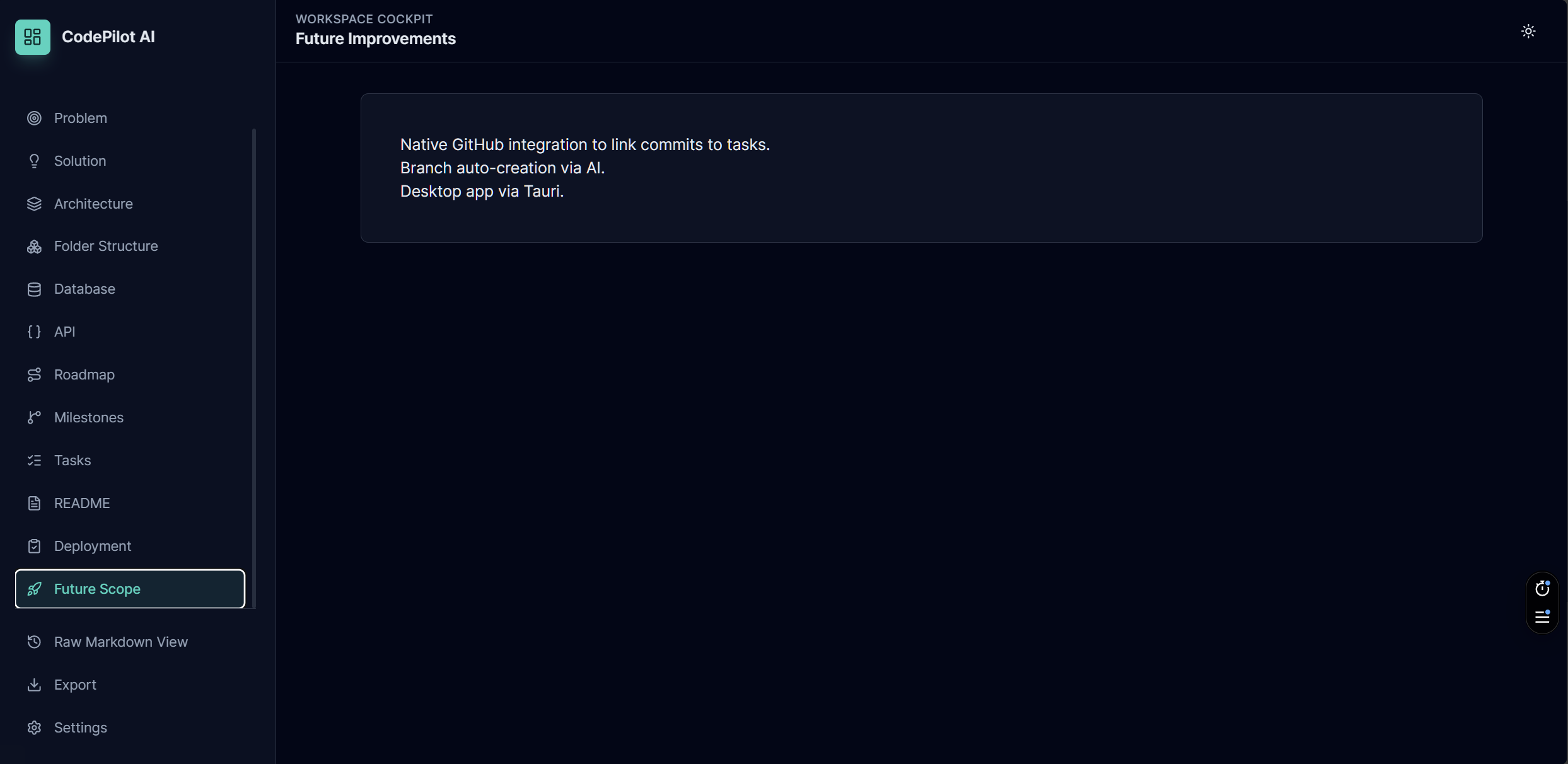
🚀 What's next for CodePilot AI This is just the beginning! We have an ambitious roadmap ahead:
- Direct GitHub Integration:** Automatically provision a GitHub repository, push the generated folder structure, and turn the Kanban board into GitHub Issues.
- Figma Import:** Allow users to paste a Figma design link so the AI can automatically deduce UI components and data models.
- Multi-Agent Planning:** Deploy specialized AI agents (Frontend Agent, Backend Agent, DevOps Agent) to collaboratively debate and refine the plan before it is presented to the user.
- CI/CD Generation:** Automatically generate GitHub Actions workflows based on the chosen tech stack.
Built With
- framer-motion
- next.js
- openai
- postgresql
- react
- supabase
- tailwindcss
- typescript
- vercel
- zod


Log in or sign up for Devpost to join the conversation.