-
-
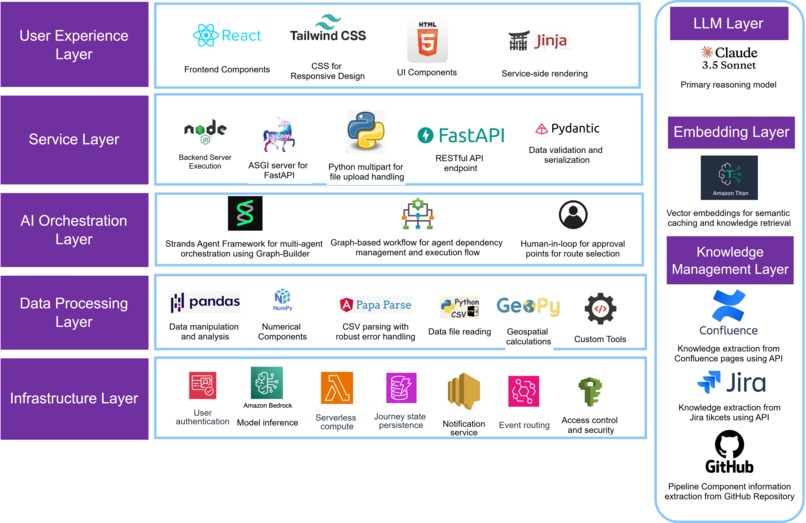
Tech Stack
-
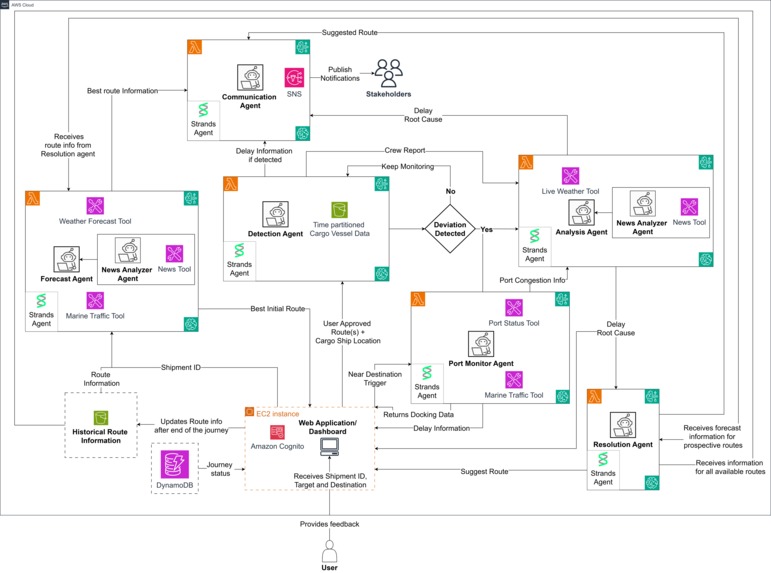
Architecture Diagram
It started with a conversation with my cousin who works in logistics. She told me about a shipment of medical supplies that sat in port congestion for 8 days—equipment desperately needed by hospitals. "We saw the delay coming," she said, "but by the time we reacted, it was too late." That stuck with me. 15% of shipments delayed. 80% of shippers blind to exceptions. Reactive decisions costing $800+ per incident. I realized this wasn't just a logistics problem—it was a prediction and orchestration challenge perfect for multi-agent AI.
What I Learned Building this solution taught me that AI agents aren't just tools—they're collaborators.
Each agent needed its own "personality": The Forecast Agent is the cautious analyst, weighing weather models and traffic patterns The Detection Agent is the vigilant sentinel, never blinking at vessel positions The Analysis Agent is the detective, piecing together root causes from scattered evidence
I learned that autonomous doesn't mean uncontrolled. The most critical lesson? Human judgment at decision points isn't a limitation—it's a feature. When our Analysis Agent determined the vessel deviation was justified weather avoidance, having a human confirm "yes, continue" built trust in the system.
Built With
- and-external-apis-for-weather
- aws-lambda
- bedrock
- bedrock-(claude-3.5-sonnet)
- dynamodb
- fastapi
- html5
- leaflet.js
- marine-traffic
- news
- node.js
- nova
- python
- react
- sns
- strands-agent-framework
- tailwind-css

Log in or sign up for Devpost to join the conversation.