-
-
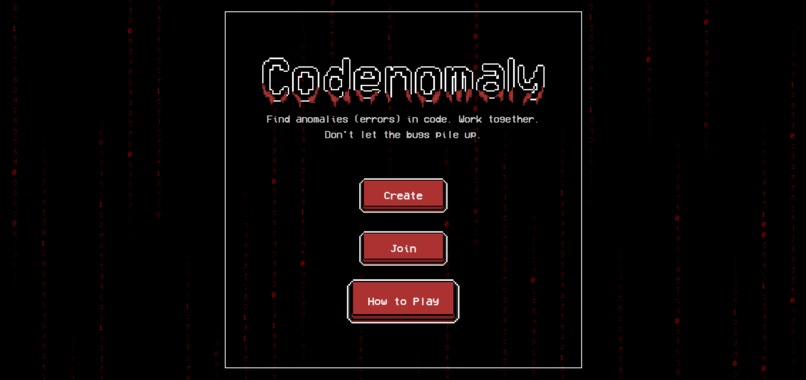
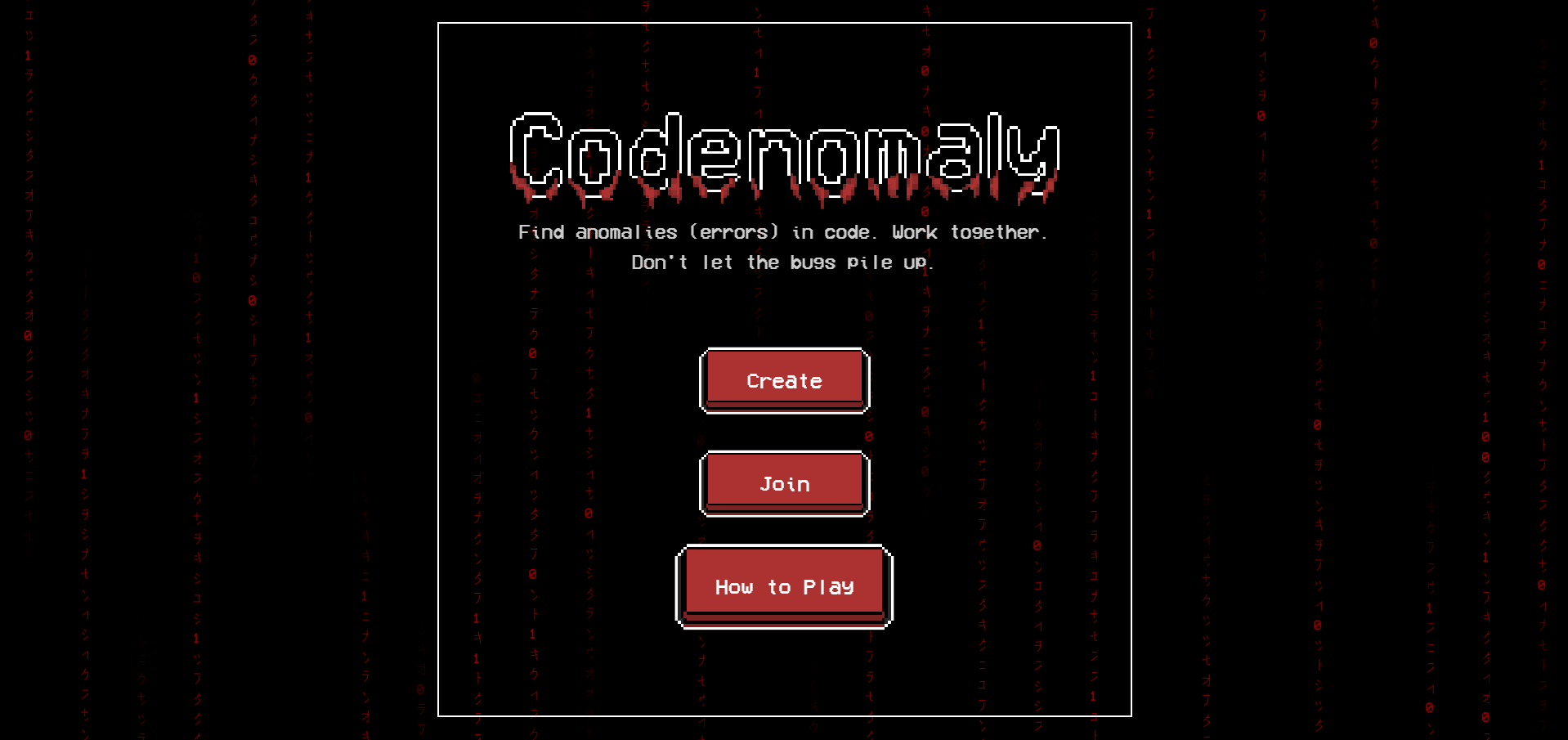
Codenomaly home screen
-
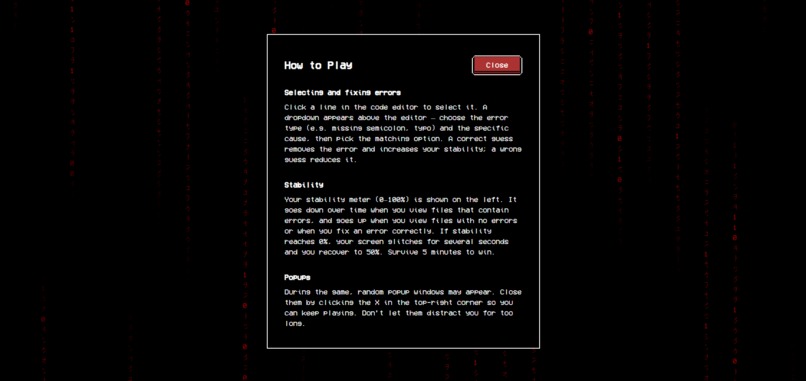
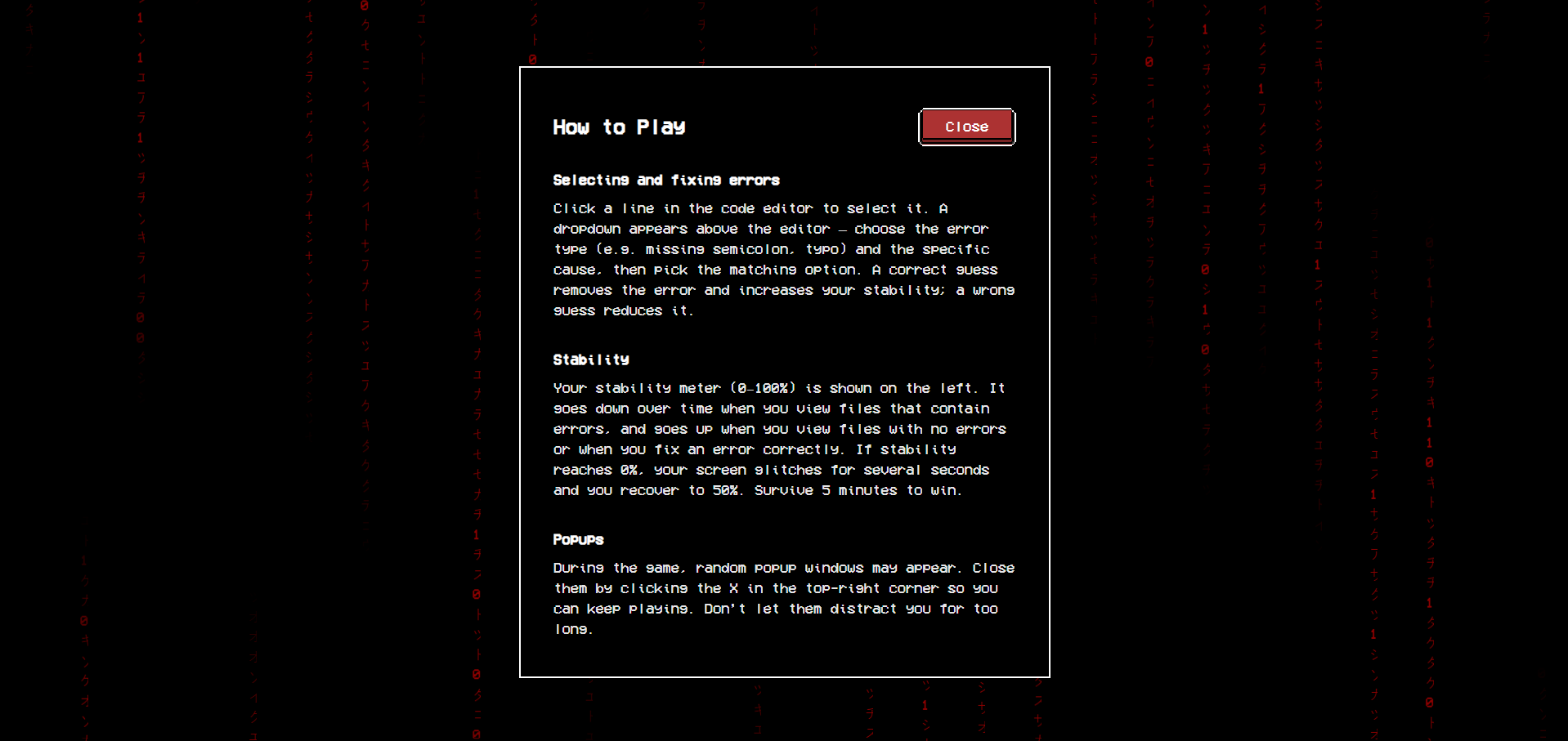
How to Play Screen
-
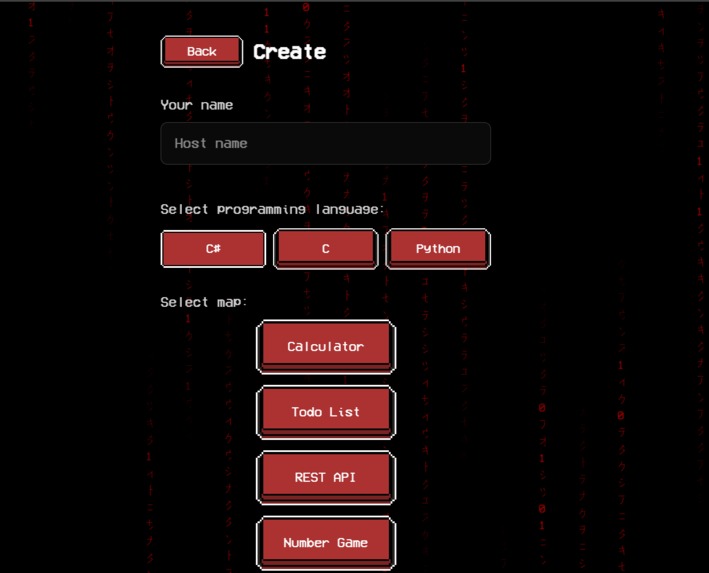
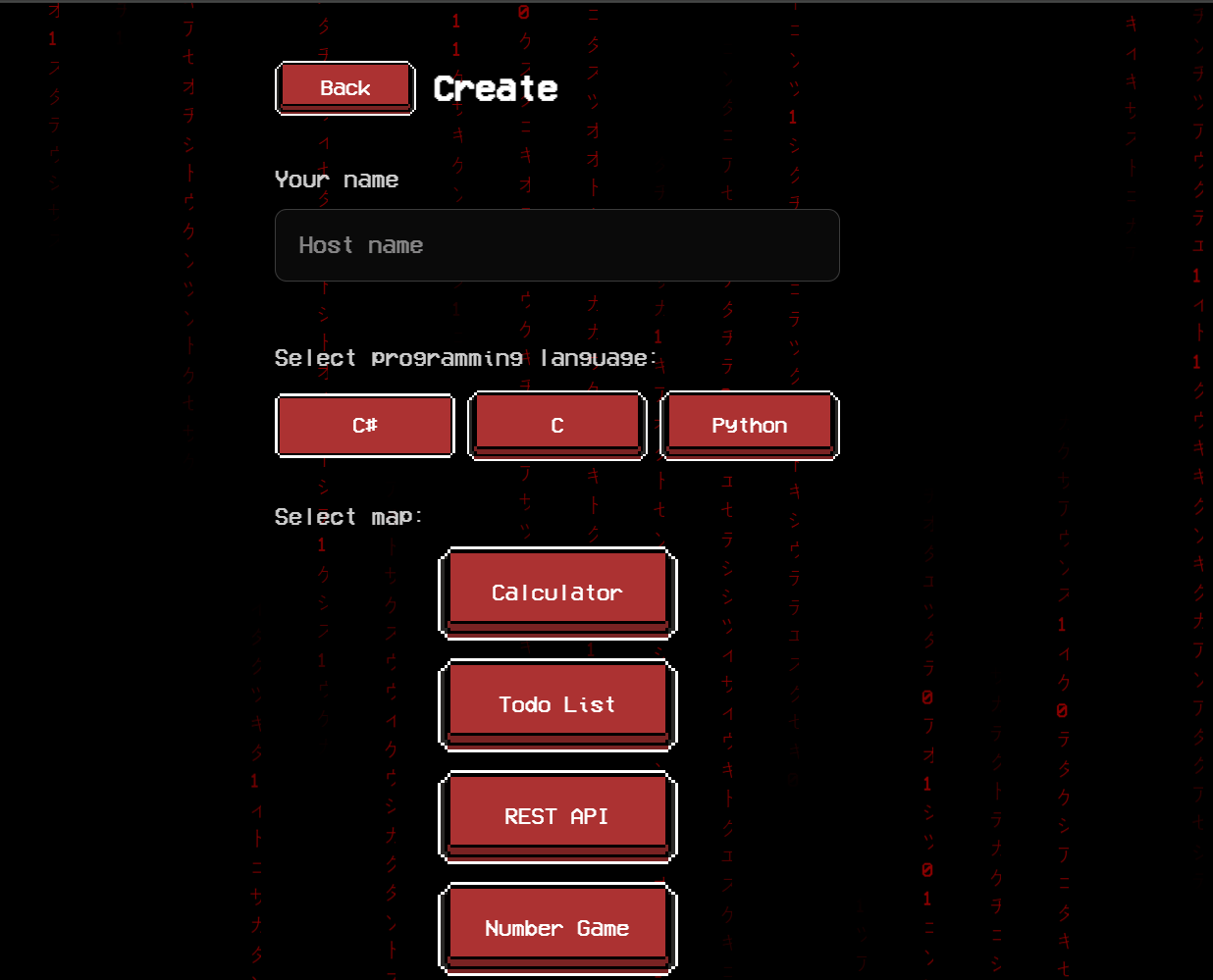
Create game screen. Select a language & a map
-
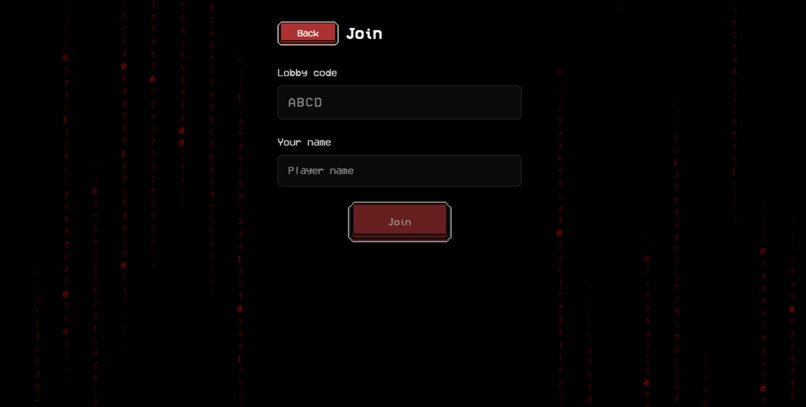
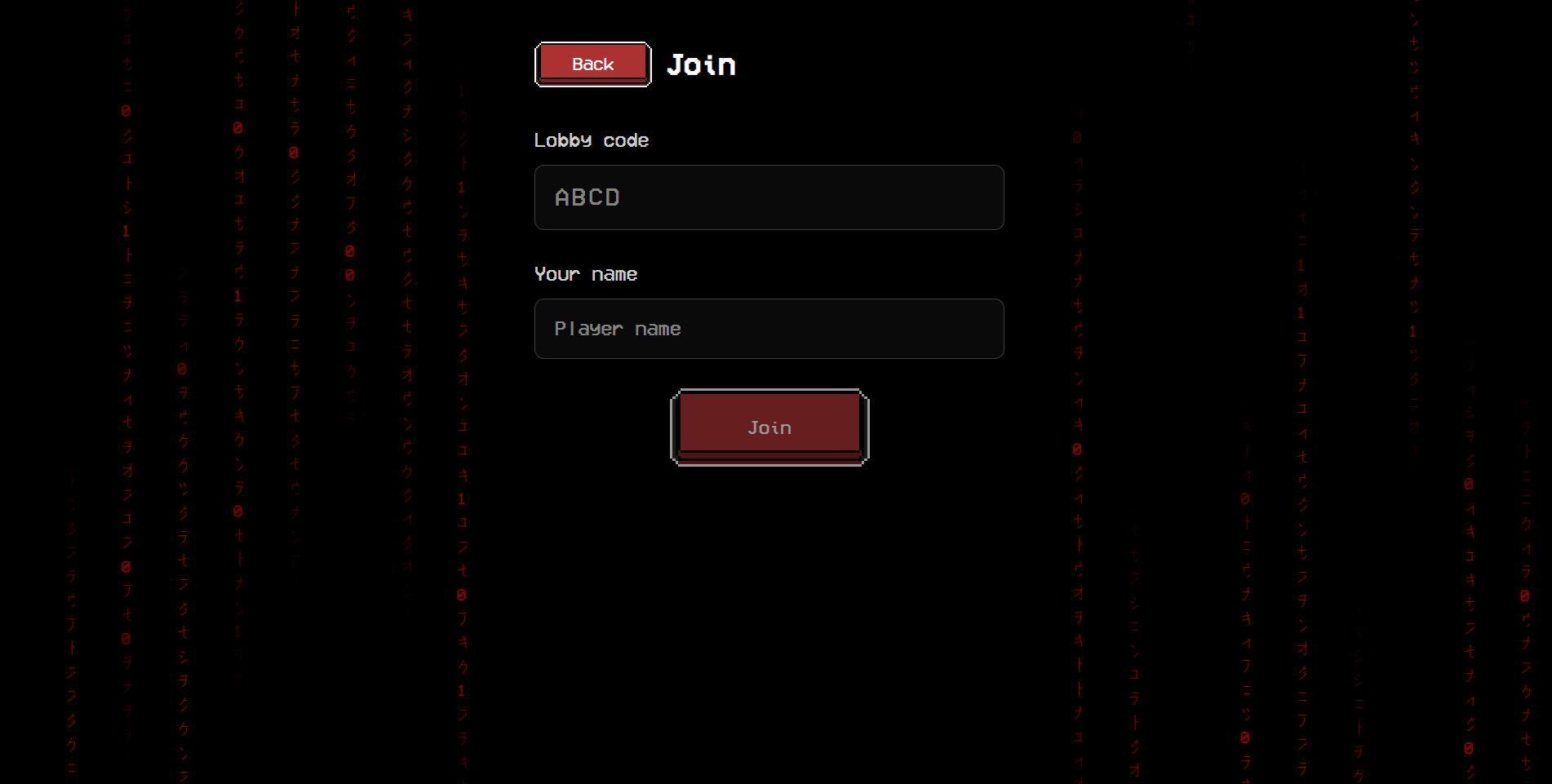
Join Lobby
-
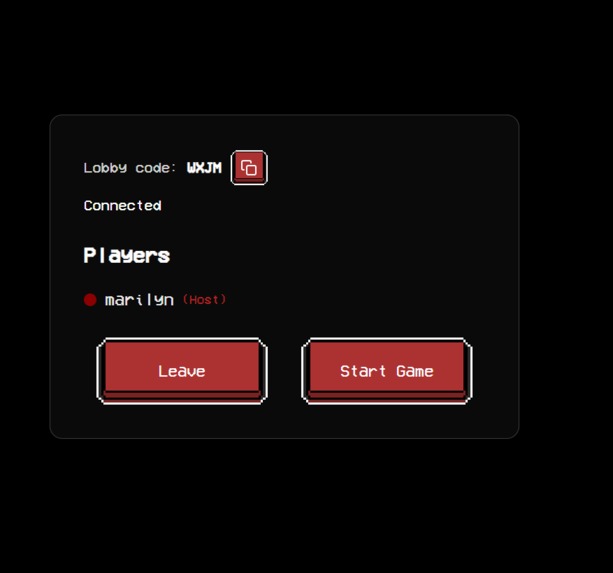
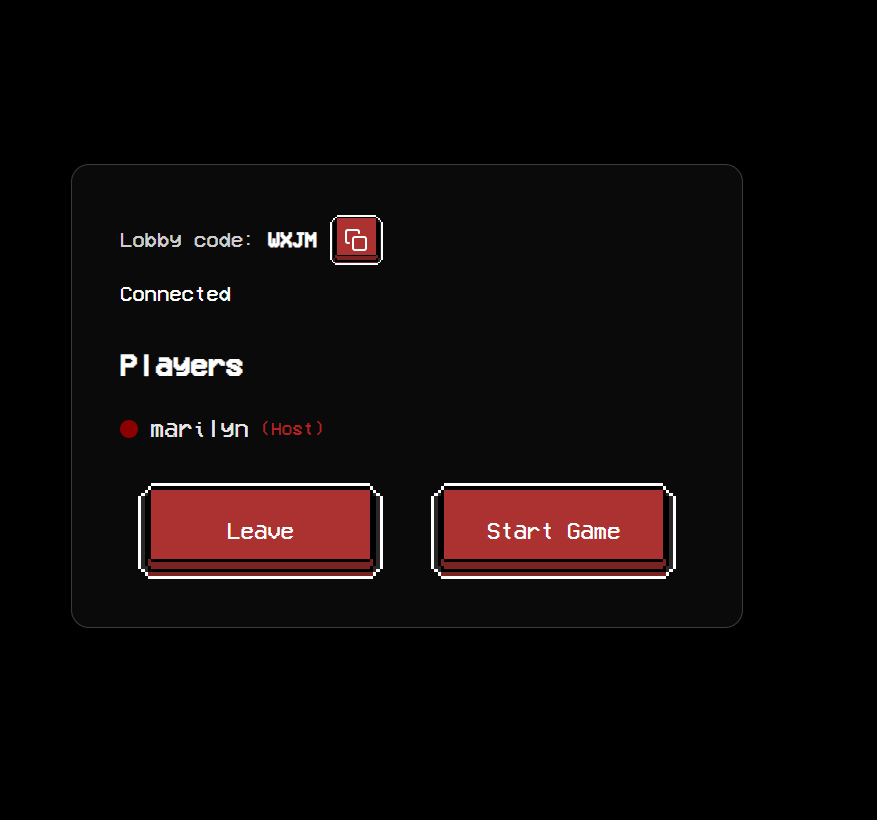
Lobby / Waiting area for multiplayer games
-
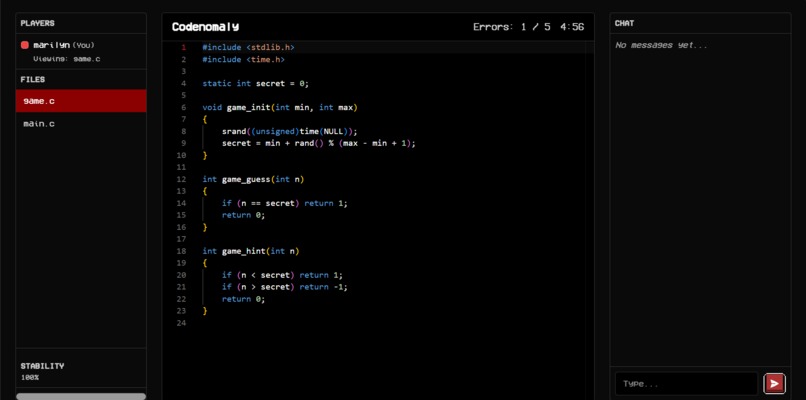
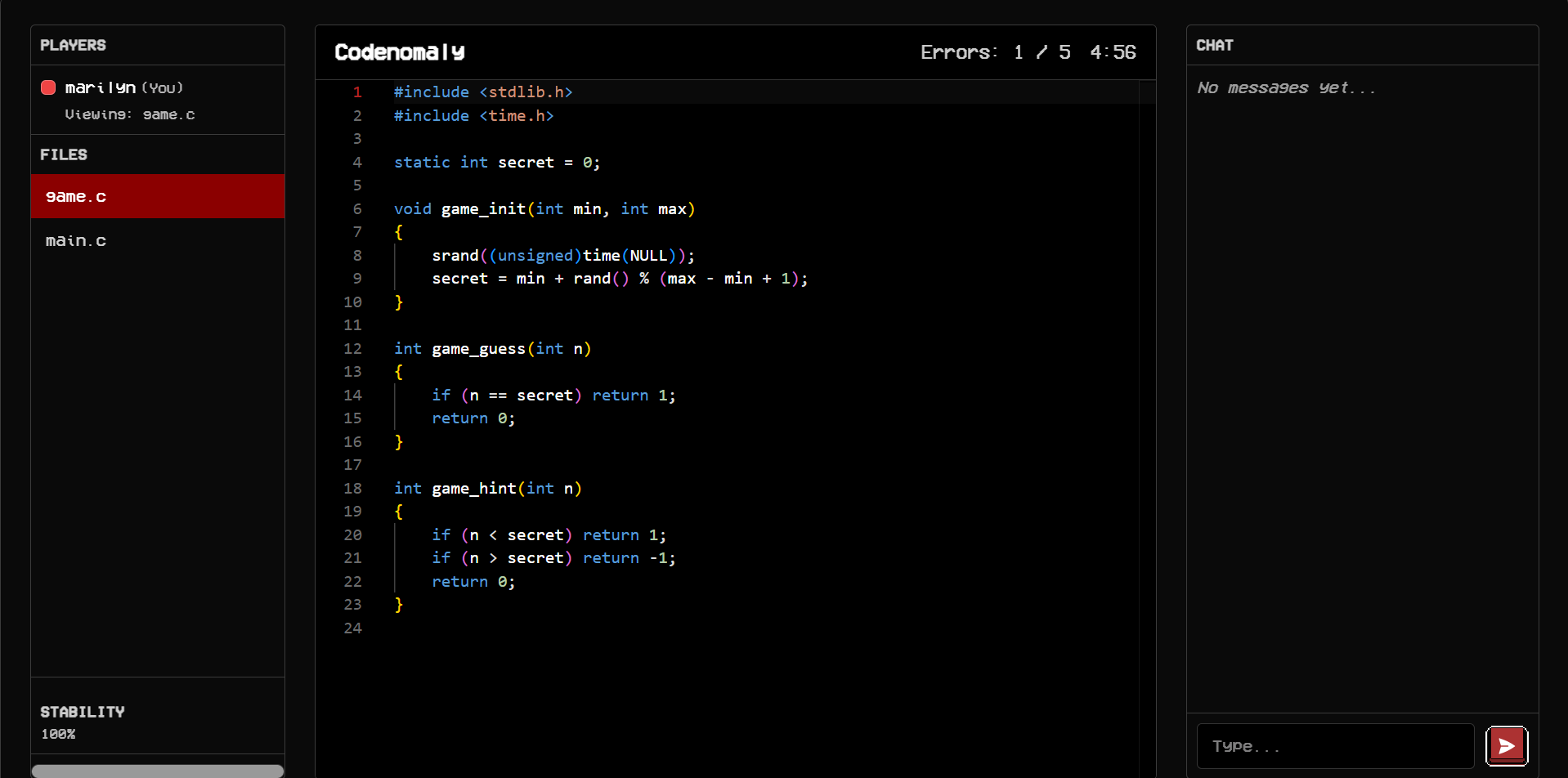
Gameplay screen | Players & files on the left | Chat on the right
-
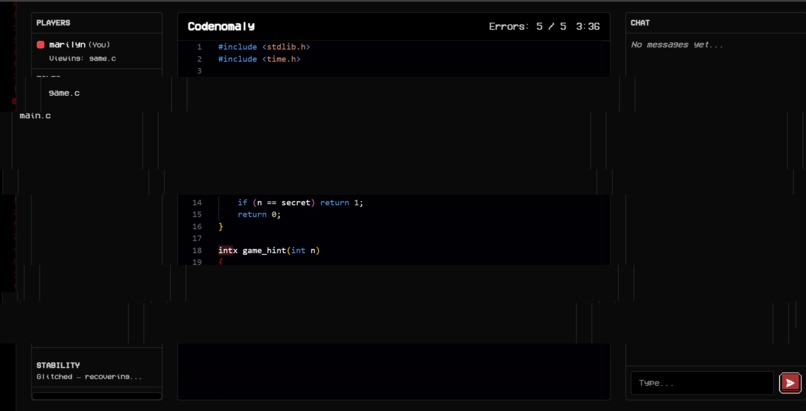
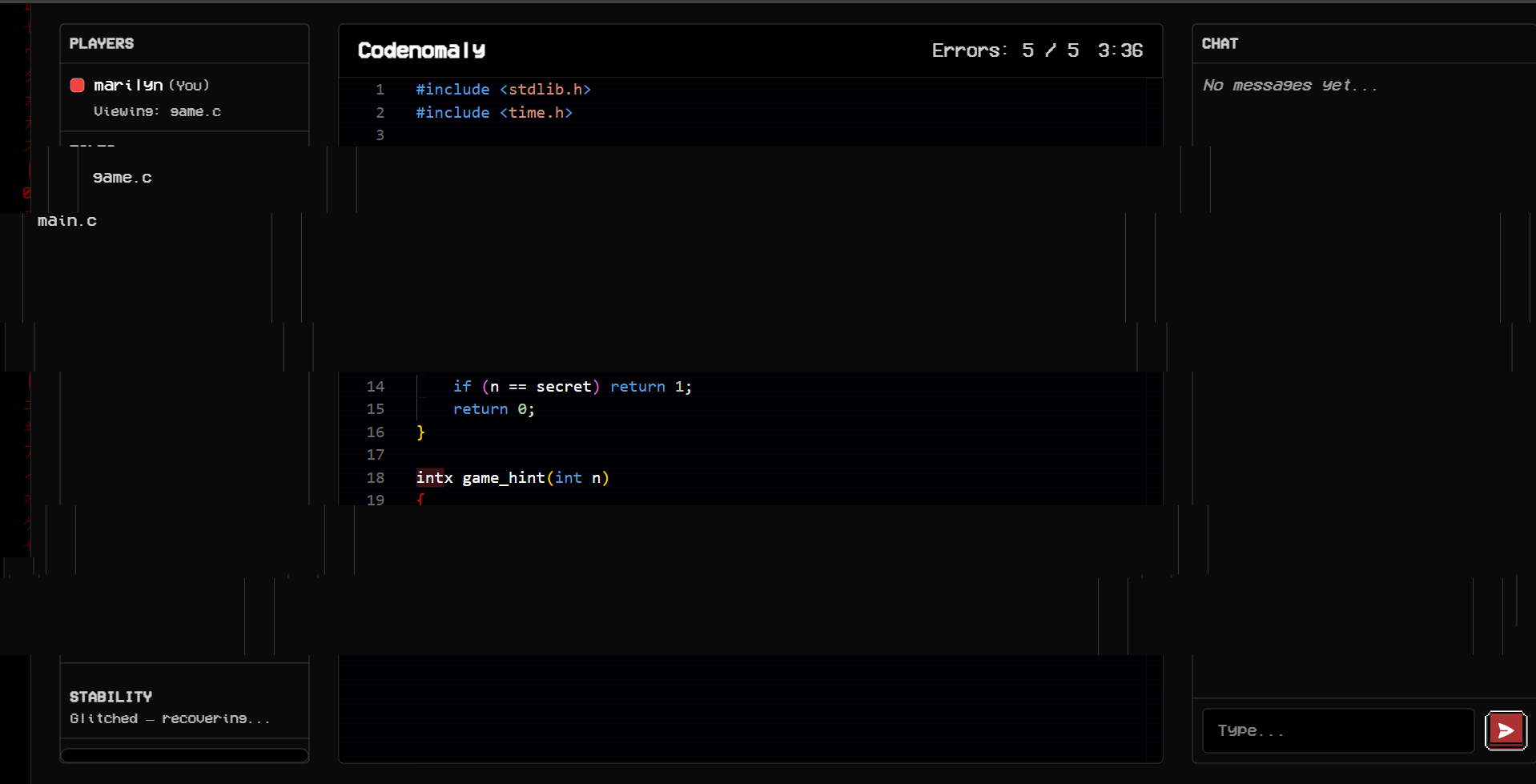
Glitch indicates closeness to failure
-
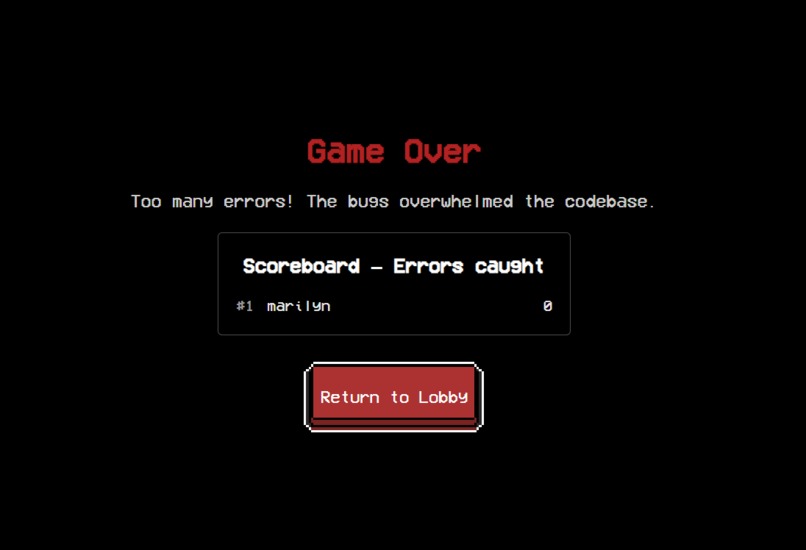
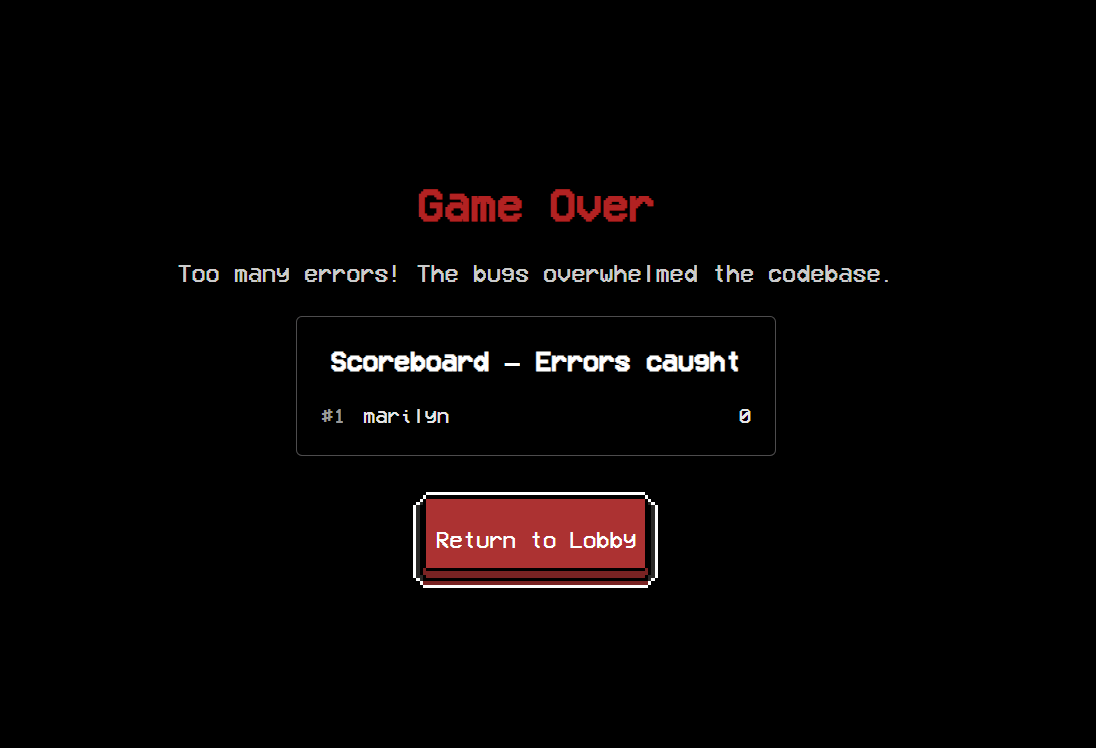
Game over when the bugs are not all found on time
-
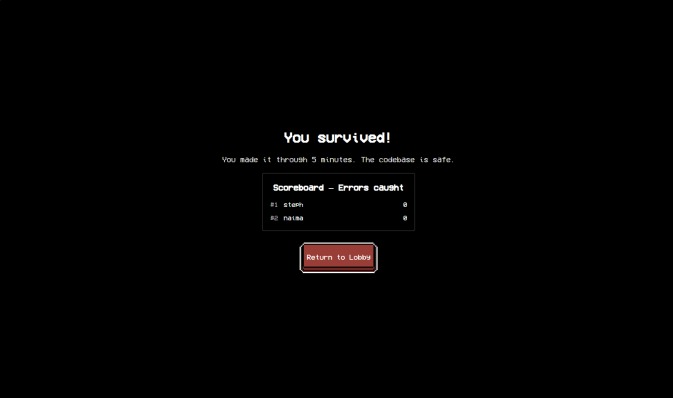
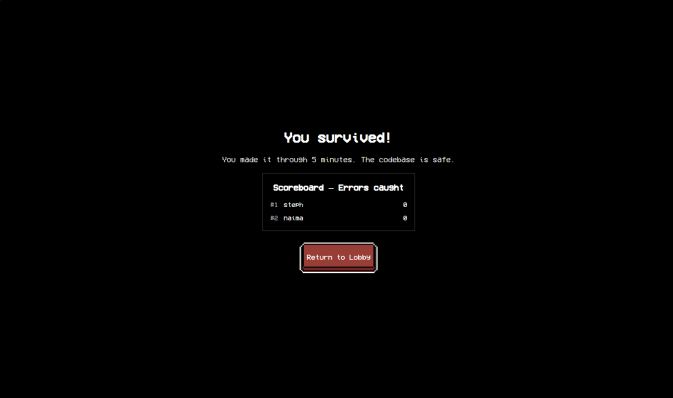
Survived
Team Name: Codenomaly
Members: Stephen Mertyl, Kira Archer, Marilyn Anderson, Naima Sana
Inspiration
During this semester, the team constantly found ourselves debugging projects for class. As Computer Science students, we're always surrounded by code, and sometimes, it feels like the bugs are hunting us. That was when, during this hackathon, we decided to devise a both fun and innovative solution to practicing debugging.
We created Codenomaly, a horror-themed survival game inspired by "I'm On Observation Duty", where players must work together to debug constantly propagating errors before they are overwhelmed.
What It Does
Codenomaly is a browser-based multiplayer game where players must survive 5 minutes inside a shared coding project.
Players:
- Join a lobby using a 4-letter code
- Choose a programming language (C#, C, Python)
- Load into a VSCode-style environment
- Search for errors that spawn over time
- Select a line and classify the error type
- Manage their Stability meter
Errors accumulate dynamically. If too many exist at once, the game ends in a loss.
If a player’s stability drops to 0%: $$ \text{Stability}_{new} = 50\% $$ Their screen glitches temporarily and they cannot interact, but they rejoin the game shortly after.
The goal is simple:
Survive until the 5-minute timer ends.
How We Built It
Backend
We built the real-time multiplayer server using PartyKit, a WebSocket-based room server.
The server:
- Maintains authoritative game state
- Spawns errors over time
- Tracks player stability
- Broadcasts synchronized updates
Key logic includes:
- Dynamic error spawning
- Stability decay when viewing corrupted files
- Global error counter monitoring
- Win/loss evaluation
We made the server authoritative to prevent desynchronization issues between clients.
Frontend
Our frontend stack includes:
- React 18
- Vite
- Tailwind CSS
- Monaco Editor
- Zustand
We used Monaco Editor to replicate a real IDE experience. Players click lines, select error types from a dropdown, and submit fixes.
We separated:
- Client-local UI state (Zustand)
- Server-synced game state (PartyKit broadcasts)
One key architectural decision was isolating latency-heavy processes from the main UI thread. Stability effects, popups, and glitch overlays are managed separately so the editor never freezes.
Challenges We Ran Into
Learning Real-Time Systems
Keeping:
- Error counts
- Player cursors
- Stability meters
- Timers
perfectly synchronized across browsers was much harder than expected.
Early builds suffered from:
- Ghost errors
- Lobby & multiplayer syncing
- UI alignment issues
We solved this by:
- Making the server authoritative
- Broadcasting full room snapshots
- Preventing clients from making assumptions
Monaco Editor Complexity
Monaco is powerful, but integrating it into a game environment was tricky.
We had to:
- Track line indices precisely
- Overlay UI elements dynamically
- Disable interactions during glitch states
- Prevent race conditions during state updates
Balancing Difficulty
If errors spawned too fast, the game felt impossible.
If too slow, it felt boring.
We experimented with scaling spawn rate: $$ \text{SpawnRate} \propto 1 + 0.3 \times \text{Players} $$
Balancing tension without frustration became one of the most interesting design challenges.
Accomplishments We’re Proud Of
We are incredibly proud that we:
- Built a fully synchronized multiplayer game
- Designed a scalable error system
- Turned debugging into a survival mechanic
- Successfully integrated real-time WebSockets
- Balanced UI performance with game logic
What We Learned
We learned:
- Real-time architecture design
- Multiplayer state management
- Server-authoritative systems
- Deployment configuration
- Game balancing psychology
Most importantly, we learned that complex systems only work when responsibilities are clearly separated.
What’s Next for Codenomaly
Codenomaly will continue evolving.
Planned improvements include:
- Campaign progression system
- Unlockable “boss repositories” (multi-file mega projects)
- Currency-based powerups
- Persistent player profiles
- Expanded language support
- Ranked mode
We also plan to deploy permanently and refine performance optimizations.
Built With
- React
- Vite
- Tailwind CSS
- Monaco Editor
- Zustand
- PartyKit
- TypeScript
Built With
- monaco-editor
- partykit
- react-18
- tailwind-css
- vite
- zustand


Log in or sign up for Devpost to join the conversation.