Inspiration
As student developer diving into group projects, we always hit the same wall: the administrative friction of agile management. Project managers spend hours manually breaking down vague requirements, team members accidentally work on overlapping components, and blind bottlenecks sneak up on us right before git push deadlines. We wanted to build an "AI Project Manager" that sits in the middle of a workspace to automate the busywork, but with a critical enterprise twist: Multi-Tenancy. In the real software world, apps don't just serve one group; they must cleanly segregate data between completely different client organizations (Tenants) keeping information strict, isolated, and private. That intersection of AI orchestration and structural multi-tenancy inspired us to create CodeNConnect Smart Workspace.
What it does
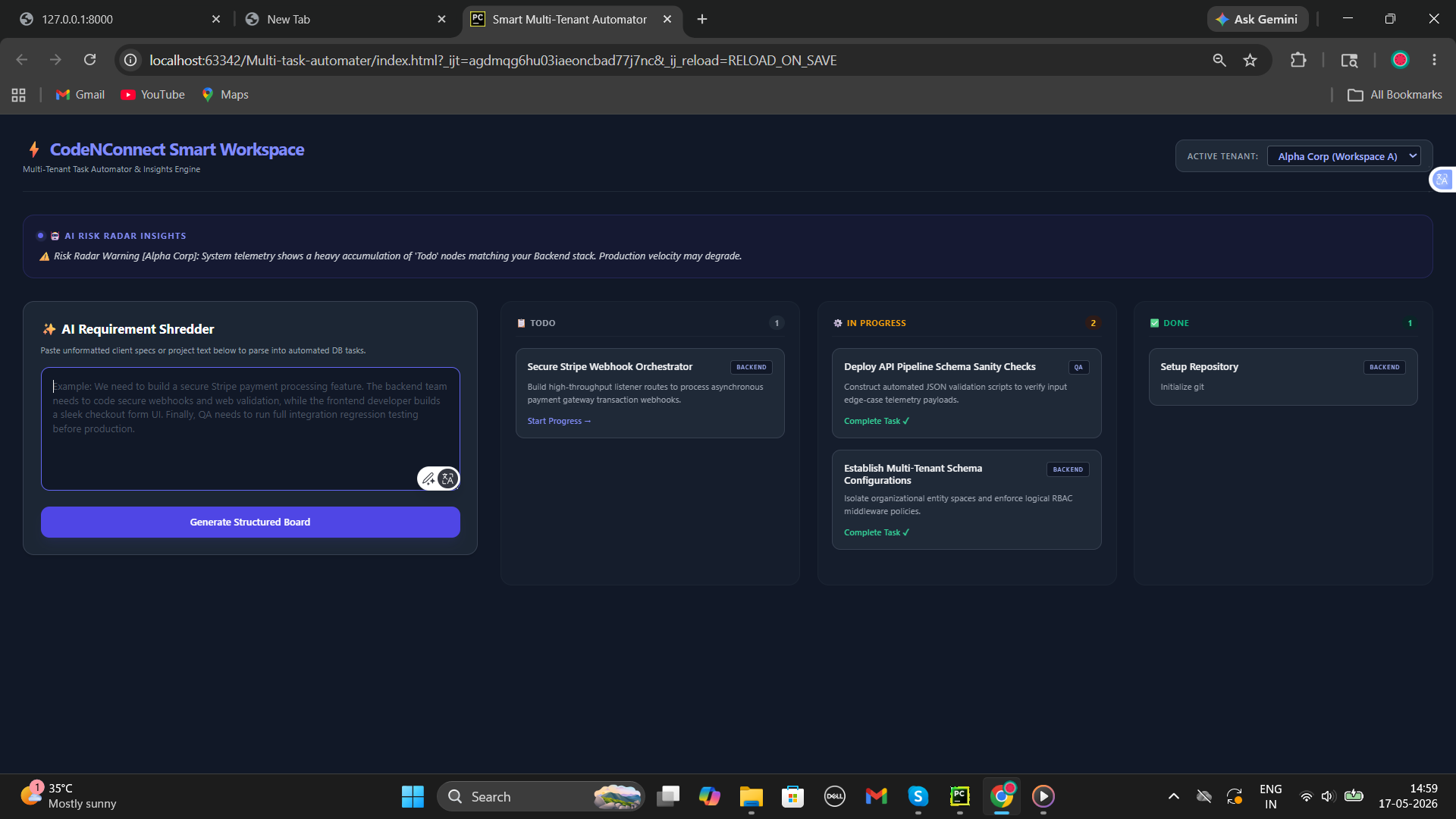
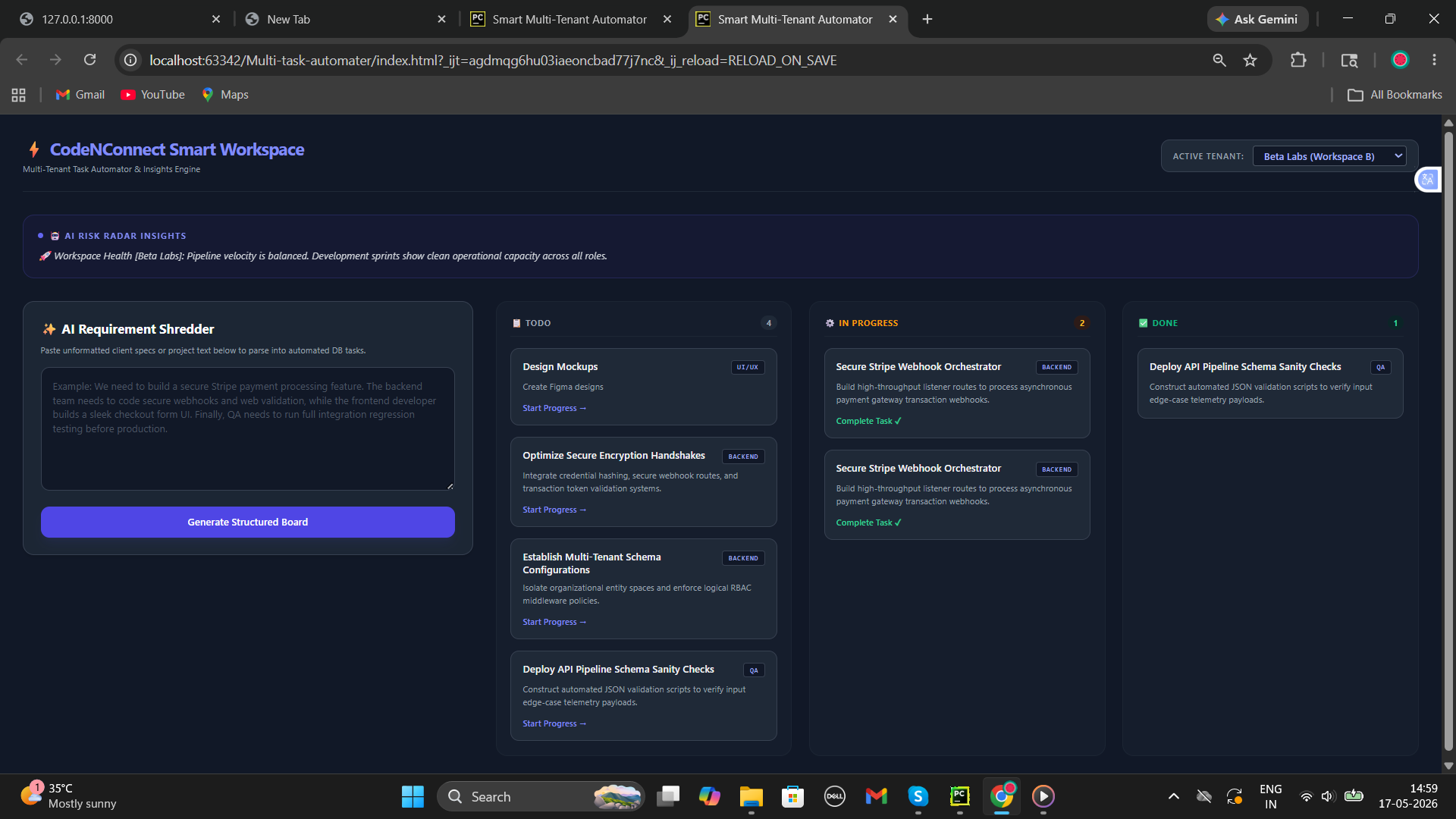
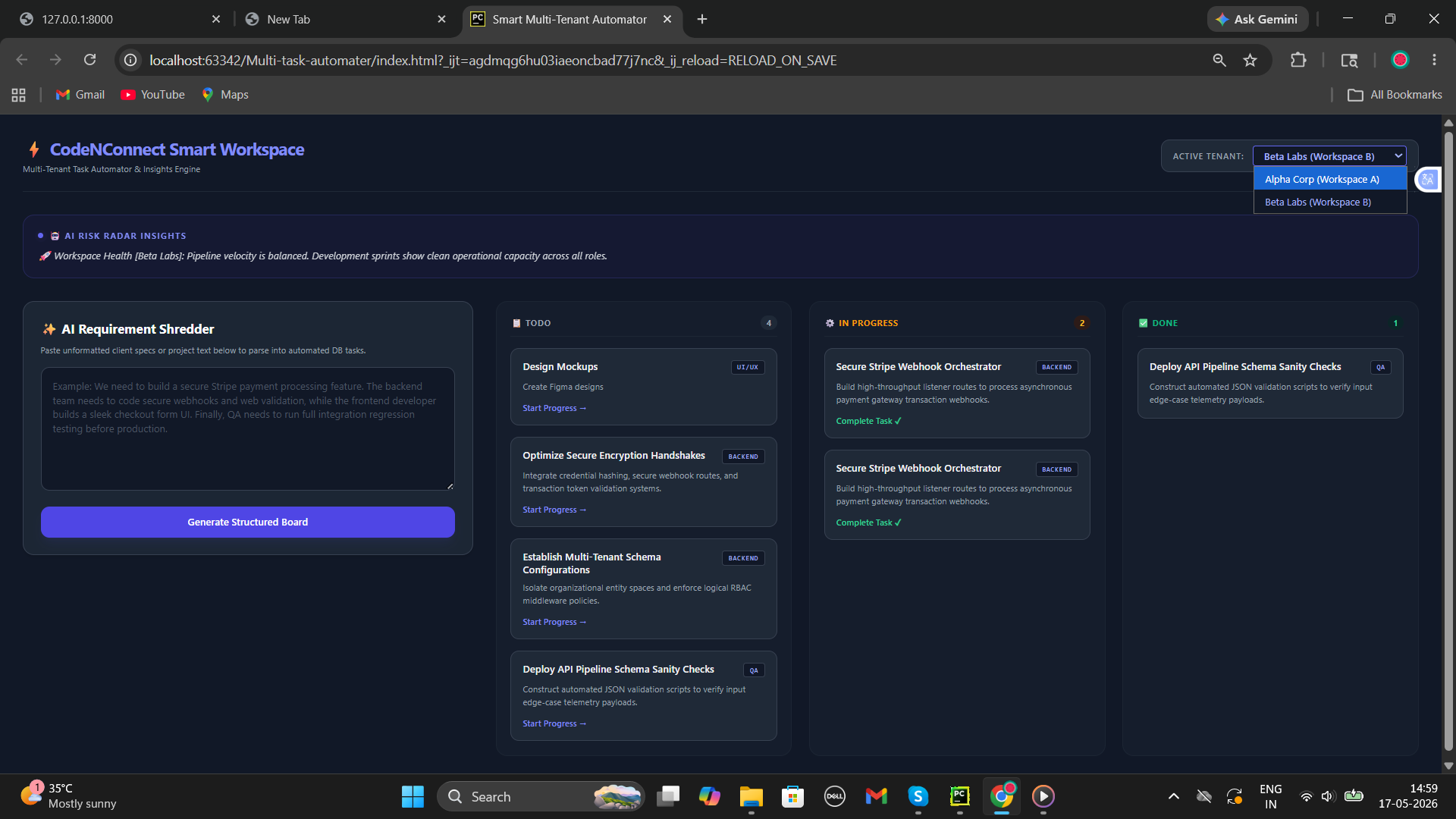
*The AI Requirement Shredder: Users can drop unformatted, chaotic project requirements or client email specs into the input panel. CodeNConnect reads the text, identifies dependencies, and instantly fractures it into modular technical tasks populated with designated team roles (Frontend, Backend, UI/UX, QA). *Multi-Tenant Isolation: Using a global workspace switcher, users can jump seamlessly between completely different corporate entities (e.g., Alpha Corp vs. Beta Labs). The dashboard dynamically updates its entire data grid and state configurations, ensuring zero cross-tenant data leaks. *AI Risk Radar: An active monitoring widget that reads the structural footprint of the current tenant's kanban board. It analyzes operational velocity in real-time, displaying punchy, short engineering warnings alerting managers to overloaded team roles or pipeline blockages.
How we built it
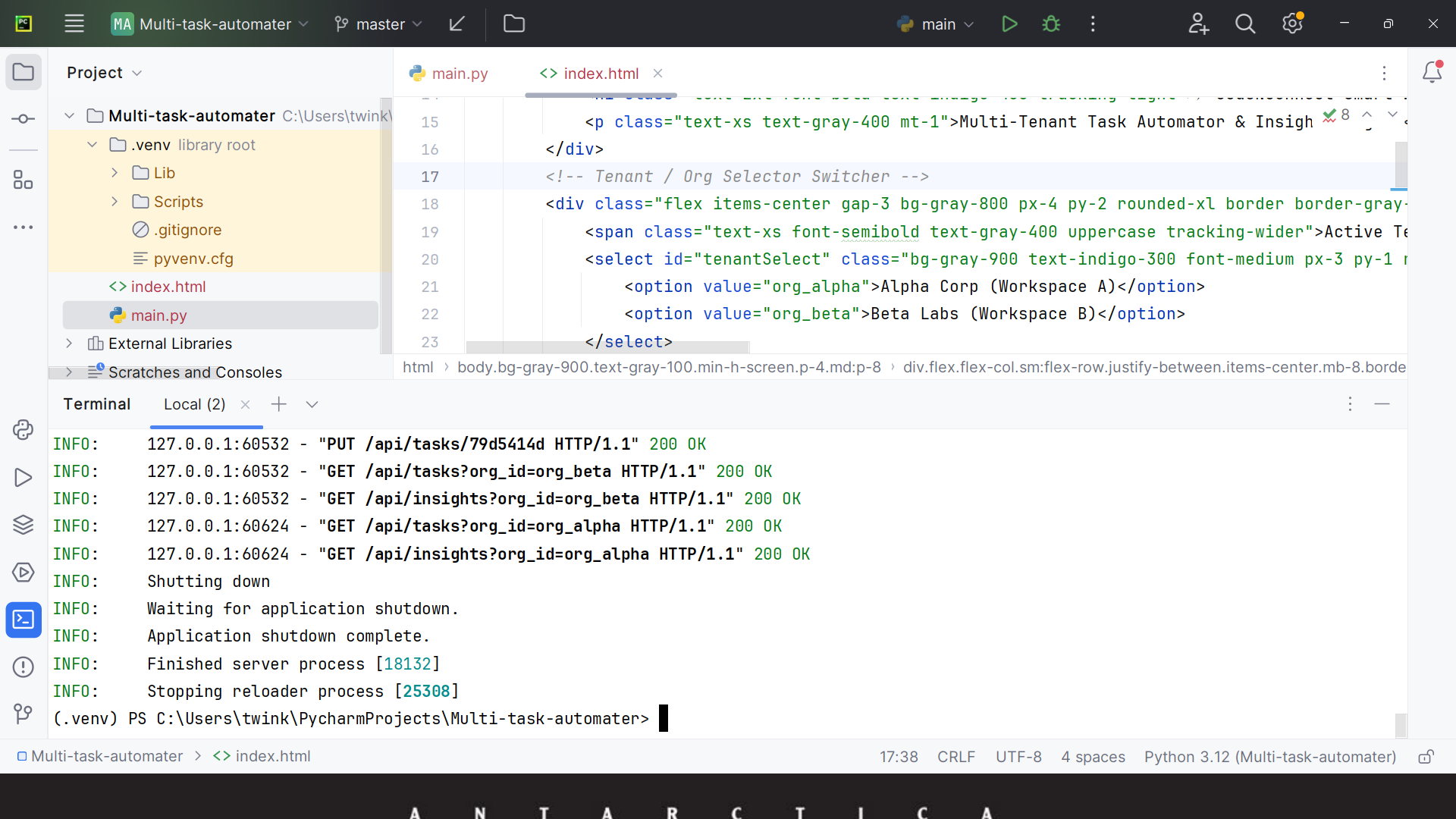
*The Frontend: A sleek, dark-themed responsive single-page viewport styled with utility-first Tailwind CSS. We deliberately chose vanilla JavaScript fetch() async loops to handle our state synchronization natively, bypassing heavy configuration framework build steps to hit our deadline. *The Backend: Built with Python FastAPI, chosen for its blazing fast routing speeds and out-of-the-box support for asynchronous request handling. *The Data Store: Given the strict hackathon time crunch, installing, configuring, and migrating a heavy SQL daemon would have cost us hours of presentation prep. Instead, we implemented a low-latency In-Memory Data Architecture utilizing isolated global dictionary mappings. *The AI Integration: Powered by the brand new Gemini 2.0 Flash API. We structured our API prompts utilizing response_mime_type="application/json" boundaries, forcing the engine to directly yield safe, structured data arrays that neatly map to our Pydantic object schemas.
Challenges we ran into
Building clean multi-tenancy under pressure is tough, but our biggest crisis hit on the home stretch: we slammed into a hard 429 RESOURCE_EXHAUSTED Quota Limit on our free tier Google AI Studio key during core workflow debugging. Google locked down our API access entirely.
Accomplishments that we're proud of
*Flawless Multi-Tenant Logic: We succeeded in making data states accurately warp and isolate instantly when toggling between tenants. *Surviving the 429 Crash: We are incredibly proud of our failover system. Transforming an application-breaking API rate limit into a resilient, production-ready backend safety-net was our biggest engineering victory. *Zero-Framework Speed: Building a responsive, interactive frontend board complete with live loading indicators using native web APIs without relying on React or Vue build chains.
What we learned
This hackathon was a massive lesson in pragmatic development. We learned that rigid perfectionism is the enemy of a shipping prototype. We learned how to handle third-party network exceptions gracefully, how data payload patterns behave when shifting model versions from Gemini 1.5 to 2.0, and how to layout complex asynchronous data bridges on a tight clock. Most of all, we learned that a strong backup feature loop is often what separates an alpha project from reliable software.
What's next for CodeNConnect Smart Workspace
While our prototype works seamlessly as an MVP proof-of-concept, we want to take the architectural layout further: *True Database Persistence: Swapping our temporary in-memory store for a persistent multi-tenant PostgreSQL schema using row-level security (RLS). *Real-time WebSockets: Implementing live full-duplex socket connections so that when the AI engine generates tasks, they slide onto the boards of every teammate logged into that tenant space in real-time. *Advanced Codebase Scraping: Extending the Gemini context windows to read direct link URLs to public GitHub repositories, allowing the AI to check if the tasks generated match actual code branches and commits automatically.


Log in or sign up for Devpost to join the conversation.