-
-
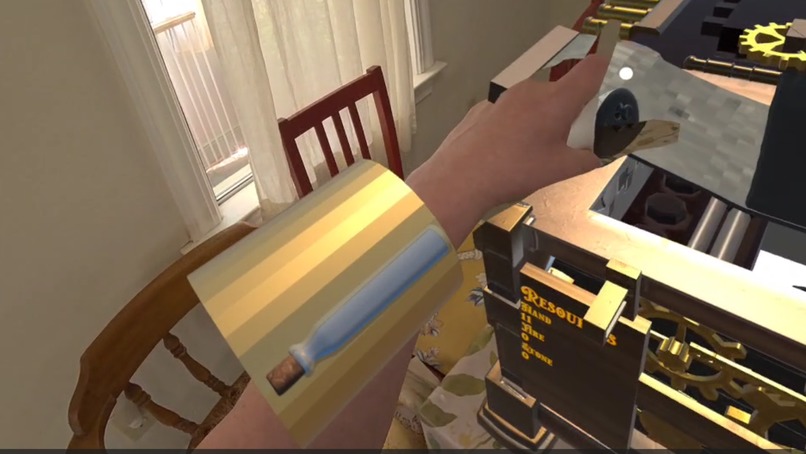
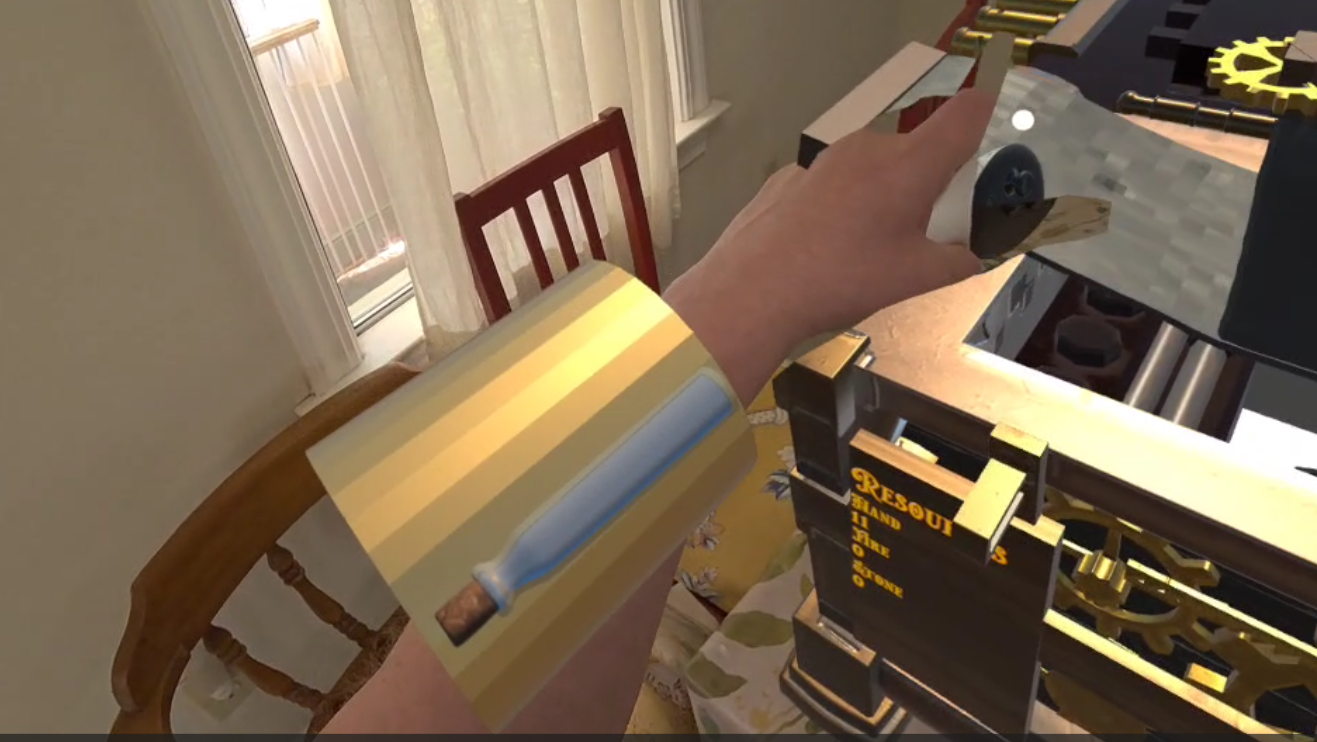
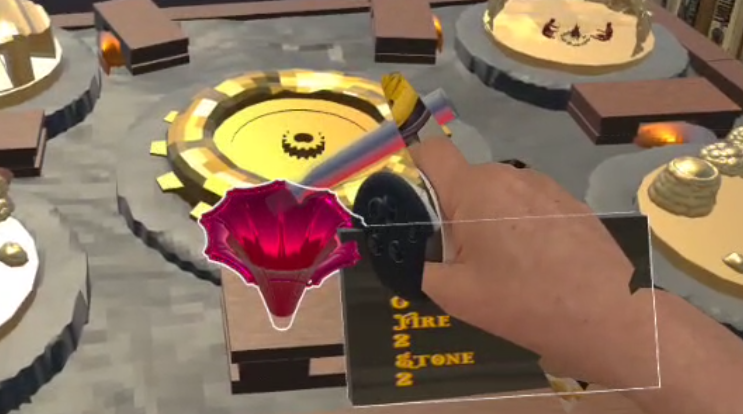
The bracer which has the resources the player has earned
-
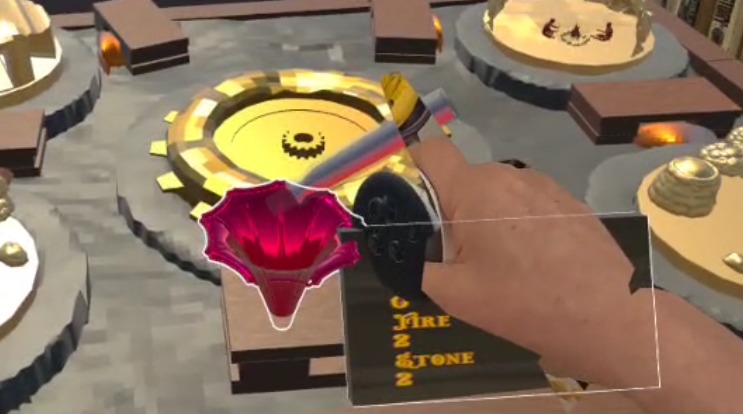
Pouring out resources to reveal a diorama
-
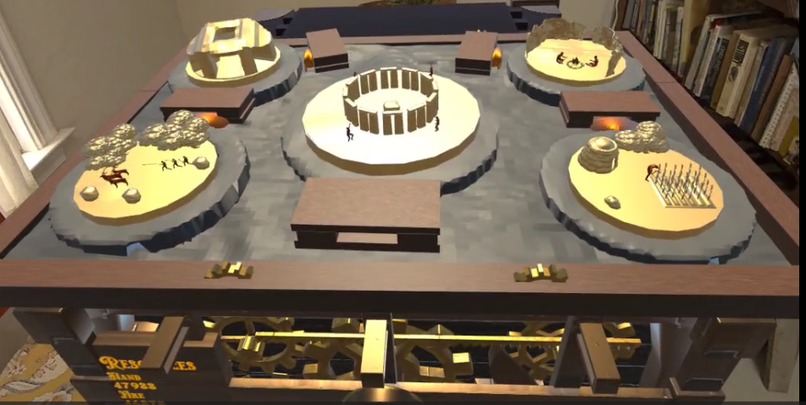
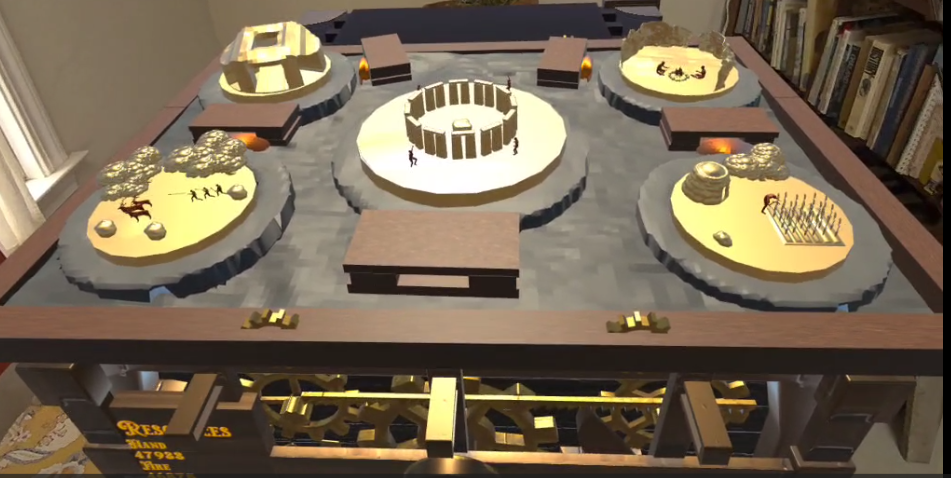
The dioramas revealed!
Inspiration
With the requirements given by the hackathon of a casual, mixed reality game that uses modern Meta Presence Platform SDKs, we decided that we wanted to take the opportunity to build something that could be both a fun casual game experience and virtual art as well. We drew from three different sources of inspiration for the game.
From an artistic perspective, we wanted to build something that evoked a feeling of the clockwork automaton creations from the 18th, 19th, and early 20th centuries. We were inspired by scenes from old cuckoo clocks, the famous mechanical Turk, and other games that had previously tapped into this motif such as the Syberia series.
For gameplay, we were inspired by the idle clicker genre of game and wanted to build an experience that captured that sense of collection and growth of resources that idle clicker games provide. For the upcoming final game we will continue to be working on, we also want to provide a layer of humor and mystery that will be provided via dialog and deeper reveals as the player crosses multiple different Ages in their path towards the ultimate unlock at the end of the game.
Finally, since this is an MR experience, we wanted to provide something more tactile and realistic than a flat computer game experience. We were inspired by real world objects like cranks and vials, and in the final game we will have more interactive elements like dials and buttons for the player to make more selections and choices.
What it does
The game is centered around a box which acts as a host for many clockwork automaton-style scenes that the player is able to unlock as they accumulate resources within the game. As a resource gathering game, the player will use the crank on the outside of the box and the scenes they unlock to generate ever greater reserves of resources which they will then be able to spend to reveal these scenes.
For the technical demo release, we have released the entire first Age of the box, which includes five scenes the player is able to unlock. The age is the Stone Age, and the scenes are the fire pit, the hunt, the farm, the quarry, and the temple. For the technical demo, we reduced the purchase price of each scene to practically nothing so that our judges can easily experience the whole demo. In addition to giving the player more game resources over time, the scenes provide pleasant art and music for the player to enjoy within their room as a mixed reality experience.
The full game will have a deeper narrative and mysteries, and four more ages for the player to play through: the Steel Age, the Steam Age, and the Space Age. Each age, including Stone Age, will have more for the player to discover and choose as they work through the game. The hunt scene, for example, in the Stone Age, will allow the player to choose what type of game they want their hunters to hunt, with better resources being awarded at the end of the hunt. The player will also learn that future ages will require resources from past ages to unlock, requiring the player to return to ages they have completed previously, where they will discover not all is as they left it…
How we built it
As our first experience building with Unity + MetaXR + the Presence Platform, this project taught us a lot about how to build a game using the Meta SDKs. We started simple, focusing on key functionality we needed to be able to build the player experiences, such as a box that could be unlocked, gears and other controls that could provide haptic feedback through the controllers, a bracer that we could place on the player’s arm as they moved their body, and phials that the player could grab and uncork using both their hands as they poured the contents of the phials over the funnels in the game experience to pay resources to unlock components of the game.
Most fundamentally, we needed to think of a casual game experience that would be fun in MR, which is how we came up with a light game that could also be used as art in a person’s room. Of course, to deliver that experience we also needed to build MR support into the game, such as passthrough and occlusion, and design the hands-on content in such a way that would look natural on the player’s actual body and in their hands.
Challenges we ran into
Meta’s approach to XR followed some different paradigms and design patterns from what we were used to, so we had to do a lot of research of the codebase and the documentation to understand how to build an experience that would properly work with MR and the Presence Platform SDKs. The tutorial videos DevPost shared were very helpful, as were the comments Meta provided in their code and their documentation on the Meta Quest Developer Center website.
Accomplishments that we're proud of
We are proud of what we have built so far. We believe we have provided a fun and beautiful experience for our players that brings a different type of game to MR than has been built to date and applies MR experiences to the genre in a fun and interesting way. We think once we are done with the full game we will have something that will fit well in the Meta Quest Store for players to enjoy.
We think the technical demo shows how our MR integrations feel natural and fun, and how our content is an enjoyable virtual addition to a room. We think the gameplay gives players a fun interactive experience as they move through the game to unlock more of its content. We are excited about our roadmap which has even more Presence Platform integrations and lots more content which will make the game an even richer, deeper, and more enjoyable experience for our players.
What we learned
We learned a lot about the “Meta way” of designing for XR and we began to observe common patterns and designs in their SDKs, which we believe puts us in a good place to move forward with future integrations. We’ve learned how to build an MR experience where we do not have control over the layout of the player’s space but we can work within that space to give the player a delightful experience. As our first DevPost hackathon, we’ve also learned how to work with the DevPost team on how to deliver a hackathon project at the end of the project!
What's next for Codename: Box of Ages
We have a post-hackathon project plan that we are very excited about. With the core functionality of the technical demo behind us, we will be able to focus on much more content and deeper integrations with even more of the Presence Platform SDKs.
We have three more ages of content to add, with planned scenes to reveal for Steel, Steam, and Space Ages to add to the Stone Age which we have built for the current hackathon. Once there are multiple ages for the player to move through, we will be able to begin adding interplay of activities and resources across the ages, giving the player the opportunity to return to previous ages they have completed and find differences to uncover and more mysteries and story to unlock. We have a deeper story to weave between the scenes the player is revealing, to give the player more of a purpose, context, and narrative as they move through the game. And, of course, as an idle resource gathering game, we will be greatly increasing the amount of resources a player gathers to progress through the game, increasing the sense of scale and accomplishment for the player as the game grows under their guidance.
We also plan to add support for controller-free hands-based interaction using Meta’s gesture capabilities if the player would rather jump in for a session without grabbing their controllers. We will build improved support for room context and having the box stay where the player set it down across multiple gameplay sessions with upcoming Spatial Anchor support. If there is interest, we could also see adding multiplayer with shared spatial anchors and the ability for more than one player to interact with the same box at the same time.
Built With
- audiosdk
- depthapi
- handtracking
- hapticssdk
- interactionsdk
- metaxr
- movementsdk
- passthrough
- presenceplatform
- sharedspatialanchors
- spatialanchors
- unity


Log in or sign up for Devpost to join the conversation.