CodeForge AI - From Prompt to Verifiable Code Inspiration AI coding assistants have made generating code easier than ever, but writing code is only one part of software development. Developers still spend time understanding unfamiliar repositories, debugging errors, fixing tests, and checking whether proposed solutions actually work.
That inspired us to build CodeForge AI for the Best Apps and Agents track of the Nebius × NVIDIA Global AI Hackathon. Our goal is to move beyond code suggestions toward a more transparent software engineering workflow: one where developers can see what an agent changed, what it tested, and what remains unverified. How We Built It We built CodeForge AI with a full-stack architecture that connects AI inference, backend orchestration, and an interactive developer workspace.
- Frontend: React, Vite, and TypeScript.
- Backend: Python and FastAPI.
- AI model: NVIDIA Nemotron 3 Ultra 550B A55B.
- Inference platform: Nebius Token Factory, accessed through an OpenAI-compatible API.
- Repository integration: GitHub connection for working with code repositories. We integrated Nemotron through the backend so model credentials stay server-side. We focused on prompt engineering and structured agent workflows rather than fine-tuning the model.
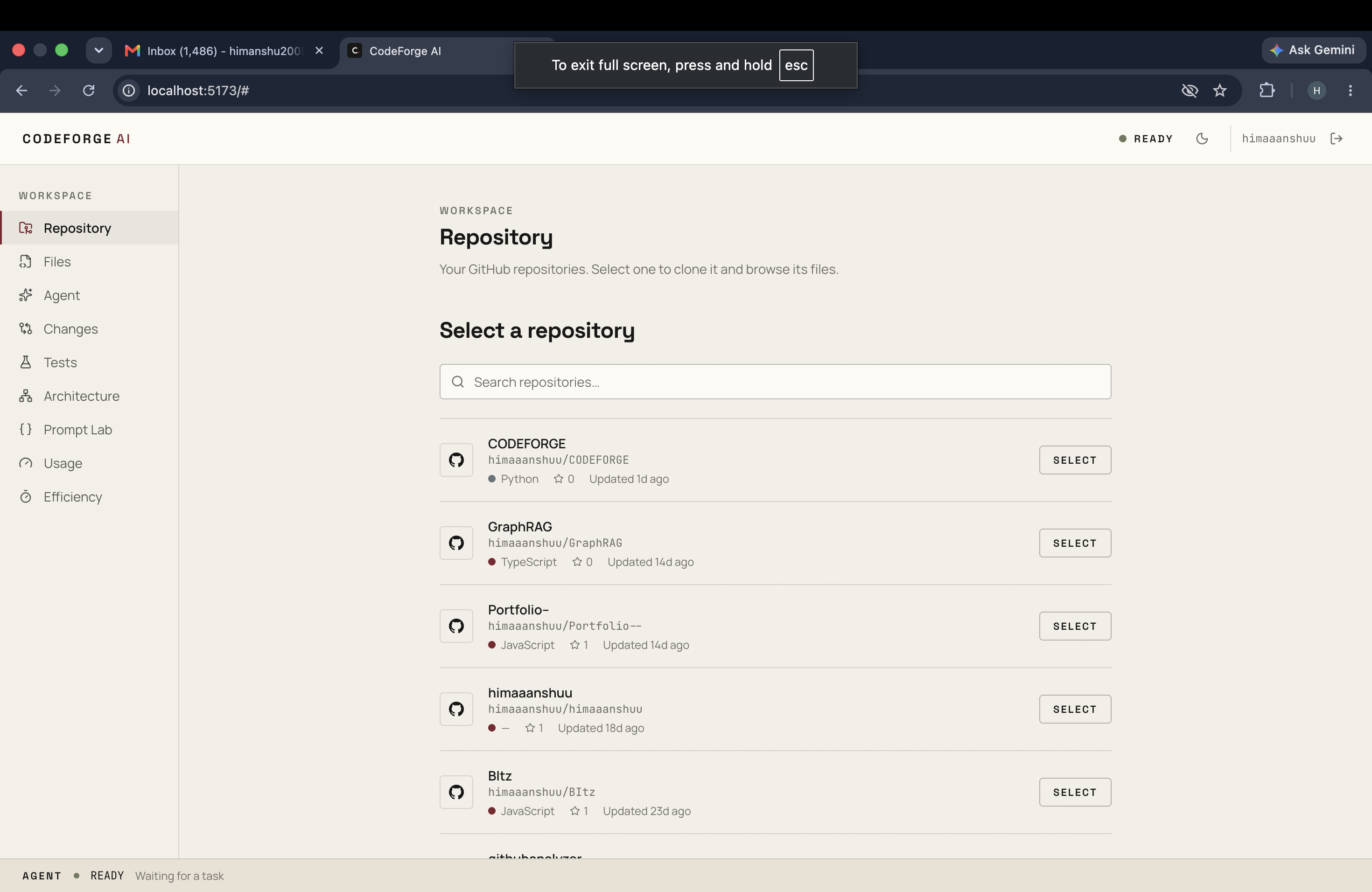
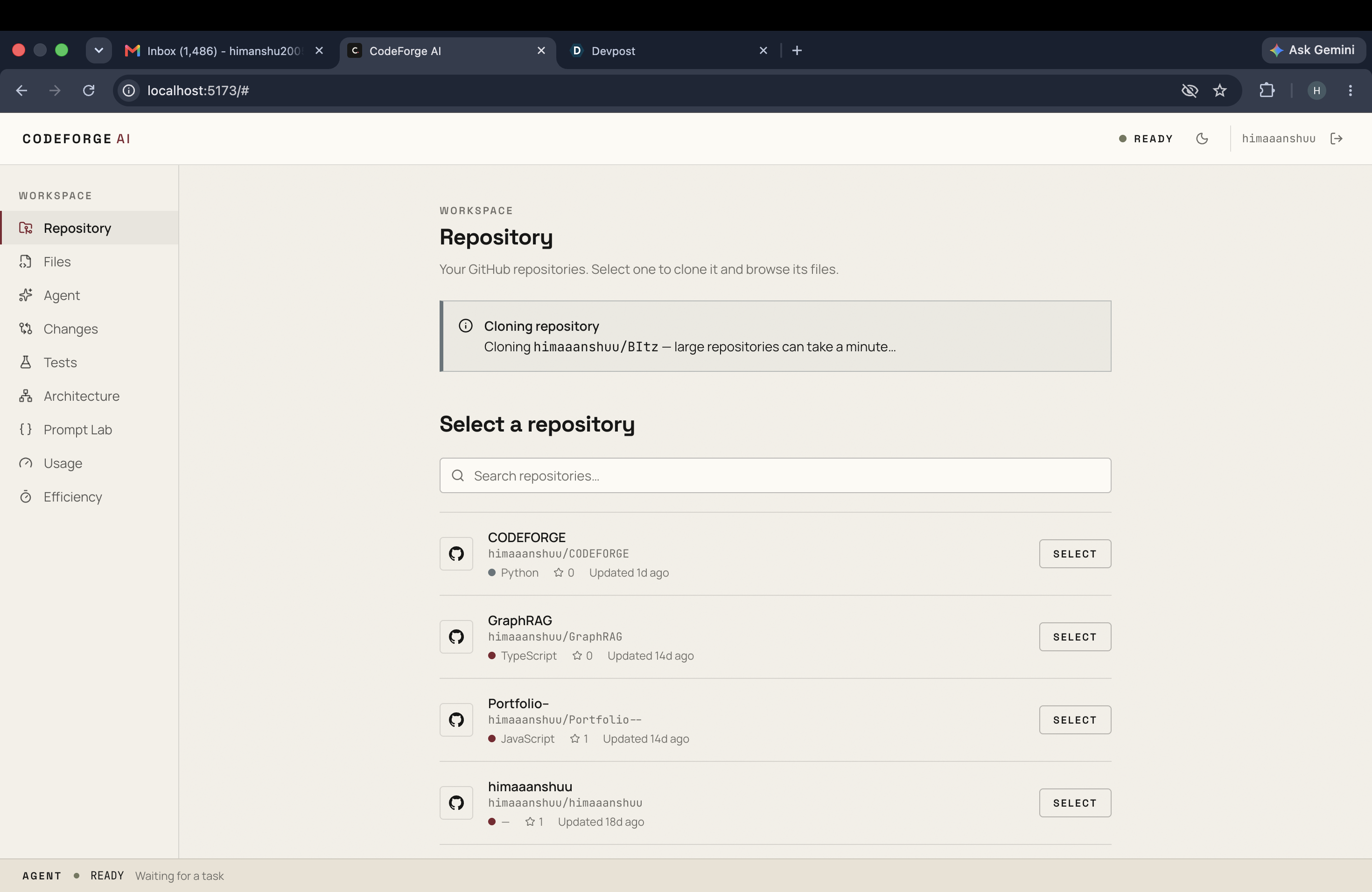
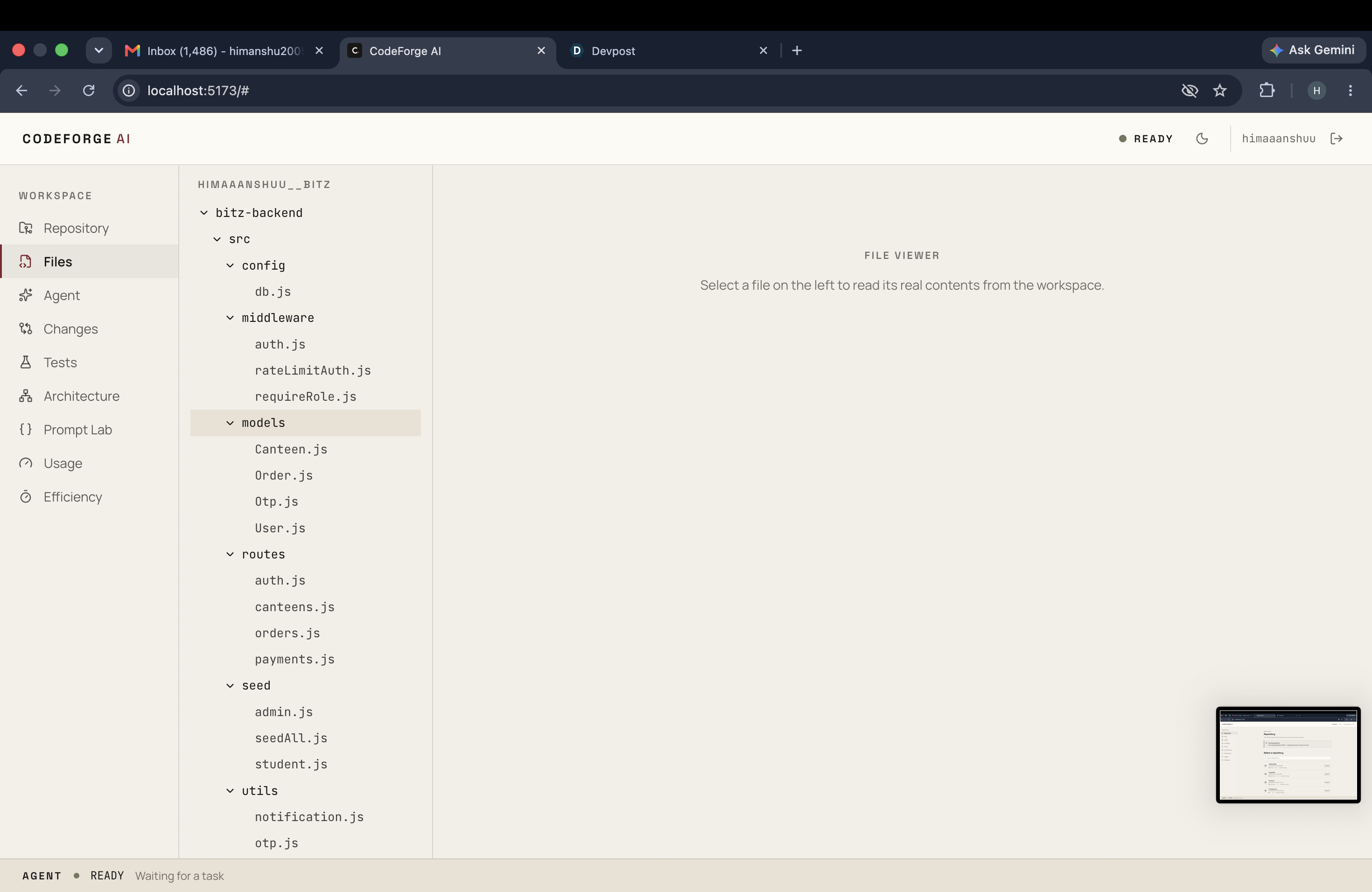
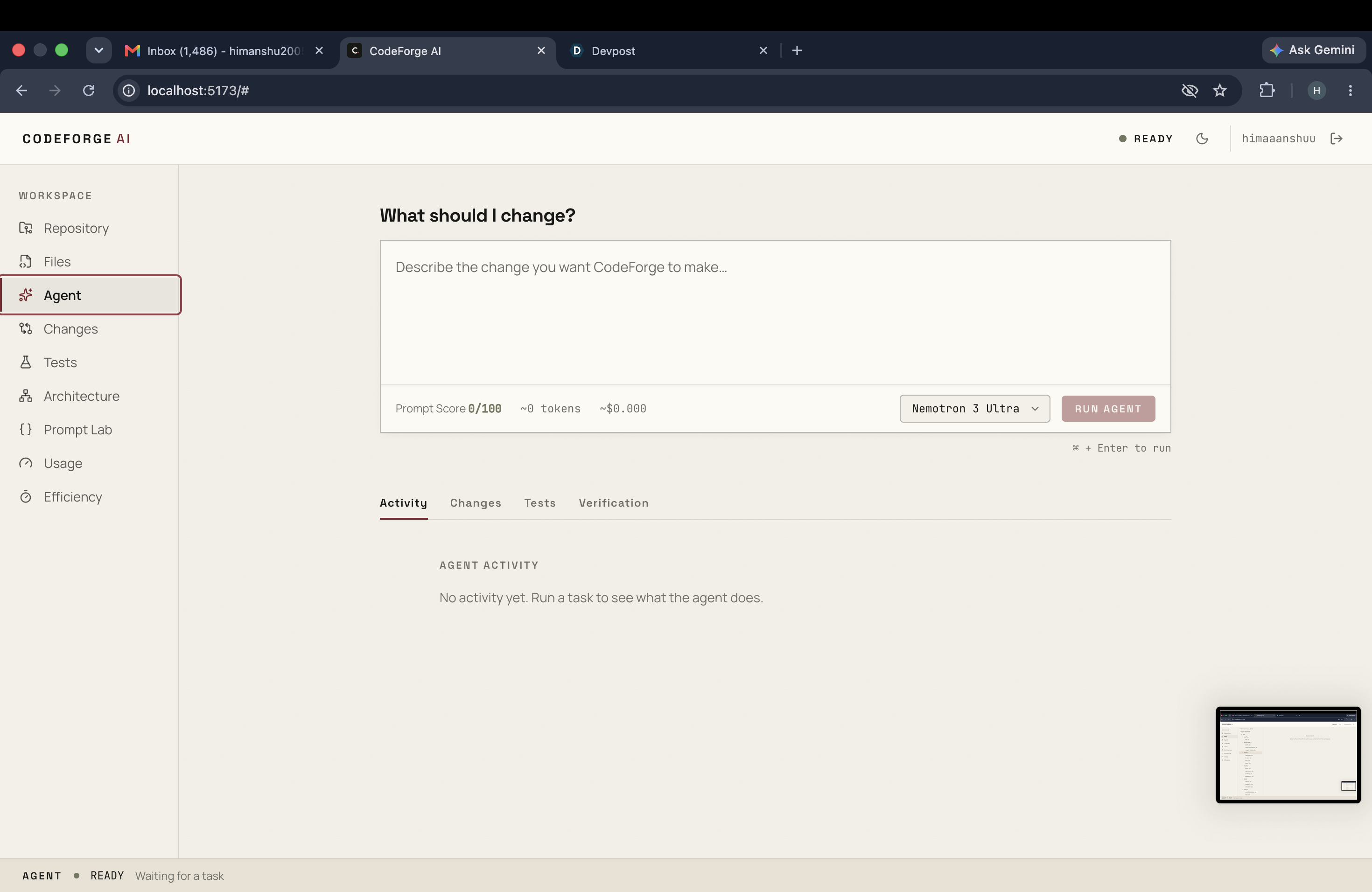
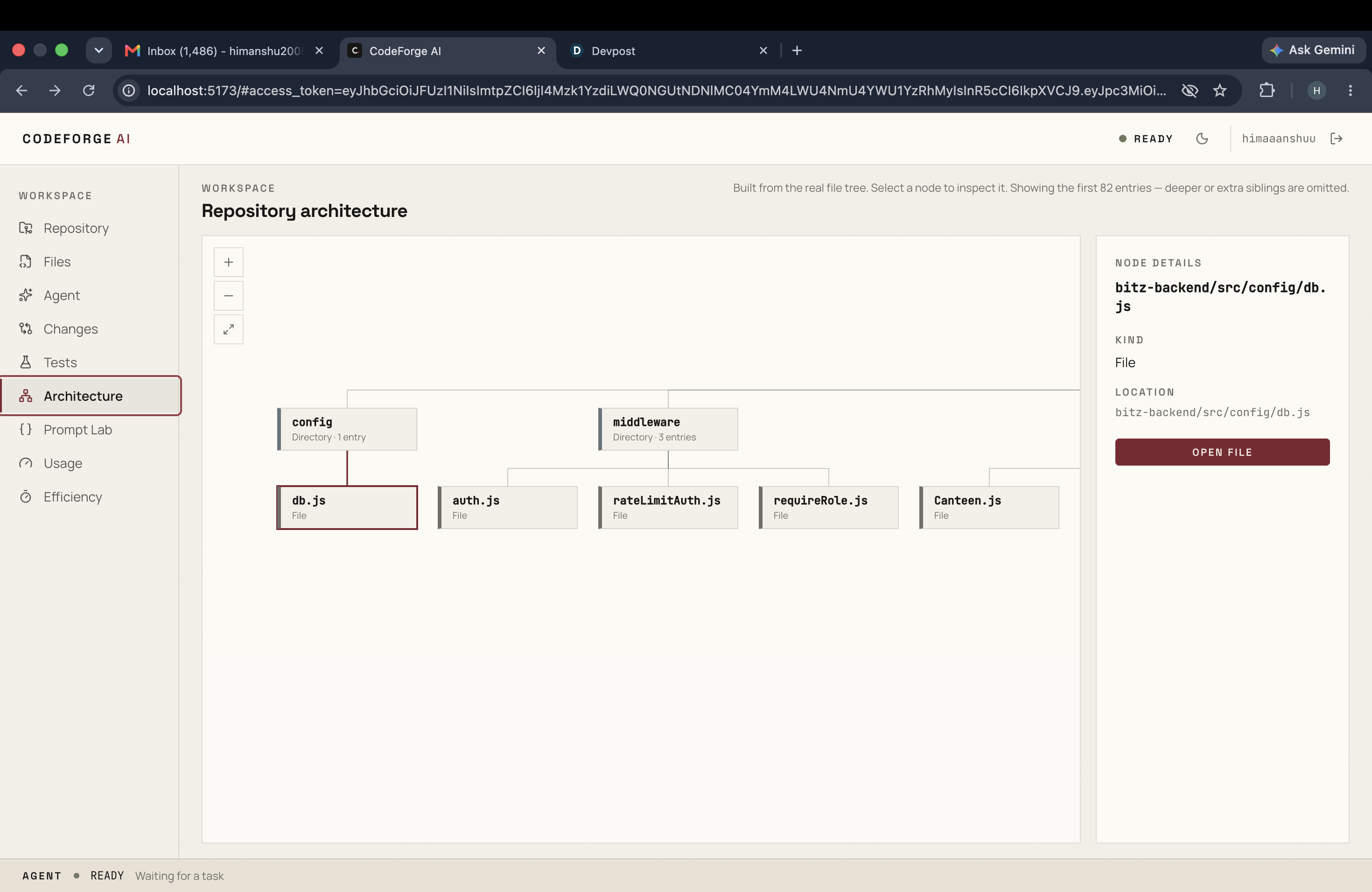
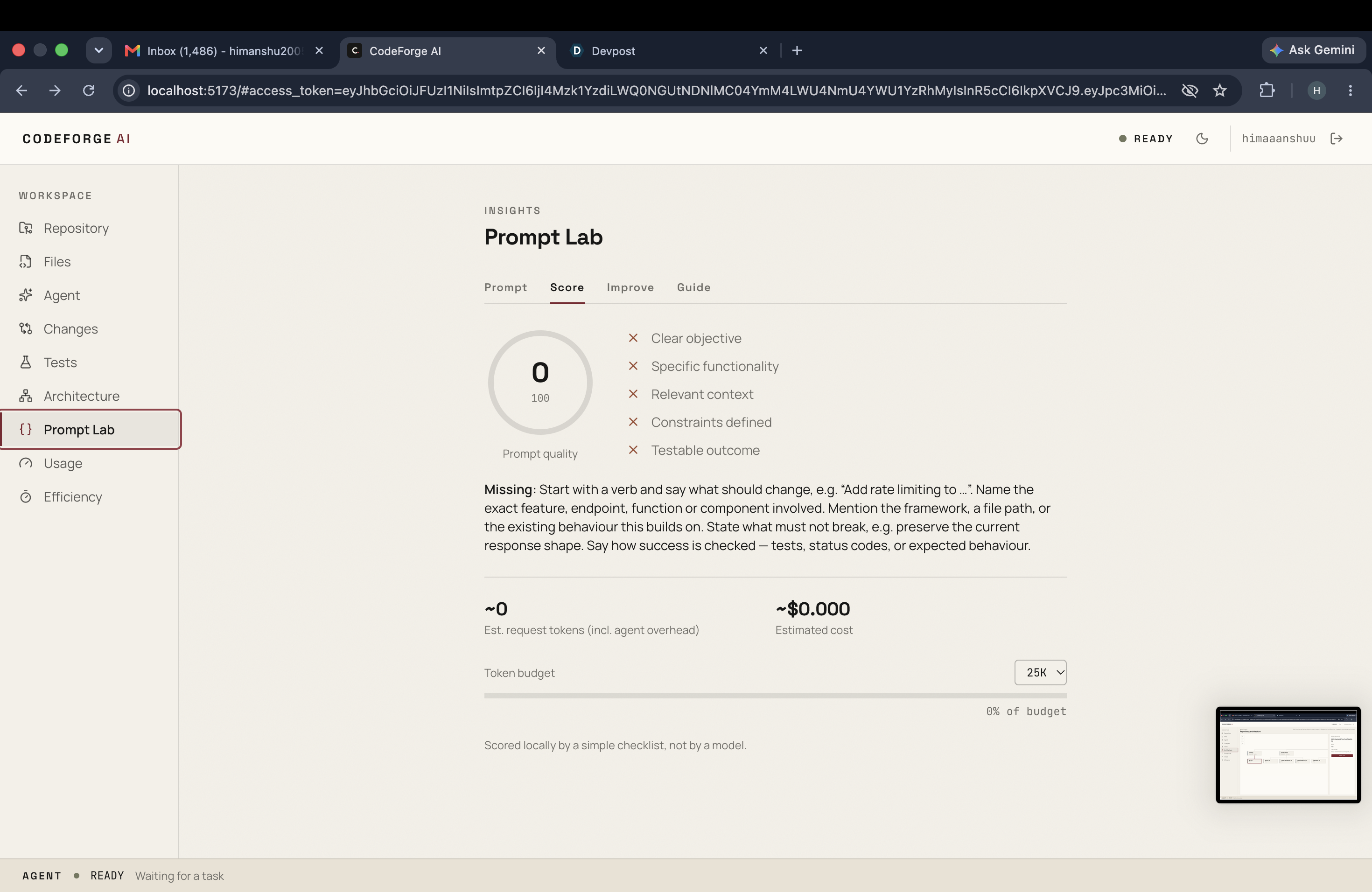
The workspace lets users provide a repository task, follow the agent’s activity, review code changes, and inspect test results. CodeForge also includes a GitHub publishing flow for reviewed changes. The aim is to connect code generation with execution feedback and make the agent’s work easier to inspect. Challenges We Faced One of our biggest challenges was thinking beyond a traditional AI chatbot. A coding agent needs more than a model that produces plausible answers. It needs repository context, tools, reliable orchestration, error handling, and ways to check its results.
Other challenges included:
- Integrating a large language model into a full-stack application.
- Designing prompts and workflows for multi-step coding tasks.
- Managing communication between the frontend, backend, and AI inference service.
- Protecting API credentials and considering the risks of executing repository code.
- Making the agent’s activity understandable to developers.
- Distinguishing actual verification from code that only appears correct. These challenges shaped our core principle: a coding agent should communicate what it changed, what it tested, and what remains unverified.
In our recorded demo, the agent did not complete the requested task. CodeForge reported the run as failed. This reflects a challenge we’re continuing to address: making multi-step coding tasks more reliable and helping users understand when a task hasn’t completed. What We Learned Building CodeForge AI strengthened our understanding of LLM integration, prompt engineering, API orchestration, and agentic system design.
We learned that building a useful AI product isn’t simply about choosing a powerful model. Context management, tool integration, testing, security, and failure recovery all affect how useful and dependable an agent can be.
Working with Nebius Token Factory let us explore API-based access to NVIDIA Nemotron without managing the infrastructure needed to host the model ourselves. That let us focus on the application architecture and the developer experience.
Most importantly, we learned to approach AI-generated results critically: generation is not verification, and a successful response is not necessarily a successful implementation. What’s Next We plan to improve CodeForge AI’s repository understanding, multi-step task execution, debugging, test-based repair, and GitHub workflows. We also want to make execution more transparent, so developers can inspect changes, understand test results, and see which parts of a task remain incomplete.
Our aim is to reduce repetitive engineering work while keeping developers informed and in control. CodeForge AI — From Prompt to Verifiable Code.
Our goal isn’t just to make AI write code faster. It’s to make AI-assisted software development more transparent, useful, and verifiable.
Built With
- api
- factory
- fastapi
- github
- nebius
- nemotron
- nvidia
- python
- react
- rest
- token
- typescript
- vite

Log in or sign up for Devpost to join the conversation.