
Inspiration
Even in the age of technology, roadblocks are ever present in the reimagining of urban spaces from identification to solution. In Philadelphia, there have been efforts to increase public participation in city planning, including the creation of neighborhood plans, community-driven development initiatives, and public hearings. However, there are still challenges to engaging a broad range of residents in these processes, particularly those from historically marginalized communities.
According to a report by the Pew Charitable Trusts, only 4% of Philadelphia residents participated in public meetings on zoning and land use between 2014 and 2017. Additionally, a survey by the City of Philadelphia found that only 35% of residents felt that they had a say in decisions that affect their neighborhoods.
These statistics suggest that there is a need for continued efforts to increase public participation in city planning processes in Philadelphia, particularly among underrepresented communities in Philadelphia.
Urban planners may find it challenging to determine and take action on problems such as uneven or poorly maintained sidewalks, limited access to green space, and inadequate pedestrian infrastructure, due to the absence of information of the actual problem itself as well as the magnitude of it. We decided that we wanted to come up with a solution that would unify the residents of Philly and the urban planners to streamline the process of urban regeneration.
What it does
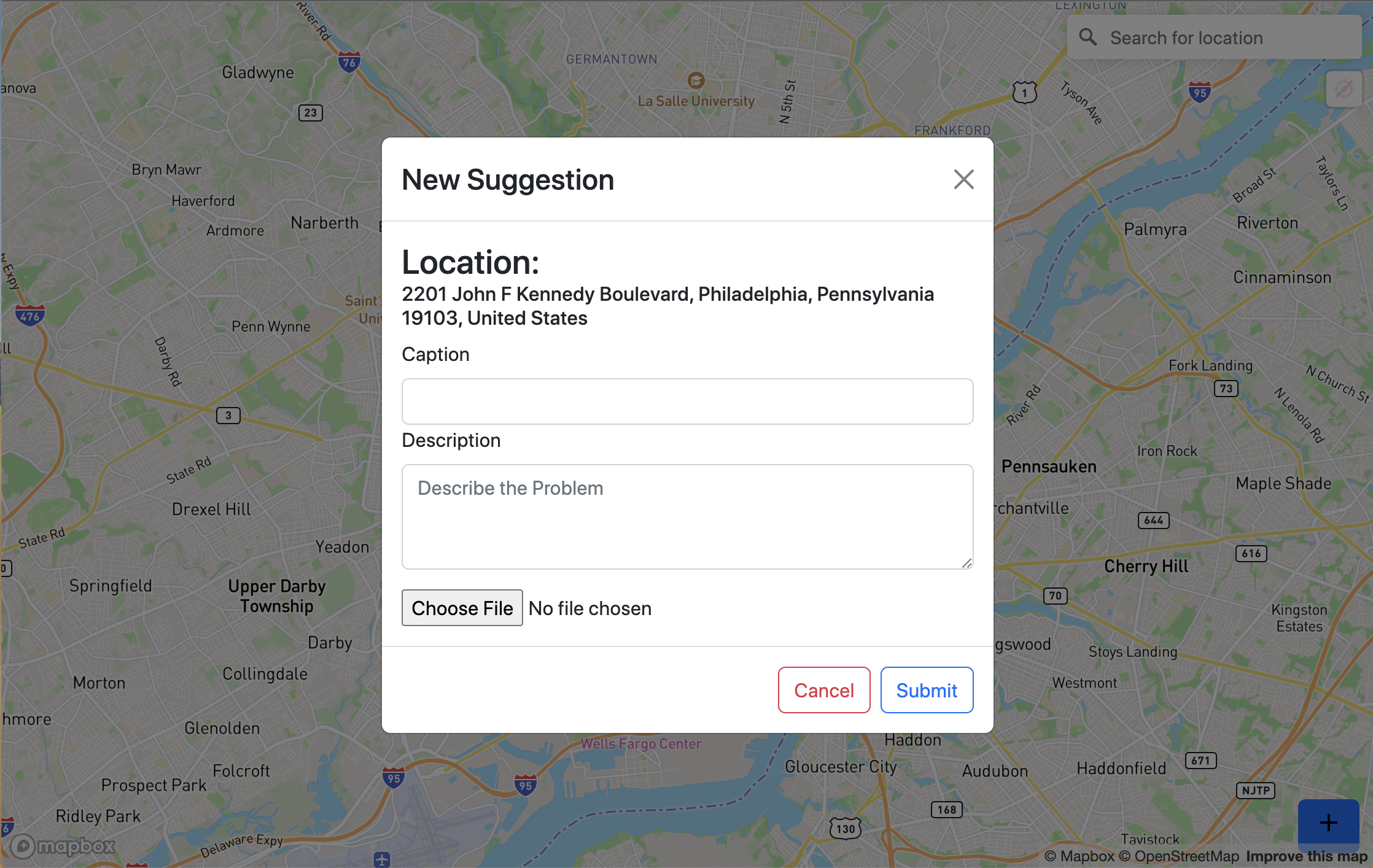
ViewPoint is an innovative application that leverages the power of computer vision and natural language processing to suggest improvements to city planners based on user-uploaded street view photos. By using advanced machine learning algorithms, ViewPoint can augment street view photos to showcase potential urban design enhancements. How it works: Users upload street view photos of their city to ViewPoint, providing some basic information about the location and their suggestions for improvement. ViewPoint then uses DALL-E, a powerful neural network designed by OpenAI, to generate images that show what the city could look like with suggested improvements implemented. These augmented images are then displayed back to the user, who can review them and provide feedback on what they like and dislike. Finally, ViewPoint aggregates the feedback from all users to generate a comprehensive report that can be shared with city planners, providing them with valuable insights into what their constituents want and need from their city. With ViewPoint, city planners can tap into the collective wisdom of their citizens to make data-driven decisions about how to improve their city. By leveraging the power of DALL-E, ViewPoint can generate realistic images that help people visualize the potential impact of proposed changes, making it easier to build consensus around urban design decisions. Whether you're a concerned citizen who wants to make a difference in your community or a city planner looking for innovative ways to engage with your constituents, ViewPoint is the perfect tool for creating a more livable, sustainable, and beautiful city.
How we built it
We used the React Framework to build the frontend. The MapboxAPI allowed us to style the map with a simple and intuitive UI. Additionally, we used React Hooks on the client side because we wanted a responsive design approach. On the backend, we used a NodeJS server to build out the needed endpoints in order to store user posts. For storing photos, we want to store both the raw and masked images in addition to the final augmented image from DALL-E, as we felt as though city planners should be able to access the raw/masked images and regenerate the augmentations from DALL-E if needed. We decided to use MongoDB to store user post data, but use AWS S3 Bucket to store image files, as we felt that using a Bucket approach would allow for a more scalable end result.
Challenges we ran into
We initially wanted to use an AWS S3 Bucket to store the images due to its scalability. However, integrating the AWS S3 image upload with the other components was complicated, and our solution still has some vulnerabilities.
Accomplishments that we're proud of and what we learned
We were new to using OpenAI and the MapboxAPI. Although the learning curve was steep for successfully integrating these APIs into the project, we were able to pull off a somewhat seamless integration of these features.
What's next for ViewPoint
Moving forward, we expect our solution to become increasingly useful as DALL-E improves. Eventually, we hope users feel empowered to describe problems that are nearly impossible to understand without a visual supplement to DALL-E. Additionally, we hope to improve our integration of AWS fully and eventually add other functionalities that make our project more useful to its user base and allow our solution to scale, such as commenting on posts.
Built With
- amazon-web-services
- dall-e
- mongodb
- node.js
- openai
- react


Log in or sign up for Devpost to join the conversation.