-
-
CODE EXPERT
Inspiration
As a developer constantly exploring open-source projects and diving into new codebases, I've experienced firsthand the challenge of quickly understanding complex code repositories. The traditional approach of jumping between files, scanning documentation, and mentally mapping code relationships often turns hours into days. Whether it's a legacy system or a modern codebase, the learning curve can be discouragingly steep, taking valuable time away from actual development.
This common frustration sparked the idea for CodeExpert. I envisioned a tool that could transform code exploration into a natural conversation, making complex codebases accessible through simple questions and answers. Instead of methodically piecing together how a system works, what if developers could interact with their code as if chatting with a knowledgeable team member who understands every detail of the repository? CodeExpert makes this vision a reality, bridging the gap between complex codebases and human understanding, allowing developers to focus on building rather than deciphering code.
What it does
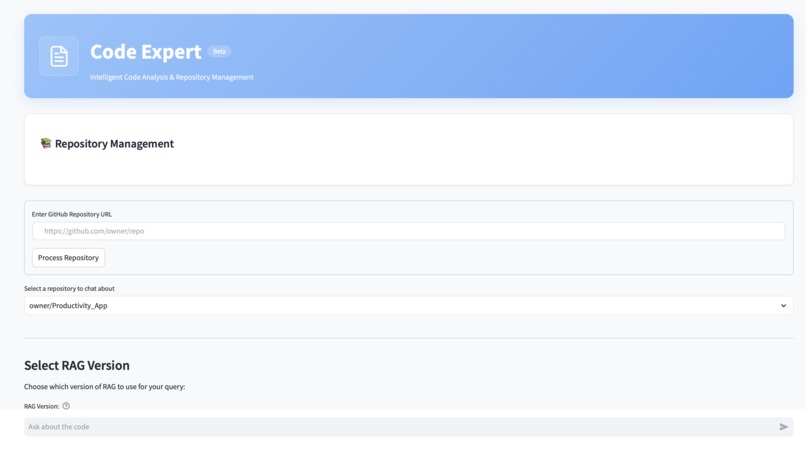
CodeExpert transforms any GitHub repository into an interactive knowledge base. Simply paste any public GitHub repository URL, and you can start asking questions about the code in natural language. The application:
- Processes and analyzes entire GitHub repository
- Enables natural conversations about code functionality
- Provides context-aware responses with code examples
- Ensures accuracy through advanced RAG filtering
- Displays real-time evaluation metrics for transparency
How I built it
CodeExpert was developed as a comprehensive system with several key components:
Repository Processing
- Created a robust GitHub service for repository ingestion
- Implemented intelligent file filtering and chunking
- Built an efficient batch processing system for large codebases
RAG Implementation
- Integrated Snowflake Cortex Search for accurate code retrieval
- Utilized Mistral LLM for natural language understanding
- Developed both Base and Filtered RAG approaches
- Implemented custom metrics for evaluation metrics
User Interface
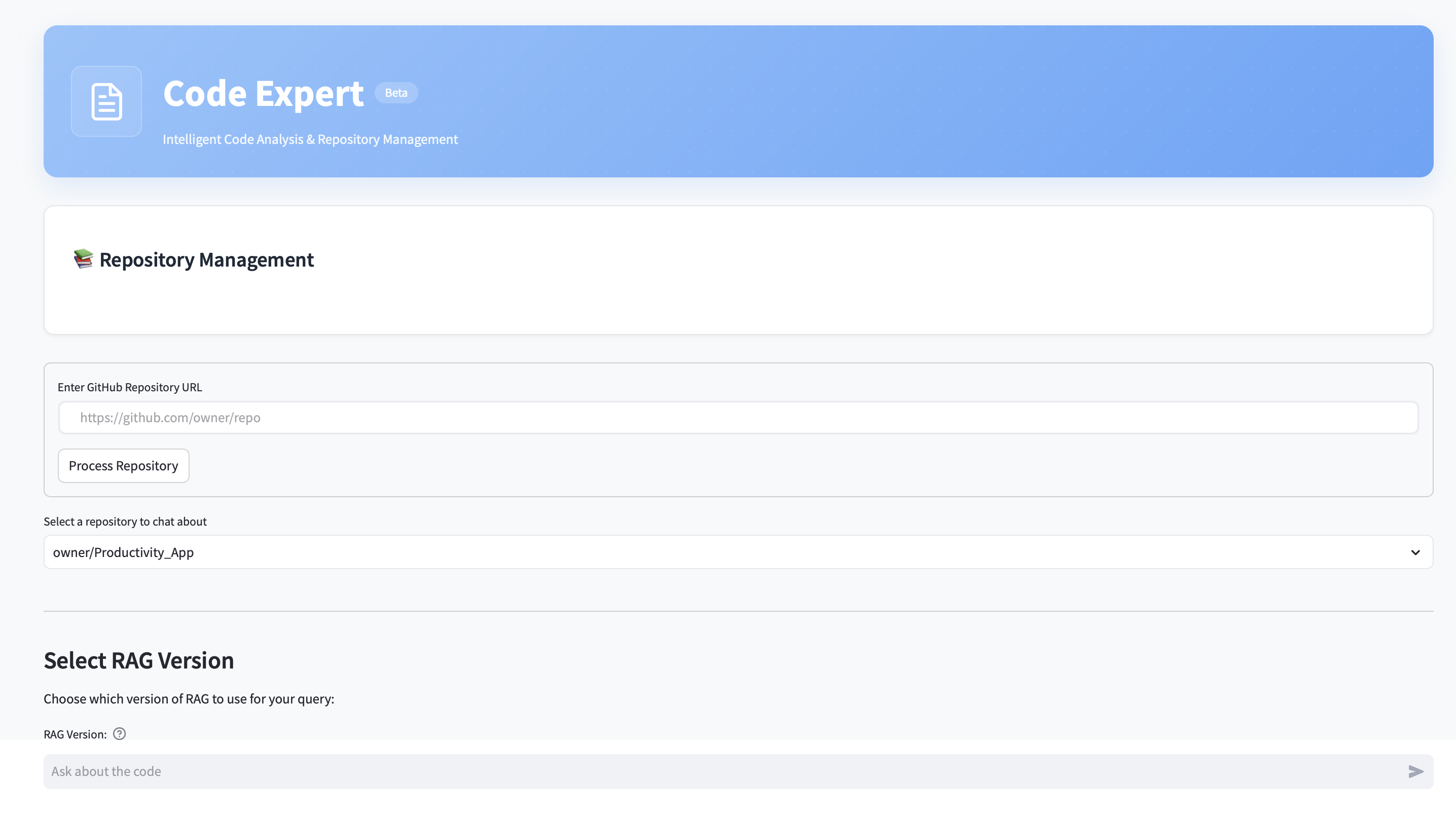
- Built an intuitive interface using Streamlit
- Added real-time processing indicators
- Created interactive metrics visualization
- Implemented a clean, modern design for better user experience
Challenges I ran into
The biggest challenge was optimizing the RAG performance. Getting the filtered RAG to work effectively required several iterations and careful tuning.
Accomplishments that I'm proud of
Developed a Sophisticated Dual RAG System
I achieved significant measurable improvements:
- Groundedness: Improved from 0.7 to 0.95 (+35.71%)
- Answer Relevance: Enhanced from 0.52 to 0.64 (+23%)
- Response Quality: Increased from 0.5 to 0.64 (+27%)
Technical Content Quality:
- Code references increased from 6 to 34
- Technical terms expanded from 4 to 33
- Code blocks improved from 0 to 6
Repository Processing System
I created an efficient system that successfully:
- Processes large codebases.
- Filters relevant code chunks.
- Maintains context across files.
- Stores repositories for quick and easy access.
Intuitive User Interface
Built a user-friendly interface that transforms complex code exploration into simple conversations:
- Clean, modern UI design.
- Real-time progress tracking.
- Interactive metrics visualization.
- Seamless repository management.
Advanced Technology Integration
Successfully integrated cutting-edge tools and technologies:
- Snowflake Cortex Search for accurate code retrieval.
- Mistral LLM for natural language understanding.
- Custom Metrics for performance evaluation.
- Streamlit for a responsive and interactive frontend.
What I learned
- Leveraged Snowflake Cortex Search for efficient code retrieval and analysis
- Implemented and optimized Mistral LLM for accurate code understanding
- Developed dual RAG architecture (Base and Filtered) for improved response quality
- Mastered evaluation metrics for evaluating and improving RAG performance
- Created efficient repository processing and chunking strategies
- Built real-time evaluation systems for monitoring response quality
- Implemented repository caching and management systems
- Developed techniques for maintaining code context during processing
- Learned to balance between performance speed and response accuracy
- Gained hands-on experience with modern AI tools for code analysis
- Understood the importance of code-aware chunking in RAG systems
- Mastered prompt engineering for code-specific use cases
This project has been an incredible learning journey, teaching us not just about individual technologies, but how to combine them effectively to solve real-world developer challenges. Each challenge I faced led to deeper understanding and better solutions.
What's next for CodeExpert
- IDE integration for seamless code analysis during development
- Automated documentation generation from codebase analysis
- Team collaboration features for shared repository insights
- Advanced language support for more programming ecosystems
- Real-time code review assistance capabilities
- Custom knowledge base creation for specific projects
- Performance optimization for faster response times
- Version control integration for Git-aware responses
- Enhanced context understanding across multiple files
- Enterprise-scale repository management features
I'm committed to making CodeExpert the go-to tool for developers who want to understand code quickly and effectively. Our roadmap focuses on both technical improvements and user experience enhancements to create a more powerful and intuitive code understanding platform.

Log in or sign up for Devpost to join the conversation.