-
-
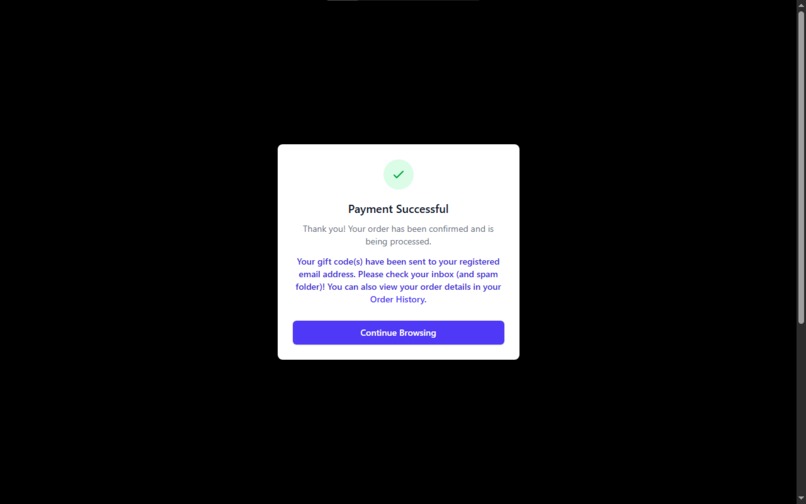
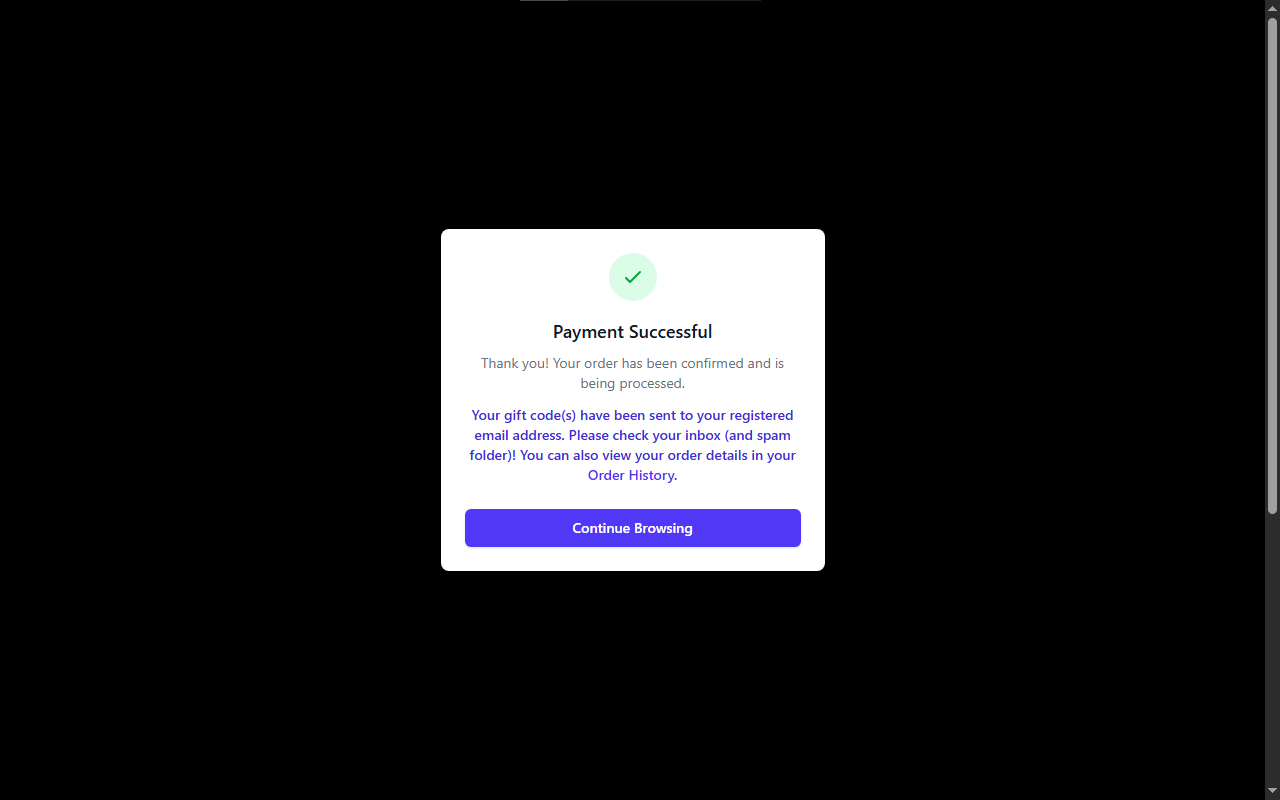
success/fail page
-
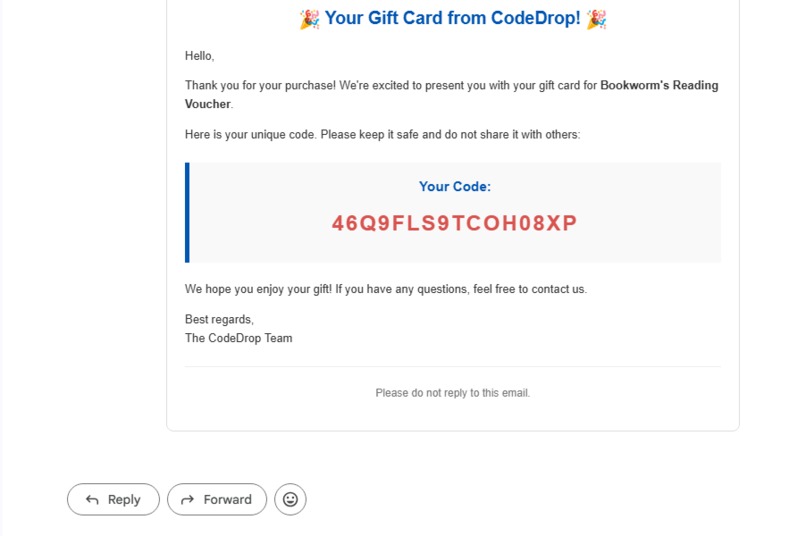
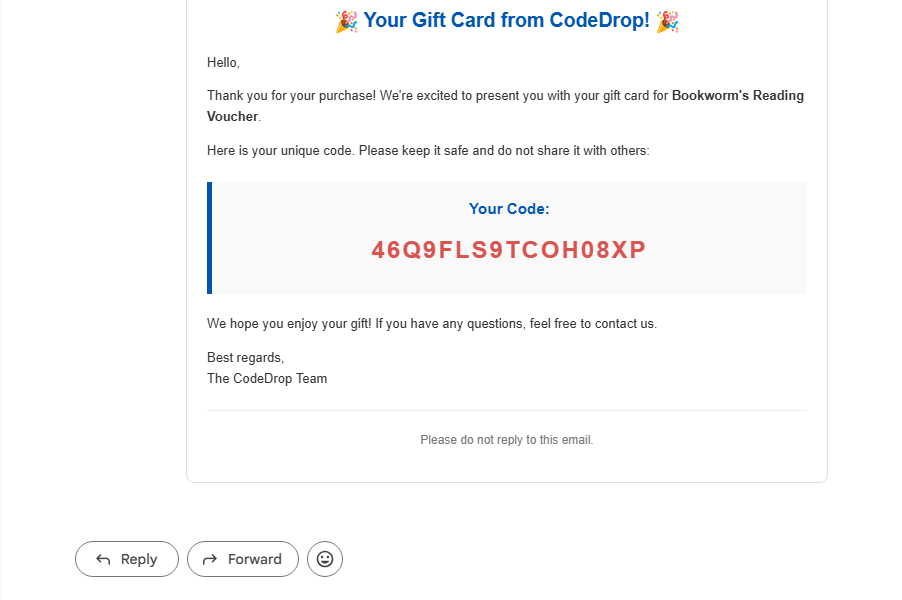
gift code in gmail
-
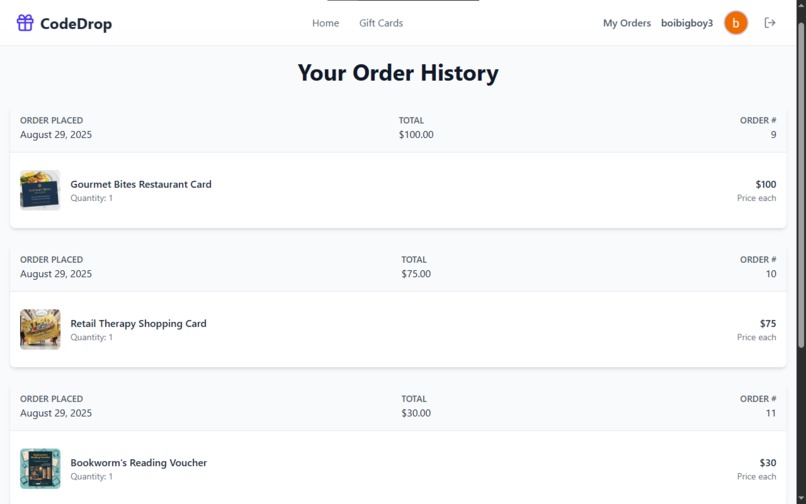
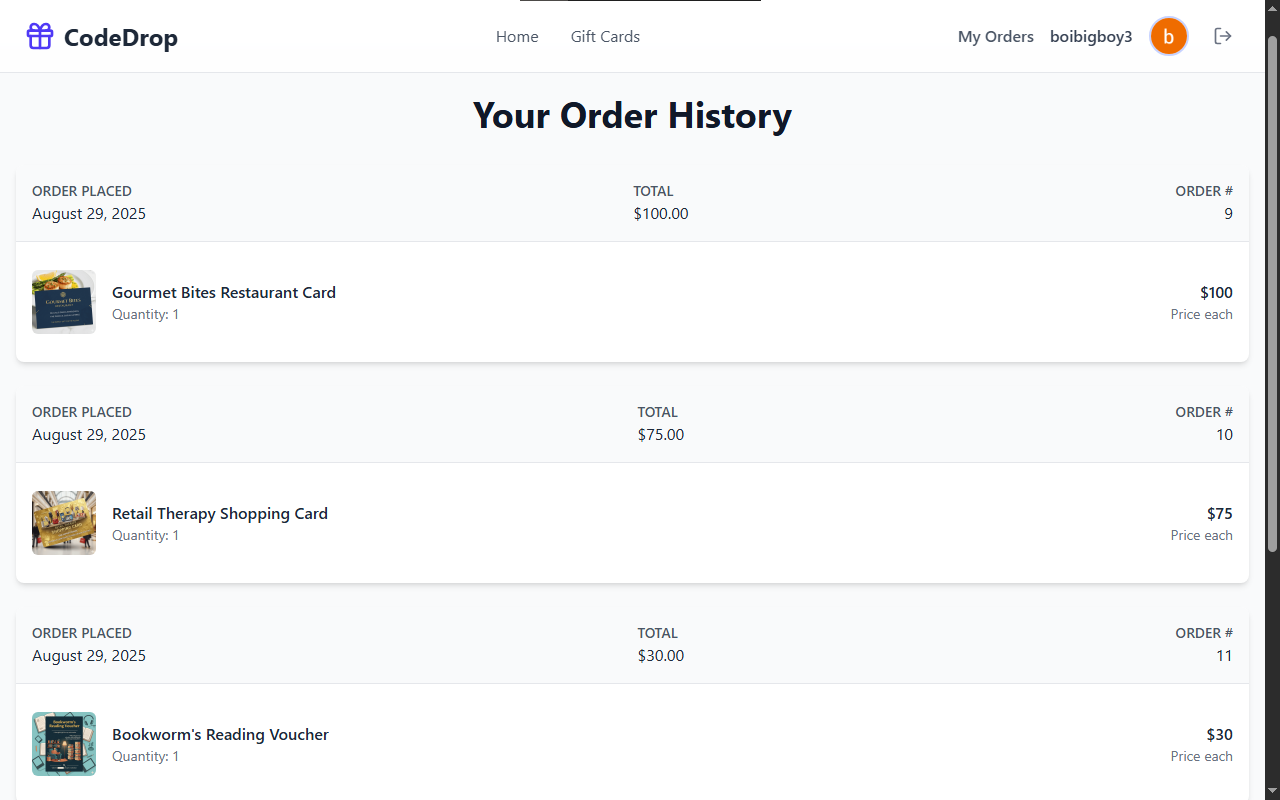
Order history page
-
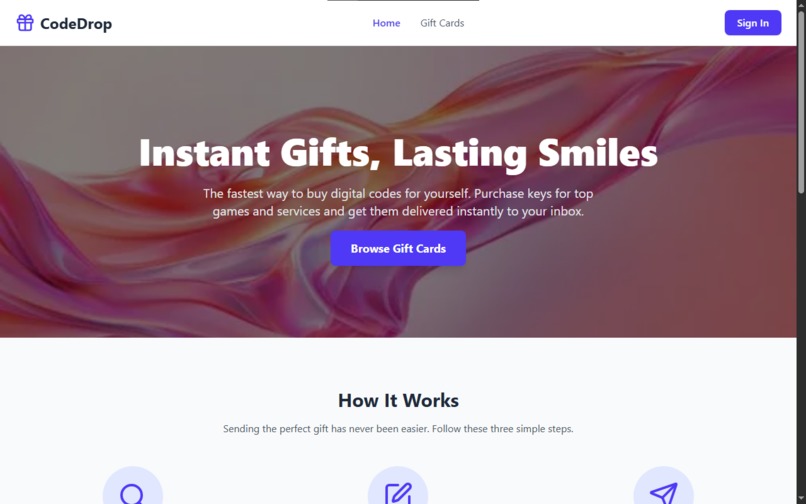
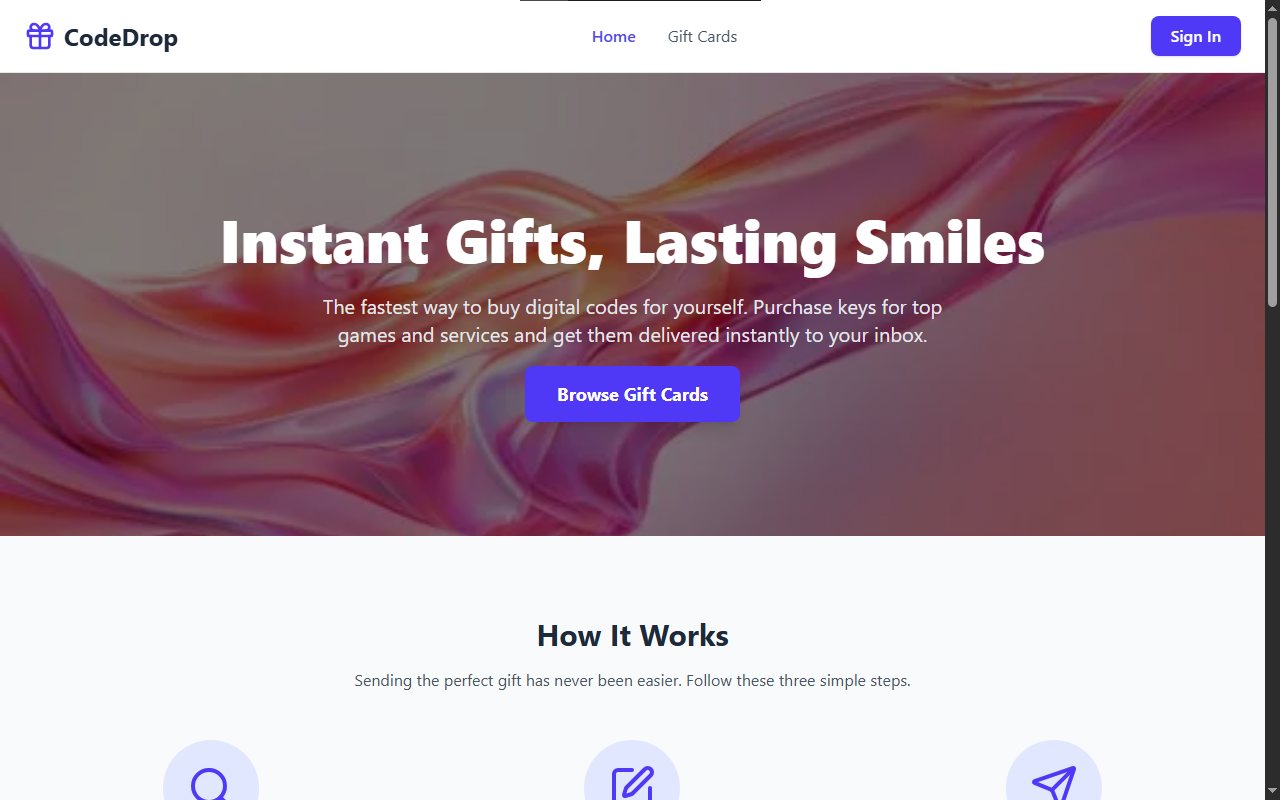
landing page
-
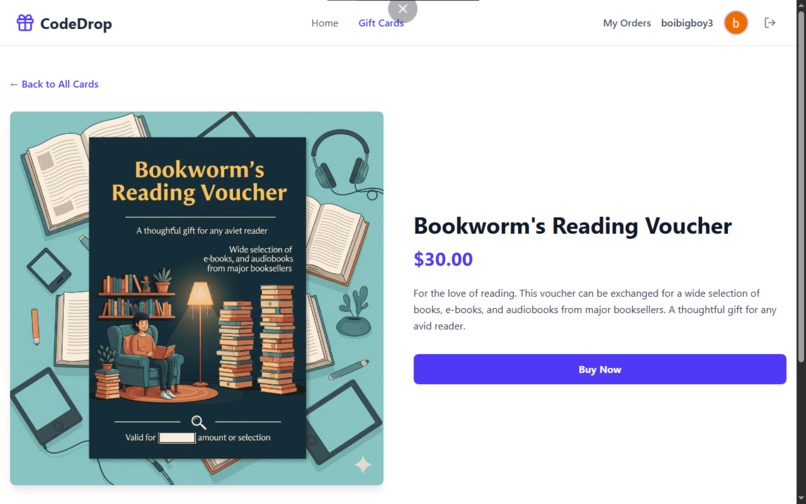
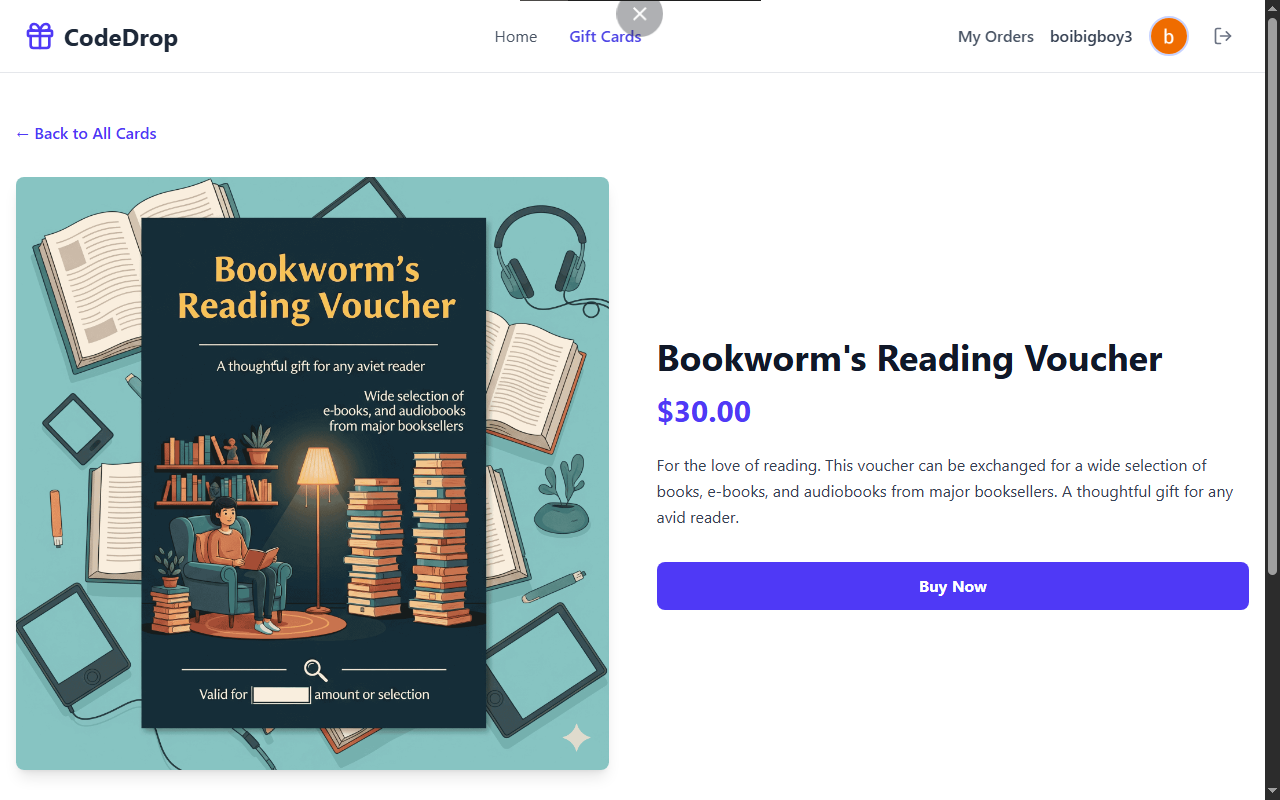
git cards
-
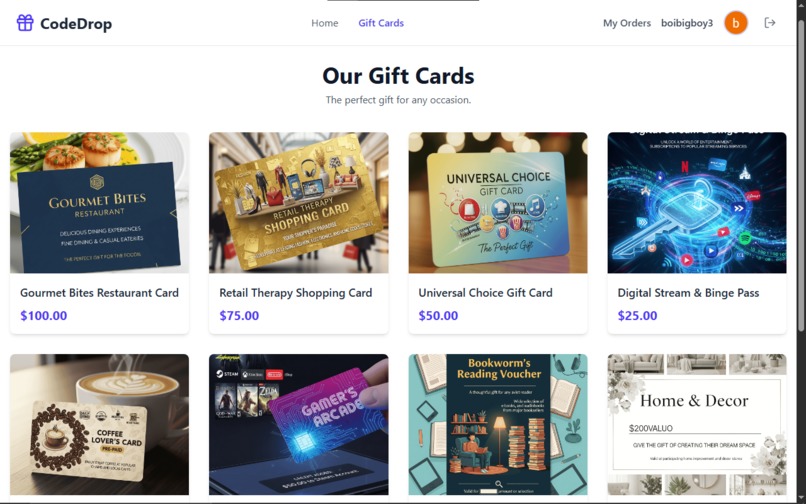
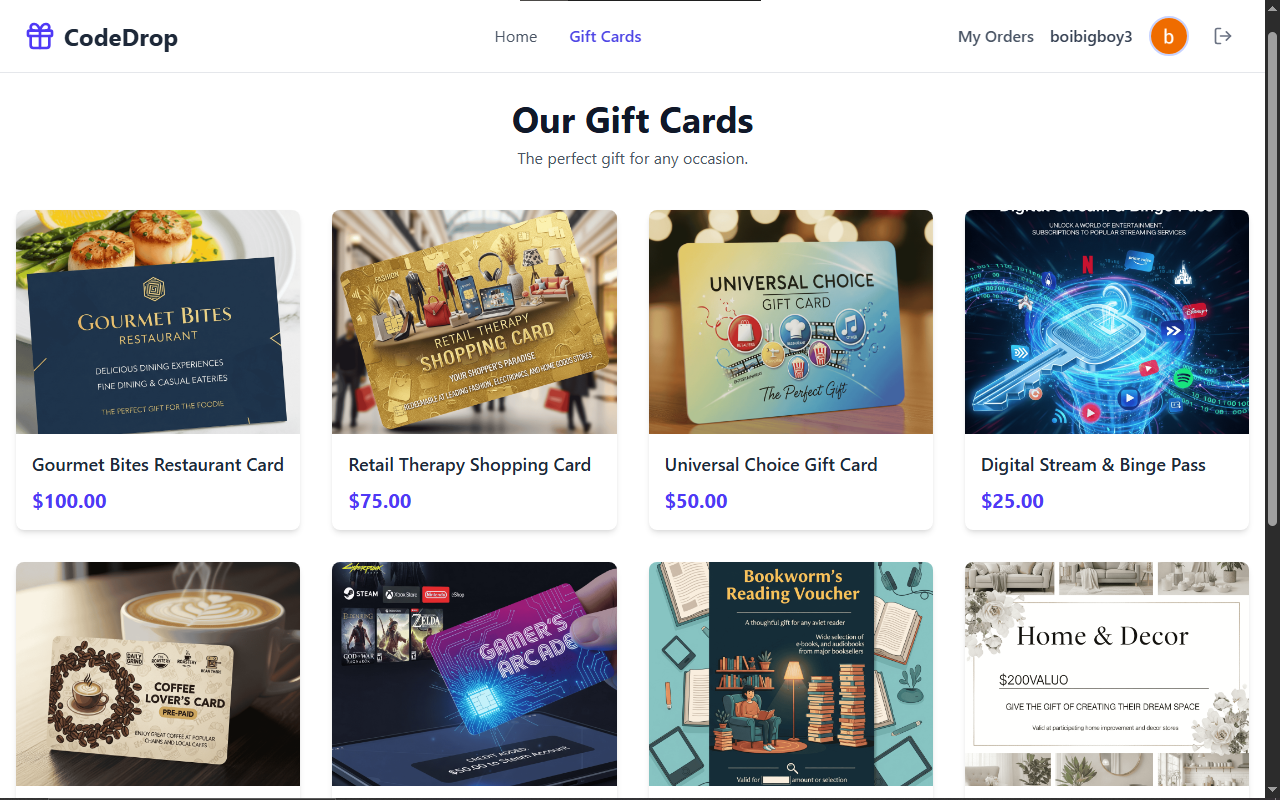
shop
About CodeDrop
The Inspiration
I was inspired by a simple frustration: buying digital gift codes for myself is often a slow and clunky process, buried within huge retail websites. I wanted a dedicated space for this one task. That's why I built CodeDrop, a streamlined, user-centric platform focused on a single mission: to let you buy a code for your favorite games and services, and get it delivered to your inbox instantly. It’s a personal code cart, designed for speed and convenience.
What I Learned
This hackathon was an incredible learning journey, teaching me as much about the realities of a market as it did about technology.
A Deep Dive into the Gift Code Market
My research revealed a fascinating and challenging business landscape. The digital gift code industry is a multi-billion dollar market, but it operates in a very specific way:
- A Market of Giants: The entire space is dominated by a few massive, authorized distributors. Small, independent sellers are practically nonexistent because getting codes requires direct, official partnerships with brands like Steam or Google.
- The Business Model: The ecosystem runs on bulk purchases at a slight discount. This leads to razor-thin profit margins for resellers. The profit on any given code is calculated by the simple formula $Profit = P_{retail} - P_{wholesale}$, and that margin is often just a few percent. This model is only viable at an enormous scale, which was a crucial insight.
Core Technical Skills
Understanding these business constraints guided my technical focus toward building a lean, secure, and efficient foundation.
- Simple & Solid Database Design: I learned to design an effective relational database using PostgreSQL. The key was creating clean and meaningful relationships between the
users,orders, andcodestables to ensure data integrity and enable features like order histories. - Secure & Simple Authentication: I implemented OAuth 2.0 to handle user sign-ups. This taught me the modern standard for providing a secure, password-less user experience, removing the need for me to handle or store sensitive user passwords.
How It's Made
CodeDrop is a full-stack application built with a modern, scalable tech stack, chosen for its type-safety and performance.
| Component | Technology Used |
|---|---|
| Frontend | React & TypeScript |
| Backend API | Node.js, Express & TypeScript |
| Database | PostgreSQL |
| Integrations | Stripe API for Payments, OAuth 2.0 |
Challenges & Future Steps
While the core application is functional, the project highlighted critical real-world challenges that would need to be solved to make CodeDrop a viable product.
- Code Sourcing & Partnerships: The single biggest hurdle is sourcing the gift codes. This can't be done programmatically; it would require building business relationships and securing official partnerships with each brand to become an authorized reseller.
- Licensing and Legal Compliance: You cannot legally sell branded codes without permission. The next phase would involve navigating the complex legal landscape of trademarks and reseller agreements.
- Security and Encryption: Storing a database of valuable, unredeemed codes would make it a prime target. A crucial future step would be implementing end-to-end encryption to ensure codes remain secure until the moment they are delivered to the user.
This hackathon project serves as a strong proof-of-concept, and tackling these business and security challenges would be the exciting next phase of development.

Log in or sign up for Devpost to join the conversation.