-
-
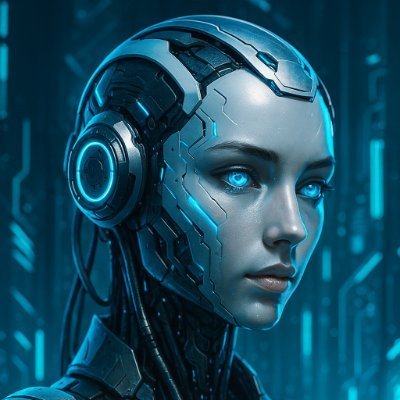
CodeDodona
Inspiration
CodeDodona was inspired by a simple but powerful idea:
AI should not feel like isolated prompts inside a chat window.
It should feel alive, interactive, persistent, and capable of real-time collaboration with humans.
As a developer with decades of experience building enterprise systems, I wanted to explore how modern AI infrastructure, real-time communication, avatars, and blockchain technologies could merge into a unified ecosystem of intelligent agents.
The project was also inspired by the growing need for:
- AI-powered business assistants
- Real-time conversational systems
- AI communication analysis
- Interactive digital personalities
- Decentralized AI monetization models
CodeDodona became both a technical experiment and a long-term vision: to build AI agents that can interact naturally through voice, reasoning, memory, and persistent presence.
What it does
CodeDodona is a modular AI agents ecosystem that combines:
- Real-time voice interaction
- AI avatars
- Large Language Models
- Blockchain monetization
- Persistent AI infrastructure
- AI workflow assistants
The platform currently includes multiple AI agents with specialized roles, including:
- Lyra — a Transitional Intelligence Guide
- Aegis — an executive email intelligence assistant
- Harmonia — a mentor-style conversational AI
The ecosystem supports:
- Interactive voice conversations
- Real-time AI streaming
- AI session persistence
- Wallet-based authentication
- Tokenized AI access systems
- AI-powered communication assistance
- AI retail and enterprise assistant concepts
CodeDodona is designed as an evolving infrastructure where multiple AI agents can coexist under a shared ecosystem rather than as a single chatbot application.
How we built it
The platform was built using a hybrid architecture combining:
- Node.js backend services
- Python AI workers
- SQL Server databases
- LiveKit WebRTC infrastructure
- Solana blockchain integrations
- PM2 process orchestration
- AI avatar pipelines
The backend handles:
- AI orchestration
- real-time communications
- token validation
- session management
- persistent memory
- billing and credit systems
We implemented:
- Real-time voice streaming
- AI avatar synchronization
- Wallet-based authentication
- Blockchain-powered credit activation
- Multi-agent orchestration
- Tokenized AI usage systems
The architecture was intentionally designed to remain modular so different AI models and infrastructure providers can be integrated over time.
Challenges we ran into
One of the biggest challenges was synchronizing:
- voice,
- AI reasoning,
- avatars,
- WebRTC infrastructure,
- and persistent sessions
into a stable real-time experience.
Latency optimization became critical.
Another major challenge was infrastructure complexity.
The project combines multiple technologies simultaneously:
- Python
- Node.js
- SQL Server
- blockchain systems
- AI APIs
- LiveKit
- avatar pipelines
Maintaining stability across all these layers required constant refactoring and testing.
Cost optimization was also an important challenge.
Real-time AI voice systems and avatars can become expensive quickly, so we explored:
- open-source LLMs,
- hybrid deployments,
- and modular AI routing
to improve scalability.
Blockchain integration introduced additional UX challenges related to:
- wallet onboarding,
- transaction handling,
- token validation,
- and decentralized monetization flows.
Accomplishments that we're proud of
We are proud that CodeDodona evolved from a concept into a functioning multi-agent ecosystem with real-time interaction capabilities.
Key accomplishments include:
- Building multiple operational AI agents
- Implementing real-time voice communication
- Integrating blockchain-powered monetization
- Creating persistent AI infrastructure
- Designing modular AI orchestration pipelines
- Deploying interactive AI avatars
- Supporting tokenized AI access systems
We are also proud that the project demonstrates how small independent developers can build sophisticated AI ecosystems using modern open infrastructure.
What we learned
This project taught us that:
- AI products are evolving into ecosystems rather than isolated tools
- Real-time interaction dramatically changes user expectations
- Infrastructure reliability is just as important as model quality
- Modular architectures are essential in rapidly evolving AI environments
- Blockchain integration requires careful UX simplification
- Small teams can now build highly advanced AI systems using modern tooling
We also learned the importance of balancing experimentation with operational stability.
What's next for CodeDodona
The next phase of CodeDodona focuses on expanding the ecosystem into real-world commercial deployments.
Planned directions include:
- AI retail assistants
- AI customer support agents
- AI communication analysis systems
- AI workflow automation
- AI companions
- Hybrid cloud/on-premise deployments
- Expanded open-source AI integration
- More advanced persistent memory systems
We also plan to continue improving:
- scalability,
- latency,
- avatar realism,
- reasoning quality,
- and decentralized monetization infrastructure.
The long-term vision is to transform CodeDodona into a scalable ecosystem of intelligent AI agents capable of natural, persistent, and economically sustainable interaction with humans.
Built With
- blockchain
- javascript
- lemonslice
- livekit
- node.js
- openai
- python
- solana
- sql
- xai

Log in or sign up for Devpost to join the conversation.