Inspiration
The rapid, mainstream adoption of AI-assisted coding has created a "Shadow AI Debt Crisis," where enterprises ship AI-generated code daily without any traceable record of its origin. We were inspired to bridge this gap in enterprise visibility, as there is currently no systematic way to attribute AI-generated code to a specific model, prompt, or timestamp.
What it does
CodeDNA provides deterministic AI provenance by intercepting AI-generated code at the moment of creation—before it is ever committed to a repository. It creates a cryptographically linked record that tracks the code's origin, serving as a necessary compliance layer for audit trails, security reviews, and legal accountability.
How we built it
As outlined in the "Code-DNA.pptx" file, we utilized a 3-layer architecture to handle capture, buffering, and cloud synchronization:
Layer 1 (Capture): A lightweight Python daemon runs silently in the background, hooking into IDE events to intercept every AI completion before it is accepted.
Layer 2 (Buffer): An SQLite database stores provenance records locally, ensuring zero data loss even when offline, with automatic deduplication and normalization.
Layer 3 (Cloud): A Supabase sync pipeline receives authenticated payloads, powering real-time dashboards and enabling enterprise-grade audit exports.
Challenges we ran into
We were tasked with addressing the "Shadow AI" problem in a market where 0% of enterprises currently have the ability to track the exact provenance of their AI-generated code. Building an end-to-end pipeline—from IDE hooks to cloud sync—within a single hackathon sprint required us to prioritize a functional data pipeline over theoretical frameworks.
Accomplishments that we're proud of
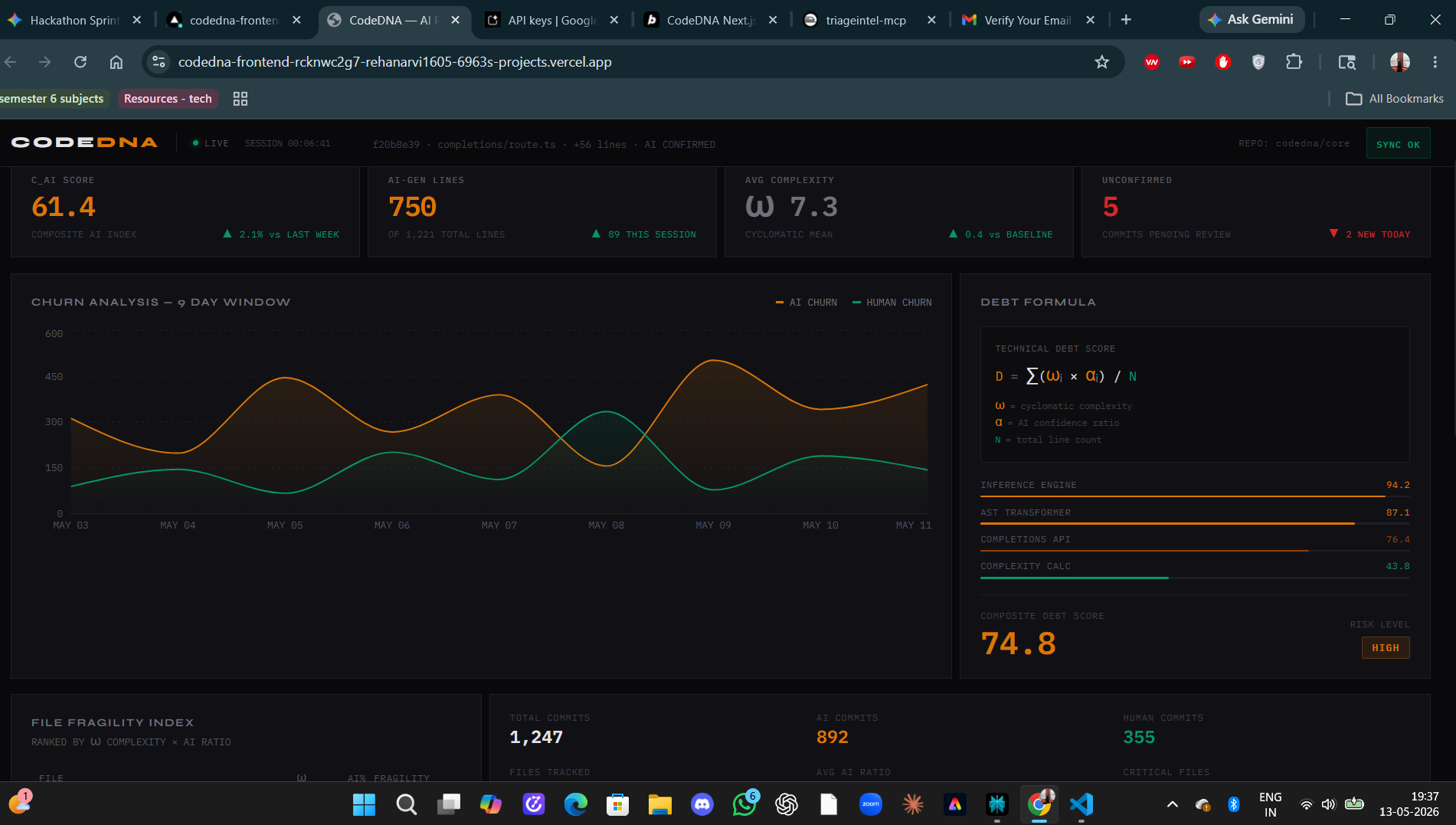
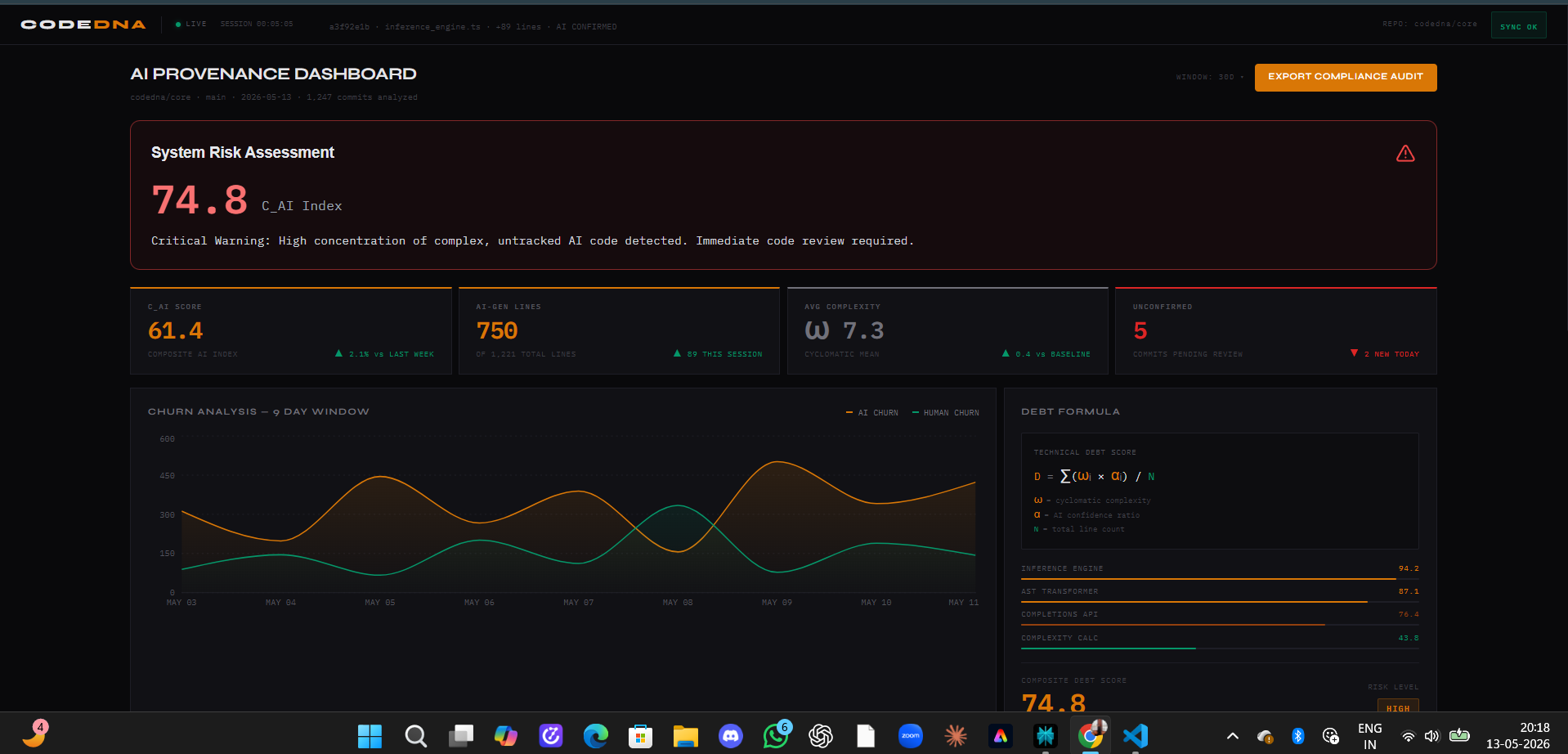
We successfully moved from concept to a fully functional, tested prototype in one hackathon sprint. The entire data pipeline—Capture, Buffer, Sync, and Dashboard—is now operational, providing per-model attribution, file-level breakdowns, and timestamp histories in real-time.
What we learned
We analyzed the $30 billion AI engineering frontier and realized that AI adoption has significantly outpaced governance tooling. We learned that with emerging regulatory pressures—such as the EU AI Act and U.S. executive orders mandating accountability—AI provenance is rapidly shifting from a "nice-to-have" feature to a critical compliance necessity.
What's next for CodeDNA
Our next milestone is to integrate provenance checks directly into GitHub Actions to enforce CI/CD governance. This will allow teams to block code merges if AI-generated contributions exceed configurable thresholds without proper review, a deliverable we are targeting within 30 days.

Log in or sign up for Devpost to join the conversation.