-
-
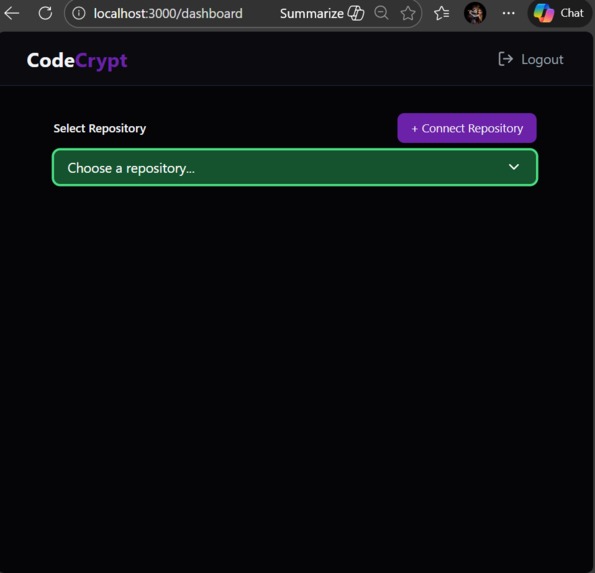
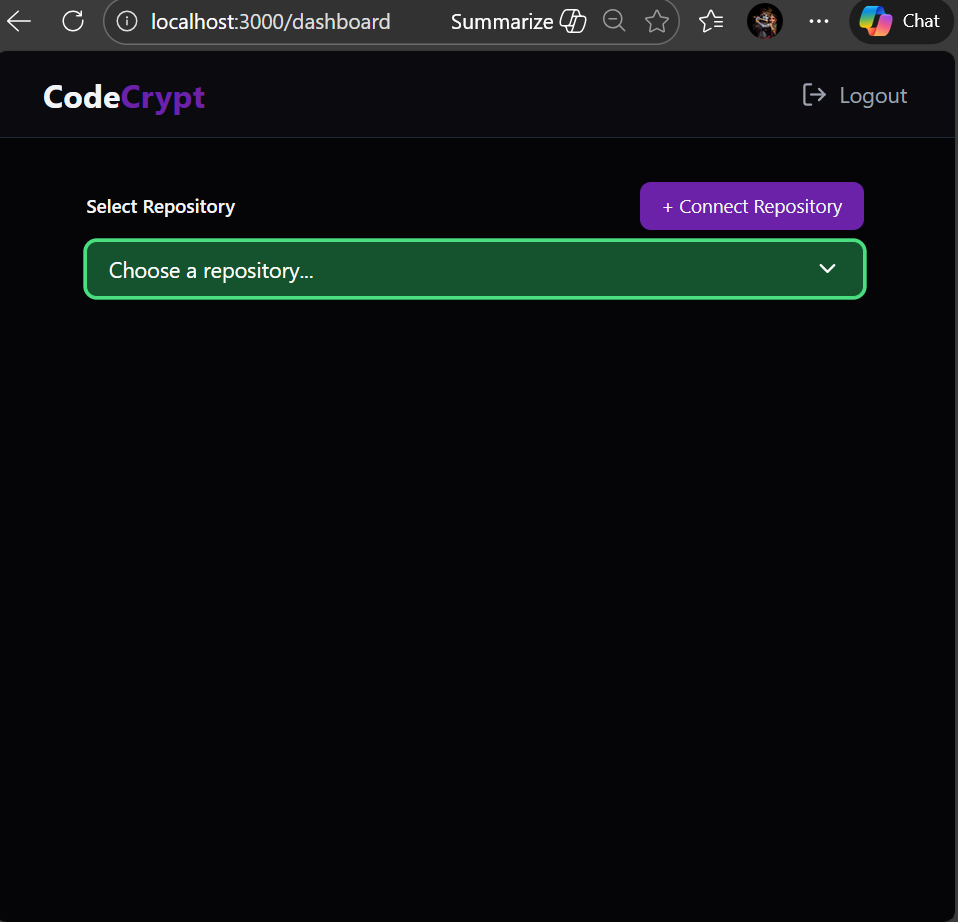
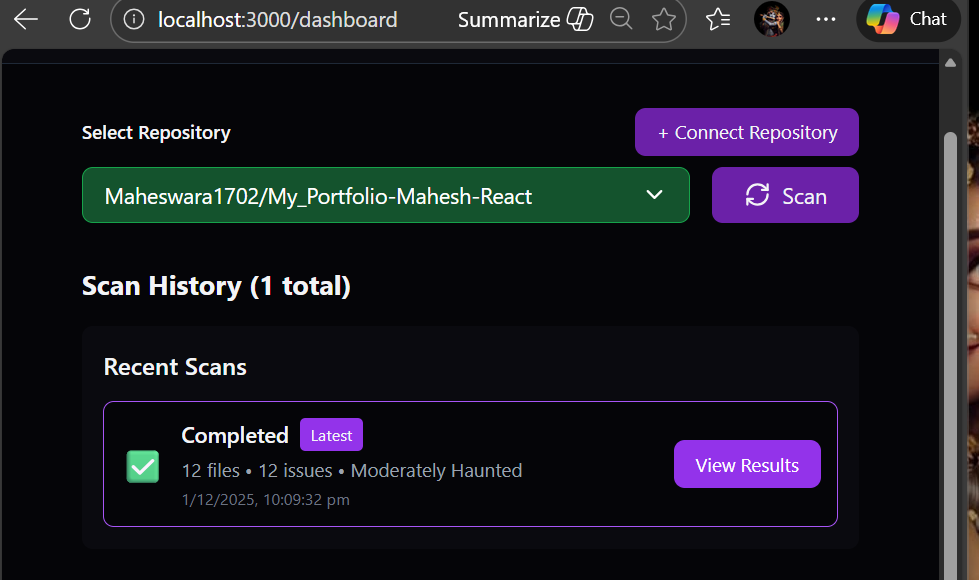
my repository page
-
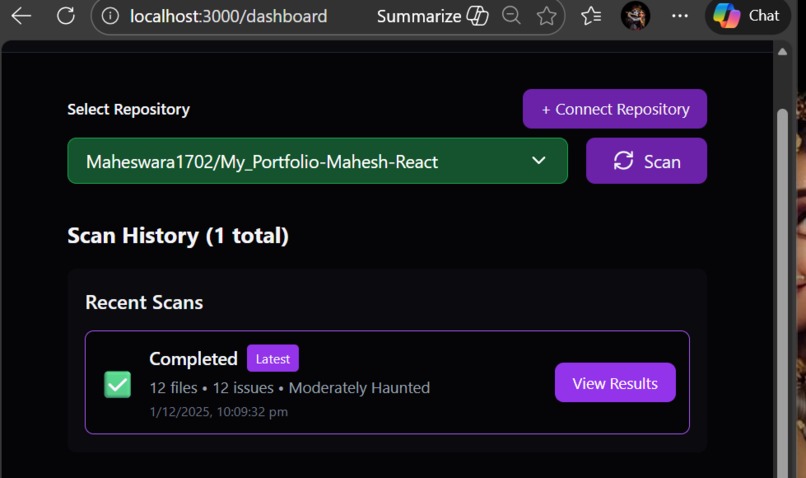
after completed scan
-
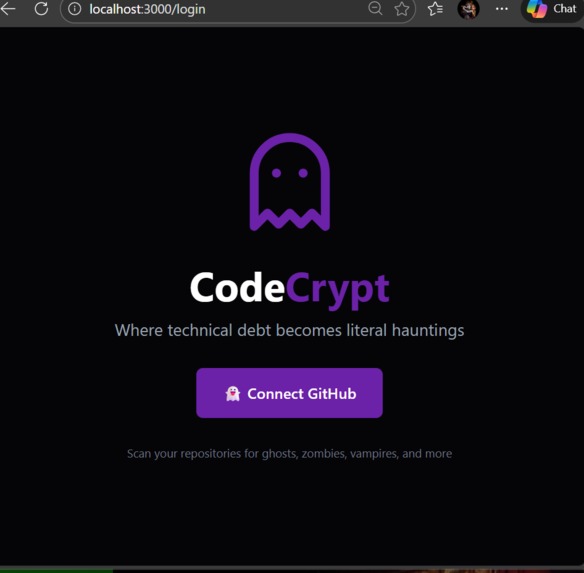
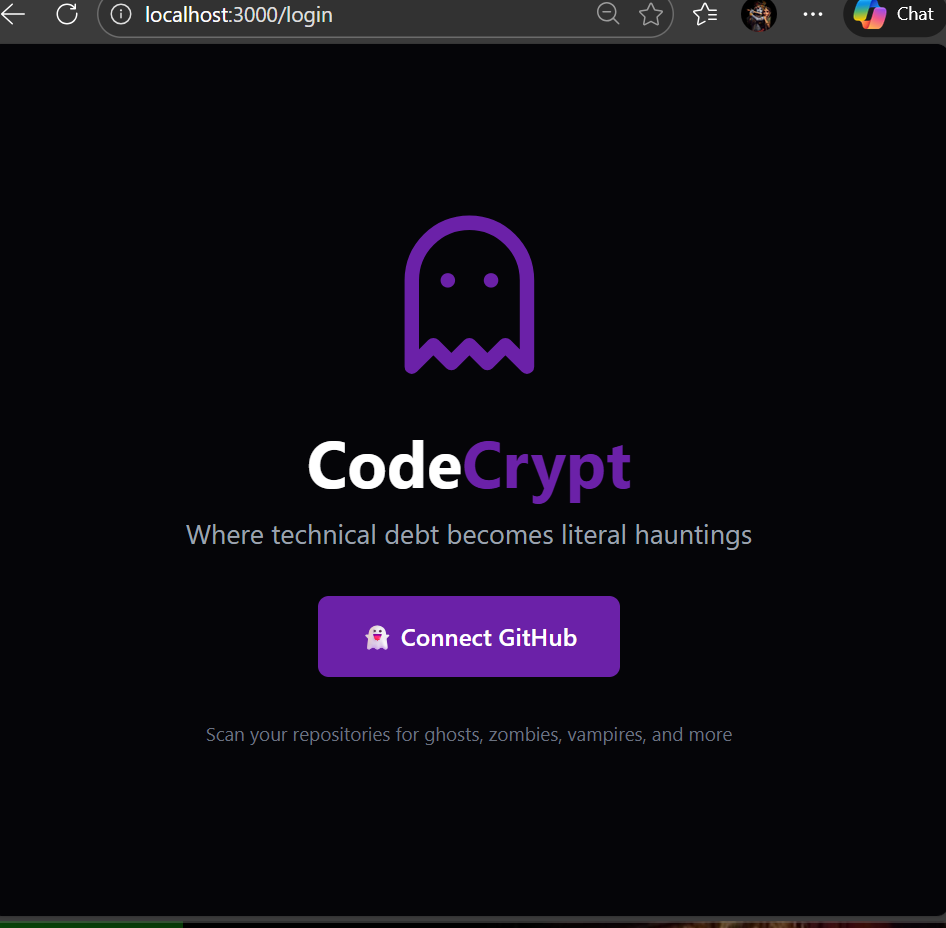
login page
🔮 CodeCrypt - AI-Powered Code Quality Scanner 📖 Project Story 🌟 Inspiration As developers, we've all inherited "haunted" codebases—projects filled with mysterious bugs, outdated dependencies, and undocumented functions that seem to come back from the dead. Traditional linters help catch syntax errors, but they don't explain why code is problematic or how to fix it effectively. We wanted to create something more intuitive, more helpful, and frankly, more fun.
CodeCrypt was born from a simple question: What if we could treat code quality issues like supernatural entities that need "exorcising"?
We envisioned a tool that:
Makes code quality assessment approachable through creative metaphors
Provides AI-powered explanations that actually help developers learn
Automates the tedious parts of code cleanup
Turns technical debt management from a chore into a game
🏗️ How We Built It CodeCrypt is a full-stack application built with modern technologies and a microservices architecture:
Frontend (The Exorcist's Dashboard):
Built with React 18 + TypeScript for type safety
Vite for lightning-fast development and builds
TailwindCSS for responsive, beautiful UI components
Framer Motion for smooth animations that bring the "haunting" theme to life
React Query for efficient data fetching and caching
Socket.io Client for real-time scan progress updates
Backend (The Command Center):
Express.js with TypeScript for robust API development
PostgreSQL for persistent storage of scans, issues, and user data
Redis with Bull queue for reliable job processing
JWT authentication for secure GitHub OAuth integration
WebSocket server for real-time communication with the frontend
Scanner (The Ghost Detector):
Custom TypeScript analyzer using Abstract Syntax Tree (AST) traversal
simple-git for cloning and interacting with GitHub repositories
Rule-based detection system for each "entity type" (Ghosts, Zombies, etc.)
AI Worker (The Paranormal Expert):
OpenAI GPT-4 integration for generating intelligent explanations
Queue-based processing to handle multiple explanations concurrently
Context-aware prompts that provide meaningful, actionable advice
Key Architectural Decisions:
Microservices Approach: Separating scanner and AI workers allows independent scaling
Queue-Based Processing: Redis Bull queues ensure no scan jobs are lost
Real-Time Updates: WebSocket connections keep users informed during long scans
GitHub Integration: OAuth flow provides secure repository access without storing credentials
🧠 What We Learned Building CodeCrypt taught us valuable lessons about:
Technical Insights:
AST manipulation is powerful but complex—parsing modern JavaScript/TypeScript requires handling numerous edge cases
Queue systems need careful error handling and retry logic
AI explanations must be carefully prompted to avoid hallucinations and ensure accuracy
Real-time systems require thoughtful state management on both client and server
Project Management Lessons:
Breaking down a complex system into manageable services is crucial
Property-based testing caught edge cases we never would have considered
Documentation is as important as code—especially for open-source projects
User experience matters: even developers appreciate intuitive interfaces
🚧 Challenges We Faced
- The AST Maze:
Different import styles (ES6, CommonJS, dynamic imports)
Complex nested code structures that break simple pattern matching
False positives from unused code that's actually used dynamically
Solution: We implemented layered validation and context-aware detection rules.
- AI Explanation Quality:
Early explanations were too generic or technically inaccurate
Sometimes the AI would "invent" problems that didn't exist
Solution: We developed a prompt engineering system with specific templates for each issue type, including code context and constraints.
- Real-Time Sync:
Keeping scan status synchronized across multiple clients
Handling WebSocket disconnections and reconnections
Managing memory with large scan results
Solution: Implemented a robust event system with Redis pub/sub and client-side reconnection logic.
- GitHub API Limitations:
Rate limits for cloning and creating pull requests
Permission scopes for different repository types
Handling private vs. public repositories
Solution: Careful rate limiting, caching strategies, and clear user messaging about permissions.
🎯 The Impact CodeCrypt isn't just another linter—it's a learning tool. By framing technical concepts through creative metaphors and providing AI-powered explanations, we help developers:
Understand why certain patterns are problematic
Learn better coding practices through concrete examples
Gradually improve codebases without overwhelming complexity
Make technical debt reduction approachable and even enjoyable
Built With
- express.js
- frontend:-react-18
- github-oauth
- postgresql
- redis-ai:-openai-gpt-4-api-tools:-docker
- socket.io
- tailwindcss-backend:-node.js
- typescript
- vite

Log in or sign up for Devpost to join the conversation.