-
-
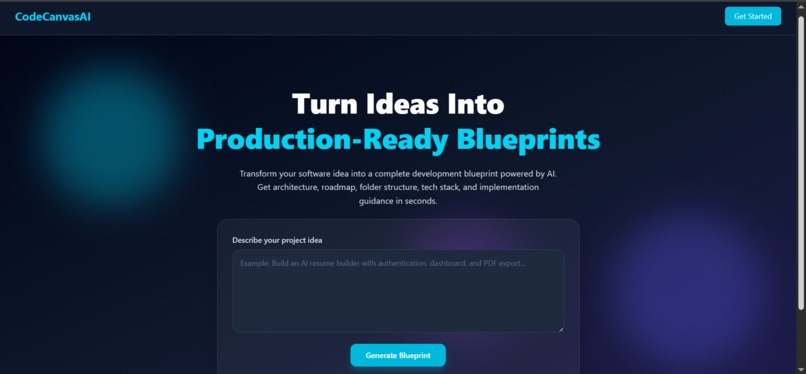
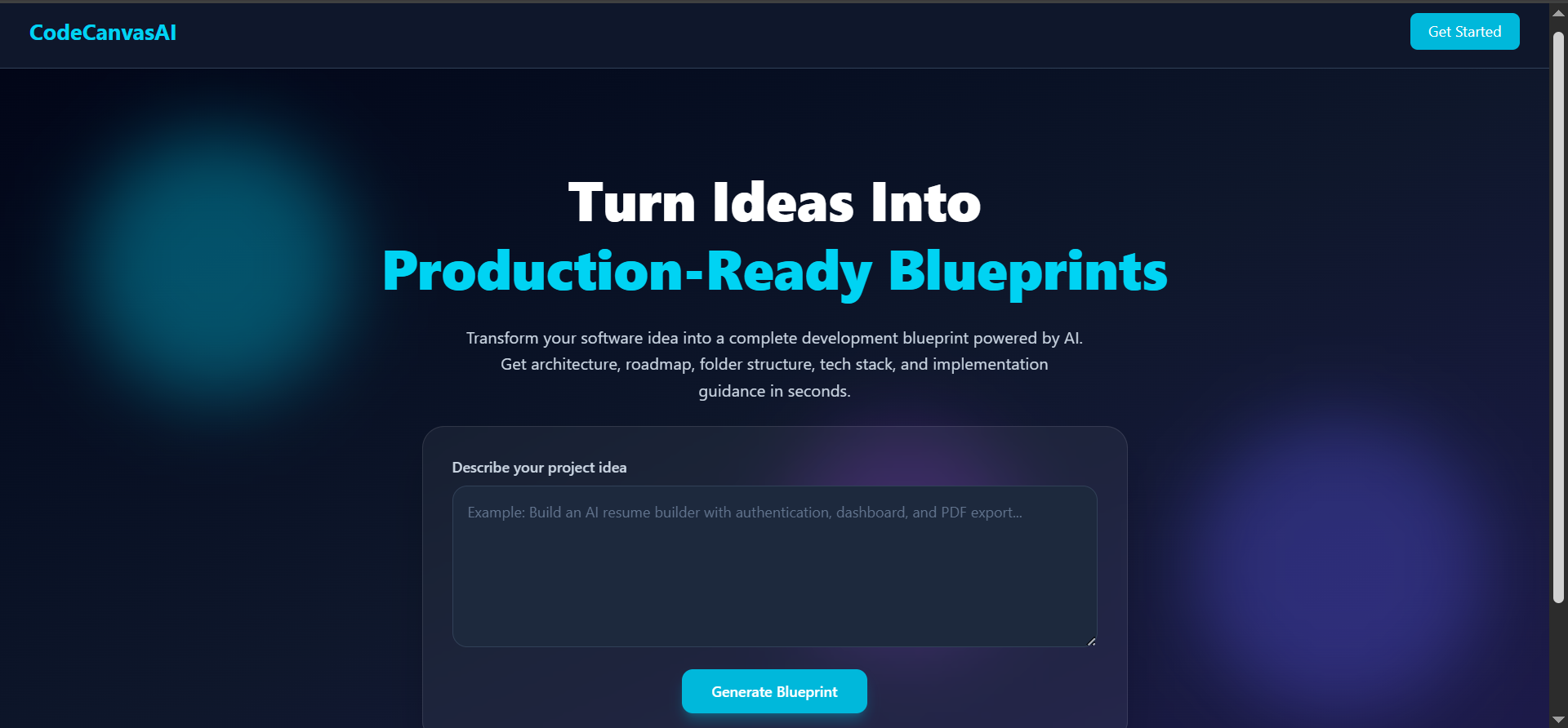
Landing-page
-
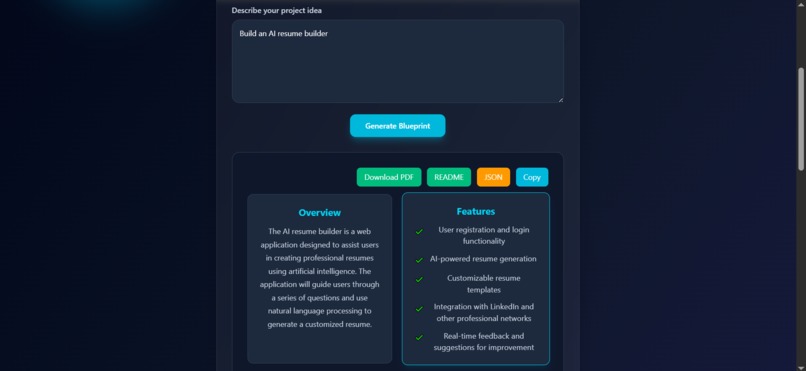
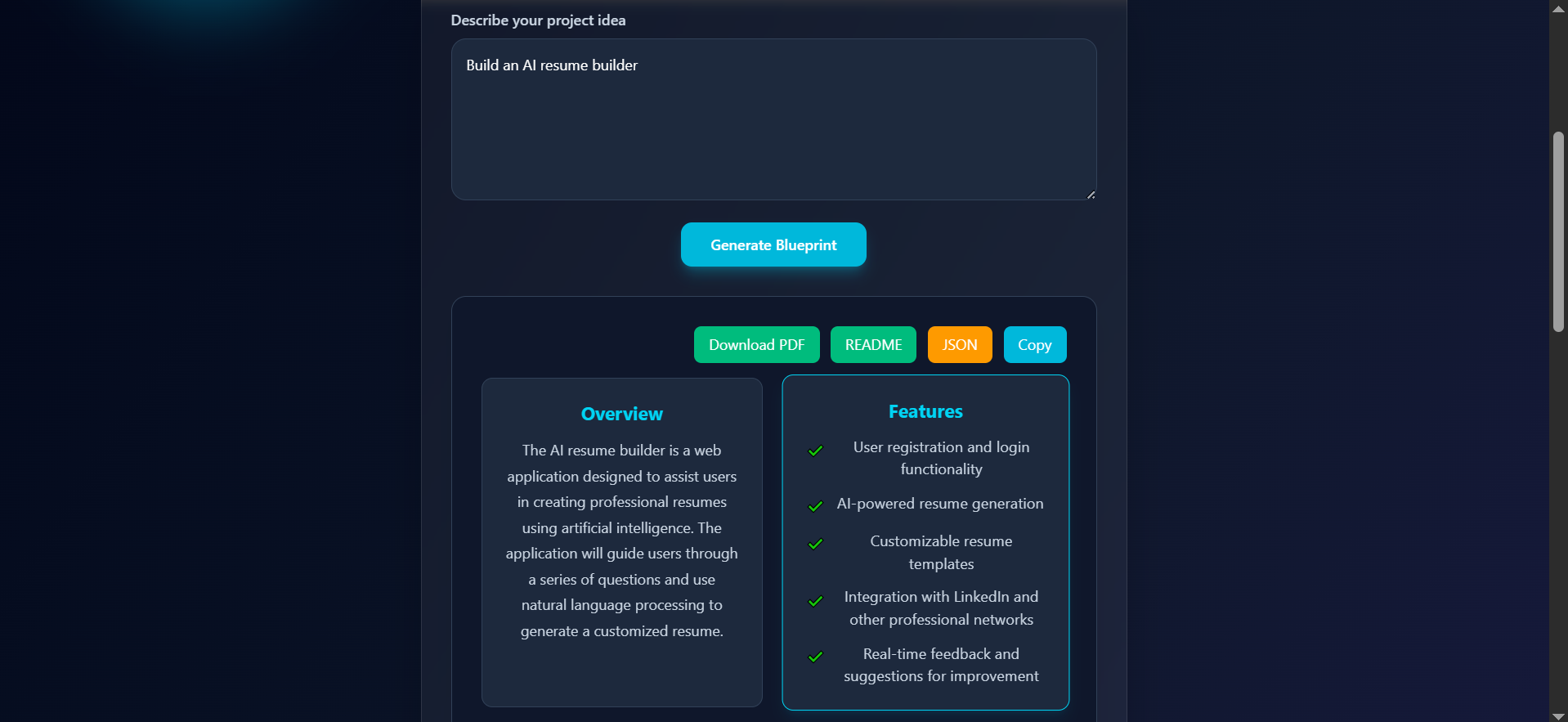
Dashboard
-
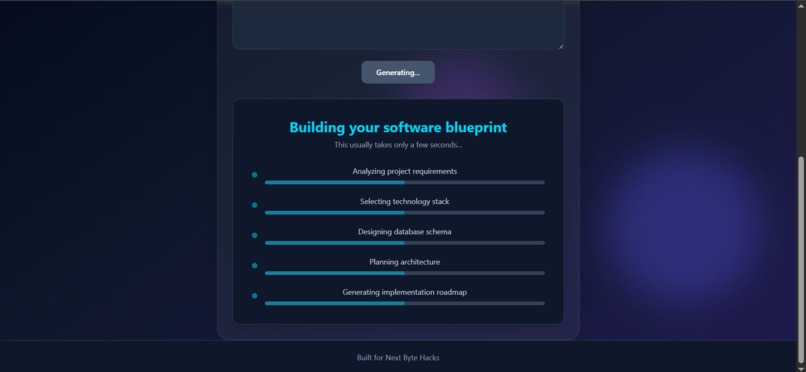
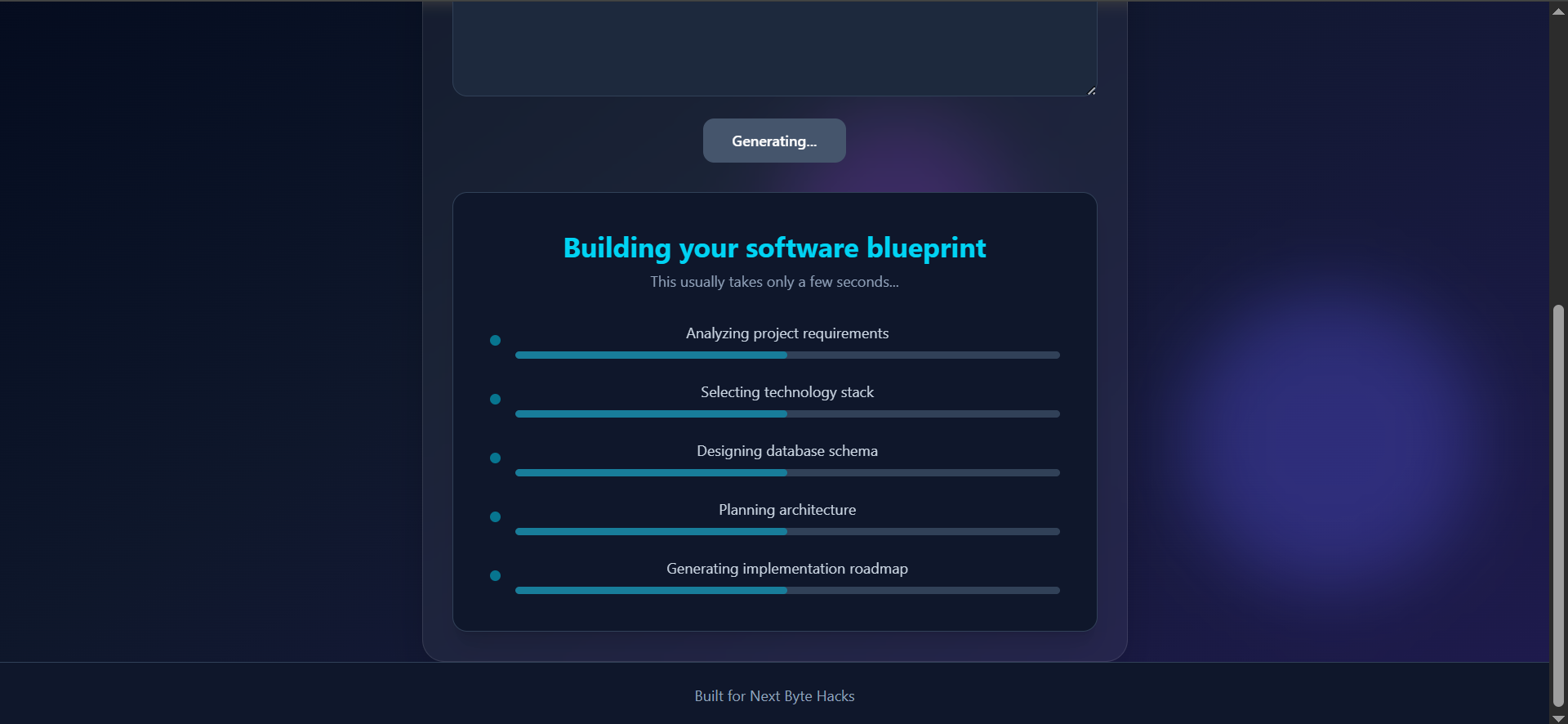
Loading-screen
-
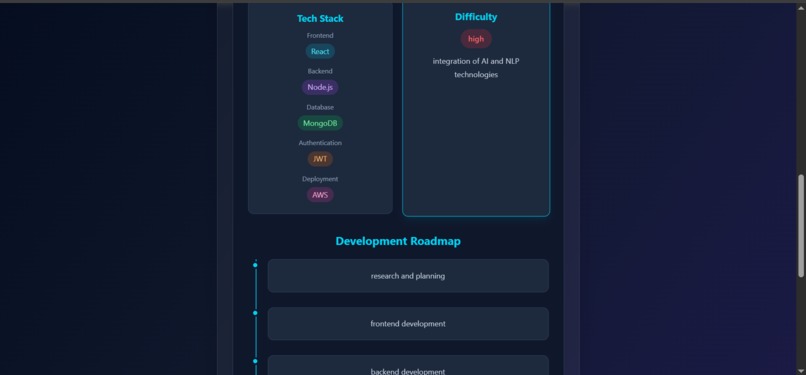
Roadmap
-
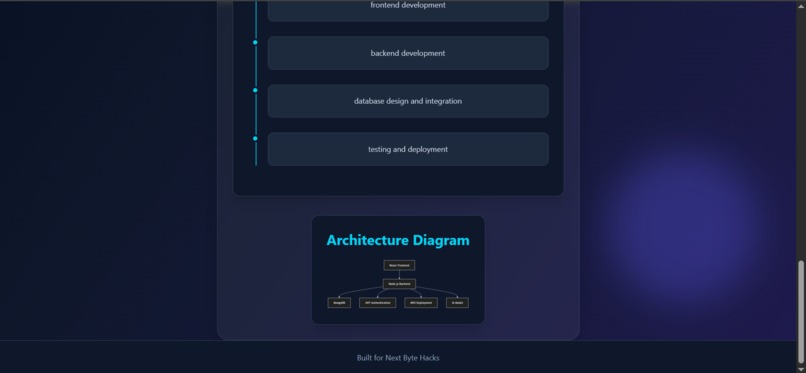
Architecture
Inspiration
Every software project starts with an idea, but turning that idea into a clear development plan is often one of the most time-consuming parts of the process.
Developers and students spend hours deciding on the right technology stack, designing the application architecture, planning the folder structure, and organizing development tasks before writing their first line of code.
We wanted to simplify this process by building an AI-powered planning assistant that could transform a simple project idea into a complete software blueprint within seconds.
That's how CodeCanvasAI was born.
What it does
CodeCanvasAI is an AI-powered software planning assistant that converts natural language project ideas into production-ready software blueprints.
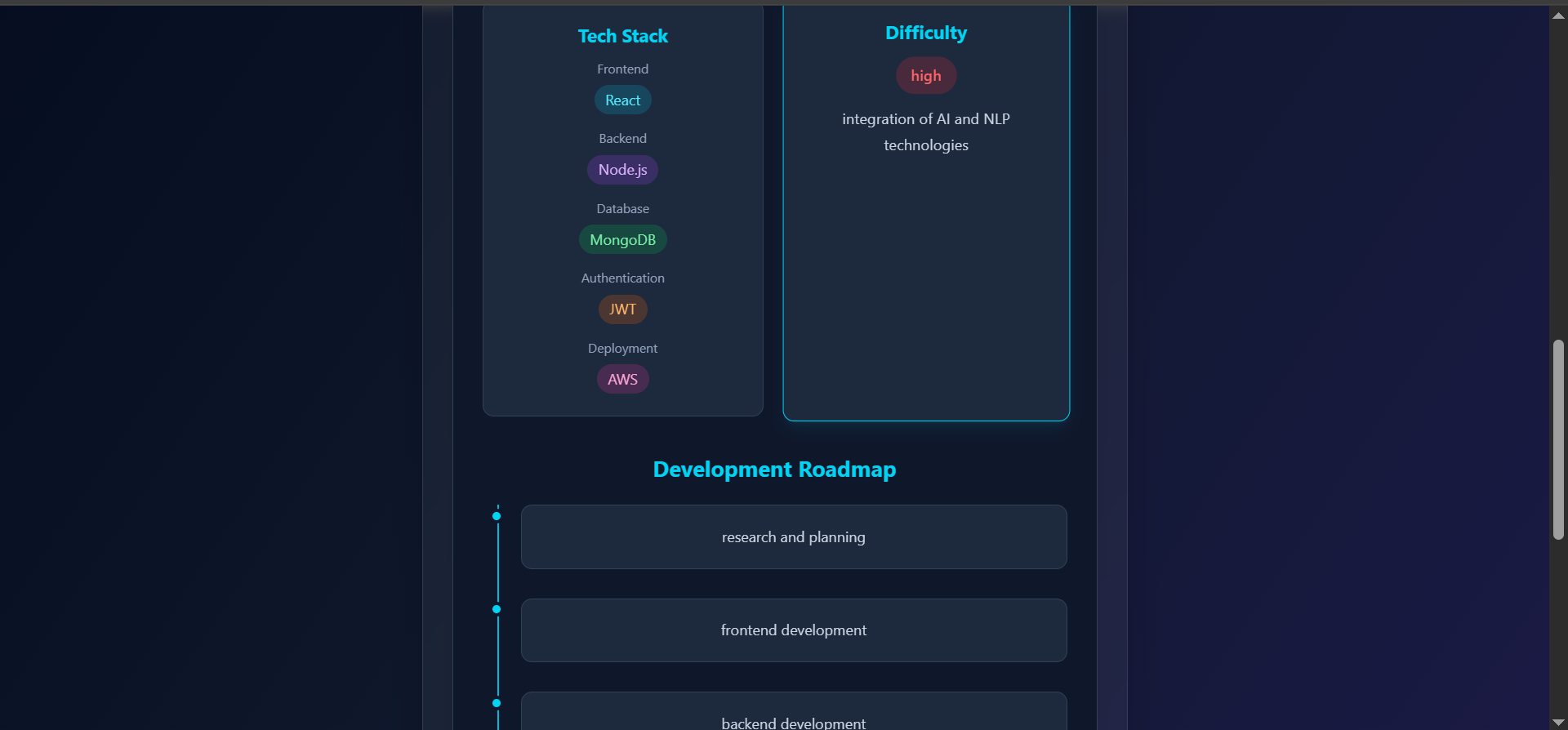
Given a simple prompt, the application automatically generates:
- Project overview
- Core features
- Recommended technology stack
- Folder structure
- Database design
- Development roadmap
- Difficulty estimation
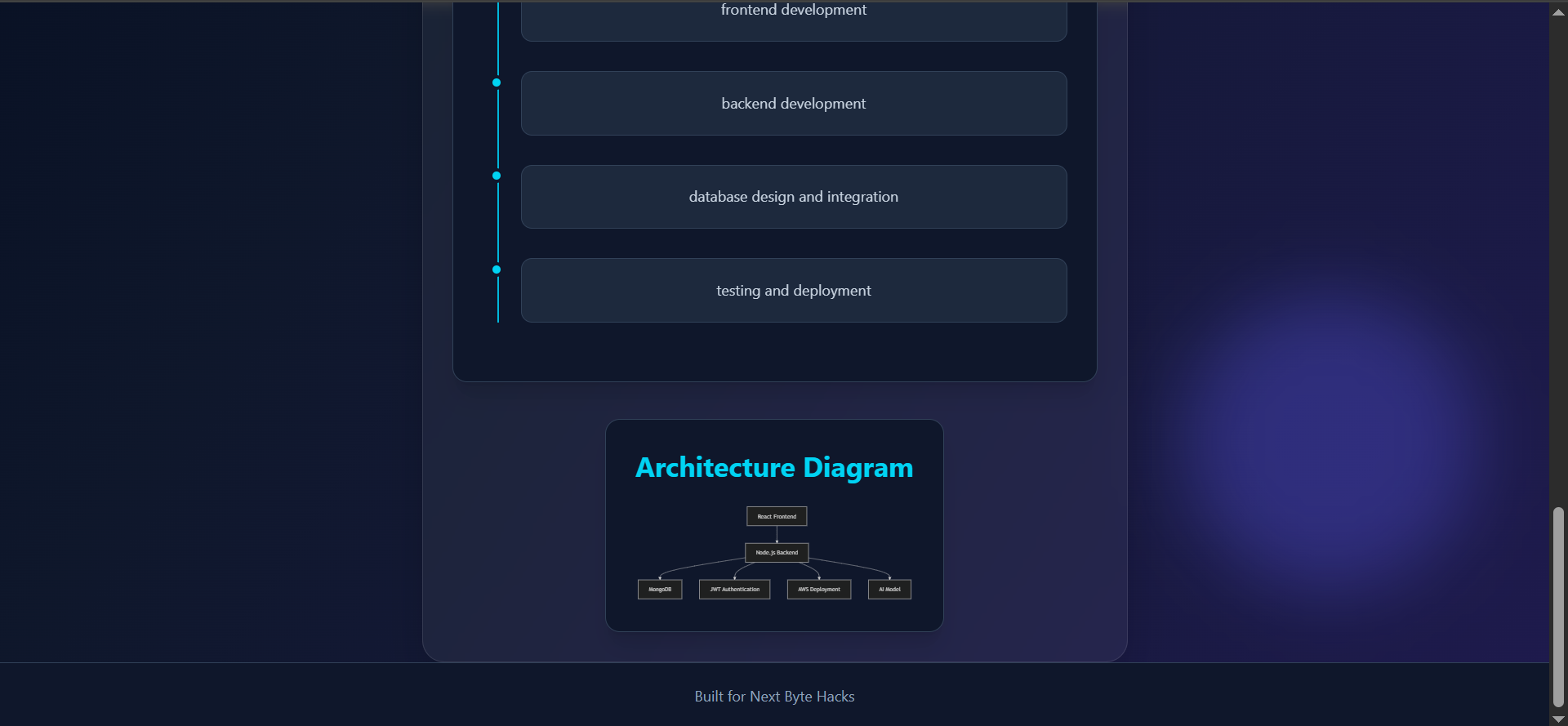
- Architecture diagram
- Exportable documentation
Users can also export their generated blueprint as:
- README.md
- JSON
making it easy to continue development immediately.
How we built it
We built CodeCanvasAI using a modern web development stack.
The frontend was developed using React, Vite, and Tailwind CSS to create a responsive and clean user interface.
The AI responses are generated using the Groq API, allowing fast blueprint generation with structured outputs.
We used Mermaid.js to dynamically generate architecture diagrams based on the AI-generated system design.
Additional features such as PDF generation, README export, and JSON export were implemented to make the generated blueprint practical for real-world development.
Finally, the application was deployed using Vercel.
Challenges we ran into
One of the biggest challenges was making the AI generate consistent and well-structured software blueprints. We refined the AI instructions and improved response processing to ensure every blueprint followed the same organized format.
Another challenge was dynamically generating architecture diagrams from AI-generated content while keeping them readable and visually organized.
We also spent considerable time polishing the user experience, improving responsiveness across different devices, and implementing export functionality for multiple formats.
Accomplishments that we're proud of
We're proud that CodeCanvasAI evolved from a simple idea into a complete AI-powered planning tool.
Some highlights include:
- AI-generated production-ready software blueprints
- Automatic architecture diagram generation
- Export support for PDF, README, and JSON
- Responsive modern interface
- Live deployment with GitHub integration
Most importantly, we built a tool that can genuinely help developers reduce planning time and start building faster.
What we learned
Throughout this project we gained practical experience integrating large language models into real-world applications.
We also learned how to transform AI-generated content into structured developer documentation while improving frontend design, prompt engineering, deployment workflows, and overall user experience.
This project strengthened both our technical skills and our understanding of building complete end-to-end software products.
What's next for CodeCanvasAI
We plan to continue improving CodeCanvasAI with features such as:
- Multi-language blueprint generation
- Interactive architecture editing
- Authentication and saved projects
- Team collaboration
- GitHub repository generation
- CI/CD workflow recommendations
- Cost estimation for cloud deployment
- AI-generated API documentation
- Direct code scaffolding from generated blueprints
Our long-term vision is to make CodeCanvasAI a complete AI-powered software planning platform that helps developers move from idea to implementation faster than ever before.

Log in or sign up for Devpost to join the conversation.