-
-
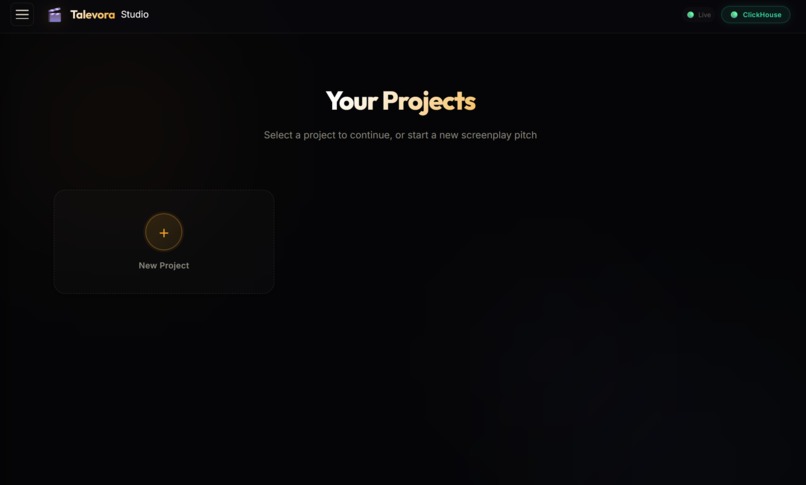
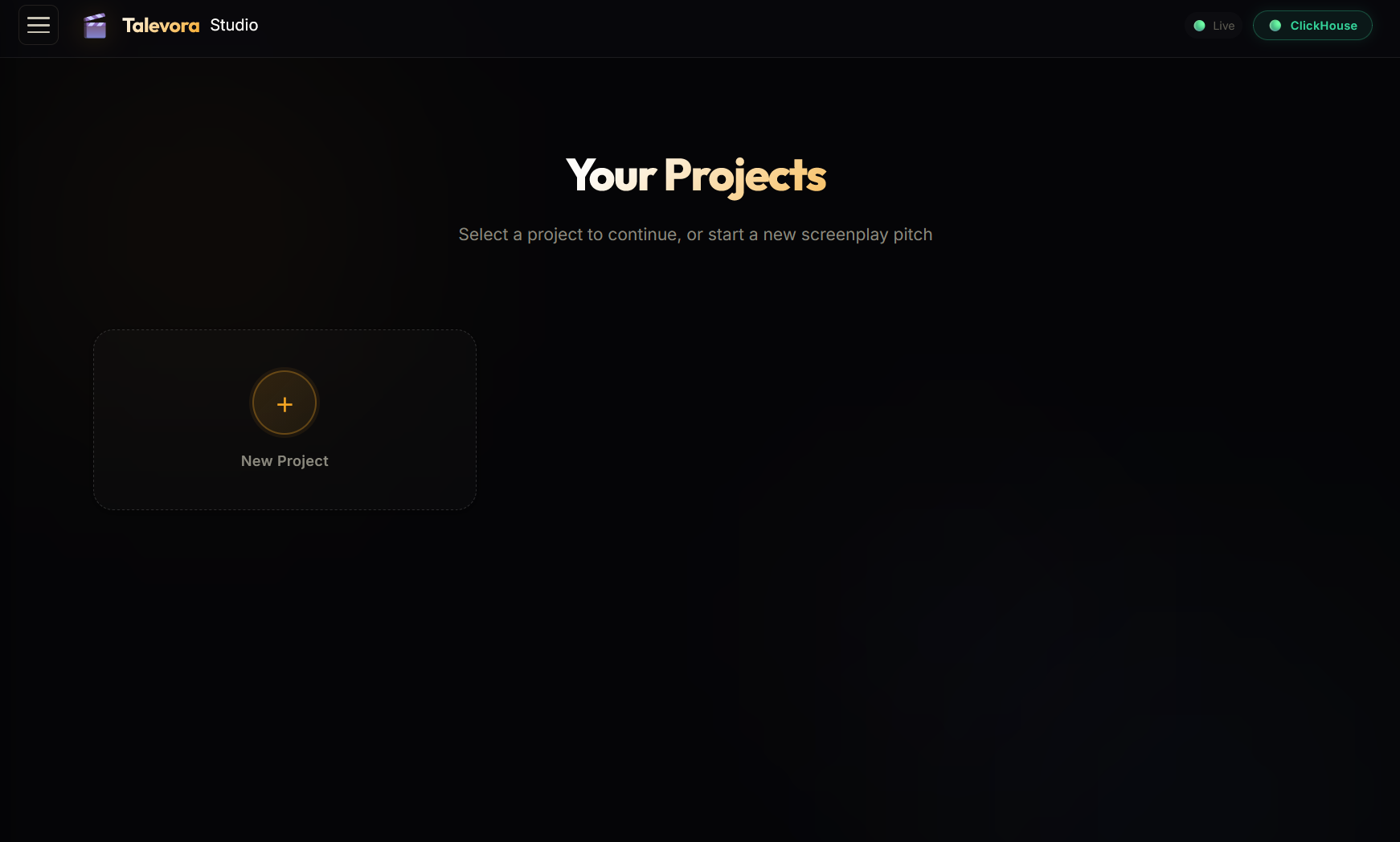
landing page
-
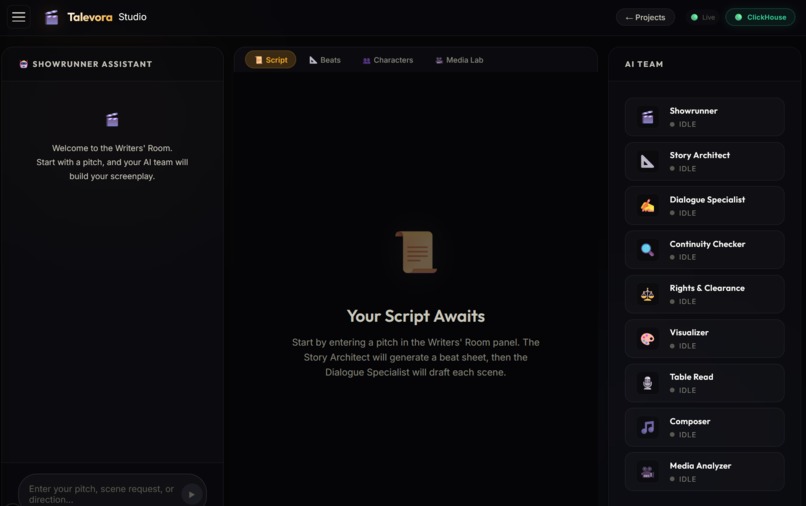
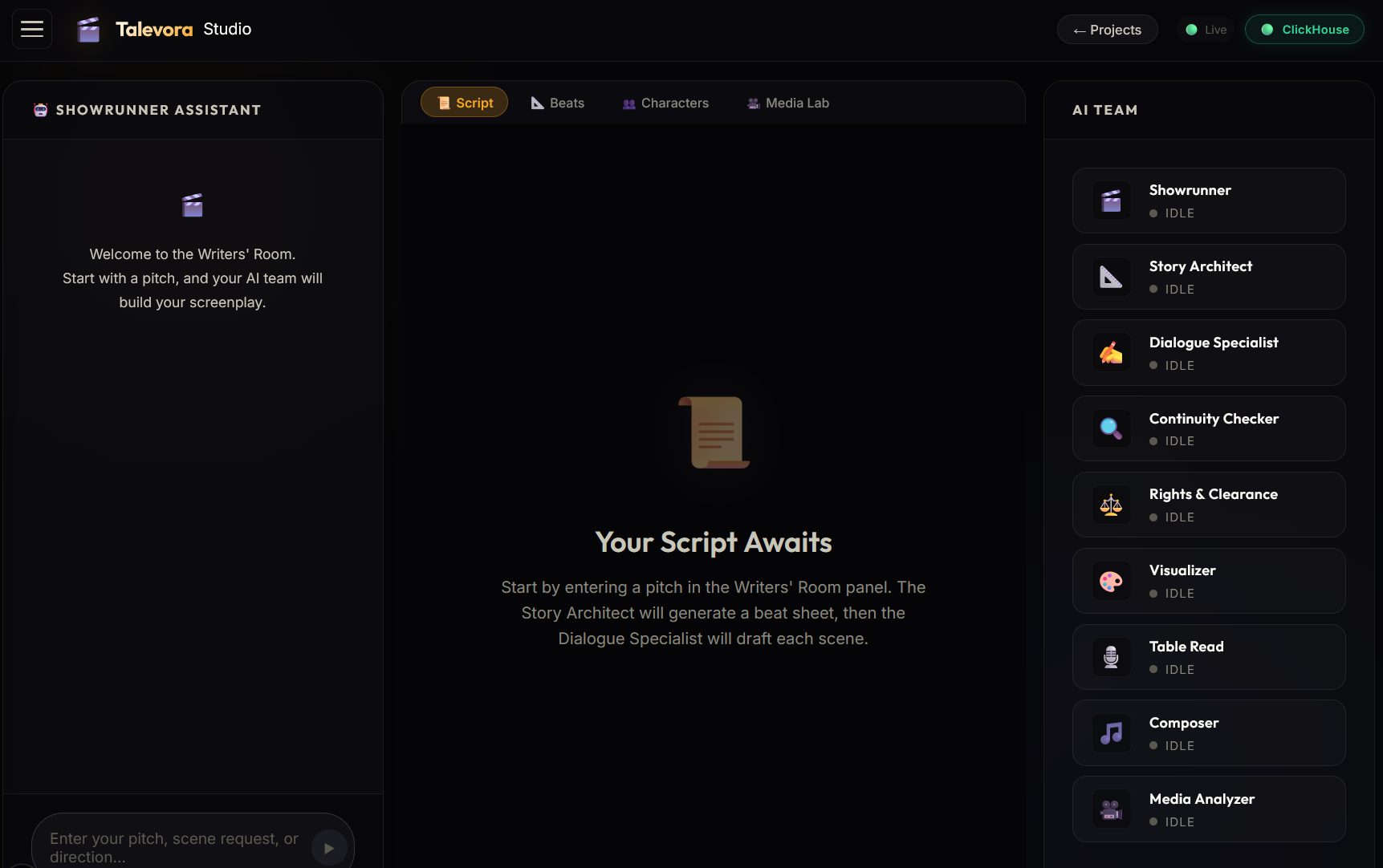
dashboard
-
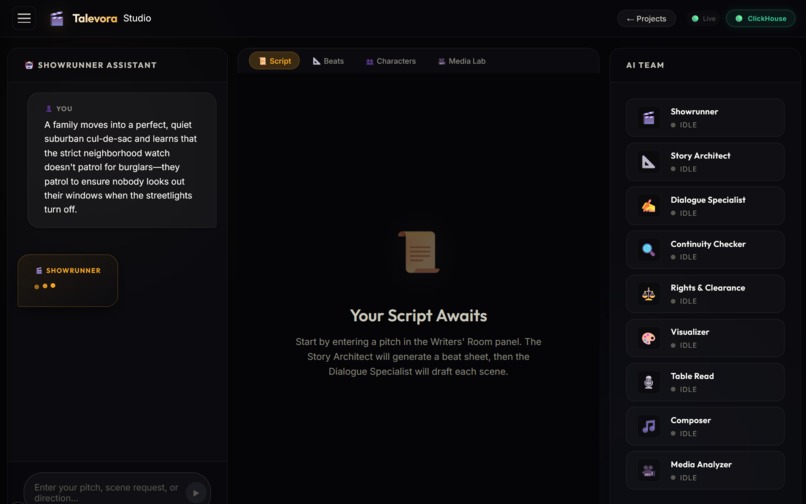
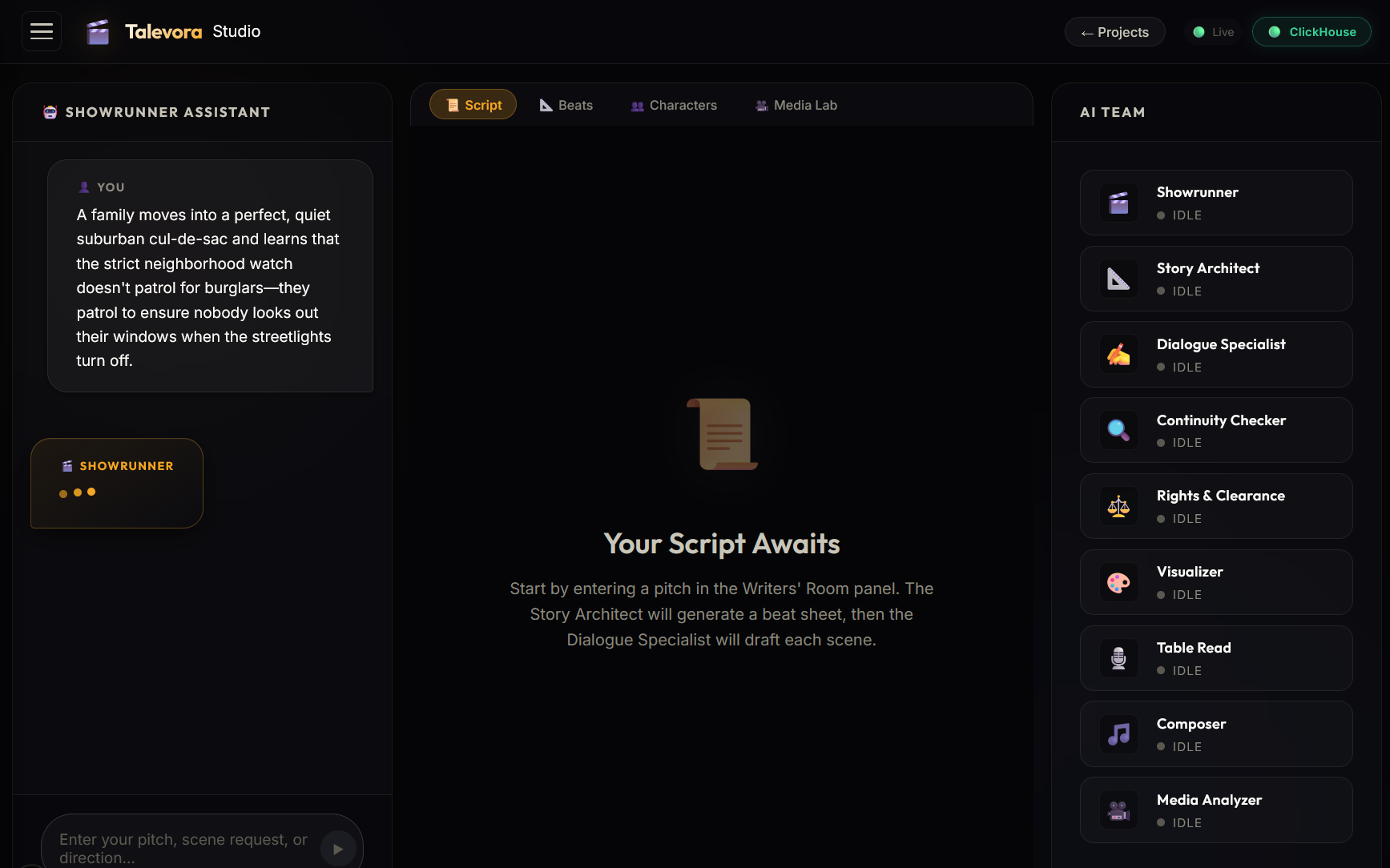
prompt section
-
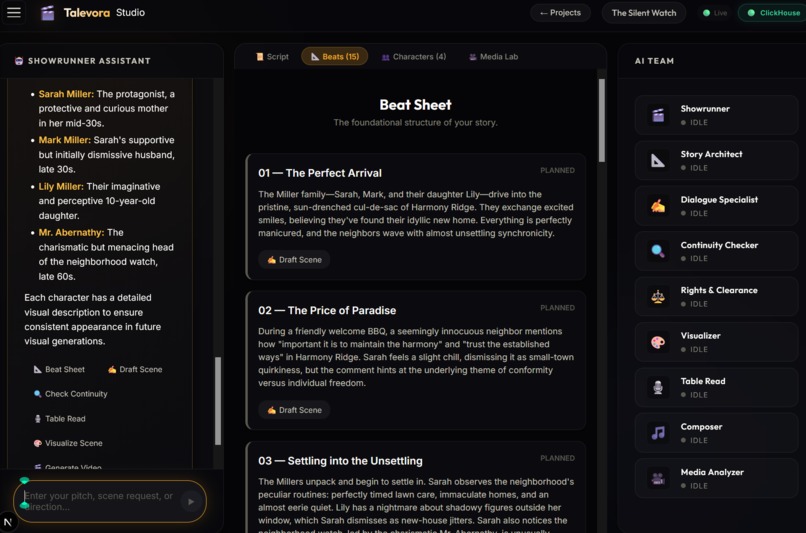
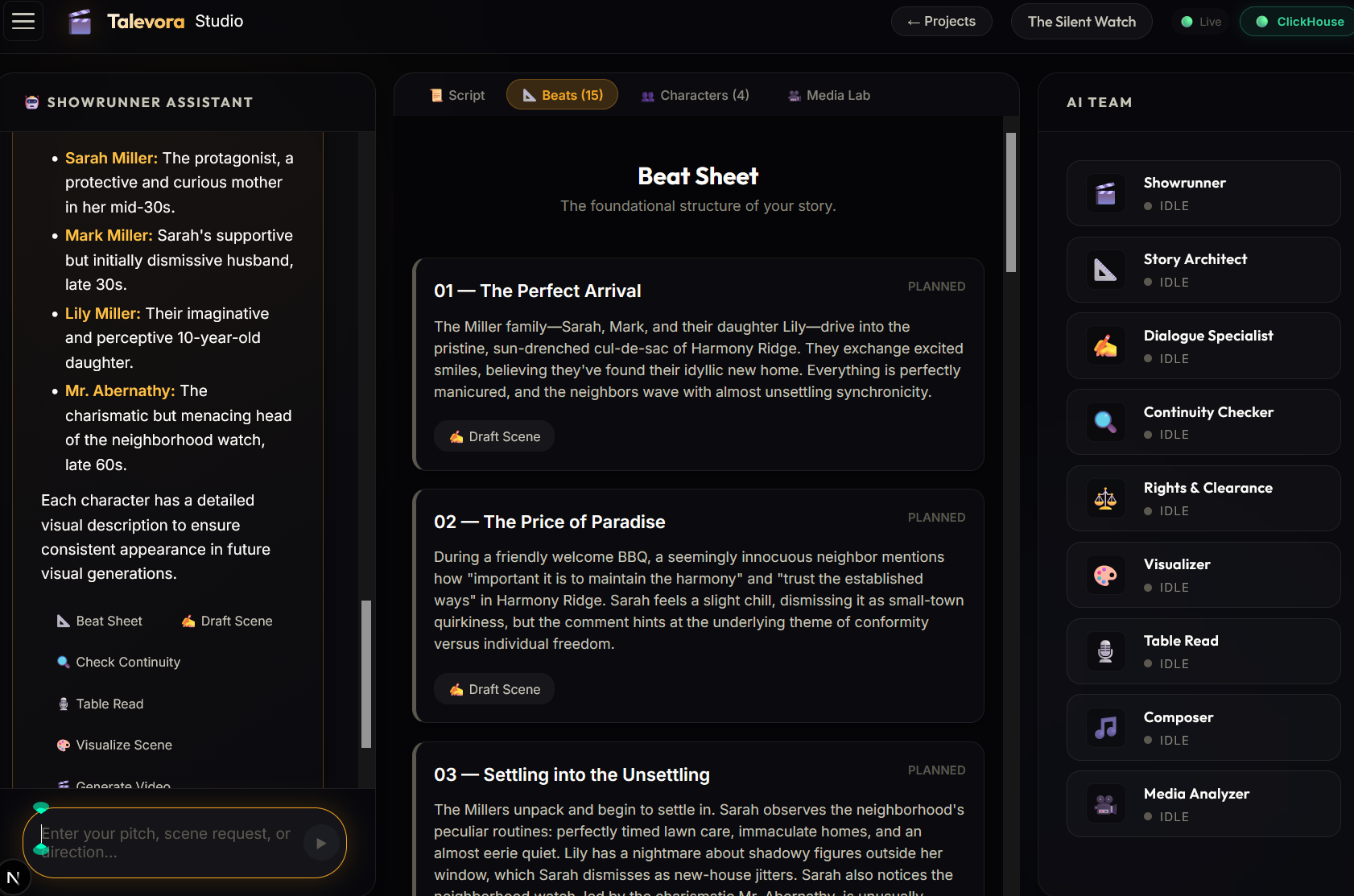
beat sheet
-
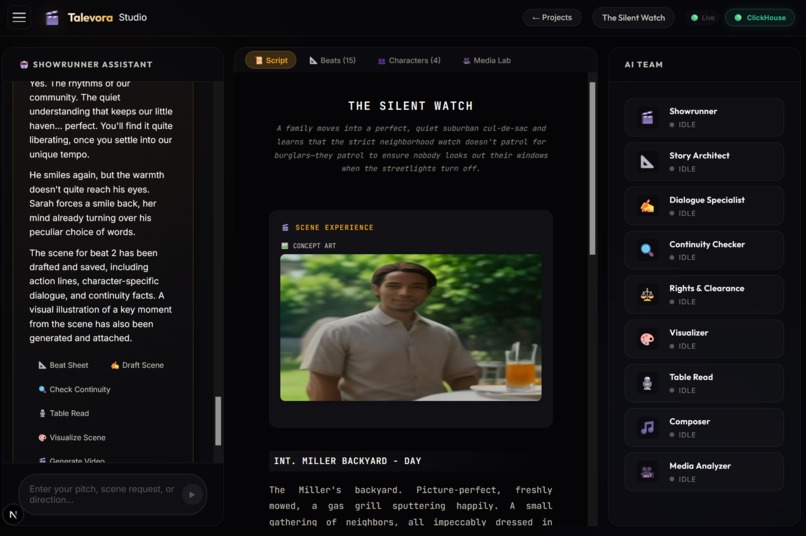
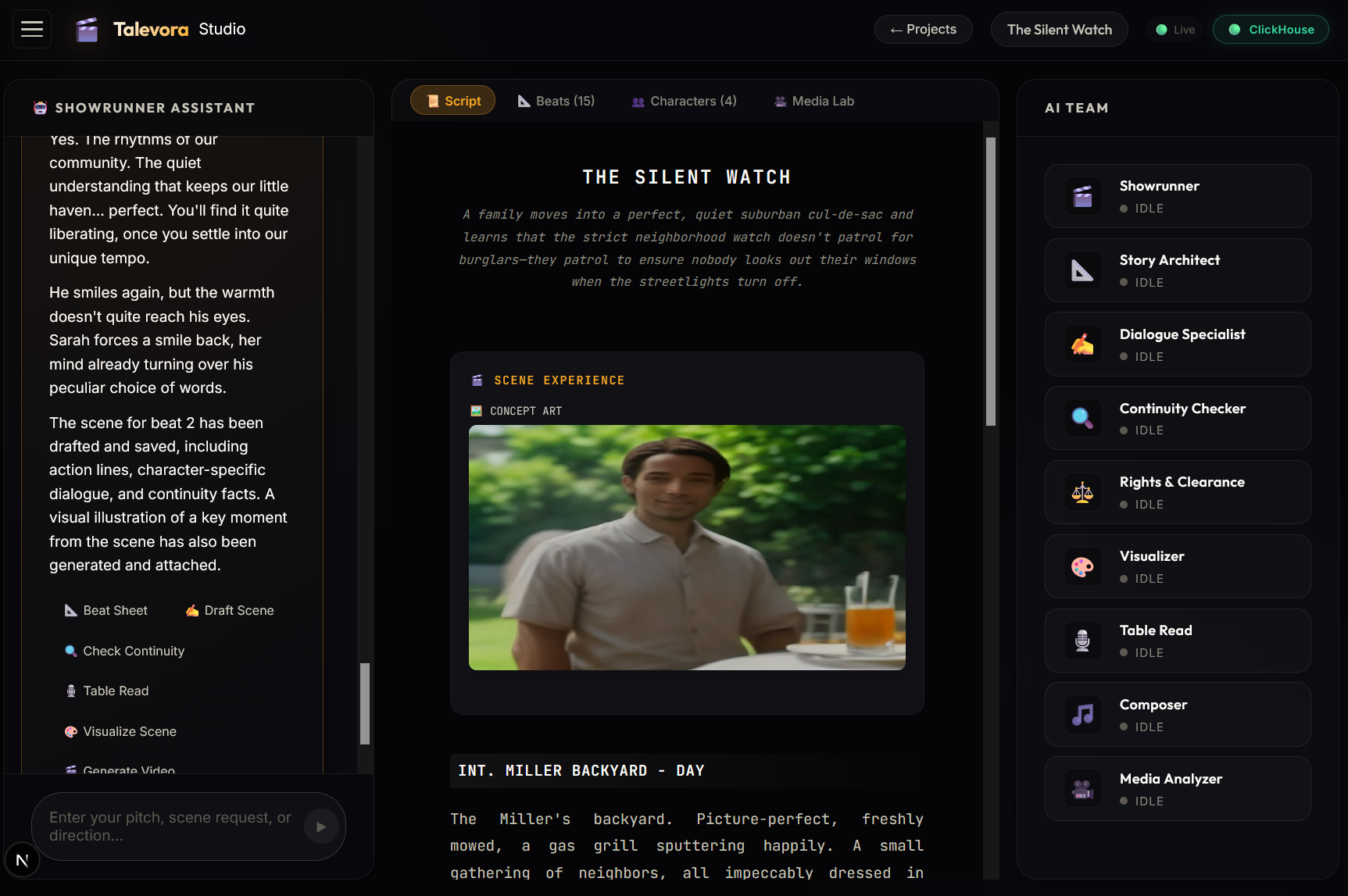
image generation
-
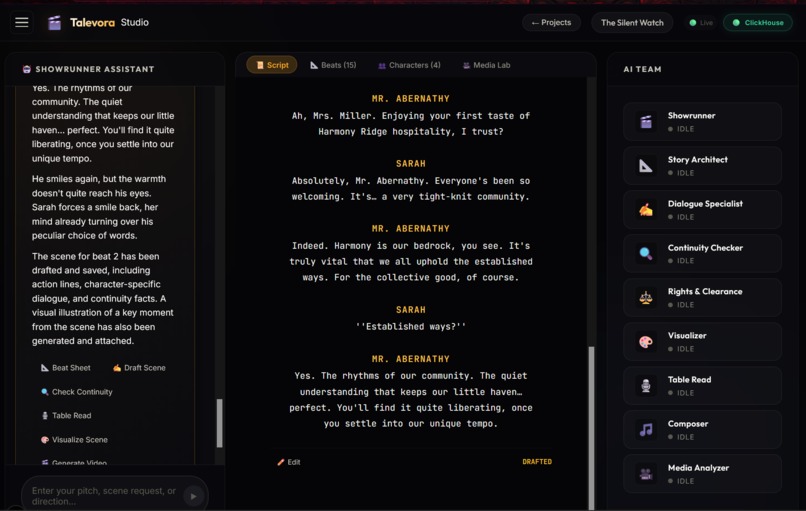
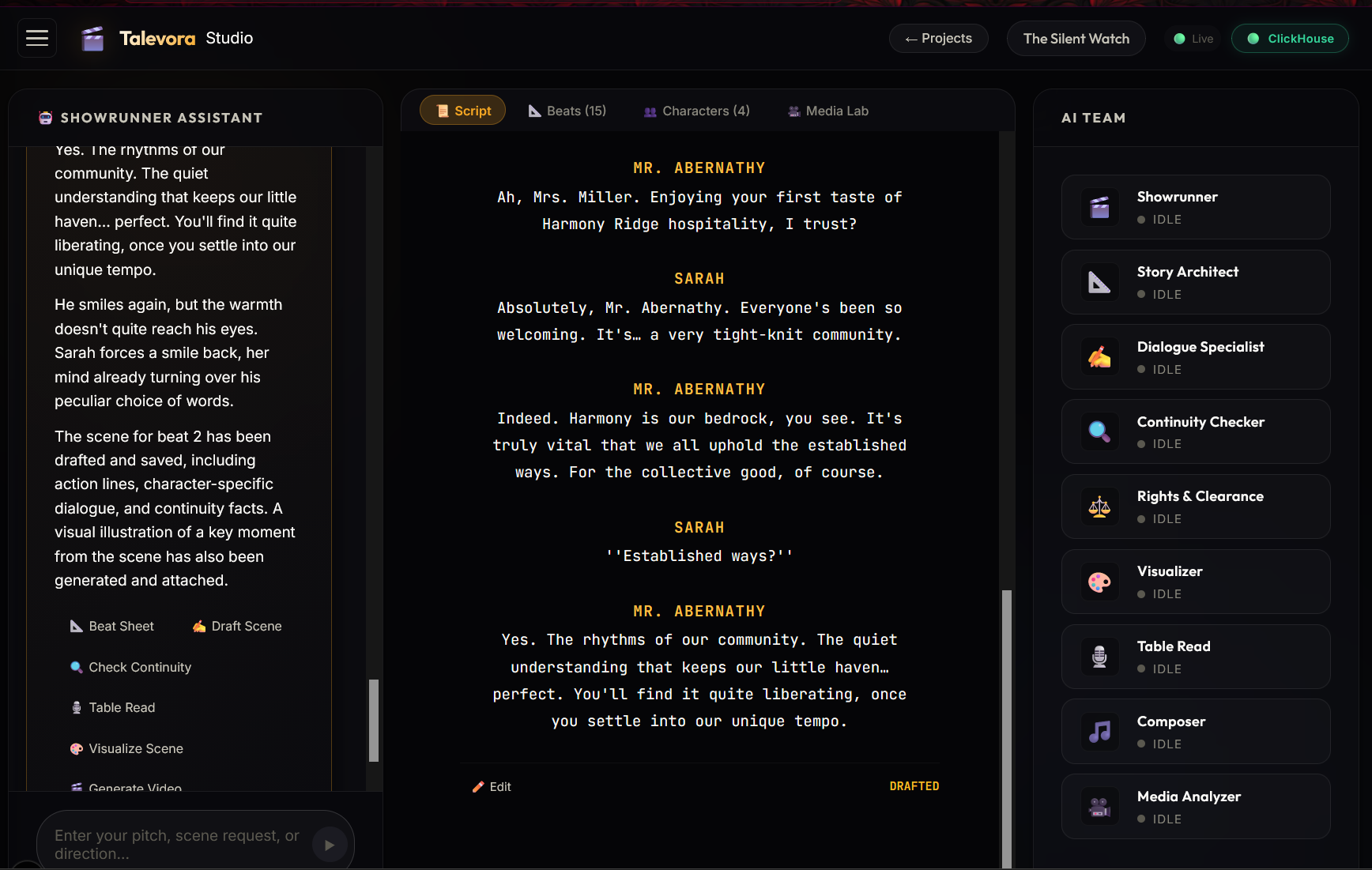
generated script
-
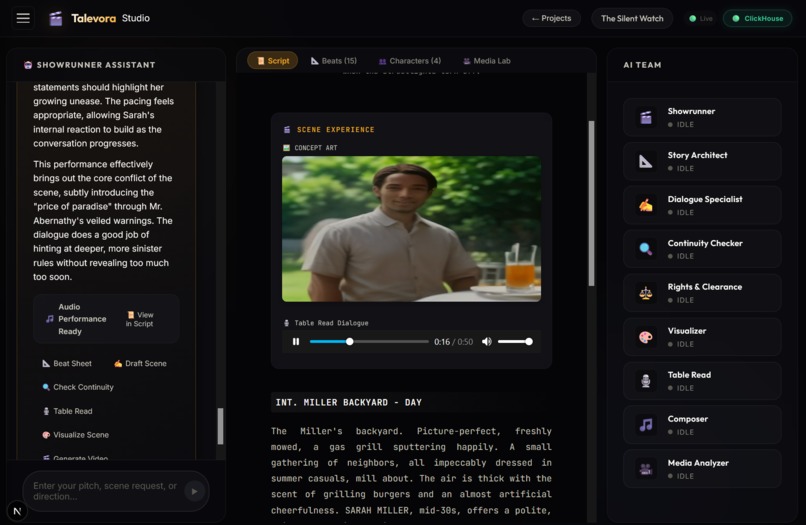
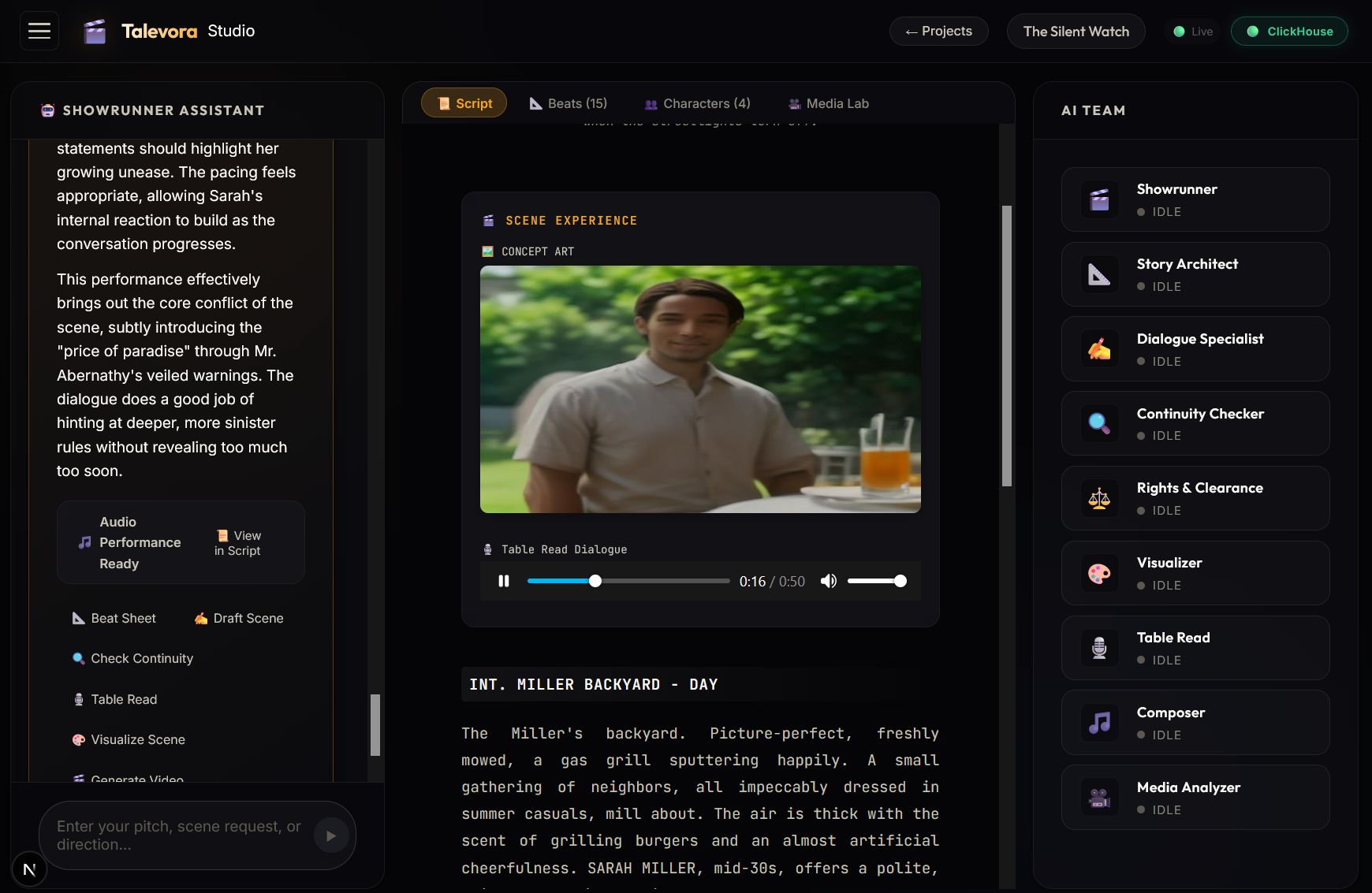
generated audio
-
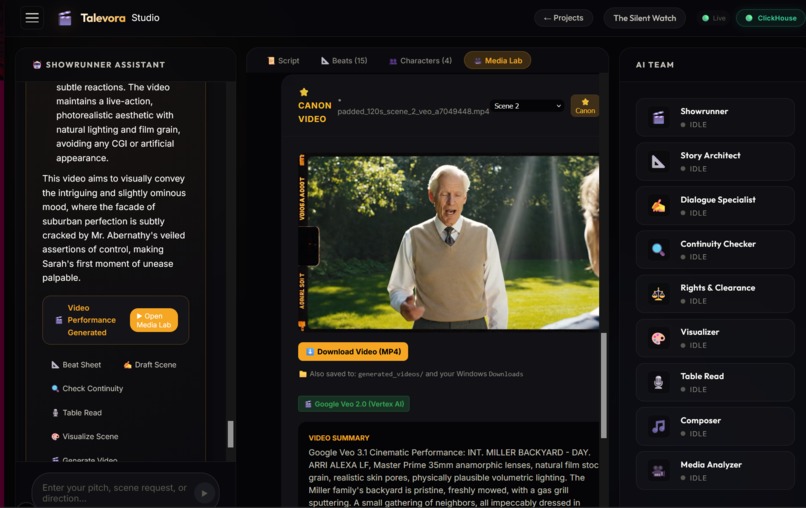
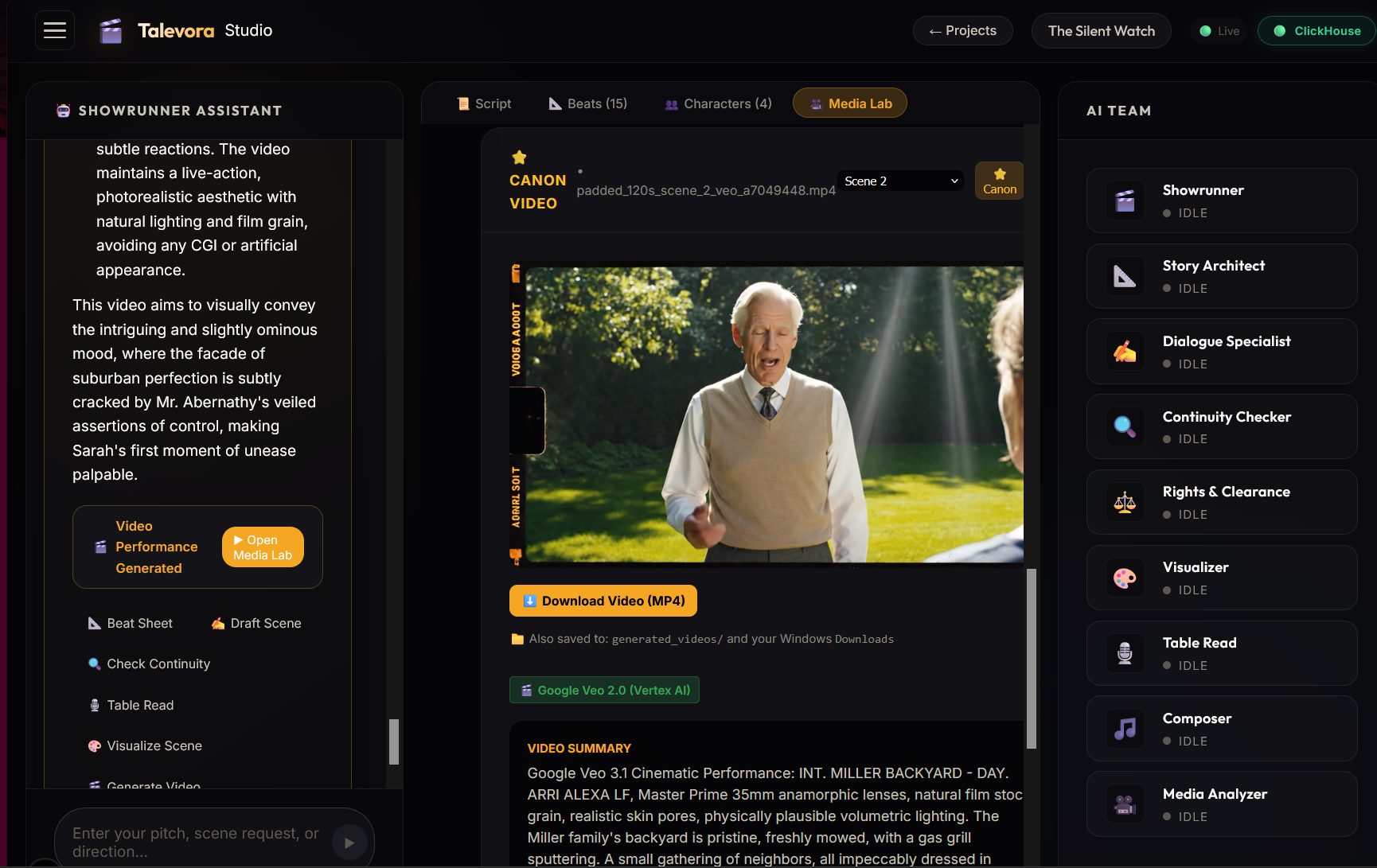
generated video
Inspiration
Screenwriting and pre-production are traditionally fragmented, slow, and expensive. Taking an idea from a one-line logline to a fully structured beat sheet, continuity-checked script, storyboard, and table read requires a large team. We built Talevora to democratize this workflow—creating an autonomous, multi-agent virtual studio where a single writer can direct an entire room of AI specialists in real time.
What it does
Talevora transforms a single sentence into a full cinematic production package:
- Hierarchical Writers' Room: Orchestrated by the Showrunner Agent using Google ADK.
- Beat Sheet & Scripting: Generates 15-beat frameworks (Save the Cat!, Three-Act) and writes Hollywood-formatted screenplay scenes using Gemini 2.5 Pro.
- Continuity Gate: A strict code-level gate powered by ClickHouse Cloud Vector Search that prevents scenes from finalizing if canon contradictions exist.
- Multimodal Media Lab: Ingests reference images and videos to transcribe dialogue and extract visual canon.
- Multi-Sensory Performance: Generates multi-speaker audio table reads (Gemini 3.1 Flash TTS), original musical scores (Lyria 3), and full-motion cinematic video performances.
How we built it
- Coordination: Google Agent Development Kit (ADK) running a 9-agent supervisor hierarchy.
- Intelligence: Gemini 2.5 Flash (routing/structure), Gemini 2.5 Pro (dialogue), and Gemini Flash Vision (multimodal references).
- Audio & Music: Gemini 3.1 Flash TTS for multi-character table reads and Google DeepMind Lyria 3 for original scene soundtracks.
- Video Production: Google Veo 3.1 paired with a custom FFmpeg Dynamic Animatic Engine.
- Memory & RAG: ClickHouse Cloud vector database indexing canon with
text-embedding-004(with local ChromaDB fallback). - Full Stack: Python FastAPI backend with WebSockets, and a Next.js 14 dark-mode cinema UI.
Challenges we ran into
- Cinematic Video Generation & Audio Synchronization: Video generation was by far our toughest technical hurdle. Producing high-definition generative video that matched specific script pacing required extensive engineering. When working with Google Veo and multi-shot generation:
- Latency & Async Coordination: Generating high-fidelity video took significant compute time, requiring us to design non-blocking asynchronous background workers with live WebSocket progress streaming.
- Audio-Visual Alignment: Syncing generated video with variable-length multi-speaker dialogue tracks and background music was difficult. We had to build a custom FFmpeg muxing engine that calculates media durations, applies dynamic camera physics (push-ins, pans, handheld drift), burns in lower-third subtitles, and ducks background Lyria scores beneath spoken dialogue.
- Visual Consistency: Ensuring character faces and costumes remained identical between concept art, reference portraits, and video shots required strict prompt locking via our Character Bible.
- Preventing Narrative Drift: Managing a single source of truth across 9 autonomous agents without hallucinating details required strict RAG validation before any scene could be saved as canon.
Accomplishments that we're proud of
- Programmatic Continuity Gate: Building a real-time verification system that rejects final scenes if plot holes or timeline conflicts are detected.
- Dual-Write Vector Store: Seamlessly coupling ClickHouse Cloud for enterprise vector search with local ChromaDB resilience.
- Unified Scene Experience: Delivering an interactive deck where script, video, mood art, vocal table reads, and music play together synchronously.
What we learned
- Structuring agent handoffs via a dedicated Showrunner coordinator with explicit state transitions is vastly superior to single-prompt chains.
- Combining generative video models (Veo) with programmatic media pipelines (FFmpeg animatics) creates the most practical, production-ready pre-visualization workflow.
What's next for Talevora
- Full feature-length screenplay auto-compilation with interactive act-by-act branching.
- Multi-user collaborative writers' rooms allowing human writers to co-edit alongside agents in real time.
- Direct export to standard 3D storyboard engines and timeline editing suites (Premiere / DaVinci Resolve).

Log in or sign up for Devpost to join the conversation.