Inspiration
Talking with GlobalHack's sponsors, we kept hearing a common theme: there is a serious need to share data. But - with HIPAA and state regulations - most data coordination becomes entangled in a web of legal and social questions. We decided powerful analytics requires not more details, but more granularity.
Giving everyone a unique number, we can optimistically observe individual people moving between different services within the Continuum of Care. This data can initially help create powerful reports. With time to mature, these unique nodes will drive prescriptive modeling, allowing redistribution of resources to fully address the need of these stressed organizations.
What it does
Our program is three-fold. At each service center (medical, shelters, etc), a person can swipe their badge (RFID, card, NFC, biometric) to indicate they are at that facility. Information about the capacities of each facility can be made public to users. Real time and historic data can be viewed to assess critical points in the system and make valuable, data-driven decisions.
How I built it
We built this using Express as our content delivery network. Node.js is our server side flow control, while we utilized frameworks and libraries like jQuery and Bootstrap to "butter it up." MySQL handles storing our data. Our application runs off of AWS in a true cloud environment.
We jumped into strategy meetings to discuss where we were and what we believed we could accomplish every few hours. Working from the highest criticality, we were able to distribute our workload among our members so that everyone had a major part in the final product.
We utilized github to coordinate version control and slack to facilitate team communication.
Challenges I ran into
Our AWS cloud had difficulties interacting with our MySQL server, as well as reaching out to the Internet. We worked to resolve this issue, only to find it to cease after three reboots! We also found most of our team were younger in experience, leaving a majority of the deep work to our two seniors.
A personal challenge was not having enough time to re-familiarize myself with d3.js. I was not able to create the visualization I wanted to, so our team had to settle with a pure mockup for our dashboard page.
Our most pressing issue was a handicap of sleep coming into the competition, but we feel that is part of what makes hackathons so wild and fun.
Accomplishments that I'm proud of
Even with our challenges, we came through with our top priority pages finished. We focused on the most functionally important part of our project that we feel gives a full perspective to the possibilities of our data paradigm.
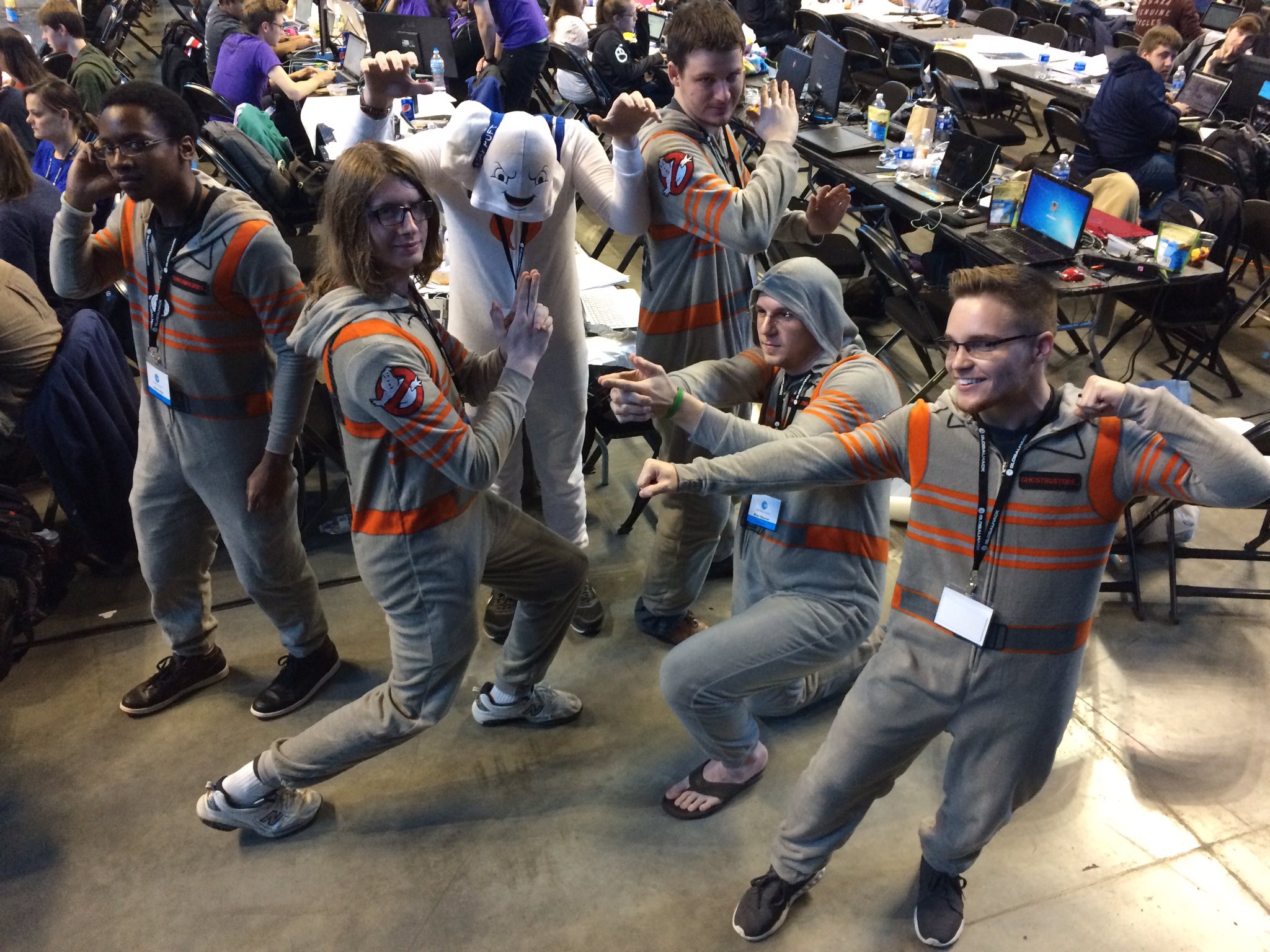
I am personally proud of our younger members, who with little experience in the domain of our project, fought tooth and nail to learn and contribute. Watching their growth through this hackathon is a memory that will stay with me for a long time.
What I learned
I learned that once you get past Node.js's dependency hell, it really is not that bad. I learned that a bunch of half (okay completely) crazy coders in a stadium with a general statement, the camaraderie between groups is palpable.
What's next for Codebusters
One of our members, Kyle June, received a call before the competition started from Google. We wish him luck with his on-site interview! Another member is off to Ford next summer to be a part of their FCG program. The rest of our motley crew will be returning to Central Michigan University to learn and lead the next great thinkers.

Log in or sign up for Devpost to join the conversation.