-
-
CodeBuddy
Inspiration
Software developers frequently experience frustration while debugging code, fixing syntax errors, or dealing with unexpected program behavior. These moments slow down productivity and make the development process mentally exhausting.
Most development tools focus on code correctness and performance, but they rarely consider the developer’s emotional state.
This project was inspired by the idea that developer tools should be human-aware and supportive, not just technically powerful.
CodeBuddy was created to detect when a developer is experiencing frustration and provide intelligent support at the right moment. By combining behavioral signals, emotion detection, and Amazon Nova Lite through AWS Bedrock, the system can deliver helpful debugging guidance exactly when developers need it most.
What it Does
CodeBuddy is an emotion-aware AI assistant designed to support developers during difficult coding sessions.
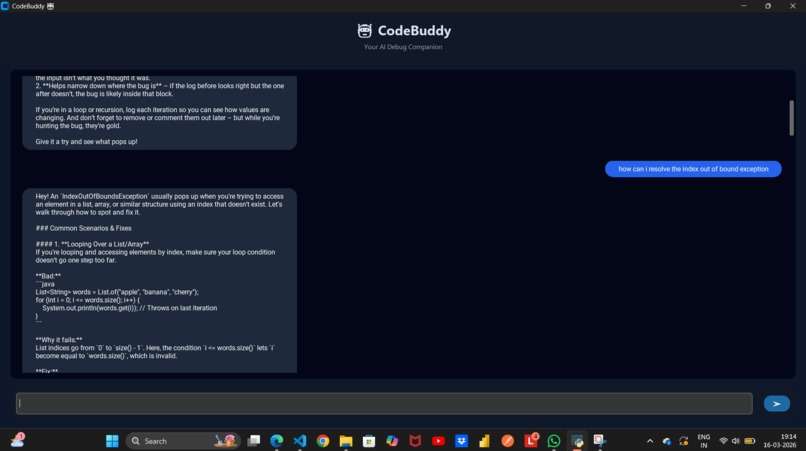
The system continuously monitors behavioral patterns and emotional signals while a developer is coding. When signs of frustration are detected, CodeBuddy activates an AI assistant powered by Amazon Nova Lite, accessed through AWS Bedrock.
The Nova-powered assistant generates helpful debugging suggestions, explanations, and supportive feedback to help the developer move past the problem.
Key Capabilities
- Detecting developer frustration using keystroke dynamics
- Analyzing facial expressions using computer vision
- Combining behavioral and visual signals with a machine learning model
- Triggering an AI assistant powered by Amazon Nova Lite
- Generating natural debugging suggestions in real time
By integrating emotion detection with Amazon Nova’s generative AI capabilities, CodeBuddy creates a development environment that is more supportive, intelligent, and responsive to the developer’s experience.
How I Built It
CodeBuddy combines behavioral analytics, computer vision, machine learning, and generative AI powered by Amazon Nova.
1. Keystroke Behavior Analysis
A keystroke logging module captures typing behavior such as:
- Typing speed
- Backspace frequency
- Pause intervals
- Burst typing patterns
These features often correlate with cognitive stress during debugging.
2. Facial Emotion Detection
A facial emotion detection module analyzes facial expressions using computer vision to estimate emotional states such as frustration or confusion.
3. Frustration Prediction Model
The behavioral and visual signals are processed using a LightGBM machine learning model, which predicts the probability that the developer is experiencing frustration.
4. Amazon Nova Lite Integration
When the frustration probability crosses a threshold, CodeBuddy activates the assistant interface. The system sends a prompt to Amazon Nova Lite via AWS Bedrock.
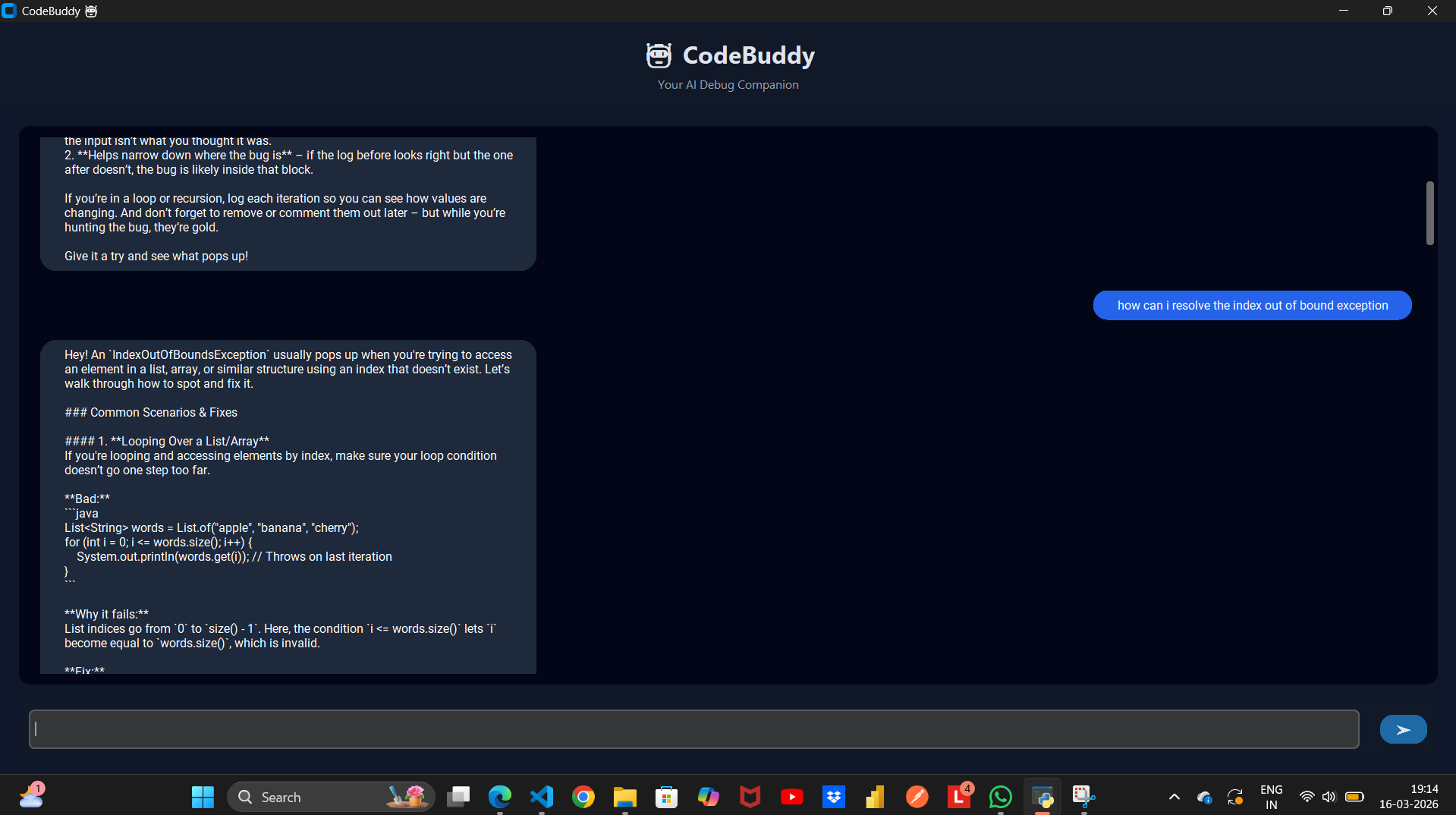
Amazon Nova Lite generates context-aware debugging suggestions, similar to guidance from an experienced developer. The generated response is displayed in a popup assistant interface, helping the developer recover quickly without interrupting their workflow.
Using Amazon Nova Lite enables fast, lightweight responses, making it ideal for real-time developer assistance.
Challenges I Ran Into
One of the main challenges was designing a reliable frustration detection pipeline using behavioral signals. Keystroke patterns vary significantly between developers, which makes building a generalized model difficult.
Another challenge was integrating multiple components including:
- Keystroke analysis
- Facial emotion detection
- Machine learning models
- The AI assistant powered by Amazon Nova Lite through AWS Bedrock
Ensuring smooth communication between these modules while maintaining real-time system performance required careful architectural design.
Additionally, integrating Amazon Nova via AWS Bedrock required prompt engineering to ensure the assistant generated natural and conversational debugging responses instead of overly structured outputs.
Accomplishments That I am Proud Of
One of the biggest accomplishments was successfully building a working prototype that integrates behavioral analysis, emotion detection, machine learning, and Amazon Nova-powered generative AI into a single system.
The system can detect frustration signals in real time and automatically activate CodeBuddy to provide debugging guidance.
Another key achievement was integrating Amazon Nova Lite through AWS Bedrock, allowing the assistant to generate contextual debugging suggestions that feel like guidance from a senior developer.
This project demonstrates how Amazon Nova can be used to build intelligent developer tools that support both technical problem-solving and the human experience of programming.
What I Learned
This project provided valuable insights into human-centered AI design.
I learned how behavioral signals such as typing patterns can reveal cognitive states during programming. Combining these signals with computer vision enabled a multimodal understanding of developer frustration.
Additionally, integrating Amazon Nova Lite through AWS Bedrock demonstrated how generative AI models can enhance developer tools by providing contextual explanations, debugging advice, and conversational assistance.
This experience showed how Amazon Nova can power intelligent developer experiences that go beyond traditional coding tools.
What's Next for CodeBuddy
There are several exciting directions for improving CodeBuddy.
IDE Integration: Building a Visual Studio Code extension so the assistant can operate directly inside a developer’s IDE.
Improved Frustration Detection: Enhancing the frustration detection model using larger datasets and deep learning-based multimodal fusion techniques.
Advanced AI Assistance with Amazon Nova: Leveraging additional Amazon Nova capabilities through AWS Bedrock to provide deeper code understanding, error explanation, and contextual debugging assistance.
Ultimately, the goal is to build emotionally intelligent developer tools powered by Amazon AI technologies that help developers stay productive, focused, and supported.
Built With
- deepface
- lightgbm
- python


Log in or sign up for Devpost to join the conversation.