-
-
problem
-
home page
-
problem
-
problem
-
problem
-
problem
-
home page
Inspiration
Inspiration
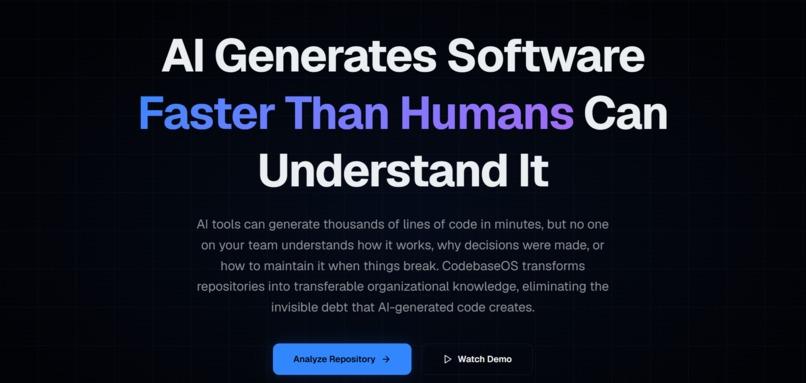
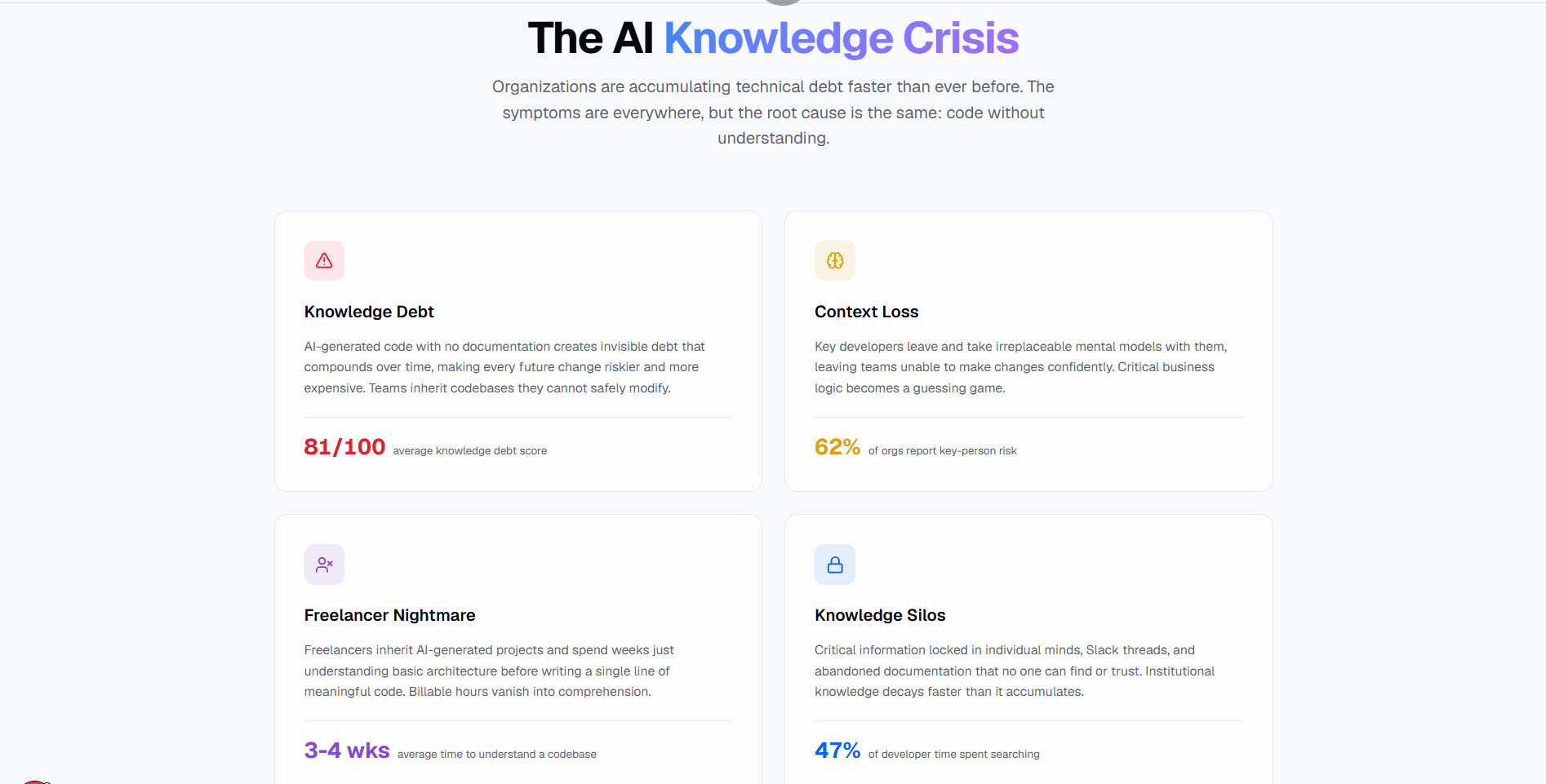
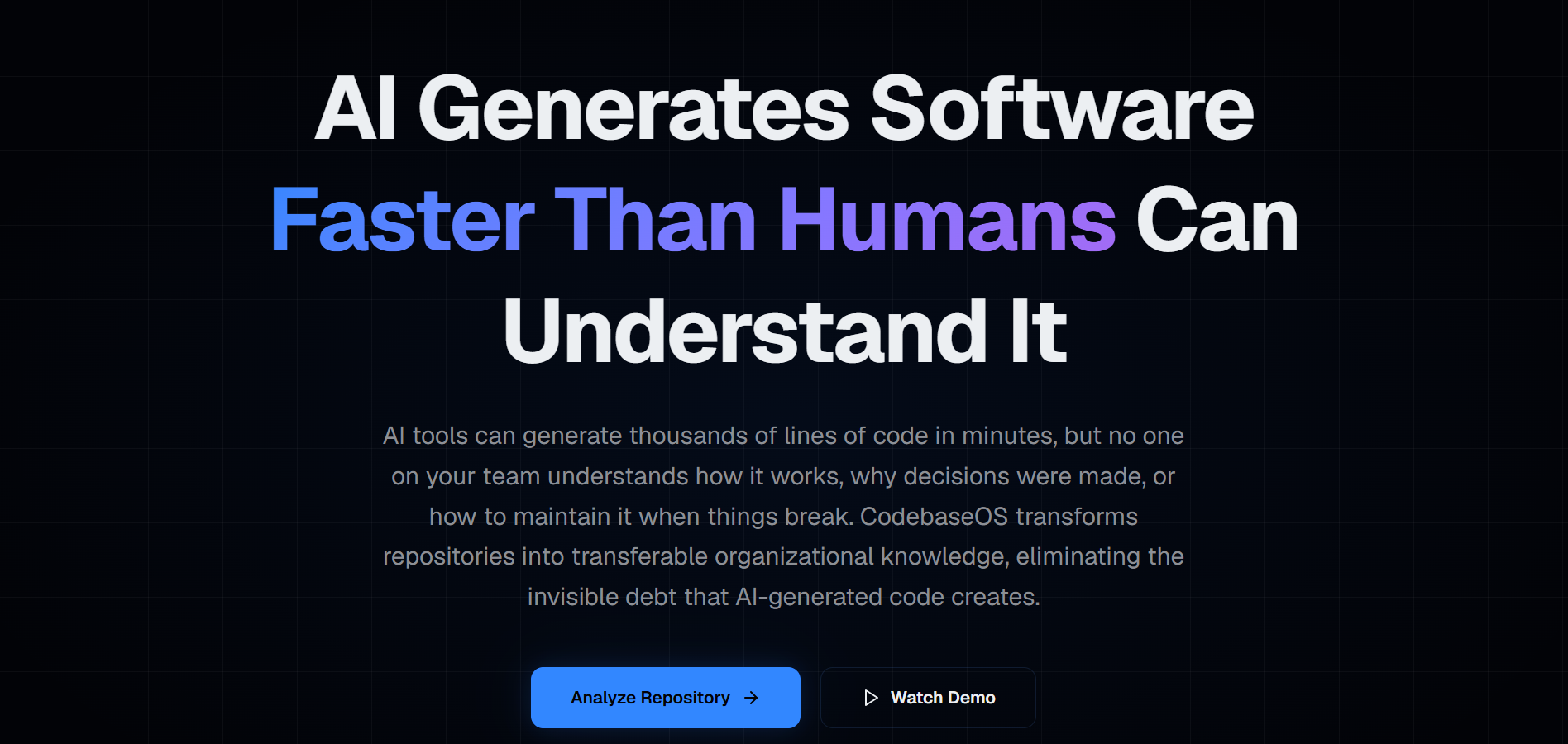
AI can generate software faster than humans can understand it.
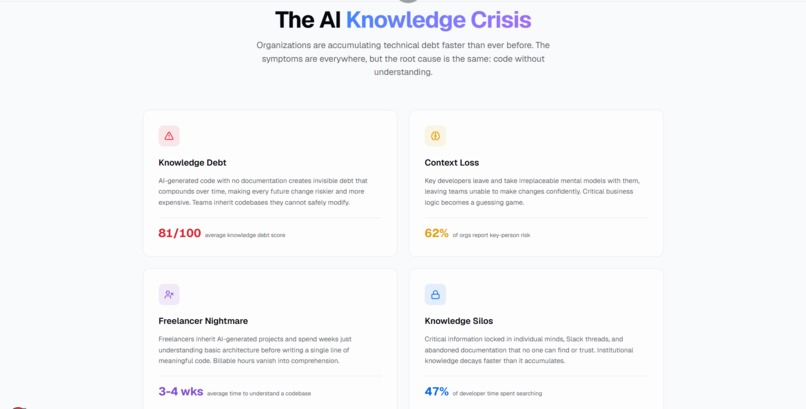
Tools like Gemini, Cursor, Claude Code, Lovable, and Copilot allow developers to build complete applications in hours. However, teams increasingly inherit repositories that nobody fully understands. Freelancers receive AI-generated projects from clients, startups inherit MVPs built by former developers, and engineering teams struggle to onboard new contributors into large codebases.
We realized that the next software challenge is not generating code—it's understanding, transferring, and preserving software knowledge.
This inspired us to build CodebaseOS, an AI Engineering Knowledge Agent that transforms repositories into organizational knowledge and actionable engineering workflows.
What It Does
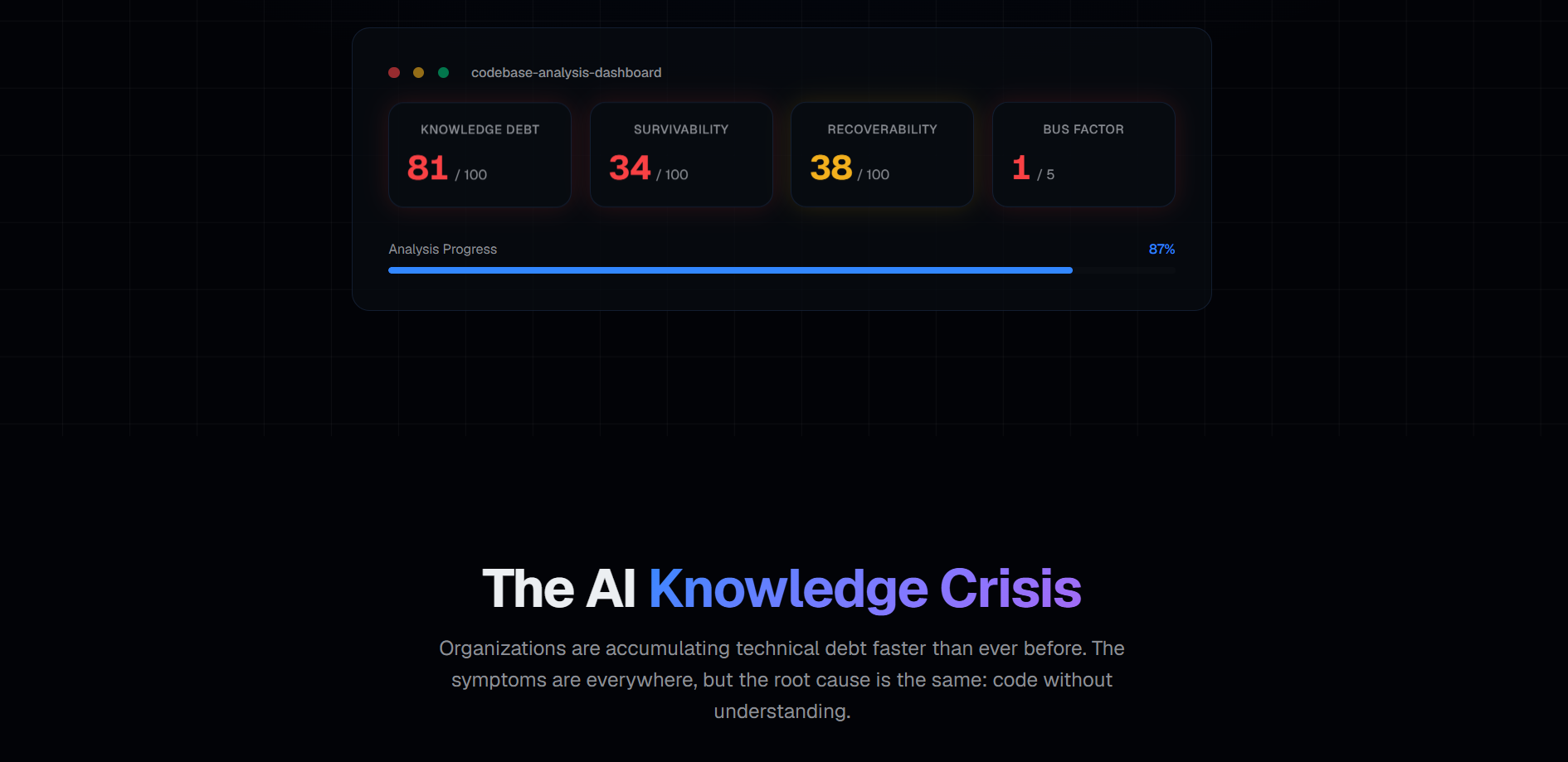
CodebaseOS analyzes repositories and converts code into understandable knowledge.
The platform provides:
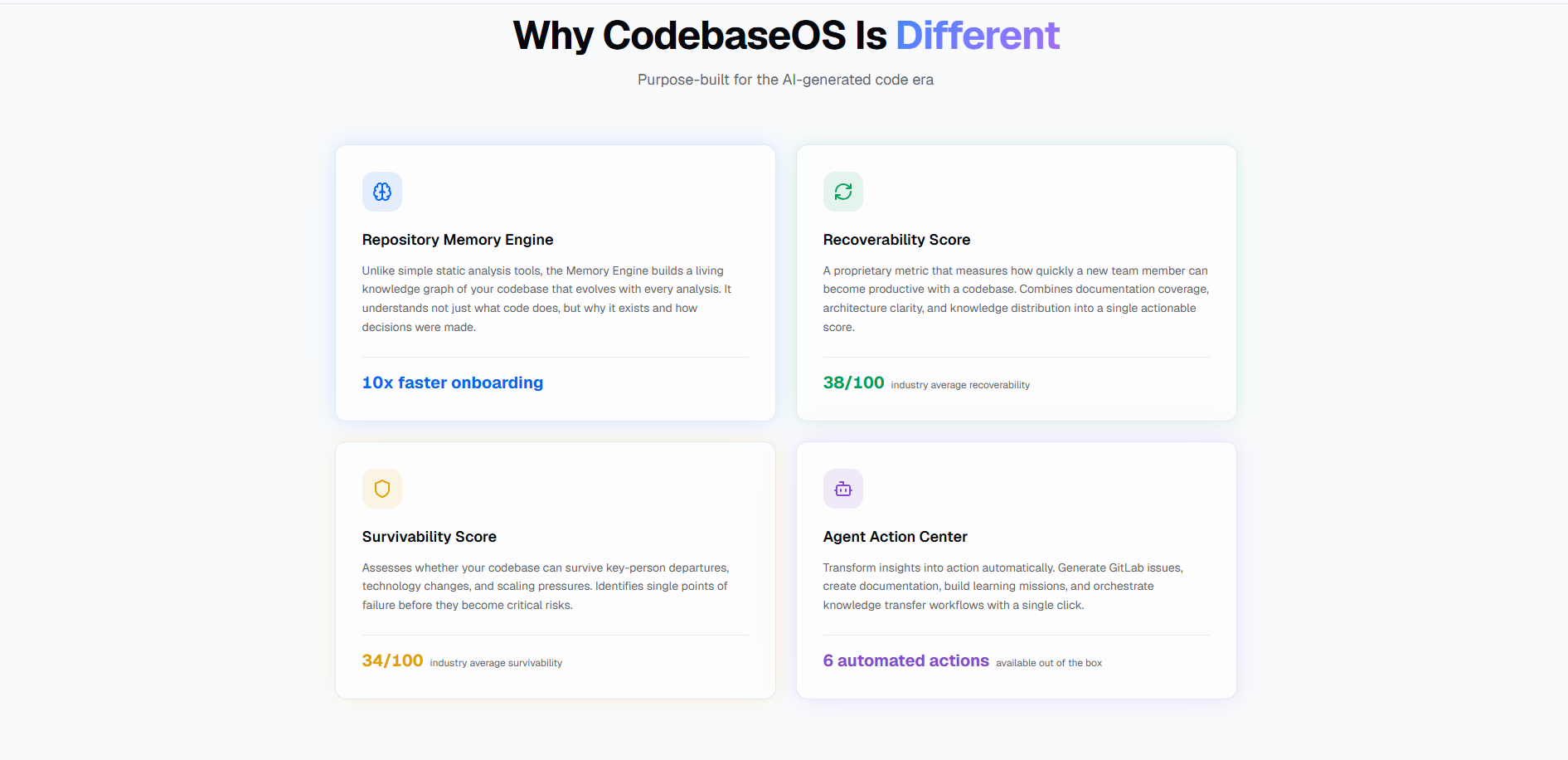
- Repository Intelligence Reports
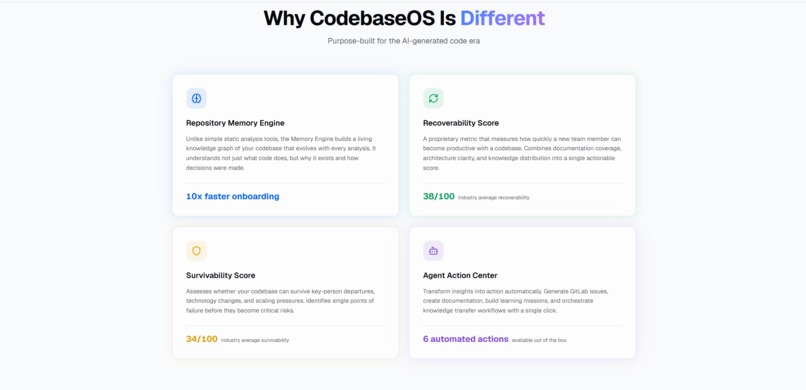
- Repository Memory Engine™
- Architecture Graphs
- Knowledge Graphs
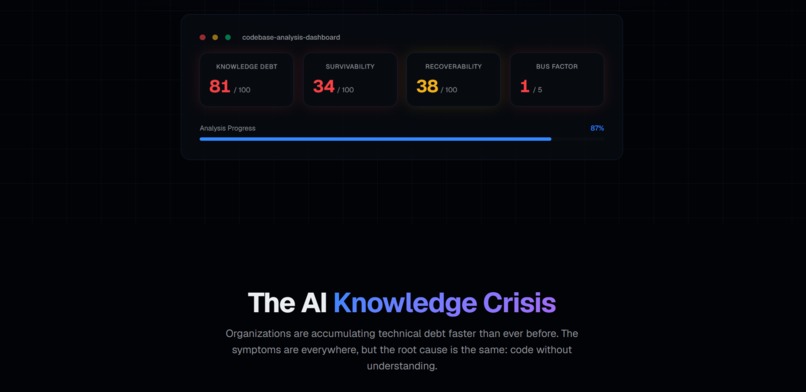
- Knowledge Debt Score™
- Survivability Score™
- Recoverability Score™
- Bus Factor Analysis™
- Knowledge Ownership Maps™
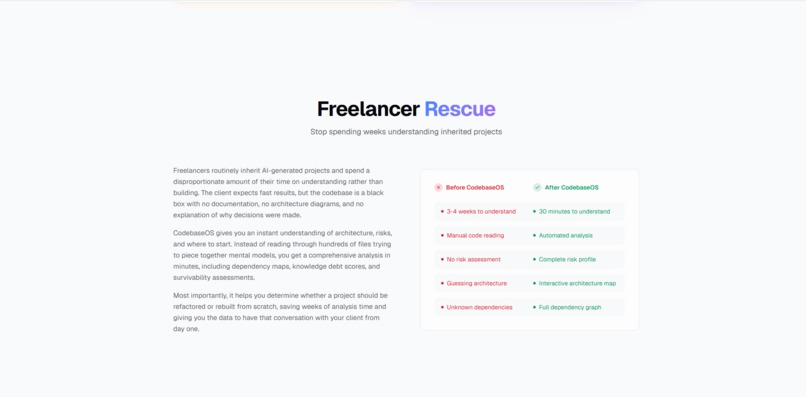
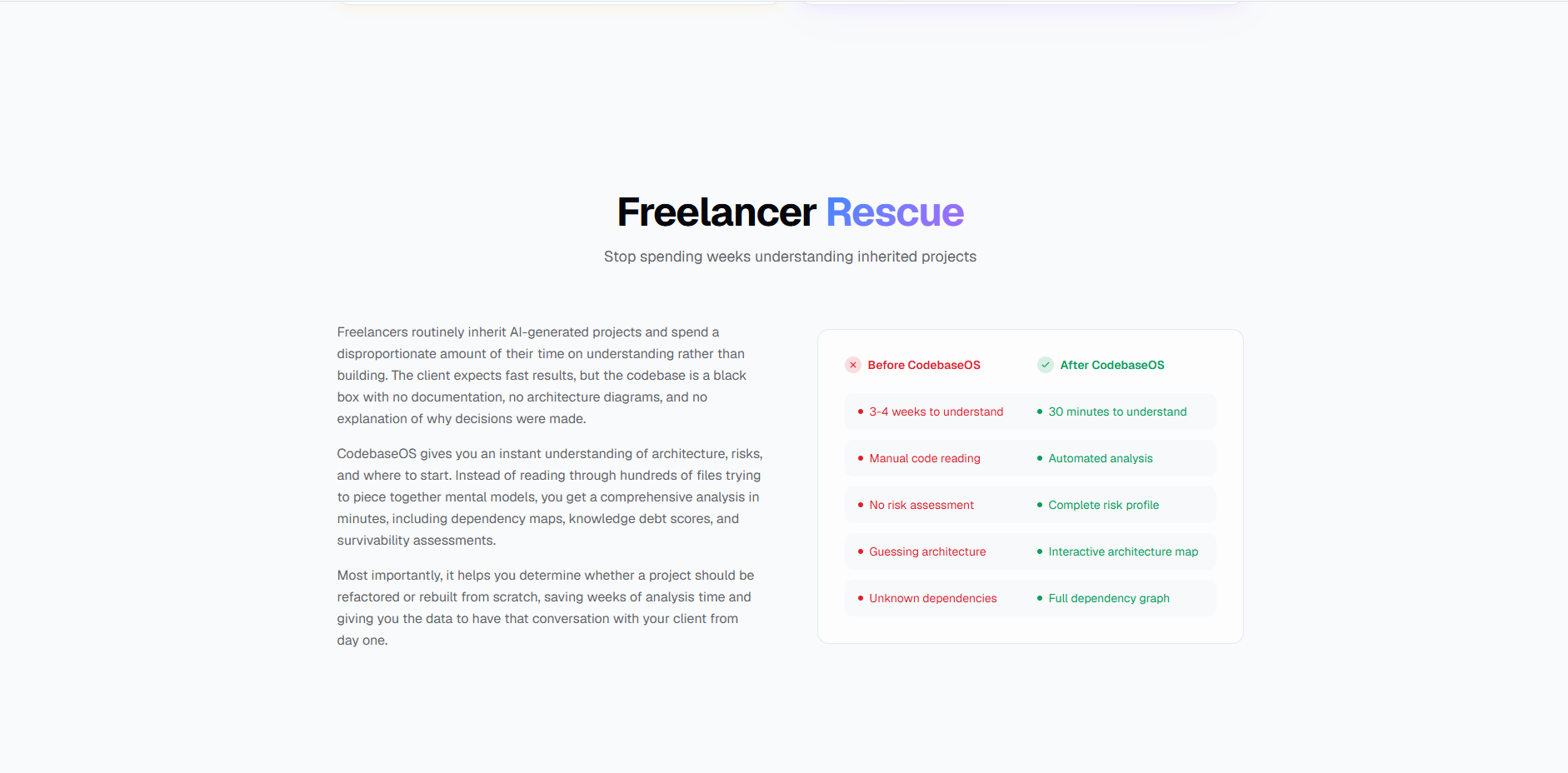
- Freelancer Rescue Mode™
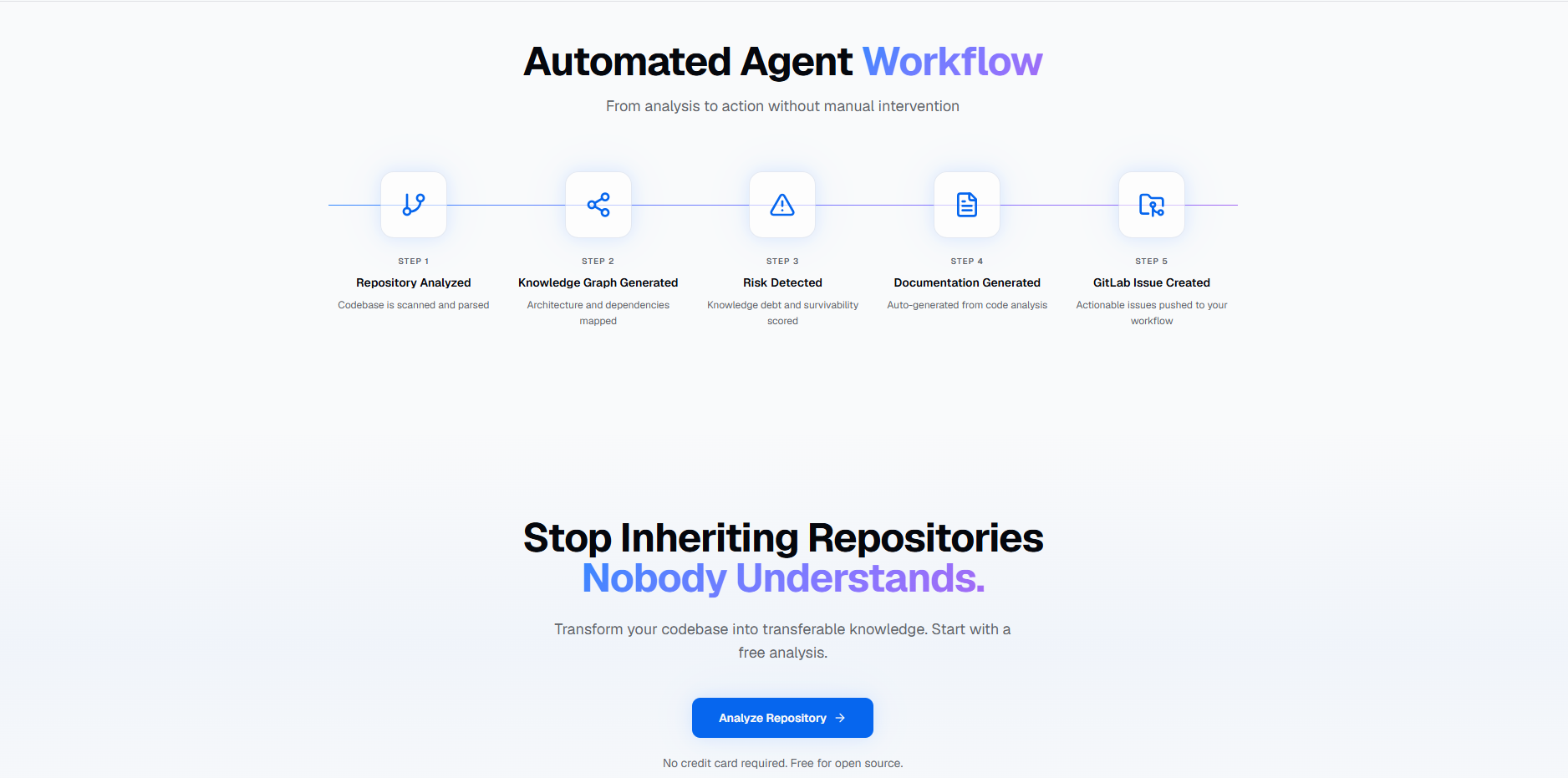
- AI Agent Action Center™
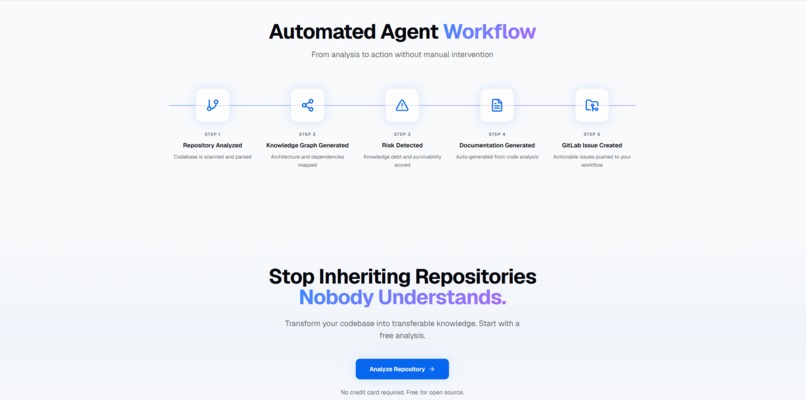
- GitLab Issue Generation
One of the biggest problems with current AI workflows is context loss. Developers repeatedly copy files and folders into AI tools because the model cannot retain understanding of an entire repository. CodebaseOS addresses this through its Repository Memory Engine™, which chunks, summarizes, and organizes repository knowledge into a persistent understanding layer.
How We Built It
Frontend:
- Next.js
- TypeScript
- Tailwind CSS
- Shadcn/UI
- Recharts
- React Flow
- Framer Motion
Backend Architecture:
- Node.js
- Express
- MongoDB
- Gemini API
- Google Cloud
- GitLab MCP
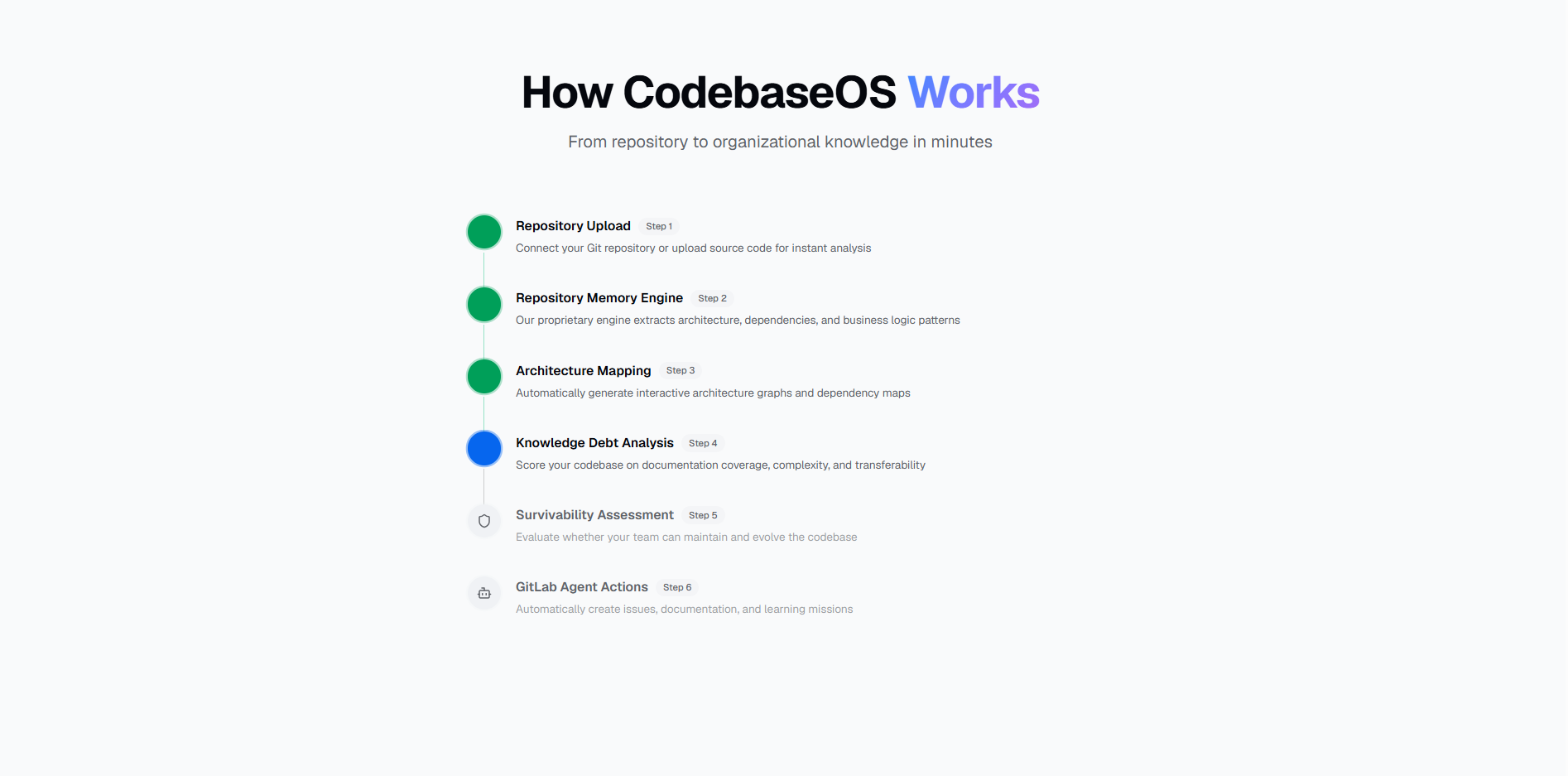
The system is designed around a multi-step AI workflow:
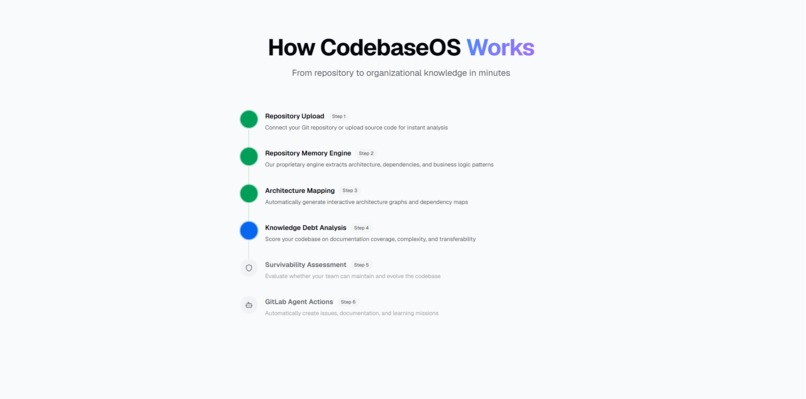
Repository Upload → Repository Analysis → Repository Memory Generation → Risk Detection → Knowledge Scoring → Agent Reasoning → GitLab Action Creation
Challenges We Faced
The largest challenge was designing a system that goes beyond repository visualization.
Many existing tools explain code, generate documentation, or answer questions. We wanted to build an agent that could reason about repository risks and take action.
Another challenge was designing explainable scoring systems for concepts such as:
- Knowledge Debt
- Survivability
- Recoverability
- Bus Factor
- Ownership Concentration
We also focused on solving real freelancer and onboarding problems, where developers inherit unfamiliar repositories and must quickly determine whether the project can be maintained, refactored, or rebuilt.
What We Learned
We learned that software knowledge is becoming a critical organizational asset.
As AI accelerates software creation, understanding and maintaining codebases becomes increasingly difficult. We explored how AI can help preserve knowledge, reduce onboarding time, identify risks, and automate engineering workflows.
What's Next
Future development includes:
- Deeper Google Cloud Agent Builder integration
- Advanced repository memory and retrieval
- Commit Story Generator™
- Architecture Drift Detection™
- AI Refactoring Advisor™
- Automated Knowledge Transfer Engine™
- Enhanced GitLab workflow automation
Our vision is to create a new category of developer tooling:
An AI Engineering Knowledge Agent that transforms repositories into organizational knowledge and actionable engineering workflows.
What it does
How we built it
Challenges we ran into
Accomplishments that we're proud of
What we learned
What's next for CodebaseOS
Built With
- agent
- api
- builder
- cloud
- css
- express.js
- flow
- framer
- gemini
- gitlab
- mcp
- mongodb
- motion
- next.js
- node.js
- react
- recharts
- shadcn
- tailwind
- typescript
- ui

Log in or sign up for Devpost to join the conversation.