-
-
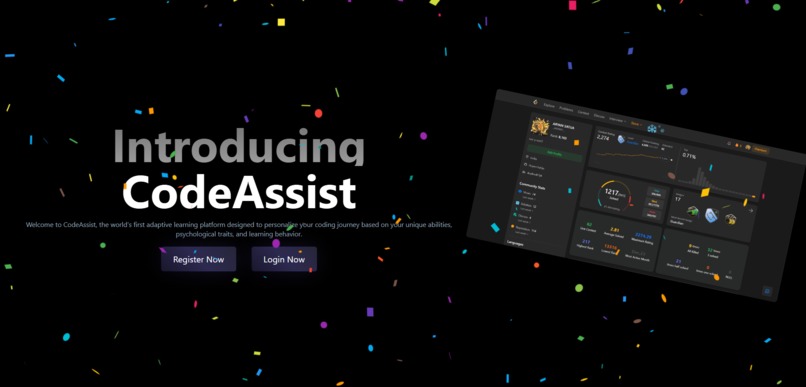
home page
-

dashboard
-
my personalised dashboard. different for different users
-
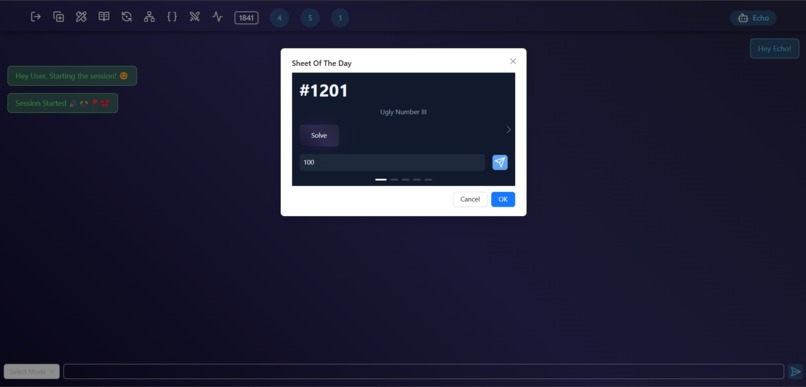
daily practice problems based on roadmap progress and cognitive levels
-
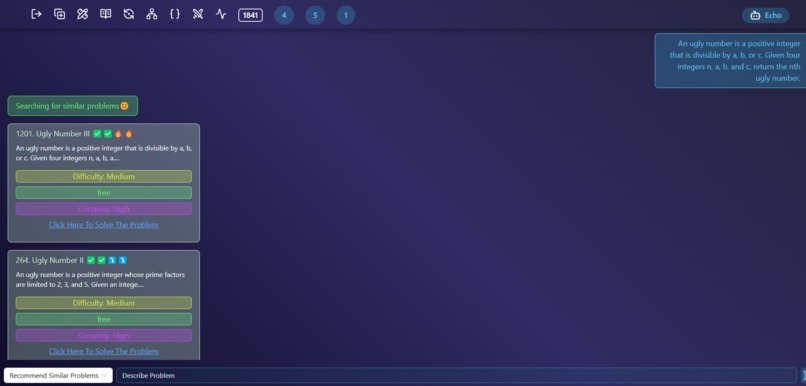
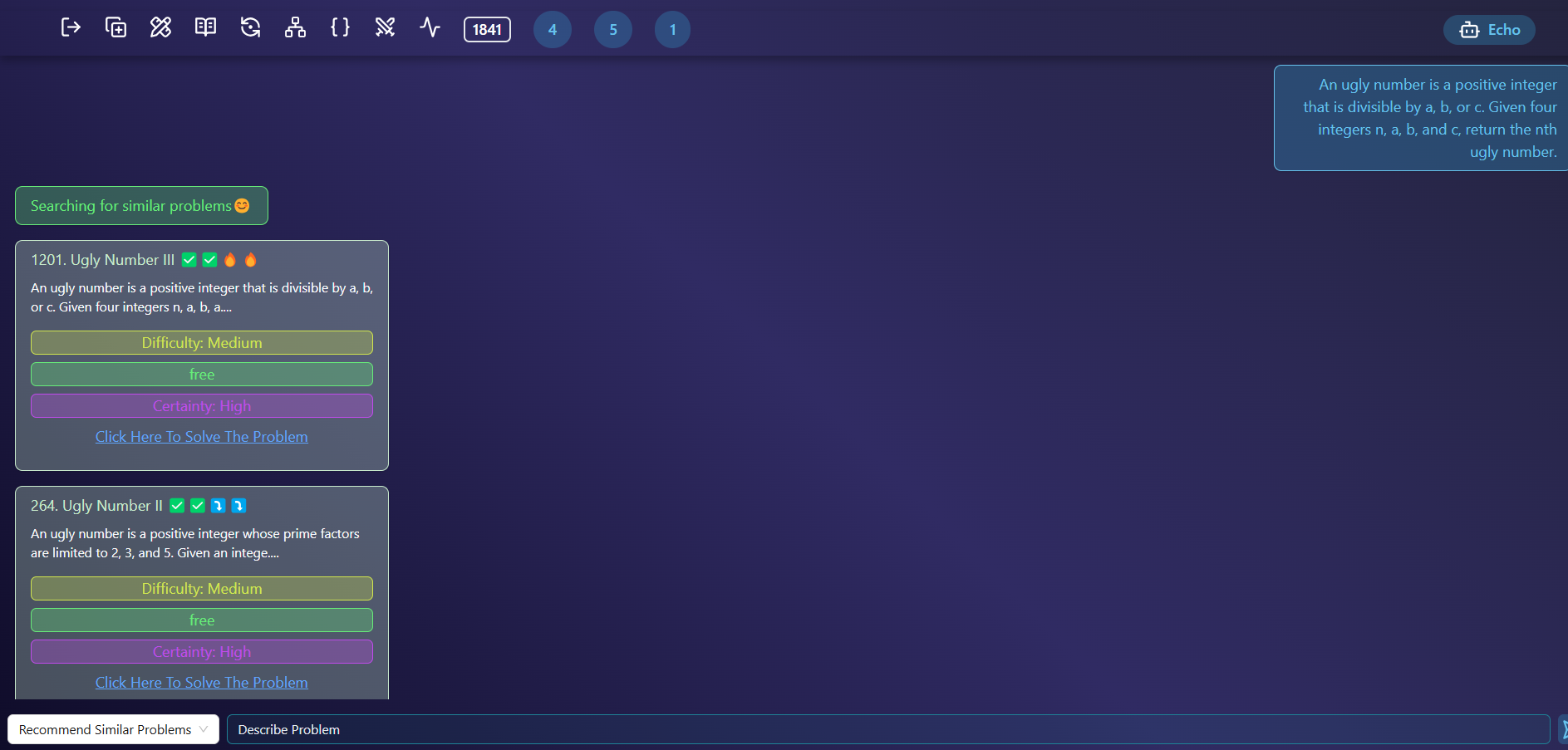
using echo for similar problem recommendations
-
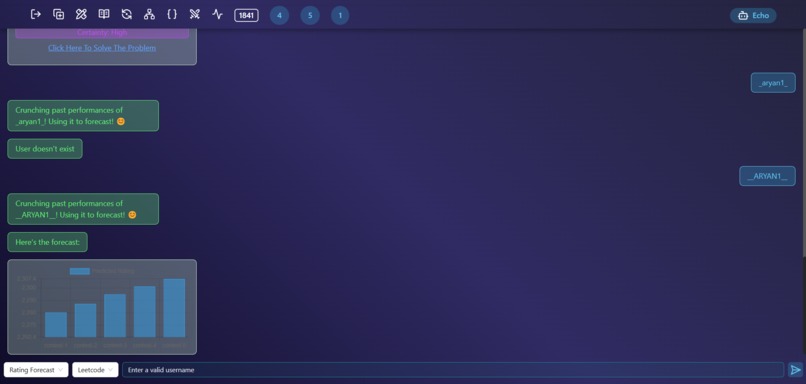
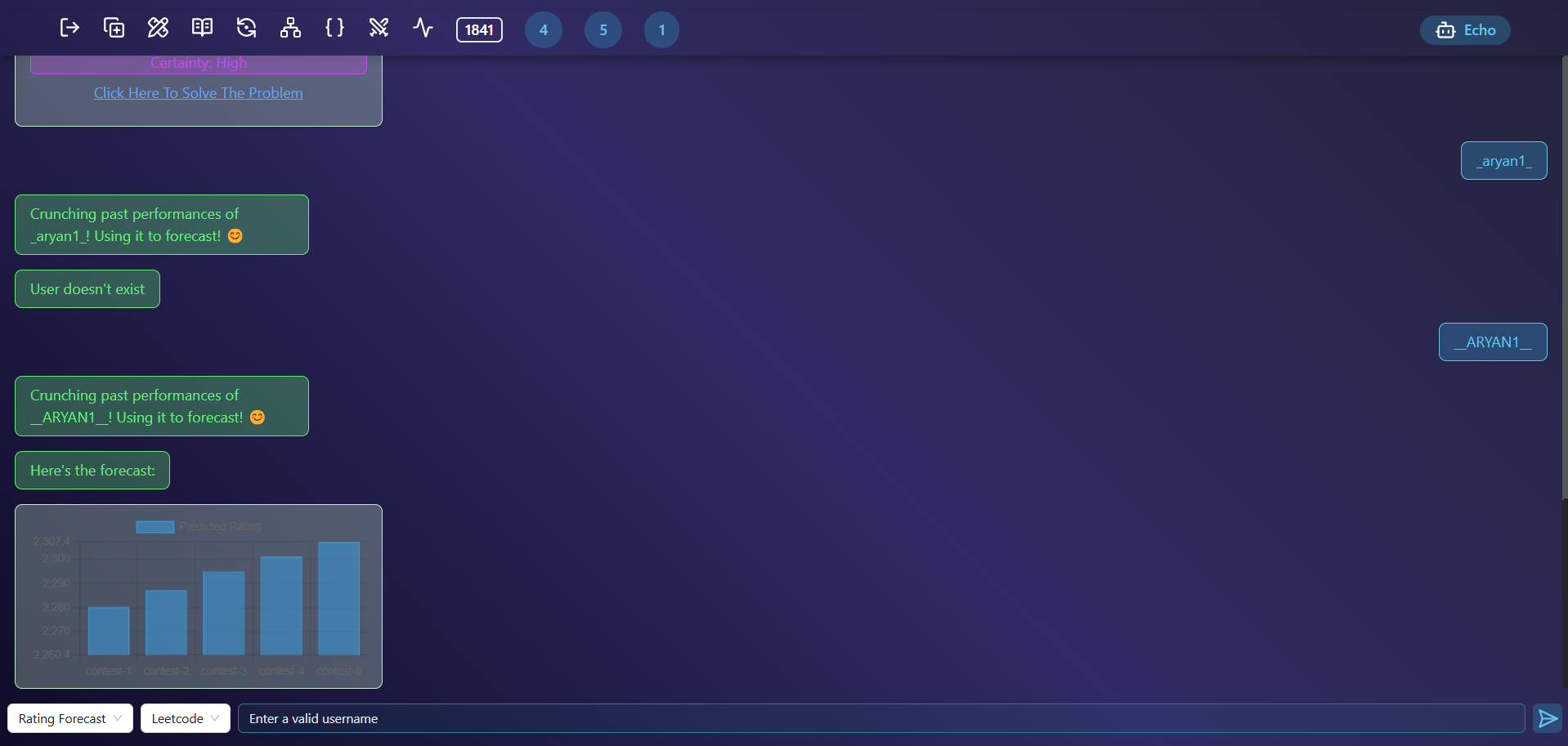
using echo to forecast ratings
-
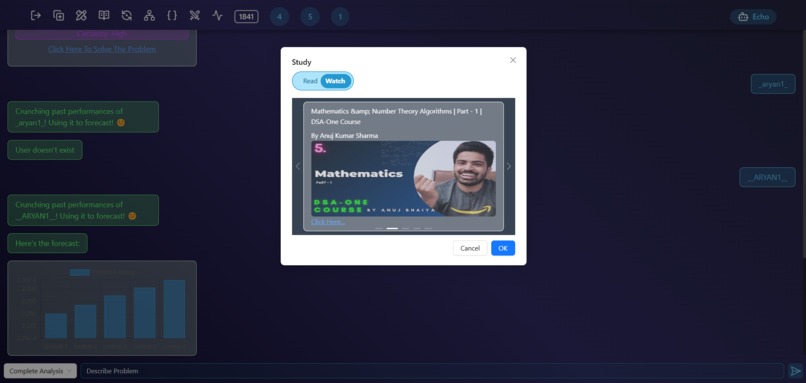
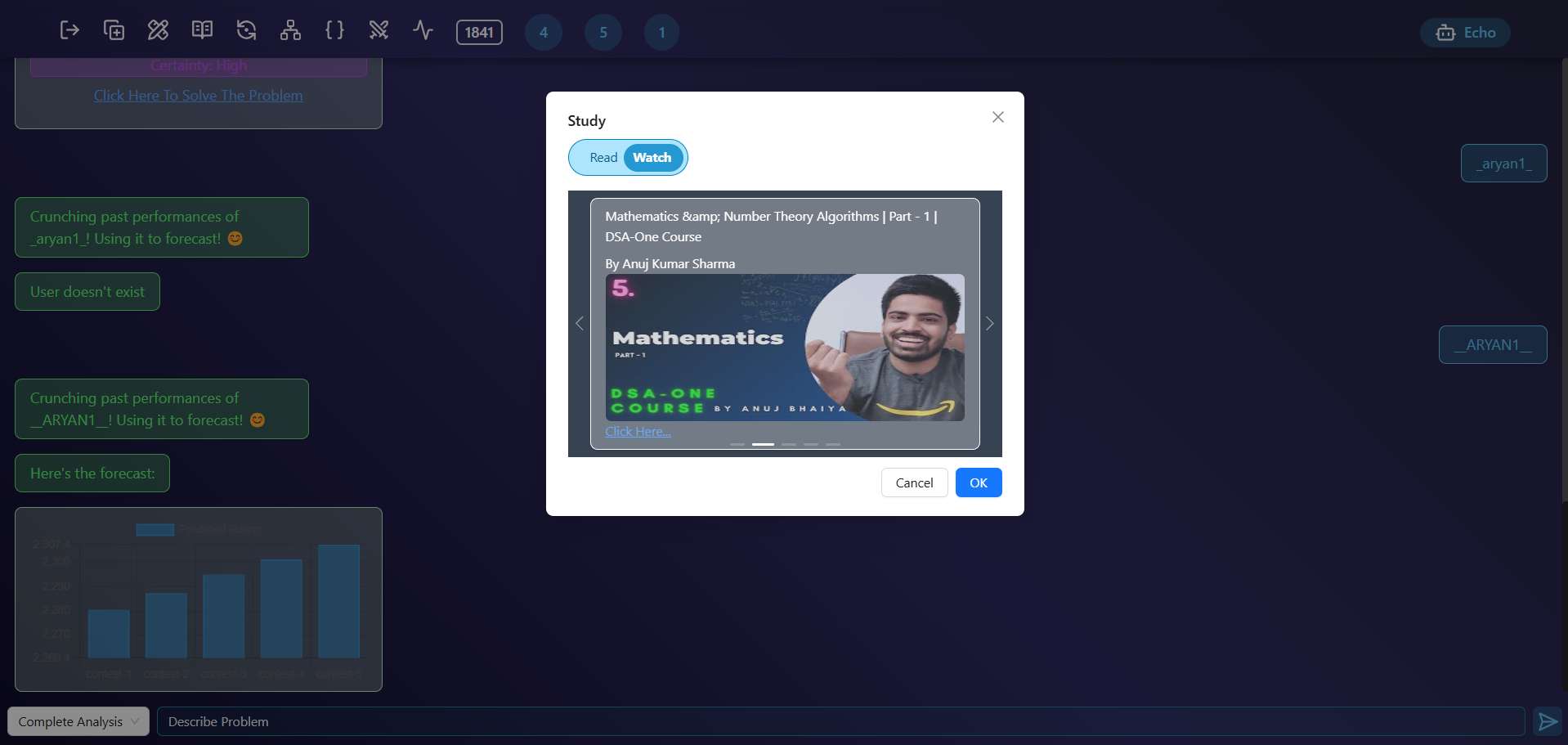
video recommendation system
-
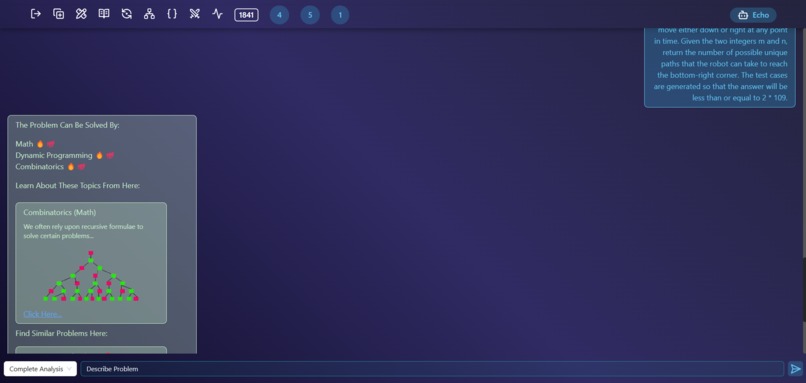
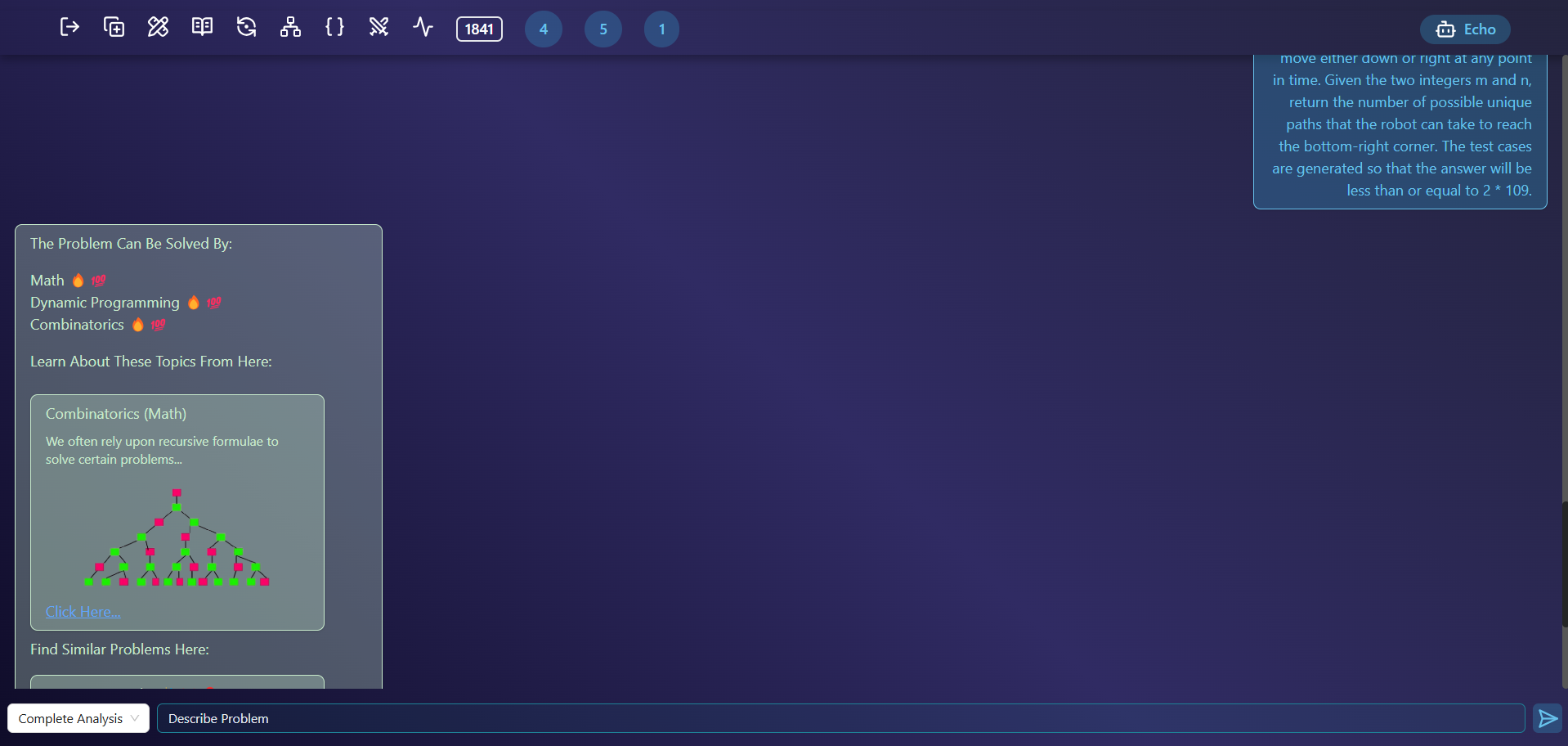
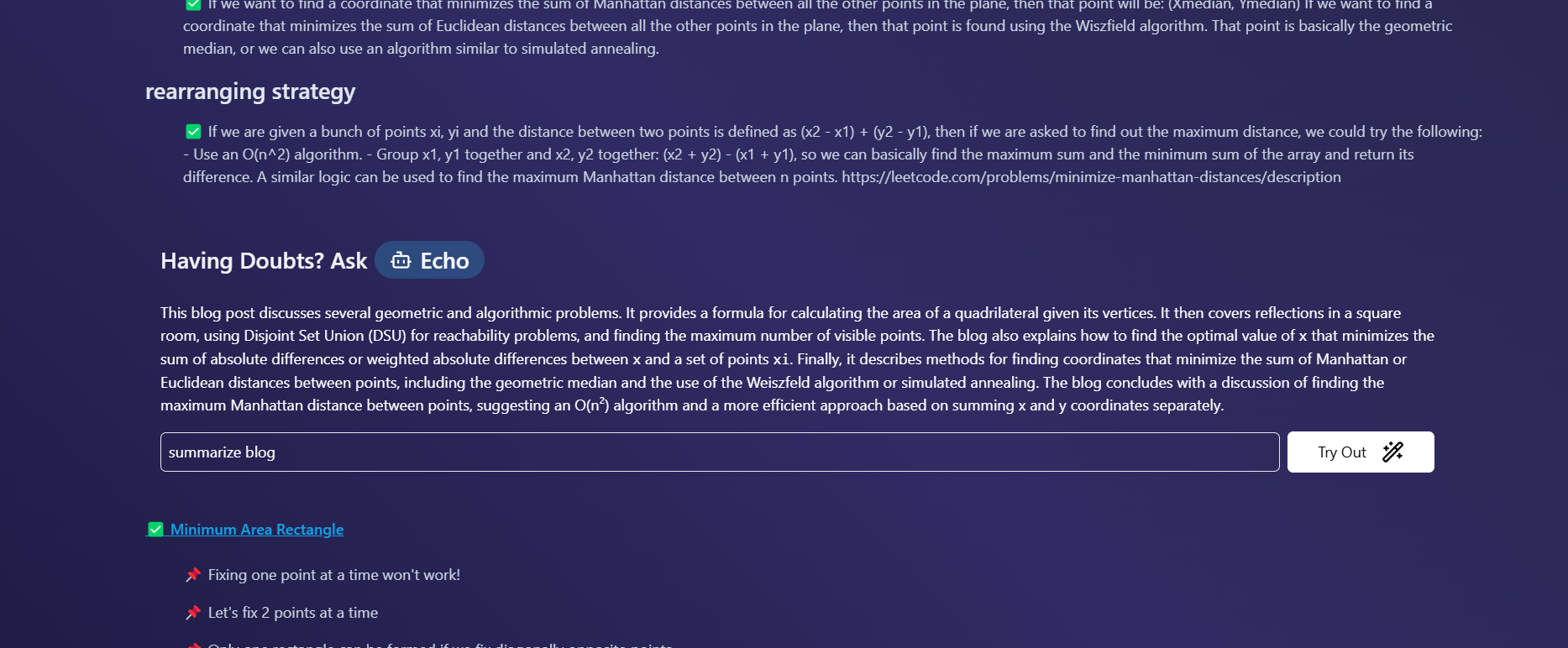
echo helping users by providing them with resources like blogs
-

blogs
-
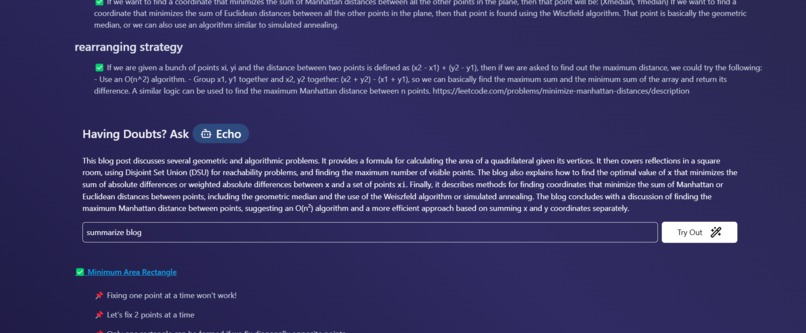
embedded ask doubt feature
-
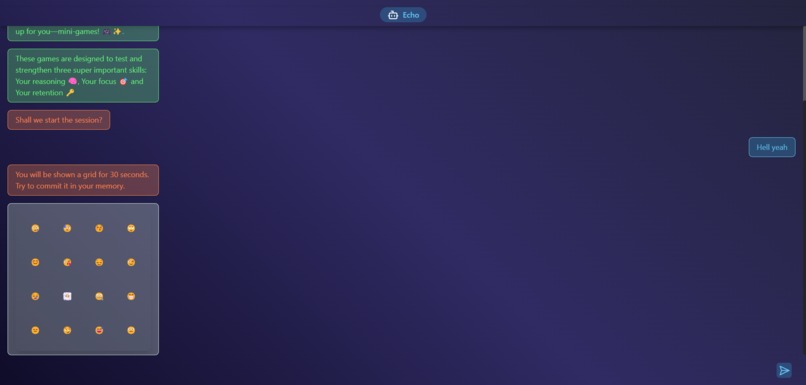
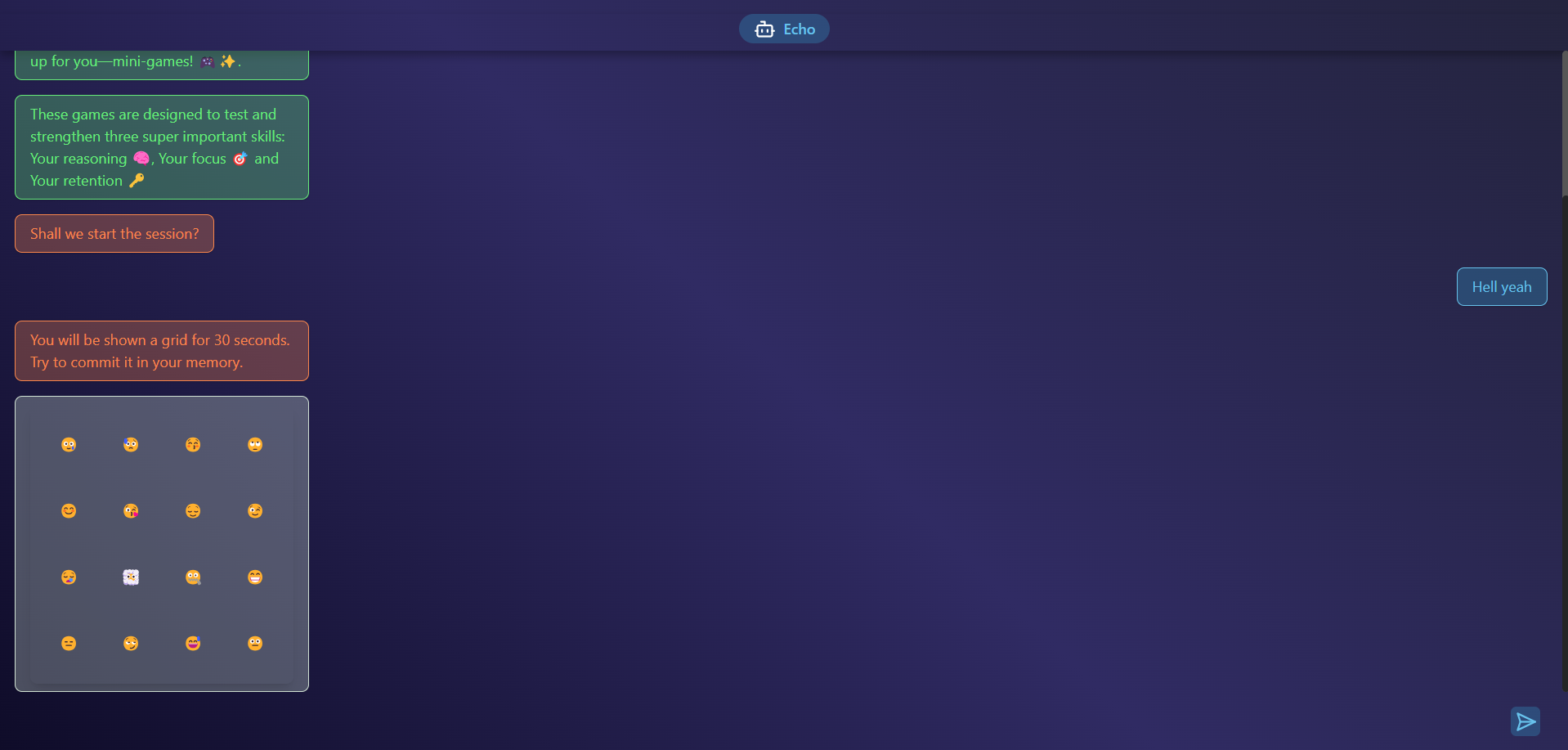
mini games: gamified approach to identify skill levels of users
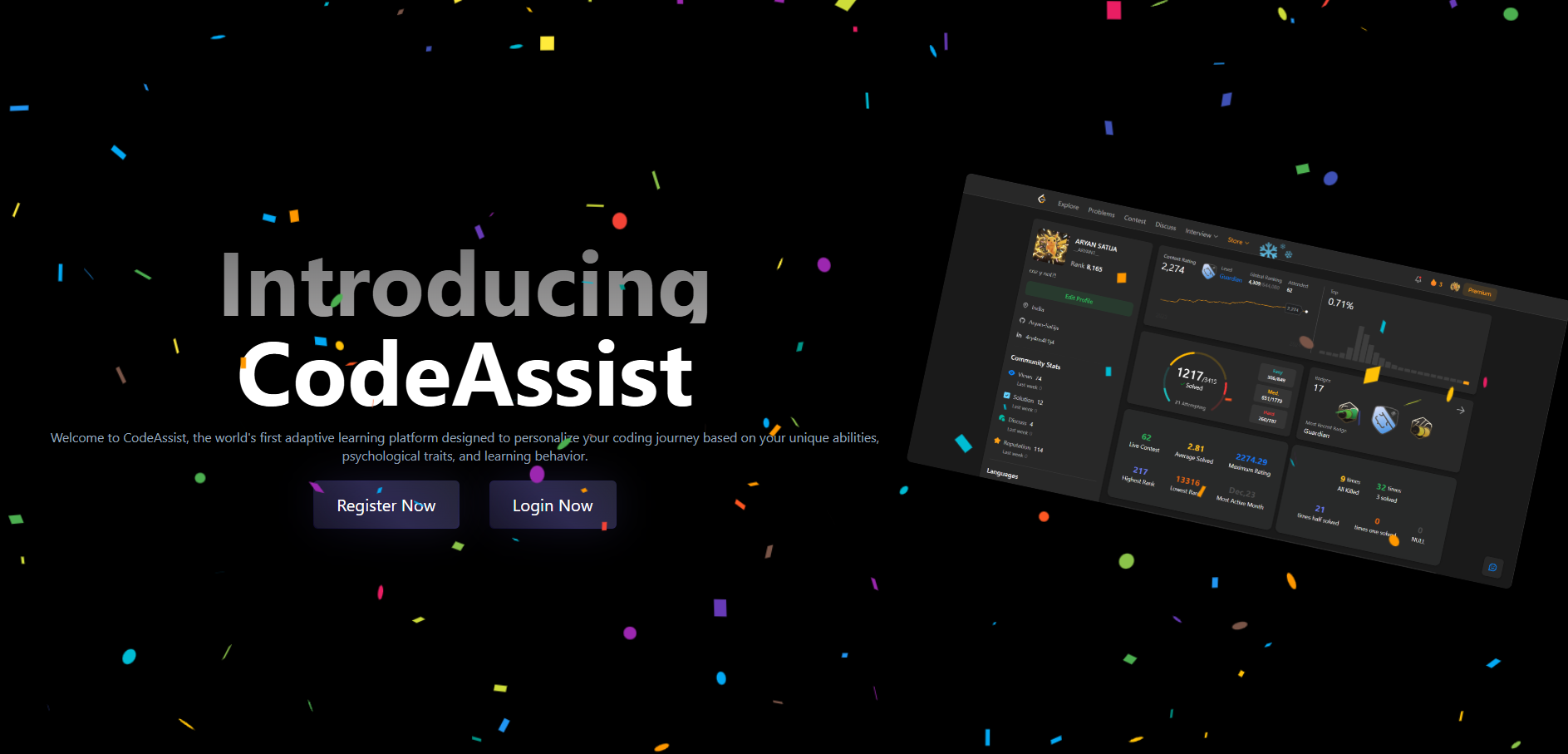


CodeAssist - The AI-Powered Personalized Learning Platform
Inspiration
Competitive coding platforms like LeetCode and Codeforces provide a vast number of problems, but they lack personalized learning experiences tailored to individual users. Many learners struggle with concept retention, cognitive overload, and inefficient problem selection. We wanted to build a platform that not only recommends problems but also adapts to each user's learning style, cognitive strengths, and weaknesses—helping them improve efficiently and stay motivated.
What it does
CodeAssist is an AI-powered personalized learning platform for competitive coding. It provides:
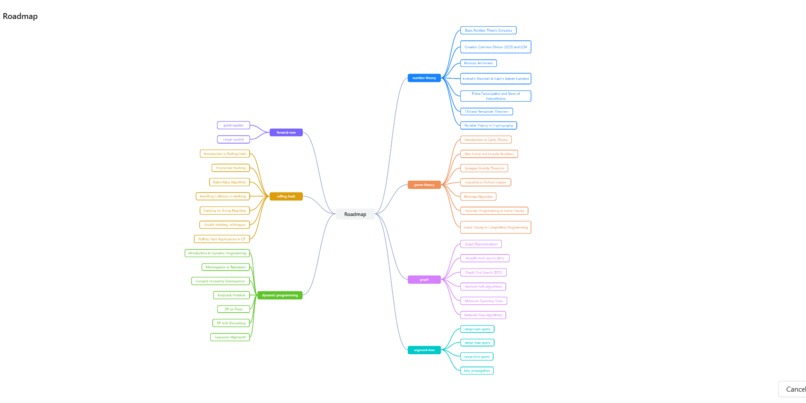
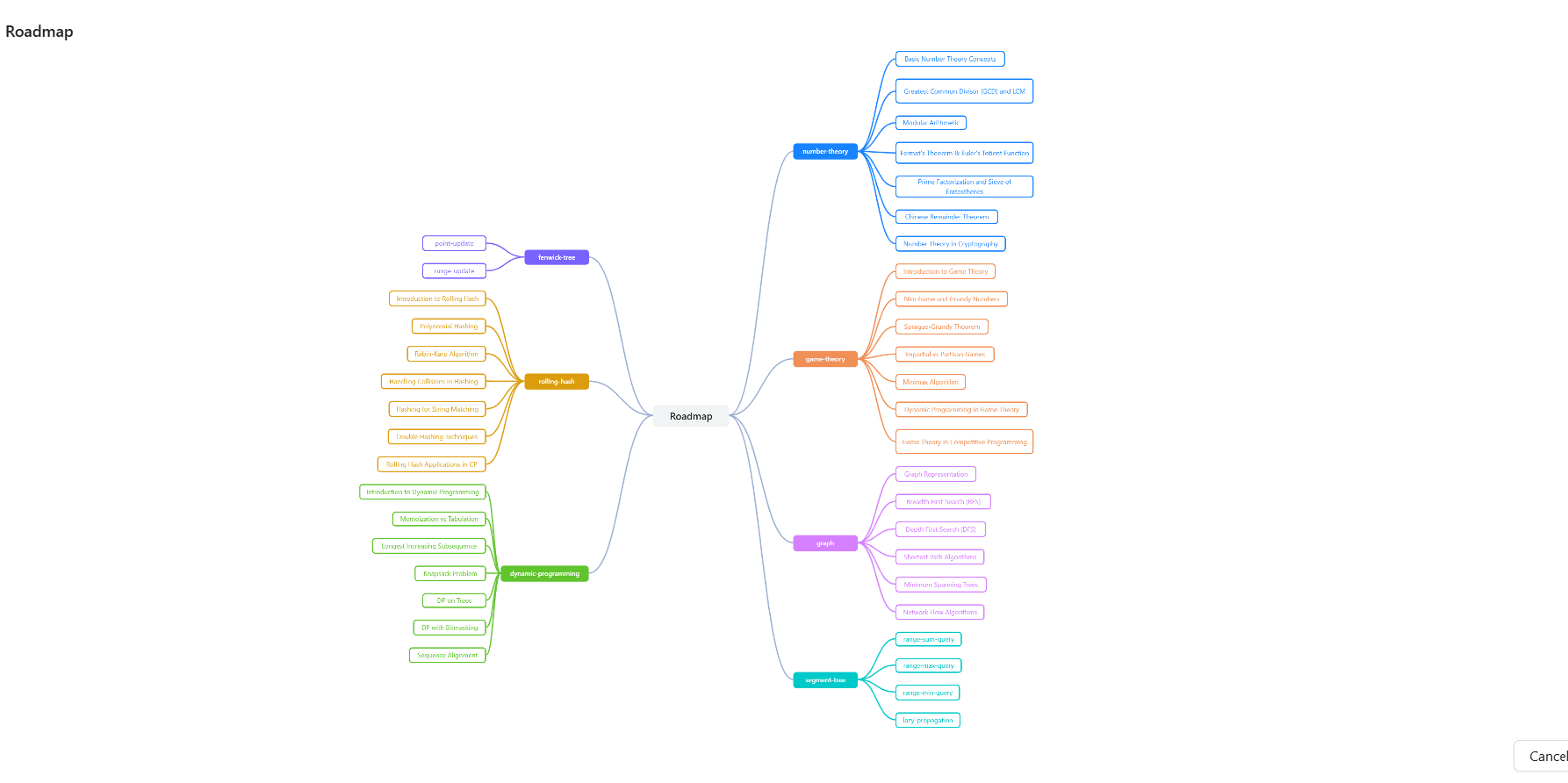
- Personalized Roadmap: CodeAssist generates a personalized roadmap, suggesting topics and problems to focus on according to the user’s current skill level. Problems are dynamically selected, with harder challenges introduced as users progress.
- Personalized Problem Recommendations: Suggests problems based on user performance, cognitive strengths, and weaknesses.
- Cognitive Mini-Games: Scientifically-backed mini-games assess memory, reasoning, and debugging skills.
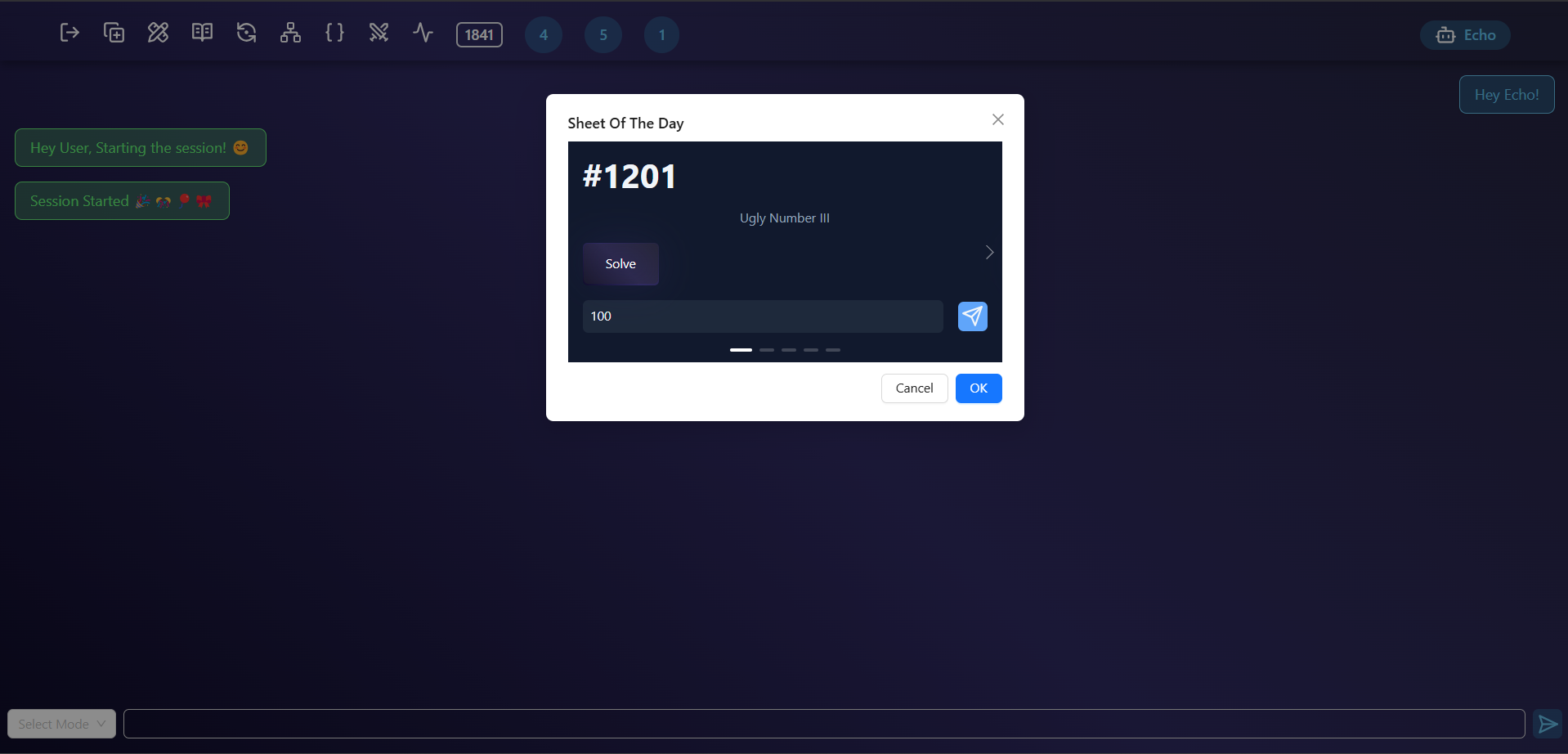
- Echo AI-Powered Problem Analysis: Uses AI to generate problem tags, find similar problems, and recommend related blogs. We did text vectorisation of 2500+ problems from different platforms. Detailed Explanation is provided in the Video.
- Adaptive Focus Mode: Adjusts themes, background music, and problem difficulty based on a user’s energy levels (circadian rhythm).
- Self Duels (Upcoming): Implements Q-learning for users to compete against their past performances.
- Virtual Study Groups (Upcoming): Allows users to collaborate and learn in real-time.
How we built it
- Frontend: React with Tailwind CSS for a responsive and interactive UI.
- Backend: Node.js with Express for handling API requests.
- Database: MongoDB
- Machine Learning: Python with scikit-learn and TensorFlow for AI-driven problem recommendations.
- AI & NLP: Text vectorization and cosine similarity for problem analysis and recommendations.
- Authentication: OAuth integration for LeetCode/Codeforces login and progress tracking.
Challenges we ran into
- Creating Accurate Personalized Recommendations: Balancing difficulty progression while ensuring engagement was a tough challenge.
- Integrating Cognitive Assessment with Learning Paths: Mapping game results to meaningful learning recommendations required a lot of fine-tuning.
- Efficient AI-Based Problem Matching: Implementing real-time problem matching while maintaining performance and accuracy.
Accomplishments that we're proud of
- Successfully developed AI-driven problem recommendations that improve over time.
- Integrated cognitive mini-games into the learning process, making problem-solving more engaging.
- Implemented Echo AI from scratch for problem similarity analysis, improving problem discovery.
What we learned
- How to combine AI, cognitive science, and competitive programming into a seamless learning experience.
What's next for CodeAssist
- Q-learning-based Self Duels: Users will be able to compete against their past performances to improve problem-solving efficiency.
- Virtual Study Groups: A collaborative environment for users to discuss problems and participate in group problem-solving.
- Enhanced AI Problem Analysis: Refining Echo AI to provide deeper insights into coding patterns.
- Gamification & Streaks: Adding XP, streaks, and achievements to boost user motivation.

Log in or sign up for Devpost to join the conversation.