-
-
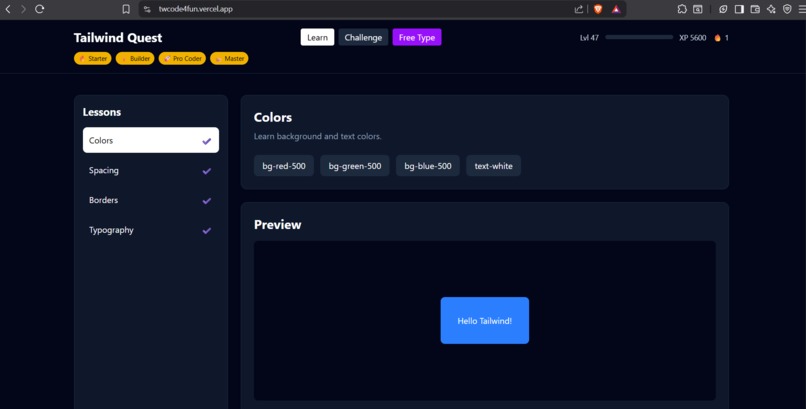
Tailwind CSS learning demo platform
-
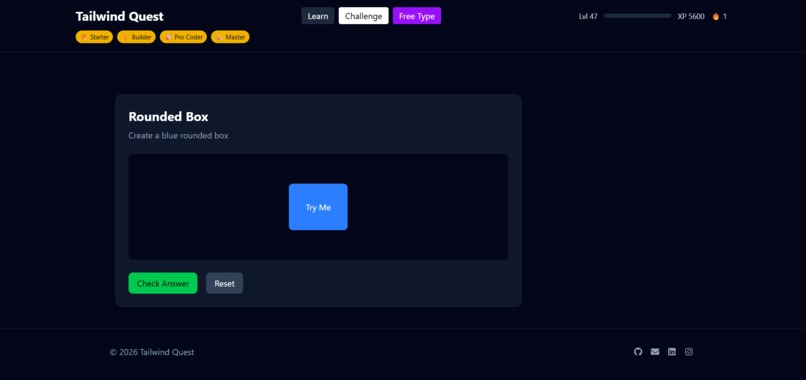
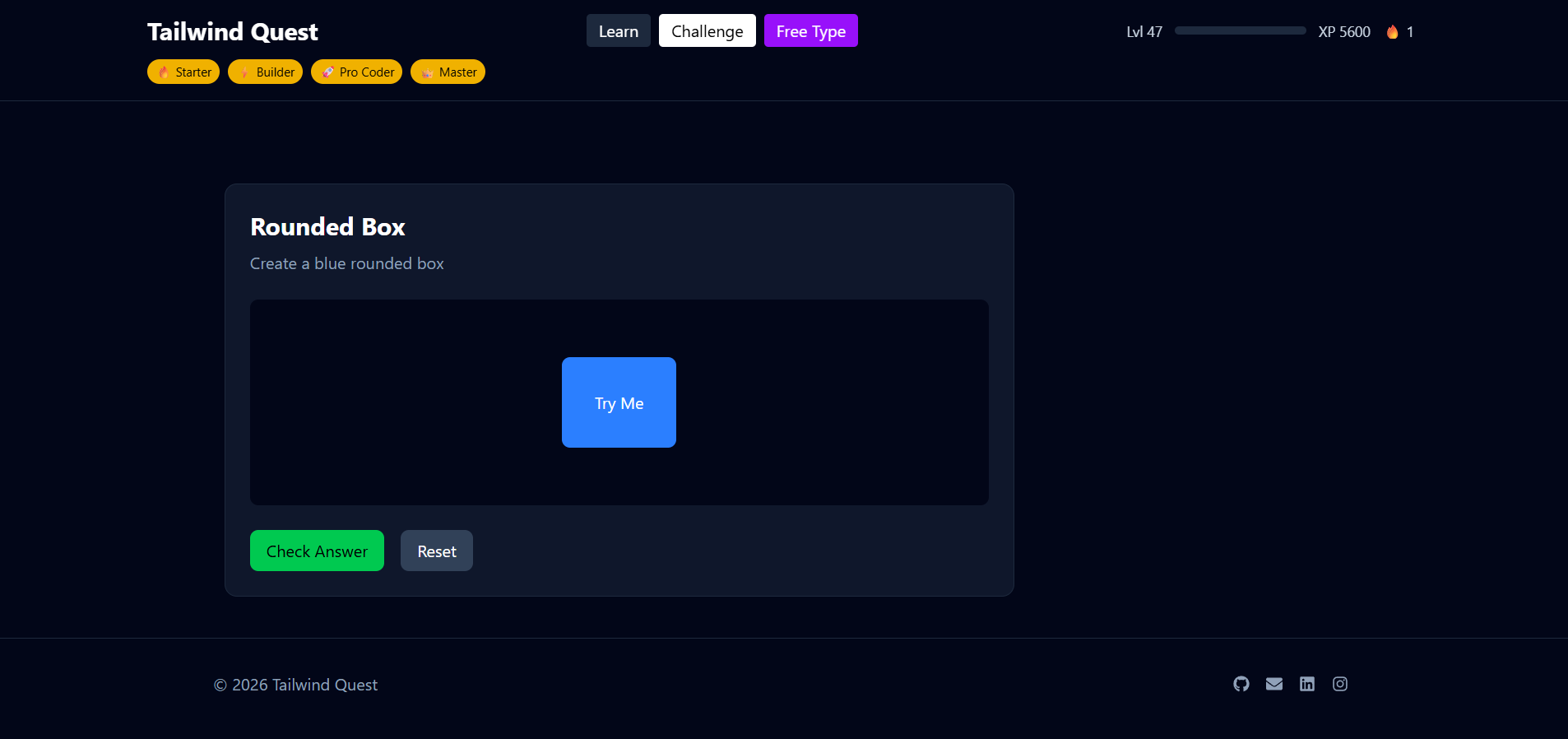
Challenge Section
-
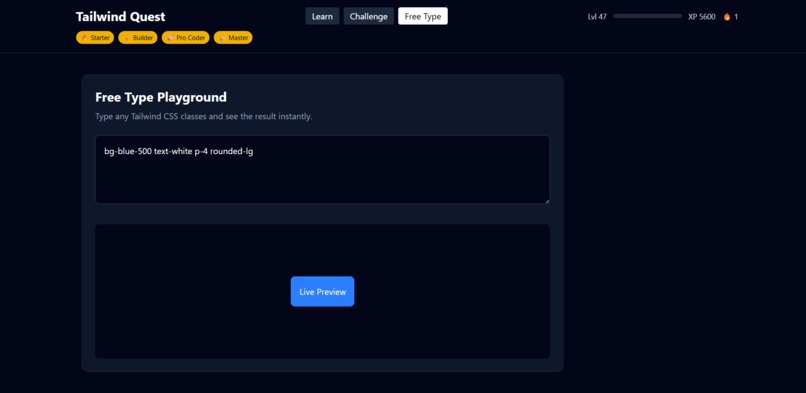
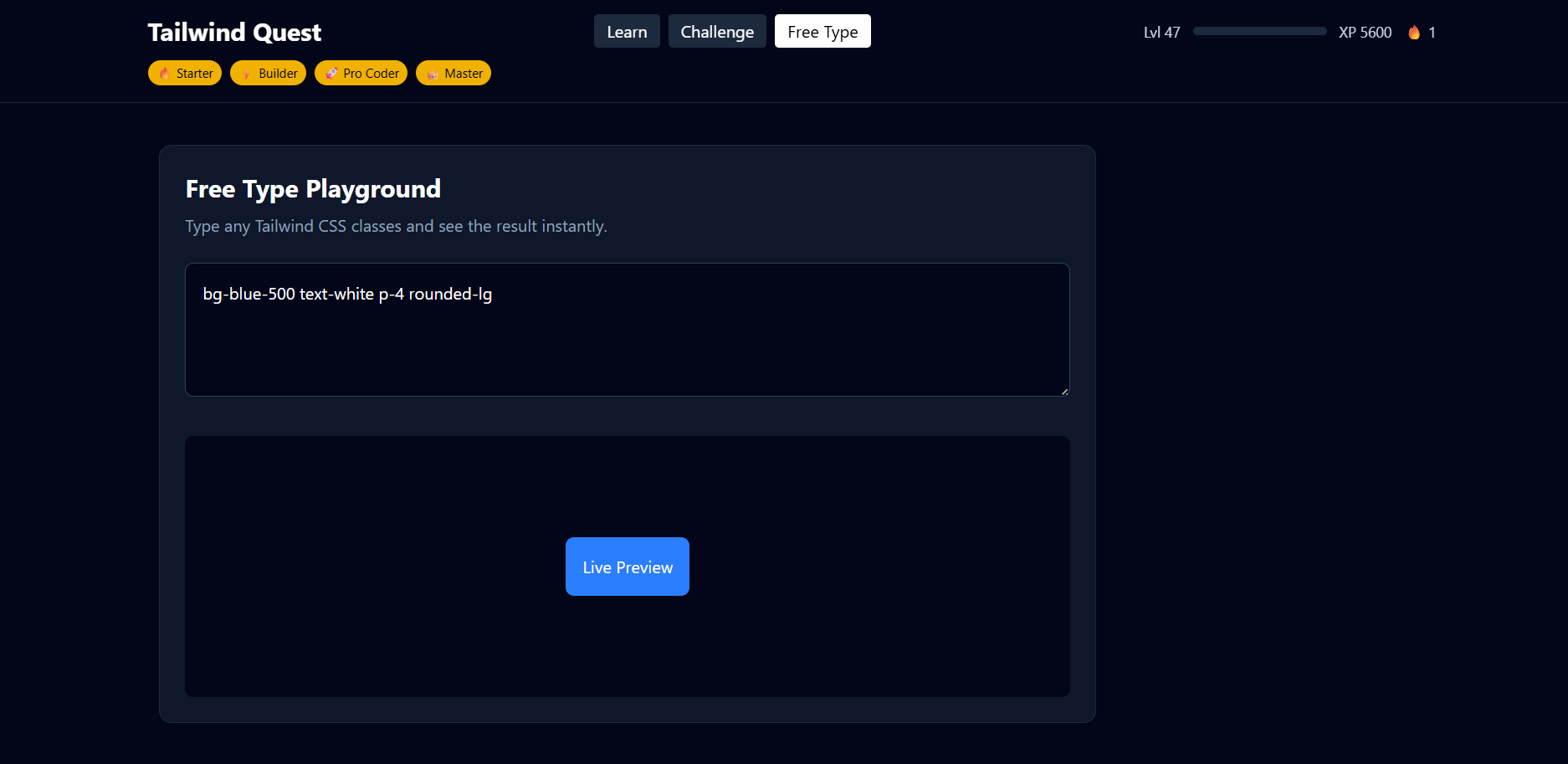
Free typing Section
Inspiration
The inspiration for this project came from a YouTube Shorts video showcasing a Tailwind CSS live learning environment. While the concept was useful, I noticed it lacked engagement, especially for students, as it felt more like a static practice tool rather than an interactive learning experience.
This led me to the idea of transforming it into a more engaging platform by introducing a gamified system with reward points, progress tracking, and interactive challenges. The goal was to make learning Tailwind CSS more enjoyable, motivating, and student-friendly.
What it does
This project is a demo interactive Tailwind CSS learning platform designed in a game-like format. It allows users to learn CSS concepts through hands-on challenges, quizzes, and real-time practice while making the experience engaging and enjoyable. By combining learning with gamification elements such as rewards and progress tracking, it helps users understand Tailwind CSS more effectively while having fun.
How we built it
I built it with React and Tailwind CSS. I started by designing the learning flow and UI, then developed reusable components for lessons, tasks and progress tracking. Tailwind helped me create a responsive and visually appealing interface quickly. After implementing the core features, I tested, optimized, and deployed the demo application.
Challenges we ran into
One of the biggest challenges I ran into was designing a learning experience that was both engaging and easy to follow for beginners. Managing application state for quizzes, XP tracking, and user progress while keeping the codebase organized was another challenge. I also spent time optimizing the responsive design to ensure the website worked smoothly across mobile, tablet, and desktop devices. Additionally, balancing visual effects and animations with performance required careful testing and refinement.
Accomplishments that we're proud of
One accomplishment I am particularly proud of is successfully building a complete interactive learning platform from the ground up using React and Tailwind CSS. I implemented features such as quizzes, progress tracking, and a responsive user interface that provides a smooth learning experience across different devices. I'm also proud of creating a clean, modern design while maintaining good performance and code organization. Most importantly, I was able to turn a complex idea into a functional project that helps users learn Tailwind CSS in a more engaging and practical way.
What we learned
Through this project, I learned how to build a scalable React application with a well-structured component architecture and how to use Tailwind CSS effectively to create responsive, modern user interfaces. I gained experience managing application state, handling user interactions, and implementing features such as quizzes and progress tracking. The project also improved my understanding of UI/UX design, performance optimization, and the importance of planning and organizing code for larger applications. Most importantly, I learned how to take a project from an initial idea to a fully deployed web application.
What's next for Code4fun
The next step for Code4Fun is to expand it into a more comprehensive learning platform by adding support for additional technologies such as JavaScript, React, Node.js, and TypeScript. I also plan to introduce user accounts, cloud-synced progress tracking, leaderboards, achievement systems, and personalized learning paths. Future updates may include AI-powered explanations, coding challenges, project-based learning modules, and a community section where learners can share their work and collaborate with others. The goal is to make Code4Fun a fun, interactive, and all-in-one platform for aspiring web developers.
Built With
- javascript
- react
- tailwindcss
